
Images
the
land
reform
programme,
Zimbabwe
had
about
2,500
white
farmers
owning
4,000
farms
A
quarter
of
a
century
after
their
land
was
seized
during
a
chaotic
land
reform
programme
that
made
global
headlines,
a
small
group
of
white
Zimbabwean
farmers
have
accepted
a
controversial
compensation
deal
from
the
government.
Once
the
backbone
of
the
country’s
agricultural
sector,
many
of
them
are
now
elderly,
visibly
frail,
battling
illness
and
financially
desperate.
“I
believe
this
is
the
only
opportunity.
We
can’t
wait
10
years
for
another
deal,
”
71-year-old
Arthur
Baisley
told
the
BBC.
Still
recuperating
from
back
surgery,
Mr
Baisley
was
among
those
who
arrived
earlier
this
year
at
a
conference
room
in
the
capital,
Harare
–
some
aided
by
walking
sticks
and
walking
frames
–
to
discuss
the
deal.
The
catch
is
that
these
farmers
have
now
been
paid
only
1%
of
their
total
compensation
in
cash
–
the
rest
is
being
issued
as
US
dollar-denominated
treasury
bonds
that
mature
in
10
years
–
with
2%
interest
paid
twice
a
year.
The
land
reform
programme,
sparked
by
the
invasion
of
white-owned
farms
around
the
country
by
supporters
of
the
late
Robert
Mugabe,
was
launched
in
2000
by
the
then
president,
who
was
desperate
to
shore
up
political
support
at
the
time
when
Zimbabwe
had
about
2,500
white
farmers
owning
4,000
farms
–
half
of
the
country’s
best
farmland.
BBC
It
was
difficult
for
my
family
in
the
beginning
but
life
goes
on,
you
have
to
move
on”
The
seizures
became
Africa’s
biggest
modern-day
land
revolution,
and
was
meant
to
redress
colonial-era
land
grabs,
when
black
people
were
forced
to
leave
their
land.
But
it
set
the
country
on
a
collision
path
with
Western
nations
–
economic
sanctions
followed,
companies
exited
and
the
economy
collapsed.
This
compensation
deal
has
been
pushed
by
Mugabe’s
successor
President
Emmerson
Mnangagwa,
who
is
keen
to
mend
fences.
The
money
being
given
to
the
farmers,
as
stipulated
by
the
constitution,
is
for
infrastructure
and
improvements
to
the
land
–
like
buildings
and
dams,
not
the
value
of
the
land
itself,
which
Zimbabwe’s
government
insists
was
illegally
seized
from
the
country’s
original
inhabitants.
Overall
this
is
estimated
to
total
$3.5bn
(£2.6bn).
However,
the
recent
cash
pay-out
totalled
just
$3.1m
for
378
farms.
Mr
Baisley
said
it
was
not
the
best
deal
but
was
reasonably
fair
–
and
his
decision
to
accept
it
has
come
with
the
realisation
that
the
takeovers
cannot
be
undone.
“It
was
difficult
for
my
family
in
the
beginning
but
life
goes
on,
you
have
to
move
on,”
he
said,
adding
that
he
would
start
selling
some
of
the
bonds
immediately
to
offset
medical
bills
and
to
care
for
his
sickly
parents.
It
is
a
significant
shift,
a
softening
of
hard
lines
previously
drawn
by
both
sides.
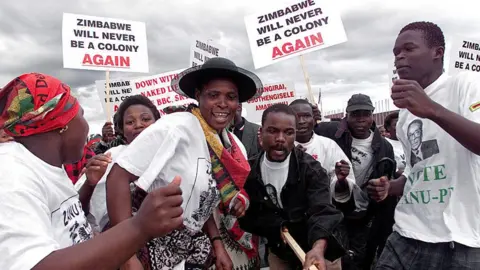 AFP/Getty
Images
2000
it
suited
President
Robert
Mugabe
to
push
land
reform
to
shore
up
his
support
in
the
face
of
growing
opposition
Mugabe
used
to
pound
the
lectern
at
party
rallies
saying
the
white
farmers
should
go
to
the
UK,
the
former
colonial
power,
for
their
compensation
–
although
quietly
he
was
paying
out
select
farmers.
The
white
farmers
meanwhile
had
insisted
on
a
$10bn
full
cash
settlement.
Both
sides
have
settled
on
the
$3.5bn
figure.
However,
unlike
Mr
Baisley,
the
majority
of
white
farmers
are
holding
out
for
a
deal
which
would
see
all
the
cash
paid
upfront.
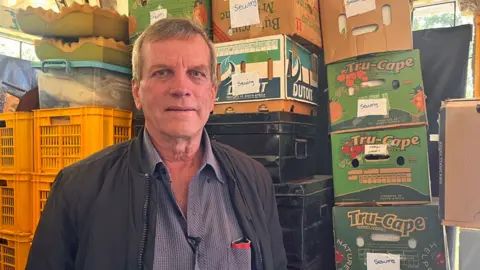
Deon
Theron,
who
in
2008
was
forced
off
the
farm
he
had
bought
after
independence,
leads
more
than
1,000
farmers
who
have
rejected
the
offer.
Boxes
of
his
possessions,
hastily
packed
during
his
departure,
still
fill
the
veranda
of
his
Harare
home
where
he
told
me
the
deal
was
not
fair
as
there
was
no
guarantee
that
the
bonds
would
be
honoured
in
10
years’
time.
Theron’s
faction
of
farmers
wants
to
be
paid
in
cash
and
feel
the
UK
government
should
help
with
negotiations
The
71-year-old
said
it
was
clear
that
the
government
did
not
have
the
money
–
and
he
wanted
to
see
the
international
community,
including
the
UK,
help
with
negotiations
as
the
government
was
refusing
to
budge,
or
even
meet
the
dissenting
group.
“The
British
can’t
go
and
sit
in
the
pavilion
and
watch
what’s
happening
because
they
are
part
of
it.
They
are
linked
with
our
history.
They
can’t
walk
away
from
it,”
he
told
the
BBC.
In
an
agreement
brokered
in
the
run-up
to
independence,
the
UK
was
to
support
land
reform
financially
–
but
it
floundered
towards
the
end
of
the
1990s
when
the
Labour
government
came
to
power
and
relations
soured.
The
need
to
re-engage
Britain
on
the
compensation
was
the
battle
cry
of
many
of
the
war
veterans
who
led
the
farm
invasions.
They
had
fought
in
the
1970s
war
against
white-minority
rule
–
and
felt
let
down
by
the
slow
pace
of
land
reform
following
independence.
But
like
the
white
farmers,
the
war
veterans
are
also
split
over
the
government’s
handling
of
the
compensation.
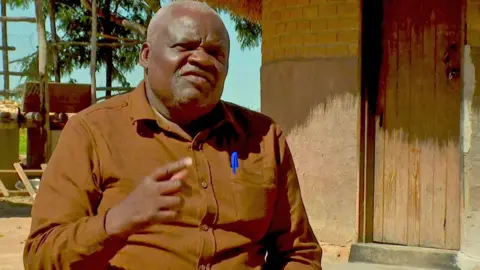
Gurira
is
part
of
a
group
of
war
veterans
suing
the
government
–
saying
the
compensation
agreed
for
white
farmers
is
too
much
at
a
time
of
economic
hardship
One
faction
is
suing
the
government
for
“clandestinely”
agreeing
to
pay
$3.5bn
in
compensation,
saying
the
offer
should
have
been
agreed
in
parliament.
One
of
its
leaders,
Godfrey
Gurira,
said
that
given
the
myriad
economic
challenges
cash-strapped
Zimbabwe
faced,
it
should
not
have
prioritised
white
farmers.
“It’s
such
a
colossal
amount…
for
a
nation
of
our
size.
People
are
suffering
they
can
hardly
make
ends
meet,
the
hospitals
have
nothing,
then
we
have
the
luxury
to
pay
$3.5bn.
In
our
opinion
it’s
an
unnecessary
act
of
appeasement,”
he
told
the
BBC.
A
second
lawsuit
challenges
an
aspect
of
a
new
land
policy
that
demands
that
new
farmers
pay
for
the
land
in
order
to
obtain
title
deeds
to
own
the
land
outright.
In
the
wake
of
the
redistribution,
the
250,000
people
who
replaced
the
2,500
white
farmers
were
only
entitled
to
99-year
leases.
However
this
meant
it
was
near-impossible
for
them
to
get
bank
loans
as
their
security
of
tenure
was
not
guaranteed.
Last
year,
the
government
said
farmers
could
apply
to
own
their
land
outright
–
with
title
deeds
–
but
they
needed
to
pay
between
$100
and
$500
per
hectare
(2.47
acres).
That
money
will
go
towards
the
compensation
deal
to
white
farmers,
according
to
the
government.
Those
challenging
this
say
forcing
black
farmers
to
effectively
buy
back
the
land
contradicts
the
law.
And
the
black
farmers
themselves
are
divided
over
the
issue.
The
land
reform
programme
has
had
mixed
results.
Many
new
farmers
did
not
have
the
skills,
the
finances
and
labour
to
farm
successfully.
But
the
country’s
agricultural
sector
is
now
rebounding
with
pockets
of
successful
farmers.
In
2002,
Solomon
Ganye
arrived
on
a
bicycle
to
receive
a
20-hectare
bare
piece
of
land
in
Harare
South.
It
was
part
of
the
sprawling
2,700-hectare
farm
that
had
been
divided
among
77
people.
He
found
the
initial
years
a
struggle
–
suffering
from
a
lack
of
finances
and
climate
shocks.
But
slowly
through
Chinese
money
ploughed
into
the
tobacco
sector,
and
after
handing
the
business
over
to
his
sons
–
both
agriculture
graduates
in
their
20s
–
things
have
improved.
They
have
built
an
enviable
enterprise
with
200
permanent
workers,
and
have
expanded
into
dairy
and
livestock
farming.
They
are
applying
for
the
title
deeds
of
their
land
and
have
even
acquired
more
in
recent
years
from
the
government.
BBC
To
be
honest
we’ve
taken
farming
to
another
level…
We’re
doing
more
than
what
the
white
guys
were
doing
in
terms
of
quality
of
tobacco
and
the
leaf
is
good”
Aaron
Ganye,
his
oldest
son,
told
the
BBC
that
without
the
land
reform
programme,
his
family
would
probably
not
have
been
able
to
buy
a
farm
because
in
the
past
the
structure
of
ownership
saw
vast
tracts
of
land
being
held
by
a
single
family.
“I’m
very
happy
because
to
be
honest
we’ve
taken
farming
to
another
level
because
now
we’re
living
a
good
life
through
farming.
We’re
doing
more
than
what
the
white
guys
were
doing
in
terms
of
quality
of
tobacco
and
the
leaf
is
good,”
the
25-year-old
said
proudly.
“We’ve
invested
in
technology.
It’s
not
easy.
I’m
now
motivating
more
farmers
to
do
good
work
here,”
he
said.
He
does
believe
that
new
farmers
should
contribute
to
compensation
payments
but
based
on
the
value
of
infrastructure
they
inherited.
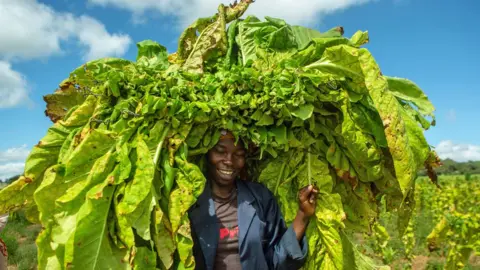 Getty
GettyImages
agriculture
sector
is
rebounding
–
with
the
highest
tobacco
production
ever
this
year
On
the
political
front,
tensions
are
also
easing
–
and
the
UK
government
no
longer
has
any
Zimbabwean
on
its
sanction
list
having
recently
delisted
four
military
and
government
officials
it
had
accused
of
human
rights
abuses.
The
UK’s
Foreign,
Commonwealth
and
Development
Office
told
the
BBC
this
was
because
they
were
no
longer
in
the
positions
they
held
at
the
time
they
were
added
to
the
list
in
2021.
Nonetheless,
it
is
a
significant
development,
marking
the
end
of
more
than
20
years
of
sanctions
against
Zimbabwe.
The
country
now
hopes
that
the
farmers’
compensation
issue
can
be
properly
sorted
out
to
get
Western
support
for
ongoing
talks
on
restructuring
its
massive
foreign
debt.
There
is
no
question
that
25
years
on,
calm
has
returned
to
almost
all
farming
fronts.
Agriculture
is
rebounding,
this
year
farmers
have
sold
over
300,000
tonnes
of
tobacco
at
auction
–
the
highest
tobacco
production
ever.
But
compromise
is
needed
on
all
sides
for
the
country
to
fully
jump
over
the
hurdle
of
land
reform
and
its
fallout.
Post
published
in:
Agriculture