
For
the
second
time
in
a
month,
I
attended
a
first-time
conference.
And,
once
again,
the
inaugural
conference
exceeded
my
expectations.
Several
weeks
ago,
I
wrote
about
Kaleidoscope,
the
debut
conference
produced
by
8am.
This
time,
I
found
myself
at
the
Client
Experience
Summit,
the
inaugural
conference
of
the
legal
technology
company
Case
Status,
held
in
its
hometown
of
Charleston,
S.C.,
Sept.
24-26.
As
the
legal
tech
conference
landscape
becomes
increasingly
crowded
–
in
this
month
alone,
there
are
multiple
conferences
every
single
week
–
a
counterintuitive
trend
is
emerging:
smaller,
customer-focused
conferences
are
also
delivering
value,
but
in
a
more
targeted
way.
The
Power
of
Focus
The
two-day
summit
centered
on
a
single,
critical
question:
How
can
law
firms
improve
their
clients’
experience?
As
cofounder
and
CEO
Andy
Seavers
(pictured
above)
said
in
his
opening
keynote,
“Without
the
client,
there
is
no
case.
Without
the
client,
there
is
no
firm.
This
is
a
client
business
and
we
need
to
put
an
emphasis
on
the
client.”
This
was
not
a
sprawling
event
trying
to
be
everything
to
everyone.
Instead,
it
brought
together
practitioners
from
small
and
medium-sized
firms
–
mostly
focused
on
personal
injury,
immigration,
family,
and
employment
law,
and
all
united
in
their
interest
in
better
serving
their
clients.
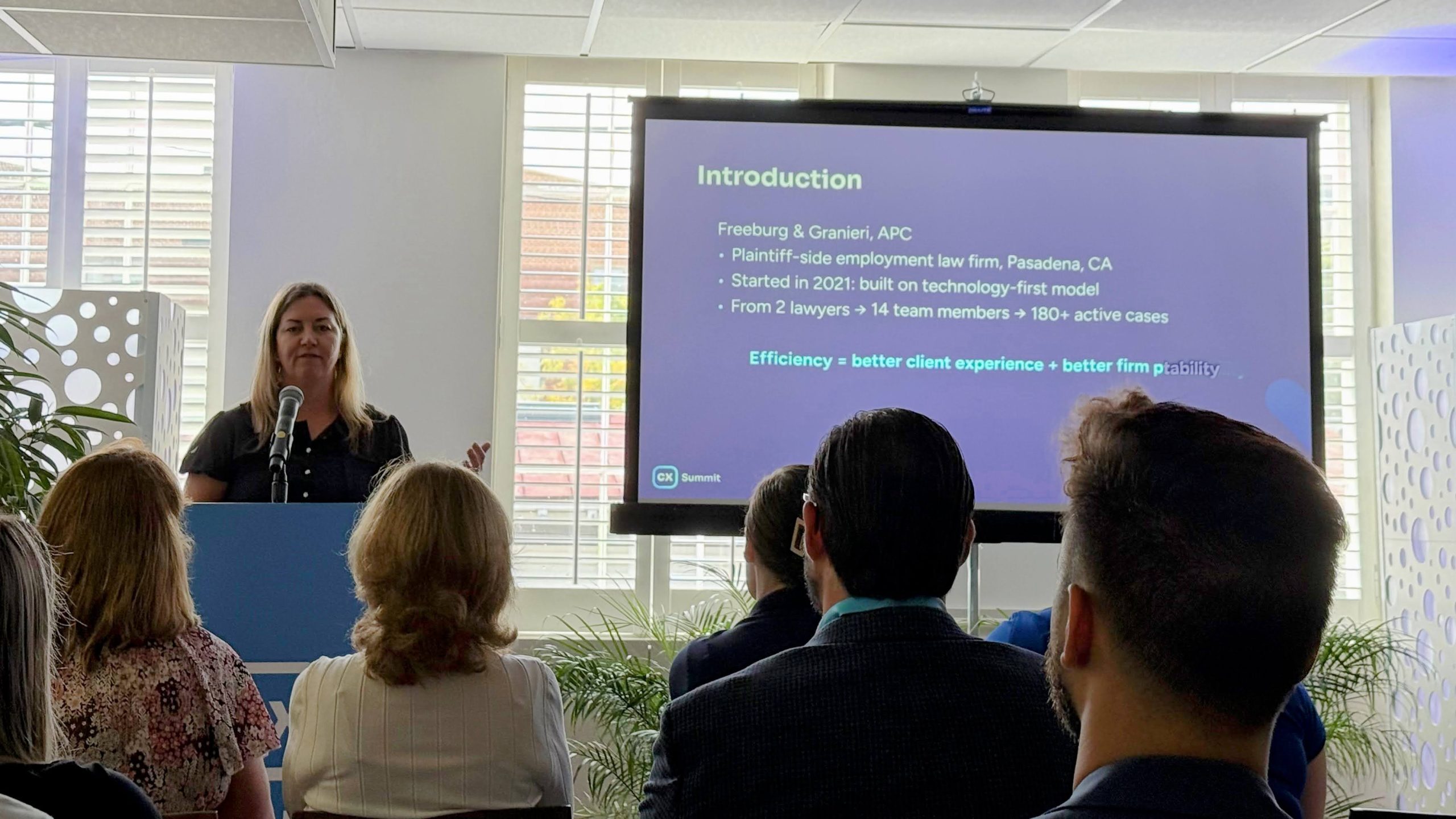
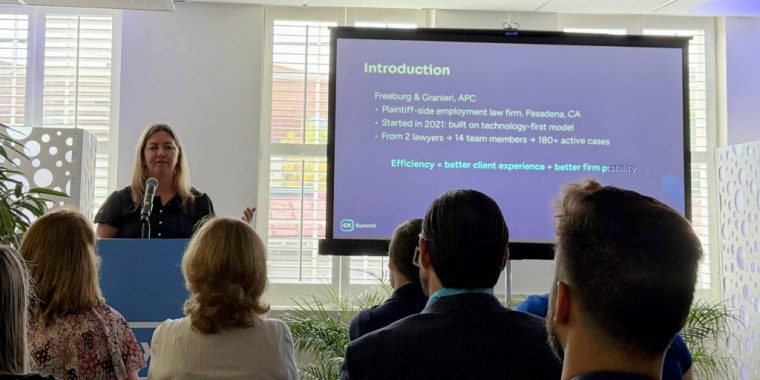
Employment
lawyer
Christy
Granieri
said
her
“technology-first”
firm
will
not
accept
clients
unwilling
to
use
the
Case
Status
app.
This
targeted
approach
created
something
you
do
not
always
find
at
larger
legal
tech
conferences:
opportunities
for
peer-to-peer
learning
and
sharing.
When
one
speaker,
the
leader
of
a
California
employment
firm,
described
her
practice
as
“a
Case
Status
firm”
–
going
so
far
as
to
say
she
will
not
take
clients
unwilling
to
use
the
app
–
you
could
almost
sense
it
resonate
with
others
in
the
room.
What
Made
It
Work
Much
like
the
Kaleidoscope
conference,
this
first-time
summit
felt
polished
and
professional.
Among
the
elements
that
made
it
so:
-
Practical
knowledge
from
practitioners.
The
speaker
lineup
featured
attorneys
and
firm
leaders
who
are
actively
involved
in
running
their
own
practices.
That
meant
that
the
programs
offered
battle-tested
insights
from
people
who
do
this
stuff
on
a
daily
basis.
Sessions
covered
client
experience,
client
service,
technology
integration,
and
sustainable
firm
growth,
all
grounded
in
actual
experience. -
Two
complementary
tracks.
The
summit
offered
two
complementary
tracks.
The
“Future-Focused”
track
examined
client
experience
as
a
long-term
growth
engine
and
strategic
differentiator,
while
the
“Tech-Forward”
track
explored
how
data,
AI,
automation
and
integrated
legal
technology
can
modernize
client
interactions. -
The
Charleston
advantage.
Let’s
face
it:
location
matters
for
a
conference.
The
summit
took
place
at
Hotel
Emeline,
a
beautifully
updated
historic
hotel
in
the
heart
of
downtown
Charleston,
a
beautiful
and
historic
city.
With
nearly
all
programs
and
meals
held
on-site,
attendees
were
just
steps
away
from
the
summit’s
learning
and
networking
opportunities. -
Universal
CLE
credit.
In
a
detail
that
matters
to
practicing
attorneys,
every
program
offered
CLE
credit
for
every
state.
That
detailed
transformed
the
conference
from
simply
nice
to
attend
to
a
sound
investment
in
professional
development.
The
Customer
Conference
Advantage
The
CX
Summit
reflected
a
growing
trend
among
legal
tech
companies,
including
smaller
ones,
to
host
their
own
customer
conferences.
While
that
makes
the
legal
tech
conference
calendar
increasingly
crowded,
the
proliferation
of
events
is
actually
a
positive
for
the
legal
community.
Rather
than
forcing
everyone
into
one-size-fits-all
mega-conferences,
this
expanding
array
of
smaller
conferences
offers
events
tailored
to
specific
interests,
practice
areas
and
technology
ecosystems.
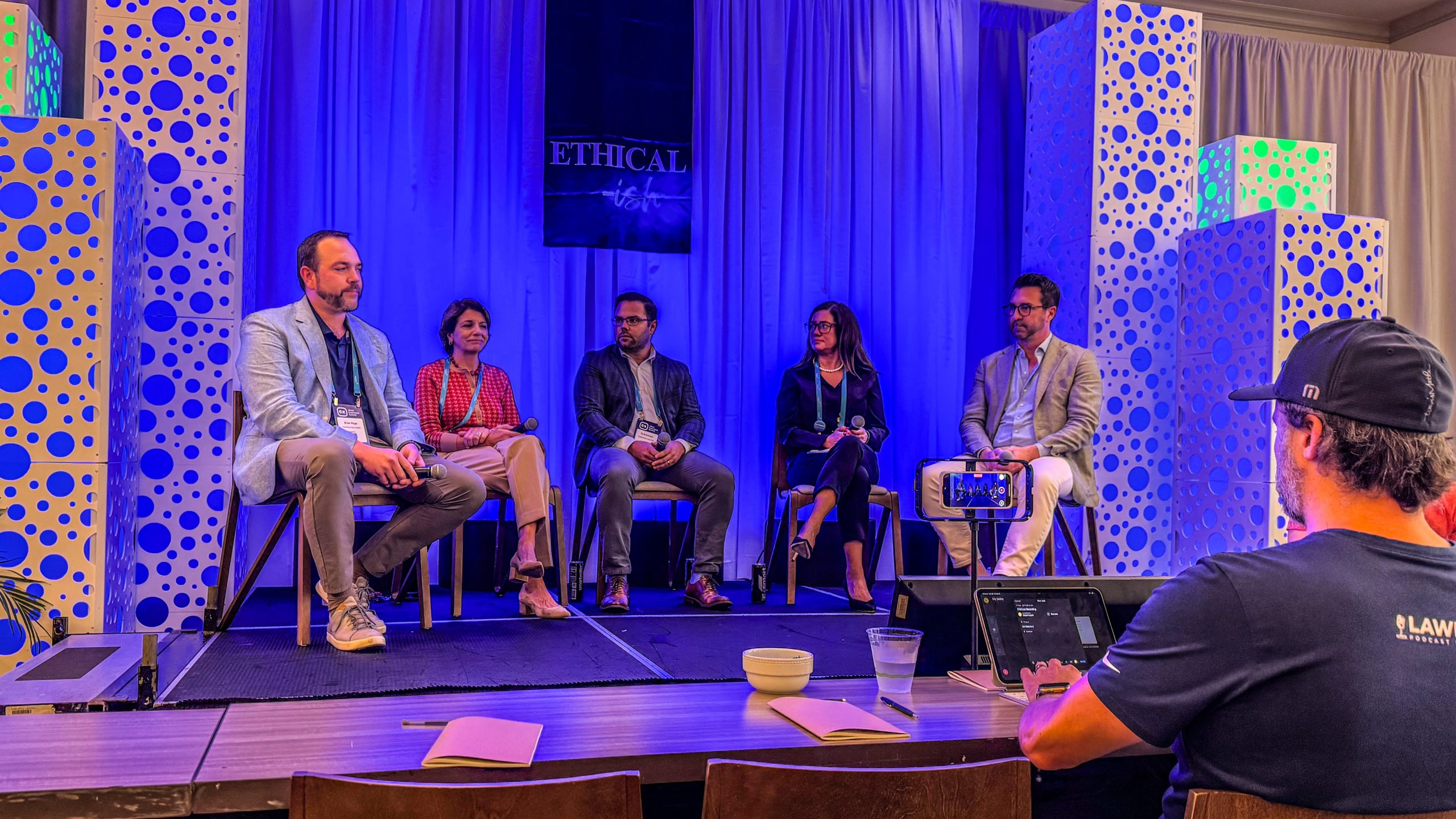
A
live
recording
of
the
Ethical-ish
podcast
focused
on
the
ethics
of
AI,
with
Brian
Page,
chief
legal
officer,
Trust
Guss
Injury
Attorneys;
Constance
Anastopoulo,
president,
Charleston
Law
School;
Ty
Robinson,
founding
attorney,
Ty
Robinson
Law
Firm;
Marina
Bradley,
executive
director,
Ostroff
Godshall;
and
Angel
Evan,
AI
ethicist
and
practice
lead,
AG
Consulting
Partners.
For
a
Case
Status
customer,
spending
two
days
with
fellow
users
and
the
company’s
team
arguably
delivers
more
actionable
value
than
a
generic
legal
innovation
conference
ever
could.
It
is
worth
noting
that
not
everyone
at
the
CX
Summit
was
a
Case
Status
customer,
and
they
need
not
have
been
to
have
benefitted
from
it.
Some
attendees
came
simply
to
learn
how
to
better
serve
their
own
clients,
and
there
was
plenty
of
programming
for
them.
Yes,
some
panels
focused
specifically
on
using
–
and
maximizing
–
the
Case
Status
platform.
But
many
others
addressed
ethics,
technology,
data,
AI
and
client
experience
principles
applicable
to
any
law
practice.
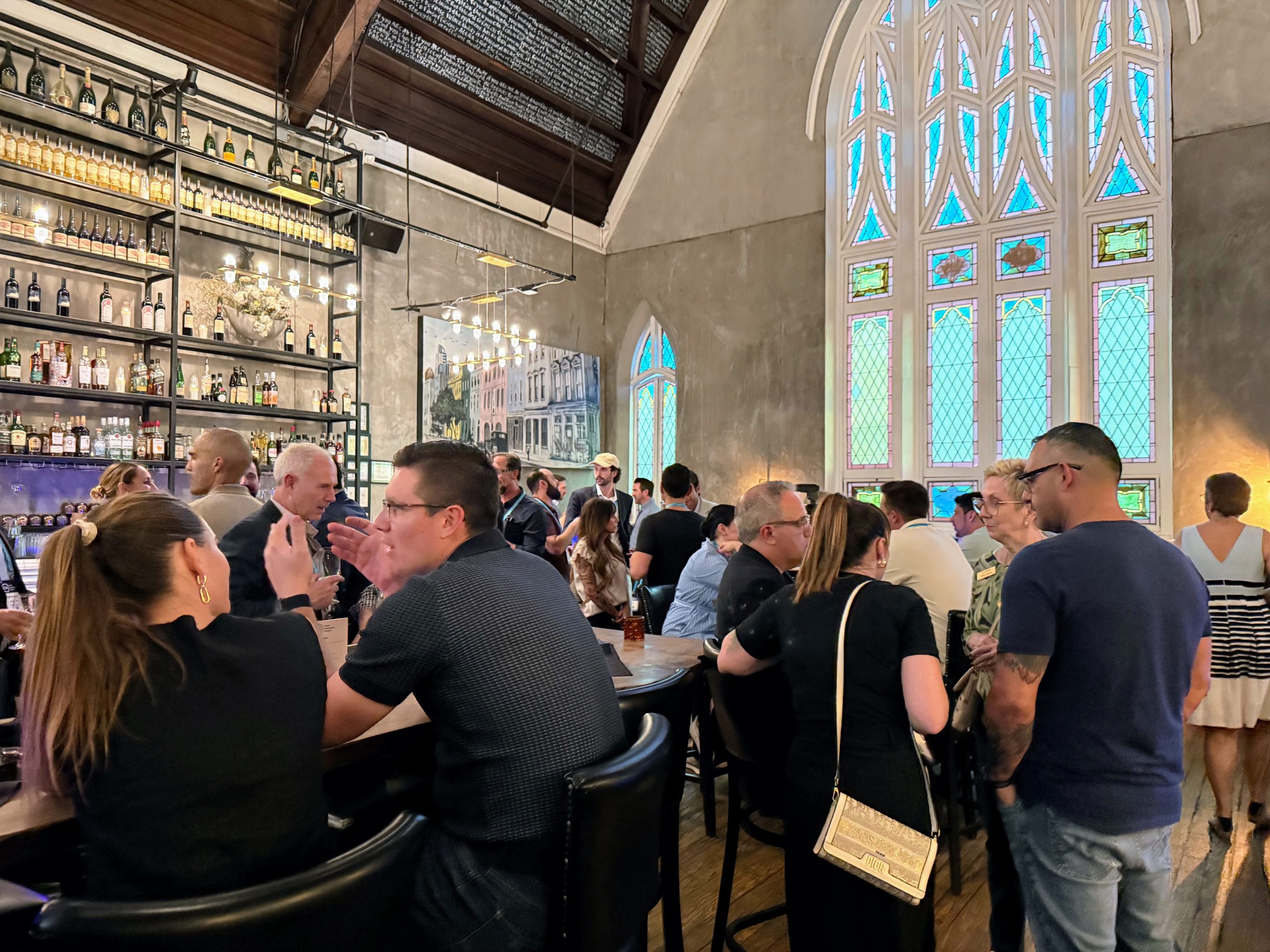
Charleston’s
Church
and
Union
restaurant
was
a
great
setting
for
the
summit’s
dinner
party.
To
my
mind,
such
a
balance
is
crucial.
To
be
successful,
a
customer
conference
cannot
be
just
an
insular
product
training
session.
‘A
Huge
Opportunity’
The
CX
Summit
achieved
something
more
by
bringing
together
a
community
of
legal
professionals
united
by
their
shared
values
and
challenges,
with
the
product
serving
as
a
catalyst
rather
than
the
sole
focus.
The
summit
demonstrated
how
smaller,
targeted
conferences
can
deliver
outsized
value.
By
bringing
together
a
specific
community
around
a
focused
mission,
it
was
able
to
foster
the
kind
of
genuine
learning
and
relationship-building
that
larger
conferences
sometimes
struggle
to
achieve.
If
this
inaugural
CX
Summit
is
any
indication,
Case
Status
has
created
something
valuable
not
just
for
its
customers,
but
for
anyone
serious
about
transforming
how
law
firms
serve
their
clients.
In
a
crowded
conference
landscape,
maybe
that
kind
of
focus
is
something
the
legal
profession
needs
more
of.
Not
to
mention,
for
law
firms,
the
opportunity
is
huge.
To
quote
Seavers
again:
“Eighty
percent
of
law
firm
clients
feel
uncared
for.
When
we
think
about
an
industry
that
has
an
ethical
obligation
to
care
for
clients,
and
that’s
the
standard
we’re
at,
we
have
a
huge
opportunity
to
really
change
and
really
grow
and
really
start
putting
focus
on
the
client
in
a
unique
way.”