
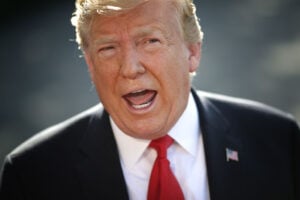
by
Win
McNamee/Getty
Images)
On
January
29,
2026,
President
Donald
Trump,
along
with
his
sons
Donald
Jr.
and
Eric,
and
the
Trump
Organization,
filed
a
lawsuit
in
the
U.S.
District
Court
for
the
Southern
District
of
Florida
against
the
Internal
Revenue
Service
(IRS)
and
the
Treasury
Department.
The
suit
seeks
at
least
$10
billion
in
damages
due
to
reputational
harm,
financial
losses,
and
public
embarrassment.
The
suit
alleges
that
the
agencies
failed
to
prevent
the
unauthorized
leak
of
their
confidential
tax
returns
by
Charles
Littlejohn
between
2018
and
2020.
Littlejohn,
who
pleaded
guilty
in
2023
and
was
sentenced
to
five
years
in
prison,
disclosed
the
information
to
outlets
like
The
New
York
Times
and
ProPublica,
revealing
details
such
as
Trump’s
minimal
tax
payments
in
several
years.
However,
this
unprecedented
action
of
a
sitting
president
suing
his
own
executive
branch
raises
legal
and
ethical
conflict
of
interest
questions.
Can
this
lawsuit
succeed?
Can
the
lawsuit
proceed
fairly
for
both
sides?
First,
the
lawsuit
could
be
dismissed
before
it
gets
to
trial.
The
statute
of
limitations
allows
taxpayers
to
sue
for
unauthorized
disclosures
but
requires
claims
to
be
filed
within
two
years
after
the
date
of
discovery.
The
Trump
complaint
argues
that
the
clock
began
for
President
Trump
in
January
29,
2024
(exactly
two
years
before
the
lawsuit
was
filed),
when
the
IRS
formally
notified
him
of
the
breach
via
letter.
However,
considering
that
the
leaked
returns
date
back
to
September
2020,
it
is
arguable
that
he
should
have
known
about
it
then.
Since
Trump
was
the
sitting
president
at
the
time,
the
IRS
could
have
notified
Trump
as
soon
as
it
knew
his
returns
were
leaked.
Assuming
Trump
succeeds
on
the
statute
of
limitations
issue,
he
will
have
to
prove
actual
damages
sufficient
to
justify
the
$10
billion
he
is
demanding.
The
suit
alleges
broad
harms
like
tarnished
business
reputations
and
negative
public
standing,
but
quantifying
these
will
be
difficult.
The
leaking
of
the
tax
returns
did
not
seem
to
have
hurt
him
financially.
Also,
his
winning
the
2024
presidential
election
could
undermine
claims
of
diminished
public
standing.
And
assuming
he
can
prove
financial
losses
or
tarnished
business
reputations,
the
government
could
argue
that
any
damages
were
self-inflicted
considering
that
Trump
has
made
numerous
bombastic
and
sometimes
offensive
statements
over
the
years.
Lastly,
the
statute
provides
that
an
officer
or
employee
of
the
United
States
must
be
responsible
for
the
unauthorized
disclosure.
The
government
could
argue
that
Littlejohn
was
a
contractor
employed
by
Booz
Allen
Hamilton,
which
could
raise
questions
about
whether
Littlejohn
was
a
direct
IRS
employee.
Because
Trump
could
potentially
control
both
sides
of
the
litigation,
it
can
create
a
conflict
of
interest
situation,
especially
where
Trump
can
simply
order
the
Treasury
Department
to
concede
the
case
and
award
Trump
whatever
amount
he
wants.
The
generally
accepted
way
to
mitigate
this
is
to
have
the
Department
of
Justice
appoint
independent
counsel
to
represent
the
government.
The
judge
assigned
to
the
case
cannot
appoint
a
special
independent
counsel
to
represent
the
government.
But
since
Trump
seems
to
value
loyalty
to
him
more
than
anything
else,
any
special
counsel
Attorney
General
Pam
Bondi
appoints
will
be
scrutinized
with
great
skepticism.
He
will
also
be
the
butt
of
every
talk
show
host’s
opening
monologue.
Yes,
that
includes
Greg
Gutfeld.
One
option
suggested
was
to
let
the
lawsuit
proceed
but
have
the
judge
schedule
the
trial
date
after
Trump
leaves
office
and
reject
questionable
settlements
offered
while
Trump
is
in
office.
If
Trump’s
successor
in
2029
happens
to
be
someone
who
worked
closely
with
him
—
such
as
JD
Vance
or
Marco
Rubio
—
any
settlement
offers
made
during
their
tenure
should
also
be
approved
by
the
court.
The
problem
with
this
strategy
is
that
Rule
41(a)(ii)
of
the
Federal
Rules
of
Civil
Procedure
allows
dismissal
of
a
lawsuit
without
court
approval
if
both
parties
agree
to
the
dismissal.
Another
suggested
option
was
to
have
a
third
party
intervene
in
the
litigation
to
ensure
that
the
federal
government’s
interests
are
independently
protected.
While
the
intervention
rules
are
beyond
the
scope
of
this
column,
it
should
be
known
that
the
potential
intervenor
must
have
standing
to
sue.
To
have
standing,
the
intervenor
must
have
concrete,
particularized,
actual
or
imminent
injury
fairly
traceable
to
a
party’s
conduct
which
can
only
be
remedied
by
a
court.
An
individual
will
not
have
standing
simply
because
he
or
she
is
a
taxpayer
or
because
they
are
concerned
about
the
potential
conflict
of
interest.
When
Trump
was
asked
about
the
potential
conflict
of
interest,
he
said
he
is
considering
giving
a
substantial
portion
of
the
lawsuit
proceeds
to
charity.
That
raises
numerous
questions,
such
as
whether
Trump
actually
will
give
the
money
to
charity,
and
to
which
ones.
Also,
if
it
is
supposedly
not
about
the
money,
why
is
this
lawsuit
necessary,
especially
when
Trump
can
direct
the
IRS
to
improve
its
security
protocols
to
ensure
this
does
not
happen
again?
The
Trump
family’s
lawsuit
should
be
allowed
to
proceed.
While
many
people
would
find
the
lawsuit
preposterous,
it
is
not
frivolous.
But
President
Trump’s
position
of
being
both
the
plaintiff
and
the
defendant’s
boss
makes
this
lawsuit
look
sketchy
due
to
the
conflict
of
interest.
It
is
not
a
slam
dunk
case
because
President
Trump
has
a
statute
of
limitations
issue
and
the
Trumps
may
not
have
suffered
damages
worth
$10
billion.
Because
of
this,
the
parties
must
be
adversarial
to
ensure
that
any
resolution
—
settlement
or
otherwise
—
is
fair
to
the
taxpayers.
Accordingly,
both
sides
should
agree
to
rules
to
ensure
there
is
no
conflict
of
interest,
ideally
by
appointing
a
reputable
independent
counsel
to
represent
the
government.
Steven
Chung
is
a
tax
attorney
in
Los
Angeles,
California.
He
helps
people
with
basic
tax
planning
and
resolve
tax
disputes.
He
is
also
sympathetic
to
people
with
large
student
loans.
He
can
be
reached
via
email
at [email protected].
Or
you
can
connect
with
him
on
Twitter
(@stevenchung)
and
connect
with
him
on LinkedIn.