
A
new
benchmarking
study
reveals
that
artificial
intelligence
adoption
in
corporate
legal
departments
is
gaining
momentum,
with
38%
of
surveyed
teams
already
using
AI
tools
and
another
50%
actively
exploring
implementation.
However,
significant
barriers
around
trust,
data
privacy,
and
measurement
persist
as
the
legal
profession
navigates
this
technological
shift.
The
inaugural
AI
in
Legal
Departments:
2025
Benchmarking
Report,
published
this
week
by
Counselwell
and
Spellbook,
surveyed
256
in-house
legal
professionals
across
North
America
to
understand
current
AI
adoption
patterns
and
future
expectations.
Ninety
percent
of
the
respondents
were
in-house
lawyers, with
the
majority
(86.8%)
based
in
Canada
and
10.5%
in
the
United
States.
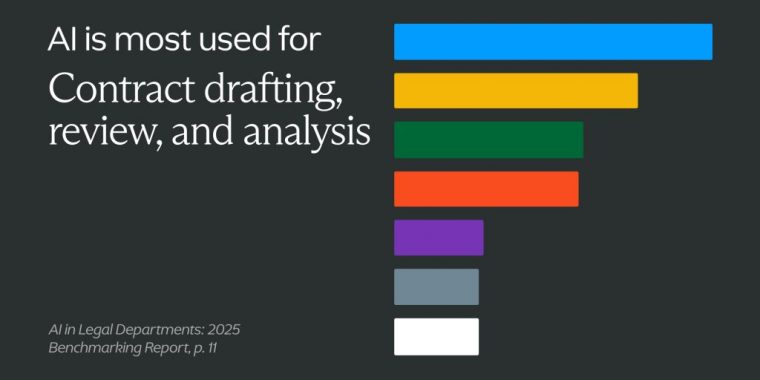
Contract
Work
Dominates
AI
Use
Cases
Among
legal
departments
already
using
AI,
contract-related
tasks
are
the
clear
leader
in
use
cases.
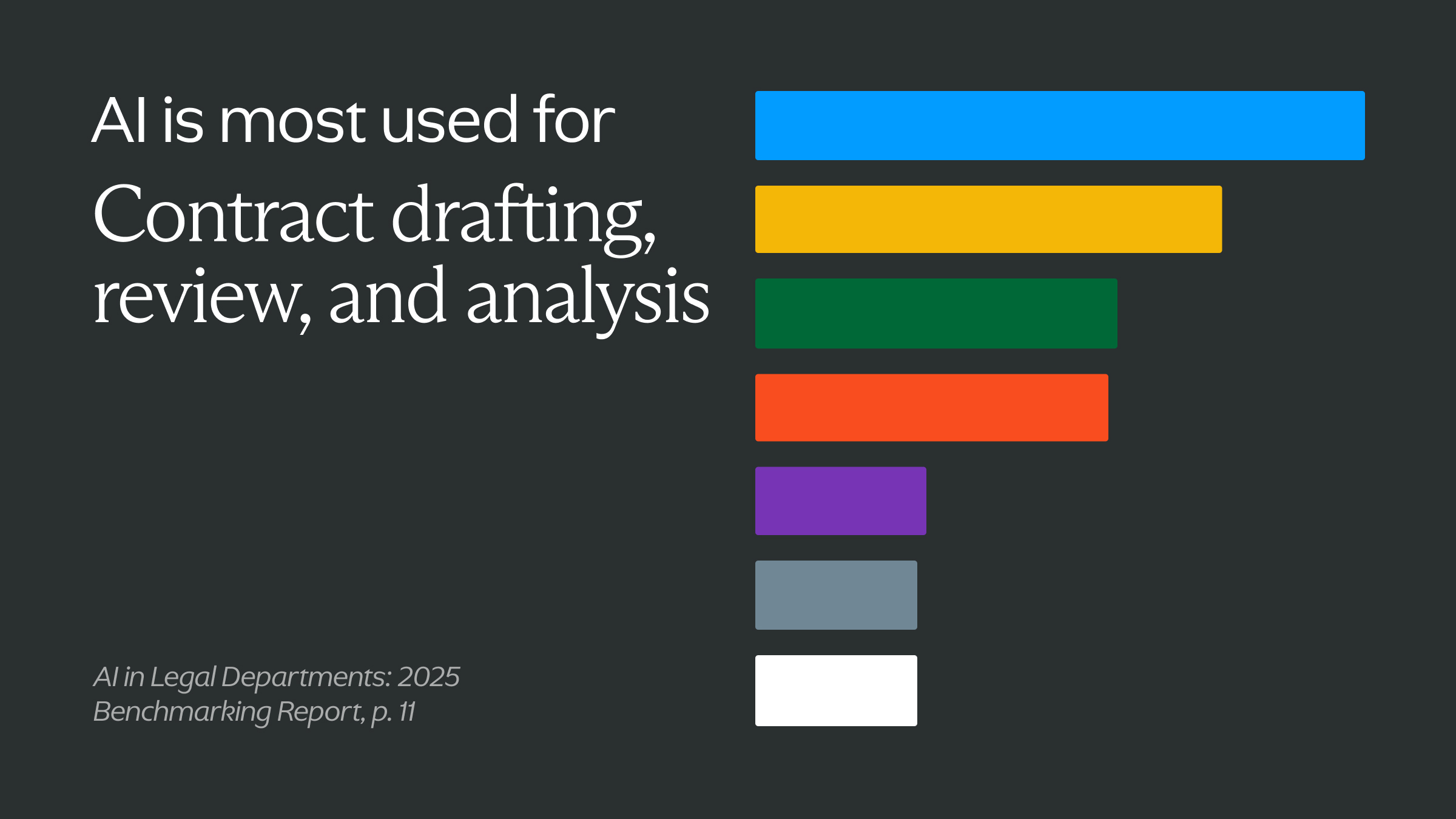
Sixty-four
percent
of
AI
users
employ
tools
for
contract
drafting,
review,
and
analysis,
followed
by
legal
research
(49%)
and
document
translation
(38%).
Looking
ahead,
respondents
expect
significant
expansion
into
operational
areas
over
the
next
1-2
years,
with
32%
planning
to
adopt
legal
operations
and
workflow
automation
tools
and
28%
considering
document
automation.
“The
results
show
a
clear
trend:
legal
departments
are
starting
with
foundational
AI
applications
like
contract
drafting
and
legal
research,
but
are
preparing
to
expand
their
AI
usage
into
broader
operational
areas,”
the
report
states.
ChatGPT
Leads
Tool
Adoption
When
it
comes
to
specific
platforms
used
by
legal
departments,
ChatGPT
dominates,
with
74%
usage
among
AI-adopting
respondents.
Microsoft
Copilot
follows
at
40%,
while
legal-specific
tools
such
as
Spellbook
capture
22%
adoption.
Rounding
out
the
top
platforms
are
tools
such
as
Gemini
(17%)
and
Claude
(11%).
Nearly
universal
satisfaction
marks
early
AI
implementations,
with
97%
of
users
reporting
their
tools
are
somewhat
(63%)
or
highly
(34%)
effective.
Among
active
users,
68%
engage
with
AI
tools
daily
or
weekly,
suggesting
these
technologies
are
becoming
integral
to
legal
workflows.
However,
trust
remains
a
significant
barrier.
Sixty
percent
of
respondents
cited
“lack
of
trust
or
quality
in
AI
outputs”
as
their
top
implementation
challenge,
followed
closely
by
data
privacy
concerns
(57%).
These
concerns
far
outweighed
traditional
barriers
like
cost
(33%)
or
system
integration
issues
(36%).
ROI
Still
A
WIP
While
83%
of
users
cite
increased
efficiency
as
the
primary
benefit
of
AI
adoption,
formal
measurement
of
return
on
investment
remains
underdeveloped.
Only
7%
of
departments
use
specific
KPIs
to
track
AI
value,
and
40%
of
respondents
remain
“not
sure
yet”
whether
their
AI
tools
are
worth
the
investment.
Monthly
spending
on
AI
tools
remains
modest
for
most
departments,
with
26%
spending
under
$100
per
month
and
only
9%
spending
more
than
$2,000
monthly.
However,
44%
of
respondents
didn’t
know
their
department’s
AI
spending,
suggesting
budget
tracking
may
also
need
refinement.
Looking
ahead,
legal
professionals
express
measured
optimism
about
AI’s
impact
on
their
roles.
Sixty-four
percent
believe
AI
will
automate
some
tasks
without
replacing
lawyers,
while
26%
expect
more
fundamental
changes
to
how
in-house
lawyers
operate.
Only
10%
anticipate
minimal
impact.
When
it
comes
to
decision-making,
66%
favor
AI
playing
a
supporting
role
by
suggesting
options
while
keeping
lawyers
in
control,
with
just
1%
supporting
full
AI
autonomy
in
legal
decisions.
Knowledge
Gaps
Remain
Despite
growing
adoption,
significant
knowledge
gaps
remain.
While
59%
of
respondents
describe
themselves
as
“somewhat
familiar”
with
AI
tools,
only
24%
feel
they
have
strong
understanding
of
AI
fundamentals
and
implications
for
legal
work.
Organizational
readiness
also
varies
widely.
While
48%
of
organizations
have
implemented
AI
policies
or
guidelines,
26%
are
still
developing
them
and
21%
lack
policies
entirely.
When
asked
what’s
missing
from
the
AI
discussion
in
legal,
respondents
highlighted
three
key
areas:
the
need
for
better
training
and
skill
development,
concerns
about
AI
accuracy
and
reliability,
and
the
lack
of
clear
regulatory
guidelines.
“Lawyers
need
to
be
trained
on
AI
prompting
to
get
the
full
value
from
GenAI
tools.
If
you
don’t
ask
the
right
questions,
you
will
never
get
the
right
answers,”
one
respondent
noted,
reflecting
broader
calls
for
enhanced
AI
literacy
among
legal
professionals.
The
survey
found
that
legal
departments
at
technology
companies
are
leading
the
adoption
wave,
with
36%
of
AI-using
respondents
working
in
the
tech
sector,
despite
tech
companies
representing
only
23%
of
all
survey
participants.
Bottom
Line
The
report
positions
itself
as
“a
valuable
early
benchmark
for
in-house
legal
teams
navigating
the
rapidly
evolving
legal
AI
ecosystem”
while
highlighting
opportunities
for
improved
training,
clearer
ROI
frameworks,
and
stronger
organizational
policies.
As
the
legal
profession
continues
to
grapple
with
AI
integration,
this
data
suggests
that
while
early
adoption
is
promising,
success
will
depend
heavily
on
addressing
trust,
training,
and
governance
challenges
that
currently
limit
broader
deployment.
While
the
findings
indicate
that
AI
in
legal
departments
is
moving
beyond
experimental
phases
toward
practical
implementation,
significant
work
remains
in
developing
the
infrastructure
and
expertise
needed
for
mature
AI
adoption.