
Ed.
note:
Please
welcome
Renee
Knake
Jefferson
back
to
the
pages
of
Above
the
Law.
Subscribe
to
her
Substack,
Legal
Ethics
Roundup, here.
Welcome
to
what
captivates,
haunts,
inspires,
and
surprises
me
every
week
in
the
world
of
legal
ethics.
Hello
First
Monday!
What
is
a
“First
Monday”
edition? Every
Monday
here
at
the
LER
you
receive
a
summary
of
the
top
ten
legal
ethics
headlines.
But,
on
the
first
Monday
of
the
month,
you
get
lots
more
—
the
headlines
plus
reading
recommendations,
legal
ethics
in
pop
culture,
job
postings,
events,
and
other
features.
Enjoy!
Did
you
see
the
launch
of NASA’s
Artemis
2 last
week?
As
a
kid
who
watched
the Challenger
disaster live
on
a
TV
wheeled
into
my
6th
grade
math
class,
I
was
surprisingly
emotional
about
the
whole
thing
and
it
was
inspiring
to
observe.
The
full “Pink
Moon” was
an
added
bonus,
and
we
got
a
nice
view
of
it
from
the
ground
in
Austin.

Moon
in
Austin
(photo
by
Renee
Jefferson)
Highlights
from
Last
Week –
Top
Ten
Headlines
#1
“Politicians
Would
Appoint
NC
Lawyer
Discipline
Board
Under
Proposed
Reforms.” From The
News
&
Observer: “North
Carolina’s
system
for
investigating
and
disciplining
lawyers
would
be
overhauled
under
recommendations
formally
approved
on
Wednesday
by
a
legislative
committee.
The
recommendations,
crafted
by
the
State
Bar
Grievance
Review
Committee,
would
allow
elected
Republicans
to
appoint
a
majority
of
the
members
of
the
Disciplinary
Hearing
Commission,
which
decides
whether
and
how
to
punish
lawyers
accused
of
ethical
violations.
Currently,
those
appointments
are
mostly
made
by
the
State
Bar.”
Read
more here.
#2
AI
Ethics
for
Lawyers.
Two
headlines
for
#2.
First, from
the ABA
Journal:
“Sanctions
Ramping
Up
in
Cases
Involving
AI
Hallucinations.” —
“The
use
of
monetary
sanctions
against
attorneys
is
seemingly
on
the
rise
as
courts
continue
to
address
artificial
intelligence-generated
hallucinations
in
case
documents.”
Read
more here. Second,
from NPR:
“Penalties
Stack
Up
as
AI
Spreads
Through
the
Legal
System.” —
“When
it
comes
to
using
AI,
it
seems
lawyers
just
can’t
help
themselves.
Last
year
saw
a
rapid
increase
in
court
sanctions
against
attorneys
for
filing
briefs
containing
errors
generated
by
artificial
intelligence
tools.
The
most
prominent
case
was
that
of
the
lawyers
for MyPillow
CEO
Mike
Lindell,
who
were
fined
$3,000
each
for
filing
briefs
containing
fictitious,
AI-generated
citations.
But
as
a
cautionary
tale,
it
doesn’t
seem
to
have
had
much
effect.
‘Recently
we
had
10
cases
from
10
different
courts
on
a
single
day,’
says Damien
Charlotin,
a
researcher
at
the
business
school
HEC
Paris
who
keeps
a worldwide
tally of
instances
of
courts
sanctioning
people
for
using
erroneous
information
generated
by
AI.”
Read
more
and
listen here.
#3
“Judges
are
Increasingly
Using
AI
to
Draft
Rulings
and
Prepare
for
Hearings.” From The
Washington
Post: “A
study
found
over
60
percent
of
surveyed
judges
have
used
AI
in
their
work,
even
as
some
experts
worry
AI’s
unreliability
could
compromise
their
authority.”
Read
more here (gift
link).
#4
“Why
a
98-Year-Old
Federal
Judge
is
Asking
the
Supreme
Court
for
Her
Job
Back.” From NPR: “A
federal
judge
who
has
been
sidelined
for
three
years
over
questions
about
her
competency
is
asking
the
Supreme
Court
to
throw
her
a
lifeline. Judge
Pauline
Newman is
98
years
old
—
and
she
wants
a
chance
to
hear
cases
again.”
Read
more
and
listen here.
#5
“Rude
Texas
Judge
Facing
More
Trouble
Amid
Backlash
Over
Viral
Video.” From TMZ: “The
Texas
judge
going
viral
for
all
the
wrong
reasons
has
even
more
problems
…
he’s
facing
fines
for
missed
filings
with
the
Texas
Ethics
Commission.”
Read
more here.
And
from ABC
News,
watch
one
of
the
viral
video
clips here.
#6
“Syracuse
Judge
Disciplined
for
Refusing
to
Marry
Same-Sex
Couple,
But
She
Will
Keep
Her
Job.” From Syracuse.com: “A
Syracuse
City
Court
judge
is
being
disciplined
for
refusing
to
officiate
a
same-sex
marriage,
actions
that
state
officials
said
constitute
serious
misconduct
and
damaged
trust
in
courts.
The
state
Commission
on
Judicial
Conduct
announced
its
decision
Monday
that Judge
Felicia
Pitts-Davis should
be
censured
for
refusing
to
perform
a
scheduled
courthouse
wedding
involving
a
same-sex
couple
on
Nov.
16,
2024.
A
censure
is
a
formal
public
reprimand,
meaning
Pitts-Davis
is
officially
disciplined,
but
she
keeps
her
position
as
judge.”
Read
more here.
#7
“Pam
Bondi
is
Out
as
Attorney
General
—
But
the
Damage
She
Has
Done
to
the
DOJ
is
Profound.” An
op-ed
from Richard
Zitrin in
the San
Francisco
Chronicle: “President
Donald
Trump has
used
the
Department
of
Justice
as
if
it
were
his
own
personal
law
firm.
And Pam
Bondi,
in
her
zeal
to
help
her
boss,
often
seemed
as
if
she
were
Trump’s
personal
lawyer,
a
role
she
once
played,
instead
of
the
attorney
general
of
the
United
States.
…
The
priorities
of
the
department
have
been
upended.
An
open
letter
in
October
from
295
former
employees
put
it
plainly:
‘The
Justice
Department
cannot
uphold
the
rule
of
law
when
it
carries
out
the
President’s
retribution
campaign
and
protects
his
allies;
violates
court
orders
and
evades
due
process
requirements;
directs
attorneys
to
violate
their
ethical
responsibilities;
and
fires
its
employees
without
notice
or
cause.
It
also
cannot
keep
our
country
safe.’
…
Bar
complaints
have
been
mounting
against
Trump’s
entourage
of
Justice
Department
lawyers,
and
there’s
no
longer
any
internal
ethics
review.
Still,
Bondi
proposed
a
new
rule
that
would
prevent
state
disciplinary
authorities,
who
have
clear
authority
to
discipline
federal
lawyers,
from
investigating
their
conduct
until
the
Justice
Department
does
an
internal
—
and
ill-defined
—
review
that
could
take
years.
This
effort,
too,
will
not
succeed.”
Read
more here.
#8
“ABA
Suit
Over
Trump’s
Crackdown
On
Firms
Moves
Forward.” From Law360: “A
D.C.
federal
judge
has
ruled
the
American
Bar
Association
may
pursue
a
challenge
to
the
Trump
administration’s
series
of
executive
orders
targeting
law
firms.”
Read
more here.
#9
“Department
of
Justice
Proposes
Putting
its
Attorneys
Above
the
Law.” An
op-ed
from Mark
Recktenwald (former
Chief
Justice
of
the
Hawaii
Supreme
Court)
in The
Hill: “One
of
the
most
effective
checks
on
the
Trump
administration
has
been
the
federal
courts.
Not
surprisingly,
the
administration
is
now
trying
to
limit
the
courts’
ability
to
curb
its
excesses.
It
is
doing
so
by
trying
to
loosen
the
ethical
controls
on
the
Department
of
Justice
lawyers
who
represent
the
government,
making
it
easier
for
them
to
evade
accountability
and
achieve
the
administration’s
political
goals.”
Read
more here.
#10
“Khalil
Seeks
Bove’s
3rd
Circ.
Recusal
Over
Ex-DOJ
Roles.” From Law360: “Mahmoud
Khalil,
a
lawful
permanent
resident
targeted
for
deportation,
asked
a
Third
Circuit
judge, U.S.
Circuit
Judge
Emil
Bove,
to
recuse
himself
from
en
banc
review
of
a
decision
allowing
for
Khalil’s
detention,
saying
Wednesday
that
the
judge
was
likely
involved
in
decisions
related
to
the
case
while
at
the
Department
of
Justice.”
Read
more here.
Recommended
Reading
So
much
great
reading
in
legal
ethics
is
out
in
the
world
right
now.
These
four
articles
will
keep
you
thinking
long
after
you
read
them.
“Private
Equity’s
Law
Firm
Workaround:
MSOs,
Rule
5.4,
and
the
Governance
Gap” by Lev
Breydo (William
&
Mary).
From
the
abstract:
Private
equity
is
moving
aggressively
into
the
legal
profession—and
its
oversight
infrastructure
is
wholly
unprepared
for
this
generational
shift.
To
work
around
prohibitions
against
nonlawyer
ownership,
investors
are
repurposing
the
management
services
organization
(MSO):
a
split-entity
model
in
which
attorneys
retain
the
regulated
practice,
but
investors
acquire
the
firm’s
operating
platform.This
Essay
provides
the
first
systematic
account
of
PE
investment
in
law
firms
and
the
governance
gap
in
which
it
is
occurring—a
vacuum
unrecognized
by
the
ABA,
state
bars,
or
the
courts.
The
playbook
is
well-trodden,
and
the
risks
are
not
hypothetical.
In
just
a
few
years,
private
equity
fundamentally
reshaped
accounting
through
hundreds
of
transactions,
with
regulators
scrambling
only
after
the
fact.
Law
is
next.
The
MSO
model
rests
on
the
fragile
assumption
that
“business
operations”
and
“legal
practice”
can
be
clearly
and
durably
separated.
Healthcare
and
accounting
experience
proves
otherwise,
with
similar
split-structures
consistently
exhibiting
formality
erosion
and
investor
“control
creep”
through
financial
and
operational
pressure.
Governance
tensions
also
run
deep:
the
structurally
conflicted
MSO
board
must
build
value
while
policing
its
own
influence
over
the
interlinked
law
firm.
The
problem
is
not
the
MSO
per
se,
but
the
transactions
proliferating
in
darkness
without
guardrails.
This
Essay
proposes
a
three-part
governance
framework:
(i)
structural
safeguards
limiting
MSOs
to
genuine
support
functions;
(ii)
independent
directors
and
a
board
ethics
committee;
and
(iii)
ongoing
compliance
monitoring.
The
costs
of
the
governance
gap—compromised
representation
and
reduced
independence—will
fall
on
the
public,
not
investors.
The
window
to
act
is
closing
fast.
“Legal
Ethics
As
Confederate
Memorial” by Pilar
Margarita
Hernández
Escontrías (Seattle).
From
the
abstract:
In
this
article,
I
excavate
the
white
supremacist
history
of
the
legal
ethics
rules
and
demonstrate
how
the
emergence
of
the
1908
Canons
of
Professional
Conduct
was
a
project
of
anti-Black
solidarity
between
whites
in
the
South
and
the
North
following
Reconstruction.
In
Part
I,
I
embark
on
the
story
of
codification
by
beginning
my
historical
inquiry
in
1861
in
Alabama,
where
Confederate
major
and
New
South
Redeemer
Thomas
Goode
Jones
spent
evenings
during
the
war
reading
legal
texts.
He
went
on
to
study
law
with
a
southern
secessionist
and
a
pro-slavery
Chief
Justice
of
the
Alabama
Supreme
Court.
I
then
detail
how
he
led
the
Alabama
Bar
Association
in
adopting
the
first
code
of
attorney
conduct
in
the
nation.In
Part
II,
I
detail
Jones’
vision
of
federalism
as
seen
through
speeches,
letters
between
him
and
President
Theodore
Roosevelt,
and
legal
opinions.
Exploring
these
archives
expose
Jones’
thinking
and
communication
as
a
federal
judicial
officer,
foregrounding
his
fervent
belief
in
states’
rights
and
white
supremacy.
Not
unlike
other
secessionists,
Jones’
federalism
sanctioned
anti-Black
violence
in
the
name
of
states’
rights.
This
approach
to
federalism
in
his
legal
practice
inspired
his
approach
to
leading
the
profession
as
it
adopted
its
1908
Canons.In
Part
III,
I
argue
that
our
legal
ethics
rules
and
the
regime
that
followed
is
a
Confederate
memorial.
In
his
attempt
to
unify
the
white
North
and
South
following
the
Civil
War,
Jones
ethics
rules
hold
the
characteristics
of
Confederate
memorials:
they
emerged
in
the
violent
context
of
post-Reconstruction
United
States,
and
their
presence
elides
a
racially
violent
history
in
service
of
purportedly
neutral
or
colorblind
principles
of
competence,
honor,
respect,
and
integrity,
among
other
professional
values.
When
understood
in
political
economic
context,
legal
ethics
rules
and
the
disciplinary
regime
associated
with
these
rules
are
memorials
to
a
violent,
anti-Black
past
within
our
settler
nation
and
within
our
profession.
As
Confederate
memorials,
they
perpetuate
the
anti-Black
solidarities
that
animated
their
promulgation
in
the
first
instance.
“Advice
without
Lawyers?
Immigrants,
Legal
Deserts,
and
Reflections
on
Who
Can
Practice
Law” by Jayanth
K.
Krishnan (Indiana).
From
the
abstract:
The
recent
immigration
surge
in
Minneapolis
evoked
deep
anger
and
despair,
not
just
within
Minnesota
but
among
many
observers
across
the
country.
Indeed,
the
plight
of
immigrants
suffering
under
such
federal
enforcement
has
a
long
history.
Immigrants
who
face
removal
do
not
have
a
right
to
government-appointed
counsel.
For
those
in
detention,
their
time
behind
bars
can
be
extensive,
and
they
are
often
placed
in
overcrowded
and
unclean
holding
cells,
disconnected
from
family
and
other
forms
of
community
support.
Today,
millions
of
immigrants
remain
vulnerable,
with
their
ability
to
access
justice
as
unattainable
as
ever.
Unfortunately,
immigrants
encounter
particularly
difficult
circumstances
in
“legal
desert”
communities,
where
there
are
effectively
no
lawyers
at
all.
Alternative nonlawyer advocates
have
emerged,
however,
filling
the
gap
and
offering
valuable
legal
services.
Yet
bar
associations
and
attorneys
general
in
many
states
have
responded
by
prohibiting
such
assistance
on
the
basis
that
it
constitutes
the
unauthorized
practice
of
law.
Adding
weight
to
those
who
oppose
nonlawyers
is
the
Second
Circuit,
which
in
September
2025
ruled
that
the
state
of
New
York
could
forbid
these
workers
from
participating
in
the
legal
services
space.
The
court
emphasized
consumer
protection
in
its
decision
and
found
that
the
state’s
regulations
complied
with
an
intermediate
scrutiny
analysis
under
the
First
Amendment.
Other
jurisdictions,
though,
have
taken
a
different
approach
from
the
Second
Circuit
and
embraced
various
nonlawyer
programs.This
Article
sides
with
those
states
that
have
welcomed
nonlawyer
entrepreneurialism
by
arguing
for
a
tiered
“Justice
Advocate”
framework.
Under
this
appropriately
regulated
model,
which
would
protect
consumer
interests,
certified
nonlawyers
could
provide
narrowly
defined
legal
assistance.
This
framework
also
more
justly
accommodates
the
free
speech
rights
of
nonlawyers
and
ultimately
delivers
greater
access
to
legal
services—especially
for
those
immigrants
who
live
in
legal
deserts.
“‘No
Further
Discussion
Necessary’:
Compliance
As
Professionalism
In
Legal
Education” by Sarah
Schendel (Suffolk).
From
the
abstract:
Since
2009,
the
Virginia
Board
of
Bar
Examiners
has
published
a
formal
dress
code
for
bar-exam
takers.
For
several
years,
it
ended
with
a
telling
line:
“Recognizing
the
high
caliber
of
professionalism
that
has
traditionally
characterized
the
bar,
the
Board
is
confident
that
no
further
discussion
of
this
topic
will
be
necessary.”
The
sentence
was
eventually
removed,
but
its
intent
and
legacy
remain,
revealing
how
the
legal
profession
often
equates
professionalism
not
with
ethical
judgment
but
with
unquestioned
compliance.
This
seemingly
trivial
example
exposes
something
central
about
how
lawyers
are
made.
Legal
education
does
more
than
teach
doctrine;
it
socializes
students
into
a
professional
identity
built
on
hierarchy,
restraint,
and
deference.
From
orientation
to
the
bar
exam,
students
are
taught
that
composure
signals
competence,
that
neutrality
means
fairness,
and
that
disagreement
threatens
professionalism.
The
result
is
a
culture
that
prizes
conformity
over
conscience.
Legal
Ethics
in
Pop
Culture
—
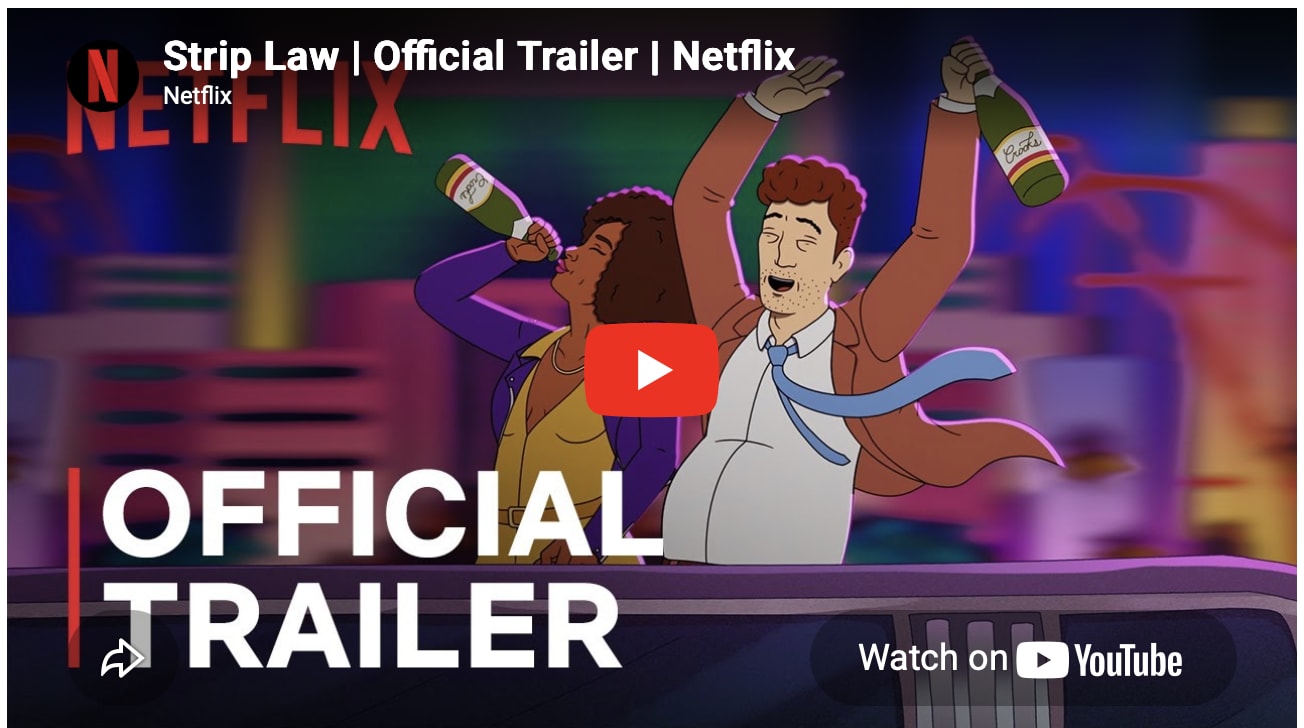
“Billboards
and
the
Billable
Hour:
A
lawyer’s
take
on
a
Netflix
series
about
Las
Vegas
litigation”
From Adam
Banner in
the ABA
Journal:
“Every
so
often,
a
legal
show
comes
along
that
makes
me
ask
one
important
question:
WTF
am
I
watching?
That’s
roughly
the
experience
of
viewing Strip
Law,
the
latest legal
comedy
on
Netflix.
The
adult
animated
sitcom
centers
on
a
group
of
flamboyant
attorneys
who
take
on
outrageous
cases
and
market
themselves
with
all
the
subtlety
of
a
monster-truck
rally
and
the
restraint
of
a
sleazy
stand-up
comedian.
I
approached
the
show
with
skepticism.
After
all,
television
lawyers
usually
fall
somewhere
between Atticus
Finch’s saintly
demeanor
and Saul
Goodman’s theatrical
chaos. Strip
Law plants
its
flag
firmly
in
the
latter
territory—then
replaces
the
flagpole
with
a
neon
billboard,
pushes
all
the
chips
to
the
middle,
and
lights
the
poker
table
on
fire
in
a
way
that
only
an
animated
comedy
could.
And
honestly,
I’m
kind
of
a
fan.
Kind
of.”
Read
more here.
And
watch
the
official
trailer here.
Get
Hired
Did
you
miss
the
500+
job
postings
from
previous
weeks?
Find
them
all here.
Conflicts
Attorney,
Lewis
Brisbois
—
Las
Vegas,
NV. From
the
posting:
”This
role
is
responsible
for
reviewing
and
analyzing
conflicts
check
reports
for
new
firm
matters,
lateral
attorney
hires,
and
legal
support
staff
hires.
The
Conflicts
Attorney
will
identify
potential
conflicts
issues
and
work
closely
with
firm
attorneys
and
staff
to
resolve
and
clear
conflicts
of
interest.”
Learn
more
and
apply here.
Ethics
Attorney,
General
Services
Administration
—
Washington
DC. From
the
posting:
”Work
with
the
Ethics
Law
Division
on
providing
advice
and
opinions
on
complex
matters
related
to
the
Standards
of
Ethical
Conduct
for
Employees
of
the
Executive
Branch
and
the
criminal
conflict
of
interest
statutes.”
Salary
starts
at
$108,173.
Learn
more
and
apply here.
Ethics
Commission
Advisory
Attorney
—
Columbus,
OH. From
the
posting:
“Serves
as
a
management
level
attorney
providing
legal
counsel
&
advice
to
public
officials,
Chief
Advisory
Attorney,
Executive
Director,
Commissioners
on
policy
development
and
implementation
relating
to
advisory
functions
of
the
Ethics
Commission.”
Learn
more
and
apply here.
Litigation
Counsel,
Illinois
Attorney
Registration
and
Disciplinary
Commission
—
Chicago. From
the
posting:
”The
ARDC
is
currently
seeking
three
full-time
Litigation
Counsel
to
join
our
dedicated
litigation
team
in
the
Chicago
office.
Litigation
counsel
facilitate
attorney
compliance
with
the
Rules
of
Professional
Conduct
and
when
necessary,
prosecute
formal
disciplinary
matters.
Staff
attorneys
have
a
diverse
and
challenging
caseload
within
the
context
of
a
fast-paced
work
environment,
balancing
the
rights
of
attorneys
and
protecting
the
public
and
the
courts.
This
is
an
exciting
opportunity
to
engage
in
challenging
and
meaningful
public
service
work
while
making
a
difference
in
the
lives
of
fellow
Illinoisans
and
advancing
the
ethical
and
competent
practice
of
law.”
Salary
range
$110,000-130,000.
Learn
more
and
apply here.
Unauthorized
Practice
of
Law;
UPL
Counsel,
State
Bar
of
Michigan
—
Lansing,
MI. From
the
posting:
”As
UPL
Counsel,
you
will
manage
and
direct
all
aspects
of
the
Bar’s
Unauthorized
Practice
of
Law
program
—
from
investigation
and
litigation
to
education
and
policy
development”
Salary
range
$80,000-110,000.
Learn
more
and
apply here.
Upcoming
Ethics
Events
&
Other
Announcements
️
Did
you
miss
an
announcement
from
previous
weeks?
Find
them
all here.
April
13,
10-11AM
Pacific.
Stanford
Law
School
Rhode
Center
on
the
Legal
Profession. Lawyers’
Monopoly
Webinar
Series
2:
Lessons
from
the
Field:
On-the-Ground
Efforts
to
Effect
Positive
Regulatory
Innovations.
Learn
more
and
register here.
April
16,
5-7PM
Pacific.
Gonzaga
Law
School
Clarke
Prize
in
Legal
Ethics. Scott
Cummings
(UCLA)
and
I
will
be
discussing
“Good
Faith
and
Public
Trust
in
an
Erosive
Era.”
Learn
more
and
register here.
April
22-24.
American
Bar
Association Spring
2026
National
Legal
Malpractice
Conference,
Coral
Gables. Learn
more
and
register here.
May
13,
10-11AM
Pacific.
Stanford
Law
School
Rhode
Center
on
the
Legal
Profession. Lawyers’
Monopoly
Webinar
Series
3:
The
Comparative
Lens.
Learn
more
and
register here.
May
27-29. ABA
51st
Conference
on
Professional
Responsibility,
UCLA
Meyer
and
Renee
Luskin
Conference
Center,
Los
Angeles.
Learn
more here.
May
29-30.
ABA
41st
National
Forum
on
Client
Protection,
UCLA
Meyer
and
Renee
Luskin
Conference
Center,
Los
Angeles.
Learn
more here.
June
24,
10-11AM
Pacific.
Stanford
Law
School
Rhode
Center
on
the
Legal
Profession. Lawyers
Monopoly
Webinar
Series
#4:
Charting
the
Future
of
Legal
Services.
Learn
more
and
register here.
June
25-26.
International
Association
of
Legal
Ethics
Berlin
Conference: “The
Legal
Professions
in
Times
of
Rule
of
Law
and
Democratic
Backsliding.”
Learn
more here.
October
15-16.
Complex
Litigation
Ethics
Conference,
UC
Law
San
Francisco. The
conference
is
the
fourth
annual
event
addressing
Complex
Litigation
Ethics.
It
will
bring
together
luminaries
in
the
field—judges,
scholars,
lawyers,
and
others—to
discuss
a
cutting-edge
topic
that
is
of
critical
importance
to
our
justice
system.
Learn
more here.
December
9-11.
International
Legal
Ethics
Conference,
National
University
of
Singapore,
Faculty
of
Law. Learn
more here.
Keep
in
Touch
-
News
tips?
Announcements?
Events? A
job
to
post? Reading
recommendations? Email [email protected] –
but
be
sure
to
subscribe
first,
otherwise
the
email
won’t
be
delivered. -
Do
you
have
colleagues
who
care
about
legal
ethics? Please
share
the
Roundup
with
them.
I’d
love
to
see
our
community
continue
to
grow!
Renee
Knake
Jefferson
holds
the
endowed
Doherty
Chair
in
Legal
Ethics
and
is
a
Professor
of
Law
at
the
University
of
Houston.
Check
out
more
of
her
writing
at
the Legal
Ethics
Roundup.
Find
her
on
X
(formerly
Twitter)
at @reneeknake or
Bluesky
at legalethics.bsky.social.