
Ed.
note:
Please
welcome
Renee
Knake
Jefferson
back
to
the
pages
of
Above
the
Law.
Subscribe
to
her
Substack,
Legal
Ethics
Roundup, here.
Welcome
to
what
captivates,
haunts,
inspires,
and
surprises
me
every
week
in
the
world
of
legal
ethics.
Happy
Monday!
Last
week
I
delivered
a
presentation
for
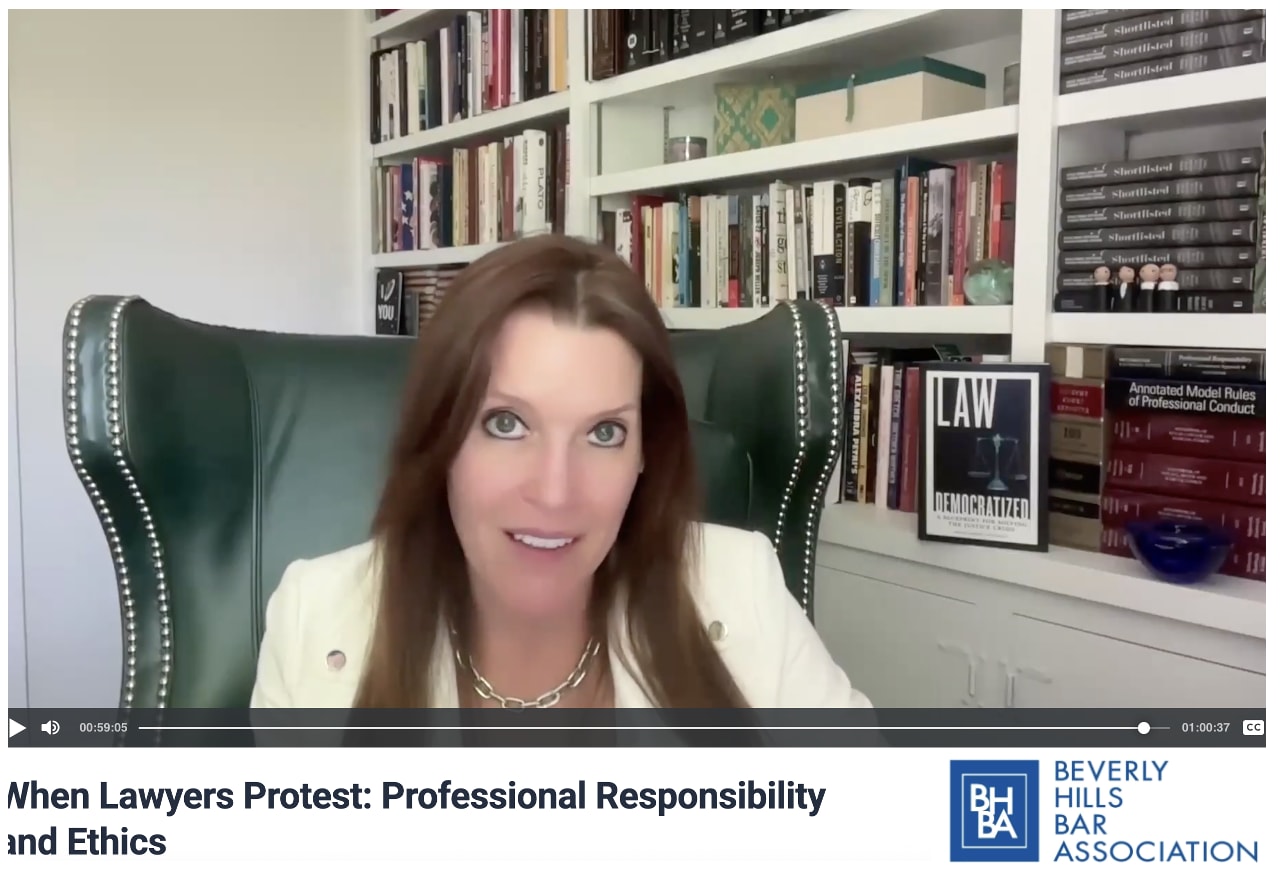
the Beverly
Hills
Bar
Association.
“When
Lawyers
Protest:
Professional
Responsibility
and
Ethics”
is now
available
to
stream
OnDemand
at
this
link.
You
should
be
able
to
access
it
for
free,
but
if
not,
send
an
email
to
[email protected]
for
a
code
to
receive
complimentary
access
along
with
CLE
participation
credit.
I
draw
from
my
book Law
Democratized:
A
Blueprint
for
Solving
the
Justice
Crisis and
my
forthcoming
Michigan
Law
Review
piece
of
the
same
title,
“When
Lawyers
Protest,”
which
will
be
published
in
June.
This
week
I
head
to
Chicago
for
an ABA
Accreditation
Council meeting.
Anyone
can
attend
our
open
meeting
on
Friday,
May
15,
via
Zoom
at
this link and
you
can
find
the
agenda here.
Now
for
our
headlines.
Highlights
from
Last
Week
–
Top
Ten
Headlines
#1
“Judge
Slams
Trump
Administration
for
‘Serious
Breakdown’
in
Legal
Ethics.” From The
New
York
Times: “The
Department
of
Homeland
Security
criticized
a
judge
for
releasing
a
man
accused
of
murder
overseas,
but
did
not
inform
her
of
the
accusation.
The
judge
said
she
would
consider
imposing
sanctions.”
Read
more here (gift
link).
#2
“Still?
NJ
Weighing
Rule
to
Ban
Attorney-Client
Sex.” From Law.com: “The
justices
rejected
a
similar
proposal
in
2002,
but
a
lot
has
changed
since
the
last
time
the
court
considered
such
an
issue.”
Read
more here.
#3
“Former
Paul
Weiss
Chair
Brad
Karp
Defends
Settlement
With
Trump
During
Harvard
Law
School
Class.” From The
Harvard
Crimson
(H/T
How
Appealing): “Brad
S.
Karp,
the
former
chairman
of
Paul
Weiss,
defended
the
firm’s
settlement
with
the
Trump
administration
during
a
Harvard
Law
School
class
on
April
15,
telling
students
he
had
to
make
a
deal
for
the
firm’s
survival.
Karp
—
who
stepped
down
in
February
after
his
emails
with
disgraced
financier Jeffrey
E.
Epstein were
made
public
—
told
students
that
Paul
Weiss
partners
unanimously
agreed
to
attempt
a
settlement
because
of
concerns
that
other
major
firms
would
poach
the
firm’s
clients
and
partners,
according
to
two
attendees,
who
were
granted
anonymity
because
of
the
school’s
classroom
non-attribution
policy.
Before
pursuing
a
settlement,
Karp
said
he
met
with
several
other
major
law
firms
to
discuss
mounting
a
joint
resistance
to
the
Trump
administration,
according
to
the
two
people.
The
effort
was
ultimately
unsuccessful
—
at
least
eight
firms
struck
similar
deals
with
the
administration,
committing
hundreds
of
millions
of
dollars
in
pro
bono
services
collectively.”
Read
more here.
#4
“Impact
of
Finalized
Student
Loan
Limits
on
Law
Students
and
Law
Schools.” From TaxProf
Blog
(quoting
Reuters): “A
small
number
of
U.S.
law
schools
allow
new
students
to
kick
off
their
studies
in
May
or
June,
before
the
traditional
fall
first
semester.
Demand
is
up
this
year
as
students
look
to
beat a
cap
on
federal
loan
amounts that
goes
into
effect
July
1,
according
to
interviews
with
administrators
at
five
law
schools.
At
least
two
schools
—
Stetson
University
College
of
Law
and
Rutgers
Law
School
—
created
summer
start
options
expressly
to
enable
new
students
to
take
advantage
of
the
current
student
loan
system.
New
students
who
take
out
federal
loans
before
July
are
grandfathered
into
the
expiring
loan
program
for
the
remainder
of
their
studies
under
final
U.S.
Department
of
Education
regulations
released
Thursday.”
Read
more here.
#5
“California
Bar
Proposes
Rule
Requiring
Lawyers
to
Verify
Every
AI
Output
—
and
Five
Other
AI-Focused
Ethics
Changes.” From LawSites: “When
using
any
technology
—
including
AI
—
a
lawyer
‘must
independently
review,
verify,
and
exercise
professional
judgment
regarding
any
output
generated
by
the
technology
that
is
used
in
connection
with
representing
a
client.’
That
language
appears
in
a
new
comment
to
Rule
1.1
on
competence
proposed
by
the
State
Bar
of
California’s
Standing
Committee
on
Professional
Responsibility
and
Conduct
(COPRAC)
as
part
of
a package
of
AI-related
amendments to
six
of
the
state’s
Rules
of
Professional
Conduct.
The proposed
changes would,
for
the
first
time,
write
specific
AI
obligations
into
California’s
rules.
The
changes
span
the
rules
on
competence,
client
communication,
confidentiality,
candor
toward
tribunals,
and
supervision
of
both
lawyers
and
other
staff.”
Read
more here.
#6
“Supremely
Cringe:
Neal
Katyal
And
‘TED-Gate’.” From David
Lat in Original
Jurisdiction: “Don’t
say
I
didn’t
warn
you.
Almost
twenty
years
ago,
I
wrote
an
Above
the
Law
post
posing
this
question: Is
Neal
Katyal
the
Paris
Hilton
of
the
Legal
Elite? … It
turns
out
that
Katyal did have
staying
power:
two
decades
later,
we’re
still
talking
about
him.
Just
like
Paris
Hilton,
he
went
viral
over
a
video—which,
like
Hilton’s,
has
been
widely
viewed
as
highly
embarrassing.
But
unlike
Paris
Hilton—today
seen
sympathetically,
as
the victim of
a
non-consensual,
privacy-violating
leak—Neal
Katyal
did
it
to
himself.
It
all
started
on
Wednesday
night,
with
a tweet (which
has,
as
of
this
writing,
been
viewed
1.4
million
times).”
Read
more here,
including
an
exclusive—and
very
thoughtful—interview
with
Katyal.
#7
“M&A
Insider
Trading
Allegations
Threaten
Big
Law
Reputations.” From Bloomberg
Law: “Elite
M&A
lawyers
accused
of
aiding
a
massive
insider-trading
ring
show
how
Big
Law
firms
risk
reputational
harm
when
their
talent
is
accused
of
serious
crimes.
Seven
firms—Goodwin
Procter;
Latham
&
Watkins;
Sidley
Austin;
Weil,
Gotshal
&
Manges;
Wachtell,
Lipton,
Rosen
&
Katz;
Willkie
Farr
&
Gallagher;
and
DLA
Piper—have
former
employees
involved
in
the
scheme
in
which
prosecutors
allege
lawyers
from
top
mergers
and
acquisition
firms
provided
tips
on
some
of
the
biggest
deals
of
the
last
decade
to
an
insider
trading
ring.”
Read
more here.
#8
“The
DOJ
Keeps
Breaking
Its
Own
Rules.” An
op-ed
from Barbara
McQuade in Bloomberg
Law: “When
the
Justice
Department
targets
high-profile
individuals
like
former FBI
Director
James
Comey and Fed
Chair
Jerome
Powell, you’d
think
prosecutors
would
follow
longstanding
policy
to
achieve
the
best
results.
Think
again.”
Read
more here.
#9
Alabama
Sidelines
ABA
in
Lawyer
Admissions
While
Tennessee
Weighs
Similar
Move.” From Reuters: “Alabama
has
become
the
third
Republican-led
U.S.
state
in
recent
months
to
limit
the
role
of
the
American
Bar
Association
in
lawyer
licensing,
and
Tennessee
could
be
next.
The
Supreme
Court
of
Alabama
on
Thursday revised, its
admissions
rules
to
eliminate
graduation
from
an
ABA-accredited
law
school
as
a
requirement
to
take
its
bar
exam
—
following
the
lead
of
both
Texas
and
Florida
and
ratcheting
up
efforts
during President
Donald
Trump’s second
term
to
dislodge
the
ABA
as
the
primary
accreditor
of
U.S.
law
schools.”
Read
more here.
#10
“Ethics
My
Bad:
Building
an
Ethical
Error
Culture.” From
the Wisconsin
Lawyer: “Good
lawyers
make
mistakes.
Ethical
lawyers
deal
with
them.
Hiding
errors
doesn’t
fix
them,
and
when
lawyers
are
afraid
to
speak
up,
small
problems
can
get
much
bigger.
What
if
you
could
build
a
practice
culture
in
which
people
feel
comfortable
owning
up
to
mistakes,
addressing
them
early,
honestly,
and
in
ways
that
prevent
the
next
one?”
Read
more here.
Get
Hired
Did
you
miss
the
500+
job
postings
from
previous
weeks?
Find
them
all here.
Upcoming
Ethics
Events
&
Other
Announcements
️
Did
you
miss
an
announcement
from
previous
weeks?
Find
them
all here.
Keep
in
Touch
Do
you
have
colleagues
who
care
about
legal
ethics? Please
share
the
Roundup
with
them.
I’d
love
to
see
our
community
continue
to
grow!
News
tips?
Announcements?
Events? A
job
to
post? Reading
recommendations? Email
[email protected]
–
but
be
sure
to
subscribe
first,
otherwise
the
email
won’t
be
delivered.
Renee
Knake
Jefferson
holds
the
endowed
Doherty
Chair
in
Legal
Ethics
and
is
a
Professor
of
Law
at
the
University
of
Houston.
Check
out
more
of
her
writing
at
the Legal
Ethics
Roundup.
Find
her
on
X
(formerly
Twitter)
at @reneeknake or
Bluesky
at legalethics.bsky.social.