
Ed.
note:
Please
welcome
Renee
Knake
Jefferson
back
to
the
pages
of
Above
the
Law.
Subscribe
to
her
Substack,
Legal
Ethics
Roundup, here.
Welcome
to
what
captivates,
haunts,
inspires,
and
surprises
me
every
week
in
the
world
of
legal
ethics.
This
week
is
all
about
books
for
me.
On
Wednesday,
you
can
join
me
from
6-7:30PM
eastern
for
an
event
hosted
by Hofstra
Law’s Monroe
H.
Freedman
Center
for
the
Study
of
Legal
Ethics
and
Fordham
Law’s
Stein
Center
for
Law
and
Ethics where
I
will
be
discussing
the
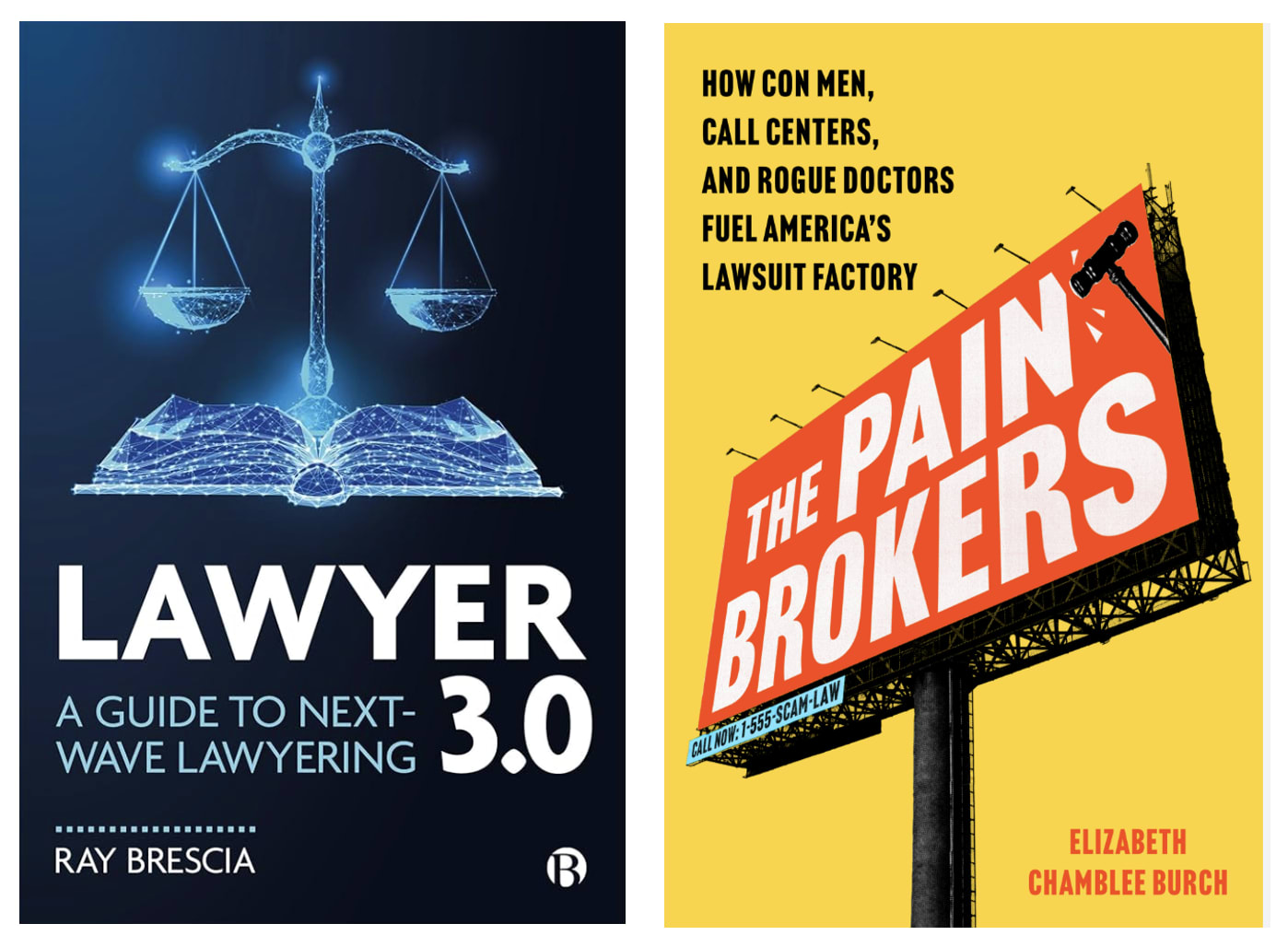
new
book
from Ray
Brescia (Albany)
— Lawyer
3.0:
A
Guide
to
Next-Wave
Lawyering —
along
with Bruce
Green (Fordham), Cat
Moon (Vanderbilt),
and Sateesh
Nori (NYU).
It’s
free!
Learn
more
and
register here.
You
can
also
find
me
this
week
over
at PrawfsBlawg,
where
I’ll
be
contributing
to
an
online
symposium
about
a
new
book
by Elizabeth
Burch (Georgia), The
Pain
Brokers:
How
Con
Men,
Call
Centers,
and
Rogue
Doctors
Fuel
America’s
Law
Suit
Factory.
Other
contributors
include Brooke
Coleman (Seattle), Seth
Endo (Seattle), Miriam
Giles (Northwestern), Tony
Sebok (Cardozo), Howard
Wasserman (FIU),
and Brad
Wendel (Cornell).
Visit PrawfsBlawg to
follow
along. (And
revisit
the
Recommended
Reading
section
in LER
No.
113 for
a
preview
of
the
book.)
Highlights
from
Last
Week
–
Top
Ten
Headlines
#1
“The
Perilous
War
Over
Legal
Ethics
in
Government
and
Politics.” From Bob
Bauer in Executive
Functions: “The
Trump
administration
is
waging
a
war
against
the
legal
profession
on
a
number
of
fronts.
…
How
these
actions
may
affect
the
profession
will
depend
on
how
far
the
administration
is
willing
to
take
this
fight,
but
also
on
how
the
conflict
is
understood
and
how
the
defense
against
the
administration
is
conducted.”
Read
more here.
#2
“US
Judges
Speak
Out
Against
Threats,
Mysterious
Pizza
Deliveries.” From Reuters: “A
group
of
federal
judges
on
Thursday
publicly
denounced
a
rise
in
threats
against
them
and
their
colleagues,
including
hateful
messages
aimed
at
a
judge
who
ruled
against
part
of President
Donald
Trump’s hardline
immigration
agenda.
Five
judges
appointed
by
both
Democratic
and
Republican
presidents
during
a
virtual
event
recounted
receiving
disturbing
emails
wishing
them
dead
and
mysterious
pizza
deliveries
to
their
private
homes
as
reasons
why
they
could
not
remain
silent.”
Read
more here.
#3
“John
Roberts
Is
Hanging
District
Court
Judges
Out
to
Dry.” From Balls
and
Strikes: “Chief
Justice
John
Roberts received
applause
from
an
audience
at
Rice
University
on
Tuesday
in
appreciation
of
his
defense
of
the
judiciary
from
inappropriate
attacks.
Roberts appeared in
conversation
with Lee
Rosenthal,
a
senior
federal
district
judge,
who
asked
the
chief
how
he
handles
criticism
of
the
Supreme
Court.
Roberts
responded
by
acknowledging
that
‘judges
around
the
country
work
very
hard
to
get
it
right,’
and
that
constructive
criticism
is
‘healthy’
and
‘important.’
But
he
stressed
that
‘personally
directed
hostility
is
dangerous,’
and
has
‘got
to
stop.’
…
[But
in]
September
2025,
a
dozen
sitting
federal
judges
spoke
to
NBC
News
about
how
the
Court’s
use
of
the
shadow
docket
was
putting
them
in
harm’s
way.”
Read
more here.
#4
“The
Legal
Profession
Cannot
Litigate
Its
Way
Out
of
Technological
Change.” From
the ABA
Journal: “The
recent lawsuit
accusing
OpenAI
of
the
unlicensed
practice
of
law has
triggered
a
familiar
reflex
within
the
profession:
fear
that
technology
is
encroaching
on
protected
ground.
The
complaint
centers
on
a
disability
benefits
claimant
who
had
reached
a
settlement
with
her
insurer
and
then,
relying
on
ChatGPT,
fired
her
attorney
and
generated
new
filings
seeking
to
reopen
the
case.
The
insurer
now
argues
that
OpenAI
‘aided
and
abetted’
her
misuse
of
the
judicial
system.
Whatever
the
merits
of
that
claim,
the
reaction
of
many
in
the
profession
reveals
something
more
consequential
than
the
lawsuit
itself.”
Read
more here.
#5
“Proposed
California
Lawyer
Civility
Oath
Sparks
Free
Speech
Concerns.” From
the Marin
County
Visitor: “California
lawyers
in
Marin
County
will
soon
take
a
civility
pledge
as
part
of
their
annual
renewal
oath.
The
State
Bar
of
California
says
this
move
will
promote
dignity,
courtesy,
and
integrity
throughout
the
profession.
…
In
Marin
communities
like
San
Rafael,
Novato,
Sausalito,
and
Mill
Valley,
attorneys
are
watching
to
see
how
the
pledge
might
change
courtroom
conduct,
client
relations,
and
daily
professional
interactions.
There’s
a
sense
of
curiosity
mixed
with
a
bit
of
skepticism.”
Read
more here.
#6
“Judicial
Ethics
Committee
Issues
Opinion
on
Judges
Serving
as
TV
Analysts.” From
the Tennessee
Bar
Association: “The
Judicial
Ethics
Committee
released
an
ethics
opinion
on
March
6
in
response
to
a
request
for
guidance
on
whether
a
part-time
judge
or
a
pro
tempore
part-time
judge
may
function
as
a
legal
analyst
providing
‘gavel
to
gavel’
coverage
of
pending
cases
for
a
local
television
news
station.
The
committee
found
that
such
a
role
would
not
be
allowed
under
the
Rules
of
Judicial
Conduct.”
Read
more here.
#7
“Federal
Judge
in
D.C.
Issues
New
Grand
Jury
Policy
After
Failed
Indictments
of
Democrats.” From NBC
News: “The
chief
federal
judge
for
the
District
of
Columbia
has
ordered
that
the
judiciary
be
notified
when
a
grand
jury
rejects
the
Trump
administration’s
attempts
to
indict
defendants,
following
the
failed
effort
to
charge
six
sitting
members
of
Congress
over
a
social
media
video. Judge
James
Boasberg said
the
rule
applies
when
the
effort
to
indict
comes
first
as
a
grand
jury
investigation.
He
said
it
would
be
in
place
for
120
days
but
could
become
permanent.
Boasberg
wrote
the
decision
was
‘in
furtherance
of
the
interests
of
consistency
and
transparency.’”
Read
more here.
#8
“FTC
Pitches
California
Supreme
Court
on
Ways
to
Improve
Its
Ethics
Committee.” From Fix
the
Court: “Today,
Fix
the
Court
submitted
a comment to
the
California
Supreme
Court
on
a
proposed
rule
that
would
formally
establish
a
Supreme
Court
Advisory
Committee
on
the
Code
of
Judicial
Ethics.
The
proposal, Rule
9.81 of
the
California
Rules
of
Court,
would
codify
the
structure
and
procedures
of
a
committee
that
has
historically
advised
the
court
on
amendments
to
the
California
Code
of
Judicial
Ethics.
While
the
committee
has
existed de
facto for
several
years,
it
has
never
been
governed
by
a
formal
rule.
We
are
encouraged
by
the
Court’s
effort
to
formalize
the
committee’s
role,
but
we
are
urging
several
changes
designed
to
strengthen
transparency
and
public
confidence
in
the
process.”
Read
more here.
#9
“AI,
Privilege,
and
Work
Product:
Conflicting
Federal
Decisions
Create
a
New
Risk
Frontier.” From JDSupra: “Two
recent
federal
court
decisions—issued
one
week
apart—reach
sharply
divergent
conclusions
on
whether
materials
generated
using
artificial
intelligence
platforms
are
protected
by
the
attorney-client
privilege
or
the
work
product
doctrine.”
Read
more here.
#10
“Where
Calif.
State
Courts
Landed
On
Generative
AI
Use
Rules.” From Law360: “The
majority
of
California’s
58
superior
courts
—
together
making
up
the
country’s
largest
trial
court
system
—
have
decided
to
greenlight
the
use
of
generative
artificial
intelligence
in
their
work
this
year,
a
Law360
investigation
found.”
Read
more here.
Get
Hired
Did
you
miss
the
450+
job
postings
from
previous
weeks?
Find
them
all here.
Upcoming
Ethics
Events
&
Other
Announcements
️
Did
you
miss
an
announcement
from
previous
weeks?
Find
them
all here.
Keep
in
Touch
Do
you
have
colleagues
who
care
about
legal
ethics? Please
share
the
Roundup
with
them.
I’d
love
to
see
our
community
continue
to
grow!
News
tips?
Announcements?
Events? A
job
to
post? Reading
recommendations? Email
[email protected]
–
but
be
sure
to
subscribe
first,
otherwise
the
email
won’t
be
delivered.
Renee
Knake
Jefferson
holds
the
endowed
Doherty
Chair
in
Legal
Ethics
and
is
a
Professor
of
Law
at
the
University
of
Houston.
Check
out
more
of
her
writing
at
the Legal
Ethics
Roundup.
Find
her
on
X
(formerly
Twitter)
at @reneeknake or
Bluesky
at legalethics.bsky.social.