
Ed.
note:
Please
welcome
Renee
Knake
Jefferson
back
to
the
pages
of
Above
the
Law.
Subscribe
to
her
Substack,
Legal
Ethics
Roundup, here.
Welcome
to
what
captivates,
haunts,
inspires,
and
surprises
me
every
week
in
the
world
of
legal
ethics.
Happy
Monday!
And
happy
early
St.
Patrick’s
Day!
I’m
writing
you
from
Chicago,
where
I
attended
a
board
meeting
on
Saturday
and
enjoyed
one
of
the
great
holiday
traditions
–
a
walk
along
the
dyed-green
Chicago
River.
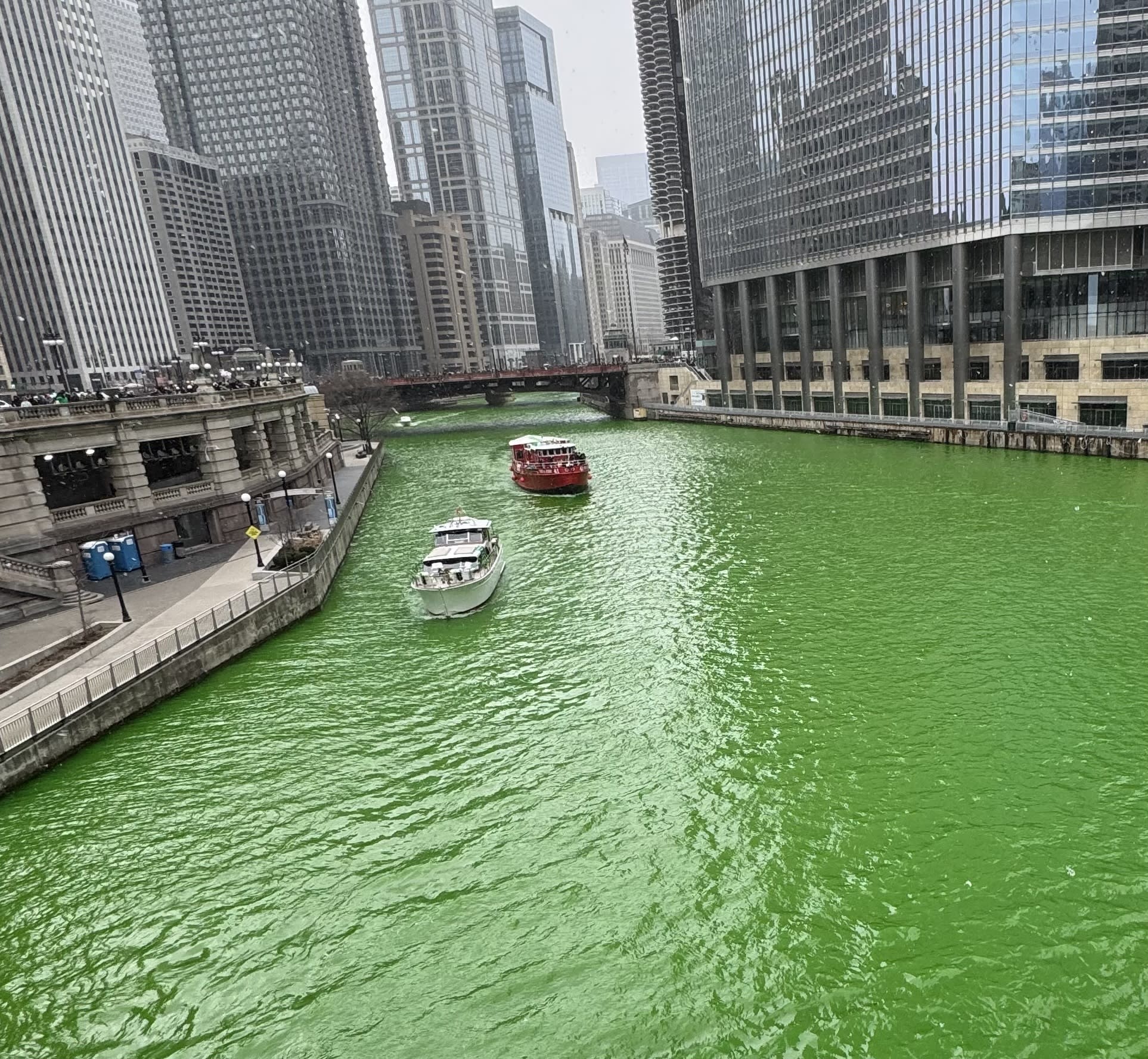
Chicago
River
(photo
by
Renee
Jefferson)
Highlights
from
Last
Week
–
Top
Ten
Headlines
#1
“The
Justice
Department
Wants
to
Make
it
Safe
for
Lawyers
to
Lie.” Op-Ed
from Deborah
Perlstein (Princeton)
in The
New
York
Times: “For
presidents,
broadly
speaking,
lying
is
not
against
the
law.
For
lawyers
pursuing
a
president’s
agenda,
however,
it’s
a
very
different
story.
Like
all
other
lawyers
licensed
to
practice
in
the
United
States,
if
they
violate
legal
ethics
rules,
they
can
face
sanctions
in
court
or
professional
discipline,
up
to
and
including
the
permanent
loss
of
their
license
to
practice.
Efforts
to
overturn
the
2020
election
foundered
in
court
more
than
60
times,
before
judges
of
both
parties,
in
part
because
lawyers
arguing
President
Trump’s
case often
feared telling
a
court
the
same
extravagant
lies
that
the
president
was
telling
the
American
people.
That
was
then.
Now,
under
pressure
to
ignore
a
range
of
ethics
rules,
a
large
number
of
Department
of
Justice
attorneys
have
quit,
opting
to
lose
their
jobs
but
save
their
careers.
Between
these
departures
and
a
purge
of
legal
staff
members
seen
as
insufficiently
loyal
to
the
president’s
agenda,
the
department
has
lost
thousands
of
lawyers.
It
shows:
Briefs
are
riddled
with
errors.
Attorneys
come
to
court
grossly
unprepared.
Worst,
court
orders
stand
violated
—
in
some
cases,
it
seems,
because
there
weren’t
enough
lawyers
available
to
ensure
they
were
carried
out.”
Read
more here (gift
link).
(For
more
on
lawyer
lies
and
the
first
amendment,
see
my Yale
Law
Journal
Forum article.)
#2
“LDF
Denounces
Proposed
Rule
Shielding
DOJ
Lawyers
From
Accountability
and
Ethics
Enforcement.” From
the Legal
Defense
Fund: “Last
week,
the
Department
of
Justice
(DOJ) published
a
proposed
rule in
the
Federal
Register
that
would
allow
the
Attorney
General
to
intervene
in
state
bar
disciplinary
investigations
and
demand
that
those
investigations
be
suspended
while
the
DOJ
conducts
its
own
internal
review.
The
proposal
threatens
to
undermine
independent
oversight
by
state
ethics
committees,
fails
to
protect
the
public
from
unethical
acts,
and
risks
shielding
DOJ
attorneys
from
meaningful
accountability. ”
Read
more here.
#3
“ISBA
Files
Comment
Opposing
Proposed
Department
of
Justice
(DOJ)
Rule
Seeking
to
Interfere
With
State
Disciplinary
Investigations
Involving
DOJ
Attorneys.” From
the Illinois
State
Bar
Association: “On
Thursday,
March
12,
2026,
the
Illinois
State
Bar
Association
formally
filled
its comment in
opposition
to
the
Department
of
Justice’s
(‘DOJ’)
Proposed
Rule
concerning
‘Review
of
State
Bar
Complaints
and
Allegations
Against
Department
of
Justice
Attorneys.’
The
Proposed
Rule,
which
was
filed
by
the
DOJ
last
week,
relates
to
state
disciplinary
agencies’
investigations
and
prosecutions
of
DOJ
attorneys.
It
would
establish
a
process
for
the
DOJ
to
review
bar
complaints
and
allegations
against
its
attorneys.
Under
the
Proposed
Rule,
before
a
current
or
former
DOJ
attorney
could
participate
in
any
disciplinary
investigation
by
a
state
disciplinary
authority,
the
DOJ
would
have
the
right
to
review
the
misconduct
allegations
in
the
first
instance
and
request
the
state
disciplinary
authority
to
suspend
its
investigation
until
the
completion
of
the
DOJ’s
review.”
Read
more here.
#4
“The
Legal
Ethics
Issue
That
Will
Never
Die.” From Brad
Wendel’s
Legal
Ethics
Stuff: “There
has
been
a
lot
of
reporting
and
commentary
recently
about
a
Notice
of
Proposed
Rulemaking
(NPRM)
from
the
Department
of
Justice,
the
main
thrust
of
which
is
to
interpose
the
DOJ
into
the
process
of
disciplining
DOJ
lawyers
for
violations
of
the
rules
of
professional
conduct.
Unlike
some
of
the
more
bumptious
actions
of Pam
Bondi’s DOJ,
this
NPRM
actually
looks
reasonable
well
thought
out
and
put
together
by,
you
know,
actual
lawyers
in
the
DOJ.
For
one
thing,
it’s
actually published
in
the
Federal
Register as
a
formal
rulemaking.
It’s
also,
in
some
ways,
less
aggressive
than
it
might
have
been
if
it
had
simply
been
dashed
off
by Boris
Epshteyn,
like
the
law
firm
executive
orders.
Bottom
line
up
front
(BLUF):
I
think
this
is
mostly
for
show
and
won’t
change
much.
However,
there
has
been
a
lot
of
discussion
about
it
that
exposes
some
confusion
about
the
issues
at
stake.
This
is
nothing
new.
…
When
I
first
came
into
this
area
as
a
lawyer
and
then
as
a
graduate
student
in
the
mid
to
late
1990s,
the
conflict
between
the
DOJ
and
state
rules
of
professional
conduct
was
already
old
news,
having
been
aired
out
during
the George
H.W.
Bush and Clinton administrations,
but
going
back
even
farther
to
an OLC
opinion
in
1980,
during
the Carter administration,
which
concluded
that
‘[s]tate
bar
associations
may
not,
consistent
with
the
Supremacy
Clause,
impose
sanctions
on
a
government
attorney
who
has
acted
pursuant
to
his
federal
law
enforcement
responsibilities.’
One
theme
of
this
history
is
that
Attorneys
General
of
both
parties
uniformly
resent
what
they
take
to
be
the
meddling
of
state
disciplinary
authorities
in
the
functioning
of
the
DOJ
and
the
conduct
of
its
lawyers.”
Read
more here.
#5
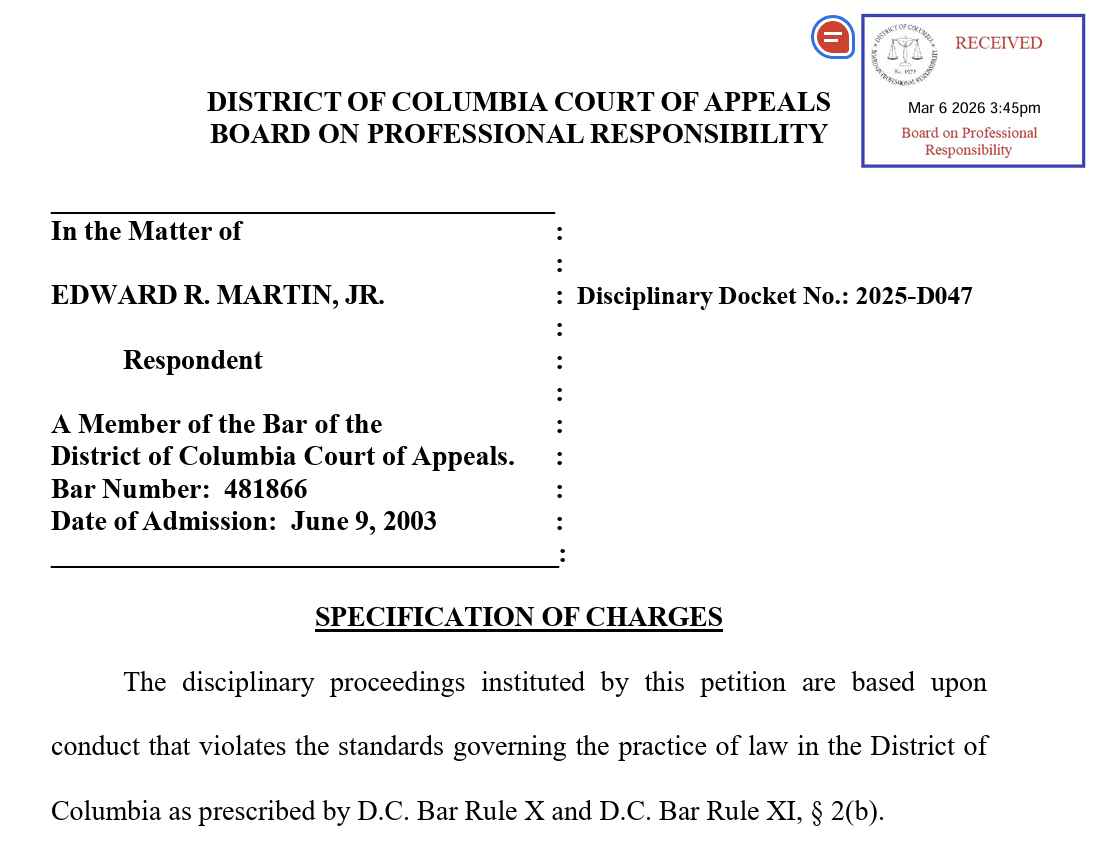
“Ed
Martin
Faces
Disciplinary
Proceedings
Over
Actions
as
D.C.
U.S.
Attorney.” From The
Washington
Post: “The
senior
Justice
Department
official
faces
disciplinary
proceedings
over
a
letter
he
sent
to
Georgetown
University’s
law
school
about
its
DEI
practices.”
Read
more here (gift
link).
#6
“Trump
Lawyer
Rebuked
at
ABA
for
Saying
DOJ
in
a
‘Better
Place’.” From Bloomberg
Law: “A
typically
collegial
white
collar
legal
conference
turned
testy
when
one
of
the
president’s
defense
attorneys
faced
incredulous
and
at
one
point
rancorous
pushback
for
praising
Trump’s
Justice
Department. John
Lauro,
who
represented President
Donald
Trump in
special
counsel Jack
Smith’s 2020
election
interference
case,
offered
a
starkly
opposing
view
to
his
co-panelists
Friday
at
an
American
Bar
Association-hosted
discussion
in
San
Diego
on
threats
to
the
rule
of
law.
Veteran
department
officials
and
a
former
judge
described
a
constitutional
crisis
playing
out
under Attorney
General
Pam
Bondi.
But
Lauro
said
DOJ
is
‘in
a
better
place’
than
a
year
earlier
‘because
I
have
the
unique
experience
of
representing
a
political
figure
who
was
probably
more
abused
by
the
criminal
justice
system
in
America
than
any
other
political
figure
ever.’
… Retired
US
District
Court
Judge
Nancy
Gertner,
who
now
teaches
at
Harvard
Law
School,
later
retorted:
‘Whatever
the
issues
were
with
respect
to
the
Trump
prosecution,
they
do
not
justify
the
fracture
of
American
democracy.’”
Read
more here.
#7
“Arizona
Supreme
Court
Makes
Modest
Changes
to
Law
License
Program.” From AZ
Central: “The
Arizona
Supreme
Court
took
another
step
to
change
the
state’s
experiment
with
law
licensing,
but
set
aside
advice
from
the
State
Bar
that
the
reforms
may
not
do
enough
to
keep
ordinary
legal
clients
safe.”
Read
more here.
#8
“US
Judges
Condemn
Trump
Appointee’s
‘Vulgar
Barroom
Talk’
in
Transgender
Bias
Case.” From Reuters: “Nearly
30
U.S.
appeals
court
judges
have
issued
unusual
written
rebukes
to
a
colleague
over
his
coarsely
worded
dissent
in
a
case
involving
a
spa
for
women
that
refused
service
to
a
transgender
woman.
The
judges
on
the
9th
U.S.
Circuit
Court
of
Appeals
were
writing
late
Thursday
in
response
to Circuit
Judge
Lawrence
VanDyke’s dissent
from
the
full
court’s
decision
not
to
review
the
spa’s
claims
that
a
Washington
state
anti-discrimination
law
violated
its
constitutional
rights.”
Read
more here.
#9
“Who
Holds
Congress
Accountable?
A
Look
at
the
Invisible
Ethics
System
for
Lawmakers.” From PBS: “Congress
is
charged
with
writing
the
laws
that
govern
the
rest
of
us,
but
who
holds
lawmakers
accountable
when
they
break
the
rules?
We
take
a
closer
look
at
the
number
of
sitting
members
of
Congress
facing
active
ethics
investigations,
and
the
largely
invisible
system
designed
to
police
them.”
Read
more
and
listen here.
#10
“98-Year-Old
Federal
Judge
Suspended
for
Mental
Fitness
Appeals
to
Supreme
Court.” From The
Hill: “Pauline
Newman,
a
98-year-old
federal
appeals
judge
suspended
by
her
colleagues
over
concerns
about
her
mental
fitness,
has
asked
the
Supreme
Court
to
step
into
her
fight
to
resume
hearing
cases,
her
lawyers
said
Thursday.
Three
years
ago,
Newman’s
fellow
judges
at
the
U.S.
Court
of
Appeals
for
the
Federal
Circuit
prevented
her
from
taking
on
new
cases
indefinitely.
Newman
has
sued
them,
arguing
it’s
unconstitutional.”
Read
more here.
Get
Hired
Did
you
miss
the
450+
job
postings
from
previous
weeks?
Find
them
all here.
Upcoming
Ethics
Events
&
Other
Announcements
️
Did
you
miss
an
announcement
from
previous
weeks?
Find
them
all here.
Keep
in
Touch
Do
you
have
colleagues
who
care
about
legal
ethics? Please
share
the
Roundup
with
them.
I’d
love
to
see
our
community
continue
to
grow!
News
tips?
Announcements?
Events? A
job
to
post? Reading
recommendations? Email
[email protected]
–
but
be
sure
to
subscribe
first,
otherwise
the
email
won’t
be
delivered.
Renee
Knake
Jefferson
holds
the
endowed
Doherty
Chair
in
Legal
Ethics
and
is
a
Professor
of
Law
at
the
University
of
Houston.
Check
out
more
of
her
writing
at
the Legal
Ethics
Roundup.
Find
her
on
X
(formerly
Twitter)
at @reneeknake or
Bluesky
at legalethics.bsky.social.