
Ed.
note:
Please
welcome
Renee
Knake
Jefferson
back
to
the
pages
of
Above
the
Law.
Subscribe
to
her
Substack,
Legal
Ethics
Roundup, here.
Welcome
to
what
captivates,
haunts,
inspires,
and
surprises
me
every
week
in
the
world
of
legal
ethics.
Happy
First
Monday!
Hello
from Washington
DC,
where
we
celebrated
the
4th
of
July
and
our
wedding
anniversary
or,
as
we
call
it,
our
own
“Loving”
day.
(For
more
on
that,
see here –
gift
link.)
We
caught Beyoncé’s holiday
performance
on
Friday,
and
it
lived
up
to
all
of
the
strong
reviews.
From
the New
York
Times:
Beyoncé’s
Cowboy
Carter
Tour
remixes
American
history,
and
her
own.
The
superstar’s
new
stage
show
turns
reclamation,
personal
and
musical,
into
joyful
extravaganza.
…
Reverence
was
just
one
of
her
postures,
but
not
one
she
wore
for
long.
At
the
end
of
the
show,
a
huge
bust
of
the
Statue
of
Liberty
appeared
onstage
with
a
bandanna
covering
its
mouth,
as
if
protecting
itself.
One
video
sketch
found
a
giant
Beyoncé
stomping
past
the
White
House
—
wonder
who’s
hanging
out
in
there?
—
then
drawing
a
wink
from
the
Lincoln
Memorial.Read
more here (gift
link).
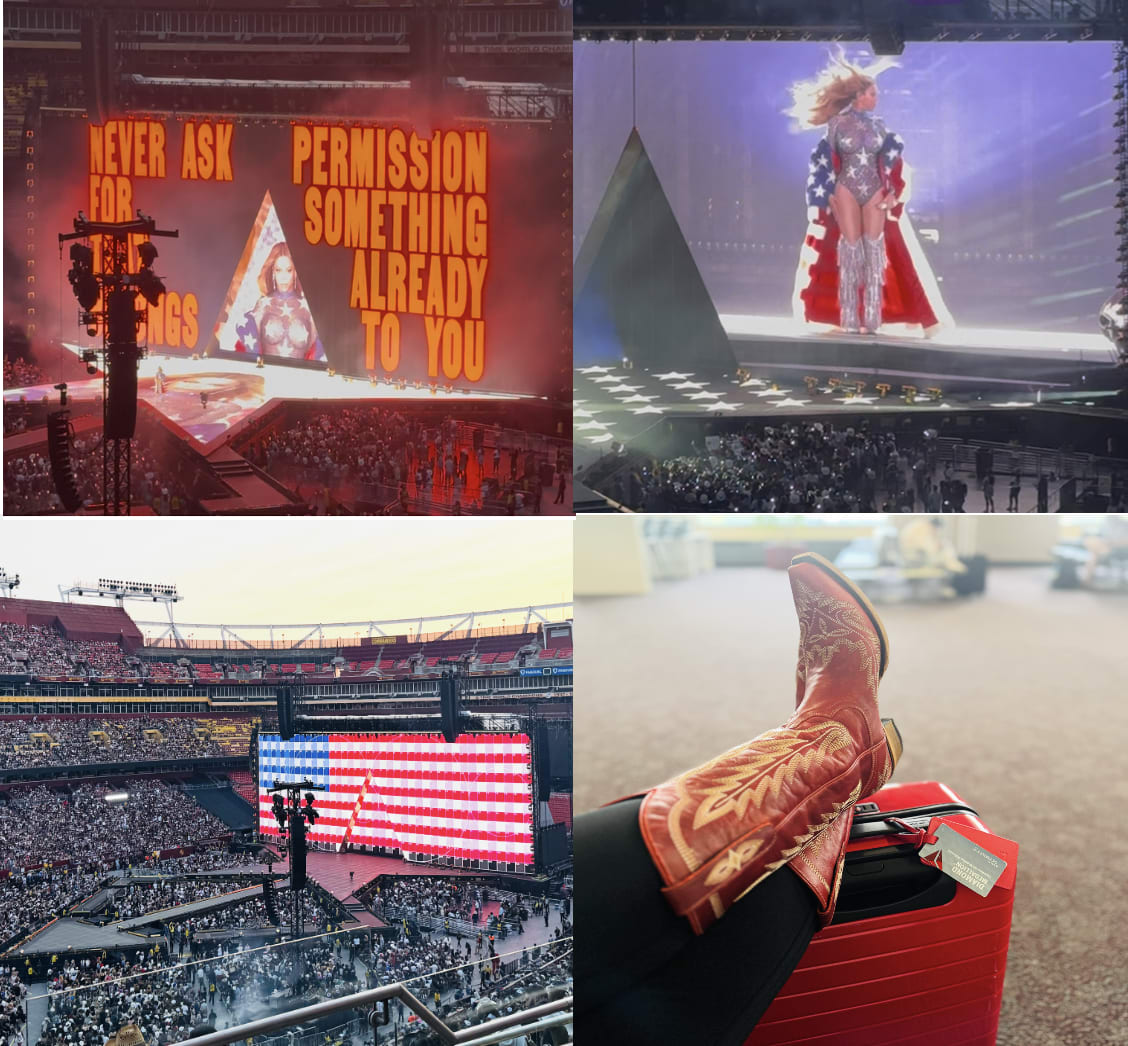
Cowboy
Carter
Tour,
Northwest
Stadium
(photos
by
Renee
Jefferson)
It
was
a
busy
week
leading
up
to
the
holiday.
I submitted
comments in
response
to
the Supreme
Court
of
Texas’s order requesting
input
about
whether
to
maintain
ABA
accreditation
for
Texas
law
schools
or
pursue
alternatives.
Short
version:
keep
ABA
accreditation
but
also
authorize
licensed
paraprofessionals
and
community
justice
workers,
as
recommended
by
the
Texas
Access
to
Justice
Commission’s
Working
Group
on
Access
to
Legal
Services.
Read
my
full
statement here.
(Full
disclosure
–
I
served
on
the
Working
Group
and
I’m
slated
for
election
to
the
ABA
accrediting
body,
the
Council
of
the
ABA
Section
of
Legal
Education
and
Admission
to
the
Bar,
in
August.)

I
also
was
thrilled
to
join
the
first
meeting
of
the TEDLaw
Faculty
Advisory
Council.
Yes,
you
read
that
right.
TED
is
bringing
its
incredible
platform
for
inspiring
and
sharing
knowledge
to
legal
education.
The
effort
is
spearheaded
by TED
Conferences
General
Counsel Nishat
Ruiter.
Learn
more here.
Over
a
decade
ago,
a
few
of
us
at Michigan
State
University organized
a
series
of
TED-like
events
around
the
globe
in
London,
NYC,
Dubai,
and
Silicon
Valley
under
the
name ReInvent
Law. Those
conferences
helped
infuse
technology,
innovation,
and
entrepreneurship
into
law
school
programs
across
the
country.
(For
more
on
that
history, download
my
chapter
“The
ReInvent
Law
Archive” from
the
book Legal
Design:
Dignifying
People
in
Legal
Systems (Cambridge
University
Press
2024)
or scroll
through
these
memories captured
at LawSites).
I
can’t
wait
to
see
how
Nishat
and
her
TED
team
transform
teaching
across
the
law
school
curriculum.
Here’s
an introduction to
her
vision
for
TEDLaw and
a preview of
the
TEDLaw
Curriculum.
Stay
tuned
for
more
information
about
a
TEDLaw
Conference
coming
in
2026.
And
if
you
want
to
get
involved
now,
take
a
few
moments
to
provide
feedback
in
this survey.

Now,
let’s
get
started
with
the
headlines.
Don’t
forget
to
keep
scrolling
down
to
the
very
end
—
on
the
first
Monday
of
each
month,
you
get
a
longer
version
of
the
Roundup
with
reading
recommendations,
job
postings,
events,
and
other
features.
Enjoy!
Highlights
from
Last
Week
–
Top
Ten
Headlines
#1 “Trump
Administration
Presses
On
With
Fight
to
Enforce
Law-Firm
Sanctions.” From
the Wall
Street
Journal:
“The
Trump
administration
isn’t
giving
up
its
legal
fight
to
enforce
punishing
sanctions
against
law
firms
following
a
string
of
resounding
defeats
in
court.
The Justice
Department on
Monday
filed
notice
that
it
was
appealing
a
ruling
that
struck
down
an
executive
order
against Perkins
Coie,
one
of
the
first
law
firms
to
be
targeted
by
a
sweeping
measure
that
directed
agencies
to
remove
access
to
federal
buildings
and
strip
its
clients
of
government
contracts. Judge
Beryl
Howell,
a
Barack
Obama-appointee,
ruled
in
May
that
the
order
was
unconstitutional.
She
is
one
of
four
judges
who
have
struck
down
similar
executive
orders
targeting
firms
that President
Trump perceived
as
being
at
odds
with
his
administration,
politics
or
him
personally.
The
latest
came
on
Friday
from Judge
Loren
AliKhan,
who
said
an
order
against Susman
Godfrey was
plagued
by
‘grave
constitutional
violations.’”
Read
more here.
#2 “‘We
Have
to
Speak
Up
for
Justice:’
Judges
from
the
US
and
Venezuela
Defend
the
Rule
of
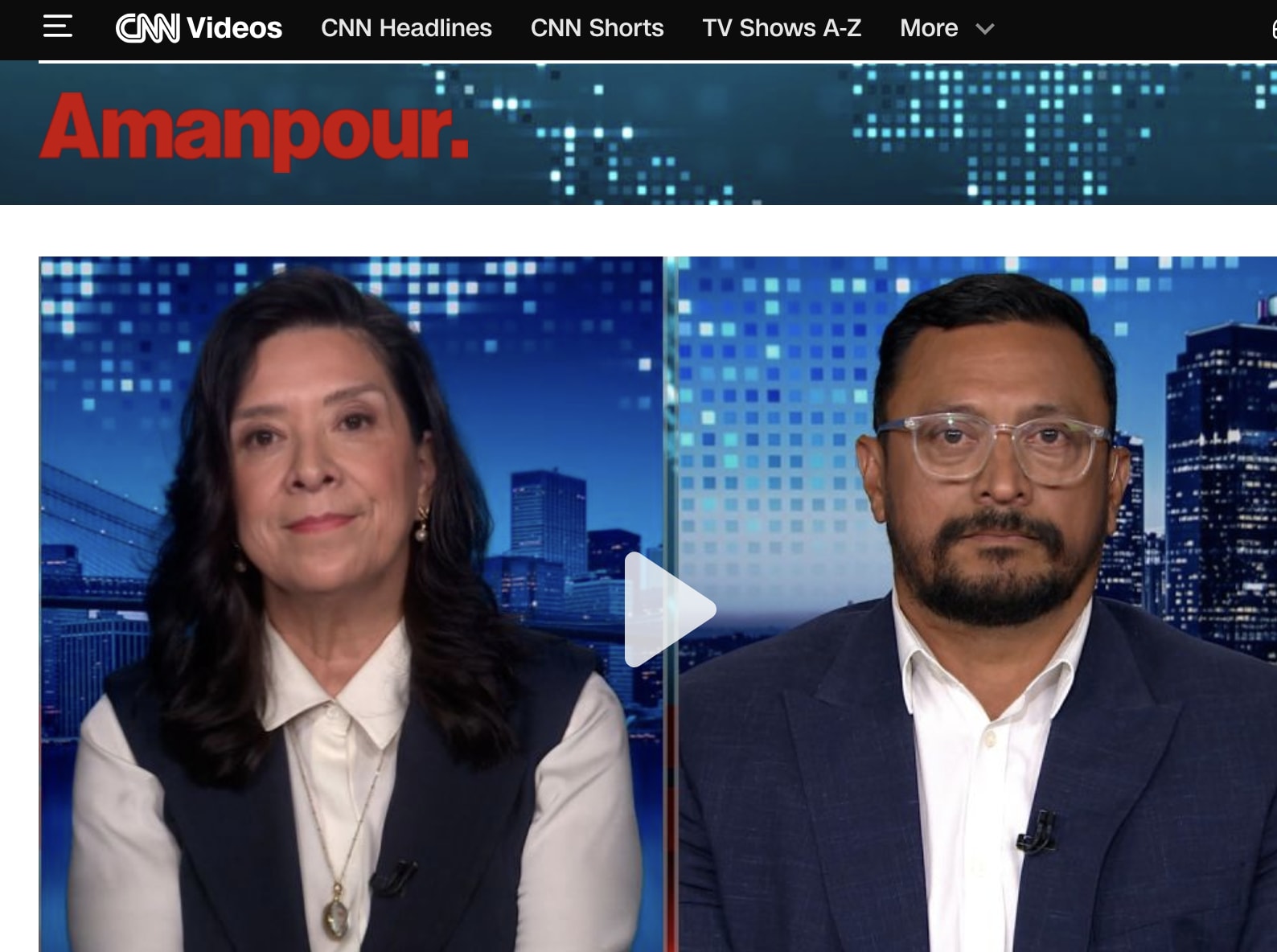
Law.” From
the
CNN
show Amanpour,
anchor Bianna
Golodryga interviewed U.S.
District
Judge
Esther
Salas,
whose
son
was
murdered
in
an
attack
targeting
her,
and
Salas
observed:
“You
know,
a
lot
of
people
talk
about
this
being
political.
It
is
not
political
to
defend
the
rule
of
law.
In
fact,
there
is
a
Canon
that
guides
our
judicial
ethics,
Canon
4.
And
the
commentary
to
Canon
4
is
very
clear.
And
I
want
to
just
paraphrase
it,
but
it
says
that
judges
may
express
opposition
to
the
persecution
of
judges
or
lawyers
anywhere
in
the
world
if
the
judge
has
ascertained,
after
reasonable
inquiry,
that
the
persecution
is
occasioned
by
conflict,
emphasis
on
conflict,
between
the
persecuted
lawyer
or
judge,
and
the
policies
or
practices
of
the
relevant
government.
That
was
written
when
judges
were
traveling
internationally
to
speak.
I
don’t
think
that
commentary
was
written
to
be
used
necessarily
in
the
United
States
of
America,
but
I
do
think
it
is
a
Canon
that
judges
should
look
to
and
think
about,
because
there
is
at
least
reasonable
inquiry
now
and
proof
that
we
are
under
attack,
either
attacks
by
known
individuals
or
attacks
by
those
that
hide
in
the
shadows
and
send
us
death
threats
to
our
chambers
and
send
us
pizzas
to
our
homes
to
try
to
inflict
fear.”
Read
more
of
the
transcript here.
Watch
the
interview here.
#3 Financial
Consequences
for
Lawyers
and
Law
Students
Under
the
“One
Big
Beautiful
Bill
Act.” Two
headlines
for
#3. First,
from
the Daily
Journal:
“Litigation
Funding
Dodges
Tax
Bullet
in
Big
Beautiful
Bill.
A
controversial
excise
tax
on
litigation
funding
proceeds
—
once
feared
by
funders
and
lawyers
alike
—
has
been
left
out
of
the
Senate’s
final
tax
bill
for
now,
but
with
strong
industry
backing
and
future
legislative
interest,
it
may
yet
return
in
another
form.”
Read
more here. Second,
from Forbes:
“Unprecedented
Student
Loan
Overhaul
In
‘Big
Beautiful
Bill’
Passes
House,
Heads
To
Trump.
…
The
bill
eliminates
the
Graduate
PLUS
program,
a
federal
student
loan
option
that
helps
fund
attendance
at
graduate
and
professional
schools.
Increased
Stafford
loan
borrowing
limits
would
partially
offset
the
elimination
of
this
option,
but
with
lifetime
caps
of
$100,000
for
graduate
students
and
$200,000
for
professional
students,
it
may
simply
not
be
enough
to
cover
the
full
cost
of
expensive
advanced
degrees.
Critics
have
argued
that
some
prospective
students
may
turn
to
riskier
private
student
loans,
or
decide
against
going
to
medical
or
law
school
altogether,
which
would
make
existing
shortages
in
high-need
areas
…
even
worse.”
Read
more here.
#4 “Federal
Judges
are
Public
Officials
for
Defamation
Purposes,
Judge
Rules.” From Reuters:
“Federal
judges
are
public
officials
who
must
meet
a
higher
bar
to
sue
individuals
for
defamation,
a
federal
judge
concluded
as
he
dismissed
a
lawsuit
by
one
of
his
counterparts
against
onetime
members
of
a
Florida
condo
association’s
board. U.S.
District
Judge
Roy
Altman in
Fort
Lauderdale,
Florida,
reached
that
conclusion
in
an amended
opinion released
Monday
that
rejected
claims
by Senior
U.S.
District
Judge
Frederic
Block.
The
Brooklyn-based
judge
had
sued
two
former
condo
association
board
members,
alleging
they
tried
to
destroy
his
reputation
by
falsely
accusing
him
of
computer
hacking
during
a
years-long
feud
over
renovations.”
Read
more here.
#5
Nominee
for
New
Jersey’s
Permanent
U.S.
Attorney
Faces
Ethics
Investigations. Two
headlines
for
#7. First, from
the New
York
Times:
“President
Trump on
Tuesday
nominated Alina
Habba,
his
former
campaign
spokeswoman
and
personal
lawyer,
to
be
New
Jersey’s
U.S.
attorney
for
the
next
four
years,
a
move
that
would
remove
her
interim
status.
In
doing
so,
Mr.
Trump
endorsed
a
loyal
supporter
with
little
prosecutorial
experience
to
continue
leading
one
of
the
country’s
top
law
enforcement
offices.
…
Ms.
Habba
has
bucked
the
traditionally
nonpartisan
approach
of
U.S.
attorneys.
She
has
aggressively
carried
out
Mr.
Trump’s
wish
to
use
the
Justice
Department
to
target
his
enemies,
including
Democratic
elected
officials
who
oppose
the
president’s
immigration
agenda.”
Read
more here (gift
link). Second, from NOTUS:
“Alina
Habba,
once President
Donald
Trump’s personal
attorney
and
now
the
interim U.S.
attorney
for
New
Jersey,
has
quietly
been
under
investigation
by
the
state’s
professional
regulators
for
more
than
a
year
—
putting
her
license
to
practice
law
at
risk.
NOTUS
obtained documents detailing
the
investigation,
which
since
January
2024
has
been
probing
what
happened
when
a
young
waitress
at
Trump’s
Bedminster
golf
club
tried
to
sue
over
sexual
harassment
by
her
manager.”
Read
more here.
#6
“’We
Could
Not
Remain
Silent’:
The
Members
of
the
Legal
Profession
Pursuing
Ethics
Investigation
for
AG
Pam
Bondi.” An
op-ed
from Abbe
Smith (Georgetown)
and Ellen
Yaroshefsky (Hofstra)
in
the New
York
Law
Journal:
“Since Donald
Trump’s return
to
office,
every
agency
tasked
with
ethical
oversight
of
the
executive
branch,
including
the Office
of
Government
Ethics,
the Office
of
Special
Counsel,
and
the Justice
Department’s
Office
of
Professional
Responsibility has
been
shut
down
or
rendered
feeble.
This
rapid
descent
into
an
ethics-free
regulatory
environment
happened
in
less
than
five
months.
It
is
against
this
backdrop
that,
last
month,
three
civil
society
groups
and
70
prominent
lawyers,
law
professors,
and
judges
filed
a
complaint
with
the Florida
Bar
Association,
urging
it
to
investigate U.S.
Attorney
General
and
Florida
Bar
member
Pam
Bondi for
her
misuse
of
the
concept
of
‘zealous
advocacy’
to
pursue
the
Trump
Administration’s
objectives.
We
helped
draft
this
complaint
because
we
could
not
remain
silent
while
Bondi
violated
ethical
obligations
fundamental
to
the
legal
profession
by
repeatedly
firing
Justice
Department
lawyers,
or
giving
them
no
choice
but
to
resign,
when
those
lawyers
refused
to
act
unethically.”
Read
more here.
#7
“Ex-Defender
Faces
Skeptical
Judges
in
Seeking
Case’s
Revival.” From Bloomberg
Law:
“An
appeals
court
seemed
skeptical
of
a
former
federal
public
defender’s
challenge
to
the
judiciary’s
procedures
for
handling
misconduct
complaints. Caryn
Strickland,
who
alleged
that
she
was
harassed
by
her
supervisor
at
the
Western
District
of
North
Carolina’s
federal
defender’s
office,
argued
to
the
court
on
Monday
that
her
case
involves
the
right
of
other
judiciary
employees
to
be
in
a
workplace
free
from
harassment.”
Read
more here.
#8
Federal
Judges
Are,
Too
Often,
‘Above
the
Law.’
We
Can
Stop
It.” An
op-ed
from Aliza
Shatzman (Legal
Accountability
Project)
in
the Philadelphia
Inquirer:
“As
the
lawyer
leading
the
charge
against
workplace
misconduct
in
the
courts,
I’m
accustomed
to
criticizing
imperious
federal
judges
who
are
above
the
law.
I
don’t
mean
they
act
like
they
are
above
the
law
—
they
are
often
literally
above
the
laws
they
interpret.
Some
routinely
engage
in
workplace
misconduct
that
would
otherwise
be
illegal.
But
it’s
not,
because
the
tens
of
thousands
of
law
clerks
and
other
employees
who
work
for
federal
judges
lack
even
basic
protections
against
discrimination.
…
Judiciary
employees
support
the
daily
functioning
of
our
courts
and
ensure
justice
for
those
who
appear
before
the
courts,
all
while
lacking
justice
and
workplace
protections
themselves.
Judges
refer
to
clerks
as
‘idiots,’
treat
them
like
personal
assistants
rather
than
esteemed
law
graduates,
and
fire
them
for
no
reason.
And
even
when
judges
display
worrisome
signs
they
are
no
longer
able
to
serve,
they’re
protected
by
the
cloak
of
life
tenure,
and
pressure
staff
to
conceal
their
shortcomings.”
Read
more here.
(Full
disclosure:
I
am
a
member
of
the Legal
Accountability
Project’s
Advisory
Board).
#9 “ABA’s
Plan
to
Double
Hands-On
Credits
for
Law
Students
is
Rife
With
Flaws,
Deans
Say.” From Reuters:
“An
American
Bar
Association
proposal
to
double
the
hands-on
coursework
credits
for
law
students
is
facing
sharp
criticism
from
some
legal
educators
as
being
too
costly,
too
constraining,
and
an
overreach
in
controlling
curriculum.
Under
the
proposed
change
to
the
ABA’s
law
school
accreditation
standards,
the
number
of
credits
for
hands-on
classes,
known
as
experiential
learning,
that
students
must
take
would
increase
to
12
from
the
current
six.
Students
would
need
to
earn
at
least
three
of
those
credits
in
a
clinic
or
a
field
placement.”
Read
more here.
#10 “Fordham
Law
Helps
Launch
Global
Initiative
on
the
Legal
Profession.” From
a Fordham
Law
Press
Release:
“In
April,
Fordham
Law,
represented
by Professor
Bruce
Green,
joined
six
leading
law
schools
at
the
inaugural
meeting
of
the Global
Network
of
Centers
on
the
Legal
Profession,
a
new
global
organization
of
law
school
centers
focused
on
examining
the
legal
profession,
legal
education,
and
legal
ethics.
Green,
director
of
Fordham
Law’s
Stein
Center
for
Law
and
Ethics,
was
joined
by
faculty
members
from
the Harvard
Law
School
Center
on
the
Legal
Profession,
the
LawAhead
Center
at
IE
Law
School,
the
Bucerius
Center
on
the
Legal
Profession,
Georgetown
University,
King’s
College
London, and Tilburg
University,
for
the
day-long
session
at
IE
University
in
Madrid,
Spain.
The
goal
of
the
Global
Network
of
Centers
on
the
Legal
Profession
is
to
‘foster
collaborative
projects
among
institutions
dedicated
to
research,
dialogue,
and
training
in
the
legal
field,’
as
well
as
promoting
‘future
exchanges
and
collaborations
regarding
developments
in
the
legal
profession
internationally.’”
Read
more here.
(Side
note:
Efforts
like
this
are
part
of
the
agenda
I’ve
called
for
in
my
recently-published Cardozo
Law
Review article “Ethics
Accountability:
The
Next
Era
for
Lawyers
and
Judges.” Kudos
to
Fordham
and
the
others
leading
on
this
front.)
Recommended
Reading
Recommendation
#1: “How
a
Rule
23(b)(2)
Class
Action
Could
Save
Law
Firms
From
Trump” by Nora
Freeman
Engstrom (Stanford), Jonah
Gelbach (Berkeley),
and David
Marcus (UCLA).
From
the
abstract:
Donald
Trump
has
issued
numerous
Executive
Orders
attacking
leading
law
firms,
threatening
to
destroy
their
relationships
with
clients.
These
Executive
Orders
are
clearly
unlawful.
Yet,
several
targeted
firms
have
surrendered
without
a
fight,
while
several
others
even
surrendered
preemptively,
before
Trump
took
any
action
against
them.
As
stunning
as
this
acquiescence
to
President
Trump’s
abuse
of
power
is,
there’s
a
simple
economic
logic
to
it,
which
can
be
understood
via
the
dynamics
of
the
classic
Prisoners’
Dilemma.
All
law
firms
would
be
better
off
if
no
firm
capitulated.
But
a
firm
can
reap
short-term
individual
benefits
by
capitulating.
And,
for
a
host
of
reasons,
mustering
effective
collective
action,
where
all
firms
stand
shoulder-to-shoulder
against
Trump,
is
wickedly
difficult.
How
can
firms
overcome
this
collective
action
problem?
The
answer:
Rule
23(b)(2).
Indeed,
the
Rule
23(b)(2)
class
action
device
was
created
precisely
to
solve
the
type
of
collective
action
problem
that
Trump’s
onslaught
has
created.
In
this
short
Essay,
we
outline
how
a
Rule
23(b)(2)
class
action
for
injunctive
relief
could
be
brought
on
behalf
of
all
law
firms
in
Trump’s
crosshairs,
defend
it
as
the
right
strategy,
and
explain
why
both
precedent
and
history
support
its
use.
Download
from
SSRN here.
Recommendation
#2: “Kenneth
Chesebro
and
the
Ethics
of
Election
Subversion” by Sung
Hui
Kim (UCLA).
From
the
abstract:
This
Article
examines
the
role
of
attorney
Kenneth
Chesebro
in
orchestrating
the
“fake
electors
plot”
following
the
2020
U.S.
presidential
election.
It
traces
Chesebro’s
transformation
from
a
Harvard-educated
lawyer
with
Democratic
ties
to
a
key
architect
of
Donald
Trump’s
post-election
strategy
to
derail
the
transfer
of
power
to
Joseph
Biden.
Part
I
provides
a
detailed
chronology
of
Chesebro’s
activities
between
November
2020
and
January
2021,
revealing
how
his
legal
advice
evolved
from
preserving
legal
rights
in
Wisconsin
to
a
coordinated
plan
to
impanel
alternate
electors
across
multiple
battleground
states
as
a
pretext
for
the
Vice
President
to
intervene
unilaterally
in
the
Congressional
certification
of
the
national
election
on
January
6.
Part
II
analyzes
the
professional
discipline
case
against
Chesebro
under
Model
Rule
8.4(c).
It
examines
the
principal
elements
of
Chesebro’s
strategy
and
argues
that
his
conduct
appears
to
have
involved
dishonesty,
fraud,
deceit,
or
misrepresentation,
warranting
professional
discipline.
Part
III
interrogates
Chesebro’s
moral
culpability,
contending
that
his
actions
represent
not
merely
a
violation
of
professional
conduct
rules
but
a
profound
betrayal
of
public
trust
and
democratic
principles.
This
Article
concludes
that
Chesebro’s
moral
culpability
transcends
his
violations
of
the
professional
conduct
rules.
By
pursuing
increasingly
aggressive
strategies
to
overturn
Biden’s
legitimate
victory
without
evidence
of
outcome-changing
fraud,
by
offering
a
would-be
autocrat
with
a
blueprint
for
how
to
subvert
the
collective
will
of
the
voters
in
contravention
of
the
U.S.
Constitution,
federal
and
state
laws,
and
by
using
his
legal
expertise
to
peddle
implausible
theories
designed
to
exploit
procedural
leverage
to
advance
a
naked
power
grab,
he
demonstrated
a
mind-blowing
willingness
to
undermine
democracy
itself.
Chesebro
betrayed
the
public
trust
in
ways
that
existing
professional
conduct
rules,
which
lack
explicit
duties
to
preserve
democracy,
cannot
adequately
capture
or
address.
Read
the
full
article here.
(And
revisit last
week’s
LER for
news
of
Chesebro’s
DC
disbarment.)
Recommendation
#3: “The
Supreme
Court’s
Specious
Code
of
Conduct” by James
Sample (Hofstra).
From
the
abstract:
This
Article,
along
with
a
prior
article, The
Supreme
Court
and
the
Limits
of
Human
Impartiality,
publishedin
the Hofstra
Law
Review,
initially
developed
out
of
written
and
spoken
testimony
about
Supreme
Court
ethics,
transparency,
and
disclosure
before
the
Senate
Judiciary
Subcommittee
on
Federal
Courts,
where
Senator
Sheldon
Whitehouse
proposed
the
Supreme
Court
Ethics,
Recusal,
and
Transparency
Act
to
impose
and
enforce
a
code
of
ethics
for
the
Supreme
Court. … This
hearing
came
in
the
wake
of
an
investigative
report
by ProPublica that
raised
concerns
about
Justice
Clarence
Thomas’s
potential
failure
to
meet
financial
disclosure
requirements
after
he
received
trips
and
other
valuable
items
from
Republican
billionaire
donor
Harlan
Crow.
…
This
Article
seeks
to
build
on
the
prior
one,
particularly
with
an
eye
towards
critiquing
the
political,
judicial,
and
legal
ramifications
of
the
Court’s
unfortunately
ersatz
Code.
Read
the
full
article here.
Recommendation
#4: “Why
Courts
Should
Not
Discipline
Trump’s
Lawyers” by Rebecca
Roiphe (New
York
Law
School).
From
the
abstract:
After
the
first
Trump
administration,
there
were
multiple
coordinated
efforts
to
discipline
lawyers
in
highly
charged
political
cases.
For
example,
a
California
bar
court
recommended
that
John
Eastman
be
disbarred.
Eastman
helped
craft
the
legal
argument
that
then-Vice
President
Mike
Pence
had
the
right
to
delay
or
decline
to
certify
the
election
results,
and
the
disciplinary
case
concluded
that
he
lied
publicly,
in
his
memos
to
his
client
and
Pence,
and
to
courts.
This
Article
draws
on
Eastman’s
case
to
argue
that
disciplinary
charges
in
politically
charged
cases
are
often
unconstitutional
and
even
when
they
are
not,
they
are
unwise
and
counterproductive
because
they
chill
useful
advocacy
and
threaten
democratic
values.
Read
the
full
article here.
Recommendation
#5: “Are
There
Causes
and
Clients
Lawyers
Should
Not
Represent?” by Richard
Abel (UCLA).
From
the
abstract:
Lawyers
have
long
asserted
that
they
are
not
morally
responsible
for
the
clients
and
causes
they
represent.
Such
irresponsibility
is
predicated
on
a
political
philosophy
of
liberal
pluralism,
which
maintains
that
because
all
human
preferences
are
legitimate,
the
only
way
to
resolve
differences
is
through
agreed
processes
–
of
which
the
legal
system
is
preeminent.
We
have
reached
a
conjuncture,
however,
where
this
posture
is
no
longer
acceptable.
Climate
change,
caused
by
human
agency,
threatens
all
life
on
earth.
Autocrats
in
many
countries
seek
to
destroy
democracy.
And
growing
inequalities
of
wealth
and
income
render
representative
democracy
an
empty
charade.
Because
lawyers
are
centrally
implicated
in
each
of
these
existential
threats,
they
must
confront
their
own
moral
responsibility.
Read
the
full
article here.
And
read
responses
from Robert
Barrington,
Guy
Beringer,
Georgia
Garrod,
Ole
Hammerslev,
Brad
Wendel, and Iris
van
Domselaar here.
Legal
Ethics
Trivia
From
the Texas
Center
for
Legal
Ethics,
here’s
the
question
of
the
month:
“Are
law
firm
websites
considered
‘advertisements’?” Test
yourself
at
this
website where
you
can
read
a
short
hypothetical,
select
an
answer,
and
see
your
results.
So
far,
out
of
85
responses,
23%
have
gotten
it
right.
Will
you?

Get
Hired
Did
you
miss
the
150+
job
postings
from
previous
weeks?
Find
them
all here.
-
Assistant
Ethics
Counsel,
North
Carolina
State
Bar
—
Raleigh,
NC/Hybrid. From
the
posting:
“The
North
Carolina
State
Bar
is
hiring
a
licensed
North
Carolina
attorney
to
serve
as
assistant
ethics
counsel.
This
is
a
unique
opportunity
to
work
at
the
intersection
of
legal
ethics,
public
service,
and
legal
education.
In
this
role,
you’ll
provide
guidance
to
attorneys
on
ethics
issues,
support
the
Ethics
Committee,
and
help
shape
the
ethical
landscape
of
the
legal
profession
in
North
Carolina
by
contributing
to
the
development
of
formal
ethics
opinions
and
amendments
to
the
Rules
of
Professional
Conduct.
You’ll
also
deliver
CLE
presentations,
conduct
legal
research,
and
support
the
State
Bar’s
efforts
in
protecting
the
public
through
the
regulation
of
the
legal
profession.”
Learn
more
and
apply here. -
Assistant
Ethics
Counsel,
Virginia
State
Bar
—
Richmond,
VA. From
the
posting:
“The
Virginia
State
Bar
has
an
immediate
opening
for
an
experienced
attorney
to
work
as
an
Assistant
Ethics
Counsel.
The
VSB
Ethics
department
attorneys
advise
bar
members,
judges,
and
out-of-state
attorneys
through
the
ethics
hotline
on
a
variety
of
professional
regulation
issues,
including
legal
ethics,
lawyer
advertising,
and
unauthorized
practice
of
law.
They
also
develop
and
present
CLEs,
interpret
statutes
and
rules
relating
to
legal
ethics,
draft
legal
ethics
opinions
and
rule
amendments,
and
provide
counsel
and
support
to
assigned
committees,
task
forces
and
work
groups.”
Learn
more
and
apply here. -
Associate
Director
and
Counsel,
Global
Compliance
Investigations, Pratt
&
Whitney
—
East
Hartford,
CT/Hybrid. Responsibilities
include:
“Investigating
allegations
of
potential
violations
of
ethics
and
compliance
laws/policies
and/or
certain
global
security
matters,
including
coordination
of
matters
with
global
ethics
&
compliance
functions;
acting
as
compliance
counsel,
supporting
non-attorney
investigators
in
ethics
and
compliance
investigations,
including
assisting
in
responding
to
governmental
subpoenas
and
managing
document
collection,
custodian
and
record
identification
and
responsiveness
reviews.”
Learn
more
and
apply here. -
Conflicts
Attorney,
Wilson
Elser
LLP
—
Washington,
DC/Remote. From
the
posting:
“We
are
seeking
a
detail-oriented
and
analytical Conflicts
Attorney to
join
our
General
Counsel’s
office.
This
individual
will
be
responsible
for
identifying,
analyzing,
and
resolving
potential
legal
and
business
conflicts
of
interest
related
to
new
business
intake,
lateral
attorney
hiring,
and
firm
operations.
The
ideal
candidate
will
bring
a
strong
understanding
of
legal
ethics
and
professional
responsibility
rules,
along
with
excellent
judgment
and
communication
skills.”
Learn
more
and
apply here. -
Ethics
Attorney/Sr.
Associate/Associate,
Cha
Law
Ethics
—
Remote
(with
CA
Bar
License). From
the
posting:
“We
are
seeking
a
Senior
Ethics
Attorney
to
join
our
fully
remote
team.
This
role
involves
representing
attorneys
and
law
students
in
various
legal
ethics
matters,
including
State
Bar
investigations,
legal
malpractice
defence,
reinstatements,
and
admissions.
The
ideal
candidate
will
have
a
strong
background
in
legal
ethics,
excellent
communication
skills,
and
the
ability
to
work
independently
in
a
remote
setting.”
Learn
more
and
apply here. -
Senior
Conflicts
Counsel
Manager,
Dinsmore
LLP
—
Cincinnati,
OH. From
the
posting:
“Dinsmore
is
seeking
a
full-time
Senior
Conflicts
Counsel
Manager
to
lead
Dinsmore’s
conflicts
attorney
group
in
identifying
and
resolving
ethical
and
business
conflicts
for
the
firm’s
new
clients
and
matters
as
well
as
assisting
in
conflict
clearance
and
client
and
matter
intake
for
lateral
attorneys.
The
Senior
Conflicts
Counsel
Manager
also
researches
and
advises
the
firm’s
lawyers
on
risk
management
issues
and
the
rules
of
professional
conduct
in
the
states
in
which
Dinsmore
operates.
The
person
in
this
role
will
also
help
oversee
the
management
of
the
firm’s
conflicts
database
and
assist
in
other
key
conflicts
and
ethical
issues
for
the
firm.”
Learn
more
and
apply here. -
Senior
In-House
Lawyer
–
Conflicts
A
&O
Shearman
—
New
York
City/Hybrid. From
the
posting:
“The
role
of
the
Senior
In
House
Lawyer
–
Conflicts
is
to
be
a
trusted
adviser
to
the
business,
providing
high
quality,
proactive
business-focused
support
and
solutions
to
colleagues
on
a
variety
of
commercial
and
complex
regulatory
issues,
focused
mainly
on
conflicts
of
interest
and
other
business
acceptance
matters.
It
requires
an
individual
with
the
ability
to
develop
strong
working
relationships
to
be
a
“go
to”
and
accessible
person
for
queries
and
concerns
from
around
the
world.
These
queries
come
from
stakeholders
of
all
levels
from
business
teams
and
fee
earners,
including
practice
group
heads
and
senior
management.
The
Senior
In
House
Lawyer
–
Conflicts
is
given
a
high
level
of
autonomy
and
expected
to
take
responsibility
for
identifying
solutions
and
driving
them
forward.
In
addition,
the
Senior
In
House
Lawyer
–
Conflicts
will
participate
in
strategic
projects
and
be
part
of
the
horizon-scanning
team,
inputting
into
the
strategic
direction
of
the
firm’s
regulation.”
Learn
more
and
apply here.
Upcoming
Ethics
Events
&
Other
Announcements
Did
you
miss
an
announcement
from
previous
weeks?
Find
them
all here.
2025
-
Help
TED
Shape
the
Future
of
Legal
Education. From
TED:
“Known
for
spreading
ideas
that
spark
change,
TED
is
now
applying
its
global
platform,
network
of
changemakers,
and
educational
innovation
to
the
legal
field—developing
a
new
learning
tool
that
brings
together
TED
Talks,
real-world
insights
from
GCs
and
practitioners,
and
research-based
frameworks
to
help
legal
education
evolve.
Our
focus
is
on
five
essential
impact
areas:
critical
thinking,
AI
adaptability,
cross-cultural
and
generational
fluency,
collaborative
leadership,
and
creative
problem-solving.
This
isn’t
about
replacing
traditional
legal
instruction—it’s
about
complementing
it
with
human-centered,
story-driven
tools
that
reflect
the
world
lawyers
are
entering.
We’re
asking
GCs,
lawyers,
and
legal
practitioners
around
the
world
to share
their
perspectives
about
the
way
our
industry
should
be
trained
through
a
short
survey (10–15
minutes).”
Complete
the survey
here. -
July
21.
Call
for
Papers
Deadline:
The
Role
of
AI
in
Legal
Education
–
Preparing
the
Next
Generation
of
Lawyers
at
Westminster
Law
School,
London. This September
11 event
will
bring
together
academics,
legal
professionals,
students,
and
industry
stakeholders
to
examine
how
AI
is
reshaping
law
degrees,
particularly
in
areas
such
as
curriculum
design,
assessment,
teaching
methods,
and
graduate
employability.
Keynote
Speakers
include Lisa
Webley (University
of
Birmingham), Dan
Hunter (King’s
College
London),
and Luke
Mason (University
of
Westminster).
Submit here (funding
support
for
early
career
academics
available). -
August
1.
Call
for
Papers
Deadline:
Association
of
American
Law
Schools New
Voices
Call
for
Papers
Deadline. The
AALS
Section
on
Professional
Responsibility
invites
submissions
for
its
New
Voices
panel
at
the
Annual
Meeting,
January
2026
in
New
Orleans,
LA.
Submissions
are
invited
from
junior
faculty
(those
who
are
pre-tenure
or
otherwise
with
five
or
fewer
years
of
experience),
along
with
others
who
are
new
to
writing
in
the
field
of
Professional
Responsibility.
Those
submitting
work
must
be
full-time
faculty
members
(including
full-time
VAPs
or
fellows)
at
AALS
member
law
schools.
Work
that
has
already
been
published
(or
will
be
published
prior
to
the
conference)
is
ineligible
for
consideration.
Interested
faculty
should
submit
their
work
for
consideration
to Sarah
Cravens [email protected] no
later
than
5:00pm
Central
Time
on
Friday,
August
1,
2025,
with
“PR
New
Voices
Submission
–
2026
Annual
Meeting”
in
the
subject
line
of
the
email. -
August
7-9.
Association
of
Professional
Responsibility
Lawyers
Annual
Meeting
in
Toronto. Learn
more here. -
August
12,
2-3PM
Eastern. Measuring
What
Matters:
Evaluating
the
Impact
of
InnovationsA
Webinar
Series
on
Judicial
Innovation
and
Leadership. Building
on
the
momentum
of
the Advancing
Innovation
National
Summit,
IAALS and
the Berkeley
Judicial
Institute are
thrilled
to
present
this
dynamic
webinar
series
designed
to
equip
judges
with
the
practical
tools
and
insights
needed
to
drive
meaningful
innovation
in
the
courts.
The
series
will
go
beyond
theory
and
dive
deep
into
strategies
that
will
empower
judges
to
navigate
change,
build
trust,
and
foster
a
more
accessible
justice
system
for
all.
This
series
is
open
to
all
judges
seeking
to
become
catalysts
for
positive
change
in
the
legal
system.
Learn
more
and
register here. -
August
13,
8AM-6PM,
University
of
Houston
Law
Center.
AALS
Southwest
and
Big
12
Law
Faculty
Pre-Recruitment
Workshop:
“So,
You
Want
to
Be
a
Law
Professor.” Panel
discussions
and
interview
opportunities
for
future
law
professors.
Participating
law
schools
include:
Arizona
State
University,
Sandra
Day
O’Connor
College
of
Law,
Baylor
Law
School,
SMU
Dedman
School
of
Law,
St.
Mary’s
University
School
of
Law,
Texas
A&M
University
School
of
Law,
Tulane
Law
School,
University
of
Arkansas
School
of
Law,
University
of
Arkansas
at
Little
Rock
William
H.
Bowen
School
of
Law,
University
of
Cincinnati
College
of
Law,
University
of
Kansas
School
of
Law,
University
of
Mississippi
School
of
Law,
University
of
Oklahoma
College
of
Law,
University
of
Utah
S.J.
Quinney
College
of
Law.
Learn
more
and
register here. -
October
9-10.
Complex
Litigation
Ethics
Conference,
Center
for
Litigation
and
Ethics,
UC
Law
SF. Learn
more here.
2026
-
January
6-9. Association
of
American
Law
Schools
Annual
Meeting,
Section
on
Professional
Responsibility
Events. Learn
more here. -
December
2-4.
International
Legal
Ethics
Conference
at
the
University
of
Houston.
Learn
more here.
Keep
in
Touch
-
News
tips?
Announcements?
Events? A
job
to
post? Reading
recommendations? Email [email protected] –
but
be
sure
to
subscribe
first,
otherwise
the
email
won’t
be
delivered.
Renee
Knake
Jefferson
holds
the
endowed
Doherty
Chair
in
Legal
Ethics
and
is
a
Professor
of
Law
at
the
University
of
Houston.
Check
out
more
of
her
writing
at
the Legal
Ethics
Roundup.
Find
her
on
X
(formerly
Twitter)
at @reneeknake or
Bluesky
at legalethics.bsky.social.