
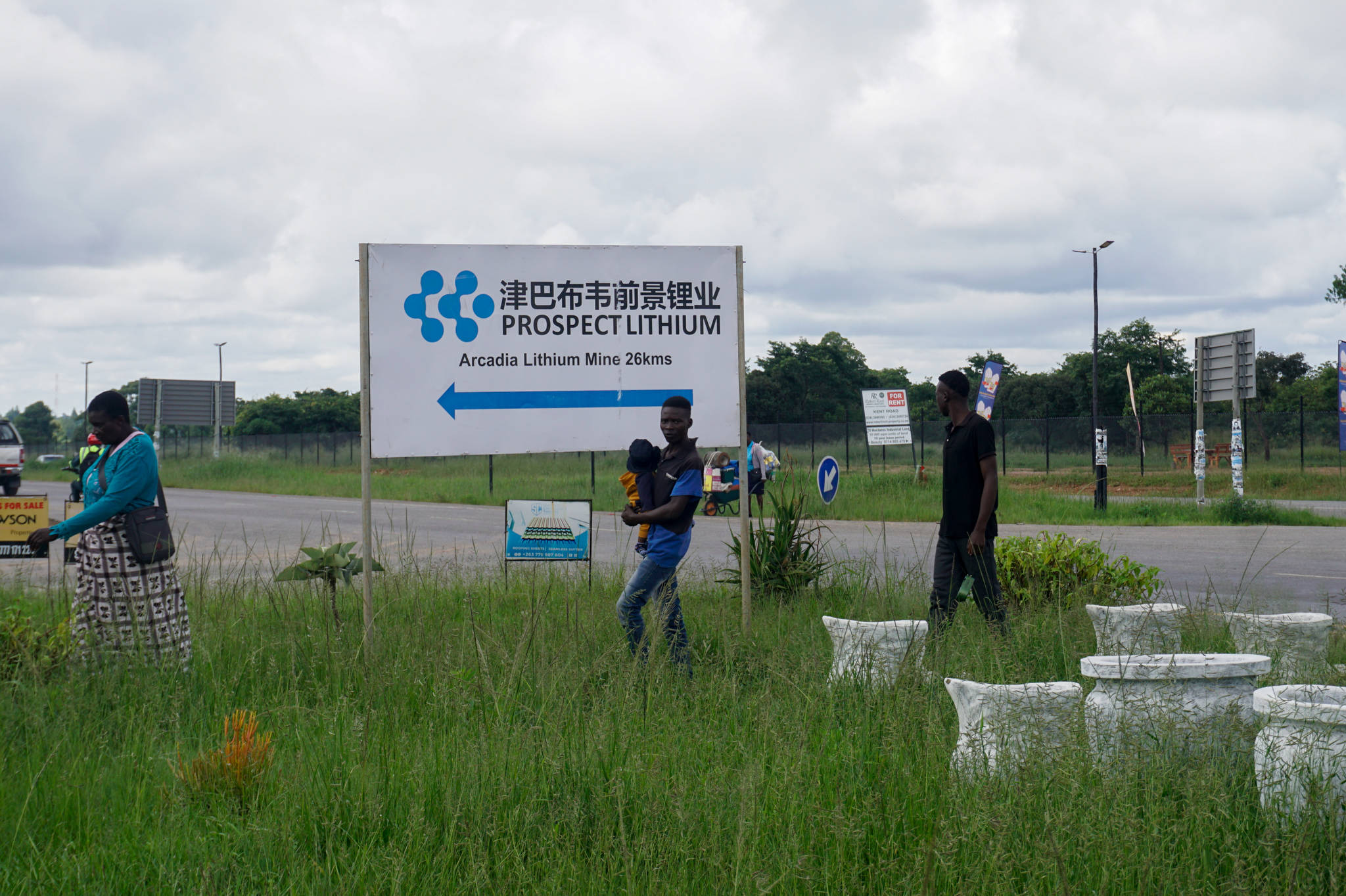
HARARE,
ZIMBABWE
—
In
2023,
Peter,
a
truck
driver,
was
approaching
a
border
checkpoint
between
Zimbabwe
and
Mozambique.
He
had
little
reason
to
question
what
was
in
his
truck’s
sealed
container
—
he’d
transported
shipments
for
this
Chinese-owned
company
before.
“We
just
thought
everything
was
in
order,”
he
says.
But
rather
than
chrome,
the
mineral
listed
on
the
container’s
paperwork,
inspectors
found
raw
lithium.
By
law,
unprocessed
lithium
shouldn’t
leave
Zimbabwe
without
written
permission
from
the
minister
of
mines
and
mining
development.
Peter
didn’t
have
that.
Border
officials
impounded
the
truck
and
trailer
—
worth
more
than
US$50,000
—
for
a
year.
Drape
Trucking,
the
company
where
Peter
works,
recovered
it
after
paying
a
US$5,000
fine.
Zimbabwe,
which
boasts
Africa’s
largest
lithium
reserves,
is
poised
to
help
meet
global
demand
in
the
race
to
secure
green
energy
and
develop
advanced
technology.
Its
production
pales
in
comparison
to
powerhouses
like
Australia
and
Chile,
but
the
country
is
still
among
the
top-eight
producers
of
the
mineral,
producing
1,200
tons
in
2021
alone.
But
as
demand
grows,
so
does
illegal
trading.
In
Zimbabwe,
some
companies
mislabel
shipments
or
underreport
the
quality
and
quantity
of
lithium
exports.
Border
officials
—
either
unaware
or
complicit
—
allow
the
shipments
to
slip
through,
undermining
efforts
to
regulate
one
of
Zimbabwe’s
most
valuable
exports.
Peter
asked
that
Global
Press
Journal
use
only
his
first
name,
and
he
did
not
share
the
name
of
the
company
responsible
for
the
shipping
container’s
contents.
He
provided
the
name
of
the
owner
of
the
company,
but
Global
Press
Journal
was
not
able
to
verify
the
involvement
of
anyone
by
that
name
in
the
industry.
Tendai,
a
former
border
agent,
says
he’s
accepted
bribes
to
allow
lithium
shipments
to
pass
through
the
border.
Tendai
confirmed
the
incident
involving
Peter
and
says
he
was
arrested
and
fined
for
his
role.
Like
many
other
sources
who
spoke
to
Global
Press
Journal
for
this
article,
he
asked
not
to
use
his
full
name
for
fear
of
losing
his
job.
Barely
banned
In
2022,
Zimbabwe
banned
the
export
of
raw
lithium
to
curb
smuggling
and
extract
more
value,
since
the
law
would
force
mining
companies
to
process
lithium
domestically.
Since
then,
some
of
the
largest
lithium
mining
companies
in
the
country,
such
as
Arcadia
and
Bikita
Minerals,
have
set
up
processing
operations.
Data
on
whether
these
regulations
have
generated
more
revenue
is
hard
to
find.
Official
records
show
that
the
country’s
lithium
production
capacity
surged
by
230%
between
2022
and
2023.
Most
of
the
product
ends
up
in
China,
which
controls
90%
of
Zimbabwe’s
mining
sector.
Even
so,
the
ban
has
done
little
to
contain
lithium
smuggling
across
Zimbabwe’s
porous
borders.
The
regulations
are
ineffective,
says
Gorden
Moyo,
director
of
the
Public
Policy
and
Research
Institute
of
Zimbabwe.
Officials,
“including
members
of
security
services,
who
collude
with
politicians
and
foreign
governments,
particularly
China,”
facilitate
illegal
exports,
he
says.
Nomsa
Jane
Moyo,
the
general
manager
at
the
Minerals
Marketing
Corporation
of
Zimbabwe,
a
parastatal
group
that
inspects
exports,
says
the
organization
closely
monitors
mining
at
all
stages
to
ensure
that
companies
export
the
quantities
and
qualities
they
declare.
They
intercept
those
who
skirt
the
law,
she
says.
The
government
seized
22
lithium
shipments
in
2023
and
23
in
2024.
Some
were
seized
before
reaching
the
borders;
others
were
flagged
by
officials
at
the
Forbes
border
post,
between
Zimbabwe
and
Mozambique,
and
the
Beitbridge
border
post,
between
Zimbabwe
and
South
Africa.
Secrecy
at
the
mines
According
to
the
Minerals
Marketing
Corporation,
in
2023,
the
country
sold
a
total
of
769,086
metric
tons
of
lithium,
valued
at
US$794
million
and
produced
by
two
main
lithium
mining
companies,
Prospect
Lithium
Zimbabwe
and
Bikita
Minerals.
Two-thirds
of
these
minerals
went
to
either
China
(59%)
or
Hong
Kong
(7%),
according
to
United
Nations
trade
data.
But
these
figures
don’t
reflect
the
true
volume
of
lithium
leaving
Zimbabwe,
says
Tendai,
the
former
border
agent.
Lithium
export
permits
are
issued
with
a
fixed
limit
for
how
much
a
company
can
export,
so
companies
often
underreport,
he
says.
It
all
starts
at
the
mines,
where
officials
claim
to
closely
monitor
activities,
says
Tatenda,
an
employee
at
Prospect
Lithium
Zimbabwe
who
asked
that
Global
Press
Journal
use
only
his
first
name
for
fear
of
losing
his
job.
Tatenda
says
the
company
undervalues
high
grades
of
lithium.
And
while
the
ministry
of
mines
carries
out
inspections,
he
says,
“the
high-quality
lithium
is
concealed
beneath
lower-value
ore
to
mislead
inspectors.”
Global
Press
Journal
made
several
attempts
to
speak
to
Prospect
Lithium
Zimbabwe.
Officials
indicated
that
they
would
comment
but
did
not
respond
to
subsequent
requests.
Companies
mislabel
shipments
or
underreport
the
quality
and
quantity
of
lithium
exports.
Border
officials
—
either
unaware
or
complicit
—
allow
the
shipments
to
slip
through.
Nomsa
Jane
Moyo,
from
the
Minerals
Marketing
Corporation,
says
the
lithium
quality
tests
they’ve
carried
out
at
Prospect
Lithium
Zimbabwe
meet
all
legal
requirements.
Tendai,
the
former
border
agent,
says
the
mining
companies
sometimes
bypass
shipment
records
by
bribing
not
only
border
officials
but
also
officers
from
the
Zimbabwe
Revenue
Authority
or
the
Minerals
Marketing
Corporation
of
Zimbabwe
and
others
within
the
export
chain.
The
Zimbabwe
Revenue
Authority
did
not
respond
to
multiple
requests
for
an
interview,
and
Nomsa
Jane
Moyo
did
not
respond
to
allegations
of
corruption
within
the
Minerals
Marketing
Corporation.
Corruption
facilitates
smuggling,
but
some
border
officials
don’t
always
know
what
they’re
inspecting,
says
Levious
Chiukira,
a
customs
and
trade
consultant
at
Gleam
Customs
and
Clearing
Agency.
“I
worked
as
a
customs
official
for
years,
yet
I
cannot
differentiate
between
petalite
and
lepidolite,
both
of
which
are
forms
of
lithium,”
he
says.
“[The
revenue
authority]
does
not
employ
geologists,
and
there
is
no
institutional
capacity
to
address
this
knowledge
gap.”

Undermined
Exporters
exploit
the
regulatory
gaps,
Gorden
Moyo
says.
“While
corruption
is
punishable
by
law
in
China,
when
they
operate
abroad,
they
act
with
impunity.”
The
government
hasn’t
helped.
Contracts
between
the
state
and
investors
are
not
accessible
to
the
public,
according
to
a
report
by
the
Africa
Policy
Research
Institute.
It
erodes
public
trust,
says
Tafara
Chiremba,
an
environmentalist
at
the
Zimbabwe
Environmental
Lawyers
Association.
Because
of
the
smuggling,
Chiremba
says,
it’s
China,
not
Zimbabwe,
that
benefits
from
the
country’s
wealth
of
lithium.