
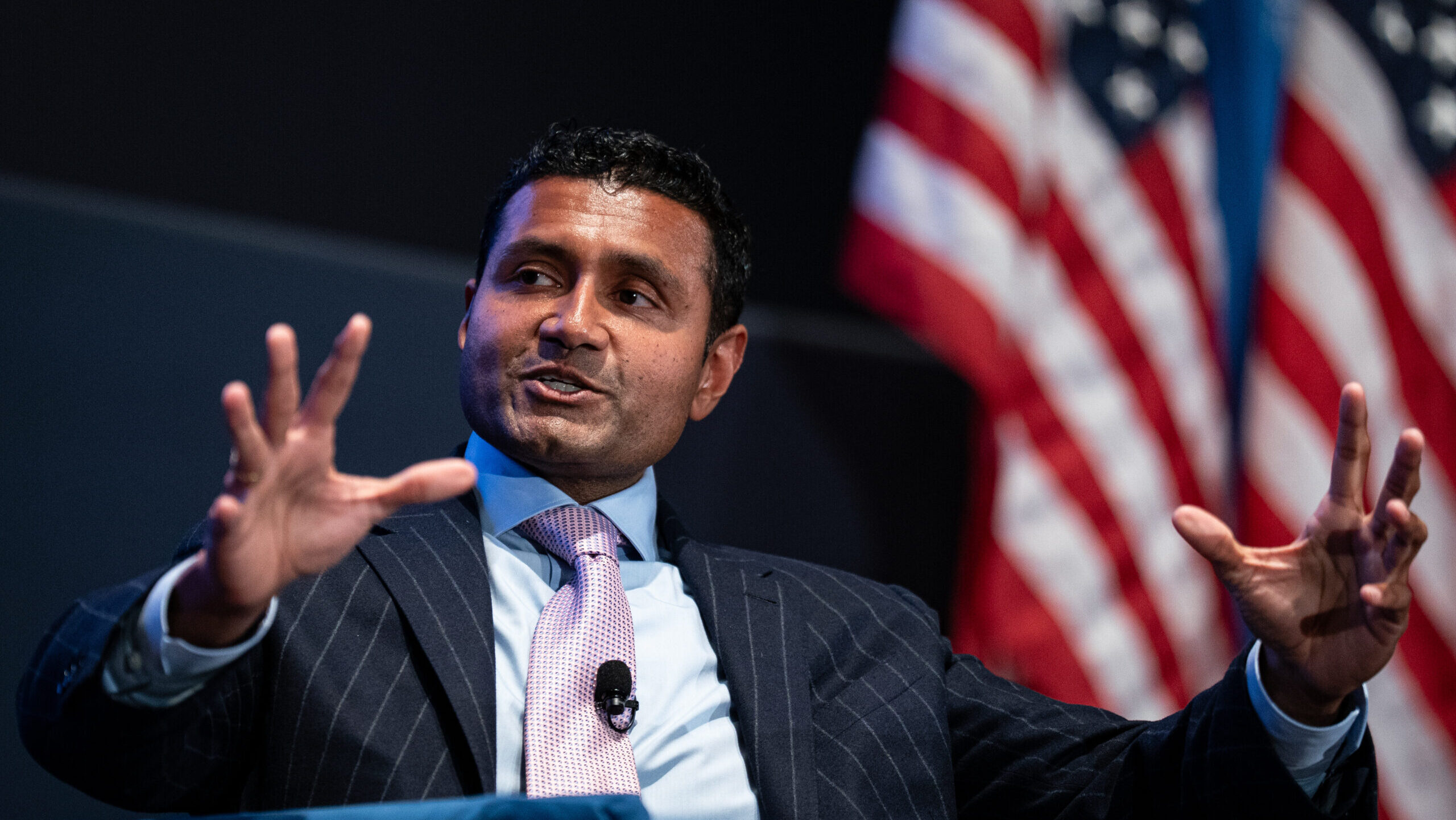

Shyam
Sankar,
chief
technology
officer
of
Palantir
Technologies
Inc.,
speaks
during
the
Hill
&
Valley
forum
at
the
US
Capitol
in
Washington,
DC,
US,
on
Wednesday,
April
30,
2025.
(Al
Drago/Bloomberg
via
Getty
Images)
WASHINGTON
—
The
US
Army
today
will
direct
commission
four
tech
executives
at
the
rank
of
Lt.
Col.,
charging
them
with
leading
a
new
Army
innovation
corps
inside
the
Reserve
component,
according
to
a
service
spokesman.
“Detachment
201
is
being
created
to
bring
in
tech
innovation
executives
leaders
to
help
the
Army
…
on
broader
conceptual
things
like
talent
management,
how
do
we
bring
in
tech
focused
people
into
the
ranks
of
the
military,
and
then,
how
do
we
train
them,”
Col.
Dave
Butler,
the
top
spokesman
for
the
Army
Chief
of
Staff,
told
Breaking
Defense
today.
This
initial
cohort
of
executives
includes
the
chief
technology
officer
from
Palantir,
Shyam
Sankar,
whose
“Defense
Reformation”
website
has
become
a
talking
point
among
defense
tech
community;
Andrew
Bosworth,
the
chief
technology
officer
from
Meta;
Kevin
Weil,
OpenAI’s
chief
product
officer
and
Bob
McGrew
who,
until
November,
was
chief
research
officer
at
at
OpenAI.
The
Wall
Street
Journal
first
reported
on
the
plan.
The
four
will
be
sworn
in
tonight
ahead
of
the
service’s
250th
birthday
celebration
on
Saturday,
Butler
said.
The
move
comes
as
the
Trump
administration
embraces
venture
capital
and
tech
industries,
including
VC-backed
startups
like
Anduril,
Palantir
and
others
who
have
begun
to
take
root
as
major
players
in
the
defense
industrial
base.
The Trump
administration’s
nominee
to
take
the
reins
as
the
Army’s
No.
2
two
civilian,
Michael
Obadal,
is
an
Anduril
employee.
Army
Chief
of
Staff
Gen.
Randy
George
and
Army
Secretary
Dan
Driscoll
have
also
been
focused
on
giving
tech
startups
and
non-traditional
defense
companies
a
more
prominent
role
inside
the
service.
Driscoll
has
even
called
it
a
“success”
if
a
large
prime
contractor
closes
its
doors
in
the
coming
years
if
they
can’t
start
operating
more
efficiently.
“I
will
measure
it
as
success
if
in
the
next
two
years,
one
of
the
primes
is
no
longer
in
business,
and
the
rest
of
them
have
all
gotten
stronger,”
he
said
in
May
on
the
TBPN
podcast.
As
the
new
era
of
defense
tech
sweeps
through
the
halls
of
the
Pentagon
and
the Army
stands
up
Detachment
201,
Butler
said
the
service
will
try
to
ensure
that
there
isn’t
a
conflict
of
interest
between
the
executives
coming
in
as
lieutenant
colonels
and
the
companies
they
still
work
for.
(For
instance,
Meta
and
Anduril
are
teamed
together
to
compete
for
the
Army’s
next-gen
heads
up
display.)
“There’s
plenty
of
precedent
for
this,”
Butler
said.
“We’ve
done
this
over
and
over
when
our
nation
needed
top
talent.
The
difference
is
we
used
to
do
it
in
wartime
now
we’re
doing
it
ahead
of
wartime
so
that
we
can
prepare
and
deter.”
“There’s
an
urgency
to
change
and
transform
the
Army
and
these
guys
[are]
going
to
help,”
he
added.
As
for
what
the
founders
of
Detachment
201
will
be
doing,
Butler
said
it
is
not
expected
to
revolve
around
programs
of
record
or
big-ticket
acquisitions.
Instead,
they
will
be
looking
at
much
“broader”
topics
and
there
will
be
firewalls
in
place
to
protect
both
the
Army
and
their
respective
companies.
“Det.
201
is
an
effort
to
recruit
senior
tech
executives
to
serve
part-time
in
the
Army
Reserve
as
senior
advisors,”
an
Army
statement
announcing
the
news
said.
“In
this
role
they
will
work
on
targeted
projects
to
help
guide
rapid
and
scalable
tech
solutions
to
complex
problems.
By
bringing
private-sector
know-how
into
uniform,
Det.
201
is
supercharging
efforts
like
the
Army
Transformation
Initiative,
which
aims
to
make
the
force
leaner,
smarter,
and
more
lethal.”