
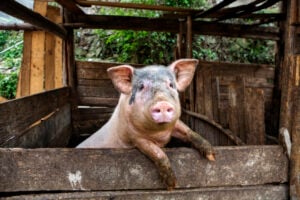

via
Getty)
This
is
an
article
about
academic
dishonesty,
both
with
one’s
audience
and
with
oneself. It
is
about
the
goal
of
academia
being
advancement
of
knowledge
and
the
making
of
a
better
world. To
the
extent
other
things
are
sought,
such
as
external
validation,
the
result
can
be
a
bastardization
of
that
which
we
ought
to
be
doing
and
perhaps
making
the
discipline
worse
off
deliberately
or
negligently.
Throughout
this
blog
post,
assume
an
author
has
written
an
article
about
pigs
flying. It
sounds
ridiculous. But
consider
how
an
author
could
tantalize
you
with
an
article
title
like
“On
the
Prospect
of
Porcine
Flight:
Rethinking
the
Impossible”
or
“Porcine
Aviation:
The
Politics
of
the
Previously
Unthinkable”
or
“Pigs
and
the
Potential
of
Porcine
Bumble
Bees.” Now
you’ve
got
something
to
tantalize
the
law
reviews!
Now,
how
to
write
that
article
as
quickly
and
with
maximum
splash
as
possible. Let’s
start
with
how
it
is
all
too
often
done:
-
Misleading
Title
Clickbait.
“Can
Pigs
Fly?
The
Truth
Will
Shock
You!” No,
it
won’t,
and
the
author’s
claimed
signal
of
excitement
is
misrepresentation. The
asking
of
the
question
also
misleads,
as
it
suggests
there
is
an
open
question
worthy
of
an
article.
-
Lying
About
Facts. “Pigs
can
fly.” “I’ve
seen
pigs
fly.” No,
they
don’t. And
no,
you
have
not. You
may
have
seen
an
image
of
a
pig
jumping
in
a
lake,
but
that
isn’t
flight.
(Note:
Michael
Sowa’s
famous
painting
is
called
“Köhlers
Schwein
mit
Ente”
not
“flying
pig.”) Making
up
facts
is
perhaps
the
most
dangerous
and
self-destructive
thing
you
can
do
as
a
scholar. It
can
get
you
fired. It
could
get
you
sued,
depending
on
your
funding
and
the
subject
of
your
paper. And
you
might
be
the
last
person
to
know
when
your
sin
is
discovered. But
worse,
you
do
real
damage
to
the
discipline.
There
are
a
couple
of
prominent
examples.
Francesca
Gino,
a
professor
at
Harvard
Business
School
who
studied
unethical
behavior,
was
called
into
question
for
falsifying
data
and
lost
tenure.
Eric
Stewart
at
FSU
similarly
lost
tenure
for
questions
about
data.
Ward
Churchill
was
fired
at
UC
Boulder
for
making
up
facts
as
well. But
his
story
runs
deeper,
as
information
he
claimed
was
true
about
himself
turned
out
to
not
be
provable
—
namely,
that
he
hailed
from
a
Native
American
background,
a
claim
genealogy
research
failed
to
prove
and
which
no
tribe
recognized.
Authors
have
even
been
accused
of
stealing
someone
else’s
story
as
their
own.
Bottom
line,
once
you
publish
an
article
that
is
factually
untrue,
expect
your
scholarly
reputation
to
tank. You
might
be
read,
you
might
even
be
published,
but
you
won’t
be
trusted. And
that’s
the
best-case
scenario.
-
Misstating
Theory.
It
might
be
intentional,
but
it
might
be
based
upon
the
limited
knowledge
of
the
author. This
happens
quite
a
bit
when
an
author’s
sources
are
not
original
sources. Namely,
the
author
has
read
what
others
have
said
about
some
tome
but
failed
to
read
the
tome
itself. This
happens
quite
often
in
economics,
where
frequently
few
have
bothered
to
read
Marx
or
Marshall
but
have
read
quite
a
bit
by
others
who
claimed
to
have
read
them.
Take
for
example
someone
citing
an
article
that
says,
“the
court
in
Brooks
v.
Foglio
took
judicial
notice
that
pigs
could
fly,
at
least
in
theory.” And
the
cited
article
even
quotes
the
case:
“The
Court
thus
takes
judicial
notice
of
the
following
facts:
pigs
can
fly
and
hell
has
frozen
over.”
Brooks
v.
Foglio,
No.
CIV.A.
13-2504
JEI,
2013
WL
3354430,
at
*1
(D.N.J.
July
2,
2013).
But
if
you
look
at
the
case,
this
pigs
statement
is
preceded
with:
“In
what
is
almost
certainly
the
first
lawsuit
of
its
kind,
Plaintiff
Marjorie
Brooks
alleges
that
her
insurance
company
paid
her
too
much
money
after
her
home
was
damaged
by
Hurricane
Sandy.” So
no,
that
doesn’t
mean
pigs
can
fly. More
on
this
later
when
I
write
about
the
heroic
assumptions
people
ignore.
-
Not
Citing
Literature.
“There
is
no
literature
that
suggests
pigs
cannot
fly.” “There
are
no
serious
studies
that
suggest
pigs
cannot
fly.” These
statements,
flat-out
ignoring
literature,
might
impress
those
who
publish
your
work,
but
to
true
scholars,
you
look
like
an
idiot
who
has
not
done
the
most
basic
literature
search. It
is
too
common
that
authors
do
not
realize
there
are
other
disciplines
that
have
thought
about
these
issues
for
longer,
and
are
happy
to
limit
their
search
only
their
own
literature,
where
they
are
most
comfortable.
Not
engaging
with
literature
that
contests
your
own
thinking
is
as
anti-intellectual
as
it
comes. This
often
leads
to
other
failures,
such
as
making
heroic
assumptions. And
it
is
often
based
on
the
next
sin
discussed,
not
reading
the
literature.
An
author
might
not
cite
literature
because
it
disproves
their
theory. An
author
might
not
cite
literature
because
they
stole
someone’s
idea
and
wants
to
claim
they
came
up
with
it
on
their
own. Both
are
sins
of
misrepresentation.
-
Not
Reading
Literature. Suppose
the
author
cites
a
NASA
study
of
zero
gravity
pigs
on
the
International
Space
Station. But
the
author
doesn’t
read
the
paper,
which
reveals
that
the
pigs
aren’t
flying,
they
are
technically
free
falling. The
fact
the
author
has
failed
to
read
the
literature
shows
—
to
those
who
have
read
the
literature,
although
it
might
impress
law
students
and
other
fellow
travelers
of
the
school
of
being
an
ignorant
academic. By
the
way,
“Pigs
Can
Fly”
and
“Why
Pigs
Must
Fly”
are
legit
articles. They
just
aren’t
helpful
here,
because
they
are
using
the
metaphor
and
are
not
speaking
of
pigs
literally.
Moreover,
the
conditions
upon
which
the
pigs
are
doing
the
“flying”
are
quite
limited. One
does
not
often
encounter
pigs
on
the
Space
Station. And
those
conditions
rarely
hold
true
even
under
the
most
generous
(and
wrong)
definition
of
flying.
As
a
corollary,
reading
requires
thinking
about
the
literature. That
means
not
immediately
rejecting
it
without
first
understanding
the
article’s
perspective. Using
a
sports
analogy:
Before
you
attempt
to
score
points,
you
should
probably
figure
out
the
rules
of
the
game
and
the
strengths
and
weaknesses
of
the
other
players.
What
happens
in
the
academy
is
often
the
equivalent
of
what
children
do:
Side
by
side
or
“parallel”
play. Children
of
an
immature
age
will
play
near
but
not
with
one
another. “I’m
building
a
house,”
says
one. “I’m
drawing
a
house,”
says
another. And
that’s
it. This
is
what
happens
all
too
often
in
academia
as
well. Not
even
a
glance
over
at
the
other
professor’s
house
drawing
or
building. There
is
hubris
in
that:
“What
I
have
to
say
is
so
important
that
what
others
have
couldn’t
be
useful”
should
not
be
a
thing
in
academia.
Lastly,
as
this
section
was
inspired
by
a
Bluesky
post
of
Professor
Josh
Sheppard
at
the
University
of
Colorado,
“Do
not
cite
an
academic
paper
unless
you’ve
read
it.”
Be
wary
of
citing
without
reading
for
AI
reasons
as
well.
-
Misciting
Literature. Suppose
the
author
cites
a
paper
called
“Pigs
in
Space:
The
Flight
of
Peppa.” Absent
reading
the
article,
the
author
has
no
idea
that
this
is
a
(completely
made
up)
children’s
book. One
example
of
my
own
is
that
I
have
a
blog
post
titled
“Use
Racial
Slurs
In
The
Classroom!” The
unscrupulous
might
cite
me
as
a
proponent
of
doing
so,
but
even
a
quick
glance
shows
that
I’m
dead
set
against
it,
and
was
mocking
professors
who
were
in
favor
of
it.
-
Making
Grandiose
Claims. Many
of
the
failures
to
access
literature
can
lead
to
grandiose
claims
about
scholarly
contributions.
“My
article
is
the
first
to…” No,
it
isn’t. Others
have
done
similar,
and
the
author
is
not
narrowly
defining
their
contribution.
Making
grandiose
claims
is
easier
to
do
with
the
ignorance
of
a
poor
literature
search.
-
Heroic
Assumptions
That
Are
Unrealistic. “Pigs
could
fly. That
requires
some
evolution
for
the
pig
to
grow
wings. The
literature
has
already
contemplated
this:
Numerous
images
throughout
history
show
pigs
with
wings.” Okay,
no. First,
pigs
having
“wings”
does
not
mean
pigs
could
fly. Allow
me
to
introduce
you
to
the
“flying
squirrel.” You
might
think,
“Well,
allow
me
to
introduce
YOU
to
the
bumble
bee!,”
but
that
ignores
pigs
are
not
in
the
same
family
(let
alone
genus)
as
pigs
(look
up
bumble
bees,
flight
vortex,
and
Bernoulli’s
principle).
Second,
you’ve
only
accounted
for
lift,
not
weight,
thrust,
and
drag. Third,
there
is
no
realistic
evolutionary
progression
that
allows
for
pigs
to
have
wings. In
short,
no
matter
how
complex
your
argument,
it
is
bullshit. And
often,
laying
it
on
thick
with
verbose
text
creates
the
ruse
of
intelligent
thought. But
it’s
still
bullshit.
Heroic
assumptions
often
happens
in
economics,
too. People
will
speak
of
how
easy
it
is
to
assume
a
zero-income
effect. But
there’s
enough
literature
out
there
(if
you
read
it)
to
recognize
if
you
do
this
you
are
assuming
a
spherical
cow. Law
reviews
might
buy
it,
but
you
are
not
furthering
knowledge.
-
Asskiss
Cites. These
are
cites
designed
to
sway
people
who
are
big
names
in
your
field,
but
do
not
include
the
other
folks
who
have
written
on
it. And
just
dropping
those
names
without
engaging
in
the
flaws
or
weaknesses
of
their
theories
clearly
demonstrates
you
are
citing
them
for
the
same
reason
a
monkey
holds
a
lightbulb
—
not
for
illumination!
One
of
the
reasons
this
is
problematic
is
that
someone’s
reputation
is
not
an
argument. “I
know
this
person
and
they
are
famous
and
therefore
are
correct”
is
anti-intellectual:
Many
famous
people
are
often
wrong,
and
there
is
no
law
professor
exceptionalism. Have
doubts? Look
up
how
many
famous
law
professors
made
very
bad
COVID-19
predictions.
And,
merely
because
someone
has
become
famous
does
not
mean
that
the
quality
of
their
work
is
consistent
throughout
time
or
subject
matter.
Whether
the
work
trends
upward
or
downward
(“reputational
enshittification?”
—
sorry,
Cory
Doctorow)
depends
on
an
appraisal
of
the
work,
not
the
person.
-
Sacrificing
Accuracy
For
Speed.
Doing
scholarship
correctly
takes
time.
I’m
grateful
to
Professor
Anthony
Kreis
at
Georgia
State
for
observing
the
“hurry
up”
problem.
Often,
doing
scholarship
(and
legislation,
for
that
matter)
right
runs
contrary
to
the
desires
of
those
who
seek
to
make
the
world
a
worse
place. Sloppy
is
fast
and
potentially
popular
and
done
right
may
not
come
in
time
to
undo
the
damage. But
it
is
invaluable
to
criticize
that
which
is
not
done
right,
whether
it
is
flawed
assumptions,
completely
made-up
facts,
improper
historical
analysis,
flawed
methodologies,
or
other
things
that
detract
from
the
purposes
of
scholarship.
Hey,
did
you
notice
none
of
these
long-standing
sins
have
much
to
do
with
AI? I
mean,
they
could,
but
the
problem
is
more
enduring
and
more
human.
Maybe
I
should
have
written
this
column
in
…
Pig
Latin.
LawProfBlawg is
an
anonymous law professor.
Follow
him
on X/Twitter/whatever (@lawprofblawg).
He’s
also
on
BlueSky,
Mastodon,
and
Threads
depending
on
his
mood. Email
him
at [email protected].
The
views
of
this
blog
post
do
not
represent
the
views
of
his
employer,
his
employer’s
government,
his
Dean,
his
colleagues,
his
family,
or
himself.