
via
Getty
Images
Fears
are
growing
in
opposition
circles
in
Zimbabwe
that
the
ruling
Zanu-PF
party
is
making
a
new
grab
for
power
as
it
presses
ahead
with
constitutional
amendments
aimed
at
giving
parliament
–
rather
than
voters
–
the
right
to
elect
the
president
and
to
extend
his
term
from
five
to
seven
years.
“This
is
a
coup,
a
slow
coup
that
is
unfolding
in
Zimbabwe,”
veteran
opposition
politician
and
former
finance
minister
Tendai
Biti
told
the
BBC.
But
Zanu-PF
–
in
power
since
independence
in
1980
–
has
vehemently
defended
the
proposed
changes.
“There’s
nothing
that
stops
us
to
change,
to
go
to
another
system
that’s
less
costly,
less
controversial,”
party
official
Patrick
Chinamasa
said.
The
conflicting
views
highlight
the
deep
polarisation
that
draft
legislation
–
aimed
at
changing
the
constitution
–
has
caused,
pitting
Zanu-PF
and
opposition
supporters
against
each
other.
This
became
clear
during
public
hearings
that
parliament
held
recently
to
give
people
a
chance
to
express
their
views
on
the
proposed
shake-up
that
will
lead
to:
-
Presidential
elections
–
held
since
1990
–
being
scrapped -
Parliamentary
and
presidential
terms
being
extended
from
five
to
seven
years -
Parliamentary
elections
scheduled
for
2028
being
delayed
to
2030 -
President
Emmerson
Mnangagwa,
whose
second
and
final
term
is
due
to
end
in
2028,
remaining
in
office
until
2030 -
The
new
parliament
electing
the
next
president.
“I
support
the
bill
in
its
entirety,”
a
woman
said,
at
a
public
hearing
in
a
sports
arena
in
the
capital,
Harare,
last
week.
Thousands
filled
the
venue,
with
speaker
after
speaker
taking
the
microphone
to
echo
calls
for
Mnangagwa
to
remain
in
office
beyond
2028.
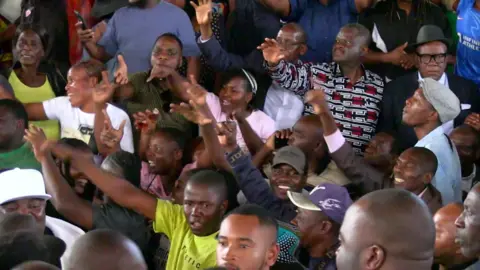
a
recent
public
hearing
in
Harare
people
cheered
speakers
who
back
the
changes
but
opponents
were
intimidated
Mnangagwa
took
power
in
2017
after
ousting
long-time
ruler
Robert
Mugabe
with
the
backing
of
the
military
–
and
went
on
to
win
disputed
elections
in
2018
and
2023.
“Term
limits
must
be
extended
from
five
to
seven
years
and
the
MPs
that
we
vote
in,
must
be
allowed
to
elect
the
president,”
a
man
said
at
the
public
hearing.
When
the
microphone
was
moved
to
the
area
where
leading
critics
of
the
bill
were
sitting,
there
were
scenes
reminiscent
of
the
violence
and
intimidation
that
has
often
marred
Zimbabwean
politics,
with
pushing,
shoving
and
fighting
–
along
with
the
snatching
of
mobile
phones
and
journalists
being
ordered
to
delete
videos
of
the
chaos.
Leading
opposition
member
and
lawyer
Fadzayi
Mahere
told
the
BBC
that
Zanu-PF
supporters
had
caused
the
“commotion”
in
order
to
prevent
critics
from
registering
their
disagreement
with
the
bill.
Chinamasa
denied
that
the
ruling
party
backers
were
behind
the
chaos.
“What
reason
what
do
we
have
as
Zanu-PF
to
be
violent
when
the
masses
are
behind
us?
The
opposition
does
not
accept
that
their
view
is
failing
to
prevail,”
he
told
the
BBC.
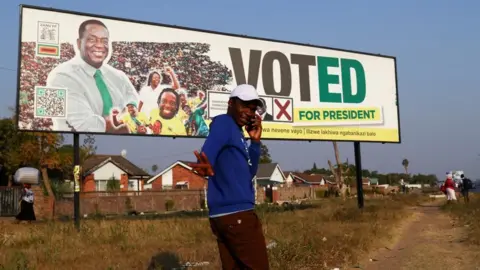 Reuters
wants
to
move
the
power
to
elect
the
president
from
the
electorate
to
parliament
But
the
opposition
says
Zimbabwe
is
seeing
a
new
wave
of
repression.
In
the
run
up
to
the
hearings,
the
opposition
groups
say,
the
police
banned
more
than
a
dozen
of
their
meetings.
National
Constitutional
Assembly
leader
Lovemore
Madhuku
said
he
was
beaten
by
masked
assailants
last
month
as
the
police
watched.
Biti,
who
leads
the
Constitution
Defenders
Forum,
is
out
on
bail
after
being
accused
of
holding
a
public
meeting
without
official
permission.
“We
have
a
history
of
repression
[in
Zimbabwe],”
he
told
the
BBC.
Parliament
is
expected
to
pass
the
bill
in
the
coming
weeks,
in
what
will
be
the
culmination
of
a
campaign
that
started
in
2024,
with
the
chanting
of
the
slogan
“2030
–
he
(Mnangagwa)
will
still
be
the
leader”.
The
campaign
faced
some
fierce
detractors
within
Zanu-PF,
but
its
main
critic
– Blessed
Geza,
also
known
as
“Bombshell”
–
died
earlier
this
year.
For
supporters
of
the
83-year-old
president,
the
political
overhaul
will
entrench
democracy,
ending
what
they
regard
as
toxic
presidential
election
campaigns
that
often
trigger
violence,
and
lead
to
results
being
disputed.
“As
you
know,
any
election
of
the
president
–
and
it’s
not
just
Zimbabwe
alone
–
.
violence
is
associated
with
a
popular
vote,”
Chinamasa
told
the
BBC,
as
he
defended
the
proposed
changes.
But
for
critics
the
bill
is
a
step
towards
recreating
the
“imperial
presidency”
they
fought
to
end
during
Mugabe’s
37-year
rule.
BBC
They
are
making
the
mistake
that
Mugabe
made.
That
of
closing
[the
democratic]
space
absolutely”
A
new
constitution
adopted
in
2013
restricted
a
president
to
serving
a
maximum
of
two
terms,
further
stating
that
any
move
to
extend
term
limits
would
need
to
be
endorsed
by
voters
in
a
referendum
–
and,
crucially,
that
a
sitting
president
cannot
benefit
from
any
extension
unless
voters
give
their
approval
in
a
second
referendum.
For
the
likes
of
Biti,
the
bill
reverses
these
hard-fought
gains,
and
could
be
challenged
in
the
courts
as,
they
argue,
it
violates
the
constitutional
requirement
that
a
referendum
be
held
before
the
president’s
term
is
extended.
But
Zanu-PF
is
confident
that
it
is
acting
constitutionally,
saying
there
is
no
need
for
a
referendum
as,
in
its
view,
the
two-term
limit
remains
–
all
that
is
happening
is
that
a
term
will
now
be
seven,
rather
than,
five
years.
But
critics
fear
that
Zanu-PF
–
led
by
Mnangagwa
–
could
be
moving
stealthily
to
scrap
term-limits.
“If
they
can
get
away
with
two
years
what
stops
them
from
getting
away
with
20
years?”
Biti
said.
Chinamasa
dismissed
suggestions
that
the
bill
signals
a
“dramatic
shift”
in
how
Zanu-PF
will
govern
Zimbabwe.
“It’s
just
that
for
this
moment
we
would
want
to
continue
the
political
stability.
We
want
to
continue
the
economic
development
that
is
taking
place
since
his
excellency
took
over
in
2018,”
Chinamasa
said.
“When
his
time
is
up
we
will
choose
other
leaders.”
For
the
opposition,
Zimbabwe
is
returning
to
its
dark
past.
“They
are
making
the
mistake
that
Mugabe
made.
That
of
closing
[the
democratic]
space
absolutely,”
Biti
said.
Post
published
in:
Featured