
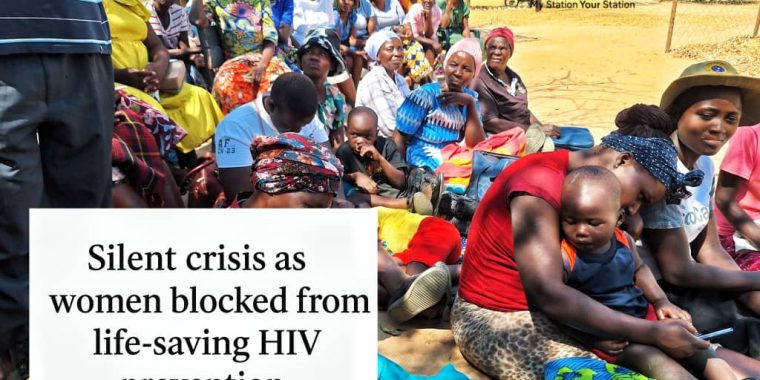

At
Katema
Clinic,
women
spoke
in
hushed
but
resolute
tones
about
how
patriarchal
traditions
and
male
dominance
are
preventing
them
from
using
Pre-exposure
prophylaxis
(PrEP),
a
proven
medicine
that
drastically
reduces
the
risk
of
contracting
HIV.
For
Cleopatra
Jongwe,
31,
from
Pomerai
Village,
PrEP
represents
hope
in
a
marriage
where
her
husband
refuses
HIV
testing
and
condom
use.
“I
know
that
if
I
use
PrEP,
I
will
not
be
infected
even
if
I
engage
in
unprotected
sex
with
that
partner,”
she
explained.
But
once
she
tried,
her
worst
fears
were
confirmed.
“The
moment
you
get
home
with
PrEP,
tensions
mount
with
our
traditional
husbands
who
accuse
us
of
promiscuity.
We
end
up
ditching
the
drugs
and
exposing
ourselves
to
HIV
because
at
the
end
of
the
day,
we
want
to
protect
our
marriages.”
Her
story
is
echoed
by
many
in
Gokwe
South,
where
women
say
male
partners
often
equate
prevention
drugs
with
infidelity.
Community
leaders
admit
the
deeply
ingrained
gender
roles
give
men
control
over
sexual
and
reproductive
decisions,
leaving
women
powerless
to
act,
even
in
the
face
of
clear
risk.
Zimbabwe
has
been
hailed
for
its
progress
against
HIV.
More
than
1.3
million
people
live
with
the
virus,
but
the
country
has
reached
the
UNAIDS
95-95-95
fast-track
targets:
95%
of
people
living
with
HIV
know
their
status,
95%
of
those
diagnosed
are
on
treatment,
and
95%
of
those
on
treatment
have
suppressed
the
virus.
The
country
has
also
slashed
mother-to-child
transmission
rates
from
about
30%
in
2005
to
6.4%
in
2025.
But
the
figure
remains
slightly
above
the
global
elimination
target
of
5%,
and
experts
warn
that
rural
gender
dynamics
risk
slowing
the
fight.
Community
Health
Nurse
Nomatter
Kamutande
says
the
cost
of
men’s
resistance
is
often
borne
by
women
and
unborn
children.
“Please,
when
situations
like
these
arise,
let
us
use
condoms
until
the
baby
is
born,
so
they
come
out
uninfected
with
HIV,”
she
pleaded.
“We
want
zero
infections.
We
do
not
want
that
scenario
where
the
mother
transmits
HIV
to
the
unborn
child,
yet
we
have
all
prevention
measures
at
our
disposal.”
Health
rights
organisations
say
the
resistance
in
communities
like
Gokwe
is
not
about
science
or
access
alone
but
culture.
In
many
patriarchal
households,
men’s
authority
extends
to
what
women
can
do
with
their
bodies.
While
PrEP
has
been
approved
in
Zimbabwe
in
multiple
forms
—
oral
pills,
a
long-acting
injection,
and
a
vaginal
ring
—
distribution
remains
limited
by
funding,
awareness,
and
stigma.
In
rural
settings,
stigma
is
often
the
harshest
barrier.
“Cultural
norms
expect
women
to
be
faithful
while
allowing
men
multiple
partners,”
said
one
health
outreach
worker.
“This
means
women
are
at
risk
even
when
they
themselves
are
abstinent.
Yet
if
a
woman
tries
to
take
PrEP,
she
is
branded
unfaithful.
It
is
a
contradiction
that
keeps
infections
alive.”
Between
January
and
June
2025,
Zimbabwe
recorded
nearly
6,000
AIDS-related
deaths,
slightly
higher
than
the
same
period
in
2024.
Health
experts
fear
such
numbers
could
rise
if
prevention
tools
remain
out
of
reach
for
those
most
at
risk.
In
places
like
Gokwe
South,
women
say
they
are
trapped:
protect
their
marriages
and
risk
infection,
or
protect
their
health
and
risk
domestic
violence
or
rejection.
The
choice,
for
many,
is
no
choice
at
all.
Reporting
by
Anesu
Masamvu
Post
published
in:
Featured