
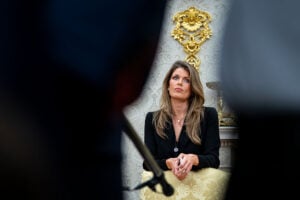
Halligan
(Photo
by
Al
Drago/Getty
Images)
Back
in
December,
the
Virginia
State
Bar
declined
to
pursue
an
ethics
probe
into
the
insurance
lawyer
posing
as
the
U.S.
Attorney
for
the
Eastern
District
of
Virginia.
The
Trump
administration
had
illegally
installed
Lindsey
Halligan
into
that
role,
and
she
took
advantage
of
that
opportunity
to
pursue
bad
cases
against
the
president’s
perceived
enemies
list.
And
she
even
managed
to
screw
those
up.
Despite
the
judicial
scoldings,
Halligan
continued
to
play
act
as
U.S.
Attorney
until
Judge
David
Novak
leveled
a
scathing
rebuke,
forcing
the
DOJ
to
finally
back
away
from
Halligan.
At
the
time,
Virginia
professional
regulators
refused
to
act
on
a
complaint
filed
by
the
Campaign
for
Accountability,
claiming
“Whether
criminal
indictments
were
obtained
through
material
misrepresentations
of
fact
and
done
for
political
purposes
falls
within
the
authority
of
the
court
to
determine
and
not
this
office.”
Fast
forward,
and
the
courts
have
adjudicated
this
and
more,
so
the
Campaign
has
filed
its
renewed
complaint.
Which
frankly
showed
tremendous
restraint
by
not
opening
with
“Yes,
Virginia,
there
is
a
code
of
professional
conduct.”
Federal
judges
have
now
issued
rulings
finding
that
Halligan
operated
without
legal
authority,
defied
judicial
orders,
and
made
“fundamental
misstatements
of
the
law.”
The
bar
wanted
the
courts
to
do
their
job.
The
courts
did
their
job.
Tag,
you’re
it.
Magistrate
Judge
William
E.
Fitzpatrick
first
found
that
Halligan
made
“fundamental
misstatements
of
the
law”
in
the
grand
jury
process,
including
suggesting
the
former
FBI
director
didn’t
have
a
Fifth
Amendment
right
not
to
testify.
Then
Judge
Cameron
McGowan
Currie
ruled
Halligan
had
been
unlawfully
serving
as
U.S.
Attorney
since
September
22,
2025,
and
had
no
lawful
authority
to
present
indictments
against
James
Comey
or
New
York
Attorney
General
Letitia
James
in
the
first
place.
Which
brought
us
to
Judge
David
Novak
wondering
why
Halligan
kept
signing
filings
as
though
she
hadn’t
already
been
told
to
stop.
After
conclusively
demanding
Halligan
knock
it
off,
Judge
Novak
warned
that
he’d
refer
her
to
the
Virginia
Bar
if
she
continued.
But
a
judge
referral
isn’t
required
for
a
state
bar
to
perform
its
baseline
ethical
obligations.
In
fact,
the
Virginia
bar
previously
disciplined
prosecutors
without
judicial
referrals.
A
Fairfax
County
prosecutor
got
disciplined
for
suborning
perjury.
A
Prince
George’s
County
prosecutor
got
disciplined
for
incompetence.
If
there’s
any
difference
here,
it’s
that
there’s
an
even
deeper
record
of
possible
violations.
“Two
federal
judges
found
that
Ms.
Halligan
operated
without
legal
authority,
with
one
finding
she
openly
defied
court
orders,
and
another
concluded
she
misled
a
grand
jury,”
CfA’s
Michelle
Kuppersmith
explained.
“Contrary
to
the
Virginia
State
Bar’s
claims,
it
has
the
authority
and
must
act
to
investigate
these
serious
allegations
and
hold
Ms.
Halligan
accountable.”
The
new
complaint
provides
another
whirlwind
journey
through
the
ethical
rules,
highlighting
a
treasure
trove
of
“stuff
lawyers
shouldn’t
do.”
Failing
to
investigate
under
these
egregious
circumstances
sends
the
message
that
powerful
prosecutors
can
violate
ethical
rules
with
impunity,
safe
in
the
knowledge
that
the
Bar
will
turn
a
blind
eye.
While
they
claimed
to
be
deferring
to
the
courts,
it’s
impossible
to
read
the
bar’s
earlier
retreat
as
anything
but
an
attempt
to
avoid
the
administration’s
ire.
From
Biglaw
firms
to
institutions
of
higher
learning,
anyone
crossing
the
White
House
finds
itself
on
the
receiving
end
of
government
harassment.
Those
petty
efforts
consistently
wither
in
litigation,
but
it
is
easier
to
avoid
the
issue
entirely.
But
gatekeeping
the
profession
isn’t
supposed
to
be
easy.
It’s
a
serious
job
and
attorneys
deserve
a
regulator
that
isn’t
going
to
shirk
that
responsibility.
When
it’s
all
said
and
done,
the
only
accountability
that
these
lawyers
are
likely
to
ever
face
for
their
abuses
will
have
to
come
from
the
profession
itself.
It’s
going
to
be
on
lawyers
to
police
our
own
and
make
sure
that
attorneys
filing
frivolous,
retaliatory
criminal
suits
or
lying
to
tribunals
don’t
get
to
saunter
through
the
revolving
door
back
to
a
cushy
firm
job
when
this
is
over.
They
can’t
be
allowed
to
practice
again.
Ball’s
back
in
your
court,
Virginia.
Earlier:
Virginia
State
Bar
Whistles
Past
Lindsey
Halligan
Ethics
Complaint
Claiming
It’s
Not
Their
Job
Disbar
Them
All:
The
Only
Accountability
Left
For
Trump’s
Lawyers
 Joe
Joe
Patrice is
a
senior
editor
at
Above
the
Law
and
co-host
of
Thinking
Like
A
Lawyer.
Feel
free
to email
any
tips,
questions,
or
comments.
Follow
him
on Twitter or
Bluesky
if
you’re
interested
in
law,
politics,
and
a
healthy
dose
of
college
sports
news.
Joe
also
serves
as
a
Managing
Director
at
RPN
Executive
Search.