
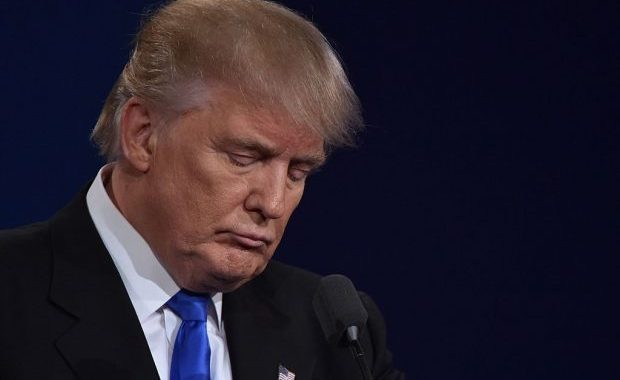
by
PAUL
J.
RICHARDS/AFP/Getty
Images)
As
the
Trump
administration
prepares
to
wrongfully
deport
Kilmar
Abrego
Garcia
for
the
second
time
after
apparently
realizing
they
had
no
real
case
against
him
in
court,
the
Maryland
resident,
unlike
last
time,
was
not
whisked
away
to
foreign
shores
before
he
had
a
chance
to
challenge
the
effort.
Judge
Paula
Xinis
reminded
the
administration
that
it
was
“absolutely
forbidden”
from
removing
Abrego
Garcia
until
she
could
hold
a
hearing.
The
federal
judges
in
Maryland
have,
for
their
part,
issued
a
standing
order
requiring
that
all
potential
deportations
must
wait
at
least
48
hours
to
give
the
courts
an
opportunity
to
hear
a
habeas
petition
from
a
potential
deportee.
Given
the
administration
already
attempted
to
secretly
fly
people
out
of
the
country
and
use
international
waters
as
an
attempt
to
skirt
jurisdiction,
the
Maryland
judges
felt
it
prudent
to
impose
a
two-day
period
to
get
ahead
of
a
matter
before
the
petitioner
wakes
up
in
a
bathtub
in
Uganda
with
note
from
Kristi
Noem
explaining
that
she’s
keeping
their
kidney.
In
a
normal
world,
this
would
be
the
sort
of
de
minimus
restriction
that
the
administration
would
take
in
stride.
In
this
world,
Trump
sued
all
the
federal
judges
in
Maryland
explaining
that
Article
II
should
allow
him
to
deport
anyone
he
decides
should
qualify
for
deportation
without
review.
Since
every
judge
was
a
defendant,
the
case
was
moved
to
Virginia
and
assigned
to
Trump-appointed
judge
Thomas
Cullen.
Cullen
dismissed
the
case,
offering
a
rebuke
of
the
administration
along
the
way:
Indeed,
over
the
past
several
months,
principal
officers
of
the
Executive
(and
their
spokespersons)
have
described
federal
district
judges
across
the
country
as
“left-wing,”
“liberal,”
“activists,”
“radical,”
“politically
minded,”
“rogue,”
“unhinged,”
“outrageous,
overzealous,
[and]
unconstitutional,”
“[c]rooked,”
and
worse.
Although
some
tension
between
the
coordinate
branches
of
government
is
a
hallmark
of
our
constitutional
system,
this
concerted
effort
by
the
Executive
to
smear
and
impugn
individual
judges
who
rule
against
it
is
both
unprecedented
and
unfortunate.
Since
the
judge’s
name
is
Cullen,
let’s
talk
about
vampires
for
a
bit.
Not
the
sparkly
Twilight
kind,
but
the
old
school
variety.
Count
Dracula
needed
permission
to
enter
a
house.
Likewise,
Republicans
yearn
for
permission
to
wallow
in
their
own
crapulence.
It’s
not
strictly
necessary,
conservatives
are
willing
to
embark
on
unconstitutional
power
grabs
sua
sponte,
but
if
they
had
their
druthers,
they
want
to
be
able
to
trace
every
excess
back
—
however
disingenuously
—
to
something
they
can
blame
on
Democrats.
Make
an
offhand
comment
in
the
early
90s
about
not
confirming
a
justice
during
an
election
year…
hold
open
a
seat
for
a
whole
year.
Explain
that
this
was
never
a
real
policy
and
it’s
a
bullshit
excuse…
confirm
a
justice
a
week
before
the
election.
Pack
key
geographic
areas
with
hack,
unqualified
appointees
and
embark
on
a
nakedly
political
effort
to
legislate
through
the
courts
until
liberals
call
it
out…
then
call
impeccably
qualified
“liberal”
judges
illegitimate.
Professional
niceties
have
obscured
judicial
abuses
for
years,
so
you
won’t
catch
a
lot
of
people
—
least
of
all
me
—
crying
over
judges
being
called
“rogue”
or
“unconstitutional.”
But
those
epithets
need
to
be
supported
by
the
record.
It’s
one
thing
to
call
a
specific
judge
“radical”
for
using
an
imaginary,
astroturfed
plaintiff
to
overturn
FDA
drug
safety
decisions
from
Amarillo
and
another
to
say
it’s
radical
for
a
whole
district
worth
of
judges
to
set
themselves
2
business
days
to
appropriately
calendar
a
hearing.
You’ve
got
to
show
your
receipts
if
you
want
to
throw
around
burns
like
that.
Let’s
call
it
the
Kendrick
Doctrine.
Cullen
is
right
that
this
recent
run
is
unprecedented,
but
it’s
a
disservice
to
reduce
it
to
a
critique
of
name-calling.
The
problem
isn’t
the
names,
but
that
the
administration
can’t
back
up
its
tone
with
hard
facts.
That’s
a
pretty
important
line
to
draw.
Relatedly,
the
issue
is
“smear[ing]
and
impugn[ing]
individual
judges
who
rule
against
it,”
because
insulting
individual
judges
as
individuals
that
implies
a
level
of
specific,
focused
criticism.
It’s
that
the
Trump
administration
rhetoric
is
never
meant
to
be
limited
to
a
singular
judge.
Any
individual
judge
they
put
on
blast
is
impliedly
a
stand-in
for
a
broader
conspiracy.
Matthew
Kacsmaryk
is
an
“activist”
because
before
the
bench
his
job
was
literally
“lawyer
for
an
activist
group.”
When
Trump
uses
the
term
it’s
a
placeholder
for
a
generic
category
of
judges
that
should
be
presumptively
distrusted
until
and
unless
they
rule
in
Trump’s
favor.
In
any
event,
Cullen
offered
the
Trump
administration
a
lifeline:
Fair
enough,
as
far
as
it
goes.
If
these
arguments
were
made
in
the
proper
forum,
they
might
well
get
some
traction.
And
under
normal
circumstances,
it
would
not
be
surprising
if
the
Executive
raised
these
concerns
through
the
channels
Congress
prescribed—that
is,
by
challenging
the
orders
as
applied
to
a
particular
habeas
proceeding
through
a
direct
appeal
to
the
Fourth
Circuit
or,
as
expressly
authorized
by
federal
statute,
by
petitioning
the
Judicial
Council
of
the
Fourth
Circuit,
which
has
the
authority
to
rescind
or
modify
local
court
rules.See
28
U.S.C.
§§
2071(c),
332(d)(4).
In
other
words,
if
the
administration
wants
to
argue
that
the
judges
have
to
issue
a
new
stay
every
time
they
receive
a
new
habeas
petition,
they
can
go
to
the
appellate
court
and
try
their
luck
with
that…
in
an
appropriate
case.
But
what
they
can’t
do
is
lodge
a
free-standing
complaint
against
ALL
THE
JUDGES
complaining
about
a
standing
order
like
a
sovereign
citizen
microdosing
ketamine.
But
as
events
over
the
past
several
months
have
revealed,
these
are
not
normal
times—at
least
regarding
the
interplay
between
the
Executive
and
this
coordinate
branch
of
government.
It’s
no
surprise
that
the
Executive
chose
a
different,
and
more
confrontational,
path
entirely.
Instead
of
appealing
any
one
of
the
affected
habeas
cases
or
filing
a
rules
challenge
with
the
Judicial
Council,
the
Executive
decided
to
sue—and
in
a
big
way.
It’s
the
vacuity
of
it
all.
The
insults
aren’t
rhetorical
flare
for
these
people,
they’re
an
end
to
themselves.
Another
bit
of
the
tacky,
gold-plated
trim
around
empty
spectacle.
Trump
sued
“all
the
judges”
because
it
gave
him
a
few
days
of
free
headlines
to
rant
about
judges
and
bolster
his
overarching
claim
that
judges
who
rule
for
him
are
good
and
those
that
rule
against
him
are
bad
—
regardless
of
the
merits.
It
was
never
a
serious
response,
because
these
are
not
serious
people.
Which
is
all
to
say
that
Judge
Cullen
probably
would
prefer
that
we
not
focus
on
his
status
as
a
Trump
nominee,
but
to
hide
that
would
let
the
White
House
get
away
with
it.
This
isn’t
a
left-wing,
liberal,
activist,
radical.
He
cannot
and
should
not
be
looped
into
the
generic
broadside
against
judges
just
because
he
honors
the
rule
of
law.
Earlier:
Trump
Administration
Goes
Full
Sovereign
Citizen
And
Sues
ALL
THE
JUDGES!
 Joe
Joe
Patrice is
a
senior
editor
at
Above
the
Law
and
co-host
of
Thinking
Like
A
Lawyer.
Feel
free
to email
any
tips,
questions,
or
comments.
Follow
him
on Twitter or
Bluesky
if
you’re
interested
in
law,
politics,
and
a
healthy
dose
of
college
sports
news.
Joe
also
serves
as
a
Managing
Director
at
RPN
Executive
Search.