
Ed.
note:
Please
welcome
Vivia
Chen
back
to
the
pages
of
Above
the
Law.
Subscribe
to
her
Substack,
“The
Ex-Careerist,” here.
I
WAS
WALKING
along
the
south
edge
of
Central
Park
when
I
saw
a
woman
in
handcuffs.
I
usually
pay
scant
attention
to
this
type
of
scene
(hey,
I’m
a
New
Yorker),
but
this
time
I
stopped.
She
was
a
middle-aged
Asian
woman
in
cheap,
nondescript
clothes
and
sneakers.
She
didn’t
look
threatening.
Flanked
by
officers
in
plain-clothes,
she
seemed
terrified,
as
she
was
pushed
into
an
unmarked
SUV.
What
did
this
woman
do
to
merit
such
ceremony?
Assault
someone
in
the
park?
Run
a
drug
cartel?
Offer
illicit
services?
None
of
those
possibilities
felt
right.
Quickly,
I
wondered:
Could
this
be
an
ICE
raid?
It’s
only
logical.
Immigrants,
including legal
residents,
are
now
being
hunted
down,
getting
detained
at
airports,
picked
up
off
the
street,
held
without
explanation,
or
speedily
deported.
Just
like
that.
Gone.
To
be
clear,
I
have
no
idea
if
this
woman’s
travails
had
anything
to
do
with
immigration.
But
her
arrest
touched
a
nerve,
tapping
a
vein
of
insecurity
I
didn’t
know
I
had.
I
am
a
Taiwan-born,
naturalized
American
citizen. I
came
to
this
country
legally.
My
parents
came
here
legally.
My
slate
is
squeaky
clean.
I
have
no
rational
reason
to
be
afraid.
Yet
I
am.
Soon
after
taking
office,
Donald
Trump
resuscitated
the Alien
Enemies
Act
of
1798 to
carry
out
his
mass
deportation
agenda.
Under
this
rarely
invoked
law,
immigrants
can
be
quickly
expelled
without
due
process.
(So
far,
the
administration
has
sent
at
least
137
Venezuelan
nationals,
alleged
gang
members,
to
a
notorious
maximum-security
prison
in
El
Salvador,
without
any
kind
of
hearing.)
Trump
is
also
stymying
legal
immigration
and
throwing
a
monkey
wrench
at
established
routes
to
citizenship.
He’s
ending
DACA,
which
protects
immigrants
who
grew
up
in
this
country
from
deportation,
and
revoking
the
protected
status
of
political
refugees,
including
Afghans
who
served
the
U.S.
government.
And,
of
course,
he’s
hellbent
on
ending
birthright
citizenship.
I
am
not
affected
by
any
of
these
measures,
but
I
am
jumpy.
If
established
rights,
such
as
birthright
citizenship,
can
be
stripped
away,
are
naturalized
citizens
like
me
vulnerable
as
well?
Lately,
my
imagination
has
been
running
wild. Did
my
father
make
a
mistake
in
his
immigration
paperwork
(mind
you,
that
was
over
50
years
ago)
that
could
jeopardize
my
citizenship?
Could
I
be
deemed
a
security
threat
for
something
I’ve
written
or
said?
Am
I
naive
to
assume
that
my
rights
as
an
American
are
unassailable?
You
might
think
I’m
paranoid.
Yet,
history
shows
I’m
not
completely
nuts.
Yung
Wing,
the
first
Chinese
graduate
from
Yale
College
(class
of
1854),
was
a
naturalized
American,
yet
his
citizenship
was
revoked
under
the Chinese
Exclusion
Act of
1882.
(Interestingly,
the
Supreme
Court
later
ruled
in United
States
v.
Wong
Kim
Ark that
the
Exclusion
Act
did
not
prevent
the
children
of
Chinese
immigrants
born
in
the
U.S.
from
acquiring birthright
citizenship.)
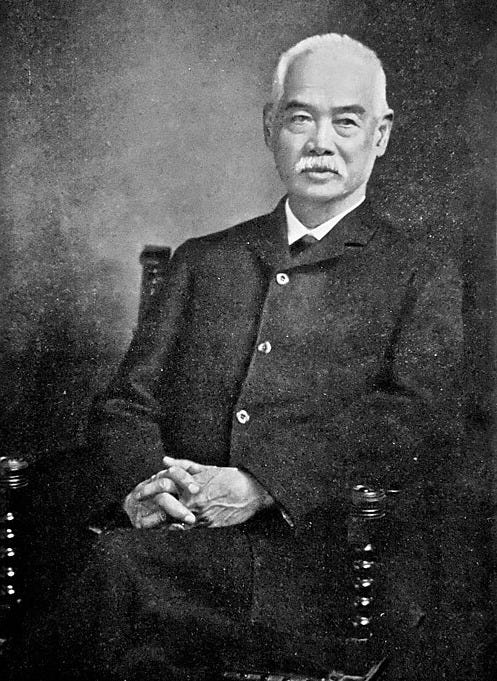
Wing,
the
first
Chinese
graduate
of
Yale.
Once
again,
Trump
is
making
China
the
boogeyman.
He’s
launched
an
all-out
trade
war
against
China,
blaming
that
nation
for
America’s
economic
woes.
While
there
are
legitimate
reasons
to
go
after
China
on
trade,
what’s
disturbing
is
the
jingoistic
language
Trump
deploys
in
his
attacks.
“China
is
ripping
us
off,”
he’s
ranted.
“They’re
killing
us
in
trade.
They’re
killing
us
in
manufacturing.
China
is
eating
our
lunch.”
In
sum,
China
is
not
just
a
rival
but
an
insatiable
monster
that
gorges
on
what
belongs
to
America.
Yellow
Peril
2.0,
anyone?
Give
Trump
credit
for
not
hiding
his
racism.
During
his
first
term,
he
labeled
Covid-19
the
“China
virus”
and
the
“Kung
Flu,”
fueling
a
torrent
of
racial
hate
in
which
Asians
were
viciously
attacked
and
even
killed
across
America.
(Studies
show
a correlation between
Trump’s
anti-China
rhetoric
and
incidences
of
Asian
hate.)
The
tentacles
of
xenophobia
extend
beyond
trade.
The
latest
example
is
the
sweeping
travel
ban
on
citizens
of
12
countries
who
happen
to
be
mainly
Black,
brown,
or
Asian.
Then,
there’s
academia
where
China
gets
extra
attention.
Recently,
Secretary
of
State
Mark
Rubio
announced
that
the
U.S.
will “aggressively
revoke” the
visas
of
Chinese
students,
and
that
those
“with
connections
to
the
Chinese
Communist
Party
or
studying
in
critical
fields”
will
be
targeted.
(Though
Trump
throws
out
the
welcome
mat
to buyers
of
his
cryptocurrency
with
ties to
the
Chinese
Communist
Party.)
It’s
totally
unclear
what
constitutes
“connections
to
the
Chinese
Communist
Party”
or
what
defines
“critical
fields.”
But
that
hardly
matters.
Because
the
message
is
clear:
The
Chinese
are
a
threat
to
America
and
need
special
scrutiny.
What’s
insidious
about
all
this is
that
it
blurs
the
line
between
the
Chinese
government
and
Chinese
people. And
that’s
precisely
the
cruel
genius
of
Trump’s
rhetoric
—
it
erases
distinctions.
Between
Asians
and
Asian
Americans.
Between
immigrants
and
citizens.
It
makes
all
Asians
suspect.
At
heart
is
the
idea
that
Asians
in
America
are
secretly
loyal
to
their
country
of
national
origin
–
that
they
can
never
be
true
Americans.
That
was
the
rationale
for
the
internment
of
Japanese
Americans
during
World
War
II,
which
too
was
based
on
the
Alien
Enemies
Act
of
1798.
Until
recently,
I
thought
imprisoning
Americans
based
on
race
could
never,
ever
happen
again
–
that
it’s
as
unimaginable
as
reinstating
segregated
bathrooms
or
taking
away
women’s
right
to
vote.
But
perhaps
it
behooves
us
to
think
outside
of
that
box.
I
can
still
see
that
woman
in
handcuffs
in
Central
Park
–
her
bowed
head,
her
look
of
fear.
And
her
shame.
There’s
no
reason
for
her
to
have
this
pull
on
me,
but
she
does.
Because
that’s
the
thing
about
being
Asian
in
America
right
now:
you’re
suspect,
even
when
all
you’ve
done
is
walk
through
the
park.
Subscribe
to
read
more
at
The
Ex-Careerist….
Vivia
Chen writes “The
Ex-Careerist”(Opens
in
a
new
window) column
on
Substack
where
she
unleashes
her
unvarnished
views
about
the
intersection
of
work,
life,
and
politics.
A
former
lawyer,
she
was
an
opinion
columnist
at
Bloomberg
Law
and
The
American
Lawyer.
Subscribe
to
her
Substack
by
clicking
here: