
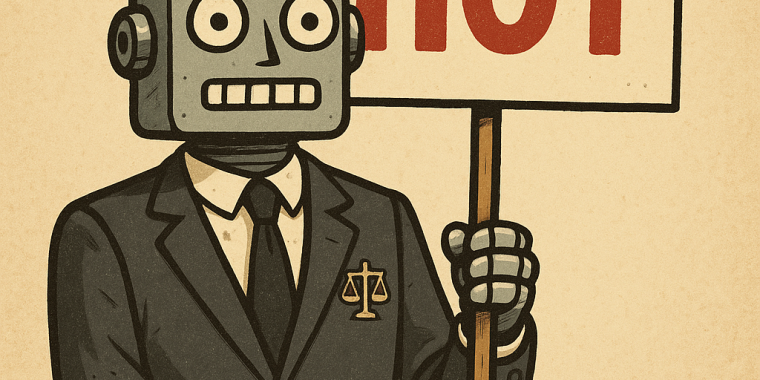
by
ChatGPT)
No
one
ever
took
DoNotPay
up
on
its
offer
to
pay
$1
million
to
anyone
willing
to
use
their
AI
system
to
argue
a
Supreme
Court
case.
It
was
a
wild
swing
from
a
company
that
couldn’t
even
successfully
get
their
system
into
traffic
court.
But
we
always
appreciated
the
gumption.
The
Supreme
Court
oral
argument
is
an
academic
circle
jerk
before
the
majority
decides
to
Trump
can
just
disappear
people
and
that
they
will
not
dwell
on
any
counterarguments,
so
why
not
let
ChatGPT
take
a
stab
at
it?
And
at
the
time
we
suggested
DoNotPay
aim
slightly
lower
and
set
up
an
experiment
to
moot
an
upcoming
Supreme
Court
case.
They
didn’t
go
ahead
with
that.
Because…
well,
the
FTC
stuff
happened.
Jenner
&
Block’s
Adam
Unikowsky
decided
to
go
ahead
and
perform
an
experiment
on
his
own
using
the
top
consumer-facing
AI
tools
out
there
right
now.
Taking
his
own
oral
argument
from
Williams
v.
Reed
(which
he
won,
providing
his
post
a
bonus
humblebrag
element),
Unikowsky
fed
the
briefs
and
key
precedent
into
Claude
4.0
Opus,
asked
it
the
questions
posed
by
the
real
justices
and
hit
the
button.
And
if
you
don’t
want
to
read
the
transcript,
he
employed
ChatGPT’s
new
“Advanced
Voice
Mode,”
and
piped
in
a
synthetic
ElevenLabs
voice
spliced
in
with
the
justices
and
made
an
audio
track
of
the
whole
argument.
Unikowsky
says:

My
conclusion:
Supreme
Court
litigators
can’t
think
of
a
billable
rate
high
enough
to
make
them
want
to
sit
through
these
extended
oral
argument
times.
If
you
needed
more
confirmation
that
the
Supreme
Court
bar
is
losing
patience
with
devoting
a
half
day
of
time
to
play
“this
could’ve
been
an
email
(brief)”
with
a
crop
of
justices
just
voting
the
party
platform…
here
it
is.
And
in
that
world,
AI
actually
makes
a
lot
of
sense.
As
an
exercise
in
dressing
up
GOP
policy
goals
with
a
few
asides
about
out-of-print
dictionaries
and
cherry-picked
18th
century
pamphleteers,
artificial
intelligence
might
be
uniquely
positioned
to
excel.
In
fact,
one
Republican
appellate
judge
has
already
foreshadowed
the
future
of
Originalist
AI,
using
bots
to
comb
massive
amounts
of
dubiously
relevant
material
to
find
references
to
reverse
engineer
results.
Not
every
case
falls
into
that
rut
—
Williams
v.
Reed,
for
example,
brought
a
pair
of
conservatives
across
ideological
lines
—
but
the
justices
pick
their
own
cases
and
the
most
consequential
matters
get
there
so
they
can
grind
their
political
axes.
The
Republican
justices
on
Supreme
Court
have
reduced
the
process
to
a
game
of
Mass
Effect:
review
the
choice
laid
out
in
one
brief,
review
the
choice
laid
out
in
the
other
brief,
smash
that
Renegade
button.
Once
the
algorithms
can
figure
out
how
to
send
Clarence
and
Sam
on
luxury
vacations,
the
bots
will
have
mastered
the
Supreme
Court
game.
Maybe
we
can
replace
the
justices
next…
Justice
Roboto
Lives.
But
even
without
the
well-earned
cynicism
for
the
Court,
Unikowsky
makes
a
strong
case
that
oral
argument
is
the
ripest
spot
for
AI
to
level
up
in
litigation.
Human
judgment
can
build
the
case,
curate
the
materials,
craft
the
briefs,
but
when
a
judge
starts
lobbing
hypotheticals
pulled
from
their
childhood
nightmares,
an
unflappable,
context-rich
algorithm
is
going
to
be
much
better
at
pulling
page
cites
in
real
time.
It’s
worth
considering
turning
to
AI
for
oral
argument
for
no
other
reason
than
to
speed
up
a
process
dragged
down
by
advocates
flipping
through
binders.

But…
do
we
really
want
perfect
oral
argument?
Indistinguishably
polished
presentations
from
“mansplaining
as
a
service”
tools
(I
believe
that
term
belongs
to
Christine
Lemmer-Webber).
Batting
away
and
turning
around
hostile
questions
without
stumbling
sounds
a
lot
like
mechanically
perfected
bullshit
to
me.
Unikowsky
notes
that
an
advantage
to
experimenting
with
AI
at
oral
argument
carries
low
downside
risk
because
most
lawyers
agree
that
it
rarely
affects
the
outcome,
but
if
we
think
the
briefs
do
most
of
the
work,
then
oral
argument’s
primary
value
must
be
in
its
extemporaneous,
personal
qualities.
The
utility
might
be
the
stumble,
or
the
hesitation
in
defending
the
tougher
hypo,
or
the
blindspot
over
a
particular
aspect
of
the
record
that
calls
otherwise
sound
arguments
into
doubt.
Without
that
dimension,
is
there
even
a
point?

A
litigant
in
New
York
sprung
this
on
an
appellate
panel
earlier
this
year.
They
were
not
amused.
On
the
one
hand,
pro
se
litigants
seem
suited
for
AI
assistance.
On
the
other
hand,
there’s
a
“garbage
in,
highly
polished
garbage
out”
problem.
Nervousness
can
serve
the
pro
se
litigant.
You
know
who’s
confident?
Sovereign
Citizens.
And
no
one
has
a
lick
of
patience
for
their
jackassery.
But
a
nervous
and
confused
pro
se
litigant
can
earn
the
help
of
a
conscientious
judge
willing
to
tailor
questions
to
tease
out
answers
that
the
litigant
doesn’t
even
realize
can
help
them.
AI
will
march
confidently
off
the
cliff,
humans
can
get
a
life
preserver.
That’s
because
all
courts
are
really
maritime
courts
because
of
the
gold
fringe
on
the
flag,
am
I
right
Sovereigns?
In
the
New
York
case,
the
litigant
replaced
themselves
with
a
generically
attractive
white
bro.
Who
speaks
when
an
AI
handles
oral
argument?
Unikowsky,
an
accomplished
advocate,
created
a
voice
modeled
imperfectly
on
his
own.
Do
we
reify
existing
biases
when
we
turn
oral
argument
over
to
the
bots?
Parties
hire
a
lot
of
generic
white
dudes
now,
but
when
we
invent
our
own
advocates,
do
we
just
lean
even
harder
into
that?
Or,
potentially
worse,
will
parties
craft
their
avatars
to
subvert
the
optics
of
a
case.
Before
you
dismiss
the
unconscious
influence
a
fake
Black
advocate
could
have
cynically
defending
racial
gerrymandering,
remember
all
the
effort
that
went
into
putting
a
real
life
Black
person
on
the
Court
to
cynically
defend
racial
gerrymandering.
Which
is
to
say
it’s
always
possible
to
find
human
lawyer
to
act
on
these
unconscious
themes.
David
Goldberger
represented
the
Illinois
Nazis
and
while
his
being
Jewish
never
came
up
in
the
case,
it’s
the
sort
of
thing
that
sits
in
the
back
of
a
judge’s
mind
when
a
case
turns
on
“I
may
not
agree
with
what
you
say
but
…”
That
said,
AI
opens
the
bullpen
to
infinity.
Maybe
we
don’t
allow
AI
to
have
a
deepfake
face…
fair
enough.
Voices
trigger
implicit
stereotyping
too.
All
that
is
without
addressing
the
real
risk
that
AI
is
itself
hopelessly
white-coded.
Hallucinations
continue
to
plague
AI
as
well.
Unikowsky
puts
a
lot
of
faith
in
telling
the
AI
“please
stop
hallucinating”
and
while
it’s
reasonable
to
put
more
faith
in
that
than
telling
the
Trump
administration
“please
stop
ignoring
due
process”
neither
seems
an
effective
prophylactic.
Legal
specific
AI
products
invest
a
lot
of
time
and
energy
into
solving
the
hallucination
problem
and
studies
suggest
they
can’t
avoid
it
entirely.

The
resulting
answer
is…
creative.
Unikowsky
reports
the
AI
resisted
answering
on
the
grounds
that
the
question
was,
in
fact,
dumb.
But
the
fact
that
it
relented
and
made
up
an
answer
demonstrates
what
happens
when
a
restriction
on
hallucinating
runs
headlong
into
trying
to
confidently
comply
with
whatever
ridiculous
question
a
judge
asks.
Turning
oral
argument
over
to
the
bots
seems
almost
as
bad
an
idea
as
turning
driving
over
to
a
Tesla.
But
the
merits
Unikowsky
identifies
can’t
be
ignored.
The
technology
will
continue
to
improve
and
the
profession
needs
to
stay
ahead
of
it.
A
hybrid
model
allowing
advocates
to
consult
with
their
AI
—
if
only
to
streamline
the
process
of
rifling
through
documents
to
find
the
right
quote
—
seems
like
common
sense
already.
The
time
is
now
to
brainstorm
the
right
regulations.
Requiring
voices
to
be
the
human
on
the
brief?
Mandating
both
sides
have
equal
access?
Certifications
for
acceptable
tools?
Unikowsky
offers:

Yeah…
not
exactly
filled
with
confidence
that
in
his
defense
of
turning
AI
over
to
legal
his
AI
drew
a
guy
talking
into
the
back
of
a
helmet.
 Joe
Joe
Patrice is
a
senior
editor
at
Above
the
Law
and
co-host
of
Thinking
Like
A
Lawyer.
Feel
free
to email
any
tips,
questions,
or
comments.
Follow
him
on Twitter or
Bluesky
if
you’re
interested
in
law,
politics,
and
a
healthy
dose
of
college
sports
news.
Joe
also
serves
as
a
Managing
Director
at
RPN
Executive
Search.