
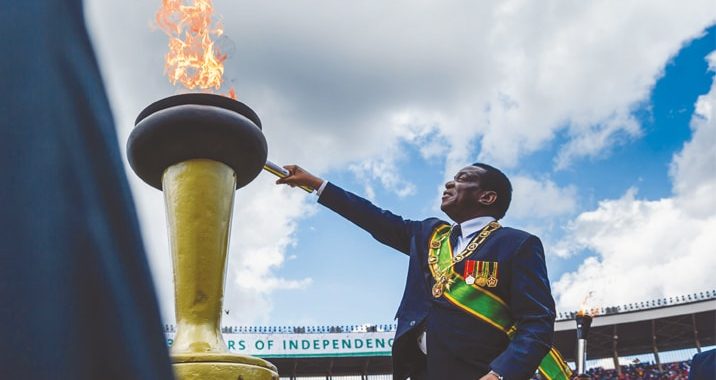

This
year,
we
unite
in
recognition
of
the
46th
anniversary
of
our
independence,
a
pivotal
moment
in
our
history
that
not
only
signified
the
end
of
colonial
rule
but
also
heralded
our
long-awaited
democratic
breakthrough.
Independence
Day
is
not
merely
a
date
on
the
calendar;
it
serves
as
an
important
reminder
of
our
past—the
struggles,
sacrifices,
and
unwavering
commitment
of
thousands
of
individuals
who
fought
for
our freedom. It
invites
us
to
reflect
deeply
on
our
journey
and
to
remember
the
price
that
was
paid
for
the independence
we
enjoy
today.
As
we
commemorate
this
day,
it
is
imperative
to
confront
a
crucial
question:
Who
truly
enjoys
the
fruits
of
Independence
in
Zimbabwe
today?
The
stark
reality
is
that
many
of
our
fellow
citizens—particularly
vulnerable
populations
among
us
including
widows,
the
elderly, opharns, and
people
with
disabilities—continue
to
survive
with
profound
hardships.
Those
who
toil
daily
to
make
ends
meet,
the
unemployed, the
informal traders,
vendors
striving
for
survival,
and
civil
servants
who
receive
meagre
allowances
face
increasing
challenges.
Additionally,
informal
traders
and
Small-Medium
businesses
continue
to
endure
harassment
at
the
hands
of
the
Zimbabwe
Republic
Police
(ZRP)
and
Municipal
police
officers,
fostering
a
sense
of
disillusionment
with
the
promises
of
independence
and
democracy.
Their
struggles
reveal
a
failure
that
goes
beyond
party
politics;
it
is
a
systemic
issue
that
reflects
a
deep-rooted
inequality,
one
that
can
be
attributed
solely
to
the
current
ZANU-PF
manifesto
of
a
small,
powerful elite.
As
we
commemorate
our
Independence
Day,
it
is
important
to
reflect
on
the
socio-economic
challenges
facing
our
nation. Many
Zimbabweans
are
experiencing
severe
poverty
and
underdevelopment.
This
situation
can
be
largely
attributed
to
misplaced
priorities
established
by
an
elite
class,
which
engages
in
primitive
accumulation
of
wealth.
As
a
result,
Zimbabwe
is
being
treated
more
like
a
private
entity
than
as
a
sovereign
nation,
contributing
to
the
ongoing
challenges
faced
by
the
majority
of
its
citizens. This
elite
group
often
behaves
as
though
they
are
above
the
law,
highlighting
a
disparity
in
how
wealth
is
displayed
and
treated
in
the
country.
While
some
individuals may flaunt
large
amounts
of
foreign
currency,
many
small
traders find
themselves
in legal
trouble
for
operating
with
modest
sums,
such
as
a
$20
USD
note,
in
public
markets
and
town
squares
across
cities
like
Harare’s Fourth Street,
Bulawayo’s Tredgegold, at
OK Supermarket in
Gweru,
Moto-Moto
Mutare,
and
at
Wimpy
in
Masvingo.
Additionally,
small-scale
cross-border
traders,
who
are
predominantly
women
and
youth
striving
to
support
their
families,
often
have
their
goods
confiscated
by
revenue
officers
at
various
border
points.
In
contrast,
the
elite
class,
tenderpreneurs (zviganandas) frequently
donate
cars
and
cash
without
fulfilling
their
tax
obligations,
further emphasizing
the
economic
inequalities
in
Zimbabwe.
This
has
led
to
a
disheartening
rise
in
inequality,
with
joblessness
remaining
a
defining
characteristic
of
our
purported
economic
growth.
The
elite
class (Zvigananda) are
above
the
law,
whilst
the
toiling
masses
suffer
from
lawfare
and
a
brazen,
dirty,
corrupt
police
and
Zimbabwe
Revenue
Authority
(ZIMRA)
system.We
continue
to
observe
the
exploitation
and
exclusion
of
villagers
in
the
ongoing
resource
extraction
taking
place
in
their
regions.
The
unfortunate
realities
faced
by
communities
in
Mutoko,
Marange,
Gwanda,
Hwange,
Gutu,
Buhera,
and
Inyathi,
among
others,
are
disheartening.
Forty-six
years
after
independence,
ordinary
Zimbabweans
are
still
treated
as
second-class
citizens,
while
corrupt
state
officials
accept
small
bribes
to
favour
foreign
investors.
The
liberty
and
freedom
of
villagers
are
under
systematic
attack.
Fundamentally,
we
face
an
ongoing
struggle
against
a
predatory
elite
cabal
that
seeks
to
manipulate
our
hard-won
democratic
framework
to
serve
their
narrow
interests.
As
we
reflect
on
the
significance
of
Independence
Day,
we
are
reminded
of
the
selfless
sacrifices
made
by
the
sons
and
daughters
of
our
land
who
took
up
arms
against
colonial
oppression.
Their
fight
was
not
merely
for
liberation
but
was
also
deeply
rooted
in
addressing
the
economic
and
racial
injustices
that
plagued
our
society.
The
struggle
encompassed
the
fight
for
land—land
that
had
been
unjustly
appropriated
by
the
minority
white
population—as
well
as
the
fight
for
One-Man-One-Vote,
essential
for
dismantling
a
constitutional
order
that
had
historically
marginalised
the
black
majority,
relegating
them
to
the
depths
of
poverty
and
segregation.
The
date
of
April
18,
1980,
marked
a
watershed
moment
when
the
Union
Jack
was
lowered,
giving
way
to
the
Zimbabwean
flag—a
powerful
symbol
of
new
hope
and
prosperity.
We
take
pride
in
the
fact
that
in
2013,
the
people
of
Zimbabwe
crafted
their
own
constitution and
participated
in
a
referendum
to
adopt
the
new
charter,
a
momentous
achievement
reflecting
the
collective
will
of
our
citizens.
Unfortunately,
this
hard-earned
national
contract
is
now
under
siege,
as
a
reactionary
clique
in
this
government
appears
intent
on
dismantling
it
piece
by
piece.
The
introduction
of
the
Constitutional
Amendment
Number
3,
Bill
of
2026,
is
a
regression
that
undermines
the
aspirations
our
people
hold
dear:
the
very
values
for
which
many
sacrificed
their
lives
during
the
liberation
struggle.
Whilst
constitutions
can
be
amended
from
time
to
time,
the
process has
to be
legal
and
consultative.
Changing
the
supreme
contract
without
a
referendum
is
the
worst
sign
of
dictatorship.
These
amendments
signal
a
disturbing
trend:
a
calculated
move
to
transform
Zimbabwe
into
a
one-party
state,
a
dynasty
with
President
Mnangagwa
positioning
to
crown
himself
Munhumutapa
III,
edging
the
nation
toward
an
absolute
monarchy.
The
fundamental
rights
that
we
fought
for—such
as
the
rights
to
freedom
of
assembly
and
expression—are
increasingly
under
threat
as
ZANU-PF
seeks
to
solidify
its
authoritarian
grip
on
power.
The
disheartening
scenes
witnessed
during
recent
public
hearings,
where
citizens
were
systematically
silenced
and
denied
the
opportunity
to
participate
freely,
represent
a
serious
affront
to
our
democracy
and
merit
unyielding
condemnation.
The
unlawful
dismissal
of
Jessie
Majome,
who
served
as
the
Chairperson
of
the
Zimbabwe
Human
Rights
Commission
(ZHRC)
follows
a
recent
pattern
of
capture
of
opposition
political
parties
through
choreographed
recalls
and
court
judgements
at
whose
heart
is
to
destroy
voices
of
dissent.
On
November
24,
2017,
the
military
described
its
operations
as
a
mission
to
“restore
order,”
specifically
targeting
individuals
accused
of
theft
in
close
proximity
to
then-President
Mugabe.
Now,
with
the
introduction
of
a
proposed
Constitutional
Amendment,
there
is
a
movement
to
redefine
the
military’s
role.
Instead
of
primarily
focusing
on
upholding
the
Constitution
and
saluting
the
national
flag,
the
proposal
suggests
that
the
military’s
responsibilities
should
shift
toward
“defending/protecting
Munhumutapa
III.”
This raises
important
questions
for
our
state
institutions:
Are
these
policies
and
constitutional
changes
aimed
at
fostering
a
new
vision
for
a
great
Zimbabwe,
or
do
they
risk
undermining
the
sacrifices
made
by
those
who
fought
for
our
independence?
It
is
particularly
disheartening
that
these
developments
are
occurring
just
before
the
anniversary
of
our
nation’s
independence,
a
time
that
should
be
marked
by
the
celebration
of
our
democratic
values
and
human
rights.
In
response
to
these
urgent
issues,
we
call
on
all
Zimbabweans
to
stand
firm
in
our
diversity
as
a
powerful
force
and
to
fiercely
resist
the
erosion
of
our
constitution.
This
fight
is
not
just
a
reflection
of
our
liberation
struggle
but
is
essential
for
fulfilling
the
aspirations
of
the
post-independence
generations.
We
cannot
afford
to
be
complacent.
If
we
allow
this
constitutional
dismantling
to
continue
unchecked,
we
risk
facing
even
more
severe
amendments—such
as
Amendment
Number
4—which
would
lead
our
nation
straight
into
a
full
blown
dictatorship,
banning
political
parties
and
civil
society.
It
is
time
to
act
decisively and protect
democracy
and
our
hard
won
independence.
The
proposed
“national
title
deeds”
on
the
agricultural
land
program
is
similar
but
different
in
methodology
from
the
colonisation
of
Zimbabwe
itself.
The
proposal
to
force
farmers
to
pay
the
upper
of
$2000
USD
per
hectare
seeks
to
ensure
that
the
current Zvigananda and
their
foreign
collaborators
become
the
new
landed
class
in
Zimbabwe.
They
want
to
install
themselves
as
the
new
“billionaires”
without
even
producing
a
matchstick.
This
will
automatically
reduce
ordinary
people
from
being
citizens
to
slaves.
This
must
be
resisted
even
if
it
means
another
revolution.
Land
is
our
birthright!
We
must
unite
to
defend
the
hard-won
freedoms
that
define
our
nation
and
uphold
the
democratic
ideals
our
forebears
fought
so
valiantly
to
establish.
It
is
imperative
that
Zimbabwe
returns
to
order
and
constitutionalism.
Our
taxes
should
unequivocally
be
allocated
toward
building
our
hospitals,
schools,
and
public
transport
systems,
as
well
as
supporting
restorative
justice
for
issues
like
Gukurahundi,
and
providing
for
civil
servants
and
war
veterans.
The
current
abuse
of
our
tax
money
to
bribe
political
actors
with
cash
and
cars
is
just
as
reprehensible
as
Ian
Smith’s
use
of
hut
taxes
to
finance
arms
that
oppressed
the
majority
of
black
Zimbabweans.
This
must
end.
Happy
Independence
Zimbabwe.
May
2026
be
the
year
of
the
people!
Post
published
in:
Featured