

31.5.2026
8:38
Key
Messages
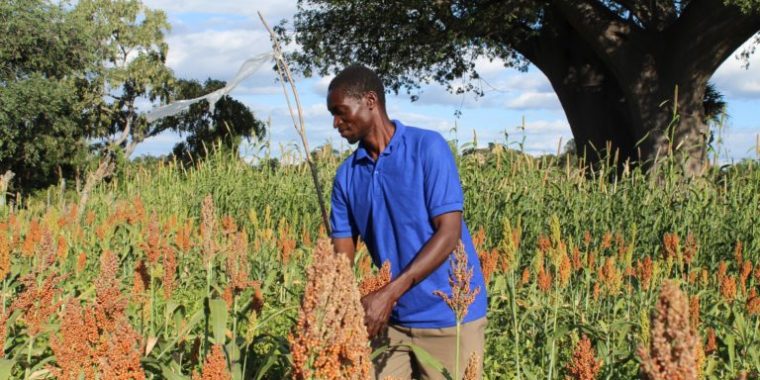
Onias
Machono
from
the
Dende
farmers’
club
in
his
millet
and
rapoko
crops
where
he’s
set
up
a
scarecrow
to
fend
off
the
quelea
weaver
birds.
Image
courtesy
of
Tatenda
Chitagu.
-
Stressed
(IPC
Phase
2)
outcomes
are
expected
through
September
2026
in
deficit-producing
areas
as
the
April
to
June
main
crop
harvest
progresses. Households
in
these
areas
are
accessing
food
through
their
own-produced
crop
harvest,
despite
localized
impacts
to
production
from
excessive
rainfall
and
prolonged
dry
spells
during
the
November
2025
to
March
2026
rainy
season.
However,
households
still
have
limited
cash
incomes
–
in
part
due
to
below-average
access
to
casual
labor,
livestock
sales,
wild
produce
such
as Mopane worms,
remittances
and
other
sources
–
preventing
them
from
meeting
essential
non-food
needs. -
Minimal
(IPC
Phase
1)
outcomes
are
ongoing
and
expected
through
September
in
typical
surplus-producing
areas
in
the
Mashonaland
Provinces and
other
parts
of
the
country.
Households
can
meet
their
food
and
non-food
needs,
despite
localized
impacts
to
production
from
excessive
rainfall
and
dry
spells.
Households
will
have
access
to
own-produced
stocks
and
sufficient
income
from
food
and
cash
crop
sales,
casual
labor,
self-employment,
and
other
typical
sources. -
Increased
availability
of
staple
cereals
at
household
and
market
levels
is
resulting
in
seasonal
price
declines
in
surplus-producing
areas. Maize
grain
prices
are
between
0.23-0.29
USD/kilogram
(kg)
(or
4-5
USD/17.5
kg
bucket),
about
40-50
percent
lower
than
prices
during
the
January
to
March
2026
peak
lean
season.
However,
household
and
open
market
staple
cereal
stocks
are
limited
in
some
deficit-producing
southern
and
eastern
areas
where
crop
production
was
low.
The
movement
of
staple
cereal
from
surplus-
to
deficit-producing
areas
is
still
low
across
most
areas,
as
most
farmers
with
surpluses
have
not
yet
finished
harvesting
and
are
not
yet
ready
to
sell
their
grain.
As
a
result,
staple
cereal
prices
in
deficit-producing
areas
remain
elevated,
around
0.46
USD/kg
(8
USD/bucket).
The
demand
for
maize
meal
in
these
areas
also
remains
unseasonally
high. -
Above-average
water
availability following
average
to
above-average
cumulative
rainfall
received
during
the
November
2025
to
March
2026
rainy
season
is
supporting
winter
crop
production
and
seasonal
livelihood
activities
such
as
casual
labor,
horticultural
production,
brick
making,
and
construction
labor.
Other
seasonal
activities
include
the
harvesting
and
sale
of
wild
products
such
as
thatch
grass
and
wild
fruits,
crafts,
and
petty
trade. -
Livestock
conditions,
prices,
and
income
are
expected
to
be
above
average through
the
outlook
period,
supported
by fair
to
good
pasture
conditions and
above-average
hay,
silage,
and
stover
stocks.
However,
the
prevalence
of
livestock
diseases,
such
as
January
disease,
lumpy
skin
disease,
foot
and
mouth
disease,
and
others
in
some
areas
will
affect
livestock
conditions,
reducing
potential
income
from
livestock
sales. -
Fuel
price
and
transport
fare
increases driven
by
the
conflict
in
the
Middle
East
continue
to
negatively
impact
poor
households’
livelihoods,
disposable
income,
and
access
to
markets.
Despite
relative
stability
in
the
prices
of
some
basic
food
and
non-food
commodities,
increases
in
production
and
freight
costs
and
some
commodity
supply
disruptions
will
likely
push
price
increases
for
some
commodities
in
the
near
term.
According
to
the Zimbabwe
National
Statistics
Agency
(ZIMSTAT),
the
May
local
ZiG
(0.5
percent)
and
USD
(0.3
percent)
monthly
inflation
decreased
by
0.6
and
0.8
percent,
respectively,
from
April.
Post
published
in:
Agriculture
We
use
cookies
on
our
website
to
give
you
the
most
relevant
experience
by
remembering
your
preferences
and
repeat
visits.
By
clicking
“Accept
All”,
you
consent
to
the
use
of
ALL
the
cookies.
However,
you
may
visit
“Cookie
Settings”
to
provide
a
controlled
consent.
Manage
consent