
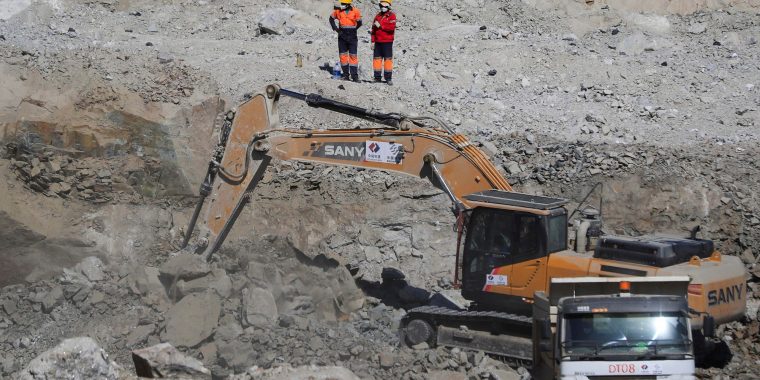

Zimbabwe
has
the
largest
lithium
reserves
on
the
African
continent.
Lithium
has
been
mined
since
the
colonial
period
in
the
1950s.
It’s
a
critical
part
of
rechargeable
lithium-ion
batteries
that
are
essential
for
the
electric
vehicle
industry.
Globally,
the
lithium-ion
battery
market
is
worth
US$78.9
billion
and
is
likely
to
amount
to
US$349.6
billion
by
2034.
In
2021,
there
was
a
new
lithium
rush
in
Zimbabwe
because
of
increased
global
demand
for
the
mineral.
Today,
most
of
Zimbabwe’s
lithium
mines
are
owned
by
Chinese
mining
companies
like
Sinomine,
Zhejiang
Huayo
Cobalt,
Chengxin
Lithium,
Yahua
and
Canmax.
Lithium-ion
batteries
aren’t
made
in
Zimbabwe.
Instead,
the
country
exports
the
mineral
as
a
raw
resource.
Much
of
the
value
of
Zimbabwe’s
lithium
–
480,000
metric
tonnes
mined
since
2015
–
is
reaped
by
companies
in
China
which
make
the
raw
lithium
into
batteries
and
other
goods.
During
the
lithium
rush,
artisanal
miners
were
involved
in
the
lithium
industry.
They
mined
and
sold
raw
ore.
But
their
participation
has
recently
slowed
down
because
artisanal
lithium
mining
is
largely
illegal.
For
this
reason,
official
data
reports
haven’t
been
able
to
record
how
much
lithium
has
been
mined
this
way.
In
2022,
the
Zimbabwean
government
banned
the
export
of
raw
lithium
ore
in
an
attempt
to
regulate
the
industry
and
curb
artisanal
lithium
mining
and
illicit
exports.
However,
it
was
still
permitted
to
export
lithium
concentrate
(a
powdered
version
of
the
raw
mineral).
But
the
government
recently
decided
to
ban
the
export
of
lithium
concentrate
from
January
2027.
It
says
the
ban
will
improve
the
country’s
efforts
towards
building
facilities
that
add
value
to
lithium,
such
as
lithium
refineries
and
battery
production
plants.
I
research
resource
extraction
and
environmental
change
caused
by
mining
in
southern
Africa.
If
properly
implemented
and
regulated,
the
new
ban
on
exporting
lithium
concentrate
could
increase
Zimbabwe’s
self-sufficiency
in
lithium
processing.
It
could
even
help
the
country
achieve
the
middle-income
economy
it
has
set
out
in
its
Vision
2030,
in
which
it
aims
to
have
a
mining
industry
that
generates
US$12
billion
a
year
in
revenue.
Zimbabwe
has
the
world’s
second
largest
reserves
of
platinum
and
huge
supplies
of
chrome.
Making
goods
locally
from
lithium
would
expand
the
mineral
export
revenue
in
addition
to
platinum
and
chrome.
However,
becoming
a
middle-income
nation
is
currently
hampered
by
mining
revenue
leaking
away
–
through
losses
from
smuggling,
tax
evasion
and
others.
Also,
environmental
justice
groups
estimate
that
about
3,000
tonnes
of
raw
lithium
leaves
the
country
daily.
Between
now
and
the
time
the
2027
ban
on
exporting
lithium
concentrate
comes
into
effect,
about
1.6
million
additional
tonnes
of
raw
lithium
could
have
been
extracted
and
sent
overseas.
This
means
the
government
should
not
wait
for
2027,
but
should
implement
the
ban
on
lithium
concentrate
exports
now.
The
ban
also
doesn’t
seem
to
be
aimed
at
uplifting
the
livelihoods
of
communities
who
live
near
lithium
mines.
I
describe
these
communities
as
living
in
sacrifice
zones:
they
bear
the
brunt
of
lithium
mining
pollution
and
land
grabs
for
mines.
These
vulnerable
groups
include
women,
children
and
artisanal
lithium
miners
who
have
been
disempowered
by
the
just
transition.
To
use
its
lithium
reserves
to
uplift
the
country,
the
government
of
Zimbabwe
needs
to
establish
local
plans
that
place
community
development
and
improved
livelihood
of
mining
communities
at
the
centre
of
mining.
This
could
be
done
through
pro-poor
development
policies
that
will
create
employment
opportunities
for
local
people
in
lithium
mining
frontiers.
It
could
also
include
compelling
mines
to
purchase
locally
made
goods
and
fresh
produce.
Bringing
artisanal
miners
into
local
value
chains
in
gold,
diamond
and
chrome
mining
would
also
help
these
informal
miners
become
part
of
the
formal
mining
economy.
The
politics
of
lithium
mining
in
Zimbabwe
Zimbabwe
is
one
of
the
10
biggest
global
lithium
exporters
(Chile,
Argentina
and
Australia
are
others).
In
the
first
nine
months
of
2023
alone,
it
is
estimated
that
about
US$209
million
worth
of
Zimbabwean
lithium
was
sold.
The
potential
of
lithium
to
stimulate
economic
development
and
attract
international
investments
is
unquestionable.
The
problem,
however,
over
the
last
few
years
seems
to
be
that
the
market
isn’t
regulated
enough.
Lithium
mining
has
not
created
many
jobs,
and
for
the
few
that
are
employed,
there’ve
been
gross
human
rights
abuses,
wage
cuts,
and
a
lack
of
investment
in
road
infrastructure.
The
politics
of
lithium
mining
are
also
shaped
by
networks
of
political
elites.
They
are
known
as
the
lithium
barons:
people
who
engage
in
corrupt
deals
and
smuggling.
Another
problem
has
been
the
misplaced
focus
on
artisanal
miners.
For
example,
the
2022
lithium
ban
mainly
targeted
artisanal
lithium
miners
who
were
on
the
margins
of
the
industry.
It
did
not
affect
large-scale
mining
companies
to
the
same
extent.
When
the
lithium
ban
was
introduced,
the
market
for
processed
lithium
expanded
and
the
demand
for
unprocessed
lithium
drastically
shrank.
This
left
artisanal
miners
with
raw
lithium
and
a
shrinking
market
price.
What
needs
to
happen
next
Between
now
and
2027,
lithium
mining
companies
in
Zimbabwe
will
try
to
extract
as
much
lithium
as
possible
before
the
ban
comes
into
effect.
This
could
deplete
the
lithium
reserves
in
the
country.
Mining
investors
might
look
elsewhere.
The
Zimbabwean
government
should
take
these
steps
to
solve
the
problem:
1)
The
Zimbabwe
government
must
ensure
total
monopoly
of
its
lithium
reserves.
The
over-reliance
on
Chinese
investments
in
the
lithium
industry
has
set
a
bad
precedent
for
what
might
happen
with
other
minerals
in
future.
It
will
take
time
for
the
government
to
undo
this
and
set
up
its
own
monopoly.
This
resource
sovereignty
will
be
vital.
2)
The
government
must
consider
how
to
govern
minerals
in
a
people-centred
way.
So
far,
lithium
has
not
benefited
ordinary
Zimbabweans.
3)
The
resource
communities
where
extraction
deals
are
taking
place
must
be
consulted
and
brought
into
the
conversation
about
how
Zimbabwe
can
benefit
from
its
lithium
reserves.
Communities
in
Zimbabwe
like
Buhera,
Bikita,
Mberengwa
and
Goromonzi
have
endured
years
of
lithium
mining
pollution.
This
includes
their
freshwater
sources
being
contaminated
by
mines,
toxic
dust
from
blasting,
mineworkers
being
exposed
to
hazardous
and
unsafe
working
conditions,
displacement,
and
above
all
gross
human
rights
abuses
from
multinational
lithium
mining
companies.
4)
The
ban
on
the
exports
of
lithium
concentrates
is
crucial
for
stimulating
local
beneficiation
and
value
addition.
The
government
should
implement
this
ban
immediately
rather
than
waiting
for
the
2027
timeline.
Jabulani
Shaba,
Postdoctoral
researcher,
University
of
Groningen
This
article
is
republished
from
The
Conversation
under
a
Creative
Commons
license.
Read
the
original
article.