

by
HARARE —
Zimbabwe’s
tobacco
sector
was
once
on
the
brink
of
collapse.
Now,
it’s
booming
again.
Last
year
alone,
it
earned
the
country
close
to
$1
billion
in
revenue.
But
though
the
crop
is
one
of
the
country’s
top
exports
and
production
has
soared,
small-scale
contract
farmers
say
they
see
little
profit
due
to
restrictive
financing
agreements.
The
tobacco
boom,
farmers
say,
is
keeping
them
in
debt.
Gift
Ngoma
is
among
them.
When
he
lost
his
clerk
job
eight
years
ago,
tobacco
farming
was
the
only
way
he
could
feed
his
family.
But
fertilizer,
seeds
and
labor
proved
expensive.
Even
money
from
the
few
cows
he
sold
wasn’t
enough.
Like
many
rural Zimbabweans,
he’d
gotten
land
—
about
3.5
hectares
(9
acres)
—
through
traditional
tenure.
But
those
who
secured
land
that
way
often
lack
a
title
deed.
For
Ngoma,
formal
credit
was
out
of
the
question.
Ngoma
knew
of
local
farmers
who
had
entered
agreements
with private
companies.
The
deals
looked
good
at
first:
Each
planting
season,
a
company
provided
farmers
with
seeds
and
fertilizer
on
credit.
They’d
offer
technical
support
throughout
the
season.
In
return,
farmers
sold
enough
of
their
crop
to
the
company
and
used
part
of
the
revenue
to
cover
what
they
owed.
Ngoma
signed
on
with
Premium
Leaf
Zimbabwe,
a
subsidiary
of
Premium
Tobacco
—
a
global
company
headquartered
in
Dubai.
The
company
provided
him
with
seeds
and some
money for
labor.
Once
harvest
came,
he
sold
enough
tobacco
to
the
company
to
pay
off
his
debt.
But
over
time,
he
says,
this
agreement
came
to
feel
like
a
trap.
The
seeds
and
other
inputs
are
overpriced,
he
says,
and
there’s
little
money
left
over
to
find
true
success
as
a
farmer.
Gift
Ngoma,
a
tobacco
farmer,
waits
to
sell
his
crop
in
Harare. — Photo: Linda
Mujuru,
GPJ
Zimbabwe
Gift
Ngoma,
a
tobacco
farmer,
waits
to
sell
his
crop
in
Harare.
He
turned
to
farming
after
losing
his
formal
job,
but
he
says
contract
agreements
have
trapped
him
in
debt.
He
now
advocates
for
land
rights
and
alternative
financing.
Thin
rewards
More
than
100,000
small-scale
tobacco
farmers
in
Zimbabwe
have
entered
into
contracts
with
tobacco
companies,
according
to
data
from
the
Tobacco
Industry
and
Marketing
Board,
a
statutory
body
that
oversees
tobacco
production in
the
country.
The
contracts
—
heavily
financed
by
companies
such
as
British
American
Tobacco
and
Tian
Ze
(China
Tobacco)
—
now
support
over
95%
of
Zimbabwe’s
tobacco
production.
We
are
in
a
cycle
of
oppression.
That
production
has
rebounded
from
just
44
million
kilograms
in
2006
to
232
million
kilograms
in
2024.
The
industry
brings
in
hundreds
of
millions
of
United
States
dollars
each
year
and
contributes
nearly
10%
of
Zimbabwe’s
gross
domestic
product.
It
accounts
for
30%
of
all
exports
and
over
50%
of
agricultural
exports.
In
2024,
Zimbabwe
was
the
world’s
third-largest
exporter
of
raw
tobacco,
accounting
for
10%
of
global
exports,
behind
Brazil
and
India.
But
smallholding
farmers don’t
feel
that
success.
In
December
2024,
the
government
announced
plans
to
issue
title
deeds
to
beneficiaries
of
the
land
reform
program,
which
would
give
farmers
a
chance
to
use
their
land
as
collateral
and
rely
less
on
contract
farming.
But
for
now,
many
still
rely
on
tobacco
contracts.
“We
are
in
a
cycle
of
oppression,”
Ngoma
says.
“There
is
poverty
in
contract
farming.
It’s
as
if
we
are
laborers
on
our
farms.”
When
Global
Press
Journal
reached
out
to
Premium
Leaf
Zimbabwe
for
comment,
they
said
it
was
the
company’s
policy
to
“protect
the
privacy
of
our
farmers
and
operational
integrity.”
Tian
Ze
and
British
American
Tobacco
did
not
respond
to
several
requests
for
comment.
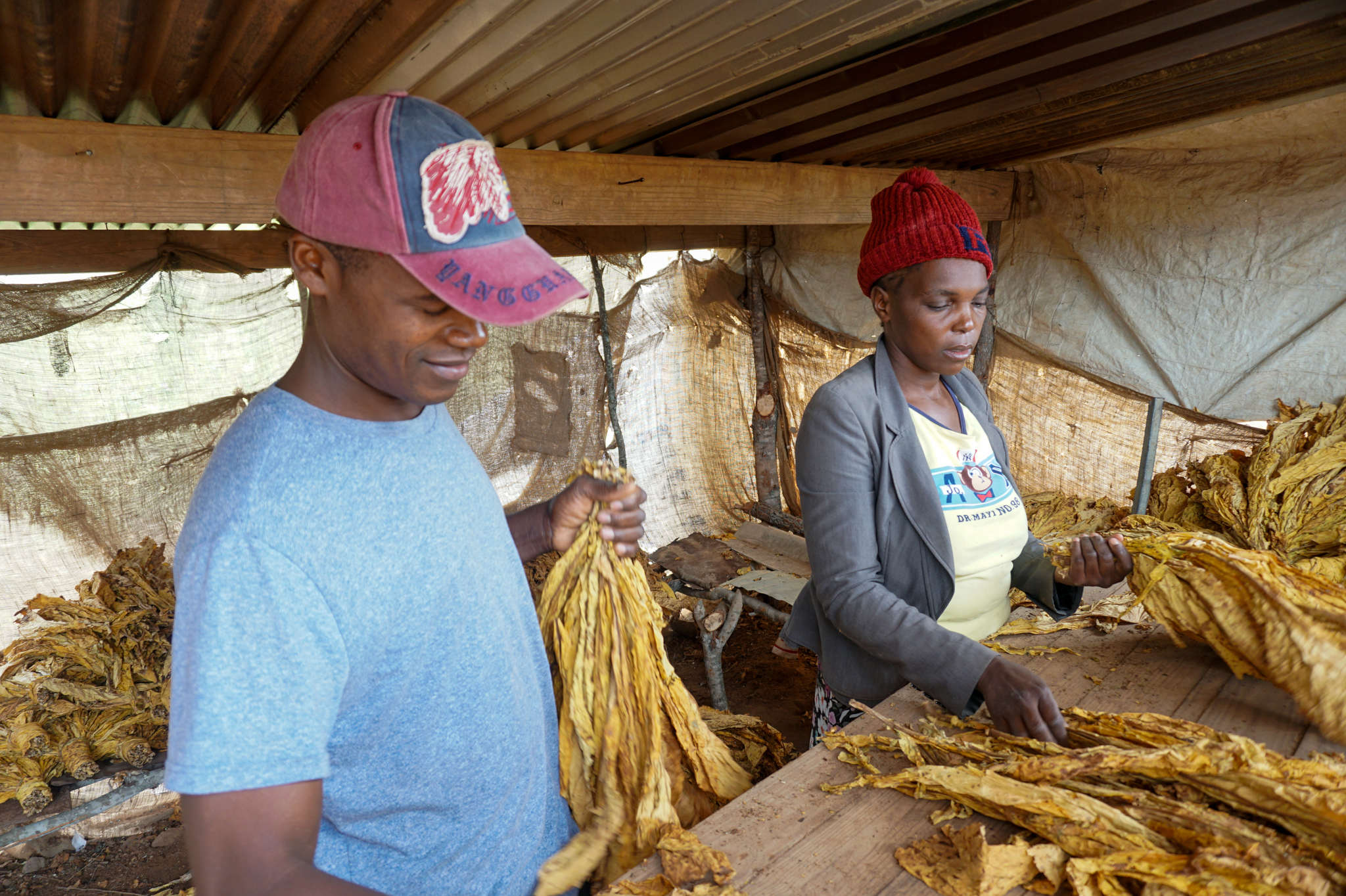
Tobacco
farmers
Chamu
Rukwere
and
Rudo
Nedziwe
grade
their
harvest
at
home
in
Rusape,
Zimbabwe.
—
Photo: Gamuchirai
Masiyiwa,
GPJ
Zimbabwe
Tobacco
farmers
Chamu
Rukwere
and
Rudo
Nedziwe
grade
their
harvest
at
home
in
Rusape,
Zimbabwe.
While
contract
farming
connects
them
to
global
markets,
they
say
it
strips
away
the
autonomy
land
reform
was
meant
to
provide.
The
land
link
Zimbabwe’s
shift
to
contract farming has
roots
in
a
wider
story
of
land
reform.
At
independence
in
1980,
white
Zimbabweans
—
who
made
up
less
than
2%
of
the
population
—
controlled
nearly
half
of
all
agricultural
land.
The
majority
black
population
was
confined
to
degraded,
overcrowded
communal
areas.
In
2000,
then-President
Robert
Mugabe
launched
the
controversial
Fast
Track
Land
Reform
Programme.
The
government
redistributed
millions
of
hectares
of
land
from
about
6,000
large,
white-owned
farms
to
more
than
168,000
black-owned
farms,
according
to
a
Human
Rights
Watch
report.
Farmers
needed
support,
and
into
the
vacuum
stepped
contract
schemes.
The
reforms
were
rushed,
controversial
and
violent,
but
they
brought
a
new
agrarian
structure.
Tobacco,
at
the
time
one
of
the
most
valuable
crops
and
dominated
by
white-owned
farms,
shifted
to
small-scale
operations by
the
new
landowners.
But
the
new
generation
of
farmers
didn’t
have
access
to
traditional
bank
credit
since
they
didn’t
hold
deeds
to
their
land.
Tobacco
production
dropped
dramatically,
from
over
197,000
tons
in
1998
to
about
44,000
tons
in
2006.
Farmers
needed
support,
and
into
the
vacuum
stepped
contract
schemes,
mostly
by
Chinese
agribusinesses
such
as
Tian
Ze.
They
supplied
seeds,
fertilizers
and
technical
support
in
exchange
for
crop
guarantees,
price
control
and
access
to
global
markets.
Ultimately,
those
contracts
played
a
key
role
in
the
post-reform
tobacco
boom.
“We
continue
to
be
dependent”
Contract
schemes
now
dominate
Zimbabwe’s
tobacco
farming,
says
Emmanuel
Matsvaire,
acting
chief
executive
officer
of
the
Tobacco
Industry
and
Marketing
Board.
In
the
2024-25
season
alone,
the
board
recorded
a
total
of
106,555 small-scale
growers,
he
says,
and
about
89%
of
these
are
contract
farming.
In
the
2025
season,
the
board
licensed
43
companies
to
contract
tobacco
farmers.
The
country’s
economy
has
long
struggled
and
“local
financing
is
generally
limited,”
Matsvaire
says.
These
companies
fill
the
gap.
But
farmers
say
the
fine
print
works
against
them.
Seeds
and
fertilizer
are
overpriced,
Ngoma
says.
For
half
a
hectare,
he
receives
seven
bags
of
fertilizer
for
$65
each.
At
the
shops,
the
same
bag
costs
about
$40.
Many
farmers
don’t
have
ready
cash
to
buy
directly
from
shops,
so
they
rely
on
private
companies
to
provide
fertilizer
and
other
inputs,
even
if
it
means
paying
more
when
harvest
comes.

Piles
of
tobacco
await
processing
in
Rusape,
Zimbabwe.
—
Photo: Gamuchirai
Masiyiwa,
GPJ
Zimbabwe
Piles
of
tobacco
await
processing
in
Rusape,
Zimbabwe.
Though
tobacco
is
one
of
the
country’s
top
exports
and
production
has
soared,
small-scale
contract
farmers
say
that
thanks
to
restrictive
agreements,
they
see
little
profit.
“Because
of
poverty,
we
continue
to
be
dependent,”
Ngoma
says.
Once
contract
farmers
pay
back
the
debts,
very
little
is
left.
In
some
cases,
the
total
earnings
don’t
even
cover
the
debt,
Ngoma
says,
which
forces
them
to
grow
tobacco
for
the
same
company
the
next
season.
The
companies
control
the
whole
process,
including
land
use,
Ngoma
says,
adding
that
at
times
they
bring
in
agricultural
experts
who
dictate
seed
types,
planting
times
and
farming
methods,
completely
disregarding
local
farming
knowledge.
Peter
Neshumba,
36,
began
contract
farming
for
Premium
Leaf
Zimbabwe
in
2024.
He
says
these
companies
go
as
far
as
controlling
whether
farmers
can
plant
anything
else.
They
want
full
devotion
for
their
crops,
he
says.
“Until
harvest,
the
land
essentially
belongs
to
them.”
These
arrangements
undermine
Zimbabwe’s
land
reforms.
If
a
farmer
doesn’t
stick
to
the
rules,
the
company
might
refuse
to
buy
their
crop
or
leave
them
without
a
contract
the
next
season,
he
says.
A
contract
analyzed
in
a
2023
study
in Oikos,
a
journal
published
by
Zimbabwe
Ezekiel
Guti
University,
shows
just
how
tobacco
contracts
lock
small-scale
farmers
into
risky
debt.
The
2019-20
Tian
Ze
contract
required
farmers
to
repay
loans
before
seeing
any
profit,
even
requiring
some
to
put
their
property
on
the
line
as
collateral.
Undoing
land
reforms
These
arrangements
undermine
Zimbabwe’s
land
reforms,
says
George
Seremwe,
the
president
of
the
Zimbabwe
Tobacco
Growers
Association.
The
reforms
were
meant
to
redress
colonial
imbalances,
but
contract
farming
introduces
new vulnerabilities for
small-scale
farmers
as
they
cede
control
of
their
land
to
contracting
companies.
But
Nelson
Marongwe,
an
independent
land
expert
who
has
researched
tobacco
farming
and
land
rights,
doesn’t
think
so.
The
contracts
are
valid,
he
says,
and
address
a
production
gap.
But
it
needs
to
be
for
a
limited
period,
he
says,
as
there
is
a
risk
of
farmers
losing
autonomy
and
companies
abusing
their
bargaining
power.
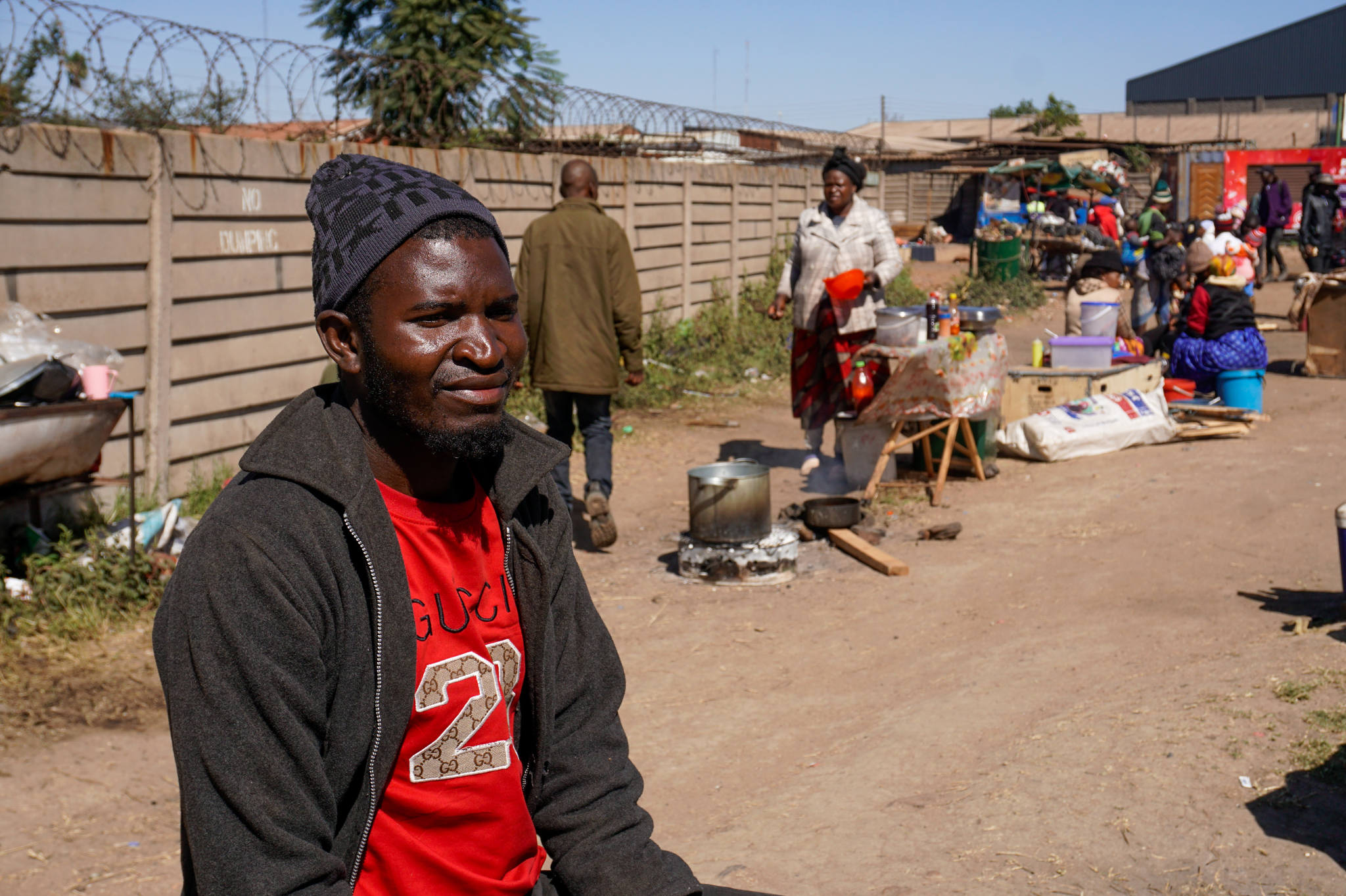
Tobacco
farmer
Peter
Neshumba
waits
for
payment
after
selling
his
crop
to
Premium
Leaf
Zimbabwe
in
Harare.
— Photo: Linda
Mujuru,
GPJ
Zimbabwe
Tobacco
farmer
Peter
Neshumba
waits
for
payment
after
selling
his
crop
to
Premium
Leaf
Zimbabwe
in
Harare.
He
says
contract
farming
controls
nearly
every
aspect
of
production,
leaving
farmers
with
little
say
over
their
land
until
harvest.
“I
feel
used”
The
tobacco
board
is
trying
to
make
these
arrangements
fairer
to
farmers,
Matsvaire
says.
The
government
is
implementing
a
framework
to
ensure
farmers
receive
a
fair
share
of
profits,
receive
inputs
in
time
and
aren’t
burdened
with
overpriced
or
substandard
inputs.
The
framework
will
also
set
a
minimum
input
package
for
farmers.
Now
that
I’m
in
it,
I
feel
used.
Matsvaire
adds
that this
farming
season,
the
Reserve
Bank
of
Zimbabwe
has
mandated
that
tobacco
farmers
retain
70%
of
their
earnings,
in
U.S.
dollars
to
protect
them
from
exchange-rate
losses.
But
Ngoma
says
other
issues,
like
land
control
and
alternative
financing
methods,
still
need
to
be
addressed.
One
solution,
Marongwe,
the
land
expert,
says,
is
to
secure
rural
land
rights
for
all
farmers,
which
would
expand
access
to
other
financing
options.
Seremwe
says
farmers
need
fairer
terms,
but
the
solution
is
not
to
abandon
contract
farming,
since
the
country
needs
the
foreign
investment.
Despite
the
challenges,
Neshumba
plans
to
keep
contract
farming.
He
doesn’t
have
financing
alternatives.
When
he
started,
he
hoped
for
better
returns.
“Now
that
I’m
in
it,”
he
says,
“I
feel
used.”
For
farmers
like
Ngoma,
the
goal
is
self-financing.
“Contract
farming,”
he
says,
“is
a
bondage.”
Source:
Zimbabwe’s
Tobacco
Empire,
Built
On
The
Back
Of
Farmers’
Debt
–
Worldcrunch