
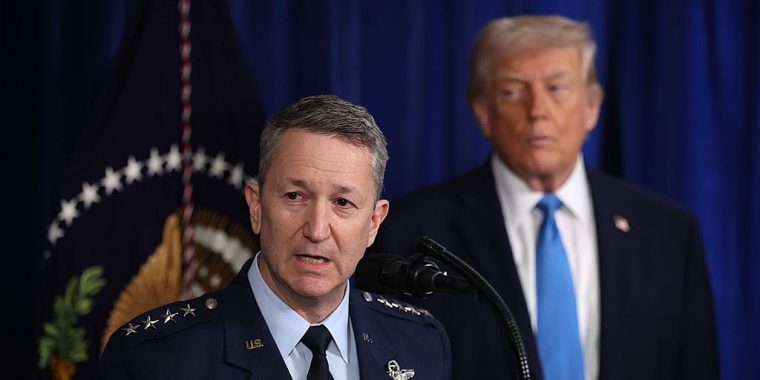
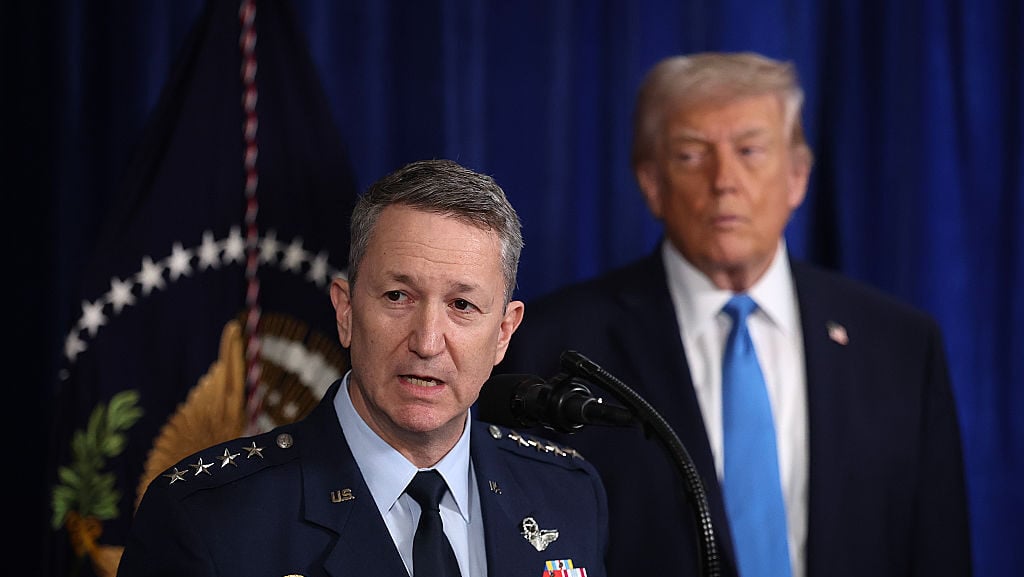
WASHINGTON
—
The
surprise,
complex
operation
to
capture
Venezuelan
President
Nicolas
Maduro
was
the
result
of
long-term
planning
between
the
US
military
and
its
intelligence
agencies,
Chairman
of
the
Joint
Chiefs
Gen.
Dan
Caine
said
today.
“The
word
integration
does
not
explain
the
sheer
complexity
of
such
a
mission,
an
extraction
so
precise
it
involved
more
than
150
aircraft
launching
across
the
western
hemisphere
in
close
coordination,
all
coming
together
in
time
and
place
to
layer
effects
for
a
single
purpose,
to
get
an
interdiction
force
into
downtown
Caracas
while
maintaining
the
element
of
tactical
surprise,”
he
said.
“Failure
of
one
component
of
this
well-oiled
machine
would
have
endangered
the
entire
mission.”
Speaking
after
President
Donald
Trump
announced
the
results
of
what
was
termed
“Operation
Absolute
Resolve,”
Caine
laid
out
details
of
the
operation
while
noting
he
would
only
speak
in
generalities
because
“there
is
always
a
chance
that
we’ll
be
tasked
to
do
this
type
of
mission
again.”
For
several
months,
the
US
has
been
building
up
its
military
capacity
in
the
region.
The
biggest
arrival
came
in
mid-November,
when
the
USS
Gerald
Ford
carrier
strike
group
arrived
in
the
region.
By
“early
December,”
Caine
said,
the
intel
community
had
provided
enough
information
—
including
details
on
Maduro’s
daily
habits
down
to
the
names
of
his
pets
—
that
the
Pentagon
felt
it
could
execute
the
operation
when
called
upon.
However,
the
weather
proved
to
be
a
factor,
which
delayed
launching
the
effort.
However,
the
weather
cleared
enough
that
at
10:46
pm
ET
last
night,
Trump
gave
the
go
order.
At
that
point,
aircraft
began
launching
from
20
different
bases
around
the
Western
Hemisphere,
Caine
said.
“In
total,
more
than
150
aircraft
— bombers,
fighters,
intelligence,
reconnaissance,
surveillance
[aircraft],
rotary
wing
—
were
in
the
air
last
night,”
the
chairman
said.
“Thousands
and
thousands
of
hours
of
experience
were
airborne.
Our
youngest
crew
member
was
20
and
our
oldest
crew
member
was
49.”
Among
those
in
the
air
were
the
extraction
force,
made
of
an
unidentified
number
and
type
of
helicopters
flying
100
feet
above
the
water.
Caine
indicated
non-kinetic
effects
from
US
Space
Command
and
US
Cyber
Command
were
used
to
suppress
Venezuelan
defenses
—
at
least,
ahead
of
kinetic
strikes
from
an
escort
force
began.
“Those
forces
were
protected
by
aircraft
from
the
United
States
Marines,
the
United
States
Navy,
the
United
States
Air
Force
and
the
Air
National
Guard,”
he
said
of
the
helicopters.
The
protection
force
included
F-22s,
F-35s,
F-18
E/As,
B-2s,
B-1s
“and
other
support
aircraft,
as
well
as
numerous
remotely
piloted
drones.”
By
1:01
AM
eastern,
the
helicopter
force
arrived
at
Maduro’s
compound.
The
“apprehension”
team
“descended
into
Maduro’s
compound
and
moved
with
speed,
precision
and
discipline
towards
their
objective,”
Caine
said.
While
Caine
didn’t
dive
into
details
of
what
happened
during
the
capture,
Trump
said
that
he
watched
the
operation
in
real-time
and
said
Maduro
was
attempting
to
flee
to
a
safe
room
when
US
troops
grabbed
him.
While
this
was
going
on,
Caine
said,
“the
helicopters
came
under
fire,
and
they
replied
[to]
that
fire
with
overwhelming
force
and
self-defense.”
One
aircraft
was
hit
but
all
aircraft
involved
in
the
operation
were
able
to
return
home.
That
would
not
be
the
only
exchange
of
fire:
“There
were
multiple
self-defense
engagements
as
the
force
began
to
withdraw
out
of
Venezuela,”
Caine
said.
“The
force
successfully
exfiltrated
and
returned
to
their
afloat
launch
bases,
and
the
force
was
over
the
water
at
3:29
am,
Eastern
Standard
Time,
with
indicted
persons
on
board”
the
USS
Iwo
Jima.
At
the
end
of
the
day,
no
American
personnel
or
vehicles
were
lost
in
the
operation.
Caine
marked
that
down
to
the
joint
training
the
US
force
maintains.
“What
we’ve
witnessed
today
is
a
powerful
demonstration
of
America’s
joint
force.
We
think,
we
develop,
we
train,
we
rehearse,
we
debrief,
we
rehearse
again
and
again,
not
to
get
it
right,
but
to
ensure
that
we
cannot
get
it
wrong,”
Caine
added.
“Our
forces
remain
in
the
region
at
a
high
state
of
readiness,
prepared
to
project
power
[or]
defend
themselves
and
our
interests
in
the
region.”