
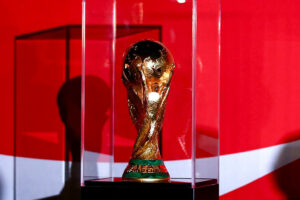

by
Ahmed
Mosaad/NurPhoto
via
Getty
Images)
FIFA
has
managed
to
turn
World
Cup
ticketing
into
an
international
spectacle
before
a
single
match
has
even
started.
In
September,
the
organization
said
that
tickets
would
begin
at
around
€51
for
group-stage
games
and
top
out
near
€5,727
for
the
final.
That
was
before
FIFA
shifted
to
dynamic
pricing.
This
week,
fans
learned
what
“dynamic”
looks
like
in
the
real
world.
Supporters
erupted
after
the
German
football
federation
published
the
price
bands
allocated
to
national
associations.
The
group-stage
tickets
that
were
supposed
to
hover
around
$60
now
sit
between
$180
and
$700.
The
cheapest
final
ticket
is
$4,185.
The
top
end
is
$8,680.
These
figures
make
a
mockery
of
the
original
promise,
and
they
obliterate
the
U.S.
bid
committee’s
vision
of
hundreds
of
thousands
of
$21
seats
for
early
matches.
Fans
call
it
a
“monumental
betrayal.”
Lawyers
know
it
is
also
a
bait-and-switch
that
funnels
consumers
straight
into
a
contract
written
with
one
goal:
protecting
FIFA
from
all
imaginable
risk.
Because
a
World
Cup
ticket
is
not
an
ordinary
purchase.
It
is
a
revocable
license
wrapped
in
the
Federal
Arbitration
Act
and
reinforced
with
clauses
that
eliminate
nearly
every
remedy
a
fan
might
expect.
I
have
read
the
lengthy
terms
and
conditions
of
ticketing
for
matches
in
the
U.S.
so
you
don’t
have
to.
What
follows
is
the
reality
behind
that
QR
code.
You
are
not
buying
access.
You
are
temporarily
borrowing
it.
The
ticket
is
a
“personal,
revocable,
single-entry
license.”
Anyone
who
has
spent
time
in
Property
or
Torts
understands
what
that
means.
FIFA
can
revoke
it
and
send
you
home
without
refund
or
explanation.
Wrong
reseller,
wrong
login,
wrong
battery
level,
wrong
vibes
at
the
turnstile.
It
all
creates
grounds
for
denial.
The
ticket
remains
FIFA’s
property
at
all
times.
Your
expectations
play
no
role
in
the
analysis.
Refunds
are
almost
nonexistent.
“Tickets
have
no
cash
value.”
That
sentence
appears
early
and
often.
Delayed
flights,
traffic
jams,
weather
disruptions,
illness,
injury,
or
a
match
that
changes
meaning
because
a
star
player
is
injured
offer
no
refund.
Even
when
refunds
exist,
they
usually
go
only
to
the
original
purchaser.
If
you
received
a
transferred
ticket,
your
chances
of
compensation
shrink
even
further.
FIFA’s
liability
cap
is
the
greater
of
$100
or
the
price
of
the
ticket.
Travel,
lodging,
and
every
other
expense
tied
to
your
once-in-a-lifetime
trip
are
on
you.
Unauthorized
sellers
are
legal
quicksand.
If
you
buy
from
anyone
other
than
FIFA
or
a
listed
partner,
your
ticket
can
be
invalidated
without
notice.
FIFA
can
refuse
entry
at
the
gate,
even
if
you
paid
a
premium.
Your
only
recourse
is
against
the
reseller,
which
is
usually
another
way
of
saying
you
have
no
recourse
at
all.
Your
phone
is
a
condition
precedent.
Mobile-only
ticketing
lets
FIFA
shift
even
more
risk
back
onto
fans.
If
your
phone
dies,
breaks,
fails
to
load
the
app,
or
doesn’t
authenticate
you
correctly,
the
terms
place
responsibility
squarely
on
you.
FIFA
suggests
using
its
help
desk
but
requires
advance
notice.
Few
people
discover
ticket
trouble
in
a
timeframe
that
makes
that
meaningful.
Children
require
precision
and
patience.
Every
individual
needs
a
ticket
unless
they
fit
FIFA’s
strict
definition
of
a
“baby
in
arms.”
Parents
are
legally
responsible
for
children’s
behavior.
Misuse
of
accessibility
tickets
can
result
in
cancellation
of
all
tickets
in
the
group.
FIFA
drafts
these
sections
with
an
attention
to
detail
usually
reserved
for
tax
codes.
Entry
is
conditioned
on
search
and
rule
compliance.
By
using
your
ticket,
you
consent
to
personal
and
bag
searches.
Refusal
means
removal.
Stadium
rules,
alcohol
regulations,
and
health
protocols
can
be
changed
at
any
time.
If
you
cannot
comply,
you
lose
your
right
to
attend.
There
is
no
refund
and
no
practical
path
to
challenge
the
decision.
You
surrender
broad
privacy
and
image
rights.
Attending
the
match
grants
FIFA
permission
to
use
your
image,
voice,
and
likeness
worldwide
in
any
medium
forever.
Anything
you
record
inside
the
stadium
can
be
used
by
FIFA.
You
may
not
livestream
or
monetize
your
content.
If
FIFA
thinks
your
post
looks
like
unauthorized
advertising,
they
reserve
full
enforcement
rights.
You
waive
most
claims,
including
unknown
ones.
The
terms
contain
a
wide
release
and
covenant
not
to
sue.
You
assume
all
typical
sporting-event
risks.
You
also
waive
protections
against
releasing
unknown
claims,
including
California’s
powerful
consumer
statute.
This
is
risk
transfer
at
its
most
aggressive.
All
disputes
go
to
private
arbitration
in
Miami.
Any
controversy
related
to
the
match,
the
ticket,
or
the
event
is
sent
to
mandatory,
binding,
individual
arbitration
under
JAMS
rules.
No
jury
trial.
No
class
actions.
No
group
claims.
The
contract
includes
an
opt-out,
but
only
if
you
notice
the
clause,
locate
the
deadline,
and
physically
mail
a
letter.
Most
people
will
not.
So
what
should
a
fan
do?
Lawyers
understand
contract
asymmetry.
Fans
generally
do
not.
If
you
are
advising
anyone,
including
yourself,
the
practical
steps
are
straightforward:
Buy
only
from
authorized
sources.
Confirm
that
your
phone,
app,
and
login
actually
work
days
in
advance.
If
arbitration
concerns
you,
calendar
your
opt-out
deadline
as
soon
as
you
purchase.
Accept
that
the
burden
of
every
unexpected
development
falls
on
the
consumer,
not
the
organizer.
The
World
Cup
will
deliver
unforgettable
moments.
It
always
does.
But
the
contract
behind
the
ticket
is
unforgiving
and
heavily
weighted
to
FIFA’s
advantage.
You
are
paying
premium
prices
for
a
document
that
offers
almost
no
reciprocal
protection.
A
World
Cup
ticket
is
not
peace
of
mind.
It
is
a
revocable
permission
slip
governed
by
New
York
law
and
the
Federal
Arbitration
Act.
And
you
have
agreed
to
every
part
of
it
long
before
the
first
whistle.
Michael
J.
Epstein,
a
Harvard
Law
School
graduate,
is
a
trial
lawyer
and
managing
partner
of
The
Epstein
Law
Firm,
P.A.,
a
law
firm
based
in
New
Jersey.