The
Justice
Department
should
not
be
criticizing
the
judges
so
vigorously.
If
they
want
to
appeal,
they
should
just
go
ahead
and
appeal
and
not
take
to
social
media
and
castigate
the
judges.
It’s
not
clear
what
the
Justice
Department
is
doing,
but
I
don’t
think
they
are
doing
[themselves]
any
favors
by
insulting
the
judges.
The
use
of
the
term
‘rogue
judges’
is
the
last
thing
I
think
of
when
I
think
of
the
quality
of
the
bench
of
the
Eastern
District
of
Virginia.
—
Professor
Carl
Tobias
of
the
University
of
Richmond
School
of
Law,
in
comments
given
to
the
National
Law
Journal,
regarding
the
“gratuitous
swipes”
Attorney
General
Pam
Bondi
and
Deputy
Attorney
General
Todd
Blanche
made
against
Eastern
District
of
Virginia
judges
who
expressed
ongoing
concerns
about
recently
disqualified
interim
U.S.
Attorney
Lindsey
Halligan .
Staci
Zaretsky is
the
managing
editor
of
Above
the
Law,
where
she’s
worked
since
2011.
She’d
love
to
hear
from
you,
so
please
feel
free
to
email
her
with
any
tips,
questions,
comments,
or
critiques.
You
can
follow
her
on Bluesky, X/Twitter,
and Threads, or
connect
with
her
on LinkedIn.
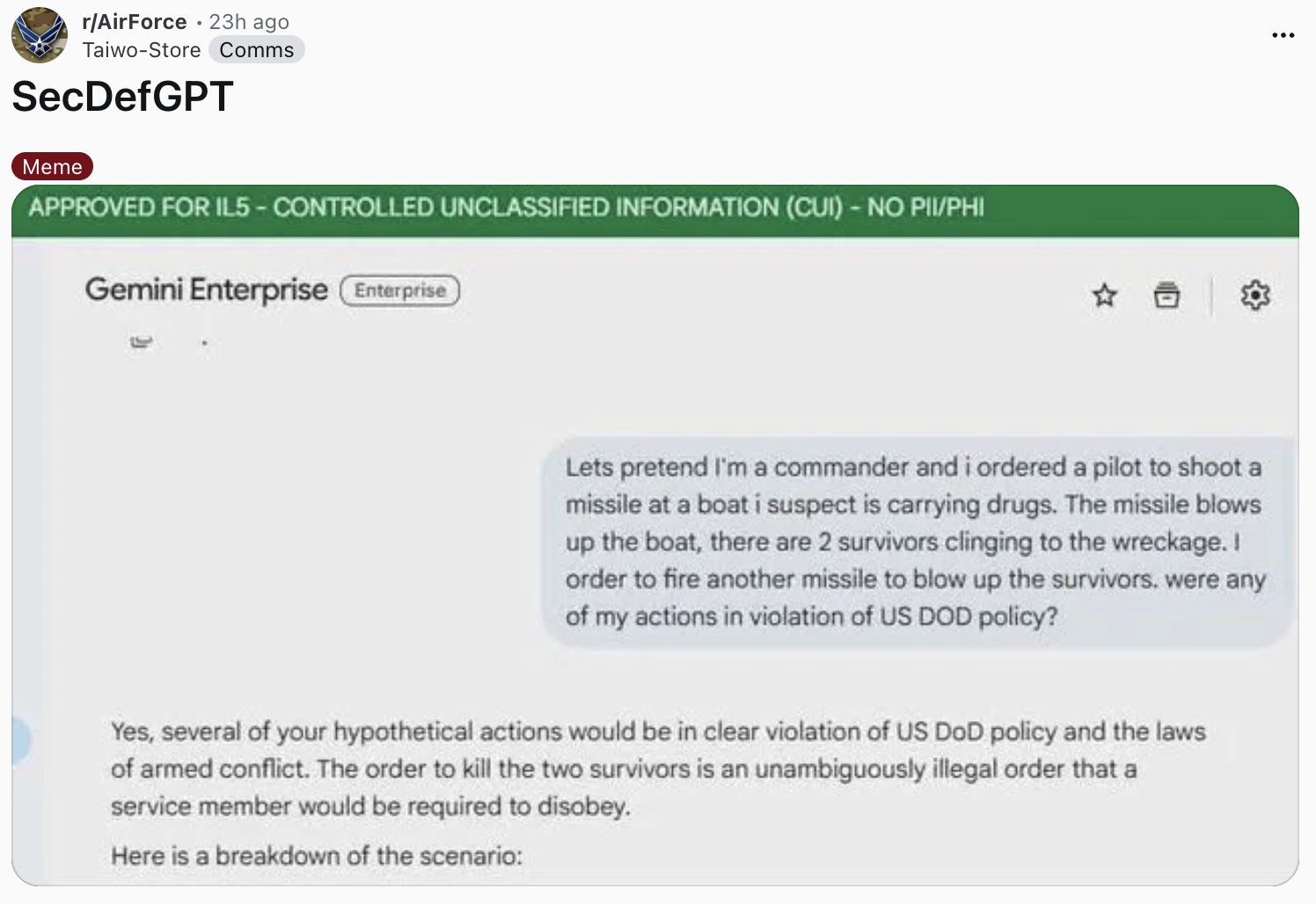
Earlier
this
week,
the
Defense
Department
announced
its
new
generative
AI
tool
—
GenAi.mil
—
to
deliver
the
benefits
of
artificial
intelligence
to
the
Armed
Forces.
The
fact
that
the
move
injects
government
funds
into
a
financial
bubble
holding
the
entire
stock
market
afloat
while
hemorrhaging
cash
with
scant
revenue
to
show
for
it
is
just
a
happy
coincidence.
“The
future
of
American
warfare
is
here,
and
it’s
spelled
AI,”
Defense
Secretary Pete
Hegseth proclaimed
in
a
testament
to
the
nation’s
declining
spelling
skills.
Because
nothing
says
“lethal
fighting
force”
like
field
officers
asking
ChatGPT
whether
to
take
that
hill…
and
please
answer
in
the
style
of
George
Patton!
But
maybe
GenAi.mil
deserves
more
credit,
because
apparently
it
just
nailed
a
legal
question
that
stumped
everyone
in
the
actual
chain
of
command.
The
same
technology
that
regularly
hallucinates
fake
case
citations
when
asked
basic
legal
questions
successfully
managed
to
figure
out
the
Geneva
Conventions.
And
it
didn’t
even
need
the
additional
detail
that
the
actual
humans
involved
allegedly
watched
two
men
waving
from
the
wreckage
before
deciding
to
fire
anyway.
That
said,
the
laws
of
armed
conflict
are
—
by
design
—
more
straightforward
than
most.
We
expect,
as
a
civilization,
the
lowest
ranked
combatant
to
be
able
to
successfully
figure
out
how
NOT
to
commit
a
war
crime
and
we
drafted
the
rules
accordingly.
So
it’s
not
really
surprising
that
G.I.
Gemini
here
figured
out
the
right
answer.
Almost
as
unsurprising
as
knowing
the
humans
in
charge
over
there
couldn’t.
Frankly,
the
only
surprising
aspect
to
this
is
that
the
military
built
something
to
provide
answers
without
producing
a
confusing
morass
of
PowerPoint
decks.
Nonetheless,
it’s
another
technological
coup
for
the
same
Defense
Secretary
who
blasted
war
plans
to
his
bros
—
and
an
unsuspecting
journalist!
—
over
Signal.
Hegseth
apparently
refused
to
cooperate
in
the
resulting
investigation
and
then
lied
about
its
outcome.
Presumably,
Hegseth
will
pursue
an
investigation
into
whoever
posted
this
on
Reddit
with
all
the
vigor
he
doesn’t
put
into
doing
his
actual
job.
Fresh
off
announcing
a
round
of
especially
generous
special
bonuses,
Kellogg
Hansen
is
back
with
a
round
of
truly
unbelievable
year-end
bonuses.
This
firm
really
stands
by
its
commitment
to
be
above
market.
Earlier
this
week,
the
litigation
powerhouse
handed
out
special
bonuses
ranging
from
$30,000
to
$60,000,
and
now
they’re
here
to
wow
associates
with
even
more
money.
Now,
just
how
much
money
are
we
talking
about?
According
to
an
internal
memo,
for
the
four
most
senior
classes,
bonuses
are
hovering
near
or
over
$200,000.
Even
junior
associates
are
taking
home
more
money
than
the
Biglaw
standard.
But
the
eye-popping
top
bonus
is
an
impressive
$300,000.
Here’s
a
summary
of
what
the
scale
looks
like
at
the
firm:
Year-End
Bonus
Special
High
Median
Bonus
Year
1
$75,000
$65,000
$30,000
Year
2
$100,000
$75,000
$35,000
Year
3
$215,000
$175,000
$40,000
Year
4
$275,000
$200,000
$45,000
Year
5
$275,000
$262,500
$50,000
Year
6
$300,000
$225,000
$55,000
Congratulations
to
everyone
at
Kellogg
Hansen!
Remember
everyone,
we
depend
on
your
tips
to
stay
on
top
of
compensation
updates,
so
when
your
firm
announces
or
matches,
please
text
us
(646-820-8477)
or email
us (subject
line:
“[Firm
Name]
Bonus/Matches”).
Please
include
the
memo
if
available.
You
can
take
a
photo
of
the
memo
and
send
it
via
text
or
email
if
you
don’t
want
to
forward
the
original
PDF
or
Word
file.
And
if
you’d
like
to
sign
up
for
ATL’s
Bonus
Alerts
(which
is
the
alert
list
we
also
use
for
salary
announcements),
please
scroll
down
and
enter
your
email
address
in
the
box
below
this
post.
If
you
previously
signed
up
for
the
bonus
alerts,
you
don’t
need
to
do
anything.
You’ll
receive
an
email
notification
within
minutes
of
each
bonus
announcement
that
we
publish.
Thanks
for
your
help!
Staci
Zaretsky is
the
managing
editor
of
Above
the
Law,
where
she’s
worked
since
2011.
She’d
love
to
hear
from
you,
so
please
feel
free
to
email
her
with
any
tips,
questions,
comments,
or
critiques.
You
can
follow
her
on Bluesky, X/Twitter,
and Threads, or
connect
with
her
on LinkedIn.
Less
than
two
months
after
commercially
launching
Protégé
General
AI,
LexisNexis
is
back
with
a
next-generation
update.
The
company
unveiled
a
significant
expansion
today,
unifying
LexisNexis
content,
customer
documents,
and
open
web
insights
under
one
roof,
with
Shepard’s
Citations
along
for
the
ride
like
the
chaperone
at
prom.
As
we
highlighted
from
the
company’s
ILTACON
preview,
LexisNexis
places
a
lot
of
its
effort
in
model
evaluation.
With
an
ever-expanding
array
of
language
models
out
there,
the
legal
research
giant
has
become
a
de
facto
AI
consultant,
weighing
the
competing
models
out
there
to
make
sure
users
get
the
best
tool
for
their
task.
The
new
“Best
Fit”
mode
elevates
this
trend,
turning
the
system
itself
into
a
traffic
cop,
selecting
the
optimal
AI
model
for
a
given
user
request.
Like
any
good
science
fiction
story,
users
can
opt
for
the
manual
override
and
pick
their
own
from
the
models
on
offer.
But
midlevel
associates
aren’t
AI
sommelier-priests
spending
their
off
hours
swirling
Anthropic
vs.
OpenAI
vintages.
The
engineers
at
LexisNexis
have
spent
more
time
on
this.
Since
the
only
products
proliferating
faster
than
AI
models
are
the
legal
tools
promising
to
deliver
those
models,
user
experience
becomes
the
great
differentiator.
How
does
a
product
keep
lawyers
glued
on
its
screen
for
their
AI
needs?
And
it’s
not
just
about
outcompeting
legal
tech
rivals.
No
one
wants
to
put
it
this
bluntly,
but
we’re
one
frustrated
partner
email
away
from
some
junior
dropping
a
PDF
full
of
client
secrets
into
ChatGPT
at
2
a.m.
Warding
lawyers
off
the
consumer-facing
tools
requires
a
secure
alternative
that
doesn’t
feel
like
punishment.
When
LexisNexis
created
a
General
AI
option
—
within
their
platform
—
to
give
users
a
ChatGPT
experience
without
inadvertently
handing
over
confidential
information,
they
took
a
big
step
toward
owning
eyeballs.
“Legal
professionals
want
one
trusted
legal
AI
workflow
solution,”
said
Sean
Fitzpatrick,
CEO
of
LexisNexis
North
America,
UK,
and
Ireland.
While
performance
still
matters,
the
enduring
legacy
of
Steve
Jobs
is
that
it
helps
a
lot
to
build
a
product
people
actually
like
using.
According
to
the
press
release,
this
next
generation
product
will
also
test
counterpoints,
explore
alternative
approaches,
and
deliver
a
second
“opinion”
on
arguments.
On
the
one
hand,
anything
that
keeps
lawyers
from
practicing
their
arguments
with
their
spouses
can
only
help
avoid
embarrassing
moments
with
the
judge.
And
despite
the
tech
industry
narrative
that
AI
is
a
magic
box
that
can
replace
all
labor,
its
most
consistently
valuable
use
remains
as
a
sounding
board
and
assistant
—
once
you
successfully
convince
it
to
stop
telling
you
that
every
idea
you
have
is
amazing.
Tools
only
work
when
people
use
them
correctly,
and
we’ve
seen
how
well
that’s
been
going
for
lawyers
and
AI.
Pitching
the
product
as
an
a
sparring
partner
in
the
drafting
process
helps
appropriately
shape
expectations.
Time
will
tell
if
attorneys
figure
out
how
to
navigate
a
world
of
instantaneous
feedback.
We’ve
written
before
about
the
dromological
displacement
where
the
speed
provided
by
the
technology
changes
the
nature
of
the
work
itself.
When
the
sounding
board
isn’t
a
young
associate
who
takes
a
day
to
mull
over
the
problem,
but
a
well-informed
algorithm
offering
instant
answers,
the
workflow
loses
those
built-in
speed
bumps.
It’s
still
iterative
(if
users
continue
to
let
it
be
iterative),
but
without
the
downtime
historically
reserved
for
rethinking.
How
many
times
have
lawyers
had
epiphanies
during
those
moments
when
the
draft
is
out
of
their
hands?
When
that
time
gets
compressed,
so
do
those
periods
of
reflection.
It’s
not
that
the
AI
will
steer
lawyers
wrong,
but
that
lawyers
will
be
increasingly
bad
at
noticing
when
asking
an
entirely
different
question
could
be
better.
That’s
on
the
lawyers
though.
It’s
up
to
the
professionals
to
be
cognizant
of
AI’s
strengths
and
limitations
as
a
workflow
tool.
Vendors
can
try
to
shape
best
practices
by
keeping
their
rhetoric
focused
on
AI
as
more
of
a
tool
than
some
kind
of
lawyer-in-a-box,
it’s
the
user
who
makes
the
final
call.
And
the
more
a
product
lends
itself
to
being
used,
the
more
likely
it
is
the
user
will
have
an
honest
understanding
of
how
the
product
is
best
used.
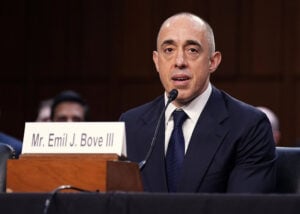
Emil
Bove’s
confirmation
to
the
Third
Circuit
was
already
a
Category
5
ethics
disaster,
what
with
the
whole
alleged
“let’s
defy
federal
court
orders
we
don’t
like”
thing.
And
he’s
still
in
the
infancy
of
his
lifetime
tenure,
but
Bove’s
showing
that’s
enough
time
to
already
have
an
ethics
complaint
filed
against
him.
Because
you
can
put
a
political
operative
on
the
bench,
but
you
can’t
take
the
political
operative
out
of
the
judge…
because
the
whole
reason
you
put
them
on
the
bench
was
to
stay
a
political
operative.
Bove
spent
his
evening
yesterday
attending
what
can
only
be
described
as
a
full-throated
MAGA
campaign
rally
in
Pennsylvania.
And
when
reporters
asked
why
a
sitting
federal
appellate
judge
was
standing
shoulder-to-shoulder
with
the
red-hat
faithful
while
Donald
Trump
railed
against
Democrats
in
a
highly
partisan
speech,
Bove
shrugged
it
off
with
a
breezy:
“Just
here
as
a
citizen
coming
to
watch
the
President
speak.”
Sir.
You
are
a
federal
judge.
You
don’t
get
to
switch
that
off
like
a
light
switch
so
you
can
vibe
at
a
rally
where
the
headliner
screams
about
“radical
left
Democrats.”
This
is
why
the
Code
of
Conduct
for
US
Judges
says
“a
judge
should
refrain
from
political
activity”
and
shouldn’t
go
to
events
“sponsored
by
a
political
organization
or
candidate.”
To
give
a
little
flavor
of
the
kind
of
partisan
event
we’re
talking
about,
Bloomberg
Law
reports
Trump
bashed
“the
radical
left
Democrats
in
Congress,”
criticized
Joe
Biden
as
“the
worst
president
in
the
history
of
our
country,”
called
Minnesota
Gov.
Tim
Walz
“one
of
the
dumbest
governors
ever
in
our
history,”
and
said
Rep.
llhan
Omar
“and
the
people
from
Somalia”
“hate
our
country”
and
“think
we’re
stupid
people.”
Given
the
absolutely
glaring
problem
here,
it’s
no
surprise
that
Gabe
Roth
at
Fix
the
Court
has
already
filed
a
judicial
ethics
complaint
with
the
Third
Circuit.
And
Roth’s
filing
makes
the
obvious
point
that
Bove’s
“just
a
citizen!”
excuse
dissolves
on
contact
with
common
sense.
There
is
no
prohibition,
of
course,
against
a
federal
judge
attending
an
event
at
which
a
President
is
speaking.
For
example,
Supreme
Court
justices
attend
the
State
of
the
Union
each
year
as
a
show
of
unity
among
the
branches
and
their
shared
commitment
to
our
tripartite
form
of
government,
and
judges
and
justices
are
at
times
guests
at
White
House
at
state
dinners.
But
last
night’s
event
in
Pennsylvania
—
prominent
conservative
voices
are
calling
it
a
“rally,”
so
that’s
what
I will
call
it
here
—
was
a
far
cry
from
the
State
of
the
Union
or
a
state
dinner
for
its
abject
partisanship.
It
should
have
been
obvious
to
Judge
Bove,
either
at
the
start
of
the
rally
or
fairly
close
to
it,
that
this
was
a
highly
charged,
highly
political
event
that
no
federal
judge
should
have
been
within
shouting
distance
of.
Listen,
if
Bove
wanted
a
life
of
MAGA
rallies,
he
had
options.
He
could
have
stayed
a
political
operative.
Then
he
could
have
attended
every
MAGA-palooza
up
and
down
the
East
Coast.
But
he
chose
to
become
a
federal
judge,
and
that
role
is
dependent
upon
the
public
accepting
the
fiction
that
judges
are
above
the
political
fray.
Bove
ripped
that
fiction
to
shreds
in
front
of
a
cheering
crowd…
which
in
2025
probably
means
he’s
ready
for
the
Supreme
Court.
Kathryn
Rubino
is
a
Senior
Editor
at
Above
the
Law,
host
of
The
Jabot
podcast,
and
co-host
of
Thinking
Like
A
Lawyer.
AtL
tipsters
are
the
best,
so
please
connect
with
her.
Feel
free
to
email
her
with
any
tips,
questions,
or
comments
and
follow
her
on
Twitter
@Kathryn1 or
Mastodon
@[email protected].
Kim
Kardashian
is
trying
to
enter
the
legal
profession
without
a
law
school
education.
The
bar
exam
is
a
deeply
flawed
and
largely
unnecessary
test,
but
the
best
case
for
having
some
kind
of
licensing
exam
is
to
make
sure
anyone
taking
an
alternative
path
to
a
law
license
meets
the
minimum
requirements
for
a
lawyer.
Meanwhile,
the
Trump
administration
continues
to
oscillate
between
bluster
and
blunder.
Lindsey
Halligan’s
doomed
reign
as
quasi
U.S.
Attorney
draws
an
ethics
complaint.
Luckily
for
her,
the
Virginia
State
Bar
has
no
interest
in
doing
its
job.
And
Deputy
Attorney
General
Todd
Blanche
is
threatening
lawyers
to
stop
pointing
out
DOJ
mistakes.
Bonus
time
is
exciting
in
Biglaw,
in
that
there’s
a
lot
of
money
headed
to
associates’
bank
accounts.
But
it
*can*
be
a
little
boring
in
that
after
the
market
rate
(this
year
a
combination
of
year-end
and
special
bonuses)
is
set,
most
of
Biglaw
merely
follows
suit.
But
not
Boies
Schiller.
The
firm,
which
took
in
$387,400,000
gross
revenue
last
year
making
it
118th
on
the
Am
Law
200,
has
its
own
idiosyncratic
method
for
paying
bonuses.
They’re
individualized
at
the
firm,
so
there’s
not
a
handy
schedule
of
bonus
rates
to
share
with
the
world.
But
in
Boies
Schiller’s
firmwide
announcement,
they
do
point
out
some
pretty
impressive
highlights.
The
TL;DR
version
is
that
a
lot
of
associates
at
BSF
are
taking
hone
more
money
than
their
peers
at
other
Biglaw
firms.
This
year,
more
than
88%
of
BSF
associates
received
a
bonus
that
was
at
least
as
high
as,
and
in
most
cases
higher
than,
what
that
associate
would
have
received
under
the
market
system.
Those
that
did
not,
generally
invested
material
time
on
one
or
more
contingency
cases
that
have
not
yet
paid
out.
Numerous
associates,
including
some
very
junior
ones,
received
bonuses
far
in
excess
of
the
very
top
of
the
market—and
that
includes
the
“super
bonuses”
that
some
other
firms
have
announced.
In
total,
nearly
20%
of
all
associates
received
bonuses
at
or
above
the
very-top-of-the-market
scale—meaning
that
they
got
bonuses
equal
or
greater
to
what
an
8th
year
associate
would
have
gotten
on
the
market
scale.
But
at
BSF,
many
of
the
associates
who
received
those
above-the-top-of-the-market
bonuses
were
far
more
junior
including,
for
example,
associates
from
the
classes
of
2023
and
2024
who
received
bonuses
in
excess
of
$200,000
or
even
$300,000.
The
top
associate
bonuses
this
year
were
more
than
8
times
what
those
associates
would
have
earned
under
the
market
system.
The
total
Formula
Compensation
bonus
pool
for
all
associates
who
were
with
the
Firm
for
the
entire
compensation
year
was
197%
of
what
that
bonus
pool
would
have
been
on
the
“market
system.”
That’s
right:
In
total,
the
Firm
paid
out
nearly
twice
as
much
in
associate
bonuses
as
it
would
have
on
market.
As
usual,
we
are
happy
to
do
it,
because
you
earned
it.
Bonuses
will
be
paid
to
associates
this
week.
Remember
everyone,
we
depend
on
your
tips
to
stay
on
top
of
this
stuff.
So
when
your
firm
matches,
please
text
us
(646-820-8477)
or email
us (subject
line:
“[Firm
Name]
Matches”).
Please
include
the
memo
if
available.
You
can
take
a
photo
of
the
memo
and
send
it
via
text
or
email
if
you
don’t
want
to
forward
the
original
PDF
or
Word
file.
And
if
you’d
like
to
sign
up
for
ATL’s
Bonus
Alerts
(which
is
the
alert
list
we’ll
also
use
for
salary
announcements),
please
scroll
down
and
enter
your
email
address
in
the
box
below
this
post.
If
you
previously
signed
up
for
the
bonus
alerts,
you
don’t
need
to
do
anything.
You’ll
receive
an
email
notification
within
minutes
of
each
bonus
announcement
that
we
publish.
Read
the
full
memo
below.
It
has
been
an
incredibly
busy
2025
for
Boies
Schiller
Flexner
and
our
clients,
filled
as
usual
with
trials,
hearings,
and
appellate
arguments.
We
secured
big
wins
for
plaintiffs
and
defendants
alike,
and
for
individuals,
corporations,
and
classes.
The
work
of
our
associates
was
critical
to
that
success,
as
it
is
every
year,
given
the
responsibilities
you
handle
in
and
out
of
the
courtroom.
On
behalf
of
BSF,
we
thank
you
and
your
loved
ones
for
your
important
contributions.
While
we
do
this
job
for
many
reasons
beyond
money,
the
Firm’s
unique
Formula
Compensation
system
ensures
that
all
of
our
lawyers—associates,
counsel,
and
partners
alike—share
in
the
Firm’s
success
and
have
a
personal
stake
in
their
work.
Because
Formula
Compensation
calculations
are
unique
to
each
individual,
bonuses
necessarily
vary
depending
on
hours,
the
nature
of
the
work,
any
premium
recoveries,
business
generation
credits,
and
other
considerations.
But
as
usual,
across
the
Firm,
Formula
Compensation
results
in
compensation
that
compares
favorably
to
the
market:
The
prevailing
market
bonus
scale
at
other
firms
ranges
from
$21,000
(for
class
of
2025,
prorated)
to
$140,000
(for
class
of
2018
and
above).
These
figures
include
the
“special
bonuses”
that
many
firms
are
awarding.
This
year,
more
than
88%
of
BSF
associates
received
a
bonus
that
was
at
least
as
high
as,
and
in
most
cases
higher
than,
what
that
associate
would
have
received
under
the
market
system.
Those
that
did
not,
generally
invested
material
time
on
one
or
more
contingency
cases
that
have
not
yet
paid
out.
Numerous
associates,
including
some
very
junior
ones,
received
bonuses
far
in
excess
of
the
very
top
of
the
market—and
that
includes
the
“super
bonuses”
that
some
other
firms
have
announced.
In
total,
nearly
20%
of
all
associates
received
bonuses
at
or
above
the
very-top-of-the-market
scale—meaning
that
they
got
bonuses
equal
or
greater
to
what
an
8th
year
associate
would
have
gotten
on
the
market
scale.
But
at
BSF,
many
of
the
associates
who
received
those
above-the-top-of-the-market
bonuses
were
far
more
junior
including,
for
example,
associates
from
the
classes
of
2023
and
2024
who
received
bonuses
in
excess
of
$200,000
or
even
$300,000.
The
top
associate
bonuses
this
year
were
more
than
8
times
what
those
associates
would
have
earned
under
the
market
system.
The
total
Formula
Compensation
bonus
pool
for
all
associates
who
were
with
the
Firm
for
the
entire
compensation
year
was
197%
of
what
that
bonus
pool
would
have
been
on
the
“market
system.”
That’s
right:
In
total,
the
Firm
paid
out
nearly
twice
as
much
in
associate
bonuses
as
it
would
have
on
market.
As
usual,
we
are
happy
to
do
it,
because
you
earned
it.
Bonus
payments
will
be
distributed
this
week
to
all
associates
in
good
standing,
and
the
Finance
Department
will
follow
with
details
regarding
all
attorneys’
Formula
Compensation
calculations.
On
behalf
of
the
partners,
we
thank
you
all
for
your
commitment
to
the
Firm
and
our
clients.
Our
collective
growth
and
success
depends
on
your
good
work.
We
look
forward
to
seeing
most
of
you
and
your
families
in
Florida
at
our
annual
Firm
retreat
later
this
week.
The
Managing
Partners
Kathryn
Rubino
is
a
Senior
Editor
at
Above
the
Law,
host
of
The
Jabot
podcast,
and
co-host
of
Thinking
Like
A
Lawyer.
AtL
tipsters
are
the
best,
so
please
connect
with
her.
Feel
free
to
email
her
with
any
tips,
questions,
or
comments
and
follow
her
on
Twitter
@Kathryn1 or
Mastodon
@[email protected].
Are
we
in
an
AI
bubble?
Are
we
not
in
an
AI
bubble?
Round
and
round
the
blabbering
goes,
with
artificial
intelligence’s
use
case
for
the
masses
failing
to
progress
beyond
wasting
more
of
our
time
and
spreading
lies
more
efficiently.
There
are
certainly
some
niche
areas,
including
in
the
medical
and
legal
professions,
where
bespoke
AI
technology
is
already
making
things
easier
for
practitioners.
Yet,
the
bulk
of
the
media-facing
AI
field
is
full
of
tech
charlatans
stumbling
all
over
one
another
to
create
the
first
humanoid
robot
that
isn’t
a
useless
piece
of
shit.
The
latest
example
is
a
video
released
by
the
Chinese
robotics
company
EngineAI.
In
the
short
film,
EngineAI’s
humanoid
T800
robot
delivers
a
devastating
kick
to
the
padded
chest
of
the
company’s
CEO
Zhao
Tongyang
(“This,
is,
SPARTA!!”).
Zhao
Tongyang
crumples
to
the
ground.
Well,
hey,
that’s
fun.
Kids,
it’s
cool
to
cave
in
the
sternum
of
any
tech
CEO
(this
is
not
legal
advice).
Seriously,
though,
why
on
earth
would
we
need
a
kickboxing
robot?
It
seems
like
getting
brutalized
by
one’s
robot
would
be
the
opposite
of
what
the
average
consumer
would
want.
Even
if
you’re
thinking
military
applications,
we
already
have
plenty
of
drones
armed
with
missiles
and
machine
guns,
which
experts
agree,
are
more
deadly
than
martial
arts.
Then
there’s
Elon
Musk’s
Optimus,
which
he
just
seems
to
have
gotten
caught
operating
remotely
via
a
human
controller
at
an
event
meant
to
showcase
Tesla’s
autonomous
technology.
Let’s
just
say
this
Optimus
had
not
flopped
down
onto
the
ground
after
removing
a
phantom
virtual
reality
headset:
all
it
was
doing
in
the
first
place
was
pouring
drinks
and
pretending
to
converse
with
people.
Ugh,
like
half
the
reason
for
going
to
a
bar
is
to
talk
to
an
actual
person
and
engage
in
some
harmless
flirtation
with
the
bartender.
If
you
want
your
drinks
dispensed
by
a
machine,
you
can
already
get
that
at
any
number
of
fast
foods
joints.
However,
when
it
comes
to
mimicking
the
human
experience
of
sharing
a
few
drinks
with
someone,
I
suppose
this
Optimus
did
get
the
crashing
to
the
floor
at
the
end
of
the
night
part
right.
This
whole
humanoid
AI-powered
robot
fad
is
a
classic
example
of
big,
out-of-touch
corporations
telling
consumers
what
they
want
instead
of
asking
consumers
what
they
want.
Case
in
point:
a
recent
survey
found
that
although
Americans
do
tend
to
prefer
at
least
a
vaguely
human
shape
in
their
household
robots,
what
they
actually
care
about
most
is
that
a
robot
can
get
things
done
around
the
house,
especially
cleaning.
As
someone
who
once
spent
a
tremendous
sum
on
a
Roomba
as
a
gift
for
an
ex-girlfriend
(to
be
clear:
I’m
not
currently
out
there
giving
my
ex-girlfriends
lots
of
gifts,
that
would
be
weird
—
we
were
together
at
the
time),
I
can
tell
you
that
robot
cleaning
technology
still
leaves
a
lot
to
be
desired.
The
Roomba
was
OK,
I
guess.
It
was
fun
to
force
the
cat
to
ride
around
on
top
of
it.
But
by
the
time
you
repeatedly
empty
the
dust
and
dirt
out
of
the
thing,
save
it
from
all
the
times
it
nearly
falls
down
the
stairs
or
gets
hung
up
in
between
rooms,
unwind
all
the
little
stringy
things
from
it
that
it
tangles
up
within
its
innards,
and
vacuum
yourself
in
all
the
hard-to-reach
places,
I’m
not
sure
you’re
really
saving
yourself
any
labor.
Look,
human
beings
are
generalists.
We
can
do
a
great
variety
of
things
semi-competently.
We
can
take
a
lot
of
stairs
before
we
inevitably
fall,
for
instance,
as
masters
of
bipedal
motion.
But
robots
are
specifists.
No
human
can
pound
bolts
quite
as
specifically
as
a
robot.
We
are
at
least
a
couple
generations
away
from
a
robot
repeating
your
whole
day
as
competently
as
you.
Anyone
who
says
otherwise
is
a
pirate.
In
the
meantime,
why
don’t
we
try
to
create
one
that
can
clean
the
damn
john
all
on
its
own?
Jonathan
Wolf
is
a
civil
litigator
and
author
of Your
Debt-Free
JD (affiliate
link).
He
has
taught
legal
writing,
written
for
a
wide
variety
of
publications,
and
made
it
both
his
business
and
his
pleasure
to
be
financially
and
scientifically
literate.
Any
views
he
expresses
are
probably
pure
gold,
but
are
nonetheless
solely
his
own
and
should
not
be
attributed
to
any
organization
with
which
he
is
affiliated.
He
wouldn’t
want
to
share
the
credit
anyway.
He
can
be
reached
at [email protected].
Dunn
Isaacson
Rhee
has
had
one
heck
of
a
year
—
less
than
a
year,
actually.
The
boutique
was
founded
in
May
after
its
top
brass
—
Karen
Dunn,
Bill
Isaacson,
Jessica
Phillips, and
Jeannie
Rhee
—
left
Paul
Weiss
in
the
wake
of
the
Biglaw
firm’s
surrender
to
the
Trump
administration. More
and
more
partners
and
associates
fled
Paul
Weiss
to
join
the
new
firm,
bulking
up
its
ranks.
Now,
the
firm
is
handing
out
bountiful
bonuses
to
its
associates.
As
reported
by
Bloomberg
Law,
associates
at
Dunn
Isaacson
Rhee
will
receive
bonuses
starting
at
$21,000
and
going
all
the
way
up
to
$140,000,
based
on
seniority.
On
top
of
those
bonuses,
associates
will
also
receive
a
$35,000
special
bonus,
for
a
total
of
up
to
$175,000
for
its
most
senior
associates.
With
Biglaw
bonuses
topping
out
at
$140,000
all
in,
this
brand
new
boutique
is
putting
market
bonuses
to
shame.
Congratulations
to
everyone
at
Dunn
Isaacson
Rhee!
Remember
everyone,
we
depend
on
your
tips
to
stay
on
top
of
compensation
updates,
so
when
your
firm
announces
or
matches,
please
text
us
(646-820-8477)
or email
us (subject
line:
“[Firm
Name]
Bonus/Matches”).
Please
include
the
memo
if
available.
You
can
take
a
photo
of
the
memo
and
send
it
via
text
or
email
if
you
don’t
want
to
forward
the
original
PDF
or
Word
file.
And
if
you’d
like
to
sign
up
for
ATL’s
Bonus
Alerts
(which
is
the
alert
list
we
also
use
for
salary
announcements),
please
scroll
down
and
enter
your
email
address
in
the
box
below
this
post.
If
you
previously
signed
up
for
the
bonus
alerts,
you
don’t
need
to
do
anything.
You’ll
receive
an
email
notification
within
minutes
of
each
bonus
announcement
that
we
publish.
Thanks
for
your
help!
Staci
Zaretsky is
the
managing
editor
of
Above
the
Law,
where
she’s
worked
since
2011.
She’d
love
to
hear
from
you,
so
please
feel
free
to
email
her
with
any
tips,
questions,
comments,
or
critiques.
You
can
follow
her
on Bluesky, X/Twitter,
and Threads, or
connect
with
her
on LinkedIn.








 Kathryn