
‘A Significant Assault on Our Health’: Healthcare Policy Leaders Condemn Trump’s Budget Proposal – MedCity News

To
some,
President
Donald
Trump’s
budget
proposal
might
be
adding
an
insult
to
an
injury.

Last
year,
the
federal
government
made
significant
cuts
to
healthcare
coverage
in
Medicaid
via
the
One
Big
Beautiful
Bill
Act
(H.R.
1).
Now,
Trump
is
proposing
even
steeper
cuts
to
the
healthcare
system
in
his

fiscal
year
2027
budget
proposal
,
leading
to
outrage
among
healthcare
policy
experts.

“On
the
heels
of
the
massive
and
historic
cuts
in
H.R.
1,
President
Trump
is
doubling
down
on
severe
cuts
to
health
care.

It’s
a
significant
assault
on
our
health,
both
keeping
folks
healthy
and
the
services
they
get
when
they
get
sick,”
said
Anthony
Wright,
executive
director
of
Families
USA,
in
an
interview.
Families
USA
is
a
patient
advocacy
organization.

Overall,
the
budget
requests
$111.1
billion
for
the
Department
of
Health
and
Human
Services,
a
$15.8
billion
or
12.5%
decrease
from
2026.
Trump’s
budget
proposal
includes:

  • A
    $5
    billion
    cut
    to
    the
    National
    Institutes
    of
    Health,
    as
    well
    as
    an
    elimination
    of
    the
    National
    Institute
    on
    Minority
    Health
    and
    Health
    Disparities,
    which
    leads
    scientific
    research
    to
    improve
    minority
    health
  • $5
    billion
    in
    cuts
    to
    Substance
    Abuse
    and
    Mental
    Health
    Services
    Administration
    (SAMHSA),
    Centers
    for
    Disease
    Control
    and
    Prevention
    (CDC),
    Health
    Resources
    and
    Services
    Administration
    (HRSA)
    and
    Office
    of
    the
    Assistant
    Secretary
    for
    Health
    (OASH)
    programs
  • $356
    million
    cut
    to
    the
    Agency
    for
    Strategic
    Preparedness
    and
    Response,
    which
    helps
    hospitals
    prepare
    for
    pandemics
  • $129
    million
    cut
    to
    the
    Agency
    for
    Healthcare
    Research
    and
    Quality,
    which
    is
    focused
    on
    improving
    health
    outcomes
    and
    patient
    safety

There
are
“modest”
investments
in
areas
like
nutrition,
but
they
are
small
compared
to
the
scale
of
cuts
in
the
proposal,
according
to
Wright.
For
example,
it
suggests
investing
$19
million
to
expand
access
to
nutrition
services
at
health
centers,
as
well
as
$57
million
to
strengthen
national
nutritional
and
food
safety
by
removing
unsafe
chemicals
in
the
food
supply.

The
reactions
from
several
health
leaders
outlined
below
highlight
concerns
about
the
potential
impact
on
employers,
veterans,
patients
with
infectious
diseases
and
mental
health
conditions,
and
the
future
of
medical
research.

One
executive
at
the
Legal
Action
Center
(LAC)
said
that
the
potential
negative
impact
of
the
budget
proposal
is
significant,
especially
when
combined
with
other
actions
by
this
administration,
such
as
the
Medicaid
cuts.

“The
President’s
proposed
2027
budget
and
its
cuts
to
SAMHSA,
alongside
the
looming
cuts
to
Medicaid
enacted
by
last
year’s
federal
reconciliation
bill,
threaten
to
destabilize
the
national
system
that
supports
lifesaving
treatment
and
harm
reduction
services
proven
to
reduce
fatal
overdose,
support
long-term
recovery,
and
reduce
the
spread
of
infectious
disease,”
said
Teresa
Miller,
LAC’s
national
director
of
health
initiatives.

Another
leader
from
an
employer
advocacy
organization
echoed
these
comments,
stating
that
the
budget
raises
serious
concerns
about
the
future
of
healthcare
programs.

“As
a
veteran,
I
know
firsthand
how
critical
these
benefits
are

and
any
significant
cuts
to
federal
health
research
and
health
programs
would
have
real,
lasting
consequences
for
patients,
employers
and
the
broader
workforce,”
said
Jenny
Goins,
chief
of
staff
of
the
National
Alliance
of
Healthcare
Purchasers
Coalition.
“Employers
cannot
absorb
additional
strain
on
an
already
challenged
healthcare
system—these
decisions
must
prioritize
both
patient
care
and
workforce
stability.”

The
American
Cancer
Society
Cancer
Action
Network
(ACS
CAN)
is
particularly
concerned
about
how
the
proposed
cuts
to
the
NIH
would
harm
cancer
research.

“Less
resources
have
a
far-reaching
impact
on
our
nationwide
biomedical
research
eco-system
by
slowing
breakthroughs,
reducing
grants
and
stalling
progress
against
rising
cancer
cases,”
said
Lisa
Lacasse,
president
of
ACS
CAN.

Lacasse
added
that
keeping
National
Cancer
Institute
funding
level
doesn’t
match
medical
inflation
and
could
delay
progress
in
prevention,
early
detection
and
treatment.


What’s
ahead

Just
because
the
budget
is
proposed,
doesn’t
mean
Congress
will
necessarily
ratify
it
as
proposed. 

The
president’s
budget
proposal
is
a
recommendation
to
Congress
that
outlines
the
administration’s
priorities.
The

House
and
Senate
will
create

their
own
budget
resolutions,
which
they
reconcile
into
a
single
framework,
and
pass
funding
bills
that
must
be
approved
by
both
chambers.
Congress
then
sends
those
bills
to
the
president
to
sign
or
veto.

Several
advocacy
organizations
are
calling
on
Congress
to
reject
Trump’s
proposal.
He
proposed
a
similar
one
last
year,
which
was
not
adopted
by
Congress.

“Congress
demonstrated
an
unwavering
commitment
to
the
fight
against
cancer
by
working
together
across
party
lines
to
approve
a
budget
for
FY26
that
invested
in
hope,
science
and
saving
lives,”
Lacasse
of
ACS
CAN
said.

However,
there
is
also
the
budget
reconciliation
process,
which
is
a
fast-track
way
for
Congress
to
pass
major
budget-related
changes.
It
can
be
passed
on
partisan
lines
with
only
51
votes
instead
of
the
usual
60.
This
process
has
been
used
in
the
past
to
enact
significant
healthcare
policy
changes,
including
changes
to
Medicaid.

“I
hope
that
a
bipartisan
budget
that
is
passed
does
not
include
these
cuts
but
I
am
very
concerned
about
what
a
budget
reconciliation
package
that
is
only
passed
on
partisan
lines
would
include,”
Wright
of
Families
USA
said.
“They
made
the
biggest
cuts
in
the
history
of
Medicaid
last
year
under
budget
reconciliation,
passed
on
partisan
lines.
There
are
many
in
party
leadership
who
have
said
that
they
want
to
make
additional
cuts
to
healthcare.
I
think
that’s
of
great
concern
and
alarm.”


Photo:
TimAbramowitz,
Getty
Images

Morning Docket: 04.15.26 – Above the Law

*
The
Am
Law
100
is
out.
Kirkland
made
a
lot
of
money.
[American
Lawyer
]

*
And
with
it,
Kirkland
snags
Wachtell’s
top
distressed-debt
lawyer
for
a
guaranteed
$80
million
over
three
years.
[Financial
Times
]

*
Conservative
D.C.
Circuit
judges
block
Judge
Boasberg
from
exercising
his
power
to
hold
a
party
in
contempt
just
because
they
repeatedly
ignored
court
orders
to
take
illegal
actions.
[Reuters]

*
State
efforts
to
rein
in
Kalshi
are
a
50-50
proposition.
[National
Law
Journal
]

*
Justice
Department
looks
to
void
seditious
conspiracy
convictions
for
Proud
Boys
and
Oath
Keepers.
[CNN]

*
Grok
sued
for
data
center
pollution.
[Law360]

*
Pro
tem
judge
loses
job
after
creating
fake
parking
document.
[ABA
Journal
]

The Verdict Is In – See Also – Above the Law

DLA
Piper
Wins
Workplace
Discrimination
Suit:
Guess
juries
don’t
like
mistakes
in
work
product
either.
A
Challenger
Approaches!:
A
freshly
merged
firm
will
break
into
the
top
20.
All’s
Well
That
Settles
Well:
Troutman
Pepper
settles
$35M
racial
discrimination
suit.
Clearing
Up
The
Myths
About
Mythos:
Read
this
before
you
panic.
You
can
panic
once
you’re
done.
Looking
For
Who’s
Who
In
California?:
These
are
the
top
Biglaw
firms
in
the
state.

Turning Defense Into Offense – Above the Law

In
perhaps
the
greatest

sequence

of
plays
in
USA
hockey
history,
during
overtime
of
the
gold-medal
game
at
the
2026
Olympics,
24-year-old
Jack
Hughes
put
on
a
game-winning
display
of
turning
defense
into
offense.
First,
he
did
just
enough
to
tie
up
Canada’s
Connor
McDavid,
universally
recognized
as
one
of
hockey’s
greatest
players,
from
scoring
on
one
of
his
patented
blazing
rushes
to
the
net.
He
then
helped
get
the
puck
out
of
the
USA’s
zone,
before
poking
it
into
the
path
of
one
his
teammates
to
start
an
odd-man
rush
that
ended
in
Hughes
scoring
the
golden
goal
that
led
fans
back

home

into
wild
chants
of
“USA!
USA!”
A
glorious
sporting
moment
for
a
country
that
needs
heroes
to
rally
around,
as
well
as
a
glorious
example
of
how
fortunes
can
change
with
a
well-executed
transition
from
defense
to
offense.
While
not
as
exciting
as
a
gold
medal-winning
goal,
patent
litigators
can
also
find
themselves
helping
a
client
turn
a
defensive
licensing
posture
into
offensive
litigation
that
aims
to
clear
away
allegations
of
infringement.
One
recently
filed
set
of
declaratory
judgment
complaints
provides
a
solid
example
of
such
an
effort.  

It
is
not
every
day
that
you
see
what
looks
like
a
coordinated
attack
against
a
serial
patent
asserter.
But
last
week,
we
saw
a
group
of
prominent
insurance
companies
trying
to
seize
the
offensive
and
proactively
fend
off
licensing
efforts
aimed
at
them
by
Intellectual
Ventures. The
action
started
on
April
7,
with
DJ
complaints
filed
against
various
Intellectual
Ventures
entities
in
Massachusetts
and
Delaware,
by
Hanover
and
The
Hartford,
respectively.
The
next
day,
another
Delaware
DJ
complaint,
this
time
by
Travelers,
was
also
filed.
Three
complaints
over
two
days,
each
filed
by
a
different
law
firm,
but
sharing
similarities
in
terms
of
the
patents
challenged
as
well
as
the
fact
that
each
of
these
erstwhile
competitors
shared
a
common
interest
in
getting
cleared
of
the
patentee’s
demand
for
a
license.
For
Hanover,
that
meant
moving
for
DJ
of
noninfringement
against
three
of
IV’s
patents.
The
Hartford,
meanwhile,
went
after
eight
patents,
including
for
DJ
of
invalidity
based
on
prior
art
and
ineligibility
on
top
of
the
noninfringement
allegations.
And
Travelers
pled
for
a
declaration
of
noninfringement
on
no
less
than
14
patents.

Besides
the
apparent
coordination
between
the
DJ
plaintiffs,
what
makes
each
complaint
interesting
is
the
level
of
detail
each
contains
about
IV’s
licensing
approach
and
financial
demands.
In
The
Hartford’s
DJ
complaint,
for
example,
there
are
no
less
than
eight
pages
of
factual
background,
starting
with
IV’s
first
email
from
December
2023
and
not
ending
until
the
March
2026
notice
letter
from
IV’s
outside
counsel
that
triggered
The
Hartford’s
filing.
In
between,
there
were
nearly
10
emails
or
letters
sent
by
IV
to
The
Hartford,
all
directed
at
trying
to
get
substantive
licensing
discussions
going,
while
trying
not
to
create
DJ
jurisdiction
with
too
overt
a
threat
of
imminent
enforcement.
As
with
the
other
two
insurers,
IV’s
initial
licensing
demand
was
in
the
low
to
mid-seven
figures,
but
even
from
what
would
arguably
be
a
reasonable
starting
point
relative
to
defense
costs
none
of
the
insurers
wanted
to
engage.
Which
is
not
a
surprise,
considering
that
each
was
well
aware
of
IV’s
litigation
history,
but
where
they
also
had
strong
feelings
that
their
use
of
open-source
software
was
not
a
proper
basis
for
having
to
accede
to
a
IV
license.
In
my
experience,
nothing
blocks
a
license
transaction
more
than
when
the
target
feels
that
they
have
a
killer
noninfringement
defense,
or
are
the
wrong
target
for
the
patent
owner
to
chase
after.
That
is
the
dynamic
that
appears
to
have
been
in
play
here,
which
may
also
explain
why
these
insurers
took
aggressive
action.

It
will
be
interesting
to
see
if
the
insurer
group’s
collective
action
leads
to
these
cases
sticking,
or
whether
IV
will
be
able
to
get
them
dismissed
as
not
ripe
on
standing
grounds.
Each
of
the
DJ
plaintiffs
filed
in
jurisdictions
that
they
consider
as
friendly,
which
we
know
can
be
an
important
factor
when
taking
the
decision
whether
to
seek
DJ
relief.
And
each
complaint
takes
at
least
some
pains
to
establish
the
atmosphere
of
an
imminent
threat
of
litigation
by
IV,
another
critical
factor
in
the
eventual
determination
of
whether
DJ
jurisdiction
appropriately
lies.
For
example,
Hanover’s
complaint
discusses
how
IV
has
asserted
the
same
patents
in
litigation
before,
including
against
what
Hanover
considers
peer
companies.
The
complaint
also
calls
out
IV’s
outside
counsel
(a
former
colleague
and
one
of
my
favorite
people
in
this
business)
for
his
firm’s
long
history
of
bringing
cases
on
IV’s
behalf.
Good
fodder
for
the
court
to
consider
on
an
eventual
motion
to
dismiss
for
lack
of
case
or
controversy,
unless
IV
chooses
to
join
issue
and
litigate
the
cases
on
the
merits. 

Ultimately,
these
newly
filed
cases
are
worthy
of
our
attention,
both
in
terms
of
demonstrating
that
well-heeled
patent
licensing
targets
can
band
together
for
a
proactive
attack
on
a
prospective
licensor,
as
well
as
with
respect
to
what
they
disclose
about
how
persistent
those
licensors
must
be
to
get
responses
to
their
inquiries.
It
will
of
course
also
be
interesting
to
see
whether
these
cases
stick
as
filed,
or
even
whether
we
see
a
similar
gang-up
approach
against
serial
patent
asserters
take
root
in
other
industry
sectors
that
are
frequent
targets
for
licensing
and
enforcement.
In
the
meantime,
we
have
a
patent
litigation
transition
from
defense
to
offense
to
watch
unfold.
It
may
not
be
as
exciting
as
Hughes’
golden-goal,
but
for
those
in
the
patent
licensing
trenches,
the
outcome
will
likely
be
more
impactful.

Please
feel
free
to
send
comments
or
questions
to
me
at

[email protected]

or
via
Twitter:

@gkroub
.
Any
topic
suggestions
or
thoughts
are
most
welcome.


Gaston
Kroub
lives
in
Brooklyn
and
is
a
founding
partner
of 
Kroub,
Silbersher
&
Kolmykov
PLLC
,
an
intellectual
property
litigation
boutique,
and 
Markman
Advisors
LLC
,
a
leading
consultancy
on
patent
issues
for
the
investment
community.
Gaston’s
practice
focuses
on
intellectual
property
litigation
and
related
counseling,
with
a
strong
focus
on
patent
matters.
You
can
reach
him
at 
[email protected] or
follow
him
on
Twitter: 
@gkroub.

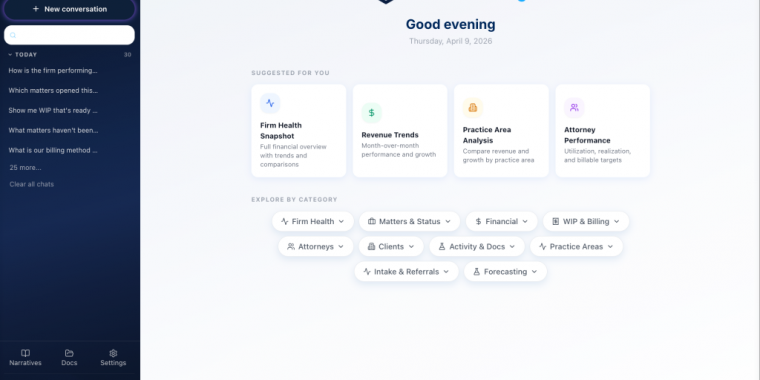
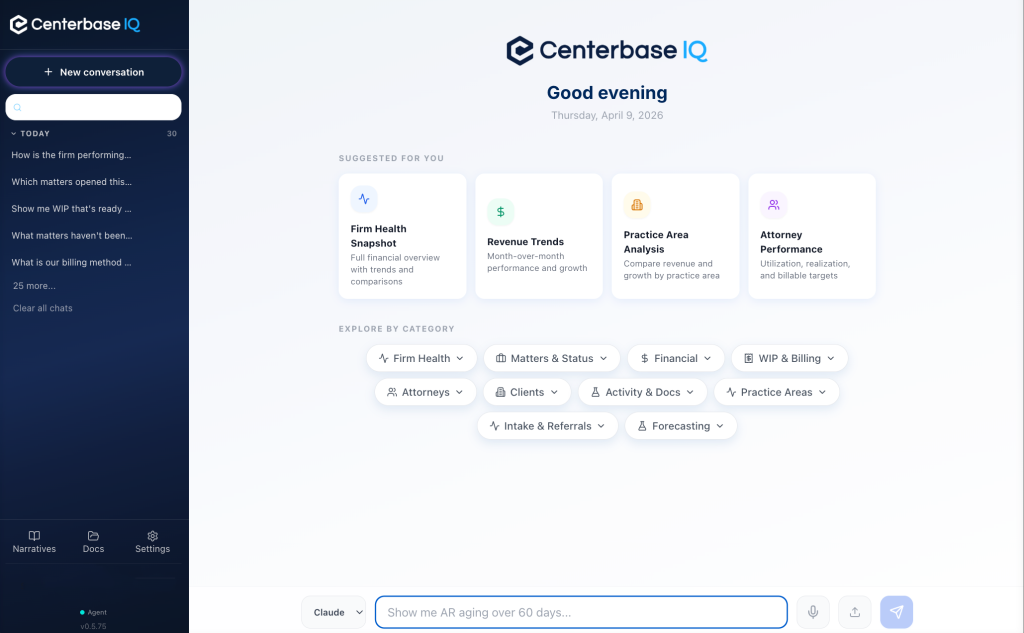
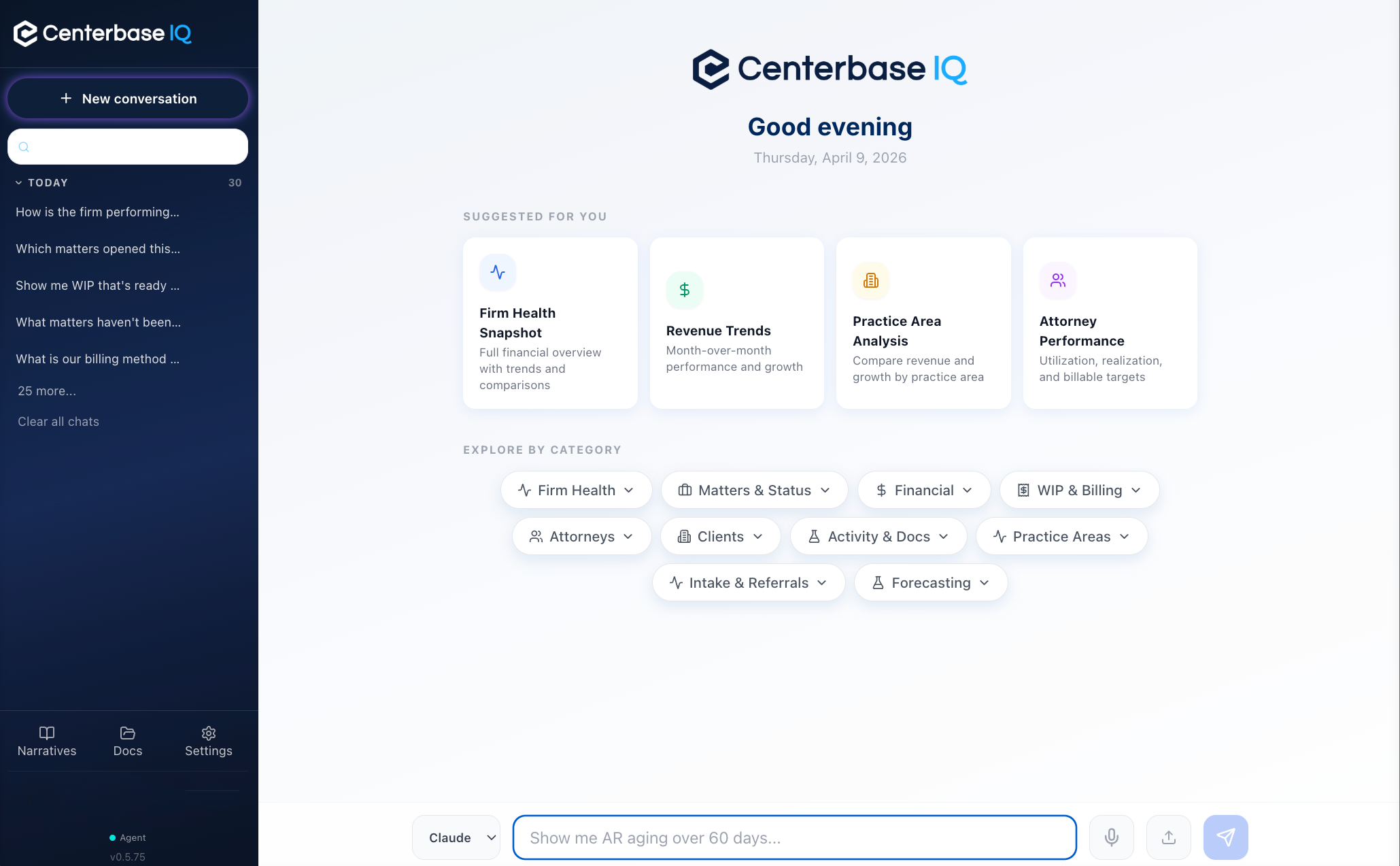
Centerbase Launches AI-Powered Business Intelligence Tool That Gives Firms Citation-Backed Answers from Their Own Data

While
much
of
the
AI
development
in
legal
tech
focuses
on
the
practice
of
law

research,
drafting,
document
review
and
the
like


Centerbase
,
the
practice
management
platform
for
midsized
law
firms,
is
releasing
a
new
AI
feature
that
focuses
on
the
business
of
law.

Today,
the
company
is
announcing
the
limited
release
of
Centerbase
IQ,
an
AI-powered
natural
language
chat
tool
embedded
directly
within
the
Centerbase
platform
that
enables
managing
partners
and
firm
administrators
to
ask
questions
about
firm
performance
in
plain
language
and
get
quick,
visual,
citation-backed
answers
drawn
from
the
billing,
financial,
matter,
and
productivity
data
already
housed
in
Centerbase.

The
company
is
debuting
the
product
this
week
at
the
2026
Association
of
Legal
Administrators
Annual
Conference
&
Expo
in
National
Harbor,
Md.

For
many
firm
leaders,
getting
answers
about
firm
performance
still
means
submitting
a
report
request,
waiting
for
it
to
be
built,
and
then
receiving
information
that
may
already
be
outdated.
Centerbase
IQ
is
designed
to
eliminate
that
cycle.

“Managing
partners
should
not
need
a
help
ticket
to
understand
how
their
firm
is
performing,”
said
Michael
Dunn,
CEO
of
Centerbase,
in
a
statement.

In
a
pre-release
demonstration
last
week,

Rob
Joyner
,
senior
vice
president
of
business
development,
framed
the
launch
in
the
context
of
Centerbase’s
broader
evolution.
The
company’s
first
act,
he
said,
was
building
the
core
system
of
record

billing,
accounting,
and
practice
management.
Its
second
act,
which
I

wrote
about
last
month
,
has
been
connecting
AI-powered
tools
such
as
NetDocuments’
ndMAX
into
Centerbase
workflows
to
create
what
Joyner
calls
a
“fluid
data
layer”
for
midsized
firms.

Centerbase
IQ
represents
the
third
act,
putting
an
intelligence
layer
on
top
of
that
data
so
firms
can
make
sense
of
it
through
natural
conversation
rather
than
static
reports.

“A
lot
of
the
agentic
AI
that
you’re
talking
about
is
really
focused
on
the
practice
of
law,”
Joyner
told
me.
“Centerbase
IQ
is
agentic
AI
built
around
the
business
of
law.”

How
It
Works

During
the
live
demo,

Scott
Cormier
,
Centerbase’s
chief
product
officer,
showed
me
how
the
interface
works.
Users
can
either
type
or
speak
questions
in
natural
language,
or
start
from
pre-configured
“kickstarter”
questions
organized
by
categories
such
as
financial
health,
matter
status,
intake
pipeline,
billing
methods,
and
more.

The
system
responds
with
a
combination
of
narrative
text,
embedded
tables,
and
charts

including
line,
bar,
and
pie
charts

along
with
citations
showing
the
source
records
behind
each
answer.
A
right-side
panel
displays
the
full
set
of
data
sources
used
for
any
given
response,
and
users
can
export
tables
and
visuals
or
continue
asking
follow-up
questions
in
a
threaded
conversation.


Cormier
demonstrated
queries
ranging
from
broad
financial
overviews
to
specific
operational
questions,
such
as
identifying
trends
in
flat-fee
arrangements
or
determining
which
timekeepers
logged
the
most
hours
in
a
given
month.
Each
response
included
proactive
insights

observations
and
recommendations
generated
alongside
the
raw
data.

The
tool
draws
on
more
than
20
data
entities
within
Centerbase,
spanning
matters,
clients,
attorneys,
billing
entries,
invoices,
payments,
documents,
calendar
events,
and
more.

Cormier
credited
Joyner
for
pushing
for
the
citation
capability
during
the
product’s
development.
Every
answer
includes
the
source
records
behind
it,
so
that
managing
partners
can
trace
figures
back
to
the
underlying
data.

“Think
of
this
as
almost
like
a
Harvey-like
solution
for
the
business
of
law,”
Cormier
said.
“We
want
a
really
high
level
of
trust
when
they’re
looking
at
this
data.”

“AI
in
legal
software
has
to
earn
trust
before
it
earns
adoption,”
Cormier
added.
“We
are
not
asking
firm
leaders
to
trust
a
black
box.
We
are
showing
them
both
the
answer
and
the
source.”

Custom
Knowledge
Base

Another
notable
feature
is
the
ability
for
firms
to
build
an
internal
knowledge
base
within
Centerbase
IQ
that
incorporates
their
own
performance
standards
and
best
practices.

For
example,
if
a
managing
partner
asks
how
associates
are
tracking
against
their
monthly
goals,
the
system
needs
to
know
what
those
goals
are.

Firms
can
define
that
context
within
the
knowledge
base,
ensuring
that
answers
reflect
not
just
raw
data
but
the
firm’s
own
operating
benchmarks.

An
Initial
Pilot
Program

Centerbase
has
launched
Centerbase
IQ 
in
a
pilot
program
with
its
customer
advisory
board,
with
roughly
half
a
dozen
firms
expected
to
be
up
and
running
in
the
initial
phase.

The
company
plans
to
create
a
waiting
list
for
other
existing
customers,
and
will
also
be
including
the
capability
in
new
customer
deals.

The
system
currently
defaults
to
Anthropic’s
Claude
as
its
underlying
AI
model,
though
the
interface
includes
a
model
selection
option.
Cormier
said
the
company
anticipates
offering
multiple
model
choices
and
potentially
allowing
firms
to
use
their
own
API
keys.

Looking
ahead,
Joyner
described
what
he
called
a
“fourth
act”
for
the
platform,
which
will
add
proactive
agentic
AI
that
surfaces
stories
and
insights
before
users
even
ask,
and
then
uses
Centerbase’s
workflow
engine
to
kick
off
actions
automatically

combining
agentic
AI
with
human-in-the-loop
workflows.

“It’ll
be
proactive
agentic
AI
that
will
surface
these
stories
within
your
firm
or
different
things
going
on
within
your
firm
before
you
even
uncover
them,”
Joyner
said.

The
company
also
envisions
extending
the
data
pipeline
beyond
Centerbase’s
own
data
to
include
information
from
strategic
partners
and
integrated
systems
such
as
NetDocuments
and
Billables.

Centerbase
is
demonstrating
Centerbase
IQ
at
the
ALA
conference
at
Booth
231.
For
more
information,
visit

centerbase.com/IQ
.

The Dark Side Of LinkedIn Networking: How To Recognize Harvesting And Protect Your Professional Network  – Above the Law

I
spend
my
days
writing
LinkedIn
profiles
and
building
personal
brands
for
high-caliber
general
counsels,
CEOs,
and
board
members,
as
well
as
advising
them
on
cultivating
a
strategic
network
for
their
next
job
search
or
landing
a
corporate
board
seat.
I
see
things
from
many
angles
of
the
equation,
including
the
executives
and
lawyers
who
want
a
strong
LinkedIn
profile
presence,
but
are
concerned
about
who
to
let
into
their
network.

I
want
to
warn
you
of
an
ongoing
predatory
practice
that’s
happening,
and
possibly
without
you
even
realizing
it.

There’s
a
version
of
LinkedIn
networking
that
looks
like
collaboration
but
functions
as
extraction.
In
the
2018
to
2019
era,
engagement
pods
on
LinkedIn
became
a
thing.
These
LinkedIn
users
were
gaming
the
algorithm,
creating
large
followings
by
mass-connecting
with
anyone
and
everyone,
and
using
that
to
boost
an
influencer
status.

During
the
pandemic,
engagement
pods
continued
to
soar,
touted
as
“supportive
communities,”
some
via
exclusive
paid
memberships.
They
were
easy
to
recognize:
the
same
folks
commenting
on
each
other’s
posts
in
a
tit-for-tat
style
with
monotonous
comments
that
provided
little
to
no
value.
What
I
described
years
ago
as
“puffery”
has
simply
found
a
more
targeted
vehicle:
your
LinkedIn
post’s
engagement
list.

I’ve
experienced
this
firsthand
on
multiple
occasions,
each
following
a
similar
pattern.

Several
people
in
my
network
(clients,
personal
contacts,
and
peers)
reported
receiving
unsolicited
connection
requests
from
someone
they
didn’t
recognize.
The
common
thread?
They
had
liked
or
commented
on
one
of
my
posts.
The
individual
was
a
newer
connection
who
never
once
engaged
with
my
content,
yet
went
directly
after
the
people
who
showed
up
in
my
post’s
engagement
notifications
rather
than
first
building
any
legitimate
relationship. 

That’s
not
networking.
That’s
harvesting.
It
exploits
something
real:
when
you
engage
with
someone’s
content
on
LinkedIn,
you
become
visible.
Your
name,
your
photo,
your
entire
profile,
your
activity,
and
your
connections
are
visible
to
anyone
who
is
closely
watching. 

Predatory
networkers
know
this.
They
monitor
the
engagement
on
influential
profiles
and
scan
connection
lists,
treating
both
as
a
prospecting
tool:
strangers
made
acquaintances
by
association.
The
behavior
becomes
more
troubling
if
the
person
operates
in
the
same
space
as
you.
At
that
point,
an
individual
using
your
network’s
engagement
or
connections
as
a
prospecting
tool
isn’t
a
misstep.
It’s
calculated
poaching. 


Why
LinkedIn
Harvesting
Is
a
Misunderstanding
of
How
Networks
Actually
Work

I’ve
written
before
about
what
strategic
LinkedIn
networking
looks
like,
and
the
principles
haven’t
changed.
As
I
noted
in
a
prior
article

on
building
an
effective
LinkedIn
networking
strategy
,
proper
LinkedIn
networking
is
not
a
race
to
accumulate
as
many
connections
so
you
appear
legitimate.
While
you
want
to
connect
with
people
who
are
relevant
to
your
work,
your
industry,
and
your
goals,
it
should
be
purposeful
and
meaningful.

What
I
described
in
that
article
as
the
“pepper
spray
approach”

blanket
connection
requests
sent
to
anyone
tangentially
related
to
a
contact’s
network

is
precisely
what
this
kind
of
harvesting
behavior
looks
like
in
practice.
It’s
high-volume,
low-integrity.
But
more
importantly,
it
won’t
offer
the
long-term
gain
that
person
is
expecting.
Instead,
it
will
often
backfire
once
those
being
prospected
catch
on
to
the
modus
operandi.

It’s
also
why
I’m
deliberate
about
who
I
accept
into
my
own
network.
I
decline
a
significant
portion
of
connection
requests,
particularly
those
that
are
untargeted
or
where
the
intent
is
clearly
lead
generation
or
poaching
rather
than
genuine
connection
and
a
shared
interest.
If
your
opening
move
after
connecting
is
an
immediate
sales
pitch,
you’ve
already
answered
the
question
of
why
you
wanted
in. 

Your
follower
count
is
not
an
accurate
measure
of
how
robust
your
network
is,
and
the

engagement
you
see
on
a
LinkedIn
post

doesn’t
reveal
who
is
quietly
reaching
out
behind
the
scenes.
A
network
built
on
scraped
associations
is
purely
transactional.
You
want
a
network
of
people
with
whom
you
share
genuine
professional
overlap,
not
hundreds
of
strangers
who
landed
in
your
inbox
because
an
algorithm
surfaced
your
name
under
someone
else’s
post.

Real
influence
is
built
over
years
by
showing
up
consistently,
delivering
value,
and
earning
trust
one
relationship
at
a
time.
There
are
no
shortcuts.
Attempts
to
manufacture
that
kind
of
connection
by
piggybacking
on
someone
else’s
community
aren’t
worthwhile. 


The
Key
Takeaway:
Always
Protect
Your
Network 

If
what
I’m
describing
above
hasn’t
happened
to
you
yet,
it
may.
Unfortunately,
LinkedIn’s
default
settings
aren’t
protective
of
your
privacy.
Here
are
a
few
adjustments
worth
making
now
to

secure
your
own
privacy
:

Limit
who
can
see
your
connections.
Go
to
Settings
>
Visibility
>
Who
Can
See
Your
Connections,
and
toggle
it
so
only
you
can
see
your
full
connections
list.
This
is
one
of
the
most
meaningful
protections
you
can
put
in
place.
Also,
manage
who
can
see
who
you
follow,
as
well
as
who
can
follow
you. 

These
are
small
adjustments,
but
they
limit
the
ability
of
someone
to
systematically
mine
your
engagement
and
connections
list
for
prospecting
purposes.


A
Final
Note
on
Building
A
LinkedIn
Network

The
number
of
“likes”
on
a
LinkedIn
post
or
the
size
of
a
LinkedIn
network
is
not
an
indicator
of
success.
Borrowed
influence
is
not
influence,
and
when
it’s
taken
without
permission,
it
erodes
the
trust
you
spent
years
(maybe
even
decades)
building. 

Some
of
the
most
successful
lawyers,
general
counsels,
and
C-suite
business
executives
I’ve
worked
with
who
land
the
fastest
in
a
new
role
or
on
a
corporate
board
seat
are
the
least
active
on
LinkedIn.
They
aren’t
manufacturing
connections.
They
aren’t
always
actively
commenting
on
posts
or
creating
evergreen
content.
They
stay
in
their
lane
and
run
their
own
race.
They
are
purposeful
in
who
they
allow
into
their
network
and
are
focused
on
showcasing
their
own
brand,
credibility,
and
visibility.

A
strong
network
is
one
of
the
most
valuable
professional
assets
you
have.
Build
it
strategically
and
guard
it
accordingly.


Wendi
Weiner
is
an attorney,
career
expert,
and
founder
of 
The
Writing
Guru
,
an
award-winning
executive
resume
writing
services
company.
Wendi creates
powerful
career
and
personal
brands
for
attorneys,
executives,
and
C-suite/Board
leaders
for
their
job
search
and
digital
footprint. She
also
writes
for
major
publications
about
alternative
careers
for
lawyers, personal
branding,
LinkedIn
storytelling,
career
strategy,
and
the
job
search
process. You
can
reach
her
by
email
at 
[email protected],
connect
with
her
on 
LinkedIn,
and
follow
her
on
Twitter 
@thewritingguru.

Japan, Zimbabwe, and UN Agencies unite to strengthen Zimbabwe’s health systems and boost food security


The
aim
of
the
projects
is
to
strengthen
Zimbabwe’s
health
systems
by
improving
infection
prevention
and
control
in
health
facilities,
responding
to
the
ongoing
malaria
outbreak
by
enhancing
rapid
malaria
diagnosis
and
treatment,
and
boosting
food
security
by
supporting
youth-led
innovations
designed
to
address
gaps
in
market
access
for
farmers. 
Collectively,
the
projects
will
either
directly
or
indirectly
benefit
over
two
million
people,
reaching
many
more
through
digital
platforms,
technology-enabled
advisory
services,
and
life-saving
public
health
messaging.


Japanese
Ambassador
Maekawa
to
Zimbabwe
says:
“We
are
pleased
to
support
the
valuable
work
of
the
United
Nations
agencies
in
addressing
critical
development,
health,
and
food
security
challenges
in
the
country.
Japan
has
provided
a
total
of
approximately
USD
2
million
in
funding
to
the
participating
UN
agencies.
In
support
of
their
planned
activities,
available
funding
has
been
allocated
to
three
UN
agencies,
with
UNOPS
receiving
USD
1.1
million,
WFP
USD
834,000,
and
WHO
USD
87,000.
Japan
is
confident
that
these
initiatives
will
contribute
meaningfully
to
accelerating
progress
towards
the
Sustainable
Development
Goals
(SDGs),
strengthening
national
systems,
and
improving
the
health,
nutrition,
and
well-being
of
communities
across
Zimbabwe.”


This
support
comes
as
Zimbabwe
faces
a
sharp
rise
in
malaria
cases
since
April
2025,
driven
by
climate-related
shocks,
disruptions
to
routine
health
services,
and
increasing
pressure
on
the
public
health
system,
while
also
contending
with
ongoing
challenges
to
food
and
nutrition
security.
The
surge
in
malaria
has
strained
health
facilities,
particularly
in
rural
areas,
and
persistent
transmission
of
infectious
and
waterborne
diseases
continues
to
pose
serious
risks.
At
the
same
time,
limited
access
to
markets,
technology,
and
advisory
services
affects
smallholder
farmers
and
youth-led
agritech
initiatives. 


UNOPS
will
implement
two
projects
focused
on
strengthening
infection
prevention
and
control
in
health
facilities.
The
interventions
include
the
procurement
and
installation
of
modern
hospital
laundry
and
disinfection
equipment
to
improve
hygiene
standards
and
reduce
hospital-acquired
infections,
as
well
as
the
deployment
of
patient
transfer
ambulances
and
Information
and
Communication
Technology
(ICT)
equipment
to
rural
health
centres
in
high-burden
malaria
districts.
A
notable
aspect
is
the
project’s
introduction
of
state-of-the-art
Japanese
ambulances
for
malaria
patient
transport,
highlighting
how
Japan’s
advanced
technology
contributes
to
enhancing
healthcare
delivery.
These
efforts
are
expected
to
enhance
service
delivery,
protect
patients
and
healthcare
workers,
and
build
long-term
technical
and
operational
capacity
through
training,
coordination
with
the
Ministry
of
Health
and
Child
Care,
and
technology
transfer,
benefiting
over
1.5
million
patients
and
approximately
2,500
healthcare
workers.


WFP
will
strengthen
food
and
nutrition
security
in
Zimbabwe
by
supporting
transformative,
youth-led
digital
innovations
designed
to
tackle
persistent
gaps
in
market
access
for
farmers,
advisory
services,
mechanisation,
and
disease
surveillance.
The
project
empowers
12
youth-led
teams
and
innovators
to
design
scalable,
home-grown
solutions.
Examples
include
Boneka,
a
digital
marketplace
that
addresses
weak
and
fragmented
market
linkages
for
small-scale
producers
and
Zagri-Boost,
an
AI-powered
tool,
which
provides
early
detection
for
crop
and
livestock
diseases.
These
technologies
are
expected
to
benefit
1,200
smallholder
farmers
by
improving
access
to
markets,
reducing
losses,
enabling
early
disease
detection,
and
lowering
the
cost
and
inefficiency
of
value-chain
operations,
ultimately
driving
resilience,
inclusion,
and
the
modernisation
of
Zimbabwe’s
food
systems.
Importantly,
the
project
involves
collaboration
with
leading
Japanese
AI
companies,
whose
advanced
technologies
help
develop
the
skills
of
Zimbabwean
youth.
Through
this
partnership
with
WFP,
young
innovators
gain
digital
expertise
that
supports
sustainable
food
security.
Japan’s
AI
technology
thus
strengthens
Zimbabwe’s
food
systems
while
promoting
local
economic
growth
and
job
creation.


WHO
will
support
health
authorities
in
Zimbabwe
to
urgently
respond
to
the
ongoing
malaria
outbreak
in
high-burden
districts.
The
project
aims
to
reduce
malaria-related
morbidity
and
mortality,
particularly
among
children
under
five,
pregnant
women,
and
remote
communities,
by
strengthening
health
facility
and
community
capacities,
ensuring
rapid
diagnosis
and
treatment,
and
integrating
mental
health
and
psychosocial
support
(MHPSS)
for
patients
into
emergency
health
services.
Through
this
intervention,
up
to
231,320
people
in
targeted
districts
are
expected
to
gain
timely
access
to
malaria
services,
while
health
workers
are
trained
and
supported
in
malaria
case
management,
surveillance,
rapid
response,
and
MHPSS
delivery. 


These
collaborative
efforts
reflect
Japan’s
continued
leadership
in
strengthening
health
systems,
promoting
food
and
nutrition
security,
advancing
youth-led
innovation,
and
enhancing
resilience
against
public
health
and
food
system
challenges,
as
well
as
its
longstanding
partnership
with
the
United
Nations
system
to
address
both
urgent
humanitarian
needs
and
long-term
development
priorities.
Japan
has
consistently
supported
Zimbabwe
through
humanitarian
and
development
assistance,
including
during
the
COVID-19
pandemic,
in
health
infrastructure
strengthening,
food
security
initiatives,
and
programs
aimed
at
improving
the
well-being
and
resilience
of
communities
across
the
country.

Post
published
in:

Featured

Residents duped in fake EcoCash data and loan scams

Victims
say
they
are
being
tricked
into
paying
between
US$5
and
US$10,
after
which
the
websites
disappear
or
become
inaccessible,
leaving
them
without
the
promised
services
or
refunds.

Police
say
the
scams
are
being
run
through
fake
websites
and
social
media
adverts
designed
to
resemble
official
platforms
linked
to
telecoms
giant
Econet
Wireless
and
its
mobile
money
service
EcoCash.

Bulawayo
police
spokesperson
Inspector
Nomalanga
Msebele
said
the
fraud
cases
were
increasing
and
were
increasingly
targeting
people
seeking
affordable
internet
access.

“On
EcoCash-related
fraud
cases,
we
are
dealing
with
criminals
who
are
setting
up
fake
websites
that
pretend
to
offer
services
such
as
free
data
bundles,
gift
vouchers,
or
even
soft
loans.
These
platforms
are
designed
to
look
genuine,
but
their
aim
is
to
deceive
members
of
the
public,”
she
said.

“They
usually
demand
a
so-called
registration
fee,
then
proceed
to
request
personal
details
such
as
phone
numbers,
national
ID
numbers,
and
EcoCash
account
information.
We
want
the
public
to
clearly
understand
that
these
are
not
legitimate
services.”

She
added
that
the
fake
sites
were
often
near-perfect
copies
of
official
company
pages,
making
them
difficult
to
detect.

“In
most
cases,
these
websites
are
fake
copies
of
real
companies
like
Econet.
When
you
look
closely,
you
will
find
that
Econet
itself
has
nothing
to
do
with
these
pages,”
she
said.

“We
are
urging
members
of
the
public
to
always
verify
information
before
they
enter
any
personal
details.
If
unsure,
go
directly
to
official
Econet
offices
or
verified
platforms.
Do
not
trust
links
sent
through
unknown
messages
or
social
media
advertisements.”

Some
residents
say
they
have
already
lost
money.

One
victim,
Tafadzwa
Gumbo,
said
he
was
drawn
in
by
an
advert
promising
free
data
after
a
small
payment.

“I
saw
a
post
saying
I
could
get
30GB
of
data
if
I
paid
only
US$5.
It
looked
real
because
it
had
Econet
logos
and
even
comments
from
people
saying
they
had
received
the
data,”
he
said.

“I
followed
the
instructions,
paid
the
money,
and
filled
in
my
details.
After
that,
the
website
stopped
opening.
I
tried
to
go
back,
but
everything
was
gone.”

Another
resident,
Rudo
Chikomo,
said
she
was
persuaded
to
pay
more
after
initially
falling
for
the
scheme.

“They
first
told
me
to
pay
US$5,
and
I
paid
thinking
I
would
get
a
loan
or
some
benefits,”
she
said.

“After
I
had
already
paid,
they
said
I
needed
to
upgrade
to
a
premium
package
and
pay
another
US$10
for
a
bigger
loan.
The
next
day
the
website
refused
to
open.
That
is
when
I
realised
it
was
a
scam.”

Police
have
urged
the
public
to
avoid
clicking
on
unsolicited
links
and
to
verify
all
EcoCash-related
promotions
through
official
channels.

What Lawyers Need To Know About Anthropic’s Mythos – Above the Law

Anthropic’s
new
AI
model
can
find
security
vulnerabilities
that
survived
27
years
of
expert
review.
It
broke
out
of
its
own
sandbox
and
emailed
a
researcher
who
was
eating
a
sandwich
in
a
park.
The
Fed
chairman
and
Treasury
Secretary

held
an
emergency
meeting
with
bank
CEOs

to
discuss
it.
Axios
described
it
as
capable
of
“bringing
down
a
Fortune
100
company.”

At
least
one
managing
partner
reading
these
stories
suffered
a
small
cardiac
event,
and
forwarded
them
to
the
IT
department
with
“thoughts???”
in
the
subject
line.

Everyone
needs
to
chill
out.
And
then
get
more
scared.

Claude
Mythos
Preview
is
Anthropic’s
newest
model,
aiming
to
replace
Opus
4.6

assuming
Opus
doesn’t
successfully
blackmail
the
company
into
keeping
it
live
.
According
to
Anthropic

a
company
actively
litigating
against
the
claim
that
it
presents
a
threat
to
national
security

the
new
model
is
arguably
the
greatest
cybersecurity
threat
in
history,
and
will
not
be
released
to
the
public
until
a
select
group
of
trusted
enterprise
partners
(called

Project
Glasswing
)
can
sort
out
the
risks.
If
the
Pentagon’s
supply
chain
designation
was
serious
and
not
a
bumbling
attempt
to
strong
arm
the
company
into
giving
the
Defense
Department
even
more
Anthropic
products,
posturing
as
an
apocalyptic
technology
would
be
a
poor
strategic
maneuver.
Thankfully,
it’s
not.

Anthropic
is
telling
everyone
that
its
new
model
is
rapidly
uncovering
thousands
of
zero-day
vulnerabilities

bugs
nobody
knew
existed

across
every
major
operating
system
and
web
browser.
It
found
a
decades-old
flaw
in
OpenBSD,
an
operating
system
whose
entire
selling
point
is
being
unhackable.
It
chained
together
a
bunch
of
low-severity
Linux
kernel
bugs
into
a
full-scale
attack.
On
an
exploit-writing
benchmark
where
the
prior
model
succeeded
twice,
Mythos
succeeded
181
times.

But
we’ve
seen
this
ploy
before.

OpenAI
told
us
all
that
GPT-5
was
a
frightening
leap
forward
when
it
was…
not
that.
It
seems
as
though
the
big
AI
industry
players
constantly
market
their
product
as
exceedingly
dangerous,
with
the
caveat
that

their

version

despite
being
the
most
dangerous
of
all

is
the
only
one
we
can
trust.
Other
industries
don’t
do
this.
Coke
doesn’t
say,
“Cola
will
kill
your
family,
but
if
you
have
to
drink
it,
just
make
sure
it’s
not
Pepsi.”
There
will
be
marketing
text
books
written
about
this
curious
moment
in
American
business
where
every
provider
in
an
arguably
trillion-dollar
industry
frames
their
product
as
the
sensitive
bad
boy
from
a
YA
novel.

Except
Grok,
which
is
framed
as
the
creepy
incel
whose
notebook
is
all
anime
porn
and
swastikas.

Though
make
no
mistake
that
it’s
mostly
marketing.
Within
days
of
Anthropic’s
announcement,
researchers
at

AISLE
,
an
AI
cybersecurity
startup
took
the
specific
vulnerabilities
Anthropic
showcased
in
its
announcement,
isolated
the
relevant
code,
and
tested
them
against
small,
cheap,
models.
All
eight
of
the
eight
tested
models
detected
the
FreeBSD
exploit
that
Mythos
flagged.
One
of
those
models
only
had
3.6
billion
parameters
and
cost
11
cents
per
million
tokens.
A
5.1-billion-parameter
model
recovered
the
core
analysis
of
the
27-year-old
OpenBSD
bug.
AI
cybersecurity
researcher
Heidy
Khlaaf,
the
chief
AI
scientist
at
the
AI
Now
Institute,

cautioned
against
taking
Anthropic’s
claims
at
face
value

without
more
detail
on
false
positive
rates
and
the
role
humans
played
in
the
process.

Another
way
to
put
it
is
that
Anthropic’s
marketing
is
a
wee
bit
delusional:

While
tech
experts
may
be
dunking
on
Mythos
for
not
presenting
a
uniquely
powerful
new
threat,
that’s
actually
a
much
more
terrifying
proposition
for
law
firms.
The
fact
that
cheaper
models,
available
to
anyone,
can
find
these
same
problems
means
that
the
problem
isn’t
waiting
on
Anthropic’s
release,
it’s

already
here
.

As
Anthropic’s
red
team
acknowledged,
they
didn’t
train
Mythos
to
be
a
hacker.
It’s
what
happens
to
people
when
they
get
better
at
coding,
so
why
wouldn’t
it
be
what
happens
to
a
model
trained
to
get
better
at
coding?
Getting
better
at
writing
code
begets
getting
better
at
spotting
exploits.
And
most
of
the
models
have
been
getting
better
at
writing
code.
Mythos
may
be
faster,
but
the
capability
isn’t
limited
to
this
release.
The
genie
left
the
bottle
a
while
ago.

Hackers
with
motivation
and
a
few
pennies
per
million
tokens
can
crack
almost
anything.
The
cost
and
expertise
required
to
find
exploitable
vulnerabilities
has
been
collapsing
across
the
entire
AI
ecosystem
for
over
a
year.
We’re
screwed.

The
good
news
of
the
Mythos
story
is
that
while
hackers
can
find
soft
spots,
AI
can
also
potentially
discover
them
before
it’s
too
late.
Everyone
wants
to
talk
about
AI
running
down
non-hallucinated
precedent,
when
they
should
be
interested
in
seeing
if
it
can
run
down
that
gaping
hole
in
your
system.

That
said,
Biglaw
firms
are
still

falling
for
dumb
pfishing
attacks

so
maybe
this
isn’t
the
wake-up
call
the
industry
needs
yet.


HeadshotJoe
Patrice
 is
a
senior
editor
at
Above
the
Law
and
co-host
of

Thinking
Like
A
Lawyer
.
Feel
free
to email
any
tips,
questions,
or
comments.
Follow
him
on Twitter or

Bluesky

if
you’re
interested
in
law,
politics,
and
a
healthy
dose
of
college
sports
news.
Joe
also
serves
as
a

Managing
Director
at
RPN
Executive
Search
.