This Week in Parliament

Both
Houses
of
Parliament
have
resumed
sitting
this
week
after
their
Easter
recess. 
In
this
Bill
Watch
we
shall
outline
the
business
they
are
expected
to
deal
with,
but
please
bear
the
following
points
in
mind:

  • When
    the
    National
    Assembly
    and
    the
    Senate
    adjourn,
    they
    set
    down
    all
    outstanding
    business
    on
    their
    Order
    Papers
    (i.e.
    their
    agendas)
    for
    the
    next
    appropriate
    sitting
    day. 
    There
    is
    usually
    too
    much
    to
    be
    covered
    in
    one
    day
    so
    whatever
    is
    not
    dealt
    with
    is
    postponed
    to
    the
    next
    appropriate
    day.
  • Both
    Houses
    of
    Parliament
    can
    change
    the
    order
    in
    which
    they
    consider
    business.

THE
NATIONAL
ASSEMBLY

Tuesday
7th
March

Bills
to
be
dealt
with:

The
Assembly
is
expected
to
deal
with
the
following
Bills:


  • Police
    Amendment
    Bill
     [link]

This
Bill
is
due
to
be
presented
in
the
Assembly,
after
which
it
will
be
referred
to
the
Parliamentary
Legal
Committee
[PLC]
for
assessment
of
its
constitutionality


  • National
    Drug,
    Substance
    Abuse
    Control
    and
    Enforcement
    Agency
    Bill
     [link]

This
Bill
is
also
due
to
be
presented


  • Medical
    Services
    Amendment
    Bill 
    [link]

The
Assembly
in
committee
will
consider
amendments
which
the
Senate
made
to
this
Bill [The
Senate
resolved
to
delete
the
clause
which
amended
the
Termination
of
Pregnancy
Act
to
simplify
the
procedures
for
obtaining
an
abortion]


  • Climate
    Change
    Amendment
    Bill 
    [link]

The
Second
Reading
of
this
Bill
is
due
to
begin


  • Biological
    and
    Toxin
    Weapons
    Crimes
    Bill
     [link]

This
Bill
is
also
due
to
begin
its
Second
reading


  • Public
    Procurement
    and
    Disposal
    of
    Public
    Assets
    Amendment
    Bill
     [link]

The
Second
Reading
of
This
Bill
is
due
to
continue


  • Zimbabwe
    School
    Examination
    Council
    Amendment
    Bill
     [link]

The
Assembly
will
consider
amendments
made
to
this
Bill
in
Committee,
the
amendments
having
been
passed
by
the
PLC.


  • Tourism
    Bill
     [link]

The
Assembly
will
also
consider
Committee
Stage
amendments
made
to
this
Bill


  • State
    Service
    (Pensions)
    Bill
     [link]

Consideration
of
the
Parliamentary
Legal
Committee’s
adverse
report
on
this
Bill [linkwill
continue.


  • Mines
    and
    Minerals
    Bill
     [link]

The
Assembly
is
also
due
to
continue
its
consideration
of
the
PLC’s
adverse
report
on
this
Bill.


  • Public
    Service
    Amendment
    Bill
     [link]

Consideration
of
the
PLC’s
adverse
report
on
this
Bill
will
continue.

Reports
of
constitutional
and
statutory
bodies

The
Assembly
will
deal
with
reports
by
the
following
bodies:

  • Reports
    by
    the
    Zimbabwe
    Electoral
    Commission
    on
    by-elections
    held
    in
    June,
    August,
    September
    and
    October
    2025
  • 2024
    report
    of
    the
    Zimbabwe
    Gender
    Commission
  • 2024
    report
    of
    the
    Zimbabwe
    Anti-Corruption
    Commission.

International
agreements
to
be
approved

The
Assembly
will
be
asked
to
approve
the
following
international
agreements:

  • Convention
    Establishing
    the
    International
    Organisation
    for
    Mediation
    (2025)
  • Protocol
    to
    the
    Convention
    on
    International
    Civil
    Aviation
    (art
    3
    bis) [link].

Reports
of
parliamentary
committees

The
Assembly
will
deal
with
reports
on
the
following
topics:

  • 2023
    financial
    statements
    of
    the
    Agricultural
    and
    Rural
    Development
    Authority
  • 2023
    financial
    statements
    of
    the
    Grain
    Marketing
    Board
  • 2020
    financial
    statements
    of
    Air
    Zimbabwe
  • 2023
    financial
    statements
    of
    the
    National
    Handling
    Services
  • The
    state
    of
    cultural
    sites
    in
    relation
    to
    tourism
  • 2025
    first
    and
    second
    quarter
    budget
    performance
    reports
    of
    the
    Ministry
    of
    Industry
    and
    Commerce
  • Operations
    of
    the
    Zimbabwe
    Women’s
    Microfinance
    Bank
  • 2024
    fourth
    quarter
    Budget
    Performance
    Report
    of
    the
    Ministry
    of
    Information,
    Publicity
    and
    Broadcasting
    Services
  • Projects
    implemented
    by
    the
    Lotteries
    and
    Gaming
    Board
    as
    part
    of
    its
    corporate
    social
    responsibility
  • 2022
    financial
    statements
    of
    the
    Ministry
    of
    Finance,
    Economic
    Development
    and
    Investment
    Promotion
  • The
    2024
    fourth
    quarter
    Budget
    Performance
    Reports
    of
    the
    Ministries
    of
    Public
    Service,
    Labour
    and
    Social
    Welfare
    and
    Skills
    Audit
    and
    Development.

Petitions
received

The
Assembly
will
consider
a
report
on
the
following
petitions:

  • Petition
    on
    the
    inclusion
    of
    women
    in
    traditional
    courts
  • Petition
    on
    community
    care-givers.

Motions
on
the
National
Assembly
order
paper

Motions
set
to
be
debated
by
the
Assembly
will
cover
the
following
topics:

  • Measures
    to
    prevent
    vandalism
    of
    infrastructure
    and
    natural
    resources
  • Measures
    to
    provide
    equitable
    care
    and
    treatment
    of
    diabetes
  • Youth
    quotas
    in
    provincial
    councils,
    local
    authorities
    and
    public
    service
    boards
  • Measures
    to
    improve
    cultural
    creativity
    in
    Zimbabwe.
  • The
    use
    of
    artificial
    intelligence
    in
    adjudication
    of
    government
    tenders
  • Requiring
    all
    Premier
    Soccer
    League
    clubs
    to
    have
    at
    least
    30
    to
    40
    per
    cent
    of
    local
    players
  • Review
    of
    employment
    tax
    (PAYE)
    brackets
  • Implementation
    of
    the
    ban
    on
    export
    of
    unprocessed
    minerals
  • Measures
    to
    control
    machete-wielding
    gangsters
    in
    rural
    areas
  • The
    erection
    of
    public
    galleries
    and
    statues
    to
    preserve
    Zimbabwe’s
    cultural
    heritage.

Wednesday
8th
April


Note:
 
On
Wednesdays,
questions
and
other
private
members’
business
have
precedence
over
government
business.

Questions
set
down
for
answer

Among questions set
down
for
Ministers
to
answer
in
the
National
Assembly
on
Wednesday
are questions on the
following
issues:

  • Revenue
    collected
    from
    vehicle
    licence
    fees
    between
    January
    and
    June
    2025
    and
    its
    impact
    on
    access
    to
    information
  • Reduction
    of
    radio
    licence
    fees
  • Requirement
    that
    motorcycle
    owners
    purchase
    radio
    licences
    when
    licensing
    their
    motorcycles
  • Expiry
    of
    data
    that
    has
    been
    purchased
    from
    telecommunication
    companies
  • Protection
    of
    teachers
    and
    other
    civil
    servants
    who
    are
    in
    conflict
    with
    community
    members
  • Protection
    of
    rape
    victims
    from
    being
    identified
    in
    the
    media
  • Votes
    for
    Zimbabweans
    in
    the
    diaspora
  • Compensation
    for
    victims
    of
    political
    violence
    since
    1980
  • Measures
    to
    ensure
    meaningful
    public
    consultation
    on
    constitutional
    amendments,
    and
    to
    safeguard
    the
    independence
    of
    constitutional
    commissions
  • Private
    sector
    funding
    for
    youth
    innovation
    hubs
  • Policies
    to
    address
    marginalisation
    of
    rural
    youths
  • Policies
    to
    address
    emigration
    of
    educated
    youths
  • Role
    of
    Defence
    Forces
    in
    national
    development
    initiatives
  • Town
    status
    for
    Ruwa
  • Policy
    on
    conditions
    of
    service
    for
    senior
    employees
    of
    local
    authorities
  • Measures
    to
    allow
    access
    to
    safe
    drinking
    water
    and
    improved
    sanitation
    in
    high-density
    urban
    areas
  • Mechanisms
    for
    regular
    audits
    of
    service
    delivery
    in
    high-density
    urban
    areas
  • Lifting
    the
    moratorium
    on
    processing
    of
    applications
    for
    change
    of
    land
    use
  • Government
    policy
    on
    local
    authorities
    billing
    for
    water
    in
    local
    currency
  • Measures
    to
    ensure
    transparency
    and
    accountability
    in
    allocation
    of
    urban
    land
  • Payment
    of
    service
    charges
    to
    local
    authorities
    by
    residents
    who
    provide
    their
    own
    services
  • Government
    policy
    on
    allowing
    public
    access
    to
    minutes
    of
    urban
    council
    meetings
  • Measures
    to
    ensure
    that
    retailers
    and
    industries
    remain
    in
    business
  • Purchase
    of
    electricity
    at
    non-commercial
    rates
    by
    local
    authorities
  • Strategies
    to
    end
    load-shedding
    by
    ZESA
  • Simplifying
    reporting
    of
    faults
    to
    ZESA
  • Reimbursement
    for
    persons
    who
    give
    ZESA
    copper
    wire
    to
    replace
    stolen
    wire
  • Measures
    to
    prevent
    tourism
    degrading
    the
    environment
    in
    the
    Zambezi
    Valley,
    and
    to
    prevent
    poaching
    in
    the
    Valley
  • Re-registration
    of
    companies
    referred
    to
    in
    the
    Global
    Compensation
    Deed
    for
    compensating
    dispossessed
    farmers
  • The
    legality
    of
    the
    Ministry
    of
    Finance
    making
    payments
    directly
    to
    suppliers
    of
    goods
    and
    services
  • Oversight
    mechanisms
    applicable
    to
    the
    Mutapa
    Investment
    Fund
  • Measures
    to
    ensure
    that
    all
    State
    procurements
    are
    done
    lawfully
  • Measures
    to
    prevent
    service
    providers,
    e.g.
    local
    authorities,
    from
    using
    currency
    exchange
    rates
    other
    than
    the
    official
    rates
  • The
    protection
    of
    citizens,
    particularly
    low
    income
    earners,
    from
    hardship
    caused
    by
    the
    IMF
    staff-monitored
    programme
  • Ring-fencing
    of
    government
    social
    safety
    nets
  • The
    dispossessed
    farmers
    who
    have
    been
    compensated
    and
    the
    amounts
    paid
    to
    them
  • Government
    policy
    on
    people
    keeping
    large
    sums
    in
    cash
  • Construction
    and
    maintenance
    of
    roads,
    dams
    and
    other
    infrastructure
  • Returning
    the
    vehicle
    licensing
    function
    to
    local
    authorities
  • Management
    of
    public
    debt
    to
    ensure
    transparency
    and
    accountability
    and
    prevent
    over-burdening
    of
    future
    generations
  • Distribution
    of
    national
    resources
    to
    marginalised
    regions
  • Vehicle
    access
    toll
    fees
    at
    Beitbridge
    border
    post
  • The
    average
    cost
    of
    constructing
    one
    kilometre
    of
    trunk
    road
  • Raising
    the
    height
    of
    road
    bridges
    to
    prevent
    flooding
  • Plans
    to
    deal
    with
    school
    drop-outs
    due
    to
    pregnancies
    and
    early
    marriages,
    particularly
    in
    border
    areas
  • Government
    policy
    on
    using
    debt
    collectors
    to
    recover
    unpaid
    school
    fees
  • Government
    policy
    on
    CAMPFIRE
  • When
    the
    national
    soccer
    team
    will
    use
    local
    stadiums
    for
    international
    and
    regional
    matches
  • Abuse
    and
    politicisation
    of
    government
    food
    aid
  • Beneficiaries
    of
    the
    agricultural
    inputs
    distribution
    programme
  • Support
    for
    small-scale
    farmers
    to
    access
    export
    markets
  • Conservation
    measures
    to
    address
    declining
    soil
    fertility
  • Repatriating
    the
    remains
    of
    freedom
    fighters
    who
    died
    in
    Zambia
  • Safeguards
    to
    ensure
    political
    neutrality
    of
    the
    Defence
    Forces
  • Measures
    for
    the
    welfare
    of
    Defence
    Force
    personnel
    and
    to
    assist
    their
    post-service
    integration
  • Measures
    for
    the
    welfare
    and
    empowerment
    of
    war
    veterans.

Thursday
9th
April

The
Assembly
will
continue
with
business
left
over
from
Tuesday.

THE
SENATE

Tuesday
7th
April

Bill
to
be
dealt
with:

The
Senate
is
expected
to
deal
with
the
following
Bill:


  • Occupational
    Safety
    and
    Health
    Bill
     [link]

This
Bill
is
due
to
undergo
its
Second
Reading.

Reports
of
constitutional
and
statutory
commissions
to
be
considered

The
Senate
is
expected
to
consider
the
following
reports:

  • Reports
    of
    the
    Zimbabwe
    Electoral
    Commission
    on
    by-elections
    held
    in
    October
    and
    November
    2024
    and
    January,
    June,
    August,
    September
    and
    October
    2025
  • 2024
    annual
    report
    of
    the
    Zimbabwe
    Gender
    Commission
  • 2024
    annual
    report
    of
    the
    Zimbabwe
    Anti-Corruption
    Commission
  • 2024
    annual
    report
    of
    the
    Zimbabwe
    Electoral
    Commission
  • 2024
    annual
    report
    of
    the
    Judicial
    Service
    Commission
  • 2024
    annual
    report
    of
    the
    Attorney-General’s
    Office
  • 2024
    annual
    report
    of
    the
    National
    Prosecuting
    Authority
  • 2024
    annual
    report
    of
    the
    Zimbabwe
    Human
    Rights
    Commission.

International
agreement
to
be
approved

The
Senate
will
be
asked
to
approve
the
following
international
agreement:

  • Protocol
    to
    the
    Convention
    on
    International
    Civil
    Aviation
    (art
    3
    bis) [link].

Parliamentary
committee
reports
to
be
considered

The
Senate
is
expected
to
consider
reports
on
the
following
topics:

  • The
    state
    of
    wetlands
    in
    Harare
  • The
    state
    of
    our
    heritage,
    culture
    and
    monuments
    in
    relation
    to
    tourism
  • Access
    to
    safe
    clean
    drinking
    water
    in
    rural
    areas.

Motions
to
be
dealt
with
by
the
Senate

The
Senate
is
expected
to
debate
motions
on
the
following
topics:

  • Measures
    to
    prevent
    children
    under
    16
    having
    access
    to
    harmful
    social
    media
  • Measures
    to
    protect
    and
    increase
    the
    national
    cattle
    herd
  • Resuscitating
    the
    manufacturing
    sector
  • Measures
    to
    prevent
    child
    marriages
    and
    teenage
    pregnancies
  • Mechanisms
    to
    prevent
    murders
    in
    Zimbabwe
  • Vandalism
    of
    State
    property,
    national
    resources
    and
    infrastructure
  • Unpaid
    domestic
    and
    care
    work
  • Reply
    to
    the
    President’s
    speech.

Wednesday
8th
April

The
Senate
will
continue
with
business
not
dealt
with
on
Tuesday.

Thursday
9th
April

Questions
set
down
for
answer

The
following
questions
have
been
tabled
for
Ministers
to
answer
in
the
Senate
on
Thursday:

  • Measures
    to
    mitigate
    the
    suspension
    of
    visas
    to
    the
    USA
  • The
    inclusion
    of
    elderly
    farmers
    in
    the
    Pfumfudza
    agricultural
    support
    programme
  • Revival
    of
    the
    district
    tillage
    mechanisation
    support
    programme
  • Unspent
    funds
    intended
    for
    vulnerable
    members
    of
    society.

Veritas
makes
every
effort
to
ensure
reliable
information,
but
cannot
take
legal
responsibility
for
information
supplied.

Post
published
in:

Featured

Can’t Take A Dick Joke – See Also – Above the Law

Cops
Arrest
Woman
For
Protesting
While
Wearing
A
Penis
Costume:
Can’t
believe
the
prosecution
took
this
case!
Regional
Excellence:
Check
out
Vault’s
regional
ranking
of
firms.
Justice
Sotomayor
Tells
Law
Students
To
Master
AI:
What
will
be
the
consequences
of
that
mastery?
In
Other
News,
People
Still
Care
About
Amy
Wax:
She
got
invited
to
speak
by
Cornell’s
FedSoc
chapter.
$35M
Is
A
Lot
Of
Money!:
WilmerHale
is
facing
public
scrutiny
over
a
bill
that
has
some
wild
pay
jumps
and
logged
hours.

Nonequity Partners Are Not Happy Campers – Above the Law

(Image
from
Getty)


Ed.
Note:

Welcome
to
our
daily
feature

Trivia
Question
of
the
Day!


According
to
Bloomberg
Law’s
Workload
&
Hours
Survey,
what
percentage
of
nonequity
partners
say
they’re
satisfied
with
their
jobs?


Hint:
A
third
of
nonequity
partners
also
say
they’re
undervalued
in
their
roles
and
more
than
half
say
they
were
burnt
out
in
2025.


See
the
answer
on
the
next
page.

Lawyers Should Stay Away From A Client’s Office Politics – Above the Law

Attorneys
often
need
to
communicate
with
multiple
members
of
a
client’s
team
in
order
to
adequately
represent
a
client’s
interests. This
can
sometimes
include
team
members
who
have
different
interests
from
each
other,
and
this
may
inject
lawyers
into
the
office
politics
of
a
client. In
most
circumstances,
lawyers
should
try
to
avoid
the
office
politics
of
a
client,
and
attorneys
can
take
a
few
steps
to
help
ensure
that
they
minimize
the
chance
that
their
work
will
impact
the
internal
politics
of
the
organizations
they
serve.

One
time,
I
was
doing
legal
work
for
a
large
organization,
and
I
needed
to
communicate
with
several
different
teams
within
the
organization. 
It
was
apparent
to
me
that
there
was
animosity
between
people
that
worked
for
this
client. Each
of
the
employees
bad-mouthed
the
other
and
talked
about
how
the
others
were
bad
at
their
jobs. I
am
not
sure
why
this
animosity
exited. Perhaps
each
of
the
teams
needed
to
compete
for
limited
funding
at
an
organization,
or
perhaps
the
employees
had
a
water
cooler
beef
that
had
existed
for
years. In
any
case,
this
animosity
made
it
difficult
to
work
for
this
client
since
each
wanted
to
use
my
representation
to
cast
good
or
bad
light
on
individual
employees
at
the
firm.

Eventually,
I
tried
my
best
to
coordinate
my
efforts
away
from
these
feuding
employees
and
spoke
almost
exclusively
with
a
manager
at
the
company
who
was
above
the
office
politics. This
made
it
a
little
more
difficult
to
get
the
information
and
documents
I
needed
since
this
needed
to
go
through
a
few
layers
at
the
client
before
this
reached
my
desk. But
this
strategy
helped
ensure
that
I
was
not
part
of
the
office
politics
that
created
a
bad
environment
at
that
shop.

Sometimes,
a
legal
representation
can
take
a
few
different
paths,
and
different
people
at
a
client
might
have
varying
perspectives
on
what
should
be
done. In
such
situations,
it
might
be
tempting
to
side
with
the
person
at
the
client
who
has
the
largest
capacity
to
refer
additional
legal
work
or
just
assume
that
the
most
senior
person
at
the
client
is
correct.

However,
lawyers
should
try
not
to
let
office
politics
dictate
which
path
should
be
taken
during
a
representation. Lawyers
should
try
to
promote
the
best
strategy
they
think
is
available
regardless
of
who
at
the
client
agrees
with
this
strategy
and
who
at
the
client
disagrees
with
the
strategy. Usually
with
some
explaining,
most
employees
of
clients
will
get
on
board
with
what
their
lawyer
wants
to
do.

One
other
sticky
situation
that
arises
often
when
it
comes
to
client
politics
is
mentioning
who
messed
up
on
a
given
project. There
have
been
times
when
clients
have
tasked
certain
personnel
to
answer
questions
or
secure
documents
and
either
the
wrong
information
is
provided
or
the
requested
documents
are
not
furnished. In
such
a
situation,
it
is
tough
to
tell
a
manager
that
a
worker
has
fallen
short,
since
this
can
jeopardize
the
lawyer’s
connection
with
an
employee
that
might
be
helpful
to
managing
a
representation.

In
such
situations
it
is
usually
best
to
approach
the
worker
directly
and
see
if
they
can
remediate
any
mistakes
before
escalating
anything. 
In
this
way,
the
lawyer
can
try
to
stay
out
of
internal
politics
and
ensure
they
do
not
create
any
bad
blood.

All
told,
larger
clients
are
just
like
larger
businesses
(including
law
firms)
and
accordingly,
they
have
office
politics
just
like
other
businesses. Lawyers
can
keep
a
few
things
in
mind
to
ensure
that
they
stay
out
of
office
politics
and
focus
on
completing
a
representation
for
a
client.


Jordan
Rothman
is
a
partner
of 
The
Rothman
Law
Firm
,
a
full-service
New
York
and
New
Jersey
law
firm.
He
is
also
the
founder
of 
Student
Debt
Diaries
,
a
website
discussing
how
he
paid
off
his
student
loans.
You
can
reach
Jordan
through
email
at 
jordan@rothman.law.

What The Legal Industry Can Learn About AI Hallucinations From Auditors – Above the Law

In
2002,
MCI
Worldcom
was
charged
with
the
largest
accounting
fraud
in
U.S.
history.
They
capitalized
regular
operating
expenses,
making
it
appear
as
if
they
were
allocating
more
toward
future
business
investments
when
they
were
not.
The
financials
reported
to
investors
were
analogous
to
AI
hallucinations. The
numbers
weren’t
real.


Current
Developments
With
Legal
Hallucinations

In
2023,
the
first

brief

to
include
AI-generated
cases
was
filed.
It
wasn’t
the
first
time
a
brief
had
been
submitted
with
mistakes,
but
it
marked
a
new
precedent
where
convincing
AI-generated
errors
could
happen
more
often.
Since
that
first
case,
there
have
been
over

1,200

reported
situations
where
hallucinations
have
made
their
way
into
filings. 

In
2025,
Graciela
Dela
Torre

filed
dozens
of
documents

as
a
pro
se
litigant,
allegedly
using
ChatGPT.
Her
filings
were
related
to
a
recently
dismissed
case
with
her
insurance
company.
Some
documents
included
hallucinated
cases,
but
the
sheer
volume
of
filings
was
burdensome.
This
March,
Nippon
Insurance
decided
to

sue
OpenAI

regarding
those
filings,
claiming,
among
other
things,
that
OpenAI
was
engaging
in
the
unauthorized
practice
of
law. 

Last
week,
a

brief
filed
with
the
Sixth
District
Court
of
Appeals

had
real
citations
but
quoted
sentences
that
don’t
appear
in
the
cited
sources.
This
brief
was
filed
by
an
attorney
who
used
a
reputable
legal
research
vendor’s
AI
offering. 


AI
Governance
Is
More
Important
Than
Ever

The
unfortunate
reality
is
that
hallucinations
are
a
feature
of
LLM
systems,
not
a
bug.
And
they
are
very
convincing.

Law
firms
need
to
ensure
they
have
strong
processes
around
the
use
of
AI.
Staff
training
needs
to
be
ongoing.
Greater
emphasis
needs
to
be
placed
on
reviewing
materials,
as
creating
documents
with
AI
is
faster
and
easier.
This
needs
to
include
who
reviews,
when
reviews
happen,
and
against
what
standard. 

In
short,
firms
need
to
self-monitor
to
ensure
hallucinations
of
all
types
don’t
find
their
way
into
work
product.
This
is
not
limited
to
court
filings
either.
Let’s
not
forget
that
contracts
and
legal
advice
provided
to
clients
can
also
include
hallucinations.


Legal
Should
Take
A
Cue
From
The
Accounting
Industry

The
idea
that
critical
errors
can
be
hidden
and
need
fact-checking
is
not
unique
to
legal.
Investors
have
long
relied
on
a
company’s
financials
and
bookkeeping,
and
the
accounting
industry
has
been
built
around
the
need
for
trust
in
the
numbers. 

Not
only
are
there
Generally
Accepted
Accounting
Principles
(GAAP)
that
guide
accounting,
but
there
are
also
protocols
for
auditors
to
follow
when
independently
attesting
to
the
integrity
of
the
numbers.
The
issues
with
MCI
WorldCom
and
Enron
resulted
in
the
passage
of
Sarbanes-Oxley.
The
accounting
industry,
which
had
previously
been
self-regulated,
became

regulated

as
a
result.

Now,
auditors
review
the
accuracy
of
the
numbers
and
the
processes
used
to
produce
them.
If
the
processes
are
shaky,
an
auditor
may
be
required
to
call
out
weaknesses
in
the
controls
the
company
has
put
in
place.

Large
businesses
also
have
internal
auditors
who
serve
as
checks
and
balances,
identifying
issues
before
they
get
to
an
independent
auditor. 


Trust 

Trust
is
at
the
foundation
of
our
financial
markets
and
also
our
legal
system.
If
it’s
harder
to
trust
and
validate
the
veracity
of
a
legal
document,
then
what
does
this
mean
for
our
justice
system?

It’s
my
view
that
we
are
at
an
inflection
point
where
law
firms
and
attorneys
must
up
their
game
in
how
they
review
their
work.
With
agentic
solutions
and
client
pressures,
the
amount
of
AI-assisted
work
product
created
will
increase
tenfold,
or
perhaps
a
hundredfold.

Validating
citations
and
using
Shepards
or
KeyCite
is
table
stakes.
There
are
now

independent
systems
on
the
market

that
can
help
with
citation
verification
and
hallucinations. 

More
firms
should
incorporate
processes
that
interrogate
and
use
adversarial
approaches
to
root
out
issues
and
errors
in
work
product
before
a
court,
opposing
counsel,
or
a
client
does.
AI
solutions
can
be
adapted
to
support
this
function. 

Organizationally,
perhaps
firms
should
consider
an
internal
audit
function
that
is
structurally
independent
of
practice
areas,
similar
to
those
in
corporations.

Dare
I
suggest
that
there
may
be
a
need
for
systems
that
serve
as
confidential,
independent
validation,
similar
to
the
role
of
financial
auditors?  


Shared
Problems
Benefit
From
Collaboration

Innovation
will
drive
the
development
of
solutions,
especially
if
standards
emerge. 

Each
firm
must
solve
for
itself,
but
leaders
across
the
industry
can
leverage
associations
to
work
together
on
shared
problems
and
best
practices. (For
example,
the

SALI
Alliance

is
an
existing
forum
used
for
data
standards.) 


Rule
11
And
Attorney
Ethics

The
ABA
has
provided
initial
guidance
on

professional
standards
for
AI

under

Rule
11
.
Lawyers
know
what
they
are
responsible
for,
but
they
must
decide
how
to
meet
those
standards
because
there
is
no
formal
operational
guidance. 

The
AICPA
provides
GAAP
as
guidelines
for
accounting
and
financial
reporting.
Perhaps
the
ABA
might
eventually
offer
similar
guidance
on
operationalizing

Rule
11

What
guidance
should
exist?
And
when
should
specific
guidance
begin
to
be
offered?
Can
it
start
through
industry
collaboration? 

Here
are
a
few
ideas
for
consideration:

  • Citation
    verification?
    Fact-checking?
  • Adversarial
    AI
    review
    (a
    second
    model
    tasked
    with
    disproving
    the
    first)?
  • Sampling
    protocols
    for
    high-volume
    activity
    (e.g.,
    mass
    tort,
    e-discovery
    summaries)?
  • Document-level
    confidence
    scoring?
  • Confidential
    and
    independent
    review?
  • Human
    sign-off
    tied
    to
    defined
    review
    thresholds?

I’ve
written
elsewhere
that

innovation
leads
and
regulation
follows
.
But
if
AI
innovation
is
going
to
cause
friction
or
undermine
trust
in
a
way
that
can
impede
justice,
then
bar
associations,
regulators,
or
the
courts
may
need
to
step
in
earlier. 


Pro
Se
Litigants

Maybe
courts
need
to
consider
some
minimum
standards
before
a
pro
se
litigant
can
file
using
AI?
Should
there
be
a
requirement
and
mechanism
to
disclose
that
AI
was
used
in
creating
a
filing?
Perhaps
the
federal
system
or
a
state
court
could
offer
a
service
to
pro
se
litigants
to
use
before
filing?
That
could
mitigate
some
of
the
downsides
while
supporting
greater
access
to
justice. 


Summary

The
current
legal
system
is
engineered
for
accuracy,
given
the
speed
at
which
humans
create
documents.
AI
breaks
that
balance,
automating
more
drafting
and
generating
work
product
at
a
scale
that
overwhelms
traditional
validation
methods.
The
review
process
needs
automation
to
keep
up. 

Accounting
has
faced
automation
and
complexity
while
adapting
to
maintain
trust.
Similarly,
legal
professionals
will
need
tools
to
support
more
automated
content
creation
and
maintain
trust
in
the
documents
they
produce.

Law
firms
need
to
protect
their
reputations
and
their
clients,
and
the
legal
profession
needs
to
ensure
legal
documents
can
be
trusted.
Just
as
investors
need
to
have
confidence
in
financial
reporting,
the
legal
industry
will
need
greater
confidence
that
hallucinations
are
manageable
when
AI
is
part
of
work-product
creation. 

The
review
of
AI-generated
work
product
may
be
the
greatest
systemic
limitation
the
legal
industry
faces
in
AI
adoption
today. 


Ken
Crutchfield
has
over
40
years
of
experience
in
legal,
tax,
and
other
industries.
Throughout
his
career,
he
has
focused
on
growth,
innovation,
and
business
transformation. His
consulting
practice
advises
investors,
legal
tech
startups
and
others.
As
a
strategic
thinker
who
understands
markets
and
creating
products
to
meet
customer
needs,
he
has
worked
in
start-ups
and
large
enterprises.
He
has
served
in
General
Management
capacities
in
six
businesses.
Ken
has
a
pulse
on
the
trends
affecting
the
market.
Whether
it
was
the
Internet
in
the
1980s
or
Generative
AI,
he
understands
technology
and
how
it
can
impact
business.
Crutchfield
started
his
career
as
an
intern
with
LexisNexis
and
has
worked
at
Thomson
Reuters,
Bloomberg,
Dun
&
Bradstreet,
and
Wolters
Kluwer.
Ken
has
an
MBA
and
holds
a
B.S.
in
Electrical
Engineering
from
The
Ohio
State
University.

‘I Dissent So Much’: Sotomayor Gets Real About Life On A Divided Court – Above the Law

Justice
Sonia
Sotomayor
(Photo
by
Alex
Wong/Getty
Images)


Ed.
note
:
Welcome
to
our
daily
feature, Quote
of
the
Day
.


If
you
mean
bridges—convince
them
that
they’re
wrong—I
dissent
so
much.
I’m
not
very
successful.


— 
Justice

Sonia
Sotomayor
,
in
a

somewhat
defeated
response

to
a
question
from
a
law
student
at
the
University
of
Alabama,
about
how
she’s
built
bridges
with
the
court’s
conservative
majority.
Sotomayor
went
on
to
describe
her
relationships
with
her
fellow
justices
as
cordial
outside
of
the
decision-making
process,
“With
all
of
them
I
certainly
have
a
civil
relationship.
And
with
many,
I
dare
say
I
have
a
friendship.”


Staci
Zaretsky
 is
the
managing
editor
of
Above
the
Law,
where
she’s
worked
since
2011.
She’d
love
to
hear
from
you,
so
please
feel
free
to email her
with
any
tips,
questions,
comments,
or
critiques.
You
can
follow
her
on BlueskyX/Twitter,
and Threads, or
connect
with
her
on LinkedIn.

WilmerHale’s $35M Bill Comes Under Fire – Above the Law

Biglaw
billing
drama
is
usually
a
closed-door
affair,
but
every
now
and
then,
the
curtain
gets
yanked
back.
And
when
it
does,
the
numbers
are…
not
subtle.

As

reported
by

Law.com,
that’s
exactly
what’s
happening
to
WilmerHale,
which
is
now
staring
down
some
very
public
scrutiny
over
a
$35
million
legal
bill
that
has
a
judge
in
London
raising
an
eyebrow…
and
ordering
a
full-on
assessment.

The
client
in
question
is
Alberto
Safra,
son
of
the
late
Joseph
Safra,
whose
$23
billion
fortune
has
apparently
spawned
the
kind
of
family
dispute
that
keeps
elite
litigators
very,
very
busy.
Safra
hired
WilmerHale
to
represent
him
in
that
fight,
and
over
the
course
of
two
years,
the
meter
ran
up
to
$35
million,
with
$18.9
million
still
outstanding.

Safra
has
now
gone
to
London’s
High
Court
to
challenge
the
invoices,
triggering
judicial
scrutiny
of
the
firm’s
charges.
And
according
to
the
court’s
findings,
there
are
some

choice

entries.

We’re
talking
about
a
single
day
where
WilmerHale
billed
more
than
$162,000.
We’re
talking
about
top
partners
charging
as
much
as
$2,095
per
hour

a
tidy
$265/hour
increase
from
what
had
been
agreed
just
15
months
earlier.
And
we’re
talking
about
Washington,
D.C.
partner
John
Trenor
logging
19.3
hours
in
a
single
day,
while
nine
timekeepers
collectively
racked
up
130.2
hours
in
one
24-hour
stretch.
(Hope
everyone
remembered
to
hydrate.)

The
real
legal
issue
isn’t
just
whether
the
bills
are
eye-popping,
but
whether
they’re
insulated
from
challenge.
WilmerHale
argued
that
its
arrangement
with
Safra
constituted
a
“contentious
business
agreement”
(CBA),
a
statutory
mechanism
under
English
law
that
can
shield
legal
fees
from
court
assessment.

But
the
court
wasn’t
buying
everything
WilmerHale
was
throwing
down.

Judge
Leonard
zeroed
in
on
the
firm’s
ability
to
unilaterally
increase
its
hourly
rates,
something
he
found
“irreconcilable”
with
the
CBA
framework.
The
court
found
that
WilmerHale
increased
rates
twice
during
the
retainer
period
without
notifying
Safra,
calling
it
“an
evident
failure
to
give
adequate
costs
information.”

On
the
positive
side
for
the
Biglaw
firm,
Judge
Leonard
acknowledged
that
Trenor
and
his
team
“worked
extremely
hard,
under
substantial
pressure,
to
help
the
claimant
achieve
his
goals”
and
that
the
hours
billed
were
“explained”
and
“commensurate
with
the
scale
of
work.”
He
also
noted
that
WilmerHale’s
rates
were
broadly
comparable
to
other
advisers
in
the
matter
and
that
the
increases
were
“largely
inflation-based.”

So
now
the
Biglaw
bills
are
under
the
microscope
with
Judge
Leonard’s
assessment
headed
Wilmer’s
way.


Kathryn
Rubino
is
a
Senior
Editor
at
Above
the
Law,
host
of

The
Jabot
podcast
,
and
co-host
of

Thinking
Like
A
Lawyer
.
AtL
tipsters
are
the
best,
so
please
connect
with
her.
Feel
free
to
email

her

with
any
tips,
questions,
or
comments
and
follow
her
on
Twitter

@Kathryn1
 or
Mastodon

@[email protected].

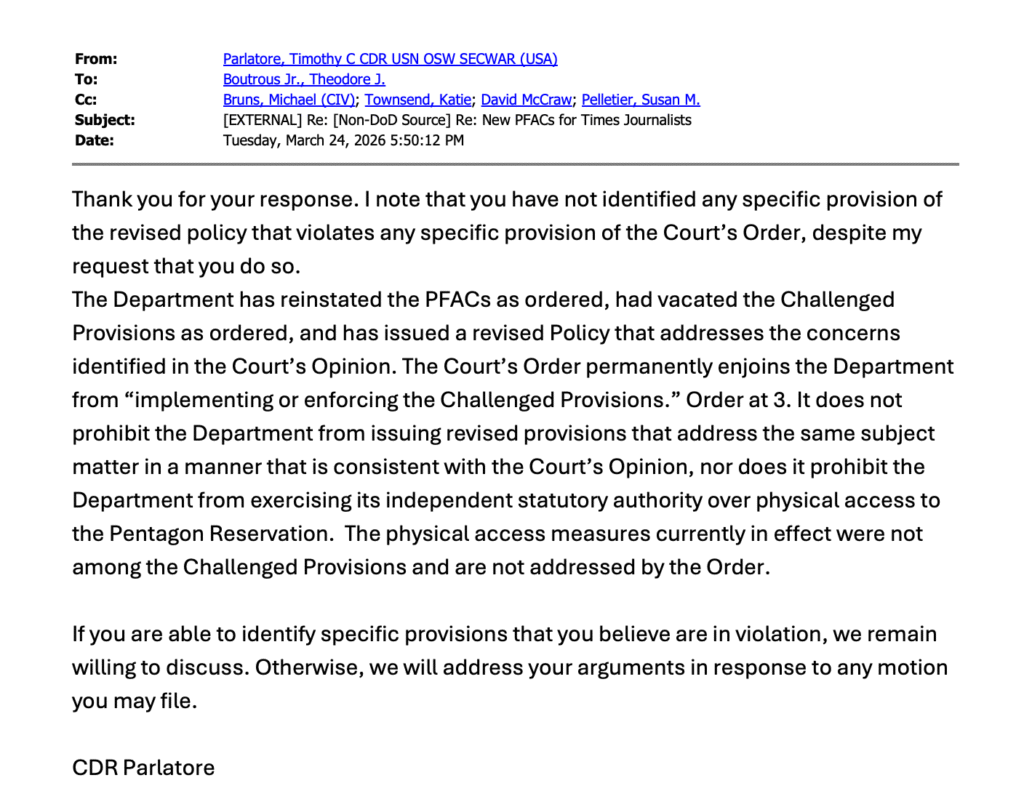
Defense Department Lawyering Almost As Good As Hegseth’s Pullups – Above the Law

(Photo
by
Anna
Moneymaker/Getty
Images)

The
Defense
Department’s
strategy
of
flipping
the
bird
to
judges
while
insisting
that
they’re
just
scratching
their
eyebrow
with
their
middle
finger
continues
to
pay
off
bigly.
For
the

second
time

in
a
month,
Judge
Paul
Friedman
voided
the
Pentagon’s
press
policy
and
ordered
DoD
to
let
reporters
back
in
the
building.
And,
once
again,
it
was
Pentagon
leadership
shooting
their
mouths
off
that
did
them
in.

“The
Department
cannot
simply
reinstate
an
unlawful
policy
under
the
guise
of
taking
‘new’
action
and
expect
the
Court
to
look
the
other
way,”
Judge
Friedman
wrote.
“Nor
can
the
Department
take
steps
to
circumvent
the
Court’s
injunction
and
expect
the
Court
to
turn
a
blind
eye.”

There
may
be
no
member
of
the
Trump
administration
who
hates
the
media
more
than
Defense
Secretary
Pete
Hegseth.
The
former
Fox
News
weekend
host


ironic,
isn’t
it?


suffered
a
humiliating
confirmation
process,
during
which
revelations
of
his
drunkenness,
infidelity,
and
utter
lack
of
managerial
skills
dominated
the
headlines.

Once
in
office,
he
took
immediate
steps
to
evict
mainstream
media
outlets
from
the
building.
In
September,
he
rolled
out
a
new policy for
the
Pentagon
press
corps,
requiring
journalists
to
agree
not
to
solicit
or
publish
any
“unauthorized”
information
in
exchange
for
access
to
the
building.

In
October,
reporters
surrendered
their
Pentagon
Facilities
Alternate
Credentials
(PFACs)
en
masse
after
refusing
to
become
glorified
stenographers.

Pentagon
reporters
could
be
seen
leaving
the
sprawling
U.S.
military
headquarters
with
boxes
after
at
least
30
news
organizations
declined
to
sign
a
new
Pentagon
access
policy
for
journalists,
warning
of
the
potential
for
less
coverage
of
the
world’s
most
powerful
military.


Reuters
(@reuters.com)


2025-10-16T04:30:56.135Z

They
were
replaced
by
a
parade
of
rightwing
shit-stirrers,
like
Laura
Loomer,
Mike
Lindell,
and
Tim
Pool,
whom
Pentagon
Press
Secretary
Kingsley
Wilson
greeted
as
the
“next
generation.” 

“The
legacy
media
chose
to
self-deport,”
she

sneered
,
adding
that
“It’s
disgraceful
that
they
call
themselves
journalists
and
we
told
them
as
such,
right?”

This
frank
admission
that
the
actual
journalists

including
Fox
and
Newsmax

had
been
booted
based
on
their
First
Amendment
protected
speech
featured
prominently
in
Judge
Friedman’s
March
20

grant
of
summary
judgment

in
favor
of
the
New
York
Times.

“In
sum,
the
undisputed
evidence
reflects
the
Policy’s
true
purpose
and
practical
effect:
to
weed
out
disfavored
journalists—those
who
were
not,
in
the
Department’s
view,
‘on
board
and
willing
to
serve,’
—and
replace
them
with
news
entities
that
are,”
he
concluded.
“That
is
viewpoint
discrimination,
full
stop.”

The
government
requested
that
the
court
allow
it
to
go
back
and
clarify
the
policy,
but
the
court
refused,
finding
that
vacatur
was
the
only
appropriate
remedy.
And
yet,
just
four
days
later,
the
Department
issued
a

“revised”
interim
policy

that
looked
quite
familiar.

The
new
policy
banished
reporters
from
the
historic
Correspondents’
Corridor
and
relocated
them
to
a
Pentagon
library
annex
that,
at
the
time
of
the
ruling,
had
not
yet
opened.
In
the
meantime,
credentialed
journalists
could
access
the
main
building
only
if
they
had
a
scheduled,
approved
appointment
and
were
escorted
at
all
times.
NYT
reporter
Julian
Barnes,
a
veteran
Pentagon
correspondent,

showed
up

for
a
pre-approved
interview
on
March
31,
arrived
early,
showed
his
credentials,
and
was
immediately
ejected
from
the
building
because
PFAC
holders
must
enter
through
Corridor
8,
not
the
Visitor’s
Center
where
his
escort
was
supposed
to
meet
him.
His
interview
was
then
postponed.

DOJ
smirked
that
the
physical
access
restrictions
weren’t
covered
by
the
original
order,
the
new
credentialing
language
was
“meaningfully
different”
from
the
old
language,
and
anyway
the
press
library
has
WiFi.
They
also
complained
that
NYT
filed
a
motion
to
compel
without
conferring

which
is
kind
of
amazing
when
your

last
email

ended
with
“we
will
not
address
your
arguments
in
response
in
any
motion
you
may
file.”

Commander
Timothy
Parlatore,
the
policy’s
architect
and
DOD’s
own
counsel,
gave
the
game
away
when
he
admitted
that
the
new
policy
“used
more
words
to
say
the
same
thing.”

But
even
if
Parlatore
had
the
ability
to
clamp
it,
the
outcome
would
have
been
the
same.
Replacing
the
prohibition
on
“soliciting”
non-public
or
unauthorized
classified
or
unclassified
information
with
a
prohibition
on
“encouraging,
inducing,
or
requesting”
it
yet
another
middle
finger

albeit
one
gesturing
toward
a
thesaurus.

The
judge
was
not
amused:

The
Court
cannot
conclude
this
Opinion
without
noting
once
again
what
this
case
is
really
about:
the
attempt
by
the
Secretary
of
Defense
to
dictate
the
information
received
by
the
American
people,
to
control
the
message
so
that
the
public
hears
and
sees
only
what
the
Secretary
and
the
Trump
Administration
want
them
to
hear
and
see.
The
Constitution
demands
better.
The
American
public
demands
better,
too.

Naturally
the
Department
has
appealed.


Liz
Dye
 produces
the
Law
and
Chaos Substack and podcast.
 You
can
subscribe
by
clicking
the
logo:


Vault’s Top Law Firms By Practice Area And Region (2027) – Above the Law

Vault
recently
released
its
closely
watched
rankings
of the
nation’s
100
most
prestigious
law
firms
.
It
was
there
that
we
learned
Cravath
has
held
onto
its
title
as
the
most
prestigious
firm
in
America
for
more
than
a
decade,
and
that
the
top
firms
saw
some
interesting
changes
(including
one
major
firm
leaving
the
Top
10
thanks
to
kissing
Trump’s
ring).

But
what
if
your
firm
wasn’t
top-ranked
in
the
Vault
100?
Perhaps
your
firm
isn’t
the
most
prestigious,
but
that
doesn’t
mean
it
doesn’t
have
clout.
Some
law
firms
reign
supreme
when
it
comes
to
certain
practice
areas,
and
others
are
known
to
dominate
entire
regions
of
the
country.

Which
law
firms
are
considered
to
be
at
the
top
of
their
game
by
practice
area
and
region?
Let’s
find
out!

For
the
purposes
of
the
practice
area
ranking,
Vault
asked
associates
to
vote
for
up
to
three
firms
they
think
of
as
the
strongest
in
their
own
practice
area,
and
the
overall
ranking
indicates
the
firms
that
received
the
highest
percentage
of
votes.
Associates
were
not
allowed
to
vote
for
their
own
firm.
Pay
attention,
prospective
laterals,
because
this
ranking
could
be
quite
useful
for
you.

We’ve
picked
out
a
dozen
of
the
practice
areas
that
were
ranked
by
Vault
(you
can
see
the
full
list
by
clicking here):

  • Appellate
    Litigation:
    Williams
    &
    Connolly
  • Bankruptcy/Restructuring:
    Kirkland
    &
    Ellis
  • Energy,
    Oil
    and
    Gas:
    Vinson
    &
    Elkins
  • General
    Commercial
    Litigation:
    Quinn
    Emanuel
  • General
    Corporate
    Practice:
    Wachtell
    Lipton
  • Intellectual
    Property:
    Fish
    &
    Richardson
  • International:
    White
    &
    Case
  • Labor
    and
    Employment:
    Littler
    Mendelson
  • Private
    Equity:
    Kirkland
    &
    Ellis
  • Real
    Estate:
    Gibson
    Dunn
  • Securities/Capital
    Markets:
    Latham
    &
    Watkins
    (replacing
    Davis
    Polk)
  • Tax:
    Skadden

Next
up,
we’ve
got
a
ranking
that
matters
to
those
who
think
“location,
location,
location”
is
the
most
important
thing
in
life.
Vault’s
regional
rankings
are
based
on
votes
tabulated
from
associates
who
were
asked
to
rate
firms
on
a
1
to
10
scale
based
on
their
prestige
within
the
region.

Here’s
the
list
of
prestige
by
region
from
Vault
(you
can
see
the
full
list here):

  • Atlanta:
    King
    &
    Spalding
  • Boston:
    Ropes
    &
    Gray
  • Chicago:
    Kirkland
    &
    Ellis
  • Florida:
    Holland
    &
    Knight
  • Mid-Atlantic:
    Skadden
  • Midwest:
    Kirkland
    &
    Ellis
  • Mountain
    States:
    Gibson
    Dunn
  • New
    York:
    Wachtell
    Lipton
  • Northern
    California:
    Cooley
  • Pacific
    Northwest:
    Perkins
    Coie
  • South
    Atlantic:
    King
    &
    Spalding
    (replacing
    Alston
    &
    Bird)
  • Southern
    California:
    Latham
    &
    Watkins
  • Texas:
    Vinson
    &
    Elkins
  • Washington,
    DC:
    Covington
    &
    Burling

Congratulations
to
the
firms
that
moved
up
in
this
year’s
practice
area
and
regional
rankings,
and
congratulations
to
all
the
firms
that
made
the
cut
in
the
first
place.
It
must
be
nice
to
see
which
firms
associates
consider
as
their
peers
in
prestige,
and
it
must
be
even
nicer
for
partners
to
know
whose
pricing
models
they
need
to
undercut
the
next
time
around.


Best
Law
Firms
by
Practice
Area
(2027)
 [Vault]

Best
Law
Firms
by
Region
(2027)
 [Vault]


Staci
Zaretsky
 is
the
managing
editor
of
Above
the
Law,
where
she’s
worked
since
2011.
She’d
love
to
hear
from
you,
so
please
feel
free
to email her
with
any
tips,
questions,
comments,
or
critiques.
You
can
follow
her
on BlueskyX/Twitter,
and Threads, or
connect
with
her
on LinkedIn.

Cornell Federalist Society Invites ‘White Supremacy’ Speaker Because That’s What Federalist Society Chapters Do – Above the Law

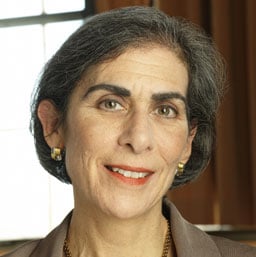
Amy
Wax

After
years
of
indulging
Professor
Amy
Wax
as
she
traded
scholarly
research
for
right-wing
trolling,
the
University
of
Pennsylvania
finally
considered
a
formal
complaint

brought
by
then
law
school
dean
Ted
Ruger

against
Wax
for
promotion
of
white
supremacy
.”
She’d
embarrassed
the
school
for
years,
attending
a

white
nationalism
conference
,
insulting
Black
graduates
by

baselessly
claiming
they
hadn’t
graduated
in
the
top
half
of
the
class
,
declaring
that
the

country
needed
fewer
Asians
,
and

inviting
the
former
editor
of
a
recognized
hate
group
publication
to
campus
.

Wax

draped
herself
in
“academic
freedom
,”
confusing
the
freedom
afforded
professors
to
pursue

published
academic
work

with

citing
Wikipedia

and

going
on
right-wing
podcasts
.
At
the
end
of
the
process,
Wax
received
a
sanction
from
the
university,
but

kept
her
job
and
tenure
.
She
took
the
school
to
court,
and
was

promptly
laughed
out
of
said
court
.

At
this
point
in
her
career,
there’s
not
much
Wax
can
add
to
a
serious
scholarly
conversation.
Thankfully
for
Wax,
Federalist
Society
chapters
are
much
more
concerned
with
trolling
than
educational
content,
and
thus
the
embattled
professor
received
an
invitation
from
FedSoc
to
speak
at
Cornell
Law.

A
lot
of
folks

were
not
pleased
:

Wax’s
appearance
at
Cornell
was
condemned
by
the Native
American
Law
Student
Association
 in
a
letter
to
the
law
school’s
student
body,
and
law
students
individually. 

“The
purpose
of
her
platform
is
not
to
engage
in
any
search
for
truth,
but
rather
to
advocate
openly
for
a
return
to
explicit
racialized
caste
systems,”
a
statement
sent
from
NALSA
to
the
law
school
student
body
on
March
26
reads.

“There
is
a
horizon
where
free
inquiry
ends,”
Ola
Eboda
J.D.
’27
wrote
in
a
letter
sent
to
the
student
body
before
the
event,
arguing
Wax’s
appearance
“sets
out
to
desecrate
the
identities
of
people.”
Eboda
is
the
vice
president
of
the Black
Law
Students
Association
 but
said
he
wrote
the
letter
in
a
personal
capacity.

In
keeping
with
the
sentiment
that
“her
platform
is
not
to
engage
in
any
search
for
truth,”
Wax
didn’t
come
to
discuss
the
finer
points
of
labor
policy,
but
instead
to
deliver
an
extended
rant
that
America’s
higher
education
system
has
been
captured
by
“woke
ideology.”
More
from
the
Cornell
Daily
Sun:

During
the
hour-long
March
25
event,
attended
by
about
20
people
and
moderated
by
conservative
Prof.
William
Jacobson,
securities
law,
Wax argued that
universities
are
self-perpetuating
institutions
obsessed
with
a
“cult
of
diversity”
rather
than
searching
for
truth
and
pursuing
new
knowledge.

William
Jacobson
and
Amy
Wax
in
the
same
room!
That’s
like
DeNiro
and
Pacino
doing

Heat
,
except
for
white
grievance
farming.

Jacobson,

threw
a
fit
several
years
ago

when
fellow
professors
raised
objections
to
Ivy
League
professors
using
their
institutional
cachet
to
perpetuate
racist
tropes

a
charge
he
considered
a
direct
attack
on
his

Legal
Insurrection

blog
since
it…
does
that.
Specifically,
Jacobson
had
just
written
a
headline
employing
the
term
“wilding,”
a
byproduct
of
the
Central
Park
Five
case

where
five
minority
kids
were
wrongly
convicted
of
a
crime.
A
few
years
later
he
was
up
in
arms
about
how
he
felt
persecuted
because

other

professors
in

other

classes
were
teaching
classes
about
race
and
bias
as
part
of
the
ABA’s
prior
requirement
that
accredited
schools
offer
the
subject.

The
Cornell
Sun
piece
delves
into
another
disturbing
aspect
of
this
event,
with
sources
questioning
why
the
FedSoc
talk
managed
to
skirt
the
procedural
obstacles
other
student
groups
face.
According
to
students
cited
in
the
article,
the
required
prior
notice
for
a
student-funded
event
dropped
at
2
a.m.
the
day
of
the
talk.
These
students
may
be
in
Biglaw
soon,
but
until
then
they’re
not
sitting
at
their
desks
at
2.

This
isn’t
the
first
time
a
student
group
invited
Wax
to
rant.

Yale
did
the
same
thing
a
couple
years
ago
,
and
at
the
time
we
noted
that
these
groups
seem
to
be
using
events
like
this
to
push
a
sort
of
reverse
Heckler’s
Veto.
As
opposed
to
the

actual

Heckler’s
Veto,
which
refers
to
authorities
using
the
hypothetical
possibility
of
a
protest
to
silence
a
speaker,
these
groups
invite
toxic
speakers
and
lean
on
the
administration
to
silence
hypothetical
protests.
And
right
on
cue,
Cornell
dispatched
police
to
the
talk
and
had
the
dean
of
students
warn
everyone
of
repercussions
for
any
disruption.

It’s
not
like
any
of
these
events
end
with
someone
throwing
rocks.
Generally
speaking,
students
either

make
a
public
statement
and
then
walk
out

or
students
show
up
and
politely
ask
pointed
questions
that
end
up
frustrating
the
speaker
into
a
temper
tantrum.
Like
when
Fifth
Circuit
judge
Stuart
Kyle
Duncan
lost
his
mind
and

started
calling
Stanford
Law
students
“appalling
idiots”

for
running
circles
around
him.
The
“free
speech
crisis”
at
law
schools
is
a
manufactured
outrage
designed
to
enforce
one-way
silence.

So
what
did
Wax
tell
the
students:

“We
put
a
man
on
the
moon

with
an
undiverse
team,”
Wax
said. 

They
made

a
whole
fucking
movie

about
how
that’s
not
true!
It
was
based
on
a
book
marshaling
careful
research,
so
I
can
understand
why
it
might
flummox
Wax.

Part
of
universities’
“capture”
by
“wokeness,”
according
to
Wax,
was
due
to increasing female
representation
in
higher
education. 

Women
“are
much
more
concerned
with
creating
a
safe
space,
making
people
feel
good,
inclusion,
you
know,
emotional
well-being,
those
sorts
of
what
I
call
the
values
of
the
nursery
and
the
kindergarten,”
Wax
said.
“Should
we
give
them
equal
time?
And
I
say,
well,
not
in
a
university,
because
women’s
priorities
are
not
fit
to
purpose.”

Look,
I
can
think
of
one
woman
whose
priorities
don’t
seem
fit
to
the
purpose
of
a
professional
learning
environment,
but
Wax
isn’t
going
to
like
the
answer.


Cornell
Law
Federalist
Society
Hosting
of
‘Racist’
UPenn
Professor
Faces
Backlash

[Cornell
Daily
Sun]


HeadshotJoe
Patrice
 is
a
senior
editor
at
Above
the
Law
and
co-host
of

Thinking
Like
A
Lawyer
.
Feel
free
to email
any
tips,
questions,
or
comments.
Follow
him
on Twitter or

Bluesky

if
you’re
interested
in
law,
politics,
and
a
healthy
dose
of
college
sports
news.
Joe
also
serves
as
a

Managing
Director
at
RPN
Executive
Search
.