Telecoms, A Key Driver For Development In Zimbabwe – The Zimbabwean

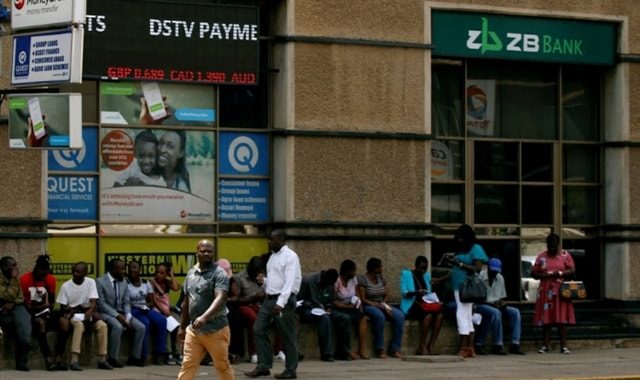
Image Supplied

Like most African countries, Zimbabwe still relies on a self-declaratory system to oversee the telecoms sector.  However, this leaves loopholes – encouraging scams and fraudulent activities and robbing the country of a vital revenue stream.  However, without the correct tools, Zimbabwean authorities do not have sufficient visibility of the sector.  Which means it is unable to measure the exact volume of telecom transactions that are subject to taxes and regulatory fees.

When it comes to international calls, for example, Zimbabwe faces a double pitfall: a lack of visibility over the real volumes of calls exchanged between local operators and international carriers and the current licensing regime. Firstly, companies based overseas buy bandwidth internationally and under-declare what they resell to telecoms operators in Zimbabwe. This means that part of the margin remains outside the country, thus depriving Zimbabwe of much-needed revenue and inflating the calls leaving the country.

Secondly, the licensing regime allows operators to have their own international gateways. Each year, billions of dollars in fees and taxes across the world are lost due to the illegal termination of international calls that by-pass the international gateways of licensed operators. These illegal international calls are fraudulently terminated as local calls, using SIM boxes, PBX, and Internet-based methods. Telecom operators try to cope with this grey telephony issue individually, some with more success than others, but with limited results overall.

With regard to domestic calls, regulators are facing a lack of transparency in regards to mobile network operators profitability, since crucial information about the quality of service, revenue and profitability are not always provided.

A proactive technology-based solution

While a unified gateway – a single entry and exit point for all voice traffic – may allow for sufficient visibility on traffic.  There is only one reliable and effective way to achieve proper telecom metrics that meet the challenges and requirements of the current digital eco-system. This is best done through a proactive technology-based revenue-assurance solution.  Which enables both the operators and regulatory authorities to optimise revenues from the telecom sector, because it is able to control revenue leakage, reduce fraud on international calls and control the network quality and integrity.

These state-of-the-art technology solutions allow for data-driven regulation, supported by highly effective systems that ensure the collection, consolidation and processing of all data relating to the sale of telecommunications products and services. Governments gain full visibility of revenues generated by all transactions relating to mobile telecommunications.  Which means a government can optimise the collection of surcharges, taxes, levies or any other contributions due to it.

Setting Zimbabwe on the path towards an economic turnaround

In 2013, Tanzania deployed a traffic monitoring system, which gave authorities a technology-based solution to measure and analyse key aspects of the telecoms sector. This system allowed the Tanzanian government to generate additional yearly revenue of approximately 12 M$.   Rwanda collects revenue owed to it through regular audits and measuring all telecoms traffic, with a focus on fraud management. Ghana conducts similar operations through an interconnected clearinghouse, its aim is to provide transparent data on traffic volumes and ensure accurate billing from mobile network operators. The information also provides visibility over the regulatory fees and international incoming traffic surcharges.

The Zimbabwean economy could benefit greatly from such cutting-edge technology and revenue assurance solutions.  Especially in the context of the Transitional Stabilization Program initiated by the government of President Emmerson Mnangagwa, which intends to make Zimbabwe a higher-middle-income country by 2030, partly thanks to the digital economy.

Written by Angela Collings, who is a communications specialist living in Fish Hoek (Cape Town).

Economic chaos is causing a food security and humanitarian crisis in Zimbabwe
ICC set to decide future of Zimbabwe Cricket

Post published in: Business

It’s official: Hyperinflation has returned to Zimbabwe – The Zimbabwean

According to the PAAB, in a statement released Friday, entities in Zimbabwe must now apply IAS 29 in their financial reporting, effective July 1, 2019.

IAS 29 deals with financial reporting in hyperinflationary economies, and allowing it to be applied in the country indicates acknowledgement by Zimbabwean authorities that the country has now entered into hyperinflation for the second time in two decades.

Zimbabwe first experienced hyperinflation from around 2005 till 2008, peaking in 2008 at 500 billion percent. The US$1 became equivalent to Z$2 621 984 228. The Zimbabwean dollar was ultimately abandoned in favour of a multi-currency system dominated by the US dollar.

However, an unsustainable import bill, corruption, externalisation of money, coupled with the printing of electronic money (RTGS$), has led the country to another hyperinflation period.

Consumers have had to deal with rampant price increases with the recent one being a 300% increase in electricity tariff and a 26% increase in the price of fuel.

Prices of basic products are now beyond reach of many, with inflation topping 175% in June before government stopped publication of annual inflation figures, saying they were misleading.

The monthly inflation figures have, however, remained elevated, and stood at almost 300% at the last count in August.

As a result, and following due processes: “The PAAB can advise that there is broad market consensus within the accounting and auditing professions that the factors and characteristics to apply the financial reporting in hyperinflationary economies standard (IAS 29), in Zimbabwe have been met,” reads the PAAB statement seen by Fin24.

ICC set to decide future of Zimbabwe Cricket
Vast Resources to sign diamonds joint venture deal in Zimbabwe

Post published in: Business

Vast Resources to sign diamonds joint venture deal in Zimbabwe – The Zimbabwean

President Emmerson Mnangagwa’s government is stepping up efforts to exploit its mineral resources to revive an economy crippled by triple-digit inflation and high unemployment, with Mnangagwa desperate to woo investors, some of whom abandoned the country during the rule of the late Robert Mugabe.

Mines Minister Winston Chitando said Vast had formed a company, Katanga Mining Pvt Ltd, with the community in the eastern Chiadzwa diamond fields.

That company would sign a joint venture mining agreement with Zimbabwe Consolidated Diamond Company which holds the mining rights, he said. A Vast Resources official confirmed the deal. Financial details would be disclosed at the signing of the agreement, the minister and the official said.

Vast Resources will join new entrants like Russia’s Alrosa as well as unlisted Chinese firm Anjin Investments.

Anjin was forced out from the Chiadzwa fields in 2016 along with other miners, with Mugabe’s government saying their licenses had expired after they declined to merge under the state-owned mining company.

Few miners doubt the potential of Zimbabwe’s mineral resources, with its diamond, platinum and lithium deposits considered among the biggest in the world.

But investors are concerned about how much money companies can take out because of acute dollar shortages. Many big miners are taking a cautious approach.

Mnangagwa will on Monday launch an ambitious plan to increase investment in mining and raise the sector’s export earnings to $12 billion by 2023 from $3.2 billion last year, Chitando said.

The problem with SADC’s ‘brotherly’ stance on Zimbabwe sanctions

Post published in: Business

Zimbabwean company sows first legal hemp seeds – The Zimbabwean

The Zimbabwe Industrial Hemp Trust (ZIHT) sowed six varieties of industrial cannabis, also known as hemp, saying it chose a prison yard out of “convenience” as the property already has tight security.

“This project is the first of its kind in the history of our country,” Agriculture Minister Perence Shiri told guests at the launch in Harare central prison.

“This pilot project will provide essential knowledge or information for the successful production of this crop. The benefits that will be derived from the production of industrial hemp are enormous and varied,” he said.

Zimbabwe legalised the production of cannabis for medicinal or scientific use last year. But it was only in September that the government legalised production of cannabis for industrial use.

Unlike marijuana, hemp contains a low count of psychoactive substance THC, while the plant requires minimal care and is adaptable to grow in most climates.

It can be processed into various products including cloth, ropes, bricks, paper and fibreglass.

The Harare-based ZIHT was the first organisation to be issued with a cannabis licence in the southern African country.

The company’s founder, dentist Zorodzai Maroveke, said she discovered the opportunities in cannabis production when she bought a dress made from hemp fabric while studying in China.

The health ministry grants growers licences valid for up to five years, but they are limited to strict cultivation conditions.

Although cannabis use was previously illegal in Zimbabwe, it is widely used in traditional medicine to treat conditions like asthma and epilepsy.

Possession of recreational cannabis remains illegal and carries a jail sentence of up to 12 years.

The problem with SADC’s ‘brotherly’ stance on Zimbabwe sanctions
Zimbabwean girls ‘take over’ UN leadership

Post published in: Agriculture

The problem with SADC’s ‘brotherly’ stance on Zimbabwe sanctions – The Zimbabwean

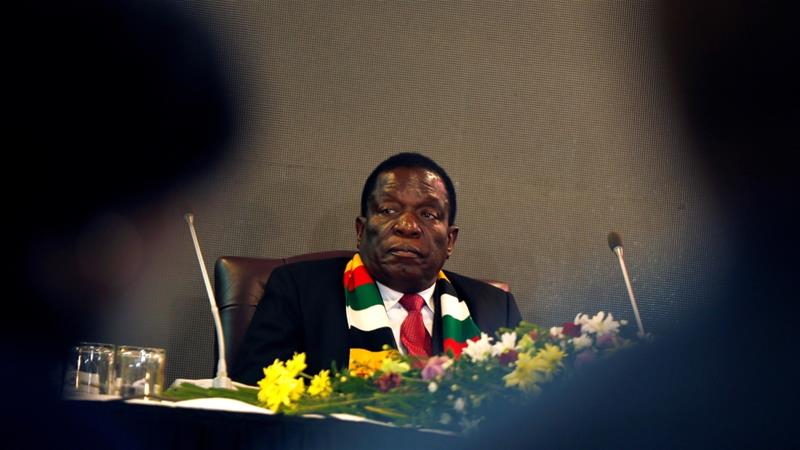
Zimbabwe’s President Mnangagwa seen at a meeting in Harare, Zimbabwe, June 5, 2019 [File: Philimon Bulawayo/Reuters]

Following a decision made in August by the Southern African Development Community (SADC) secretariat, the body’s 16 member states are expected to organise simultaneous activities on October 25 to show solidarity with Zimbabwe and demonstrate their disapproval of sanctions imposed on the country by the European Union and the United States.

Zimbabwe is still subject to sanctions that date back to the reign of former President Robert Mugabe, who was ousted in late 2017 after 38 years in power. The EU sanctions consist of an arms embargo and targeted asset freezes and travel bans, while the US has imposed financial restrictions and travel sanctions against selected individuals and entities.

Following Mugabe’s ousting, a swift return to democracy and consequent lifting of sanctions were expected. Mugabe’s successor, Emmerson Mnangagwa, however, proved to be a far more brutal leader than him. Under his watch, anti-government protests stemming from an ever-deepening economic crisis have been repressed with unprecedented force. In August 2018 and January 2019, for example, soldiers reportedly killed and raped scores of unarmed civilians participating in peaceful anti-government demonstrations.

In response, the US and the EU extended the sanctions they previously imposed on the country and vowed to keep all sanctions in place until Mnangagwa’s government allows protests and changes laws that restrict media freedoms.

SADC, nevertheless, claims the “illegal sanctions” have “an adverse impact on the economy of Zimbabwe and the region at large”, and calls for their immediate lifting to facilitate “socioeconomic recovery in the country”. Were it genuine, SADC’s public concern for the wellbeing of ordinary Zimbabweans would be welcome and much appreciated. However, SADC is lobbying against sanctions not to help Zimbabwe’s democratic and economic progression, but to whitewash the ruling Zimbabwe African National Union-Patriotic Front’s (ZANU-PF) repressive tactics and policy failures.

SADC has not only failed to censure Harare for violently stifling dissent and ignoring Zimbabweans’ core constitutional rights, but also claimed that “internal groups, in particular, NGOs, supported by external forces” are the ones that are destabilising the country.

The SADC leadership’s shocking reaction to repeated incidents of state-sanctioned violence in Zimbabwe and insistence that any opposition to ZANU-PF is a product of foreign intervention show that they believe Zimbabwean citizens cannot possibly embrace progressive ideals and make simple democratic choices for themselves.

To label democratic dissent a form of foreign-funded destabilisation is to create a polarising political binary and deny Zimbabweans the right to enjoy the full measure of liberal and constitutional freedoms. Furthermore, SADC is being extremely disingenuous about the source and nature of Zimbabwe’s intricate challenges. The ebb and flows of Zimbabwe’s multifaceted problems always match its ever-soaring political temperature. But SADC has never adopted a robust and dynamic approach to either monitoring or resolving Zimbabwe’s long-standing political and economic challenges. It only feigns dogmatic, obligatory interest in Zimbabwe’s affairs mainly before and after mostly disputed elections.

Why has SADC been reluctant to condemn repressive tendencies and the recurring use of excessive, deadly force against unarmed, peaceful demonstrators in recent times? Human rights defender Tatenda Mombeyarara, MDC youth leader Blessing Kanotunga, comedian Samantha “Gonyeti” Kureya and President of the Zimbabwe Hospital Doctors Association Dr Peter Magombeyi were reportedly abducted and tortured earlier this year. SADC has not explicitly condemned any of these politically motivated abductions or other crimes committed against unarmed, peaceful individuals.

By openly and unreservedly siding with an increasingly authoritarian government masquerading as a reformed and progressive “Second Republic”, SADC is making light of a pressing and ever-expansive need to enact serious political, media and security reforms in Zimbabwe out of “brotherly” love.

And it is undermining a substantial need for ZANU-PF to belatedly take straightforward stock of its countless failures, public sector corruption and gross inefficiency.

Various reports published by Auditor-General Mildred Chiri in June have detailed flagrant accounting malpractices as well as excessive and unauthorised expenditure amounting to billions of dollars at state entities, ministries and local authorities.

SADC, though, continues to relentlessly beat the anti-sanctions drum without paying appropriate, consistent attention to the multidimensional threat of corruption, political unaccountability, dodgy elections and rampant impunity manufactured by ZANU-PF since President Mnangagwa’s inauguration in November 2017.

By supporting the ZANU-PF-led government and disregarding the credible cries of long-suffering Zimbabwean citizens, SADC runs the risk of setting an incredibly low bar for democracy in southern Africa and continually watering a growing trend of political denialism among former liberation war parties.

The undeclared slide to authoritarian populist rule favoured by ZANU-PF has created an economic quagmire and political survival, not Western sanctions or economic revival, seemingly occupies the top of the government’s agenda.

It’s a political strategy that SADC is awfully comfortable with, because the organisation has failed to transform into a strong, progressive-thinking political outfit.

It’s a fallacy to believe that a post-independence failure by a former liberation war party could possibly vindicate colonial rule or diminish past achievements. As things stand, ZANU-PF certainly helped to liberate Zimbabwe, but it has failed to build the Zimbabwe it promised before and just after independence. Still, this should not compromise or diminish the democratic ideals cherished by progressive-minded Zimbabweans and residents of southern Africa.

SADC must in fact create a solid and effective political surveillance system to closely monitor democratic developments within the region, a facility that will lead the charge against enduringly delinquent administrations such as Zimbabwe’s. Undeniably, SADC should not have to wait for Western nations to point out glaringly obvious constitutional transgressions or human rights abuses. Besides, a still-murderous “new dispensation” cannot be persuaded to freely adopt democracy without establishing measures that proactively punish repressive deeds.

A distorted brand of pan-Africanism, where the voluntary, self-gratifying need to maintain old, wartime relationships trumps people-centred necessities and expressions, will obviously fail and simply cause further widespread social, economic and political instability in southern Africa.

To be sure, what Western powers demand of Zimbabwe’s government does not really matter in the greater scheme of life, but the humanitarian needs, liberal freedoms and democratic choices of Zimbabweans always will. So, if anybody should rebuke Zimbabwe’s government, it should be SADC.

The views expressed in this article are the author’s own and do not necessarily reflect Al Jazeera’s editorial stance. 

Mid-Level Shareholder Activism Associate

Our client law firm has a nationally known practice fending off shareholder activists. We work very closely with the firm in question, and the partner in charge of the practice is someone with whom we are very close.

We have a couple of roles within that practice currently for mid-level associates which:

a) do not require previous experience in the field;
b) will cover lateral associates’ forgone bonuses;
c) may provide some benefits beyond the usual for certain candidates; and
d) is agnostic as to geographic region – could be NYC, DC, SFO, Chicago, Texas, etc.

If you’ve been reading about the growth of shareholder activism and wondering how to get into the field, well, we can show you. These openings probably won’t last long and they require solid to stellar academic performance and at least some prior public M&A experience with a reputable firm.

If you have these things, and especially if you have them as well as a good personality (because that matters when you are working as close as you will be with boards of directors under pressure), please get in touch with us – jobs@kinneyrecruiting.com.

This Week Has Been A Long Year — See Also

Calling All Legal Ops Leaders: The 2019 LDO Survey Is Live

Calling All Legal Ops Leaders: The 2019 LDO Survey Is Live

If you are your organization’s operations head, please participate in this year’s survey and receive exclusive access to the complete results, an unparalleled resource of insight into KPIs and reporting, eDiscovery best practices, legal spend, law department management strategy, and more.

If you are your organization’s operations head, please participate in this year’s survey and receive exclusive access to the complete results, an unparalleled resource of insight into KPIs and reporting, eDiscovery best practices, legal spend, law department management strategy, and more.

Zimbabwean girls ‘take over’ UN leadership – The Zimbabwean

The girls’ takeover campaign was staged under the localised theme #ZimGirlsTakeover to inspire girls as agents of change who are capable of becoming leaders in their own right. The UN agencies “Taken Over” by the girls are the International Labour Organisation, UN Development Programme, UN Scientific and Cultural Organisation, UN Population Fund, UN Children’s Fund and UN Women.

Addressing the meeting participants, the designated UN Resident Coordinator to Zimbabwe for the day, Hon. Chantel Mawunidza, who is also the Minister of State of the Junior Parliament of Zimbabwe, noted that countries cannot achieve their development agenda as long as women and girls continue to be silenced and marginalized in society. Noting that engaging young women and girls as crucial to achieving sustainable development goals, Hon. Muwanidza said, “the UN is committed to working with girls realize their potential and meaningfully contribute to inclusive development and economic prosperity in their society.”

Senator of Junior Parliament, Hon. Vimbai Jukwa who took up the position as the head of ILO, said, “I encourage women and girls to take up leadership roles to achieve gender parity in all spheres of decision-making, including in political, economic, social and public life.”

Junior Parliament’s Hon. Elinah Moyo, who was taking up the position of the Resident Representative of UNDP, expressed that, “Women’s rights and empowerment are key contributing factors to economic growth, social development, political stability and environmental sustainability.” She also commended the UN in facilitating the #ZimGirlsTakeover campaign noting that, “There is no better way to show commitment to improving the life of the girl child than to involve girls in such initiatives. You cannot do anything for a girl without the girl’s active involvement.”

Hon. Kelina Mutate, member of the National Assembly in the Junior Parliament who took over UNESCO during the #ZimGirlsTakeover campaign said, “I am determined to ensure that there are strict laws guarding the girl child from early marriages in Zimbabwe.”

Voicing her concern about women and girls living with disabilities being at a disproportionately higher risk of experiencing gender-based violence and harmful practice, UNFPA Country Representative for the day, Hon. Caroline Muwonda of Junior Parliament underlined, “there is urgent need to address the issues of girls living with disabilities.”

UNICEF Representative for the day, Hon. Naledi Green emphasized the importance of sustainable development goals, noting that, “Addressing violence and discrimination against women and girls is essential to ensure that no one is left behind in the development agenda.”

Hon. Sandra Munhundarima, a judge in the Junior Parliament of Zimbabwe spent the day as the head of UN Women. Expressing her joy about the commemorations for International Day of the Girl Child as a platform to break-through the barriers of discrimination and prejudice against girls, Hon. Sandra said, “I will make sure that girls occupy spaces and know that they have a right to be heard.”

The #ZimGirlsTakeover campaign is part of the Spotlight Initiative programme to eliminate violence against women and girls in Zimbabwe. The Spotlight Initiative with financial commitment of USD 34 million by the European Union begun implementation this year in 23 districts in five provinces. The provinces are: Mashonaland Central, Mashonaland West, Manicaland, Matabeleland South, and Harare.

The Initiative aims to ensure that all women and girls benefit from adequate legislation and policies, gender responsive institutions, violence prevention programmes, essential services, comparable and reliable data, and strong women’s movements and civil society organisations.

International Day of the Girl Child has been celebrated each year on 11 October since the United Nations adopted it as an international day in December 2011 to highlight the different challenges that girls face in society. In addition, this day is also dedicated to the empowerment of girls across the globe and the promotion gender equality and human rights.

A Small Boat in a Storm

Post published in: Featured

Banksy’s Fake Store Is An Attempt To Abuse Trademark Law To Avoid Copyright Law

A previous Banksy effort. (Photo by Matthew Horwood/Getty Images)

You may have seen the headlines lately, saying that famed pseudonymous street artist Banksy was being “forced” into opening up a pop up store in London in order to secure a trademark and prevent “a greetings card company” from selling “fake Banksy merchandise.” Banksy also claimed that the company was “attempting to take custody of my name.” Banksy and Banksy’s artwork are somewhat famous for protesting against commercial incentives and traditional capitalism — so many people rushed to Banksy’ defense because, from the initial description, it sounded like Hallmark or some sappy corporate giant of that nature was trying to rip off Banksy images for its own benefit.

Turns out that the story is very, very different. And it doesn’t make Banksy look very good at all once you understand the details. First, the “greeting card” company in question, Full Colour Black, has responded via a Facebook post, and you realize it’s a tiny home-based business and it’s not trying to take anyone’s name or sell fake merchandise at all. Indeed, contrary to some of the reporting, it’s not “suing” over anything. It just put forth a completely legitimate challenge to Banksy’s sketchy and probably illegitimate trademark on the “flower bomber” image (the official name of which is apparently “Rage, Flower Thrower.”)

As you know, to get a trademark, you need to show “use in commerce.” And Banksy wasn’t selling the flower bomber image — though it does appear others are selling sculptures and posters of the work that was produced (as always) in secret, in Jerusalem, in 2005. In 2014, an organization representing Banksy, with the clever name of “Pest Control Office Limited”, filed and received the registered trademark on the image.

However, since it wasn’t clear how the image could qualify as a trademark in the first place, a small three person greeting card company sought to invalidate the trademark. As Full Colour Black explains:

Loud Tie Weasels are being used to paint our tiny business as a ‘big corporate group’ and paint Banksy as the harddone-by artist. There are only three people in our small business. We don’t have high powered legal teams on three continents, we don’t have a Management teams dealing with Hollywood and we certainly don’t have highly effective PR teams. We also can’t afford to open high earning hotels with celebrity acts on the grand piano nor can we steal the thunder from Stormzy’s amazing performance at Glastonbury.

All of that is Corporate Activity. We are not corporate… we sell greetings cards from our home. It is ENTIRELY untrue that we are attempting to “take custody” of his name”. This line has been invented by his Corporate Lawyers to try and gain sympathy from you. He’s made this up!!!

As they further explain, they run a small business that does photography and sells cards involving public graffiti:

We legally photograph public graffiti and make it available to you – the public. We know that you don’t have the unlimited budgets of Angelina Jolie or Brad Pitt or Christine Aguilera. You cannot afford to buy one of his official canvases. We make cards because Banksy never makes anything available to his fans. We all love his graffiti. He doesn’t want you to have it and he’s hoping to trick you into thinking that we’re hurting his business. We’re not.

We don’t infringe his rights in any way. We don’t use his trademarks or his brand name. We make cards that feature Banksy’s Public Graffiti. It’s a legitimate enterprise.

So… that last part did make me wonder a bit — because it’s not exactly clear if the statements here are true. As we’ve noted in the past, there are significant legal questions around the copyright status of public graffiti art, with some courts coming down on the side of the graffiti artists, sometimes in ludicrous ways. And, of course, that’s resulted in more and more litigation.

But… that’s all about copyright. In reading the news coverage of all of this, I was stumped as to why were were discussing trademark at all — until I realized something kind of important. Banksy is using trademark because Banksy can’t use copyright without revealing who Banksy is. Full Colour Black’s lawyer, Aaron Wood, explains:

“We are contesting the validity of one of his EU trademarks on the basis that he has freely permitted it to be reproduced such that it no longer functions as a trademark (if it ever did), on the basis that he never intended to use it as a trademark and that he is trying to register for collateral purposes (ie, to avoid evidential issues with copyright and to avoid having to file a ‘statement of use’ in the US).”

Either way, Banksy, on the advice of “arts lawyer” Mark Stephens, seems to think that setting up a pop up shop with the (okay, absolutely brilliant) name “Gross Domestic Product”, which will exist for a few weeks but never actually open to the public (though sales will happen online), somehow will re-establish the trademark in question:

Mark Stephens, an arts lawyer and founder of the Design and Artists Copyright Society, called the case a “frankly ludicrous litigation” and is giving Banksy legal advice.

“Banksy is in a difficult position,” he said. “Because he doesn’t produce his own range of shoddy merchandise and the law is quite clear – if the trademark holder is not using the mark, then it can be transferred to someone who will.”

Except, as with much of this story coming from the Banksy side, this is absolutely misleading. There isn’t “litigation” happening at all. And this is not about “shoddy merchandise.” This is about challenging the legitimacy of what certainly looks like an illegitimate trademark. And Full Colour Black’s attorney highlights that, if anything, this shop harms Banksy’s case, because they’re not even arguing that the trademark fails for lack of use in commerce, but rather that the whole trademark is a sham to get around copyright law — and this stunt supports that argument:

“If it were a revocation case then the strategy would be ill-conceived,” he claims. “The real error, however, is that this isn’t a revocation case on the basis of non-use, so it’s a frankly pointless step which doesn’t stand up to scrutiny from anyone with a modicum of knowledge of trademark law. In fact, this has strengthened the arguments that the marks are a false attempt to monopolise his work in bad faith [and to] circumvent copyright law and trademark law. Banksy may be a subversive character but the same law applies to him.”

Indeed, as others have noted, Banksy has been increasingly aggressive about enforcing trademark claims regarding people selling works based on Bansky art — despite historically arguing against things like copyright:

Having once claimed that copyright is for losers, Banksy has been ramping up his legal position for several months now. At the end of 2018, the artist’s handling service Pest Control took action against an Italian company that organised an exhibition, The Art of Banksy—A Visual Protest, for Milan’s Mudec Museum.

In February this year, the judge ruled in favour of Banksy’s request for all merchandise bearing his name to be removed from the museum’s shop, but promotional materials using his name were allowed to remain. The judge noted that the documents filed in the proceedings showed a limited use of the Banksy brand.

The whole situation is kind of crazy when you think about it. Banksy doesn’t want to use the law that actually covers the artwork, copyright, because that would likely require an outing of whoever is behind Banksy. And, according to Banksy, “copyright is for losers.” But Banksy as a concept has become so profitable that now it’s suddenly trying to stop anyone else from making money from Banksy-related works — and appears to be abusing trademark to make that happen.

Full Colour Black, the greeting card company, notes that it’s been trying for years to send Banksy some money, but that it’s gotten nowhere:

We’ve written to Banksy, his team and his lawyers many times since 2010 to say that we want to pay royalties to him. He doesn’t want it. We believe he’s making so much money already; a couple of hundred pounds a year from us probably wouldn’t even cover the cost of his handmade shoes.

I’ll say it once again… don’t be fooled folks. He’s using weasels to paint our tiny little business as a ‘big corporate’ and paint himself as the poor artist. Look beyond his slick PR. He’s out of your league but he wants your sympathy. If you really want to support the little guy… stand by us. We’ll continue to offer you amazing graffiti and we can post it to you across the world.

This really does look like Banksy gone corporate in the worst sense — abusing trademark law for no good reason at all and (worse) lying about it and pretending that a small home-based business is a big corporate entity trying to “seize” Banksy’s name, when that’s not even close to the truth. Banksy could just confirm that copyright law (and much of trademark law) is for losers, and let this small shop sell these cards that only serve to make Banksy’s own artwork more and more valuable. The fact that all of this comes at a time when Banksy just sold a painting for $12 million, and part of the reason it’s worth that is the kind of fame driven by people photographing and sharing Banksy’s work, suggests that maybe Banksy should ditch some of the “copyright” lawyers advising Banksy, and go back to some more Banksy roots.

Banksy’s Fake Store Is An Attempt To Abuse Trademark Law To Avoid Copyright Law

More Law-Related Stories From Techdirt:

How A Right To Be Forgotten Stifles A Free Press And Free Expression
It’s Time For The Academic World To See The Positive Side Of Negative Results
Attorney Who Sued Grindr Responds Extremely Poorly To The Supreme Court’s Rejection Of Her Section 230 Lawsuit

WALL Is Back On Hold

(Photo by Justin Sullivan/Getty Images)

When my kids were younger, the older one used to build these Duplo towers. And then his younger brother would toddle by and knock the tower down. And then the older one would build it back up again. And the cycle would continue until one of them hit the other and the victim would come crying to me. And I’d tell them to figure it out, and eventually we’d all go to bed.

That story seems relevant to today’s news.

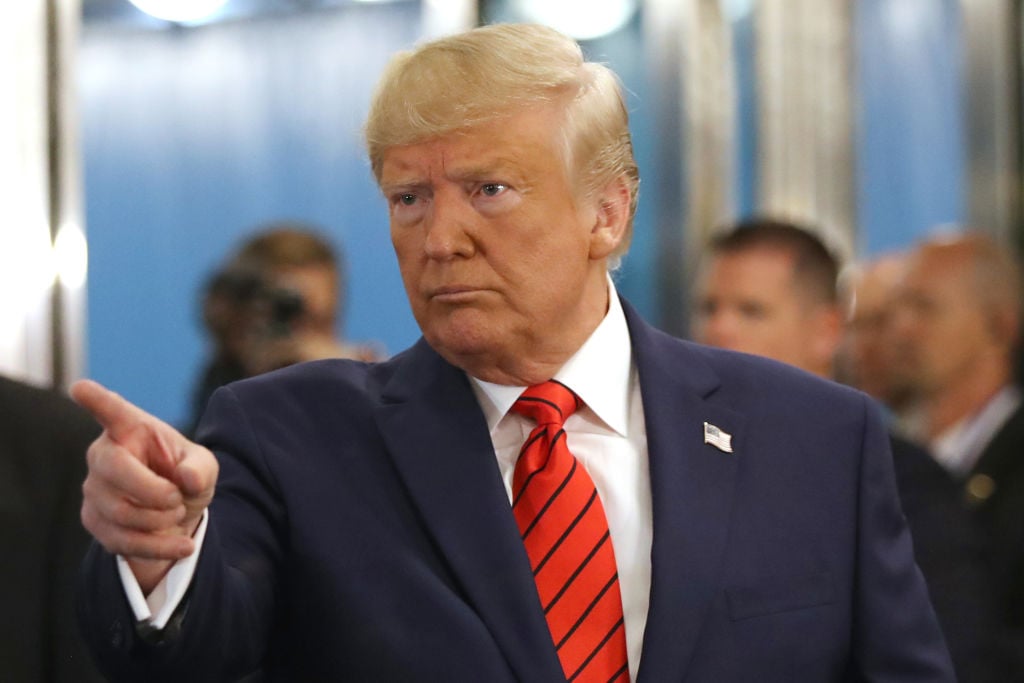
A federal judge in El Paso blocked Donald Trump’s construction on WALL. Previous cases have focused on Trump’s attempt to unconstitutionally usurp the appropriations power from Congress. Currently, John Roberts is letting Trump steal money, perhaps because he agrees, perhaps because he thinks the Democratic nominee will eventually beat Trump and resolve the issue for him. Who knows.

But the El Paso case is proceeding on statutory grounds, not Constitutional ones. The judge found that Trump was in violation of the National Emergencies Act, because his declaration of a national emergence is fake, and Trump admitted it was fake when he opined that he was declaring a national emergency to get WALL more quickly.

From Protect Democracy, which represented the plaintiffs in this case:

Today, a Texas federal court ruled that President Trump’s proclamation of a national emergency along the Southern border violated federal law. The court declared that the president’s proclamation is invalid because it illegally sought to override Congress’s decision to not fund further border wall construction. The court invited the plaintiffs, El Paso County, Texas, and the Border Network for Human Rights to propose terms for an injunction that would prevent the government from using funds to build border barriers that Congress specifically refused to authorize…

In this case, the plaintiffs argued that the president’s national emergency declaration exceeded his powers both under statutory law and the Constitution, and that its mere issuance injured border communities. The court based its ruling on statutory grounds and did not reach the constitutional issues. As detailed in their complaint, President Trump declared the emergency after months of failed attempts to obtain additional funding for his border wall culminated in the longest U.S. government shutdown in history. He publicly acknowledged that there was no urgency, saying “I didn’t need to do this, but I’d rather do it much faster.” The administration then moved to transfer $8.1 billion for border wall construction efforts – $6.7 billion more than the $1.375 billion approved by Congress.

When reached for comment, WALL audibly groaned a sigh of frustration from the existential plane: “No injunction can arrest my erection upon your lands. Soon, very soon, you will see your Circuit of Five cast out your puny guard rails of statutory interpretation, and cower before a mighty stay. For your President sayeth WALL is already thus, and thus WALL must be.”

It’s almost bedtime. I’m sure John Roberts will clean up the bricks in the morning.

BREAKING: Judge Will Block Trump Border Wall in New Ruling [Protect Democracy]


Elie Mystal is the Executive Editor of Above the Law and a contributor at The Nation. He can be reached @ElieNYC on Twitter, or at elie@abovethelaw.com. He will resist.