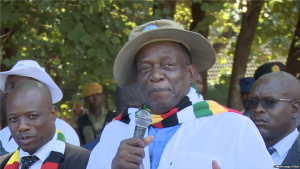

Addressing Zimbabweans directly, Mnangagwa said that “the process of reform is not an easy one, it involves sacrifices from all of us. But I promise you it is worth it. Yes, today is tough, but tomorrow is looking brighter. We are opening Zimbabwe up for investment, building a new and mutually beneficial relationship with nations and businesses around the world. We cannot be left behind”.
Throughout the 80-minute programme on Capitalk FM, Mnangagwa discussed a wide array of issues, from agriculture, mining and infrastructure development, to fuel increases and a new Zimbabwean currency, which would require pre-conditions. “Production must be there, corruption must be eliminated, the mind-set of our people must change so they believe in themselves again. When all those things are in place, we can then introduce our currency.”
Nearing the end of the first year as elected president, Mnangagwa stressed the challenges he has faced following the 37-year tenure of Robert Mugabe. “It was not only our economy that collapsed, but also our courage”, Mnangagwa said. “And to rise from our collapsed economy, certain things must be done for us to get back on our feet: reforming our economy, reforming our institutions, reforming our legislations, reforming our mind-set as people.”
Mnangagwa pointed out some of the progress made so far, including modernizing the Public Order and Security Act (POSA), the controversial emergency law dating back to the Mugabe regime, as well as media and access to information reform legislations that would meet international media freedom standards – key demands by the U.S. to remove the Mugabe-era sanctions against Zimbabwe.
Critically, President Mnangagwa has also invited the leader of the opposition MDC Alliance, Nelson Chamisa, to join the ongoing political discussion between the majority of political parties in Zimbabwe. The Political Actors Dialogue (POLAD) is an effort to improve the country’s difficult economic situation and to encourage its confrontational politicians to cooperate in the national interest.
But Chamisa has so far refused any multilateral or bilateral dialogue. “I cannot get a bulldozer or tractor to pull him out of his house for talks,” President Mnangagwa said. “Why doesn’t he come to the table where everyone is? To all those who want to offer their views, their advice on any issue, the door is open.”
Post published in: Featured


 The two agricultural commodities, which are fetching higher export prices, are on the rebound owing to the potential they give to Zimbabwean farmers and companies to earn foreign currency in a country battling a financial squeeze.Most farmers have been taking up tobacco, but this year’s crop has been fetching lower prices. In the Eastern Highlands region near the border with Mozambique, coffee and tea growing is becoming profitable once again.
 Cremio Kausiyo and his wife Deliwe Kakumura carry water from the village well to their home. They both agree that rethinking gender roles in their relationship has made them happier and more financially secure. Photo: Brett Eloff/Oxfam