Am Law 100 Firm Hit With Second Malpractice Claim This Year… With Three, They Get A Free Sandwich! – Above the Law

No
matter
what
becomes
of
these
claims,
it’s
been
a
rough
year
for
Akerman
LLP.
It’s
only
July
and
the
firm
has
a
strong
lead
in
the
“Most
Cases
Against
Its
Own
Clients”
race.
A
couple
months
ago,
the
firm
went
to
court
seeking
unpaid
fees
from
some
medical
companies
only
to
have
the
defendants

whip
around
and
allege
malpractice
.
This
week,
a
real
estate
investment
firm
filed
its
own
malpractice
claim
against
the
firm
over
$45
million
worth
of
alleged
errors.

“Akerman
failed
to
advise
[plaintiff]
Turner
of
the
most
basic
and
appropriate
remedies
available
to
landlords
under
Florida
law
in
the
event
of
a
breach
by
a
tenant,”
the
complaint
reads.
“Because
of
Akerman’s
malpractice,
Turner
was
left
holding
the
proverbial
bag
to
the
tune
of
tens
of
millions
of
dollars
with
no
adequate
remedies.”

Of
course,
the
only
thing
more
Florida
than
having
no
enforceable
remedy
in
your
lease
is
realizing
it
because
your
own
firm
finally
realized
it
three
years
later.

The
plaintiff,
represented
by
Vedder
Price
shareholder
Javier
Lopez,
asserts
that
Akerman
negotiated
lease
agreements
that
improperly
reflected
Florida
law
regarding
rent
acceleration.

38.
Defendants
entirely
failed
to
draft
Section
22
in
a
manner
consistent
with
Florida
law
because
they
included
the
rent
acceleration
remedy
only
in
Section
22.2.1
which
provided
for
rent
acceleration
upon
termination
of
the
lease,
which
is
not
an
enforceable
remedy
in
Florida.

39.
Defendants
also
failed
to
include
the
rent
acceleration
remedy
where
it
properly
belonged

in
Section
22.2.2,
which
specifically
addresses
instances
in
which
the
landlord
recovers
possession
of
the
premises
without
terminating
the
lease
and
endeavors
to
relet
the
premises
for
the
account
of
tenant.

According
to
the
complaint,
the
agreements
needed
to
specify
that
in
the
event
of
the
breach
the
lease
would
remain
but
the

right
of
possession

would
be
terminated
and
the
landlord
would
then
re-rent
it
for
the
“account
of
the
tenant.”
Without
those
magic
words,
Florida
courts
consider
the
agreement
as
potentially
providing
illegal
double
recovery.
This
is
why
no
one
likes
Florida.
Well,
this
and
the
fact
that
their
state
government’s
top
priority
right
now
is
banning
airports
from
having
weather
machines

which
sounds
like
a
joke
but

OH
MY
GOD
IT
IS
NOT
A
JOKE
.

Anyway,
the
tenant,
CareMax
Medical
Center,
breached
seven
leases
with
Turner
by
deciding
they
wanted
to
reduce
their
business
exposure
in
a
state
that
officially
asks
questions
like
“what
if
they’re
controlling
the
weather?!?!”
And
that’s
when
Turner
learned

from
Akerman,
as
it
turned
out

that
the
agreements
wouldn’t
give
them
the
remedy
they
wanted.

50.On
March
6,
2024,
Turner
spoke
with
Clayton,
who
quickly
advised
that
the
Leases
were
not
properly
drafted
to
allow
for
rent
acceleration
under
Florida
law.

51.
Presumably,
Clayton
did
not
realize
at
the
time
that
Defendants
had
reviewed,
commented
on,
and
then
approved
the
remedies
provisions
in
the
Leases
when
she
made
the
concession
to
Turner,
presumably
thinking
it
had
to
have
been
different
counsel
that
had
approved
the
fatal
provision.

52.
After
subsequent
questions
from
Turner,
Clayton
responded,
“I
don’t
know
what
to
tell
you.
I
didn’t
draft
it.”

53.
It
was
then
that
Turner
informed
Clayton
that
Defendants
had
developed
the
provisions
at
issue
and
under
Clayton’s
review.

Well…
that’s
a
shame.

“Akerman
made
a
$45
million
mistake,”
said
Lopez.
“Despite
acknowledging
their
error,
Akerman
has
refused
to
make
things
right
financially
with
Turner
Healthcare
Facilities
Fund.
Akerman
left
us
no
other
remedy
than
to
file
today’s
complaint.”

Obviously
this
complaint
just
dropped
and
Akerman
may
have
defenses
available.
But
no
firm
wants
to
keep
finding
its
name
next
to
“malpractice
allegations”
in
the
headlines.


(Check
out
complaint
on
the
next
page…)


HeadshotJoe
Patrice
 is
a
senior
editor
at
Above
the
Law
and
co-host
of

Thinking
Like
A
Lawyer
.
Feel
free
to email
any
tips,
questions,
or
comments.
Follow
him
on Twitter or

Bluesky

if
you’re
interested
in
law,
politics,
and
a
healthy
dose
of
college
sports
news.
Joe
also
serves
as
a

Managing
Director
at
RPN
Executive
Search
.

Obama Calls Out Biglaw Firms That Capitulated To Trump – Above the Law

(Photo
by
Scott
Olson/Getty
Images)


Ed.
note
:
Welcome
to
our
daily
feature,

Quote
of
the
Day
.


[They]
set
aside
the
law
[not
because
they
were]
going
to
be
thrown
in
jail,
but
because
they
might
lose
a
few
clients
and
might
not
be
able
to
finish
that
kitchen
rehab
at
their
Hampton
house.


Former
President

Barack
Obama
,
in
comments
given
during
a
private
fundraiser
in
New
Jersey,
where
he

criticized
Biglaw
partners

whose
firms

signed
questionable
pro
bono
payola
deals
with
Trump

to
escape
onerous
(and
unconstitutional)
executive
orders
to
protect
their
bottom
lines
instead
of
the
rule
of
law.


“I’m
not
impressed,”
he
said.


Staci Zaretsky


Staci
Zaretsky
 is
a
senior
editor
at
Above
the
Law,
where
she’s
worked
since
2011.
She’d
love
to
hear
from
you,
so
please
feel
free
to

email

her
with
any
tips,
questions,
comments,
or
critiques.
You
can
follow
her
on BlueskyX/Twitter,
and Threads, or
connect
with
her
on LinkedIn.

Court rejects Walter Mzembi’s latest freedom bid

HARARE

A
court
on
Monday
dismissed
an
application
by
former
foreign
minister
Walter
Mzembi,
who
was
challenging
a
decision
to
prosecute
him
over
theft
of
trust
property.

Harare
magistrate
Donald
Ndirowei
gave
no
reasons
as
he
tossed
Mzembi’s
application
challenging
his
placement
on
remand.

The
61-year-old
was
arrested
on
June
14
after
ending
his
seven-year
exile.

Mzembi
had
been
charged
with
theft
of
trust
property
in
2018
when
he
asked
a
court
to
vary
his
bail
conditions
to
enable
him
to
travel
to
South
Africa
for
cancer
treatment.

He
missed
his
court
dates
and
three
warrants
for
his
arrest
were
issued.

When
he
appeared
in
court
following
his
latest
arrest,
magistrate
Ndirowei
cancelled
his
bail
after
finding
him
in
wilful
default.

Mzembi
was
remanded
to
July
18
for
a
hearing
at
which
he
is
set
to
be
given
a
trial
date.

Charges
against
the
former
Masvingo
South
MP
stem
from
his
spell
as
the
country’s
tourism
and
hospitality
minister.

He
is
accused
of
donating
televisions
worth
$2
million
which
had
been
bought
for
the
2010
FIFA
World
Cup
fanparks
to
Emmanuel
Makandiwa’s
mega-church
in
Chitungwiza.

Understanding the evolution and state of democracy in Zimbabwe: When a coup is not called a coup

July
14,
2025


  • This
    report
    assesses
    the
    current
    state
    of
    democracy
    in
    Zimbabwe
    and
    the
    multiple
    factors
    shaping
    its
    evolution
    in
    the
    last
    decade.
  • The
    authors
    argue
    that,
    most
    recently,
    the
    2017
    ousting
    of
    President
    Mugabe
    by
    military
    coup
    was
    a
    move
    which
    set
    the
    country
    on
    a
    path
    back
    toward
    authoritarianism.
  • In
    particular,
    the
    authors
    attest
    that
    Western
    hesitance
    to
    acknowledge
    the
    coup
    enabled
    the
    ZANU
    PF
    party
    to
    evade
    international
    condemnation
    and
    stage
    a
    problematic
    election,
    granting
    the
    government
    a
    veneer
    of
    legitimacy.


Since
gaining
independence
from
colonial
rule
in
1980,
democracy
has
struggled
to
take
root
in
Zimbabwe.
The
country
provides
an
excellent
example
of
what
Charles
Tilly
(2017)
described
as
the
process
of
democratization
and
de-democratization,
wherein
countries
chase
democracy
without
success,
sometimes
getting
better
and
at
other
times
experiencing
erosion,
backsliding,
and
regression.
Zimbabwe’s
current
political
situation
is
best
described
as
an
illiberal,
militarized,
electoral
authoritarian
regime
(Masunungure
,
2011;
Levitsky
and
Way,
2002;
LeBas
and
Munemo,
2019).
On
paper,
Zimbabwean
institutions
allow
the
basic
tenets
of
democracy:
regular
elections,
participation
by
the
opposition,
civil
society,
and
a
broad
bill
of
rights.
Yet
elections
are
a
façade
covering
a
deeply
entrenched
authoritarian
system.
The
opposition
has
been
decimated
by
violence,
intimidation,
infiltration,
unlawful
arrests,
co-option,
and
delegitimization
as
“stooges”
of
Western
states.
Civil
society
operates
with
a
lot
of
courage
under
close
state
surveillance
and
instruments
such
as
the
Private
Voluntary
Organizations
(PVO)
Act
give
the
government
wide-ranging
powers
to
control
and
surveil
the
activities
of
voluntary
organizations
(Ntini,
2022).
Additionally,
the
country’s
security
sector
has
a
strong
presence
in
politics
and
culture
(Ruhanya
and
Gumbo,
2023a;
Dorman,
2017;
Makumbe,
1998). 


Methodologically,
this
case
study
mainly
relies
on
original
qualitative
interviews
with
key
diplomats
and
politicians
involved
in
external
responses
to
Zimbabwe’s
2017
coup,
in
addition
to
using
primary
and
secondary
materials.
The
case
study
assesses
the
current
state
of
democracy
in
Zimbabwe
and
the
multiple
factors
shaping
its
evolution
in
the
last
decade.
The
data
for
this
paper
is
drawn
from
interviews
conducted
by
the
authors
for
this
project
and
past
projects,
where
relevant.
In
2013,
the
various
measures
of
accountability—vertical,
horizontal,
and
diagonal—were
stronger
than
they
had
been
since
the
early
2000s.
Following
the
violent
June
2008
runoff
presidential
election,
which
resulted
in
the
deaths
of 
hundreds
of
opposition
supporters,
a
new
Government
of
National
Unity
(GNU)
was
formed
as
a
proposed
end
to
the
conflict,
with
the
ruling 
Zimbabwe
African
National
Union
Patriotic
Front’s 
(ZANU
PF)
Robert
Mugabe
as
President
and
main
opposition
leader
Morgan
Tsvangirai
as
Prime
Minister
(Alexander
and
Tendi,
2008;
Badza,
2008;
McGreal,
2008).
Between
2009
and
2016,
the
country
seemed
to
be
moving
toward
political
stability
as
an
opening
for
democracy
emerged
due
to
the
2013
adoption
of
a
new
constitution,
a
lack
of
coups,
increased
economic
stability,
and
a
reduction
in
political
persecution
(Mahonye
and
Mandishara,
2015;
Richardson,
2013;
Musarurwa,
2016;
Dendere,
2019).


However,
in
2017,
President
Mugabe
was
ousted
in
a
military
coup
after
37
years
in
power
(Moore,
2018).
This,
we
argue,
reversed
the
strengthening
of
vertical,
horizontal,
and
diagonal
accountability
seen
in
preceding
years
and
set
Zimbabwe
on
a
path
back
toward
authoritarianism.
Indeed,
one
of
the
core
reasons
for
the
lack
of
democratization
in
Zimbabwe
is
the
political
role
of
the
military
(and
the
security
sector
more
broadly),
which
is
aligned
with
ZANU
PF
and
work
to
sustain
an
authoritarian
system.
Yet
the
2017
military
coup
found
initial
“acceptance”
or
“tolerance”
by
international
actors,
with
ZANU
PF
being
asked
to
deliver
a
reasonably
credible
post-coup
election
in
2018
as
a
key
step
towards
legitimate
government
and
the
resumption
of
international
economic
aid
for
Zimbabwe
(Reuters
2017;
Beavers,
2017).
However,
by
emphasizing
credible
elections,
international
actors
downplayed
the
urgent
need
for
reform
of
the
politically
entrenched
military
that
had
staged
the
coup,
and
which
was
the
foundation
for
the
country’s
authoritarian
system.
Consequently,
since
the
coup
and
subsequent
2018
election
there
has
been
more
authoritarian
continuity
than
democratic
change
in
Zimbabwe.
We
argue
that
the
current
government’s
hold
onto
power
was
further
strengthened
by
a
longstanding
pattern
of
mass
emigration
caused
by
weakening
accountability
and
political
persecution
and
that
the
government
worsened
a
deep
socioeconomic
crisis
since
the
coup.
Additionally,
a
weak
opposition
and
repression
towards
civil
society
have
significantly
contributed
to
ZANU
PF’s
ability
to
retain
power
and
extend
its
authoritarian
political
system
since
2017. 

Studies
of
Zimbabwean
politics
seldom
engage,
in
a
serious
way,
the
significant
role
of
democracy-promoting
Western
actors
in
sustaining
ZANU
PF’s
authoritarian
system.
Therefore,
in
this
paper,
we
analyze
how
Western
states
reacted
to
the
2017
military
coup
in
Zimbabwe
that
ousted
long-time
president
Mugabe
and
replaced
him
with
ZANU
PF
stalwart
Emmerson
Mnangagwa.
We
argue
that
Western
states
chose
not
to
call
the
coup
a
coup
for
compound
reasons.
The
responses
of
Western
states
to
the
2017
coup
enabled
the
coup-makers
and
ZANU
PF
to
evade
international
condemnation
following
the
coup
and
stage
a
problematic
election
that
granted
the
coup-born
government
a
veneer
of
legitimacy.

The
paper
is
divided
into
four
sections.
The
first
section
is
a
historical
overview
of
Zimbabwean
politics
since
independence,
which
is
useful
background
for
the
reader
and
helps
us
appreciate
the
historically
rooted
nature
of
ZANU
PF’s
authoritarianism.
The
second
section
examines
how
domestic
factors
such
as
a
decline
in
civil
society
and
emigration
contribute
to
ZANU
PF’s
longevity
and
authoritarianism.
The
third
section
concerns
the
responses
of
Western
actors
to
Zimbabwe’s
2017
coup.
The
final
section
reflects
on
the
impact
of
the
2017
coup
and
its
subsequent
regime
on
the
current
state
of
Zimbabwean
politics.
We
now
turn
to
a
historical
overview
of
post-independence
Zimbabwe’s
politics.


Read
the
full
report.

Source:


Understanding
the
evolution
and
state
of
democracy
in
Zimbabwe:
When
a
coup
is
not
called
a
coup
|

Brookings

Post
published
in:

Featured

How You Can Transform Your Inefficient Intake Process – Above the Law

While
innovation
has
revolutionized
many
aspects
of
legal
practice,
intake
has
largely
eluded
the
attention
of
developers.

Instead,
many
law
firms
rely
on
disparate
processes
like
email,
forms,
tasks,
checklists,
and
phone
calls,
all
handled
by
different
departments
or
individuals. 

The
result
is
an
inefficient
process
that
wastes
valuable
time
and
is
prone
to
errors.

In
this
eBook,
our
friends
at
Mitratech
share
how
your
organization
can
do
better. 

Download
it
to
explore:

  • The
    problems
    with
    the
    current
    state
    of
    intake
  • Overhauling
    the
    intake
    process
  • The
    role
    of
    automation
    in
    transforming
    legal
    intake
  • The
    ideal
    intake
    solution

Get
set
up
for
success
today!

First-Year Biglaw Associate Killed In Hit-And-Run Crash – Above the Law

(Image
via
Getty)

We
have
more
sad
news
to
report
from
California,
where
a
young
associate
from
a
top
Biglaw
firm
was
recently
struck
and
killed
by
a
hit-and-run
driver
while
riding
his
bicycle.

Blake
Ackerman,
27,
a
2023
graduate
of
Loyola
Law,
was
a
first-year
associate
in
the
Century
City
office
of
Morgan
Lewis.

The
Recorder

has
additional
details
on
his
untimely
death:

Ackerman
died
after
being
struck
by
a
fleeing
driver
on
July
10
while
bicycling
along
a
street
in
West
Hollywood,
according
to
the
law
firm.

Local
news
reports
say
that
Ackerman
died
after
being
struck
by
a
BMW
sedan
at
around
9:45
p.m.

The
Los
Angeles
County
Sheriff’s
Department
continues
to
look
for
the
driver
who
struck
and
killed
Ackerman.

Morgan
Lewis
released
a

statement

following
Ackerman’s
death,
which
reads,
in
relevant
part:
“Blake
was
an
exceptional
person
with
a
contagious
smile
and
personality—a
bright
rising
star,
full
of
life
and
positivity.

He
was
also
known
for
giving
back,
and
shortly
before
his
death,
Blake
asked
one
of
our
partners
to
work
with
him
on
a
pro
bono
matter
to
help
someone
in
need;
we
will
see
that
through
in
his
memory.
Our
entire
Morgan
Lewis
community
is
holding
Blake
and
his
loved
ones
in
our
thoughts
and
hearts
during
this
incredibly
difficult
time.
We
will
miss
and
remember
him.”

Jami
McKeon,
the
firm’s
chair,
called
Ackerman
“a
true
delight—full
of
life,
positivity,
and
a
deep
eagerness
to
learn
and
grow,”
and
went
on
to
say
that
he
was
a
“bright
rising
star”
who
“embodied
our
firm
values
in
all
that
he
did
and
was
always
looking
for
ways
to
support
others.”

A

GoFundMe

created
to
assist
Ackerman’s
family
in
the
wake
of
his
passing
has
already
reached
more
than
$160,000
in
just
days.

We
here
at
Above
the
Law
extend
our
condolences
to
Blake
Ackerman’s
family,
friends,
and
colleagues
during
this
difficult
time.


Morgan
Lewis
Litigation
Associate,
‘A
Bright
Rising
Star,’
Killed
in
Hit-and-Run
While
Bicycling

[The
Recorder]


Staci Zaretsky


Staci
Zaretsky
 is
a
senior
editor
at
Above
the
Law,
where
she’s
worked
since
2011.
She’d
love
to
hear
from
you,
so
please
feel
free
to

email

her
with
any
tips,
questions,
comments,
or
critiques.
You
can
follow
her
on BlueskyX/Twitter,
and Threads, or
connect
with
her
on LinkedIn.

Thief Steals Unreleased Beyoncé Music In Atlanta – Above the Law

(Photo
by
Kevin
Mazur/WireImage
for
Parkwood)

Tragedy
has
struck
one
of
the
most
successful
female
singers
of
all
time.
Beyoncé
Knowles,
known
for
Ring
The
Alarm
and

102
other
RIAA
certified
titles
,
had
her
work
stolen
in
Atlanta.
She
was
not
present,
nor
was
anyone
reported
harmed,
but
the
stolen
goods
could
be
worth
millions.

CNN

has
coverage:

Hard
drives
containing
Beyoncé’s
unreleased
music
and
several
other
items
were
stolen
from
a
car
that
had
been
rented
by
her
choreographer
during
a
Cowboy
Carter
tour
stop
in
Atlanta
last
week,
according
to
police.
Officers
responded
on
July
8
after
receiving
a
call
regarding
a
theft
from
a
vehicle,
according
to
police.

A
preliminary
investigation
revealed
that
two
suitcases
belonging
Beyoncé’s
choreographer
Christopher
Grant
and
one
of
her
backup
dancers
Diandre
Blue
had
been
stolen
out
of
a
rented
Jeep
Wagoneer
while
it
was
parked
on
the
first
level
of
a
parking
deck
at
99
Krog
St.
NE,
the
report
said.
Two
laptops
and
hard
drives
that
contained
watermarked
music,
unreleased
music,
footage
plans
and
past
and
future
set
lists,
were
among
the
items
stolen,
the
report
stated.

This
better
be
a
brilliant
advertisement
for
the
4th
season
of
Lupin!
I
know
that
the

season
4
trailer

showcases
the
Eiffel
Tower
(which
is
a
very
long
walk
from
Atlanta),
but
Lupin
is
nothing
if
not
a
master
of
misdirection.

As
much
of
a
blow
as
this
is
to
music,
thinking
about
the
legal
consequences
are
even
worse:

Stealing
the
Constitution
is
one
thing:
nobody
seems
to
read
it
anymore
and
Trump
would
probably
appreciate
the
news
talking
about
something
other
than
him
telling
everyone
his
dog
ate
the
Epstein
list.
But
robbing
Beyoncé
during
the
Cowboy
Carter
tour?!
It
is
an
understatement
to
say
that
Beyoncé
boasts
one
of

the
most

dedicated
fan
bases
of
our
time.
Who
needs
Atlanta
PD
on
the
case
when
you
have
the
BeyHive?
Detail
oriented
and
moderately
obsessed
viewers
have
been
a
key
component
to
solving
many
a
cold
case

if
some
detective
work
is
all
that
stands
between
new
Beyoncé
music,
expect
her
parasocial
fans
to
have
the
perp
identified
very
soon.
And
whatever
lawyer
they
can
get
their
hands
on
probably
isn’t
as
good
as

Alex
Spiro
.


Unreleased
Beyoncé
Music
Stolen
From
Her
Choreographer’s
Rental
Car
During
Cowboy
Carter
Tour
Stop
In
Atlanta

[CNN]


Chris
Williams
became
a
social
media
manager
and
assistant
editor
for
Above
the
Law
in
June
2021.
Prior
to
joining
the
staff,
he
moonlighted
as
a
minor
Memelord™
in
the
Facebook
group Law
School
Memes
for
Edgy
T14s
.
 He
endured
Missouri
long
enough
to
graduate
from
Washington
University
in
St.
Louis
School
of
Law.
He
is
a
former
boatbuilder
who
is
learning
to
swim, is
interested
in
critical
race
theory,
philosophy,
and
humor,
and
has
a
love
for
cycling
that
occasionally
annoys
his
peers.
You
can
reach
him
by
email
at [email protected]
and
by
tweet
at @WritesForRent.

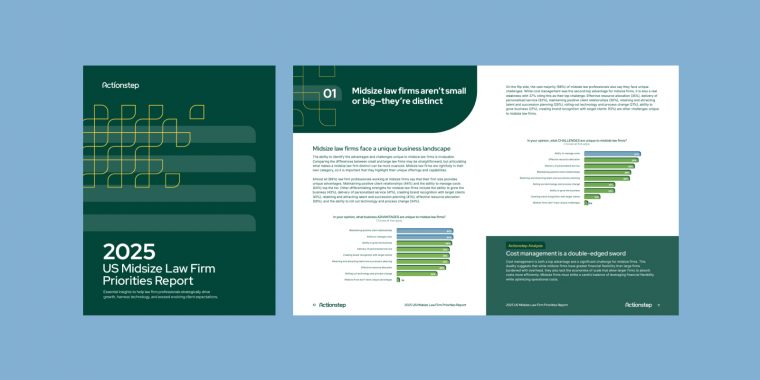
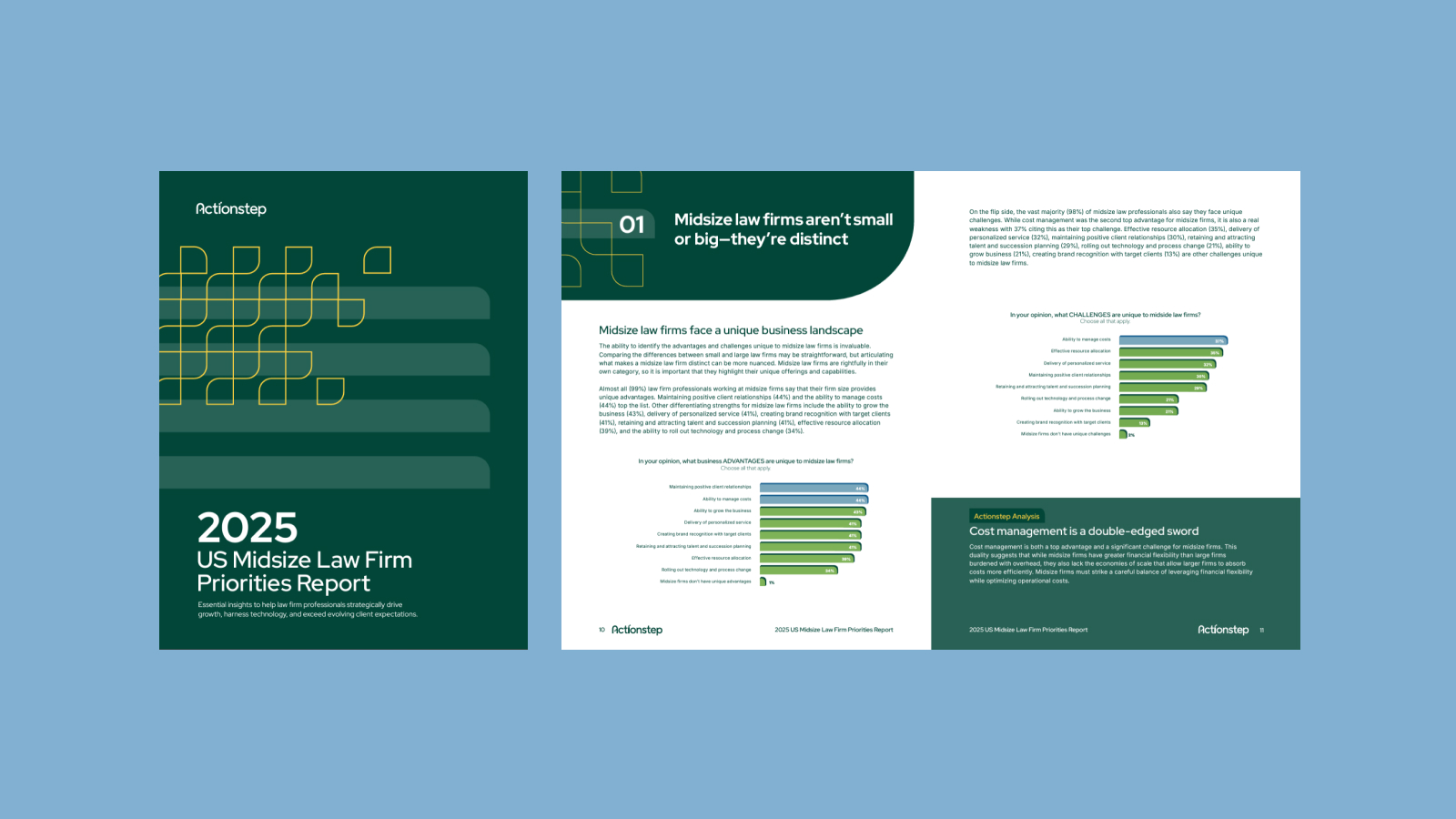
2025 US Midsize Law Firm Priorities Report | Actionstep

A
glimpse
into
the
findings

While
once
overlooked,
Actionstep
believes
the
midsize
market
is
now
coming
into
its
own.
The
findings
presented
in
this
report
shine
light
on
how
midsize
firms
operate
in
a
space
that
sets
them
apart
from
large
or
small
firms,
and
why
they
see
themselves
as
unique
and
how
they
can
leverage
these
differences
to
stay
competitive.

This
report
is
designed
to
bridge
the
gap,
providing
a
clear
snapshot
of
what
law
firm
professionals
at
midsize
firms
are
prioritizing
as
they
explore
new
technologies,
refine
processes,
and
drive
transformation
to
make
the
biggest
impact
in
the
coming
year.

🎯

Midsize
law
firms
aren’t
small
or
big

they’re
distinct

Nearly
all
midsize
law
firms
say
they
can
effectively
differentiate
themselves
from
other
size
firms,
with
the
ability
to
adapt
quickly
to
market
changes
(42%)
reported
as
the
top
differentiator

Learn
More

⚙️

Client
service
excellence
is
a
priority,
but
operational
hurdles
persist

97%
say
their
firm
wants
to
improve
client
satisfaction;
yet
34%
are
too
busy
to
do
something
about
it.

Learn
More

🤖

Technology
investment
is
no
longer
optional
for
sustainable
growth

59%
say
their
firm
is
very
motivated
to
invest
in
technology
in
2025
with
legal
accounting
having
the
most
benefit
at
39%.

Learn
More

💸

Interconnected
technology
is
key
to
operational
efficiency

47%
agree
improved
efficiency
is
the
top
benefit
to
managing
work
in
a
single
platform.

Learn
More

The Impact Of GenAI On In-House And Outside Counsel Relationships: Its Use Is Only Going To Grow – Above the Law

A
new
study
from

LexisNexis

confirms
what
many
have
suspected:
in-house
counsel
are
increasingly
relying
on
GenAI
tools
and
large
language
models
(LLMs).
And
that
use?
 It’s
probably
the
lowest
it
will
ever
be.
That’s
something
outside
counsel
need
to
be
thinking
long
and
hard
about.

The
study,
titled

The
Total
Economic
Impact™
of
Lexis+
AI
for
Corporate
Legal
Departments
,
was
conducted
for
LexisNexis
by

Forrester
Consulting
.
Forrester
interviewed
four
decision-makers
who
had
used
LexisNexis
GenAI
tools
and
then
constructed
a
composite
organization
to
illustrate
the
potential
savings
in-house
legal
teams
might
achieve
with
the
tools,
which
I
guess
it
did.


What
Caught
My
Eye

But
that’s
not
what
caught
my
eye.
Here
is
what
did:

·     
Organizations
are
still
struggling
to
identify
GenAI
solutions
that
meet
both
their
business
objectives
and
security/governance
requirements.

·     
Even
so,
the
study
suggests
that
in-house
teams
could
reduce
by
about
13%
the
amount
of
work
referred
to
outside
counsel
by
using
GenAI.

·     
GenAI
could
also
cut
by
25%
the
time
spent
by
in-house
legal
annually
on
routine
business
inquiries.

·     
In-house
paralegal
time
could
be
reduced
by
as
much
as
50%
through
AI
tools.

·     
By
automating
routine
work,
legal
staff
could
better
meet
day-to-day
demands
and
perhaps
improve
their
work-life
balance.

Some
of
the
participant
comments
are
equally
enlightening.
One
likened
the
GenAI
tools
to
having
a
virtual
associate
or
paralegal
right
at
their
side.
Another
said
they
turn
to
GenAI
when
time
is
of
the
essence.
Yet
another
pointed
out
that
work
sent
to
outside
counsel
is
inherently
more
expensive,
not
just
because
of
the
hourly
rate,
but
because
outside
counsel
often
put
more
time
into
a
matter,
and
it
drags
on
and
on.
One
participant
bluntly
observed
that
outside
counsel
are
incentivized
to
bill
time,
not
necessarily
to
finish
work
quickly
and
well.

GenAI,
they
also
said,
was
especially
helpful
in
reducing
time
spent
on
lower-value
tasks
that
don’t
require
high-level
attorney
expertise.
As
one
put
it,
GenAI
helped
them
meet
internal
client
turnaround
expectations
and
expand
their
capacity
to
take
on
more
work.

The
parallels
between
the
study
findings
and
what
the
three
in-house
counsel
on
the
LegalGeek
panel
on
which
I

previously
reported

shared
are
striking.
Both
groups
highlighted
the
internal
hurdles
they
face
in
expanding
AI
use
in
their
departments.
Both
noted
that
a
significant
objective
in
their
use
of
AI
was
to
reduce
spending
on
outside
counsel.
Both
emphasized
how
GenAI
tools
help
reduce
time
spent
responding
to
routine
and
often
repetitive
questions
from
the
business.

And
both
voiced
a
familiar
skepticism:
that
outside
counsel
don’t
always
have
their
best
interests
at
heart
when
working
on
and
billing
for
the
matters
referred
to
them.


So,
What’s
the
So
What?

Here’s
why
this
matters.
First,
the
lingering
concerns
in-house
counsel
have
about
security
actually
point
to
more,
not
less
adoption
ahead.
GenAI
vendors
aren’t
dumb.
They
know
this
is
a
pain
point
and
are
continuing
to
address
the
issue
to
increase
usage.
Everyone
in
the
study
and
on
the
panel
want
to
do
just
that.

Second,
in-house
lawyers
aren’t
dumb
either.
They
see
clearly
that
GenAI
can
help
reduce
outside
counsel
spend
and
as
the
tools
improve
and
get
more
secure,
that
trend
will
only
accelerate.
As
the
Panel
noted,
most
in-house
teams
want
to
refer
matters
to
outside
counsel
only
when
they
lack
the
needed
expertise
or
when
faced
with
litigation
matters.
(The
study
participants
noted,
by
the
way,
that
GenAI
helped
them
reduce
time
spent
by
outside
counsel
on
litigation
matters,
as
well.)
And
by
freeing
up
time
spent
on
routine
work,
in-house
lawyers
can
not
only
get
more
done
they
can
handle
matters
they
used
to
outsource
simply
because
they
didn’t
have
the
time.

I’m
not
sure
about
a
couple
of
study
findings.
Somehow,
I
doubt
that
freeing
up
time
will
result
in
in-house
legal
teams
achieving
a
greater
work
life
balance
because
they
can
get
their
work
done
sooner.
Typically,
the
workload
always
seems
to
somehow
expand
to
fill
whatever
time
is
available.
Other
tech
innovations
certainly
didn’t
provide
more
leisure
time;
they
only
increased
the
amount
of
work
expected
and
demanded.
And
as
for
the
50%
reduction
in
paralegal
time?
That
sounds
like
fewer
paralegals.


What
Is
Certain

But
one
thing
is
certain:
the
relationship
between
in-house
and
outside
counsel
is
changing.
Yes,
as
I’ve

noted
before
,
technology
will
likely
create
more
legal
work,
not
less,
at
least
for
the
short
term.
But
the
division
of
labor
between
inside
and
outside
legal
teams
is
shifting.

Outside
counsel
need
to
understand
that
change
and
define
how
and
where
they
can
bring
value
to
in-house
legal
perhaps
in
new
and
different
ways.


Stephen
Embry
is
a
lawyer,
speaker,
blogger
and
writer.
He
publishes TechLaw
Crossroads
,
a
blog
devoted
to
the
examination
of
the
tension
between
technology,
the
law,
and
the
practice
of
law
.

GLP-1s, Personalization, and Big Pharma Power Plays: What’s Really at Stake in the Eli Lilly Lawsuit  – MedCity News

The
mounting
conversations
around
compounded
GLP-1
medications
aren’t
just
about
science
or
safety.
Rather,
lawsuits
and
corporate
power
plays
have
had
massive
influence
on
how
these
drugs
are
being
perceived
and
doctors’
ability
to
make
the
best
treatment
decisions
for
their
patients.
Most
recently,
Eli
Lilly
issued
a

lawsuit
against
Mochi
Health
,
the
physician-led
obesity
care
platform
I
founded,
challenging
our
use
of
compounded
tirzepatide
formulations.

While
misinformation
around
compounding
is
nothing
new,
the
lawsuit
has
spurred
a
new
cycle
of
discussion
around
safety,
regulation,
and
the
right
of
physicians
to
prescribe
personalized,
affordable
care.
But
here’s
what’s
getting
lost
in
the
noise:
not
every
patient
fits
into
a
one-size-fits-all
box.
They
may
need
a
lower
dose,
a
different
delivery
method,
or
a
formulation
that
avoids
allergens
or
side
effects.

The
bottom
line?
Compounded
medication
is
what
makes
this
kind
of
ultra-personalized,
patient-first
treatment
possible

and
more
affordable.
So,
as
the
healthcare
industry
watches
this
case
unfold,
we
have
to
ask

are
we
really
protecting
patients
here,
or
protecting
profits?

As
the
CEO
of
Mochi
Health,
I
want
to
clear
up
the
confusion
around
what
compounding
actually
means,
why
the
impact
of
this
lawsuit
stretched
far
beyond
our
company,
and
why
protecting
safe,
customized
care
for
patients
should
be
the
real
priority.


Compounding
is
the
original
personalized
medicine

Compounded
medications
exist
because
not
every
patient
can
safely
take
a
drug
in
its
commercial
form.
The
future
of
medicine
will
be
personalized,
taking
patients’
specific
medical
history
into
account
when
prescribing
care. 

Hand-tailored
treatment
plans
are
especially
crucial
for
issues
as
nuanced
as
obesity,
which
is
often
tied
to
a
number
of
other
medical
conditions
and
considerations.
For
example,
some
patients
are
treated
for
obesity
in
tandem
with
PCOS,
requiring
specific
doses
or
additives.
Others
suffering
from
vicious
side
effects,
such
as
nausea
or
vomiting,
may
require
vitamin
supplements
to
reduce
their
discomfort.
And
those
with
aversions
to
needles
have
the
option
to
opt
for
oral
medication.

The
FDA
recognizes
this
and,
under
Sections
503A
and
503B,
compounding
is
explicitly
legal
and
essential.
These
aren’t
loopholes

they’re
part
of
a
system
designed
to
make
sure
people
get
the
care
they
need
when
standard
drug
options
fall
short.

Millions
of
Americans
depend
on
compounded
medicine
every
day

in
cancer
care,
dermatology,
pediatrics,
women’s
health.
GLP-1s
are
simply
the
latest
example.
Yet
this
trusted,
necessary
practice
is
suddenly
being
dragged
into
court.


Eli
Lilly’s
lawsuit
attempts
to
blur
the
lines
between
clinical
care
and
commercial
strategy

Mochi
Health
was
named
in
Eli
Lilly’s
recent
lawsuit
targeting
providers
and
pharmacies
that
offer
compounded
tirzepatide.

Let’s
be
clear
about
what
we
do.
Mochi
doesn’t
make
or
sell
compounded
medications.
We’re
a
physician-led
medical
practice
focused
on
offering
patients
personalized,
evidence-based
care.
We
prescribe
these
medications
only
when
they’re
appropriate
for
a
patient’s
specific
needs
and
legally
allowed.

This
lawsuit
is
about
control

who
gets
to
decide
how
patients
receive
care.
At
stake
is
the
ability
of
doctors
to
make
the
right
call
for
their
patients
when
off-the-shelf,
branded
drugs
are
not
the
right
fit.
Safety
is
always
part
of
the
conversation

which
is
something
Mochi
takes
seriously.


Compounded
GLP-1s
are
safe
when
properly
sourced
and
prescribed

At
Mochi,
we
only
work
with
licensed
and
accredited
503A
pharmacies
that
follow
strict
federal
and
state
guidelines.
Every
prescription
gets
reviewed
and
approved
by
a
board-certified
physician.

And
unlike
mass-produced
drugs,
compounded
medications
are
tested
for
potency
and
sterility
in
every
batch
before
they
ever
reach
a
patient.

Still,
there’s
a
lot
of
misinformation
out
there

which
can
make
patients
worry
unnecessarily.
As
healthcare
providers,
it’s
on
us
to
explain
the
difference
between
safe,
regulated
compounders
and
those
who
cut
corners.

But
safety
is
just
one
piece
of
the
puzzle.
The
other

and
often
overlooked

challenge
is
ensuring
that
these
treatments
remain
accessible
to
those
who
need
them
most.


The
industry
narrative
ignores
the
real
barrier:
Accessibility

There’s
no
denying
that
GLP-1
medications
are
game-changing
for
treating
obesity
and
related
chronic
conditions.
But
the
reality
is,
the
high
cost
of
branded
versions
puts
them
out
of
reach
for
too
many
Americans

especially
those
without
insurance
or
with
poor
coverage.

Pharmaceutical
companies
have
a
clear
financial
incentive
to
limit
compounded
alternatives.
But
keeping
patients
from
affordable
options
doesn’t
solve
the
healthcare
crisis

it
only
makes
it
worse.

Even
though
the
FDA
recently
removed
some
GLP-1
drugs
from
its
official
shortage
list,
compounded
versions
that
are
meaningfully
different

by
FDA
definition

remain
legal,
needed,
and
in
some
cases
the
best
choice
for
certain
patients.

And
that’s
why
this
lawsuit
isn’t
just
about
market
share.
It’s
about
whether
healthcare
stays
patient-first

or
profit-first.


This
isn’t
just
a
legal
fight

it’s
a
healthcare
equity
issue

Obesity
affects
more
than

40%
of
Americans
.
It’s
a
complex,
chronic
disease
that
demands
more
than
blockbuster
drugs.
It
requires
new
models
of
care
that
are
affordable,
scalable,
and
led
by
clinicians

not
by
market
forces.

At
Mochi,
our
care
model
is
built
to
serve
real
people
with
real
needs

including
offering
compounded
medications
when
they
make
sense.
Our
physicians
don’t
prescribe
these
lightly

but
sometimes
they
are
the
right
option.
And
when
they
are,
patients
deserve
access
to
them

without
fear,
confusion,
or
unnecessary
barriers.

This
lawsuit
may
look
like
a
business
dispute
on
the
surface.
But
underneath,
it’s
about
something
much
more
important:
the
right
of
patients
to
receive
personalized,
affordable
care.

Life-changing
obesity
medications
shouldn’t
be
gatekept
by
lawsuits
or
profit
motives.
As
regulators,
providers,
and
industry
leaders
navigate
these
issues,
we
have
to
stay
focused
on
what
matters
most:
evidence,
ethics,
and
patients

not
patents.

The
future
of
chronic
disease
care—and
the
ability
for
patients
to
get
the
treatment
that’s
right
for
them

depends
on
it.


Author
bio:


Dr.
Myra
Ahmad
,
founder
and
CEO
of

Mochi
Health
,
is
dedicated
to
revolutionizing
obesity
care
by
providing
patients
with
accessible,
evidence-based
weight
management
programs.
Driven
to
minimize
healthcare
disparities
and
provider
biases,
she
champions
personalized,
holistic
care
that
empowers
patients.

Dr.
Ahmad
received
her
MD
from
the
University
of
Washington
School
of
Medicine,
and
has
held
research
positions
at
the
MIT
Koch
Institute
for
Integrative
Cancer
Research,
UCSF
Medical
Center,
and
University
of
California,
San
Francisco.


Photo:
Gearstd,
Getty
Images