Legal Ethics Roundup: Chesebro Disbarred, 40.8% Tax On Lawyers & Lit Funders, DOJ Whistleblower Calls Out Bove & More – Above the Law


Ed.
note
:
Please
welcome
Renee
Knake
Jefferson
back
to
the
pages
of
Above
the
Law.
Subscribe
to
her
Substack,
Legal
Ethics
Roundup, here.


Welcome
to
what
captivates,
haunts,
inspires,
and
surprises
me
every
week
in
the
world
of
legal
ethics.

Happy
Monday!

It
was
a
whirlwind
of
legal
ethics
news
last
week,
so
let’s
jump
right
in.

Highlights
from
Last
Week

Top
Ten
Headlines


#1
 “DOJ
Sues
All
Federal
Judges
in
Maryland
Over
Deportation
Order.”
 From
the Washington
Post
:
“The Justice
Department
 sued
all
15
federal
district
court
judges
in
Maryland
on
Tuesday
over
an
order
that
pauses
any
deportations
under
legal
challenge
in
the
state
for
48
hours.
Legal
experts
described
the
move as
an
unprecedented
attack
on
judicial
independence,
while
government
lawyers
said
it
was
necessary
to
preserve President
Donald
Trump’s
 constitutional
authority
over
immigration.
Longtime
court
watchers
said
they
could
not
recall
another
instance
in
which
the
Justice
Department,
which
usually
represents
members
of
the
judicial
branch
in
court,
sued
the
entire
roster
of
judges
in
a
district.”

“It
is
reckless
and
irresponsible
and
yet
another
direct
frontal
assault
on
the
federal
courts
of
this
country,”
said
retired
federal
judge J.
Michael
Luttig
,
who
served
on
the U.S.
Court
of
Appeals
for
the
4th
Circuit
 from
1991
to
2006.

Read
more here (gift
link).


#2
 “Justice
Dept.
Leader
Suggested
Violating
Court
Orders,
Whistle-Blower
Says.”
 From
the New
York
Times
:
“A
senior Justice
Department
 official, Emil
Bove
III
,
told
subordinates
he
was
willing
to
ignore
court
orders
to
fulfill
the
president’s
aggressive
deportation
campaign,
according
to
a
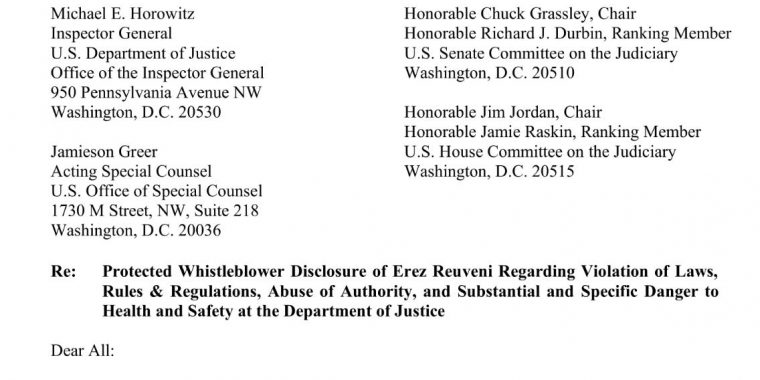
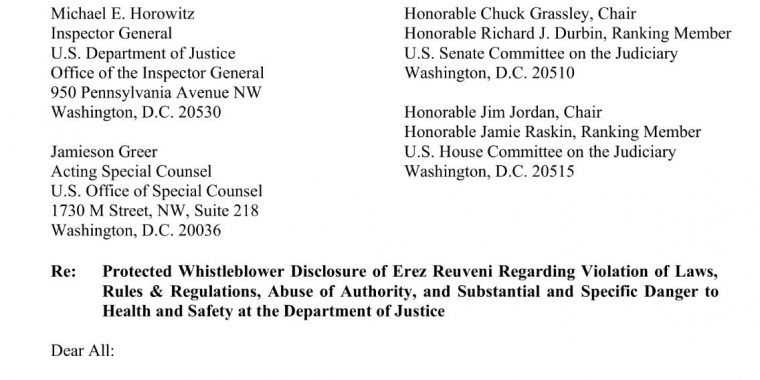
whistle-blower
complaint
by
a
department
lawyer
who
has
since
been
fired.
The
account
by
the
dismissed
lawyer, Erez
Reuveni
,
paints
a
disturbing
portrait
of
his
final
three
weeks
on
the
front
lines
of
the
Trump
administration’s
legal
efforts
to
ship
immigrants
overseas,
often
with
little
notice
or
recourse.
In
Mr.
Reuveni’s
telling,
Mr.
Bove
discussed
disregarding
court
orders,
adding
an
expletive
for
emphasis,
and
other
top
law
enforcement
officials
showed
themselves
ready
to
stonewall
judges
or
lie
to
them
to
get
their
way.”
Read
more here (gift
link).
For
more
commentary,
head
over
to
this Substack
post
 by Brad
Wendel 
(Cornell)
where,
among
other
observations,
he
catalogs
the
eight

yes
eight-
professional
conduct
rules
implicated.
As
Brad
says:
“Don’t
take
my
word
for
it.
Read
through
the letter and,
if
you’re
a
lawyer,
ask
yourself
what
you
would
have
done.”


#3
 “Lawyer
Who
Pushed
Bogus
Trump
Elector
Scheme
Is
Disbarred
in
New
York.”
 From
the New
York
Times
:
Kenneth
Chesebro
,
a
lawyer
who
helped
spearhead
a
brazen
legal
effort
to
use
phony
slates
of
pro-Trump
electors
to
overturn
the
2020
presidential
election,
was
disbarred
in
New
York
on
Thursday,
cementing
an
indefinite
ban
issued
last
year.
The
decision
by
a
New
York
State
appellate
court
concluded
a
strange
legal
journey
for
a
Harvard-educated
lawyer
who
worked
for
former Vice
President
Al
Gore
 during
the
2000
presidential
election
recount
in
Florida
and
later
evolved
into
a
supporter
of
President
Trump.
In
seven-page
opinion
,
the
court
cited
a
criminal
racketeering
case
centered
on
the
fake
electors
in
Georgia,
where
in
2023
Mr.
Chesebro
pleaded
guilty.

The
New
York
court
said
Thursday
that
Mr.
Chesebro’s
“criminal
conduct

conspiracy
to
commit
filing
false
documents

is
unquestionably
serious”
and
that
he
had
undercut
“the
very
notion
of
our
constitutional
democracy
that
he,
as
an
attorney,
swore
an
oath
to
uphold.”

Read
more here.


#4
 “Lawyers
Market
Big
#MeToo
Verdicts,
but
Their
Clients
Struggle
to
Collect.”
 From
the Wall
Street
Journal
:
“The
cases
reveal
an
unpleasant
reality
about
#MeToo
verdicts
and
other
civil
judgments:
Winning
is
hard
enough,
but
collecting
can
be
even
harder.

Plaintiffs,
on
top
of
what
they
pay
lawyers
handling
their
lawsuits,
must
pay
for
time
spent
by
the
judgment
enforcers,
or
give
them
a
cut
of
any
amounts
collected.
The
plaintiffs
have
to
cover
some
costs
upfront,
so
they
sometimes
turn
to
firms
that
finance
such
work.
Those
specialty
funders
often
take
a
first
cut
of
any
recoveries.”
Read
more here (gift
link).


#5
 “A
Fourth
Judge
Has
Blocked
a
Trump
Executive
Order
Targeting
Elite
Law
Firms.”
 From NPR:
“A
federal
judge
has
struck
down
President
Trump’s
executive
order
targeting
the
law
firm Susman
Godfrey
,
delivering
the
latest
in
a
series
of
legal
wins
for
firms
that
have
challenged
the
president’s
punitive
campaign
against
Big
Law.
The
ruling
Friday
from U.S.
District
Judge
Loren
AliKhan
 marks
the
fourth
time
out
of
four
that
a
federal
judge
has
permanently
blocked
one
of
Trump’s
executive
orders
seeking
to
punish
an
elite
law
firm.”
Read
more here.


#6
 “Former
Supreme
Court
Justice
Kennedy
Says
‘Democracy
is
at
Risk’.”
 From Politico:
“Former Supreme
Court
 Justice
Anthony
Kennedy
 warned
Thursday
that
acrimonious
political
discourse
and
threats
to
judges
are
eroding
the
ability
of
the
United
States
to
serve
as
an
example
of
democracy
worldwide.
‘Many
in
the
rest
of
the
world
look
to
the
United
States
to
see
what
democracy
is,
to
see
what
democracy
ought
to
be,’
Kennedy
said
during
an
online
forum
about
threats
to
the
rule
of
law.
‘If
they
see
a
hostile,
fractious
discourse,
if
they
see
a
discourse
that
uses
identity
politics
rather
than
to
talk
about
issues,
democracy
is
at
risk.
Freedom
is
at
risk.’”
Read
more here.


#7
 “Litigation
Funders
And
Lawyers
Face
40.8%
Tax
In
One,
Big,
Beautiful
Bill.”
 From Forbes:
“The
litigation
funding
industry—and
many
lawyers
and
law
firms—are
worried
about
a
provision
inserted
in
the
pending
tax
bill. Senator
Thom
Tillis
 (R-N.C.)
introduced
the
Tackling
Predatory
Litigation
Funding
Act
in
the
Senate,
you
can
read
the
text here.
A
companion
bill
was
introduced
in
the
House
by Kevin
Hern
 (R-Okla.).
The
litigation
funding
tax
was
not
in
the
House-passed
One,
Big,
Beautiful
Bill
Act,
but
the
Senate’s
reconciliation
bill
includes
it.
Its
ostensible
goal
as
described
by
Tillis
when
he
introduced
it
is
to
prevent
foreign
influence
in
the
U.S.
court
system
and
stem
frivolous
lawsuits.
Some
insurers
and
trade
groups
support
it,
you
can
see
a
list here.
Investors
(both
foreign
and
domestic)
often
help
fund
lawsuits,
and
the
U.S.
is
full
of
lawsuits.
But
given
the
elephant
gun
approach
of
the
proposed
new
tax,
domestic
funders
are
equally
worried,
as
are
lawyers
and
law
firms.”
Read
more here.


#8
 “Florida
Judge
Sided
with
Trump
While
Advocating
for
Nomination.”
 From Bloomberg
Law
:
“A
Florida
state
judge
was
angling
for
a
federal
judicial
nomination
from Donald
Trump
 when
he
sided
with
the
president
in
a
defamation
case
before
his
court. Ed
Artau
,
who’s
now
under
consideration
for
South
Florida’s
US
trial
court,
met
with
the
White
House
roughly
two
weeks
after
he
wrote
his
February
concurring
opinion
allowing
Trump’s
defamation
suit
against
the
Pulitzer
Prize
Board
to
proceed,
according
to
his Senate
Judiciary
Questionnaire
 made
public
by Accountable.US,
a
progressive
watchdog
group.
The
disclosure
was
first
reported
Friday
by Politico.
The
timing
of
Trump’s
announcement
that
he’d
tapped
Artau
for
the
federal
bench
soon
after
the
judge’s
decision
in
the
case
raised
concerns
about
his
impartiality
in
the
defamation
case
and
the
process
by
which
he
was
chosen.”
Read
more here.


#9
 “The
Future
is
Now:
Why
Trial
Lawyers
and
Judges
Should
Embrace
Generative
AI
Now
and
How
to
Do
It
Safely
and
Productively.”
 From JD
Supra
:
“The
unprecedented
rapid
advancement
of
generative
artificial
intelligence
(AI)
worldwide
presents
the
legal
profession
with
a
pivotal
opportunity
for
transformation.
The
legal
system
is
deeply
rooted
in
tradition,
precedent,
and
established
practices,
which
is
good;
however,
this
does
not
mean
we
should
avoid
technology.
The
legal
practice
must
be
open
to
change
and
embrace
AI,
just
as
it
did
with
computers
and
online
communications.
We
can
keep
our
traditions
of
ethics,
justice,
and
precedent,
but
also
utilize
generative
AI
to
make
our
practices
more
efficient,
consistent,
and
responsive
to
the
demands
of
the
modern
world.”
Read
more here.


#10
 “Maine’s
Highest-Ranking
Justices
Will
Not
Weigh
Complaints
Against
Peers.”
 From
the Portland
Press
Herald
:
“According
to
new
rules,
ethics
complaints
against
members
of
the Maine
Supreme
Judicial
Court 
instead
will
be
heard
by
a
panel
of
lower
court
judges.”
Read
more here.


Get
Hired

Did
you
miss
the
150+
job
postings
from
previous
Roundups?
Find
them
all here.


Upcoming
Ethics
Events
&
Other
Announcements

Did
you
miss
an
announcement
from
previous
Roundups?
Find
them
all here.


Keep
in
Touch


  • News
    tips?
    Announcements?
    Events?
     A
    job
    to
    post?
     Reading
    recommendations?
     Email [email protected] –
    but
    be
    sure
    to
    subscribe
    first,
    otherwise
    the
    email
    won’t
    be
    delivered.


Renee
Knake
Jefferson
holds
the
endowed
Doherty
Chair
in
Legal
Ethics
and
is
a
Professor
of
Law
at
the
University
of
Houston.
Check
out
more
of
her
writing
at
the Legal
Ethics
Roundup
.
Find
her
on
X
(formerly
Twitter)
at @reneeknake or
Bluesky
at legalethics.bsky.social

Zimbabwe’s Health Minister Reassures Nation On ARV Availability

His
remarks
follow
growing
concern
that
low-income
countries
could
face
shortages
of
HIV
medication,
triggered
by
an
executive
order
signed
in
January
by
former
U.S.
President
Donald
Trump.

The
order
has
raised
alarms
globally,
with
health
advocates
warning
that
it
could
disrupt
international
supply
chains
for
essential
medicines,
including
ARVs.

Speaking
to ZBC
News
,
Mombeshora
said
Zimbabwe
had
acted
proactively
in
anticipation
of
such
disruptions
and
now
has
sufficient
ARV
stocks
in
place
to
meet
current
national
needs.
He
said:

As
I
have
said
previously,
we
began
the
year
with
sufficient
ARV
stocks
to
last
until
the
end
of
June.
Following
the
announcement
of
the
executive
order
by
the
United
States,
the
Government
acted
swiftly
by
placing
new
orders
through
two
suppliers
to
close
the
anticipated
gap.

The
stocks
are
now
in
place
to
cover
us
up
to
the
end
of
the
year,
not
yet
completely
delivered.
We
started
receiving
the
medicines
about
three
or
four
weeks
ago
and
we
are
hoping
by
the
end
of
the
first
or
second
week
of
July,
all
deliveries
will
have
been
completed.

We
can
assure
the
nation
that
we
have
enough
stocks
for
ARVs
up
to
the
end
of
the
year.
We
are
now
working
on
a
plan
because
we
start
procuring
before
they
run
out
so
that
we
also
cover
the
next
six
months
from
January
2026
to
June
2026.

ZRA Warns Kariba Levels Insufficient For Full Electricity Generation

In
its
latest
update
released
on
Monday,
30
June,
the
Authority
noted
that
inflows
typically
begin
to
decrease
further
from
July
onwards
due
to
seasonal
changes.

As
of
today,
the
lake
level
stood
at
478.93
metres,
a
slight
improvement
compared
to
477.28
metres
recorded
on
the
same
date
last
year.

This
increase
translates
to
a
usable
live
storage
volume
of
15.58
billion
cubic
metres
(BCM),
almost
double
the
7.98
BCM
available
at
this
time
in
2024.

However,
ZRA
warned
that
while
the
figures
reflect
a
positive
trend,
the
levels
remain
below
the
threshold
required
to
sustain
full-capacity
hydropower
generation.

Currently,
only
24.05%
of
the
usable
live
storage
is
available
for
electricity
production,
an
improvement
from
last
year’s
12.32%,
but
still
insufficient
to
guarantee
an
uninterrupted
power
supply
across
the
region.
ZRA
said:

Although
current
lake
levels
are
higher
than
those
recorded
during
the
same
period
last
year,
they
remain
insufficient
to
support
full-scale
power
generation
by
the
power
utility
companies.

Kariba
Lake
is
designed
to
operate
between
475.50
metres
and
488.50
metres,
with
a
0.70-metre
freeboard
to
ensure
safe
and
efficient
energy
production.

As
inflows
continue
to
decline,
experts
anticipate
that
the
upward
trend
may
reverse
in
the
coming
weeks.

Smuggled Chicken Meat Bound For Harare Seized And Destroyed

The
meat,
believed
to
have
been
smuggled
from
South
Africa
and
destined
for
Harare,
was
seized
at
the
30km
peg
from
Masvingo
near
Mushagashe
Training
Centre
along
the
Masvingo-Harare
Road.

Masvingo
City
Council’s
Public
Relations
Officer,
Ashleigh
Jinjika,
confirmed
the
operation
to TellZim
News
,
saying
that
the
intercepted
meat
had
no
veterinary
clearance
or
supporting
documentation
and
was
therefore
considered
unfit
for
human
consumption.

The
consignment
was
destroyed
at
Cambria
Landfill
under
the
supervision
of
municipal
health
inspectors
and
a
veterinary
team.
Said
Jinjika:

The
meat
had
no
proper
veterinary
clearance
and
documentation,
was
deemed
unsafe
for
human
consumption
and
posed
a
serious
public
health
risk.

The
importation
of
meat
is
illegal
so
we
confiscate
to
safeguard
the
community
from
GMOs
and
also
protect
our
local
market
because
smuggled
goods
are
usually
stolen
and
do
not
pay
duty
so
they
become
cheap.

Council
urges
residents
and
vendors
to
only
source
meat
from
licensed
and
inspected
suppliers
to
ensure
community
safety
and
prevent
the
spread
of
diseases
and
we
remain
committed
to
protecting
public
health
through
strict
enforcement
of
food
safety
standards.

Chicken
cuts
smuggled
from
South
Africa
are
increasingly
dominating
menus
at
local
restaurants,
backyard
food
outlets,
and
fast-food
chains
across
Zimbabwe,
posing
a
serious
public
health
risk.

In
April
2025,
the
Zimbabwe
Anti-Corruption
Commission
(ZACC)
intercepted
a
truck
carrying
four
tonnes
of
suspected
smuggled
chicken
near
Mahusekwa
in
Mashonaland
East.

The
consignment
is
believed
to
have
entered
the
country
illegally
through
the
Beitbridge
Border
Post.
Seven
people
were
arrested
in
connection
with
the
incident.

Mastermind Behind US$600K Heist At Rafiq Adam’s Office Arrested

Rafiq
Adam,
a
respected
figure
in
Zimbabwean
business
circles
and
a
former
football
administrator,
is
best
known
for
his
tenure
as
Dynamos
chairman
and
as
team
manager
of
the
national
team,
the
Warriors,
during
the
famed
“Dream
Team”
era.

The
court
heard
that
Samson
Gora,
a
driver
employed
by
Adam’s
company,
Merchantman
Enterprises,
allegedly
supplied
key
information
about
the
movement
and
storage
of
large
sums
of
cash
at
the
company’s
offices
on
Cameroon
Street
in
the
capital.

Gora
is
alleged
to
have
conspired
with
Nyengerayi
Chikwadze,
Oscar
Muchenje,
and
two
unidentified
foreign
nationals
still
at
large.

The
gang,
posing
as
prospective
clients,
reportedly
stormed
the
premises
armed
with
a
pistol on
16
June
2025.

During
the
robbery,
one
of
the
suspects
allegedly
struck
Adam
with
the
butt
of
the
weapon
and
demanded
keys
to
the
company
safe.

In
fear
for
his
life,
Adam
complied,
allowing
the
robbers
to
access
the
safe
and
steal
US$500,000
in
cash
along
with
other
valuables,
pushing
the
total
haul
to
US$600,000.

Gora
was
arrested
on
27
June
after
CID
Homicide
detectives
received
intelligence
linking
him
to
the
heist.

During
interrogation,
he
reportedly
confessed
to
being
the
inside
man
and
admitted
to
receiving
US$10,000
as
his
share
of
the
loot.

Further
investigations
led
to
the
recovery
of
US$4,400
in
cash
and
a
Toyota
Hiace
vehicle
allegedly
purchased
with
proceeds
from
the
robbery.
The
vehicle
was
found
hidden
at
his
brother
Willard
Gora’s
residence.

Legal Ethics Roundup: Chesebro Disbarred, 40.8% Tax On Lawyers & Lit Funders, DOJ Whistleblower Calls Out Bove & More – Above the Law


Ed.
note
:
Please
welcome
Renee
Knake
Jefferson
back
to
the
pages
of
Above
the
Law.
Subscribe
to
her
Substack,
Legal
Ethics
Roundup, here.


Welcome
to
what
captivates,
haunts,
inspires,
and
surprises
me
every
week
in
the
world
of
legal
ethics.

Happy
Monday!

It
was
a
whirlwind
of
legal
ethics
news
last
week,
so
let’s
jump
right
in.

Highlights
from
Last
Week

Top
Ten
Headlines


#1
 “DOJ
Sues
All
Federal
Judges
in
Maryland
Over
Deportation
Order.”
 From
the Washington
Post
:
“The Justice
Department
 sued
all
15
federal
district
court
judges
in
Maryland
on
Tuesday
over
an
order
that
pauses
any
deportations
under
legal
challenge
in
the
state
for
48
hours.
Legal
experts
described
the
move as
an
unprecedented
attack
on
judicial
independence,
while
government
lawyers
said
it
was
necessary
to
preserve President
Donald
Trump’s
 constitutional
authority
over
immigration.
Longtime
court
watchers
said
they
could
not
recall
another
instance
in
which
the
Justice
Department,
which
usually
represents
members
of
the
judicial
branch
in
court,
sued
the
entire
roster
of
judges
in
a
district.”

“It
is
reckless
and
irresponsible
and
yet
another
direct
frontal
assault
on
the
federal
courts
of
this
country,”
said
retired
federal
judge J.
Michael
Luttig
,
who
served
on
the U.S.
Court
of
Appeals
for
the
4th
Circuit
 from
1991
to
2006.

Read
more here (gift
link).


#2
 “Justice
Dept.
Leader
Suggested
Violating
Court
Orders,
Whistle-Blower
Says.”
 From
the New
York
Times
:
“A
senior Justice
Department
 official, Emil
Bove
III
,
told
subordinates
he
was
willing
to
ignore
court
orders
to
fulfill
the
president’s
aggressive
deportation
campaign,
according
to
a
whistle-blower
complaint
by
a
department
lawyer
who
has
since
been
fired.
The
account
by
the
dismissed
lawyer, Erez
Reuveni
,
paints
a
disturbing
portrait
of
his
final
three
weeks
on
the
front
lines
of
the
Trump
administration’s
legal
efforts
to
ship
immigrants
overseas,
often
with
little
notice
or
recourse.
In
Mr.
Reuveni’s
telling,
Mr.
Bove
discussed
disregarding
court
orders,
adding
an
expletive
for
emphasis,
and
other
top
law
enforcement
officials
showed
themselves
ready
to
stonewall
judges
or
lie
to
them
to
get
their
way.”
Read
more here (gift
link).
For
more
commentary,
head
over
to
this Substack
post
 by Brad
Wendel 
(Cornell)
where,
among
other
observations,
he
catalogs
the
eight

yes
eight-
professional
conduct
rules
implicated.
As
Brad
says:
“Don’t
take
my
word
for
it.
Read
through
the letter and,
if
you’re
a
lawyer,
ask
yourself
what
you
would
have
done.”


#3
 “Lawyer
Who
Pushed
Bogus
Trump
Elector
Scheme
Is
Disbarred
in
New
York.”
 From
the New
York
Times
:
Kenneth
Chesebro
,
a
lawyer
who
helped
spearhead
a
brazen
legal
effort
to
use
phony
slates
of
pro-Trump
electors
to
overturn
the
2020
presidential
election,
was
disbarred
in
New
York
on
Thursday,
cementing
an
indefinite
ban
issued
last
year.
The
decision
by
a
New
York
State
appellate
court
concluded
a
strange
legal
journey
for
a
Harvard-educated
lawyer
who
worked
for
former Vice
President
Al
Gore
 during
the
2000
presidential
election
recount
in
Florida
and
later
evolved
into
a
supporter
of
President
Trump.
In
seven-page
opinion
,
the
court
cited
a
criminal
racketeering
case
centered
on
the
fake
electors
in
Georgia,
where
in
2023
Mr.
Chesebro
pleaded
guilty.

The
New
York
court
said
Thursday
that
Mr.
Chesebro’s
“criminal
conduct

conspiracy
to
commit
filing
false
documents

is
unquestionably
serious”
and
that
he
had
undercut
“the
very
notion
of
our
constitutional
democracy
that
he,
as
an
attorney,
swore
an
oath
to
uphold.”

Read
more here.


#4
 “Lawyers
Market
Big
#MeToo
Verdicts,
but
Their
Clients
Struggle
to
Collect.”
 From
the Wall
Street
Journal
:
“The
cases
reveal
an
unpleasant
reality
about
#MeToo
verdicts
and
other
civil
judgments:
Winning
is
hard
enough,
but
collecting
can
be
even
harder.

Plaintiffs,
on
top
of
what
they
pay
lawyers
handling
their
lawsuits,
must
pay
for
time
spent
by
the
judgment
enforcers,
or
give
them
a
cut
of
any
amounts
collected.
The
plaintiffs
have
to
cover
some
costs
upfront,
so
they
sometimes
turn
to
firms
that
finance
such
work.
Those
specialty
funders
often
take
a
first
cut
of
any
recoveries.”
Read
more here (gift
link).


#5
 “A
Fourth
Judge
Has
Blocked
a
Trump
Executive
Order
Targeting
Elite
Law
Firms.”
 From NPR:
“A
federal
judge
has
struck
down
President
Trump’s
executive
order
targeting
the
law
firm Susman
Godfrey
,
delivering
the
latest
in
a
series
of
legal
wins
for
firms
that
have
challenged
the
president’s
punitive
campaign
against
Big
Law.
The
ruling
Friday
from U.S.
District
Judge
Loren
AliKhan
 marks
the
fourth
time
out
of
four
that
a
federal
judge
has
permanently
blocked
one
of
Trump’s
executive
orders
seeking
to
punish
an
elite
law
firm.”
Read
more here.


#6
 “Former
Supreme
Court
Justice
Kennedy
Says
‘Democracy
is
at
Risk’.”
 From Politico:
“Former Supreme
Court
 Justice
Anthony
Kennedy
 warned
Thursday
that
acrimonious
political
discourse
and
threats
to
judges
are
eroding
the
ability
of
the
United
States
to
serve
as
an
example
of
democracy
worldwide.
‘Many
in
the
rest
of
the
world
look
to
the
United
States
to
see
what
democracy
is,
to
see
what
democracy
ought
to
be,’
Kennedy
said
during
an
online
forum
about
threats
to
the
rule
of
law.
‘If
they
see
a
hostile,
fractious
discourse,
if
they
see
a
discourse
that
uses
identity
politics
rather
than
to
talk
about
issues,
democracy
is
at
risk.
Freedom
is
at
risk.’”
Read
more here.


#7
 “Litigation
Funders
And
Lawyers
Face
40.8%
Tax
In
One,
Big,
Beautiful
Bill.”
 From Forbes:
“The
litigation
funding
industry—and
many
lawyers
and
law
firms—are
worried
about
a
provision
inserted
in
the
pending
tax
bill. Senator
Thom
Tillis
 (R-N.C.)
introduced
the
Tackling
Predatory
Litigation
Funding
Act
in
the
Senate,
you
can
read
the
text here.
A
companion
bill
was
introduced
in
the
House
by Kevin
Hern
 (R-Okla.).
The
litigation
funding
tax
was
not
in
the
House-passed
One,
Big,
Beautiful
Bill
Act,
but
the
Senate’s
reconciliation
bill
includes
it.
Its
ostensible
goal
as
described
by
Tillis
when
he
introduced
it
is
to
prevent
foreign
influence
in
the
U.S.
court
system
and
stem
frivolous
lawsuits.
Some
insurers
and
trade
groups
support
it,
you
can
see
a
list here.
Investors
(both
foreign
and
domestic)
often
help
fund
lawsuits,
and
the
U.S.
is
full
of
lawsuits.
But
given
the
elephant
gun
approach
of
the
proposed
new
tax,
domestic
funders
are
equally
worried,
as
are
lawyers
and
law
firms.”
Read
more here.


#8
 “Florida
Judge
Sided
with
Trump
While
Advocating
for
Nomination.”
 From Bloomberg
Law
:
“A
Florida
state
judge
was
angling
for
a
federal
judicial
nomination
from Donald
Trump
 when
he
sided
with
the
president
in
a
defamation
case
before
his
court. Ed
Artau
,
who’s
now
under
consideration
for
South
Florida’s
US
trial
court,
met
with
the
White
House
roughly
two
weeks
after
he
wrote
his
February
concurring
opinion
allowing
Trump’s
defamation
suit
against
the
Pulitzer
Prize
Board
to
proceed,
according
to
his Senate
Judiciary
Questionnaire
 made
public
by Accountable.US,
a
progressive
watchdog
group.
The
disclosure
was
first
reported
Friday
by Politico.
The
timing
of
Trump’s
announcement
that
he’d
tapped
Artau
for
the
federal
bench
soon
after
the
judge’s
decision
in
the
case
raised
concerns
about
his
impartiality
in
the
defamation
case
and
the
process
by
which
he
was
chosen.”
Read
more here.


#9
 “The
Future
is
Now:
Why
Trial
Lawyers
and
Judges
Should
Embrace
Generative
AI
Now
and
How
to
Do
It
Safely
and
Productively.”
 From JD
Supra
:
“The
unprecedented
rapid
advancement
of
generative
artificial
intelligence
(AI)
worldwide
presents
the
legal
profession
with
a
pivotal
opportunity
for
transformation.
The
legal
system
is
deeply
rooted
in
tradition,
precedent,
and
established
practices,
which
is
good;
however,
this
does
not
mean
we
should
avoid
technology.
The
legal
practice
must
be
open
to
change
and
embrace
AI,
just
as
it
did
with
computers
and
online
communications.
We
can
keep
our
traditions
of
ethics,
justice,
and
precedent,
but
also
utilize
generative
AI
to
make
our
practices
more
efficient,
consistent,
and
responsive
to
the
demands
of
the
modern
world.”
Read
more here.


#10
 “Maine’s
Highest-Ranking
Justices
Will
Not
Weigh
Complaints
Against
Peers.”
 From
the Portland
Press
Herald
:
“According
to
new
rules,
ethics
complaints
against
members
of
the Maine
Supreme
Judicial
Court 
instead
will
be
heard
by
a
panel
of
lower
court
judges.”
Read
more here.


Get
Hired

Did
you
miss
the
150+
job
postings
from
previous
Roundups?
Find
them
all here.


Upcoming
Ethics
Events
&
Other
Announcements

Did
you
miss
an
announcement
from
previous
Roundups?
Find
them
all here.


Keep
in
Touch


  • News
    tips?
    Announcements?
    Events?
     A
    job
    to
    post?
     Reading
    recommendations?
     Email [email protected] –
    but
    be
    sure
    to
    subscribe
    first,
    otherwise
    the
    email
    won’t
    be
    delivered.


Renee
Knake
Jefferson
holds
the
endowed
Doherty
Chair
in
Legal
Ethics
and
is
a
Professor
of
Law
at
the
University
of
Houston.
Check
out
more
of
her
writing
at
the Legal
Ethics
Roundup
.
Find
her
on
X
(formerly
Twitter)
at @reneeknake or
Bluesky
at legalethics.bsky.social

Zimbabwe’s shift towards electric vehicles gains momentum

Government
incentives,
including
a
reduction
of
import
tax
duties
on
electric
vehicles
(EVs)
from
40
to
25
%,
are
propelling
Zimbabwe
towards
greater
EV
adoption.
This
aligns
the
country
with
global
trends
promoting
environmentally
friendly
ways
of
transportation.

Tanaka
Kutama,
a
business
consultant
and
EV
specialist,
confirms
growing
interest
in
the
sector
since
the
duty
reductions
were
introduced.
“We
have
seen
an
increase
in
inquiries
and
imports,
but
infrastructure,
and
energy
reliability
remain
major
hurdles,”
he
says.

Currently,
Zimbabwe
has
only
a
small
number
of
public
EV
charging
stations
spread
 across
key
cities
such
as
Mutare,
Bulawayo
and
Harare.
Notable
locations
include
the
Fidelity
Life
Centre
in
Mutare,
the
Century
Towers
in
Harare
and
the
Zimbabwe
International
Trade
Fair
(ZITF)
grounds
in
Bulawayo.

According
to
Washington
Zhakata,
director
of
Climate
Change
Management
in
the
Ministry
of
Environment,
Climate
and
Wildlife,
the
shift
towards
EVs
is
inevitable.
“Countries
that
are
producing
oil
have
been
obliged
under
multilateral
environmental
agreements
to
reduce
oil
production
and
switch
to
renewable
energy,”
he
explains.
“So,
the
issue
of
electric
vehicles
is
inevitable.
We
can’t
run
away
from
it.”

Zhakata
also
notes
that
EV
adoption
is
already
under
way
in
Zimbabwe.
“Several
companies
are
starting
to
market
electric
vehicles,
including
motorcycles.
By
2030,
we
expect
a
transformation
in
the
transport
mix
from
fossil
fuel-based
energy
to
renewable
sources,”
he
says.

However,
experts
emphasise
that
for
EVs
to
truly
reduce
emissions, investment
in
mass
transportation
solutions
is
essential
.
“There
are
far
too
many
private
cars,
and
the
carbon
footprint
could
be
greatly
reduced
if
the
country
invested
in
public
transport
options
such
as
electric
buses
and
vans,”
Zhakata
adds.

Power
supply
issues
remain
a
major
challenge.
Frequent
outages,
lasting
up
to
18
hours
in
some
areas,
combined
with
limited
grid
coverage,
hinder
the
viability
of
EVs.
Many
consumers
are
sceptical,
especially
in
rural
areas,
where
electricity
supply
is
unreliable.
“People
don’t
see
EVs
as
a
solution
if
they
can’t
charge
them,”
one
commentator
observes.

Yet,
there
is
cautious
optimism.
Zimbabwe
holds
significant
lithium
reserves,
a
critical
input
in
EV
battery
technology.
This
could
position
the
country
as
a
player
in
the
emerging
EV
market,
both
regionally
and
globally.

Kudakwashe
Ngoni,
an
EV
owner
from
Harare,
remains
confident
about
the
future.
“We
are
hopeful
to
see
more
electric
vehicles
on
the
roads.
I
currently
drive
one,
and
it
has
been
a
great
investment,”
he
says.

The
road
ahead
will
not
be
without
obstacles.
However,
by
leveraging
local
resources,
addressing
infrastructure
gaps
and
promoting
public-private
partnerships,
Zimbabwe
has
an
opportunity
to
drive
sustainable
growth
in
the
transport
sector.


Lungelo
Ndhlovu
 is
a
freelance
journalist
based
in
Bulawayo,
Zimbabwe.


ndlovu.lungelo@gmail.com
  

Biglaw Firm Enters Merger Talks After Losing Nearly 60 Lawyers To Competitors In Mass Lateral Moves – Above the Law

Biglaw
firms
are
trying
to
expand
their
presence
in
the
Southeast,
specifically
Atlanta
and
Charlotte,
and
that’s
causing
some
local
firms
to
leak
lawyers
like
sieves.
In
fact,
one
midsize
firm
in
the
area
has
been
hit
so
hard
by
Biglaw
firms
on
the
hunt
for
attorneys
that
it’s
now
looking
into
merger
opportunities.

Morris
Manning
&
Martin

a
well-regarded
Am
Law
200
firm
that
brought
in
$157,946,000
gross
revenue
last
year

is
now
facing
quite
the
conundrum.
The
firm
has
lost
more
than
one
third
of
its
attorneys
(about
60)
this
year
alone
to
firms
like
Fox
Rothschild,
Clark
Hill,
Reed
Smith,
Bradley
Arant,
and
Gunderson
Dettmer,
and
most
recently
suffered
a
blow
after
Seyfarth
Shaw
took
22
lawyers
from
its
real
estate
and
corporate
practice
groups.

According
to
the

Daily
Report
,
Morris
Manning
is
now
in
serious
merger
talks
with
an
Am
Law
100
firm.
Here
are
the
details:

Morris
Manning
managing
partner
Simon
Malko
said
in
a
statement
that
a
potential
merger
offers
the
firm
“growth
prospects
on
the
horizon”
which
“are
very
exciting.”

“Morris,
Manning
&
Martin
is
poised
for
highly
strategic
and
transformational
options
for
growth,”
Malko
said.
“We
are
in
advanced
discussions
with
a
national
Am
Law
100
firm
with
outstanding
lawyers,
comprehensive
full-service
resources,
a
highly
collegial
culture,
and
a
strong
cultural,
client
and
economic
fit.

“We
have
a
solid
group
of
highly
respected
attorneys,
along
with
an
impressive
and
loyal
client
base
built
during
the
last
50
years,”
he
said.
“While
we
are
disappointed
to
see
some
of
our
attorneys
go,
we
wish
them
the
best.”

Although
this
certainly
sounds
promising,
an
industry
insider
with
knowledge
of
the
merger
talks
doesn’t
think
this
scenario
will
have
as
happy
of
an
ending
as
the
one
Malko
is
painting.
The
insider
thinks
a
more
likely
plan
will
be
for
other
firms
to
hire
away
lawyers
once
the
Morris
Manning
dissolves.

Best
of
luck
to
Morris
Manning
&
Martin
during
this
critical
juncture
in
time,
as
its
future
may
depend
on
the
next
moves
that
are
made.


Morris
Manning
Eyes
Options
as
Seyfarth
Shaw
Lures
22-Lawyer
Corporate,
Real
Estate
Group

[Daily
Report]


Staci Zaretsky


Staci
Zaretsky
 is
a
senior
editor
at
Above
the
Law,
where
she’s
worked
since
2011.
She’d
love
to
hear
from
you,
so
please
feel
free
to

email

her
with
any
tips,
questions,
comments,
or
critiques.
You
can
follow
her
on BlueskyX/Twitter,
and Threads, or
connect
with
her
on LinkedIn.

Work/Life Balance Doesn’t Have To Be A Myth For Lawyers – Above the Law

On
the
latest
episode
of
the
Jabot
Podcast,
I
welcome
attorney

Laura
Cowan
,
author
of

“Lifestyle
Lawyer
Revolution.”

Discover
why
Laura
transitioned
from
CPA
to
law,
her
journey
of
starting
an
estate
planning
firm,
and
the
insights
from
her
lifestyle-focused
law
practice.
Laura
shares
invaluable
tips
on
balancing
career
success
with
personal
well-being.
Whether
you’re
a
seasoned
lawyer
or
just
starting,
Laura’s
practical
advice
and
unique
perspective
offer
a
refreshing
take
on
modern
legal
practice.
Don’t
miss
this
insightful
conversation!


Highlights

  • Combining
    law
    with
    finance
    interests
  • Entrepreneurial
    spirit
    in
    law
    practice
  • Surviving
    the
    challenge
    of
    starting
    a
    law
    firm
  • Importance
    of
    practical
    law
    education
  • Debunking
    the
    workaholic
    lawyer
    myth
  • Avoiding
    lawyer
    burnout
  • Utilizing
    technology
    in
    law
    practice
  • Value
    of
    coaching
    for
    legal
    success
  • Fear
    and
    success
    in
    public
    speaking

The
Jabot
podcast
is
an
offshoot
of
the
Above
the
Law
brand
focused
on
the
challenges
women,
people
of
color,
LGBTQIA,
and
other
diverse
populations
face
in
the
legal
industry.
Our
name
comes
from
none
other
than
the
Notorious
Ruth
Bader
Ginsburg
and
the
jabot
(decorative
collar)
she
wore
when
delivering
dissents
from
the
bench.
It’s
a
reminder
that
even
when
we
aren’t
winning,
we’re
still
a
powerful
force
to
be
reckoned
with.

Happy
listening!


Kathryn
Rubino
is
a
Senior
Editor
at
Above
the
Law,
host
of

The
Jabot
podcast
,
and
co-host
of

Thinking
Like
A
Lawyer
.
AtL
tipsters
are
the
best,
so
please
connect
with
her.
Feel
free
to
email

her

with
any
tips,
questions,
or
comments
and
follow
her
on
Twitter

@Kathryn1
 or
Mastodon

@[email protected].

The Top Biglaw Firms In Boston (2026) – Above the Law

Boston
is
brimming
with
business
opportunities,
which
is
just
one
of
the
reasons
that
Biglaw
firms
are
flocking
there
to
throw
open
their
doors.
If
you’re
a
lawyer
who
runs
on
Dunkin’,
Beantown
is
the
place
to
be.
But
which
firm
is
right
for
you?

Thanks
to
Vault’s
recently
released regional
rankings
,
we
now
know
which
Biglaw
firms
are
dominating
the
legal
scene
in
the
Cradle
of
Liberty.
This
ranking
is
based
on
votes
tabulated
from
associates
who
were
asked
to
rate
firms
on
a
1
to
10
scale
based
on
their
prestige
within
the
region.

Here
are
the
top
10
most
prestigious
firms
in
Boston
(you
can
see
the
full
list
from
Vault
by
clicking here):

  1. Ropes
    &
    Gray
  2. WilmerHale
  3. Goodwin
  4. Kirkland
    &
    Ellis
  5. Latham
    &
    Watkins
  6. Skadden
  7. Choate
    Hall
    &
    Stewart
  8. Mintz
  9. Cooley
  10. Morgan
    Lewis
    &
    Bockius

Congrats
to
all
of
the
Biglaw
firms
that
made
the
latest
edition
of
Vault’s
Boston
rankings.
How
did
your
firm
do
this
time? Email
us
,
text
us
at (646)
820-8477
,
or
tweet
us @atlblog to
let
us
know
how
you
feel.


2026
Best
Law
Firms
in
Boston
 [Vault]


Staci Zaretsky


Staci
Zaretsky
 is
a
senior
editor
at
Above
the
Law,
where
she’s
worked
since
2011.
She’d
love
to
hear
from
you,
so
please
feel
free
to

email

her
with
any
tips,
questions,
comments,
or
critiques.
You
can
follow
her
on BlueskyX/Twitter,
and Threads, or
connect
with
her
on LinkedIn.