Corporate
lawyers
in
many
of
the
top
firms
have
more
power
when
it
comes
to
administrative
decisions
because
they
generate
more
revenue
than
most
litigators.
As
a
result,
they
may
have
played
a
bigger
role
in
the
decision
to
cooperate
with
the
administration,
leaving
many
litigators
disgruntled
to
the
point
of
looking
for
opportunities
to
leave
the
firm.
—
Rebecca
Roiphe,
a
legal
ethics
professor
at
New
York
Law
School,
in
comments
given
to
the
American
Lawyer,
on
the
growing
divide
between
corporate
and
litigation
partners
at
the
Biglaw
firms
that
made
pro
bono
payola
deals
with
the
Trump
administration.
A
D.C.
Biglaw
partner
who
spoke
anonymously
with
Am
Law
seemed
to
agree
with
Roiphe,
saying,
“The
corporate
lawyers
have
been
driving
the
[Trump
deals],
to
the
great
displeasure
of
many,
if
not
most
or
all,
of
the
litigators.”
Staci
Zaretsky is
a
senior
editor
at
Above
the
Law,
where
she’s
worked
since
2011.
She’d
love
to
hear
from
you,
so
please
feel
free
to
email
her
with
any
tips,
questions,
comments,
or
critiques.
You
can
follow
her
on Bluesky, X/Twitter,
and Threads, or
connect
with
her
on LinkedIn.
It’s
been
almost
three
months
since
Skadden
took
the
coward’s
way
out
and
inked
a
deal
with
the
Trump
administration
promising
$100
million
in
pro
bono
payola
—
earmarked
for
conservative
clients
and
causes
—
in
order
to
prevent
the
issuance
of
an
unconstitutional
Executive
Order
targeting
the
firm.
It’s
a
blow
to
the
rule
of
law,
as
powerful
Biglaw
firms
signal
they’d
rather
bend
a
knee
than
fight
to
defend
the
constitution.
In
total,
nine
firms
have
capitulated
to
Trump,
but
the
Skadden
case
has
always
been
perplexing.
They
were
the
first
firm
to
proactively
make
a
deal
with
the
administration
before
they
were
targeted
by
an
EO.
But
also
because
of
the
questions
of
how
the
deal
would
impact
the
firm’s
prestigious
Skadden
Foundation
and
the
fellows
they
hire
every
year
to
do
important
public
interest
work.
None
of
those
concerns
were
assuaged
when,
earlier
this
month,
Skadden
Foundation’s
executive
director
Kathleen
Rubenstein resigned,
saying,
“this
moment
in
history
calls
on
us
to
provide
more
and
better
support
for
public
interest
lawyers.”
“Funders
have
many
more
resources
than
grantees.
We
also
rarely
have
our
own
lives
or
liberties
on
the
line.
The
least
we
can
do
is
act
with
urgency
and
courage
commensurate
with
those
we
support.
I
felt
we
had
fallen
short—or
rather,
that
they
haven’t
yet
risen
to
that
challenge,”
Rubenstein
wrote.
“My
hope
is
that
Skadden
charts
a
path
that
respects
the
rule
of
law
and
honors
the
core
values
of
the
Skadden
Foundation.”
Skadden
also
promised
at
least
five
of
those
fellowship
spots
would
go
to
folks
working
on
conservative
causes.
And
recent
changes
to
the
firm’s
website
are
also
concerning.
A
statement
from
interim
Foundation
director
Susan
Plum
reads,
“We
recognize
that
maintaining
a
broad,
nonpartisan
approach
in
an
increasingly
polarized
climate
is
more
difficult
than
ever,
and
some
believe
it
runs
counter
to
the
Foundation’s
purpose
and
values.
We
fundamentally
disagree.
In
fact,
the
opposite
is
true.
This
moment
is
precisely
when
the
Foundation
must
adhere
to
its
core
foundational
principle
of
transcending
division
to
enable
the
Fellows’
work
where
it
is
needed
most.”
Law.com
spoke
with
several
former
Skadden
fellows,
and
they
are
pretty
disappointed
by
the
firm.
“A
lot
of
former
fellows
and
I
work
were
obviously
shocked
by
the
capitulation,
but
we’re
also
shocked
at
the
insinuation
that
the
[Skadden
Foundation]
does
political
work,
because
the
point
of
the
Foundation’s
work
and
all
of
the
fellows,
and
the
work
that
we
do
is
anti-poverty
work,
and
the
insinuation
that
that
is
a
political
issue
is
really
problematic,”
the
former
Skadden
fellow
said.
This
is
a
delightful
sentiment
that,
unfortunately,
is
woefully
divorced
from
reality.
Because
if
someone
told
you
their
number
one
policy
concern
was
poverty
YOU’D
KNOW
EXACTLY
WHO
THEY
VOTED
FOR
IN
THE
LAST
ELECTION.
Another
former
fellow
noted
the
Trump
agreement
“changes
the
integrity
of
the
[Skadden
fellow]
network.”
They
continued,
“More
and
more,
as
we
hear
what’s
going
on
through
the
news,
it’s
going
to
be
harder
to
separate
the
Foundation
from
the
firm,
and
I
think
the
longer
that
they
continue
to
capitulate
to
Trump,
the
more
difficult
it’s
going
to
be
to
separate
the
Foundation
from
endorsing
the
actions
of
the
Trump
administration.”
There
was
also
an
interesting
tidbit
revealed
by
former
fellows.
An
online
portal
for
former
Skadden
fellows
to
stay
connected
also
appeared
to
be
down
for
a
period
around
the
time
of
the
firm’s
deal
with
the
administration,
according
to
several
former
Skadden
fellows.
Communication
lines
to
former
Skadden
fellows
have
also
been
quiet
“The
website
was
down
for
fellows
for
quite
a
while,
right
during
the
capitulation
and
immediately
afterwards,
which
has
never,
in
my
experience,
happened
before,”
one
former
Skadden
fellow
said.
“And
that
was
another
thing
that
I
would
have
expected
communication
from
the
firm
or
the
foundation
about.”
Imagine
that!
In
the
wake
of
a
massively
controversial
deal,
Skadden-affiliated
people
suddenly
find
they’re
unable
to
communicate
with
one
another?!?!?
Feels
like
I’ve
heard
this
exact
story
before.
Kathryn
Rubino
is
a
Senior
Editor
at
Above
the
Law,
host
of
The
Jabot
podcast,
and
co-host
of
Thinking
Like
A
Lawyer.
AtL
tipsters
are
the
best,
so
please
connect
with
her.
Feel
free
to
email
her
with
any
tips,
questions,
or
comments
and
follow
her
on
Twitter
@Kathryn1 or
Mastodon
@[email protected].
The
midsize
U.S.
law
firm
law
market
often
gets
overlooked
in
the
press
and
to
some
extent
by
vendors.
Part
of
the
reason
is
definitional:
a
midsize
firm
in
New
York
City
is
far
different
than
one
in,
say,
Duluth,
Minnesota.
Part
of
it
is
the
differing
client
mix.
Even
the
culture
of
midsize
law
firms
is
diffuse.
It’s
tough
to
talk
about
and
market
to
such
a
diverse
group
with
a
broad
range
of
interests
and
clients.
And
vendors
often
don’t
understand
the
challenges
that
midsize
firms
face.
That’s
why
a
day-long
seminar
put
on
by
Legaltech
Hub
(LTH)
in
Chicago
last
week
was
so
compelling.
LTH
is
an
“insights
and
analysis
platform”
that
helps
legal
tech
buyers
among,
other
things
(by
way
of
disclosure,
Stephanie
Wilkins,
LTH’s
Director
of
Content,
is
a
regular
panelist
along
with
me
and
several
others
on
Bob
Ambrogi’s
LegalTech
Week
roundtable).
The
conference
was
billed
as
a
MidLaw
Tech
and
Innovation
CLE
Seminar
and
is
the
first
in
a
series
of
LTH
seminars.
The
event
reflected
LTH’s
recognition
that
despite
differences
there
are
some
common
threads
among
midsize
firms,
many
of
which
were
discussed
by
the
presenters.
Midsize
Firms
Despite
all
the
differences,
midsize
firms
typically
serve
some
number
of
business
clients
particularly
within
their
geographic
footprint.
They
often
get
called
on
to
serve
as
local
counsel
by
bigger
firms.
Importantly,
they
usually
lack
the
staff
and
resources
of
large
law
firms
for
IT,
marketing,
accounting,
and
other
non-legal
(and
non-billable)
functions.
In
addition,
because
costs
are
spread
among
fewer
partners,
achieving
consensus
on
tech
investment
can
be
difficult.
Managing
partners
have
to
work
harder
to
convince
their
partners
that
a
tech
tool
will
save
them
money
or
give
them
a
competitive
edge.
Often
tech
decisions
are
made
more
by
the
lawyers
and
less
by
tech
people,
which
adds
to
the
challenge.
That
leads
to
problems
since
it’s
harder
to
get
informed
decisions
from
busy
lawyers.
The
analysis
often
gets
bogged
down
because
the
decision
makers
lack
both
time
and
internal
tech
support.
It’s
a
dynamic
vendors
need
to
understand
but
often
don’t.
In
addition,
as
one
of
the
speakers
noted,
midsize
firms
tend
to
stick
with
the
tech
they
know
and
are
less
inclined
to
try
something
new.
Many
firms
also
often
don’t
know
what
they
have,
what’s
integrated,
and
what’s
redundant
when
it
comes
to
their
tech
stack.
In
addition
to
all
this,
midlaw
is
now
facing
a
tsunami
of
confusing
product
choices.
Nicola
Shaver,
CEO
of
LTH,
addressed
this
issue
at
the
outset
of
the
conference.
In
March,
LTH
actually
tracked
the
number
of
vendors
offering
AI
legal
products
and
discovered
there
were
about
500.
Today,
says
Shaver,
there
are
over
620.
That’s
a
huge
increase
in
a
short
period
of
time.
And
as
providers
scale
from
startup
to
mainstream,
the
risk
of
product
overlap
grows.
Shaver
also
pointed
out
that
the
vendors
midsize
firms
have
historically
depended
on
may
not
be
the
best
fit
for
AI
tools.
There’s
also
growing
recognition
that
AI
isn’t
just
a
support
tool,
it
has
to
be
part
of
the
firm’s
overall
strategy.
On
top
of
this,
AI
may
mean
that
Biglaw
firms
can
take
on
new
areas
of
work
that,
given
their
economic
structure,
would
not
have
been
profitable
or
geographically
feasible.
AI
may
change
all
that,
placing
even
more
pressure
on
midlaw.
So
it’s
no
surprise
midlaw
leaders
are
feeling
the
pressure.
The
Seminar
All
of
this
is
why
the
AI
wave
is
particularly
concerning
for
midlaw.
The
LTH
webinar
was
directed
at
just
these
concerns
and
included
topics
such
as:
The
impact
of
GenAI
on
the
midlaw
market
The
role
of
strong
practice
management
Integrating
tech
into
contract
drafting
Structuring
data
for
AI
use
Implementing
AI
to
create
better
workflows
Using
AI
to
gain
market
share
Selecting
and
deploying
the
right
AI
tools
The
Opportunities
But
despite
all
the
challenges
for
midlaw,
there
is
a
great
opportunity
today
as
a
panel
of
Shaver,
Sara
Glassmeyer,
LTH
Director
of
Data
Curation,
and
Wilkins
pointed
out.
As
Shaver
put
it,
it’s
a
tremendously
exciting
time
and
a
huge
opportunity
right
now
for
midsize
firms
that
are
smaller,
leaner,
and
tighter
than
Biglaw.
Moreover,
AI
can
enable
midsize
law
firms
to
do
things
they
never
could
before.
Midsize
firms
have
historically
had
fewer
resources
which
meant
there
was
certain
work
and
clients
they
could
not
take
long.
That’s
not
necessarily
true
anymore,
at
least
to
the
same
extent.
In
many
ways,
according
to
the
panel,
midlaw
may
have
the
most
to
gain
as
a
result
of
AI.
In
many
ways,
they
are
in
the
position
to
really
shake
things
up
for
Biglaw
in
terms
of
price,
service,
and
even
the
ability
to
bill
in
alternative
ways.
Smaller
firms
may
have
the
ability
to
change
faster
and
be
more
nimble,
if
they
put
their
minds
to
it.
Conclusion
To
my
knowledge
—
and
I
follow
legal
tech
events
closely
—
there
are
no
national
conferences
devoted
exclusively
to
midsize
law
firms.
So,
it
was
refreshing
to
see
LTH
step
into
this
space.
This
is
particularly
key
since
vendors
have
begun
to
explore
this
market,
often
without
fully
understanding
how
midsize
firms
operate,
make
decisions,
or
differ
from
larger
firms.
Too
often
we
all
tend
to
look
at
Biglaw
and
assume
midlaw
is
the
same.
It’s
not.
So,
conferences
like
this
will
address
a
large
share
of
the
market
and
I
can’t
help
to
believe
there
will
be
more.
On
a
more
fundamental
level,
midsize
law
firms,
like
law
firms
of
all
sizes,
need
to
ask
some
hard
questions
about
where
the
business
of
law
is
going.
As
Shaver
put
it
so
well,
“strategy
always
comes
back
to
business
goals.
You
need
to
decide
what
want
to
achieve
as
a
business
over
the
next
five
years.”
Stephen
Embry
is
a
lawyer,
speaker,
blogger
and
writer.
He
publishes TechLaw
Crossroads,
a
blog
devoted
to
the
examination
of
the
tension
between
technology,
the
law,
and
the
practice
of
law.
The
core
of
modern
conservative
ideology
isn’t
that
hard
to
understand.
It
has
three
axioms:
1)
White
is
Right. 2)
Violence
toward
members
of
outside
groups
is
encouraged,
actually
—
it
reinforces
social
cohesion
and
feels
good
to
boot! 3)
The
proper
way
to
deal
with
the
poor
is
to
pass
policies
which
hasten
their
deaths
and
blame
the
outcome
on
“the
market
deciding.”
This
isn’t
the
definitive
list
—
I
personally
believe
that
the
second
rule
is
just
a
corollary
of
rule
one
—
but
it
will
help
you
decode
most
Fox
News
segments,
White
House
press
releases,
and
a
recent
University
of
Florida
Levin
College
of
Law
paper
that
scored
top
marks
from
Trump-nominated
Judge
John
L.
Badalamenti
that
is
making
headlines.
From
the
New
York
Times:
In
his
capstone
paper
for
the
class,
[Preston]
Damsky
argued
that
the
framers
had
intended
for
the
phrase
“We
the
People,”
in
the
Constitution’s
preamble,
to
refer
exclusively
to
white
people.
From
there,
he
argued
for
the
removal
of
voting
rights
protections
for
nonwhites,
and
for
the
issuance
of
shoot-to-kill
orders
against
“criminal
infiltrators
at
the
border.” … At
the
end
of
the
semester,
Mr.
Damsky,
29,
was
given
the
“book
award,”
which
designated
him
as
the
best
student
in
the
class.
According
to
the
syllabus,
the
capstone
counted
the
most
toward
final
grades.
I
think
that
the
proper
response
to
public
affirmations
of
Nazi
or
Klan
talking
points
is
the
one
provided
by
the
Man
of
Steel:
Alas,
we’re
far
past
the
historical
period
of
“Your
politics
put
you
on
the
same
side
of
history
as
David
Duke”
having
any
real
bite
to
it.
Writing
for
the
Volokh
Conspiracy,
Josh
Blackman
decided
to
skip
past
the
paper’s
White
Genocide
rhetoric
(“’The
People
cannot
be
expected
to
meekly
swallow
this
demographic
assault
on
their
sovereignty,’
he
wrote,
adding
that
if
the
courts
did
not
act
to
ensure
a
white
country,
the
matter
would
be
decided
‘not
by
the
careful
balance
of
Justitia’s
scales,
but
by
the
gruesome
slashing
of
her
sword.’”)
and
instead
spends
the
first
paragraph
of
his
piece
praising
how
expertly
the
footnotes
were
Bluebooked.
Why
not
mention
how
immaculately
ironed
the
SS’s
Hugo
Boss
suits
were
while
we’re
at
it?
Blackman’s
ultimate
criticism
was
that
Damsky
argued
against
the
abolition
of
slavery
and
equal
protection
to
vote
in
the
wrong
parts
of
his
paper.
If
you’re
interested
in
an
adult’s
assessment
of
the
paper,
here’s
Anthony
Michael
Kreis.
His
is
the
best
we
have
to
work
with
considering
Judge
Badalamenti
failed
to
tell
why
he
thought
Dylan
Roof’s
manifesto
in
a
law
school
sweater
deserved
an
award:
Kreis’s
move
to
focus
on
the
actual
players
at
hand
and
not
the
paper
is
the
right
one.
The
New
York
Times
article
mentions
that
Damsky
wants
to
go
on
to
be
a
prosecutor.
He
shouldn’t
be
trusted
to
prosecute
traffic
violations
—
they
disproportionately
target
minorities
enough
as
it
is.
He
snagged
an
internship
that
was
eventually
rescinded
by
Brian
Kramer,
thank
God.
PrawfsBlawg
floats
the
question
of
if
Damsky
should
be
able
to
pass
character
and
fitness
after
submitting
a
manifesto
like
this:
they
point
out
that
a
neo-Nazi
was
denied
admission
to
the
Illinois
bar
in
the
1990s.
Grading
aside,
let’s
be
thankful
that
this
white
supremacist
was
foolish
enough
to
voice
his
thoughts
out
loud.
So
often
people
who
think
like
this
have
enough
tact
to
keep
their
racism
under
wraps
until
they
join
the
force
or
get
sat
somewhere
as
a
judge.
Let’s
hope
more
of
them
come
forward
to
get
rooted
out
quickly.
Chris
Williams
became
a
social
media
manager
and
assistant
editor
for
Above
the
Law
in
June
2021.
Prior
to
joining
the
staff,
he
moonlighted
as
a
minor
Memelord™
in
the
Facebook
group Law
School
Memes
for
Edgy
T14s
.
He
endured
Missouri
long
enough
to
graduate
from
Washington
University
in
St.
Louis
School
of
Law.
He
is
a
former
boatbuilder
who
is
learning
to
swim, is
interested
in
critical
race
theory,
philosophy,
and
humor,
and
has
a
love
for
cycling
that
occasionally
annoys
his
peers.
You
can
reach
him
by
email
at [email protected]
and
by
tweet
at @WritesForRent.
Ed.
note:
Please
welcome
Renee
Knake
Jefferson
back
to
the
pages
of
Above
the
Law.
Subscribe
to
her
Substack,
Legal
Ethics
Roundup,here.
Welcome
to
what
captivates,
haunts,
inspires,
and
surprises
me
every
week
in
the
world
of
legal
ethics.
Hello
from
San
Antonio,
where
I
attended
the State
Bar
of
Texas
Annual
Meeting last
week.
A
highlight
was
my
husband Wallace
B.
Jefferson’s keynote
speech
delivered
on Juneteenth,
where
he
recounted
his
incredible
personal
story
as
a
descendant
of
enslaved
people
who
became
the
first
African
American
Justice
and
Chief
Justice
on
the
Supreme
Court
of
Texas.
You
can
read
more
about
his
story
in this
article published
by
Duke
Law’s
Judicature
magazine
in
2023.
Here’s
a
preview:
Thirty-three
years
after Martin
Luther
King’s “I
Have
a
Dream”
speech
at
the
Lincoln
Memorial,
I
visited
Washington,
D.C.,
for
the
first
time.
It
was
Tuesday,
Nov.
5,
1996
—
a
presidential
Election
Day.
That
morning,
I
argued
my
first
case
before
the
United
States
Supreme
Court: Board
of
Commissioners
of
Bryan
County
v.
Brown.
…
I
would
stand
at
the
same
podium
where
Thurgood
Marshall
challenged
“separate
but
equal”
in Brown
v.
Board
of
Education.
The
ironies
were
inescapable:
… Brown
v.
Board and Board
v.
Brown; Thurgood
Marshall and Wallace
Jefferson —
two
lawyers
who
became
the
first
African
American
justices
on
their
respective
supreme
courts.
These
eerie
correlations
reminded
me
of
the
“unfinished
work”
that Lincoln invoked
in
his Gettysburg
Address:
that
we
must
dedicate
ourselves
to
the
same
noble
cause
for
which
those
who
fought
gave
their
last
full
measure
of
devotion.
And
our
work
is not finished.
We
are
not
yet
a
perfect
union.
But
we
are
a
union.
And
for
our
union
to
thrive,
we
must
learn
how
to
get
along.
Divided,
we
cannot
stand.
…
I
won
that
case
before
the
Supreme
Court. Justice
Sandra
Day
O’Connor,
the
first
woman
ever
to
serve
on
the
Court,
wrote
the
opinion.
When
students
at
San
Antonio’s Wallace
B.
Jefferson
Middle
School graduate,
their
next
stop
is
the Sandra
Day
O’Connor
High
School.
This
is
not
irony
but
the
product
of
a
nation
that
embraces
the
radical
proposition
that
all
men
and
women
are
created
equal.
And
now
for
your
headlines,
which
span
the
past
two
weeks
because
last
week,
of
course,
featured
the Second
Annual
LER
Summer
Reading
List.
(Be
sure
to
check
it
out
if
you
missed
it!)
Highlights
from
Past
Couple
of
Weeks
–
Top
Ten
Headlines
#1“California
Court
Upholds
John
Eastman’s
Disbarment
for
Role
in
Trump
2020
Plot.” From Politico:
“A
California
court has
upheld
a
recommendation that
attorney John
Eastman should
lose
his
law
license
because
of
his
central
role
in President
Donald
Trump’s effort
to
subvert
the
2020
election.
A
three-judge
‘review
panel’
of
the
California
State
Bar
Court
found
that
Eastman’s
conduct
was
so
egregious
—
and
his
remorse
so
lacking
—
that
the
only
remedy
was
to
permanently
prohibit
him
from
practicing
law.
…
A
judge
of
the
State
Bar
Court, Yvette
Roland,
had
recommended
Eastman’s
disbarment
last
year,
a
ruling
that
immediately
resulted
in
Eastman’s
suspension
from
practicing
law.”
Read
more here.
#2Puerto
Rico
Adopts
Duty
of
Technology
Competence
and
Allows
Non-Lawyer
Ownership
In
New
Rules
of
Professional
Conduct. From Robert
Ambrogi in LawSites:
“I wrote
yesterday about
the Puerto
Rico
Supreme
Court’s adoption
of
the
duty
of
technology
competence,
done
as
part
of
its
promulgation
of
new
rules
of
professional
conduct
to
replace
a
code
of
ethics
that
had
governed
lawyers’
professional
conduct
in
Puerto
Rico
since
1970.
While
Puerto
Rico
modeled
its
new Rules
of
Professional
Conduct on
the American
Bar
Association’s
Model
Rules,
it
diverged
from
the
ABA
in
two
significant
respects.
One,
as
I
explained
in
yesterday’s
post,
was
to
add
a
separate
rule
devoted
to
the
duty
of
technology
competence,
rather
than
address
the
duty
through
a
comment
to
the
general
rule
on
competence,
as
the
ABA
does.
The
other
—
and
potentially
more
significant
—
divergence
was
to
revise
Rule
5.4
to
allow
non-lawyers
to
have
ownership
interests
in
law
firms.”
Read
more here.
#3“Trump’s
Strategy
in
Law
Firm
Cases:
Lose,
Don’t
Appeal,
Yet
Prevail.” From
the New
York
Times:
“The
Trump
administration
is
ordinarily
quick
to
appeal
its
losses.
…
But
administration
lawyers
have
done
nothing
to
challenge
a
series
of
stinging
rulings
rejecting
Mr.
Trump’s
efforts
to
punish
prominent
law
firms
for
what
he
called
‘conduct
detrimental
to
critical
American
interests’
by
representing
clients
and
causes
not
to
his
liking.
The
administration’s
unconventional
litigation
strategy
is
telling,
said W.
Bradley
Wendel,
a
law
professor
at
Cornell
who
is
an
authority
on
legal
ethics.
‘They
knew
that
these
were
losing
positions
from
the
beginning
and
were
not
actually
hoping
to
win
in
court,
but
rather
to
intimidate
firms
into
settling,
as
many
firms
did,’
he
said.
‘Now
that
they
have
racked
up
the
four
losses
in
district
courts,
it
is
not
surprising
that
they
are
not
appealing,
because
I
don’t
think
they
ever
thought
these
were
serious
positions.’”
Read
more here (gift
link).
#4“American
Bar
Association
Sues
to
Block
Trump’s
Attacks
on
Law
Firms.” From Reuters:
“The
American
Bar
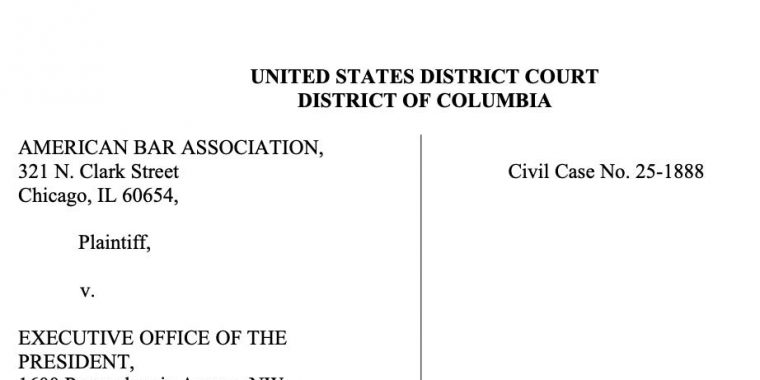
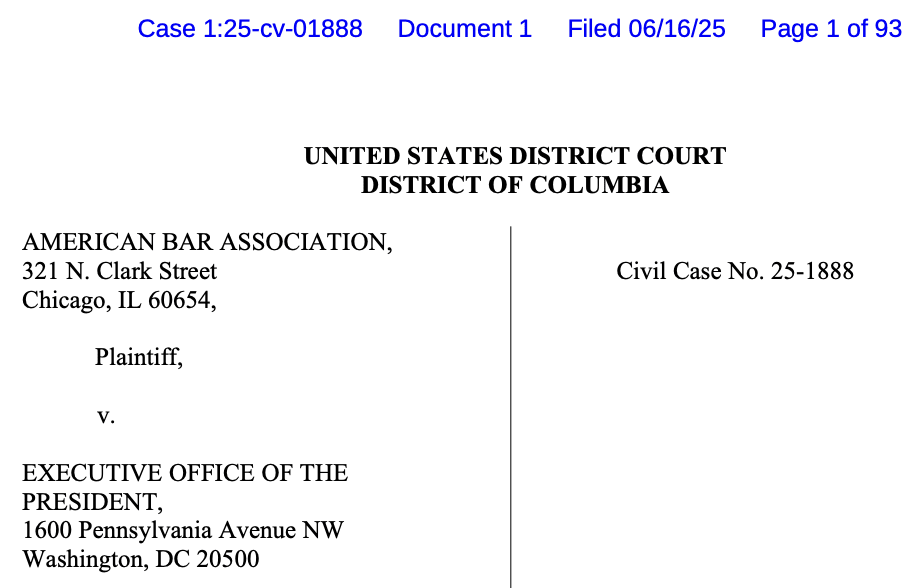
Association
sued
the
Trump
administration
on
Monday,
seeking
an
order
that
would
bar
the
White
House
from
pursuing
what
the
ABA
called
a
campaign
of
intimidation
against
major
law
firms.
The
lawsuit, filed
in
federal
court
in
Washington,
D.C.,
said
the
administration
violated
the
U.S.
Constitution
in
a
series
of
executive
orders
targeting
law
firms
over
their
past
clients
and
lawyers
they
hired.”
Read
more here.
Download
the
complaint here,
and
read
the
ABA’s
press
release
about
the
lawsuit here.
#5“Supreme
Court
Disclosures
Detail
Millions
in
Justices
Book
Payments.” From The
Hill:
“The
Supreme
Court
justices’
annual
financial
disclosures
were
released
Tuesday,
revealing
millions
of
dollars
in
combined
book
payments
to
the
justices
in
2024. JusticeKetanji
Brown
Jackson took
in
the
most, disclosing a nearly
$2.07
million
book
advance
from
Penguin
Random
House,
which
published
her
memoir,
‘Lovely
One,’
in
September.
Jackson
received
nearly
$894,000
the
year
prior.”
Read
more here.
#6“Federal
Judges
are
Powerful.
Some
of
Their
Law
Clerks
Describe
a
Toxic
Work
Culture.” From NPR:
“For
more
than
a
year, NPR
has
investigated
serious
misconduct
in
the
federal
judiciary —
and
how
difficult
it
is
to
hold
judges
accountable.
At
one
end
of
the
spectrum,
we
heard
from
clerks
who
allegedthey
suffered
sexual
assaults,
bullying,
and
pregnancy
discrimination.
But
the
power
imbalance
between
judges
and
their
young
clerks
also
fuels
a
broader,
more
insidious
culture,
where
clerks
are
expected
to
surrender
control
over
nearly
every
aspect
of
their
lives.”
Read
more here.
#7“Michigan
Law
Review
Sued
for
Alleged
Racial,
Sexual
Bias.
School
Vows
Vigorous
Defense.” From
the Detroit
News:
“A
conservative
civil
rights
organization
is
asking
a
federal
judge
to
order
the Michigan
Law
Review Association
to
stop
using
race
and
sex
preferences
to
select
its
members
and
articles
and
appoint
a
court
monitor
to
oversee
future
decisions
by
the
nonprofit.
In
a
lawsuit
filed
Wednesday
in U.S.
District
Court
in
Detroit,
a
group
called
the Faculty,
Alumni,
and
Students
Opposed
to
Racial
Preferences,
or
FASORP,
accused
the
association
for
the
law
journal
of
the University
of
Michigan
Law
School of
excluding
articles
from
conservative
White
students
and
using
race
and
sex
preferences
to
select
its
members
and
articles.
…
The
group
is
suing
on
behalf
of
three
unnamed
White
male,
heterosexual
law
professors
who
have
submitted
articles
to
the
Michigan
Law
Review
in
the
past
and
were
all
rejected.
‘Individuals
A,
B,
and
C
are
unable
to
compete
on
an
equal
basis
with
authors
who
are
women,
racial
minorities,
homosexuals,
or
individuals
who
engage
in
gender-nonconforming
behavior
or
identify
with
a
gender
that
departs
from
their
biological
sex,’
according
to
the
lawsuit.”
Read
more here.
(Full
disclosure:
my
forthcoming
piece
“When
Lawyers
Protest”
will
be
published
by
the
Michigan
Law
Review
in
2026).
#8Legal
Ethics
Scholars
File
Amicus
Brief
in
Villarreal
v.
Texas.
Along
with
several
other
legal
ethics
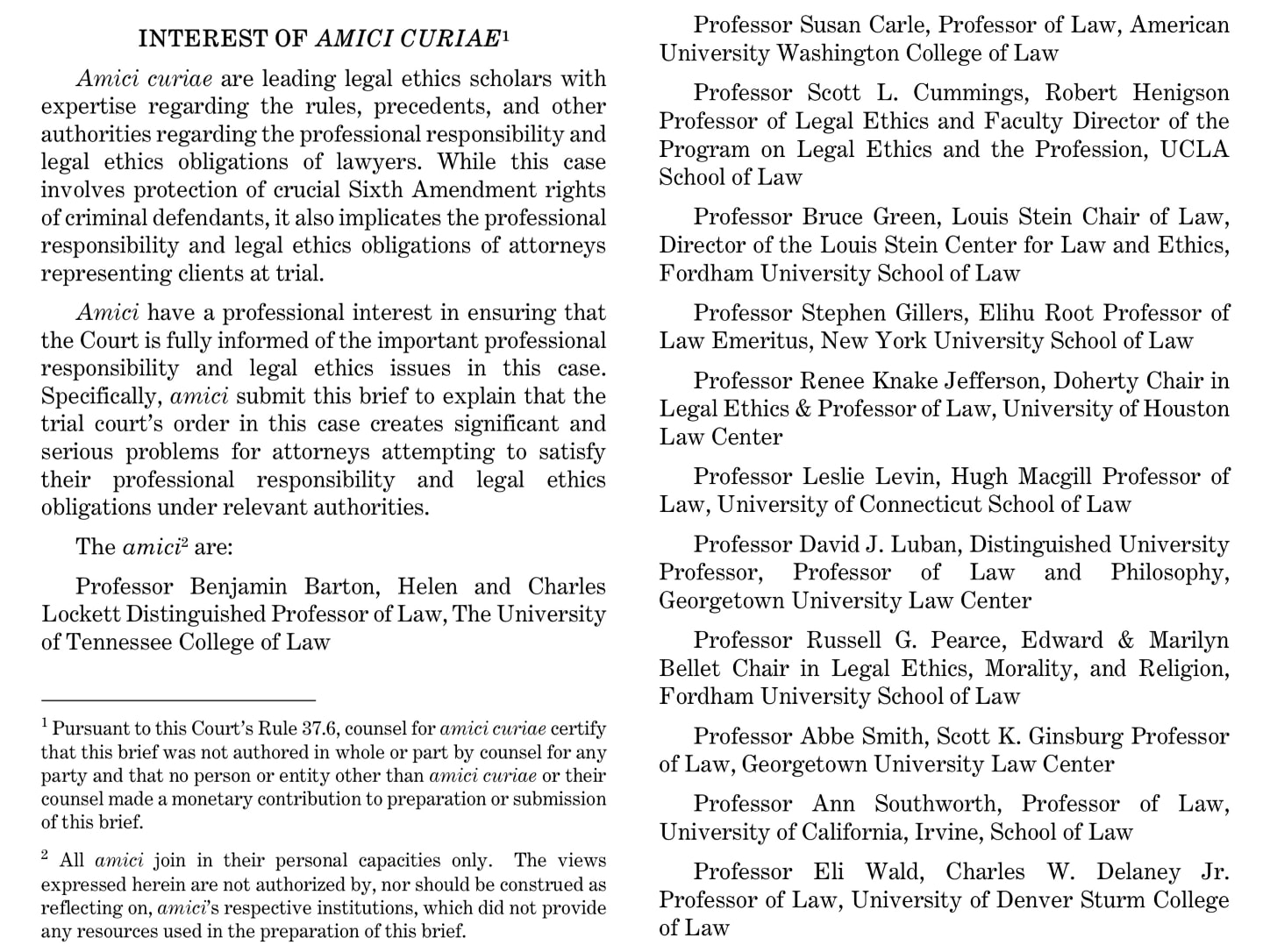
scholars,
I
joined
an
amicus
brief
filed
in Villarreal
v.
Texas,
a
case
the
US
Supreme
Court
will
take
up
during
the
2025
term.
At
issue
is
whether
a
trial
court
violates
a
defendant’s
Sixth
Amendment
right
to
counsel
by
prohibiting
the
defendant
and
his
lawyer
from
discussing
testimony
during
an
overnight
recess.
We
argue
that
a
ban
on
discussions
like
this
jeopardizes
the
lawyer’s
compliance
with
core
professional
responsibilities
and
undermines
attorney-client
privilege
and
the
duty
of
confidentiality.
Read
more
and
download
the
amicus
brief here.
#9The
Ethics
of
Book
Awards,
Law
Course
Titles,
and
Free
Speech. Two
headlines
for
#8. First,
from
the New
York
Times: “A
White
Nationalist
Wrote
a
Law
School
Paper
Promoting
Racist
Views.
It
Won
Him
an
Award.” “Preston
Damsky is
a
law
student
at
the
University
of
Florida.
He
is
also
a
white
nationalist
and
antisemite.
Last
fall,
he
took
a
seminar
taught
by
a
federal
judge
on
‘originalism,’
the
legal
theory
favored
by
many
conservatives
that
seeks
to
interpret
the
Constitution
based
on
its
meaning
when
it
was
adopted.
In
his
capstone
paper
for
the
class,
Mr.
Damsky
argued
that
the
framers
had
intended
for
the
phrase
‘We
the
People,’
in
the
Constitution’s
preamble,
to
refer
exclusively
to
white
people.
…
At
the
end
of
the
semester,
Mr.
Damsky,
29,
was
given
the
‘book
award,’
which
designated
him
as
the
best
student
in
the
class.
According
to
the
syllabus,
the
capstone
counted
the
most
toward
final
grades.
…
The
Trump-nominated
judge
who
taught
the
class, John
L.
Badalamenti,
declined
to
comment
for
this
article,
and
does
not
appear
to
have
publicly
discussed
why
he
chose
Mr.
Damsky
for
the
award.
That
left
some
students
and
faculty
members
at
the
law
school,
considered
Florida’s
most
prestigious,
to
wonder,
and
to
worry:
What
merit
could
the
judge
have
seen
in
it?
…
In
January, Carliss
Chatman,
an
associate
law
professor
at
Southern
Methodist
University,
began
a
stint
as
a
visiting
scholar
at
the
school.
It
was
not
long,
she
said,
before
a
number
of
Black
and
Jewish
students
came
to
her
with
concerns
about
Mr.
Damsky.
Ms.
Chatman
was
struck,
in
part,
by
her
own
experiences
at
the
school
in
contrast
to
Mr.
Damsky’s
award.
She
had
proposed
teaching
a
class
during
her
time
there
called
‘Race,
Entrepreneurship
and
Inequality.’
But
administrators
at
the
law
school
changed
the
name
to
‘Entrepreneurship,
she
said,
before
listing
it
in
the
course
catalog.
…
‘I
just
find
it
fascinating
that
this
student
can
write
an
article,
a
series
of
articles
that
are
essentially
manifestoes,
and
that’s
free
speech,’
Ms.
Chatman
said,
referring
to
Mr.
Damsky,
‘but
my
class
can’t
be
called
‘Race,
Entrepreneurship
and
Inequality.’”
Read
more here (gift
link). Second,
from Josh
Blackman in The
Volokh
Conspiracy: “The
New
York
Times
Launches
An
Unfair
Attack
On
Judge
Badalamenti.” Read
more here.
#10“Pam
Bondi’s
Brother
Overwhelmingly
Defeated
in
Heated
Race
to
Lead
the
D.C.
Bar.” From NPR:
“Employment
attorney Diane
Seltzer has
won
a
closely
watched
contest
to
lead
the
D.C.
Bar
Association,
defeating
securities
lawyer Brad
Bondi in
a
race
with
record
turnout.
Seltzer
tallied
more
than
90
percent
of
the
electronic
vote
with
‘no
issues
or
irregularities’
in
the
voting
system, D.C.
Bar
CEO
Bob
Spagnoletti said
in
a
press
call
Monday.
More
than
38,000
people
voted
in
the
race,
more
than
five
times
as
many
voters
in
a
typical
election,
he
said.
The
race
became
a
microcosm
for
the
clashes
and
pressures
on
the
American
legal
system
this
year,
in
part
because
one
of
the
two
top
candidates
is
the
younger
brother
of Attorney
General
Pam
Bondi.”
Read
more here.
Get
Hired
Did
you
miss
the
150+
job
postings
from
previous
Roundups?
Find
them
all here.
Upcoming
Ethics
Events
&
Other
Announcements
Did
you
miss
an
announcement
from
previous
Roundups?
Find
them
all here.
Keep
in
Touch
News
tips?
Announcements?
Events?A
job
to
post?Reading
recommendations? Email [email protected] –
but
be
sure
to
subscribe
first,
otherwise
the
email
won’t
be
delivered.
Renee
Knake
Jefferson
holds
the
endowed
Doherty
Chair
in
Legal
Ethics
and
is
a
Professor
of
Law
at
the
University
of
Houston.
Check
out
more
of
her
writing
at
the Legal
Ethics
Roundup.
Find
her
on
X
(formerly
Twitter)
at @reneeknake or
Bluesky
at legalethics.bsky.social.
Whenever
we
catch
lawyers
in
the
U.S.
turning
in
court
filings
filled
with
fake
cases
that
ChatGPT
spit
out,
they
earn
a
healthy
round
of
public
ridicule
and,
at
worst,
some
fines.
The
Department
of
Justice
tried
to
consign
people
to
an
El
Salvadoran
slave
camp
based
on
a
fake
Supreme
Court
quote
and
folks
barely
even
noticed.
The
British
legal
system
apparently
isn’t
as
easy
going,
with
a
panel
of
U.K.
judges
suggesting
a
lawyer
might
face
life
in
prison
for
submitting
AI-fabricated
case
law
in
a
civil
action.
If
that
seems
harsh,
just
remember
how
these
people
deal
with
divorce
actions:
It’s
hardcore,
man.
We
can’t
even
agree
to
keep
people
in
prison
for
trying
to
hang
Mike
Pence
and
the
U.K.
is
already
looking
at
disappearing
Edward
V
for
using
Claude
to
write
the
summary
judgment
motion.
To
be
clear,
the
judges
in
the
instant
matter
didn’t
order
junior
barristers
locked
up
in
the
Tower.
They
didn’t
even
explicitly
mention
life
imprisonment,
but
they
did
categorize
fake
cases
as,
in
some
cases,
rising
to
the
level
of
“perverting
the
course
of
justice.”
The
maximum
penalty
for
that
specific
charge?
Life.
In.
Prison.
In
this
case,
“a
90
million
pound
($120
million)
lawsuit
over
an
alleged
breach
of
a
financing
agreement
involving
the
Qatar
National
Bank,”
according
to
the
Associated
Press,
the
filing
managed
to
cite
a
whopping
18
fake
cases.
The
client
informed
the
court
that
the
mistake
was
his
fault
and
not
his
solicitor’s.
Yeah…
except
lawyers
are
supposed
to
check
that
stuff.
Even
if
the
client
is
a
lawyer
—
like
when
former
Trump
fixer
Michael
Cohen
fed
his
attorneys
some
AI
hallucinations
they
then
filed
—
the
first
rule
of
lawyering
is
that
the
client
is
always
(potentially)
wrong.
The
whole
point
of
hiring
representation
is
to
make
sure
the
personally
aggrieved
client
isn’t
going
off
half-cocked.
No
one
is
going
to
jail
over
this
one,
making
the
opinion
more
akin
to
a
U.K.
professional
responsibility
version
of
Scared
Straight.
Fake
cases
in
a
$120
million
civil
dispute
are
not
going
to
fool
anyone
for
long.
Opposing
counsel
will
sniff
those
out
quickly,
so
anyone
larding
up
on
fake
cases
in
a
banking
dispute
is
either
doing
so
unintentionally
or
guilty
by
reason
of
insanity.
The
most
draconian
of
punishments
are
intended
for
the
unscrupulous
actor
trying
to
deliberately
mislead.
And
that’s
the
miscarriage
of
justice
that’s
coming
—
if
it
hasn’t
already
arrived.
Somewhere
out
there,
there’s
a
tenant
representing
themselves
because
attorneys
cost
too
much
and
Legal
Aid
had
its
budget
slashed
to
appease
Elon
Musk,
and
that
poor
soul
is
getting
buried
under
a
tsunami
of
fake
precedent
that
they’ll
never
be
able
to
look
up
and
the
overworked
judge
will
just
rubberstamp.
It
happens.
Worse,
we’re
going
to
hear
the
stories
of
the
unsophisticated
party
trying
to
keep
their
head
above
water
with
ChatGPT
and
not
the
deeper-pocketed
bully
who
can
make
up
cases.
Because
we’ll
catch
the
former
and
the
latter
might
skate
for
a
years
if
the
overwhelmed
justice
system
doesn’t
catch
it.
Maybe
the
U.S.
could
use
a
little
more
professional
fear
before
that
happens.
In-house
lawyers
spend
a
lot
of
time
talking
about
contract
efficiency.
We
run
RFPs
for
CLM
tools,
benchmark
turnaround
times,
build
clause
libraries,
and
explore
AI-powered
review
platforms.
But
there’s
one
thing
we
don’t
talk
about
enough,
even
though
it
might
be
the
most
important
part
of
making
contracts
work
better.
That
thing
is
communication.
In
a
recent
episode
of
Notes
to
My
(Legal)
Self,
legal
consultant
Jeffery
Kruse
shared
a
perspective
every
in-house
team
should
hear.
Legal
operations,
he
said,
is
less
about
tools
and
more
about
how
we
communicate.
And
when
it
comes
to
improving
contracts,
that
message
matters
more
than
ever.
Watch
the
full
interview
here:
Contracts
Aren’t
Legal
Artifacts.
They’re
Business
Messages.
Kruse
believes
legal
teams
often
lose
sight
of
the
real
purpose
of
contracts.
Too
often,
contracts
are
treated
as
formal
legal
documents
instead
of
practical
business
tools.
We
fill
them
with
legalese,
preserve
outdated
formatting,
and
focus
on
risk
over
usability.
But
the
people
reading
and
using
these
contracts
—
sales
reps,
finance
leads,
procurement
teams
==
are
usually
not
lawyers.
When
contracts
are
hard
to
understand,
they
slow
down
the
business.
People
hesitate
to
move
forward.
Questions
pile
up.
Legal
becomes
the
translator,
and
in
the
process,
the
perception
grows
that
legal
is
a
bottleneck
rather
than
a
partner.
What
We
Say
Versus
What
They
Hear
To
help
legal
teams
reset
their
approach,
Kruse
uses
a
framework
called
SEE.
It
stands
for
Simple,
Easy,
and
Effective.
“Simple”
means
using
clear,
everyday
language
that
your
audience
understands.
“Easy”
refers
to
structure
and
flow,
making
sure
the
contract
is
logically
organized
and
not
overwhelming.
“Effective”
means
the
contract
does
what
it
is
supposed
to
do
—
it
helps
the
reader
take
action,
builds
alignment,
or
delivers
clarity.
Many
contracts
fall
short.
A
contract
might
be
technically
accurate,
but
if
a
business
stakeholder
cannot
quickly
understand
what
it
means
or
what
they’re
agreeing
to,
it
is
not
useful.
It
may
even
be
harmful
if
it
creates
confusion
or
delay.
What
This
Means
For
In-House
Legal
Teams
Before
jumping
into
technology
solutions
or
restructuring
workflows,
Kruse
recommends
that
legal
teams
ask
a
few
fundamental
questions.
Who
is
reading
this
contract?
What
do
they
need
to
understand?
Is
the
document
written
in
a
way
that
supports
clear
business
decisions?
Can
someone
without
a
law
degree
follow
what’s
being
said?
Kruse
shared
an
example
of
a
time
he
failed
to
get
buy-in
from
IT
and
finance
for
a
legal
tech
project.
He
realized
afterward
that
he
had
presented
the
problem
in
legal
language,
not
business
terms.
Those
departments
were
willing
to
help,
but
only
once
he
learned
to
speak
in
a
way
that
made
sense
to
them.
Make
Contract
Usability
A
Core
Metric
If
we
agree
that
contracts
are
communication
tools,
then
we
need
new
ways
to
evaluate
them.
Instead
of
just
tracking
legal
risk
or
review
time,
legal
teams
should
consider
metrics
like
how
often
contracts
require
clarification
after
they
are
signed,
how
long
it
takes
for
a
nonlegal
user
to
understand
key
terms,
or
how
much
confidence
other
teams
have
in
the
contract
process.
Kruse
encourages
testing
your
communication
before
rollout.
Share
your
draft
with
one
or
two
trusted
business
colleagues
and
ask
for
their
feedback.
Is
it
easy
to
understand?
Can
they
explain
the
terms
to
someone
else?
These
small
steps
can
prevent
misalignment
and
improve
how
legal
supports
the
business.
What
To
Do
Next
For
legal
leaders,
the
takeaway
is
this.
Contracts
are
not
just
about
legal
protection.
They
are
tools
that
help
the
business
move
forward.
Their
effectiveness
depends
not
only
on
what
is
written,
but
on
how
clearly
the
message
is
delivered.
Before
launching
a
new
playbook,
tech
platform,
or
contract
template,
take
a
moment
to
ask
whether
the
document
is
clear.
Is
the
language
simple?
Is
the
structure
easy
to
navigate?
Will
it
actually
help
someone
do
their
job?
Because
when
people
understand
their
contracts,
they
are
more
likely
to
trust
them.
And
that
is
what
gets
deals
done.
Olga
V.
Mack is
the
CEO
of TermScout,
an
AI-powered
contract
certification
platform
that
accelerates
revenue
and
eliminates
friction
by
certifying
contracts
as
fair,
balanced,
and
market-ready.
A
serial
CEO
and
legal
tech
executive,
she
previously
led
a
company
through
a
successful
acquisition
by
LexisNexis.
Olga
is
also
a Fellow
at
CodeX,
The
Stanford
Center
for
Legal
Informatics,
and
the
Generative
AI
Editor
at
law.MIT.
She
is
a
visionary
executive
reshaping
how
we
law—how
legal
systems
are
built,
experienced,
and
trusted.
Olga teaches
at
Berkeley
Law,
lectures
widely,
and
advises
companies
of
all
sizes,
as
well
as
boards
and
institutions.
An
award-winning
general
counsel
turned
builder,
she
also
leads
early-stage
ventures
including Virtual
Gabby
(Better
Parenting
Plan), Product
Law
Hub, ESI
Flow,
and Notes
to
My
(Legal)
Self,
each
rethinking
the
practice
and
business
of
law
through
technology,
data,
and
human-centered
design.
She
has
authored The
Rise
of
Product
Lawyers, Legal
Operations
in
the
Age
of
AI
and
Data, Blockchain
Value,
and Get
on
Board,
with Visual
IQ
for
Lawyers (ABA)
forthcoming.
Olga
is
a
6x
TEDx
speaker
and
has
been
recognized
as
a
Silicon
Valley
Woman
of
Influence
and
an
ABA
Woman
in
Legal
Tech.
Her
work
reimagines
people’s
relationship
with
law—making
it
more
accessible,
inclusive,
data-driven,
and
aligned
with
how
the
world
actually
works.
She
is
also
the
host
of
the
Notes
to
My
(Legal)
Self
podcast
(streaming
on Spotify, Apple
Podcasts,
and YouTube),
and
her
insights
regularly
appear
in
Forbes,
Bloomberg
Law,
Newsweek,
VentureBeat,
ACC
Docket,
and
Above
the
Law.
She
earned
her
B.A.
and
J.D.
from
UC
Berkeley.
Follow
her
on LinkedIn and
X
@olgavmack.
Perkins
Coie
was
one
of
the
very
first
firms
that
Donald
Trump
issued
a
retaliatory
executive
order
against,
punishing
its
lawyers
for
the
crime
of
representing
the
president’s
perceived
enemies:
Democrats.
In
its
suit
against
Trump,
Perkins
Coie
noted
that
thanks
to
the
executive
order,
its
ability
to
operate
as
a
legal-services
business
had
been
put
under
“direct
and
imminent
threat.”
Indeed,
the
firm
—
which
brought
in
$1,259,320,000
gross
revenue
in
2024,
putting
it
at
No.
47
on
the
Am
Law
100
—
seemed
worried
that
the
order
would
hurt
its
bottom
line.
Although
Trump’s
EO
was
later
found
to
be
unconstitutional,
we
may
now
have
some
tangible
fallout
from
the
hit
job,
as
multiple
sources
are
reporting
that
Perkins
Coie
has
conducted
layoffs.
According
to
our
sources,
staff
layoffs
took
place
at
the
firm
last
week,
and
as
noted
on
Fishbowl,
members
of
Perkins
Coie’s
business
professionals
team
have
been
hit
the
hardest.
Tipsters
tell
Above
the
Law
that
5%
of
the
firm’s
professional
staff
were
let
go,
and
that
morale
is
at
a
“low
point,”
as
some
reportedly
discovered
that
they
were
on
the
chopping
block
before
official
notices
were
sent
out.
We
reached
out
to
the
firm
for
comment
on
the
layoffs,
and
received
the
following
statement
from
a
Perkins
Coie
spokesperson:
We
recently
implemented
scheduled
changes
to
our
business
professional
workforce
to
better
align
with
the
firm’s
operational
needs.
These
changes,
which
reflect
the
firm’s
long-term
strategic
goals
and
incorporate
best
practices
from
across
the
industry,
affect
approximately
5%
of
our
business
professional
workforce.
This
decision
was
informed
by
a
firmwide
review
over
the
last
year
and
aligns
with
our
commitment
to
client
service
and
operational
excellence.
Best
of
luck
to
those
at
Perkins
Coie
who
recently
lost
their
jobs.
If
your
firm
or
organization
is
reducing
the
ranks
of
its
lawyers
or
staff,
whether
through
deferrals,
open
layoffs,
stealth
layoffs,
or
voluntary
buyouts,
please
don’t
hesitate
to
let
us
know.
Our
vast
network
of
tipsters
is
part
of
what
makes
Above
the
Law
thrive.
You
can email
us or
text
us
(646-820-8477).
Thank
you
for
your
assistance.
If
you’d
like
to
sign
up
for
ATL’s
Layoff
Alerts,
please
scroll
down
and
enter
your
email
address
in
the
box
below
this
post.
If
you
previously
signed
up
for
the
layoff
alerts,
you
don’t
need
to
do
anything.
You’ll
receive
an
email
notification
within
minutes
of
each
layoff
announcement
that
we
publish.
Staci
Zaretsky is
a
senior
editor
at
Above
the
Law,
where
she’s
worked
since
2011.
She’d
love
to
hear
from
you,
so
please
feel
free
to
email
her
with
any
tips,
questions,
comments,
or
critiques.
You
can
follow
her
on Bluesky, X/Twitter,
and Threads, or
connect
with
her
on LinkedIn.
Vault
recently
released
its
closely
watched
rankings
of the
nation’s
100
most
prestigious
law
firms.
It
was
there
that
we
learned
Cravath
has
held
onto
its
title
as
the
most
prestigious
firm
in
America
for
a
decade,
and
that
the
top
firms
saw
some
interesting
changes
(including
one
major
firm
entering
the
Top
10
for
the
first
time
ever).
But
what
if
your
firm
wasn’t
top-ranked
in
the
Vault
100?
Perhaps
your
firm
isn’t
the
most
prestigious,
but
that
doesn’t
mean
it
doesn’t
have
clout.
Some
law
firms
reign
supreme
when
it
comes
to
certain
practice
areas,
and
others
are
known
to
dominate
entire
regions
of
the
country.
Which
law
firms
are
considered
to
be
at
the
top
of
their
game
by
practice
area
and
region?
Let’s
find
out!
For
the
purposes
of
the
practice
area
ranking,
Vault
asked
associates
to
vote
for
up
to
three
firms
they
think
of
as
the
strongest
in
their
own
practice
area,
and
the
overall
ranking
indicates
the
firms
that
received
the
highest
percentage
of
votes.
Associates
were
not
allowed
to
vote
for
their
own
firm.
Pay
attention,
prospective
laterals,
because
this
ranking
could
be
quite
useful
for
you.
We’ve
picked
out
a
dozen
of
the
practice
areas
that
were
ranked
by
Vault
(you
can
see
the
full
list
by
clicking here):
General
Corporate
Practice:
Wachtell
Lipton
(replacing
Kirkland
&
Ellis)
Intellectual
Property:
Fish
&
Richardson
International:
White
&
Case
Labor
and
Employment:
Littler
Mendelson
Private
Equity:
Kirkland
&
Ellis
Real
Estate:
Gibson
Dunn
Securities/Capital
Markets:
Davis
Polk
Tax:
Skadden
Next
up,
we’ve
got
a
ranking
that
matters
to
those
who
think
“location,
location,
location”
is
the
most
important
thing
in
life.
Vault’s
regional
rankings
are
based
on
votes
tabulated
from
associates
who
were
asked
to
rate
firms
on
a
1
to
10
scale
based
on
their
prestige
within
the
region.
Here’s
the
list
of
prestige
by
region
from
Vault
(you
can
see
the
full
list here):
South
Atlantic:
Alston
&
Bird
(replacing
King
&
Spalding)
Southern
California:
Latham
&
Watkins
Texas:
Vinson
&
Elkins
Washington,
DC:
Covington
&
Burling
Congratulations
to
the
firms
that
moved
up
in
this
year’s
practice
area
and
regional
rankings,
and
congratulations
to
all
the
firms
that
made
the
cut
in
the
first
place.
It
must
be
nice
to
see
which
firms
associates
consider
as
their
peers
in
prestige,
and
it
must
be
even
nicer
for
partners
to
know
whose
pricing
models
they
need
to
undercut
the
next
time
around.
Staci
Zaretsky is
a
senior
editor
at
Above
the
Law,
where
she’s
worked
since
2011.
She’d
love
to
hear
from
you,
so
please
feel
free
to
email
her
with
any
tips,
questions,
comments,
or
critiques.
You
can
follow
her
on Bluesky, X/Twitter,
and Threads, or
connect
with
her
on LinkedIn.





 Kathryn