According
to
an
internal
police
memo
seen
by ZimLive,
the
robbery
occurred
at
around
12.20
AM
along
Northolt
Road,
near
Divaris
Makaharis
School
in
the
Mabelreign
area.
Inspector
Magidi,
Constable
Chihanga,
and
Constable
Nyamushamba
were
on
stationary
patrol
when
three
men
wearing
black
balaclavas
emerged
from
the
darkness
armed
with
a
claw
bar
and
a
high-powered
torch.
“Suddenly,
three
male
adults
wearing
black
balaclavas
appeared
in
front
of
the
car
armed
with
a
claw
bar
and
a
high-powered
torch,”
reads
the
memo.
Inspector
Magidi
ordered
Constable
Chihanga
to
open
fire,
but
when
Chihanga
attempted
to
shoot
through
the
window,
the
rifle
jammed.
The
robbers
smashed
the
windscreen
and
surrounded
the
car.
Nyamushamba
managed
to
get
out
but
was
hit
on
the
shoulder.
Magidi
tried
to
fight
back
but
was
struck
on
the
forehead
with
a
brick
and
collapsed.
Chihanga
fought
his
way
out,
hitting
one
of
the
attackers
with
the
rifle
butt,
but
was
then
beaten
on
the
head
with
the
claw
bar.
The
gang
grabbed
the
rifle
and
its
magazine,
jumped
into
the
officers’
white
Nissan
Tiida
(ACS
1584),
and
sped
off.
All
three
officers
were
rushed
to
Parirenyatwa
Hospital,
where
they’re
said
to
be
in
stable
condition.
Police
are
now
hunting
the
suspects
and
trying
to
recover
the
stolen
car,
rifle,
and
the
two
phones
–
a
Samsung
A15
and
a
Tecno
10.
Bulawayo
Mayor,
Councillor
David
Coltart,
along
with
several
councillors,
openly
opposed
the
extension,
arguing
that
the
local
authority
needed
a
different
administrative
direction.
However,
in
correspondence
sent
to
Mayor
Coltart,
the
Local
Government
Board
said
it
had
approved
the
extension
after
considering
the
city’s
submission.
“Reference
is
made
to
council
correspondences
dated
15
December
2025
and
14
January
2026,”
reads
the
letter.
“The
Local
Government
Board,
through
resolution
number
LGB
01126
approved
the
resolution
of
council,
which
states
that;
the…
Town
Clerk’s
existing
contract,
which
terminates
on
the
30th
November,
2025,
be
extended
for
one
year
to
30th
November,
2026,
on
existing
conditions
and
that
the
Town
Clerk’s
contract
be
extended
by
a
further
four
years
from
1
December
2026.
Please
be
guided
accordingly.”
Dube
has
served
as
Bulawayo’s
Town
Clerk
since
1
October
2016,
having
moved
from
the
Municipality
of
Victoria
Falls,
where
he
held
the
same
position.
He
succeeded
the
late
Middleton
Nyoni.
Yale
Fail:
Yale’s
two-decade
stranglehold
on
the
No.
1
law
school
ranking
ends
in
a
rankings
shakeup.
Well,
at
least
they
have
JD
Vance
—
another
famous
second
banana!
Feel
Free
To
Let
The
Screen
Door
Hit
You
On
The
Way
Out:
Pam
Bondi’s
tenure
as
Attorney
General
ends
just
in
time
for
a
bar
disciplinary
investigation,
unless
Florida
invents
another
reason
to
absolve
Bondi
of
accountability
for
her
actions.
Epstein,
Who?:
Meanwhile,
Bondi
hopes
to
use
her
firing
to
get
out
of
explaining
the
Epstein
files
to
Congress.
The
Annual
“Which
Gilded
Cage
Is
Most
Prestigious”
Survey:
Vault
again
ranks
the
100
most
prestigious
law
firms
in
America.
Trolls
Gonna
Troll:
Law
school
Federalist
Society
chapter
invites
Amy
Wax
to
share
her
thoughts
about
the
problem
with
women
and
minorities.
Diploma
With
A
Two-Drink
Minimum:
Georgetown
Law
replaces
its
graduation
gala
with
a
school
happy
hour
and
many
students
aren’t
happy.
Time
Is
Relative,
Especially
On
A
Timesheet:
Lawyer
bills
more
hours
than
exist
in
a
calendar
day,
professional
hilarity
ensues.
The
More
It
Smiles,
The
More
You
Should
Worry:
Legal
AI
tools
optimized
for
user
satisfaction
are
also
the
ones
most
likely
to
confidently
hallucinate
a
fake
circuit
court
opinion.
The
USFL
Never
Died,
It
Just
Became
Federal
Policy:
Trump
deploys
the
DOJ
against
the
NFL
over
grievances
that
predate
most
of
his
current
staff,
because
using
the
justice
system
as
a
personal
grudge
machine
apparently
has
no
statute
of
limitations.
The
Pentagon’s
Legal
Battles
Going
About
As
Well
As
Iran:
The
Defense
Department
benchslapped
over
press
policy.
Constitutional
coup:
Zimbabwe
citizens
are
not
being
consulted,
they
are
being
coerced.
Photo:
Supplied
Zimbabwe’s
Constitutional
Amendment
Bill
No
3
(CAB3)
is
not
reform
but
regression;
it
is
the
architecture
of
authoritarian
permanence
masquerading
as
progress.
The
bill
is
presented
by
Zanu-PF
as
a
modernising
reform,
yet
in
truth
it
is
a
constitutional
coup
unfolding
in
slow
motion.
What
is
being
advanced
is
not
renewal
but
regression
—
a
calculated
project
of
entrenchment,
cloaked
in
the
rhetoric
of
democracy
but
executed
through
violence,
intimidation
and
exclusion.
CAB3
is
less
a
reform
package
than
a
firewall
against
generational
change,
a
flag
planted
defiantly
in
the
soil
of
authoritarian
continuity.
The
hearings
have
been
anything
but
participatory;
they
have
descended
into
a
theatre
of
coercion.
In
Chitungwiza,
men
were
reportedly
assaulted
on
camera
simply
for
voicing
dissent,
while
civil
society
groups
and
eyewitnesses
allege
that
some
individuals
vanished
after
opposing
the
bill.
Police
reportedly
stood
idle,
complicit
in
the
silencing
of
dissent,
as
known
critics
were
denied
even
the
microphone.
This
is
not
consultation;
it
is
intimidation
masquerading
as
dialogue.
A
constitution
rewritten
under
duress,
with
cracked
ribs
and
missing
citizens
as
its
backdrop,
is
illegitimate
in
spirit
even
if
sanctified
in
law.
The
legitimacy
crisis
is
profound.
A
constitutional
amendment
ought
to
embody
the
highest
expression
of
collective
will,
yet
CAB3
is
being
forced
through
as
a
top-down
imposition.
Citizens
are
not
being
consulted;
they
are
being
coerced.
The
violence
at
hearings
is
not
incidental;
it
is
symptomatic
of
a
broader
authoritarian
drift,
a
deliberate
strategy
to
hollow
out
participatory
governance
and
replace
it
with
fear.
Against
this
backdrop
of
coercion,
civil
society
and
opposition
leaders
have
mounted
a
resistance
that
is
both
commendable
and
fearless.
Figures
such
as
Fadzai
Mahere,
Tendai
Biti,
Douglas
Coltart,
Jacob
Ngarivhume,
Jameson
Timba
and
others
have
stood
resolute,
boycotting
hearings
and
exposing
the
stage-managed
charade
for
what
it
is.
Their
courage
reminds
us
that
constitutionalism
is
not
defended
in
marble
halls
or
sterile
chambers
but
in
the
streets,
in
the
voices
of
ordinary
citizens
who
refuse
to
be
silenced.
Civil
society
organisations
have
demanded
the
suspension
of
hearings
until
transparency
and
safety
are
guaranteed.
Their
insistence
on
participatory
governance
underscores
a
profound
truth:
democracy
is
not
a
benevolence
dispensed
by
the
state
but
a
covenant
claimed
by
the
people.
Yet
Nelson
Chamisa’s
absence
looms
large,
conspicuous
to
the
point
of
indictment.
It
speaks
less
of
tactical
restraint
than
of
apathy
or
indifference
to
the
travails
and
aspirations
of
his
followers.
In
moments
of
constitutional
peril,
silence
is
complicity.
His
withdrawal
weakens
the
opposition’s
moral
force
and
leaves
civil
society
to
shoulder
the
burden
of
resistance
alone,
a
reminder
that
leadership
is
measured
not
in
rhetoric
but
in
presence
when
the
stakes
are
highest.
CAB3
is
not
an
isolated
aberration
but
part
of
a
continental
pattern
of
constitutional
capture.
It
mirrors
Uganda’s
scrapping
of
term
limits
in
2005
and
2017,
Rwanda’s
2015
referendum
that
extended
Paul
Kagame’s
rule
and
Cameroon’s
2008
removal
of
limits
that
entrenched
Paul
Biya’s
decades-long
presidency.
Each
of
these
cases
demonstrates
how
legal
frameworks
are
manipulated
not
to
expand
rights
but
to
entrench
ruling
elites,
bending
constitutions
into
instruments
of
permanence
rather
than
renewal.
Zimbabwe
now
joins
this
ignoble
club,
where
the
language
of
reform
is
weaponised
to
mask
regression.
This
continental
drift
is
dangerous
because
it
signals
a
broader
erosion
of
democratic
norms
across
Africa,
where
authoritarianism
advances
not
through
overt
coups
but
through
the
slow,
deliberate
rewriting
of
constitutions.
CAB3
is
thus
less
a
reform
package
than
a
reminder
that
the
most
enduring
threats
to
democracy
often
arrive
clothed
in
legality,
eroding
accountability
while
entrenching
power
under
the
guise
of
constitutional
change.
CAB3
strikes
at
the
very
heart
of
the
separation
of
powers
enshrined
in
Zimbabwe’s
2013
Constitution,
dismantling
the
delicate
balance
between
the
executive,
legislature
and
judiciary.
Judicial
appointments
are
to
be
further
politicised,
parliamentary
independence
hollowed
out
and
presidential
authority
dangerously
expanded.
The
proposed
shift
to
parliamentary
election
of
presidents,
presided
over
by
a
chief
justice
already
beholden
to
executive
prerogative,
is
a
cynical
stratagem
designed
to
strip
citizens
of
direct
electoral
accountability.
What
is
presented
as
reform
is
in
fact
regression:
citizens
will
cast
their
votes
for
MPs,
who
in
turn
will
select
the
president
in
a
process
already
compromised
by
ruling
party
dominance.
The
judiciary,
itself
compromised
by
decades
of
executive
influence,
will
preside
over
this
charade,
lending
a
veneer
of
legality
to
what
is
essentially
the
erosion
of
democratic
choice.
CAB3
is
not
a
renewal
of
constitutional
order
but
its
corrosion;
it
is
the
architecture
of
authoritarian
permanence,
constructed
brick
by
brick
under
the
guise
of
reform.
The
risks
posed
by
CAB3
are
neither
abstract
nor
distant;
they
are
immediate,
visceral
and
corrosive
to
Zimbabwe’s
fragile
democratic
order.
The
violent
hearings
have
already
delegitimised
the
bill,
exposing
it
as
a
top-down
imposition
rather
than
a
genuine
exercise
in
participatory
reform.
Intimidation
and
disruption
have
undermined
the
constitutional
guarantees
of
free
expression
and
assembly,
reducing
citizens
to
spectators
in
a
process
that
should
belong
to
them.
Each
incident
of
violence
deepens
mistrust
between
government
and
civil
society,
widening
the
fracture
lines
of
political
polarisation
and
eroding
the
possibility
of
consensus.
These
are
not
isolated
excesses
but
deliberate
strategies
of
authoritarian
consolidation.
Left
unchecked,
they
threaten
to
unravel
the
modest
democratic
gains
of
the
past
decade
and
entrench
a
system
in
which
power
is
preserved
not
by
consent
but
by
coercion,
ensuring
that
authoritarian
rule
is
carried
forward
for
generations
to
come.
CAB3’s
proposals
are
sweeping
in
scope
and
profoundly
dangerous
in
consequence.
By
eliminating
direct
presidential
elections
in
2028
and
relocating
them
to
parliamentary
chambers,
the
bill
strips
citizens
of
their
most
fundamental
democratic
choice.
Presidential
terms
are
to
be
extended
to
seven
years,
with
Emmerson
Mnangagwa’s
current
tenure
lengthened
by
two,
while
parliament
and
local
government
terms
are
similarly
prolonged,
consolidating
the
dominance
of
ruling
elites
and
insulating
them
from
accountability.
Traditional
leaders,
once
expected
to
embody
neutrality,
are
now
openly
politicised,
further
eroding
the
fragile
balance
of
representation.
The
Zimbabwe
Electoral
Commission
is
disempowered,
its
authority
over
boundaries
and
the
voters’
roll
transferred
to
commissions
operating
at
the
prerogative
of
the
presidency.
Judicial
independence
is
hollowed
out
as
presidential
appointments
go
unchecked,
while
the
military’s
constitutional
role
is
diluted
from
upholding
the
Constitution
to
merely
“acting
in
accordance
with”
it
—
a
subtle
but
perilous
redefinition
that
weakens
its
obligation
to
defend
democratic
order.
Taken
together,
these
measures
do
not
constitute
reform
but
regression;
they
are
the
deliberate
construction
of
authoritarian
permanence,
a
constitutional
edifice
designed
to
preserve
power
indefinitely
under
the
guise
of
legality.
The
corrective
path
is
not
simply
the
rejection
of
CAB3
but
the
reclamation
of
constitutionalism
as
a
living
covenant
between
citizens
and
the
state.
Zimbabwe
must
resist
the
continental
drift
towards
constitutional
capture,
where
constitutions
are
manipulated
into
instruments
of
permanence
and
instead
anchor
renewal
in
participatory
governance.
This
means
re-establishing
the
Constitution
as
a
framework
of
accountability,
not
a
weapon
of
entrenchment
and
restoring
it
as
the
people’s
charter
rather
than
the
ruling
elite’s
shield.
The
best
outcome
is
one
that
safeguards
the
democratic
architecture
rather
than
dismantles
it.
Term
limits
must
be
preserved
as
the
ultimate
check
against
indefinite
incumbency.
The
separation
of
powers
must
be
reinforced
so
that
the
judiciary
and
legislature
can
stand
as
genuine
counterweights
to
executive
authority.
Consultation
must
be
inclusive
and
free
from
violence,
ensuring
that
every
citizen
and
civic
group
can
participate
without
fear.
Above
all,
civic
trust
must
be
restored
so
that
constitutional
reform
is
seen
not
as
a
partisan
project
but
as
a
collective
undertaking
in
service
of
the
people.
To
achieve
this,
decisive
steps
must
be
taken.
CAB3
must
be
challenged
in
the
Constitutional
Court,
framed
as
a
violation
of
the
spirit
of
the
2013
Constitution.
Evidence
of
violence
and
intimidation
must
be
documented
and
exposed
to
regional
and
international
bodies,
ensuring
that
Zimbabwe’s
crisis
is
not
hidden
but
scrutinised.
The
opposition
must
build
a
unified
front,
hosting
alternative
citizens’
hearings
that
reflect
genuine
public
opinion.
Grassroots
dialogues
must
be
mobilised
in
provinces
such
as
the
Midlands,
linking
constitutional
critique
to
tangible
socio-economic
needs
like
housing
and
infrastructure
reform.
Finally,
reforms
must
be
advanced
that
decentralise
power
and
entrench
civic
protections,
ensuring
that
no
future
amendment
can
be
weaponised.
CAB3
is
not
reform
but
a
regression
all
Zimbabweans
must
resist,
not
only
for
the
sake
of
the
present
but
for
generations
to
come.
Wellington
Muzengeza
is
a
political
risk
analyst
and
urban
strategist
offering
insight
on
urban
planning,
infrastructure,
leadership
succession
and
governance
reform
across
Africa’s
evolving
post-liberation
urban
landscapes.
Zimbabwe’s
ruling
party,
Zanu-PF,
is
pushing
the
reforms
after
publishing
them
in
February
and
holding
public
consultations
at
the
end
of
March.
They
would
extend
presidential
and
parliamentary
terms
from
five
to
seven
years,
and
scrap
the
direct
popular
vote
for
the
presidency,
instead
giving
members
of
parliament
the
power
to
choose
the
head
of
state.
“The
changes
will
morph
the
country
into
a
one-party
state
system
of
governance
which
former
President Mugabe attempted
to
do,”
Blessing
Vava,
head
of
a
regional
civil
society
coalition
on
democracy
and
accountability,
told
RFI.
Mnangagwa,
83,
who
has
been
serving
his
second
term
since
2023,
would
also
gain
a
two-year
extension
beyond
his
current
2028
mandate
if
the
changes
are
approved.
Rushed
consultation
The
way
the
reforms
have
been
handled
has
also
drawn
criticism.
Under
Zimbabwe’s
2013
constitution,
amendments
must
go
through
a
90-day
public
consultation
period
before
being
formally
introduced
in
parliament.
But
in
this
case,
public
hearings
were
delayed
and
then
compressed
into
just
four
days,
from
30
March
to
2
April.
“It’s
delayed
weeks
and
weeks
and
weeks.
And
then…it
has
confined
the
hearings
to
a
period
of
four
days…
from
Monday
through
to
Thursday.
It
has
been
wholly
inadequate,”
said
David
Coltart,
mayor
of
Bulawayo
and
a
founding
member
of
the
opposition
Movement
for
Democratic
Change
party.
Coltart,
who
is
also
a
human
rights
and
constitutional
lawyer,
pointed
to
reports
of
intimidation
and
violence
around
the
process.
He
cited
the
arrest
of
Tendai
Biti,
leader
of
the
Constitutional
Defenders
Forum,
last
month
in
Mutare.
He
also
referred
to
the
case
of
his
son,
Doug
Coltart,
who
was
beaten
during
a
hearing
in
the
capital
Harare,
and
to
opposition
leader
Lovemore
Madhuku,
who
was attacked
and
hospitalised
earlier
in
March.
Violence
and
power
Supporters
of
the
reforms
say
the
changes
could
reduce
election-related
violence.
Zimbabwe has
a
history
of
political
violence during
elections,
including
incidents
in
2018
and
2023.
A
United
States
government human
rights report on
the
2023
elections
said
journalists
reported
attacks
on
opposition
members,
foreign
diplomats
and
journalists,
and
manipulation
of
online
debate.
“The
reason
I
am
in
favour
of
the
Constitutional
Amendment
Bill
3
is
that
we
are
facing
serious
challenges
every
time
elections
take
place,”
said
Edith
Matsambi,
a
supporter
from
Mashonaland
Central,
speaking
at
public
hearings
on
the
reforms.
“So
the
president
should
continue
in
office
for
longer,
even
up
to
10
years.”
Another
supporter
told
the
news
channel
Al
Jazeera
that
indirect
elections
could
help
reduce
tensions.
“Every
time
we
have
presidential
elections,
there
is
a
lot
of
violence.
However,
if
we
elect
the
MPs
and
the
MPs
elect
the
president,
it
will
help
us
a
lot,”
the
supporter
said.
But
critics
say
the
changes
could
instead
concentrate
power.
“I
have
absolutely
no
doubt
that
Zanu-PF
would
use
its
majority,
and
the
MPs
who’ve
been
infiltrated,
to
get
a
two-thirds
majority,”
Coltart
told
RFI.
Civicus,
a
global
civil
society
alliance,
also
criticised
the
proposed
voting
changes,
saying
they
would
remove
democratic
legitimacy
from
the
presidency.
Safeguards
at
risk
The
reforms
would
change
key
protections
introduced
in
2013.
That
constitution,
approved
by
94.5
percent
of
voters
in
a
referendum,
limited
presidents
to
two
five-year
terms
and
aimed
to
prevent
long-term
rule.
It
followed
the
end
of
Robert
Mugabe’s
37-year
presidency
by
a
military
coup
in
2017.
While
celebrated
for
leading
the
country
(then
called
Rhodesia)
to
independence
from
the
United
Kingdom
in
1980,
Mugabe’s
rule
was
marked
by
tyranny
and
corruption,
the
crushing
of
political
dissent
and
policies
that
ruined
the
country’s
economy.
Since
then,
critics
say
some
of
those
safeguards
have
been
weakened.
Zanu-PF
has
already
removed
public
interviews
for
senior
judicial
appointments.
A
further
amendment
in
2021
removed
interviews
for
judicial
promotions
and
for
the
prosecutor
general.
Coltart
said
the
latest
proposed
changes
would
go
further.
“These
amendments
have
the
effect
of
consolidating
power
in
the
hands
of
the
president.
He’s
now
given
additional
powers
to
nominate
judges,
to
nominate
those
who
prepare
the
voters’
roll
to
nominate
senators,”
he
said.
“And
there
are
a
variety
of
other
provisions
going
beyond
the
mere
extension
of
the
term
of
office
which
go
back
to
the
very
darkest
days
of
Mugabe’s
rule
in
the
1980s
and
1990s.”
Referendum
doubts
Under
the
constitution,
changes
affecting
a
sitting
president’s
term
require
a
national
referendum
after
passing
parliament.
Coltart
said
he
does
not
expect
one
to
be
held.
Vava
said
the
ruling
party
may
still
proceed,
but
warned
of
the
risks.
“Firstly,
Zanu-PF
is
trying
all
systems
out
to
evade
the
referendum
but
they
also
know
that
doing
so
will
be
a
tough
hurdle,
they
may
succeed
but
their
legitimacy
will
be
on
the
wire,”
Vava
said.
If
the
reforms
are
approved,
Coltart
said
opponents
could
challenge
them
in
the Constitutional
Court.
“That
will
have
to
come
before
the
Constitutional
Court,
and
it
is
the
only
means
that
we
have
at
our
disposal
to
contest
it.”
This
action
represents
a
blatant
violation
of
the
Constitution
and
an
affront
to
civil
democracy,
in
which
diverse
viewpoints
contribute
to
the
nation’s
well-being.
The
decision,
announced
in
a
press
statement
from
Martin
Rushwaya,
the
Chief
Secretary
to
the
Cabinet,
raises
significant
concerns
about
potential
breaches
of
constitutional
procedures.
It
also
confirms
long-held
fears
about
the
emergence
of
an
overly
powerful
presidency,
which
has
been
characterised
as
“Munhumutapa
III.”
In
the
statement
issued
by
Rushwaya,
it
was
revealed
that
Ms.
Majome
has
been
abruptly
reassigned
to
the
Public
Service
Commission,
effective
immediately.
This
decision
appears
to
be
a
retaliatory
measure
against
the
ZHRC’s
recent
report
on
the
chaotic
Public
Hearings
concerning
the
controversial
Amendment
Number
3
Bill,
which
aims
to
unlawfully
extend
Mnangagwa’s
term
of
office.
Importantly,
Ms.
Majome’s
removal
did
not
adhere
to
the
due
process
outlined
in
Sections
237,
187
of
the
Zimbabwean
Constitution.
The
sections
clearly
mandates
that
the
president
must
appoint
an
independent
tribunal
to
carry
out
a
thorough
inquiry
into
any
alleged
misconduct
before
proceeding
with
such
removals.
By
bypassing
this
legal
requirement,
the
integrity
of
the
commission
is
undermined,
raising
serious
questions
about
the
rule
of
law
in
Zimbabwe.
ZICOMO
is
particularly
alarmed
by
what
appears
to
be
a
pattern
of
disregard
for
the
country’s
legal
framework
by
President
Mnangagwa,
who
seems
to
be
exceeding
his
constitutional
authority
by
silencing
dissenting
voices
that
challenge
his
governance
and
policies.
Furthermore,
we
believe
the
current
mismanagement
of
the
country’s
politics
and
economy
is
being
led
by
an
unelected
cartel
that
has
gained
so
much
power
that
even
ZANU
PF
appears
to
be
captured.
This
action
serves
as
a
troubling
indicator
of
the
potential
future
under
the
so-called
Munhumutapa
III,
should
the
Bill
be
passed,
despite
its
illegality.
Under
Ms.
Majome’s
leadership,
the
ZHRC
has
demonstrated
a
commendable
commitment
to
advocating
for
and
protecting
the
human
rights
of
all
Zimbabweans.
The
commission
has
courageously
held
the
government
accountable
for
its
actions.
In
light
of
these
events,
ZICOMO
calls
for
the
immediate
reinstatement
of
Ms.
Majome
to
her
former
position
and
firmly
demands
the
establishment
of
an
independent
tribunal
to
investigate
any
allegations
of
misconduct
during
her
tenure.
Such
actions
are
essential
not
only
to
uphold
the
rule
of
law
but
also
to
reinforce
the
importance
of
human
rights
in
Zimbabwe.
We
conclude
by
mobilising
all
Zimbabweans—including
war
veterans,
students,
women,
faith-based
movements,
and
those
within
ZANU
PF—to
reject
this
political
and
economic
capture
by
a
predatory
cartel.
As
Zimbabwe
approaches
the
46th
anniversary
of
its
independence
on
April
18,
we
call
upon
all
citizens
to
reflect
on
this
assault
on
our
hard-won
freedoms
and
to
be
prepared
to
restore
constitutionalism
in
Zimbabwe.
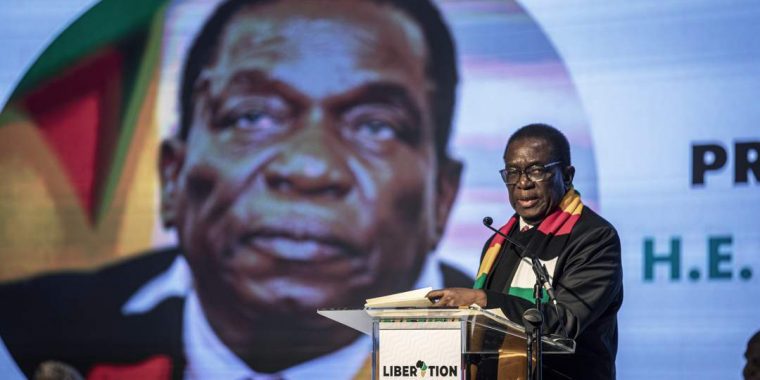
The
government
of
Zimbambwe
has
ordered
local
authorities
to
buy
President
Emmerson
Mnangagwa
biography
to
be
distributed
in
libariers
and
schools
nationwide.
Per-Anders
Pettersson/Getty
Images
Zimbabwe’s
government
has
directed
local
authorities
to
buy
President
Mnangagwa’s
biography, A
Life
of
Sacrifice,
for
schools
and
communities.
Critics
view
the
move
as
an
attempt
to
bolster
Mnangagwa’s
image
amid
efforts
to
extend
his
presidency.
The
book,
written
by
Eddie
Cross,
highlights
Mnangagwa’s
role
in
the
liberation
struggle
and
has
been
translated
into
major
Zimbabwean
languages.
John
Basera,
the
permanent
secretary
in
the
Ministry
of
Local
Government
and
Public
Works,
instructed
town
clerks,
secretaries
and
chief
executive
officers
to
buy
the
book.
“In
this
regard,
you’re
implored
to
make
the
necessary
arrangements
to
procure
this
invaluable
book
for
the
benefit
of
your
communities,”
he
said.
Titled A
Life
of
Sacrifice (2021),
the
book
was
written
by
Mnangagwa’s
then
economic
advisor,
former
opposition
politician
Eddie
Cross.
The
book
highlights
Mnangagwa’s
role
in
the
liberation
struggle,
his
imprisonment,
his
contributions
during
the
liberation
war
in
the
1970s,
and
his
time
as
a
cabinet
minister
and
president.
The
book
was
translated
into
some
of
the
main
Zimbabwean
languages:
IsiNdebele,
ChiShona
and
Tonga.
Basera
said
it
retails
at
R278,
but
for
bulk
purchases
of
at
least
100,
the
price
is
discounted
to
R246.
Critics
argue
that
the
forced
purchases
are
an
attempt
to
spruce
up
Mnangagwa’s
public
persona.
This
is
at
a
time
when
the
governing
party,
Zanu-PF,
in
parliament
tabled
a
controversial
constitutional
amendment
that
seeks
to
extend
Mnangagwa’s
stay
in
office,
granting
him
sweeping
powers
but
undermining
democracy.
Political
analyst
Zama
Mkhwanazi
said:
The
book
is
a
puff
piece.
When
it
was
released
in
2021,
it
contained
a
lot
of
issues
that
left
us
with
many
questions.
It
is
the
best
product
out
there
that
speaks
positively
about
Mnangagwa.
It
sells
his
image.
“I
think
the
timing
to
flood
schools
and
public
institutions
with
it
has
all
to
do
with
his
political
future,”
said
Zama
Mkhwananzi,
a
political
analyst.
Since
coming
to
power
through
a
coup
in
November
2017,
Mnangagwa
has
had
10
roads
renamed
after
him
in
10
cities
nationwide
under
Statutory
Instrument
167
of
2020.
Last
year,
a
traffic
junction
separating
traffic
to
Harare,
the
capital
city,
was
given
a
R1.4-billion
facelift
and
named
Trabablas,
Mnangagwa’s
nickname.
Long-haul
road
freight
in
Zimbabwe
continues
to
be
flagged
for
the
same
recurring
issues
–
100%
scanning
of
cargo
crossing
borders
like
Beitbridge,
the
lack
of
infrastructural
capacity
to
implement
rigid
anti-smuggling
efforts,
and
the
ultimate
cost
passed
on
to
industry.
And
the
more
these
non-tariff
barriers
(NTBs)
are
escalated
to
the
relevant
authorities,
especially
the
Zimbabwean
Revenue
Authority
(Zimra)
and
the
Office
of
the
Presidency,
the
more
they
seem
to
be
ignored.
At
least
that’s
according
to
Mike
Fitzmaurice,
chief
executive
officer
of
the
Transit
Assistance
Bureau.
He
said
over
the
Easter
weekend
a
transporter
was
stopped
outside
Harare
on
Good
Friday,
April
3,
and
referred
to
‘Back
Storage’,
the
facility
used
by
Zimra
to
refer
trucks
intended
for
anti-smuggling
inspection.
When
the
truck
got
there
the
driver
was
told
that
the
staff
required
to
do
the
necessary
inspection
were
not
available,
due
to
the
long
weekend.
To
make
a
long
story
short
–
the
truck
and
its
cargo
were
delayed
until
Tuesday
when
the
driver
finally
left
Back
Storage
to
complete
his
delivery.
And
the
cost
to
industry?
Roughly
US$550
per
day,
said
Fitzmaurice,
who
also
serves
as
sub-Saharan
vice-president
for
the Union
Africaine
des
Organisations
des
Transports
et
de
la
Logistique.
Asked
what
the
driver
had
to
do,
he
said
it
was
anyone’s
guess
but,
considering
that
the
transporter
in
question
was
a
regular
operator
in
Zimbabwe,
he
was
probably
a
local
and
had
somewhere
to
stay
until
April
7.
Being
a
‘regular
operator’
is
at
the
centre
of
Fitzmaurice’s
frustration.
“This
shouldn’t
have
happened
in
the
first
place.
If
intelligence
gathered
by
Zimra
was
shared
with
the
anti-smuggling
Task
Teams
they
would’ve
seen
that
the
truck
in
question
belongs
to
a
complying
operator
and
there
was
no
need
for
involving
this
company
in
random
checking.
“The
problem
is
that
the
two
don’t
talk
to
one
another.
The
Task
Teams
fall
under
The
Presidency
and
all
they
want
to
do
is
fill
their
daily
quota.
So,
they
pull
over
whoever
they
want
to.”
It’s
not
the
first
time
that
Fitzmaurice
has
made
a
case
for
post-audit
clearance
efficiencies,
where
cargo
clearing
by
law-abiding
operators
can
be
a
fit-for-purpose
solution
against
smuggling.
But
that
would
be
in
a
perfect
world.
In
a
perfect
world,
the
country’s
Beitbridge
border
with
South
Africa
could
also
be
better
run,
Fitzmaurice
said.
The
infrastructural
upgrade
of
a
few
years
ago,
estimated
at
between
US$160m
and
$172m,
was
supposed
to
have
driven
down
waiting
time
at
the
border
to
about
three
hours
max.
“That
was
the
mandate
on
which
the
$200
border
access
fee
was
marketed
on.
That
was
initially,
but
everything
gets
scanned
for
smuggling
and
eventually
referred
to
ConDep
(Container
Depot),”
Fitzmaurice
said.
Problem
is,
Beitbridge
doesn’t
have
the
physical
capacity
for
flagging
all
incoming
trucks.
“They
have
12
inspection
bays
at
the
border
itself
and
another
four
at
ConDep.
With
100%
scanning
and
staffing
often
being
an
issue,
traffic
frequently
builds
up
and
cost
is
eventually
borne
by
operators,”
Fitzmaurice
said.
He
explained
that
if
Beitbridge
wasn’t
such
a
waiting
worry
for
industry,
operators
would
gladly
pay
the
$200
in
concessionary
costs.
“But
transporters
don’t
want
to
use
the
border
because
what
should’ve
been
a
dream
crossing
has
become
another
NTB
transit
where
delays
can
last
for
a
day
or
more.”
As
a
result
of
all
the
issues
in
Zim,
back-haul
trips
from
the
Copperbelt
in
Zambia
and
the
Democratic
Republic
of
the
Congo
are
now
also
rather
heading
for
the
Kazungula
border
into
Botswana.
It
used
to
be
that
Copperbelt
traffic
would
take
the
Botswana
bypass
going
north
and
make
a
beeline
through
Zim
heading
back
south,
“but
not
any
more,”
said
Fitzmaurice.
“Now
they
all
head
to
Kazungula
and
Groblersbrug,”
South
Africa’s
N11
border
with
Botswana.
“It’s
unfortunate
because
it
doesn’t
have
to
be
like
this.
Trucks
transiting
through
Zimbabwe
could
be
a
serious
revenue
generator
for
Zim
but
then
they
need
to
create
an
environment
that’s
conducive
for
trade,”
Fitzmaurice
said.
These
challenges
highlight
the
need
to
move
beyond
policy
frameworks
to
practical
gender-responsive
classroom
strategies
that
address
the
lived
realities
of
learners.
Teachers
are
central
to
this
transformation,
yet
most
lack
systematic
training
in
gender
responsive
pedagogy.
With
over
70%
of
Zimbabwe’s
153,000
teachers
based
in
rural
schools,
shortages
of
resources,
high
pupil-teacher
ratios,
and
attrition
exacerbate
inequities.
While
frameworks
such
as
the
Continuous
Professional
Development
Framework
of
2020
and
the
draft
Teaching
Profession
Council
Bill
provide
enabling
structures,
implementation
has
been
uneven
and
largely
donor-driven.
This
study
employed
a
mixed
methods
approach,
engaging
189
teachers,
18
school
leaders,
29
parent
groups,
and
six
pupil
groups
across
nine
districts
through
surveys,
interviews,
and
focus
group
discussions.
Quantitative
analysis
assessed
correlations
between
training
and
teacher
understanding,
while
qualitative
insights
explored
classroom
practices
and
systemic
enablers
or
barriers
to
advancing
gender-responsive
pedagogies.
Findings
reveal
that
structure
and
continuous
training
in
gender-responsive
pedagogy
are
the
key
differentiators:
93%
of
trained
teachers
demonstrated
operational
understanding
of
GRP,
reported
applying
strategies
such
as
gender-neutral
language,
equitable
task
allocation
in
class,
and
inclusive
learning
environments.
In
contrast,
untrained
teachers
in
GRP
often
held
conceptual
or
incomplete
understandings
of
gender-responsive
pedagogy,
relying
on
traditional
methods
and
lacking
confidence
to
challenge
stereotypes.
Systemic
barriers,
including
fragmented
funding,
limited
materials,
and
limited
institutional
ownership,
further
constrained
consistent
application.
Recommendations
emphasize
embedding
GRP
modules
in
pre-service
teacher
training
programs,
scaling
structured
in-service
training
through
continuous
professional
development,
strengthening
mentorship
and coaching
of
in-service
teachers,
ensuring
inclusive
curricular
materials,
and
mobilizing
communities
to
support
gender
equity.
Addressing
structural,
relational,
and
mindset
levels
simultaneously
is
essential
to
transform
classrooms
into
genuinely
inclusive
spaces
that
empower
all
learners.
As
night
falls
in
Zengeza,
a
suburb
of
Chitungwiza,
21km
south
of
Harare,
packs
of
large
dogs
roam
the
streets.
They
scavenge
at
dump-sites
and
only
return
to
their
owners’
yards
at
dawn.
“We
live
in
constant
fear
of
the
dogs
because
they
have
become
a
threat
to
the
community,
and
the
responsible
authorities
are
not
taking
action,”
said
resident
Sheila
Muganhu.
“We
fear
attacks
and
[for]
the
health
of
our
children,
because
we
have
heard
of
attacks
around
the
country.”
It
is
only
a
matter
of
time,
residents
say,
before
there
is
a
serious
attack.
In
Zimbabwe,
dog
bite
cases
have
become
a
pressing
public
health
concern.
According
to
the Ministry
of
Health
and
Child
Care’s Weekly
Disease
Surveillance
Report
for
the
week
ending
4
January
2026,
619
dog
bite
cases
occurred
in
just
that
one
week
across
the
country.
In
only
about
one
in
five
of
those
cases
could
the
ministry
establish
that
the
dogs
were
vaccinated
against
disease,
while
the
vaccination
status
of
more
than
half
of
the
dogs
involved
in
the
attacks
could
not
be
ascertained.
The
number
for
that
week
is
not
atypical.
In
late
2025,
statistics
from
an
earlier
version
of
the
same
government report showed
that
Zimbabwe
recorded
on
average
around
500
dog
bite
cases
per
week.
In
2025,
three
of
these
bites
led
to
fatalities.
A
worker
at
the
Friend
Animal
Foundation
walks
with
a
pack
of
dogs
in
Tynwald,
Harare.
The
foundation
houses
and
takes
care
of
abandoned
and
illegally
bred
dogs
(Photo:
Aaron
Ufumeli
/
SAAJP)
In
July
last
year,
Chrispen
Chikadaya,
a
senior
inspector
with
the
Zimbabwe
National
Society
for
the
Prevention
of
Cruelty
to
Animals
(ZNSPCA), told NewsDay
that
illegal
backyard
breeding
of
dangerous
dog
breeds
was
helping
drive
the
crisis.
“Because
of
economic
challenges,
people
are
now
doing
illegal
breeding
of
dogs
as
a
source
of
making
money,”
said
Chikadaya.
“So
we
find
that
now
we
have
a
lot
of
what
we
call
backyard
breeders
who
are
bringing
what
they
call
special
breeds.
Some
are
from
South
Africa,
and
they
breed
those,
and
the
population
of
dogs
is
now
increasing.”
Interviews
with
dog
breeders
and
animal
welfare
inspectors
indicate
that
unlicensed
breeding
is
proliferating
across
Zimbabwe,
especially
within
urban
centres.
With
minimal
enforcement
of
regulations
designed
to
curb
reckless
breeding
practices,
inspectors
warn
that
dog
bites
could
become
a
persistent
and
escalating
threat
to
residents
in
densely
populated
areas.
Breeding
without
licences
Thomas
(not
his
real
name)
is
a
35-year-old
illegal
Boerboel
breeder.
Because
what
he
is
doing
is
illegal,
he
agreed
to
speak
only
on
condition
of
anonymity.
He
keeps
five
Boerboels
at
his
residence,
producing
approximately
60
puppies
annually.
He
admitted
to
operating
without
a
breeding
license
and
confirmed
that
his
kennel
exceeds
the
maximum
number
of
dogs
typically
permitted
on
a
residential
property
under
municipal
by-laws.
“It
all
started
as
a
hobby,”
he
said.
“But,
after
I
acquired
a
dog
from
a
friend,
people
started
to
ask
about
the
breed.
[They
were
interested
in
the
dogs],
mainly
for
security
reasons,
with
a
rise
in
burglaries
and
violent
crimes.
Since
then,
the
number
of
my
customers
who
need
dogs
has
grown.
My
prices
for
the
puppies
range
from
$200
to
$1,000,
depending
on
the
size
of
the
puppies.”
Thomas
acknowledged
that
he
operates
outside
municipal
rules.
He
claimed,
without
producing
evidence,
that
enforcement
can
be
avoided
through
bribery.
Another
dog
breeder
said
he
could
earn
up
to
$2,000
in
a
good
month.
Some
breeders
exchange
and
trade
puppies
in
place
of
payment
for
mating
services.
They
coordinate
through
social
media
and
online
messaging
platforms,
including Facebook and
WhatsApp.
An
abandoned
dog
in
a
cage
at
the
Friend
Animal
Foundation
in
Tynwald,
Harare.
(Photo:
Aaron
Ufumeli
/
SAAJP)
Enforcement
challenges
In
July
2025,
following
a
tip-off,
the
SPCA
in
Harare
removed
eight
dogs,
including
Rottweilers,
from
a
breeder
in
Southerton.
“These
female
dogs
[collectively]
were
capable
of
producing
at
least
100
puppies
per
year,
and
we
got
a
tip
off
from
an
informer,”
said
Kudzai
Chatikobo,
an
SPCA
inspector.
“The
dogs
were
sick
and
underfed.
They
were
kept
in
inhumane
conditions,
confined
to
small
cages.
This
is
against
city
by-laws.
The
case
proceeded
to
court,
and
the
dogs
were
taken
by
SPCA
for
rehabilitation
and
rehoming.”
Animal
welfare
groups
say
such
cases
are
difficult
to
pursue
consistently.
Bernard
Ndlovu,
an
inspector
at
Veterinarians
for
Animal
Welfare
Zimbabwe
(VAWZ),
said
inspectors
frequently
confront
dangerous
situations
involving
armed
individuals
and
well-connected
groups.
He
said
inspectors
can
assist
city
and
law
enforcement
officers,
but
do
not
have
independent
powers
to
enforce
by-laws.
Mel
Wood,
the
chief
animal
welfare
officer
at
VAWZ,
described
instances
where
suspected
breeders
appeared
to
have
prior
warning
of
inspections.
“At
one
time,
in
Harare,
we
went
to
a
certain
location,
where
someone
was
engaged
in
illegal
dog
breeding,”
said
Wood.
“On
arrival,
we
were
surprised
to
hear
that
the
owner
knew
we
were
coming,
and
it
seems
he
got
a
tip-off
from
someone
in
authority,
since
nothing
happened
to
him.”
Wood
said
such
incidents
raised
concerns
about
enforcement
effectiveness,
though
no
official
findings
of
wrongdoing
have
been
made
public.
In
another
case
in
2025,
SPCA
inspectors
were
preparing
to
act
against
a
breeder
when
the
individual
allegedly
left
the
country
before
the
raid,
abandoning
six
dogs,
according
to
Chatikobo.
Responsible
breeders
Not
all
breeders
operate
outside
the
law.
According
to
the Zimbabwe
Herd
Book,
dog
breeding
requires
licensing
with
local
municipal
authorities
and
compliance
with
vaccination
and
property
standards.
Joseph
Tichagwa, who
breeds
American
bulldogs
and
American
bullies,
said
he
complies
with
all
regulations.
“Dogs
are
kept
in
separate
yards
to
ensure
we
abide
by
the
city
by-laws
of
maximum
numbers
of
dogs
per
yard,
making
it
easy
to
manage
the
dogs,
ensuring
they
get
adequate
care
and
avoid
kennel
accidents.
“To
avoid
inbreeding,
we
have
quite
a
number
of
dogs
of
different
genealogy,
which
ensures
that
we
can
have
a
breeding
programme
for
at
least
five
years
without
repeat
breeding,
and
each
female
getting
enough
rest.”
Another
breeder, Mhondoro
Dzembwa,has
spoken
publicly
about
dog
breeding
online.
“The
main
purpose
of
dog
breeding,”
he
said,
“is
to
improve
and
maintain
the
breed
standard
and
to
avoid
some
breeds
going
extinct,
to
provide
security
and
companionship.
We
don’t
crossbreed,
we
just
select
good
parents
to
breed,
with
the
right
genes
we
need.”
On
enforcement,
he
said,
“Currently,
there
are
no
serious
or
strict
laws
that
prevent
dog
breeders;
it
is
being
done
illegally,
more
like
vending.
There
is
a
need
for
the
government
to
amend
the
existing
by-laws,
which
restrict
people
from
keeping
dogs
on
smaller
plots,
and
make
them
conducive
and
allow
people
to
engage
in
dog
breeding,
and
to
operate
openly.”
A
dog
being
trained
at
the
Friend
Animal
Foundation
in
Tynwald,
Harare.
(Photo:
Aaron
Ufumeli
/
SAAJP)
Dog
breeder
Peter
Nyaundi
concurs
with
Dzembwa.
“There
is
a
lack
of
awareness
on
the
[legalisation]
of
…
keeping
dogs
and
dog
breeding
in
Zimbabwe.
There
has
also
been
a
lack
of
support
structure
in
legalising
and
maintaining
the
legality
of
dog
breeding,
in
respect
of
registration,
inspection,
documentation
and
enforcement
of
laws.”
Animal
welfare
officials
say
overbreeding
and
poor
conditions
can
lead
to
neglect
and
abandonment,
contributing
to
stray
dog
populations.
However,
official
statistics
do
not
disaggregate
stray
dogs
from
owned
dogs
in
bite
data.
For
now,
residents
in
areas
such
as
Zengeza
say
they
want
stronger
oversight
and
clearer
enforcement.
As
dog
breeding
continues
to
operate
both
within
and
outside
the
law,
animal
welfare
groups
argue
that
the
core
issue
may
lie
less
in
the
existence
of
by-laws
and
more
in
their
consistent
enforcement. DM
Derick
Matsengarwodzi
is
a
freelance
journalist
based
in
Harare,
Zimbabwe.
He
mainly
writes
for
regional
and
international
media,
focusing
on
climate
change,
healthcare,
media
rights
and
investigative
journalism.









/file/attachments/orphans/SAAJP-DogBreeding-02_169839.jpg "A worker at the Friend Animal Foundation walks with a pack of dogs in Tynwald, Harare. The foundation houses and takes care of abandoned and illegally bred dogs (Photo: Aaron Ufumeli / SAAJP)")
/file/attachments/orphans/SAAJP-DogBreeding-04_443920.jpg "An abandoned dog in a cage at the Friend Animal Foundation in Tynwald, Harare. (Photo: Aaron Ufumeli / SAAJP)")
/file/attachments/orphans/SAAJP-DogBreeding-05_713525.jpg "SPCA inspector Kudzai Chatikobo. (Photo: Aaron Ufumeli / SAAJP)")
/file/attachments/orphans/SAAJP-DogBreeding-07_872494.jpg "A dog being trained at the Friend Animal Foundation in Tynwald, Harare. (Photo: Aaron Ufumeli / SAAJP)")