Zimbabwe’s Mnangagwa Calls On U.S. to End ‘Vindictive’ Sanctions – The Zimbabwean

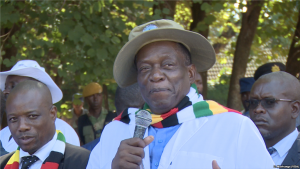
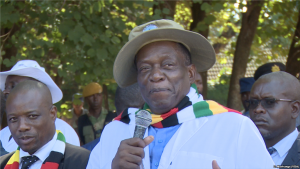
“The continued judgment and setting of Utopian standards for Zimbabwe are callous, vindictive and should not be allowed to continue,” Mnangagwa told supporters in an address at the National Sports Stadium in the capital, Harare. “We say enough is enough. Remove sanctions now.”

Sanctions against some individuals in the ruling Zimbabwe African National Union-Patriotic Front and businesses associated with them were imposed back in 2003. The U.S. has made periodic amendments to include people the State Department believes are responsible for human-rights abuses or enriching themselves at the country’s expense.

Zimbabwe has received more than $3 billion in U.S. aid since 1980 and at least $300 million this year alone, the U.S. Ambassador to Zimbabwe Brian Nichols said in an interview with newspaper publisher Trevor Ncube that was posted on the U.S. embassy’s Twitter account.

The U.S. is Zimbabwe’s single-biggest donor. Despite diplomatic tension between the two countries, American aid kept Zimbabweans from starvation after former president Robert Mugabe authorized the often violent seizure of about 90% of all white-owned farms between 2000 and 2012. That cost the country millions of jobs and saw farm exports almost disappear.

“Our targeted sanctions are not responsible for Zimbabwe falling tragically short of its potential. The fault lies in the catastrophic mismanagement by those in power and the government’s own abuse of its citizens,” Nichols tweeted Thursday.

The Southern African Development Community reiterated an August call for all forms of sanctions against Zimbabwe to be removed.

Sanctions “directly impact on employment and income generation opportunities, and thus the livelihoods of the ordinary Zimbabweans,” it said in an emailed statement Friday.

Protest against economic sanctions on Zimbabwe
Zimbabwe’s president says Western sanctions a ‘cancer’ eating at economy

Post published in: Featured

Zimbabwe’s president says Western sanctions a ‘cancer’ eating at economy – The Zimbabwean

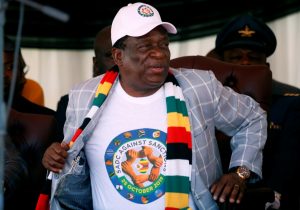
Zimbabwe President Emmerson Mnangagwa attends a rally against Western sanctions in Harare, Zimbabwe October 25, 2019. REUTERS/Philimon Bulawayo

In Harare, many stayed away from the demonstrations, saying they were a distraction from the president’s mishandling of the economy, which is plagued by 18-hour daily power cuts and shortages of foreign exchange, fuel and medicines.

Mnangagwa has so far failed to unify the country since taking over from the late Robert Mugabe, who was ousted in a coup in 2017. Hopes of a swift recovery have faded as the economy struggles to exit its deepest crisis in a decade.

Mnangagwa, like Mugabe, blames the sanctions imposed by the United States and European Union since 2001 for the economic ills and says they are intended to remove his party from power.

“Every part and sector of our economy has been affected by these sanctions like a cancer,” Mnangagwa told a sparse crowd in Harare’s 60,000-seater national stadium. “Enough is enough, remove them. Remove these sanctions now!”

The poor attendance showed the difficulties that Mnangagwa faces in mobilizing party members still divided between Mugabe’s supporters and those who ousted him. The rift was exposed by a bruising dispute over the former leader’s funeral.

Earlier, government supporters led by Mnangagwa’s wife Auxillia and bussed from across Zimbabwe marched for 5 km to the stadium.

Singing and dancing, they waved placards inscribed “No sanctions, no discrimination, sanctions new version of slavery,” and “Enough is enough, remove sanctions now.”

“We have no jobs because of the sanctions. America wants to remove ZANU-PF from power through sanctions but we will defend the party and our president,” said 32-year-old Martin Mafusire.

Similar marches were held throughout Zimbabwe after Mnangagwa declared Friday a public holiday.

But in downtown Harare, many people went about their daily business selling everything from fruit to cellphones.

“It is Mnangagwa who has to go because he has failed. I can’t leave my station to go on a useless march,” said mother-of-three Catherine Chihota, selling fruit at a street corner.

The EU and United States imposed financial and travel bans on ZANU-PF and top military figures for alleged human rights abuses and electoral fraud. The government says the measures are punishment for its seizures of white-owned farms.

ZANU-PF supporters condemn the sanctions while the main opposition Movement for Democratic Change says they are not the cause of the country’s economic crisis.

The regional Southern African Development Community has rallied behind Zimbabwe’s call for an end to sanctions.

While the government ran documentaries and articles in the official press criticizing sanctions, the U.S. and EU embassies took to social media to rebut the official narrative.

U.S. Ambassador Brian Nichols wrote an article in a private newspaper on Thursday saying “the greatest sanctions on Zimbabwe are the limitations that the country places on itself”.

He said the United States remained the biggest donor to Zimbabwe but corruption and lack of reform had dragged down the economy.

The EU keeps some sanctions in place, but in June it began talks with Harare meant to move on from the Mugabe era.

Harare says the U.S. sanctions have been the most devastating. These bar U.S. officials at the International Monetary Fund and World Bank from voting for debt relief or fresh lending for Zimbabwe.

In March, President Donald Trump extended by one year sanctions against 141 entities and individuals in Zimbabwe, including Mnangagwa.

Zimbabwe’s Mnangagwa Calls On U.S. to End ‘Vindictive’ Sanctions
U.S. imposes sanctions on Zimbabwe’s state security minister

Post published in: Featured

U.S. imposes sanctions on Zimbabwe’s state security minister – The Zimbabwean

26.10.2019 6:34

WASHINGTON (Reuters) – The United States has imposed sanctions on Zimbabwe’s state security minister, Owen Ncube, over what it says is credible information of his involvement in “gross violations of human rights,” U.S. Secretary of State Mike Pompeo said on Friday.

Pompeo said in a statement that Washington was troubled by the “Zimbabwean government’s use of state-sanctioned violence against” protesters, opposition leaders and labor leaders.

Two years after the ouster of Zimbabwe’s longtime ruler Robert Mugabe by the army and President Emmerson Mnangagwa, people are still grappling with triple-digit inflation and shortages of basic goods like fuel.

Last month, doctors took to the streets after Peter Magombeyi, their union leader and one of the organizers of an effort to demand higher wages for state doctors, went missing.

Ncube said at the time that Magombeyi’s case was being treated as a disappearance, not an abduction, as his colleagues have alleged.

Human rights groups say they have recorded more than 20 cases of abductions of activists by state security agents since January. The government denies any involvement.

Zimbabwe’s president says Western sanctions a ‘cancer’ eating at economy
Stop blaming sanctions, implement reforms

Post published in: Featured

The Shade Is Real

Biglaw

Arnold and Porter off the top rope.

—ADVERTISEMENT—

ATL Law Firm Directory

From the Above the Law Network

Hang 10 Or Die Trying: The Importance Of Proper Goal Setting And The Lesson Of ‘Point Break’

The scene opens: It’s daytime, in a bank, let’s say 11:30 a.m. on a Tuesday. The customers are going about their business with quiet purpose. The sun washes in from the eastern windows. Everyone is at least a little tan, and they look a little like people who smell of sea salt and the waves. L.A.? Could be. You can tell they all not-so secretly wish they were surfing. But who doesn’t, am I right?

Suddenly the front doors burst open, and the camera rushes to them. Who swaggers through the door, but Ronald Reagan, Richard Nixon, Lyndon B. Johnson, and Jimmy Carter, each carrying an assault rifle. “I voted for you, Mr. President!” shouts one shocked customer. “Shut up, you stupid Oakie!” Jimmy Carter inexplicably yells back.

And on it goes. What is happening? Are you watching some amazing science fiction film about time-traveling and/or cloned former presidents robbing banks? Normally I’d say, “You wish!” but here you don’t wish. Because you’re already watching the greatest movie ever made. You’re watching the opening scene of Point Break.

THE SECRET OF POINT BREAK

Why is Point Break such an amazing film? Many have asked this in the 28 years, three months, two weeks, and one day since the film’s premier. And there are many reasons: the surfing; the breathtaking cinemaphotography; the epic skydiving; Gary Busey; the flamethrower scene; the ex-presidents, of course; two meatball subs at 10 in the morning; and Keanu Reeves in the heartbreaking final scene.

But the real Point Break connoisseurs know that the secret is that its characters don’t set non-tubular goals. They never aim for, or settle for, anything short of totally bodacious. They make flamethrowers out of gas pumps. They skydive without parachutes. They go absurdly and impractically into character as ex-presidents while robbing banks. They say things like, “If you want the ultimate, you’ve got to be willing to pay the ultimate price.” They live absolutely to the limit.

This dedication to excellence allows the characters of Point Break to achieve great things. They never do things half-way or settle for mediocrity. Keanu Reeves even applied it to his own life, culminating in his recent action star renaissance due to his intense dedication to his John Wick training regimen. You too can be like Bodhi and Johnny Utah, if only you’re also stoked and ready to rip.

START APPLYING THE SECRETS OF POINT BREAK TO YOUR OWN LIFE

Too often, though, instead of being gnarly, we allow ourselves to be satisfied with taking a nosedive.

Stop taking nosedives. The first step is to set better goals. How do you know if a goal is bad? One red flag is if you achieve it. Achieving goals will leave both lost and self-satisfied. You will wrongly convince yourself that you’re “OK.” But you’re not “OK.” You’re never “OK.” Because there is always more, and you should always want more, like Bodhi.

Start by sitting down, thinking about what you want out of your life, and setting the biggest goal you can think of to that end. This should be something really big, like being the absolute ruler over all of humanity and all of its offshoots until the heat death of the universe. If you can think of something bigger, for instance involving time travel, go with that. Then remember that all acts are measured only relative to that goal: You can move forward, towards your goal (be more like Bodhi) or backwards, away from your goal and into mediocrity (be less like Bodhi). You always want to move in the direction of being more like Bodhi. No act is neutral. All things move you forward or backwards.

Next, carefully consider the path to achieving that goal and set smaller, more achievable sub-goals that will move you further along the path. For instance, a sub-goal may be turning your law firm into the most successful commercial entity in the past and future of human civilization. You want alien archaeologists 10 billion years in the future to be writing books about you. Then you start psyching yourself up, such as by yelling at yourself in mirrors. Continue this process as long as necessary.

Then, build your self-identity around those goals. Dr. Gregory House used to say that he needed his team’s entire self-worth to rise and fall based on how well they did their jobs. You need to be the same way.  The idea of failure should be intolerable.

SURF’S UP

By applying these simple lessons, you too can become a great surfer, capable of mastering the legendary 50-Year-Storm, or whatever else you wish to do. So stop making excuses and start today, living the lessons taught to us by Bodhi, Johnny Utah, and whatever character Gary Busey plays.

Matthew W Schmidt Balestriere FarielloMatthew W. Schmidt has represented and counseled clients at all stages of litigation and in numerous matters including insider trading, fiduciary duty, antitrust law, and civil RICO. He is a partner at the trial and investigations law firm Balestriere Fariello in New York, where he and his colleagues represent domestic and international clients in litigation, arbitration, appeals, and investigations. You can reach him by email at matthew.w.schmidt@balestrierefariello.com.

Desperate For Liberal Support, Democratic Nominee Tulsi Gabbard Meets With Wall Street Money Men At Anthony Scaramucci’s Restaurant

Yeah, we don’t understand what the hell she’s doing either.

This Law School May Be Gone, But Its Legacy Lives On

(Image via Getty)

What now defunct law school’s alumni include two U.S. Vice Presidents, 101 congressmen, 28 senators, six cabinet secretaries, three justices of the United States Supreme Court, 14 state governors, and 13 state supreme court chief justices?

Hint: The law school closed in 1833, but the legacies of its alums live on.

See the answer on the next page.

US To Press China Espionage Cases Regardless Of Trade Talks: DOJ

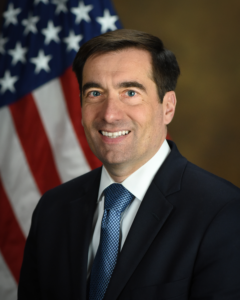
Assistant Attorney General John Demers announces indictments of Russian military intelligence (GRU) operatives.

WASHINGTON: The head of the Justice Department task force on China pledged today to continue prosecuting espionage cases regardless of trade negotiations with Beijing.

“I don’t do trade, and I try to keep our cases well apart from what’s going on the trade front,” Assistant Attorney General John Demers told the CyberTalks conference this morning, “because we didn’t bring one of these cases because of what’s going on on the trade front. And we’re not going to drop them even if we reach an agreement.”

DOJ photo

John Demers

“We’re going to stop doing cases about China intellectual property theft when the Chinese stop doing intellectual theft,” Demers continued. “If they agree to a trade agreement and they actually change their behavior, great…That’s ultimately what we’re really looking at.”

The Trump administration has been accused of inappropriately entangling trade, national security, domestic politics, and the president’s family business in its dealings with foreign powers. Demers himself was a presidential nominee, working at Boeing before Trump tapped him to head Justice’s National Security Division. He’s not a career DOJ lawyer. But Demers had significant experience, having previously worked in what was a brand-new division under President George W. Bush from 2006 to 2009, right after he clerked for Supreme Court Justice Antonin Scalia.

Since Demers took charge in February 2018, the National Security Division has

Demers and his division have also worked with the Commerce Department to impose sanctions on a Chinese company tied to industrial espionage against the US. Last year, after Jinhua Integrated Circuit Co. was accused of stealing intellectual property from US chipmaker Micron, Commerce placed Jinhua on its Entity List of companies restricted from doing business in the US. Unable to import US-made equipment for its factory, Jinhua was unable to use the stolen secrets to actually make chips, Demers said.

“The practical effect of that is this Chinese company…. is unable to import the tooling from the United States that it needs to produce a product that it stole the intellectual property to create,” Demers said today. “That means Micron is not facing that competition.”

(That said, Micron’s stock price has still slumped, in part because of rising Chinese competition and in part because it can no longer sell to Chinese tech giant Huawei, a major customer for many US firms until it, too, was put on the Entity List.)

The Micron case is an example of the kind of public-private cooperation Demers deems essential to combating Chinese espionage. “We crucially need that cooperation of the private sector to bring these cases,” he said, because it’s the companies that often detect the first signs that a network or an employee is being subverted.

Likewise, he went on, the companies need government help to counter the skills and resources of Chinese intelligence agencies like the Ministry of State Security, which has taken the lead in industrial espionage from the People’s Liberation Army.

“Looking at the way in which Chinese intelligence officers recruit employees of American companies, and comparing that to what we’re used to seeing on the traditional political espionage side,” Demers said, “it’s really the same tradecraft that’s now being aimed not at the government but being aimed at you all, being aimed at the private sector.”

“It’s hard sometimes for government employees to understand what’s going on and resist,” he said. “It’s just much harder for [private sector] employees who haven’t been trained in counterintelligence.”

NYC Mayor To Trump’s Lawyer: ‘You Should Not Be A Lawyer’

Anyone who calls themselves a lawyer who would say that should not be a lawyer — let’s start with that. If you shoot someone, that’s a crime, and no one is above the law. He would be arrested, period.

— Mayor Bill de Blasio of New York City, criticizing arguments given before the Second Circuit by Donald Trump’s lawyer, William Consovoy, where he claimed the president could not be prosecuted even if he shot someone on Fifth Avenue. “If anybody shoots someone, they get arrested. I don’t care if they’re the president of the United States or anybody else,” de Blasio said. “If you shoot someone, you should get arrested, and we would arrest him.”


Staci ZaretskyStaci Zaretsky is a senior editor at Above the Law, where she’s worked since 2011. She’d love to hear from you, so please feel free to email her with any tips, questions, comments, or critiques. You can follow her on Twitter or connect with her on LinkedIn.