FINRA Gets Around To Banning Broker It Found Guilty Of Ripping Of Client/Adulterous Lover Three-And-A-Half Years Ago

Ami Forte will have to find other ways of getting into elderly rich guys’ pants.

Global fintech company launches Digital Money Transfer to Zimbabwe – The Zimbabwean

Senditoo has also signed a guarantee partnership with with leading financial institution, Banc ABC Zimbabwe, securing US dollar cash pick-ups in all Banc ABC branches across Zimbabwe.

Founded by UK based Zimbabwean Takwana Tyaranini and his Guinean business partner Ibrahima Soumano in 2016, Senditoo was an innovative service that solely focused on allowing migrants to send instant mobile phone credit to their loved ones in over 140 countries across the world.

The company’s revenue increased by over 600% globally in approximately 36 months and they have progressively become the favourite airtime transfer platform for Zimbabweans living in the UK, with 30% of their transaction volume coming from them.

The company is looking to become the leading transmittal enterprise, offering customers both the option to send airtime and money synchronously.

“We created an innovative way of sending mobile phone credit almost three years ago and it only seemed fitting to make another ground-breaking move that will make it easier for friends and family to remit money internationally at a very low cost,” Tyaranini said.

“In the last few years, Senditoo has built a sustainable brand based on transparency, and great user experience. As a result, every other week, we received emails from our current clients insisting that we add money transfer.

Our customers are at the centre of everything that we do and everything that we aim to achieve, or have achieved so far. As we continue to grow and revolutionise the way our customers transact, we want them to be part of our next journey,” he added.

Africa as a central hub for international remittance

Africa has one of the world’s most mobile populations, and African nations account for a large part of the expanding global remittance market.

Tyaranini said that with Africa’s infrastructure, the continent has a significant advantage that can drive remittances across the globe and promote financial inclusion, particularly through mobile money.

“Digital transformation is helping the flow of money and connecting more people around the world and that is where Senditoo comes in,” Tyaranini said.

Customers are being offered a number of incentives and signing up with Senditoo to remit money in the next three months will see them receive a £5 discount on their first transfer. They will also get £5 every time they refer a friend to the service and will receive a Senditoo T-shirt when they send £100 or more.

SA Express announces daily flights between Johannesburg and Bulawayo

Post published in: Business

Public anger in Zimbabwe over a proposal to Universities to impose dress code for female students – The Zimbabwean

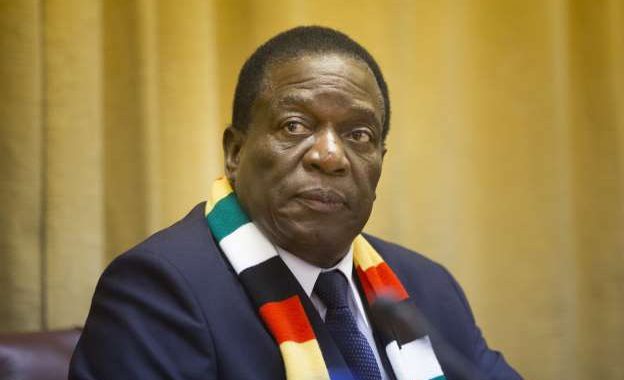
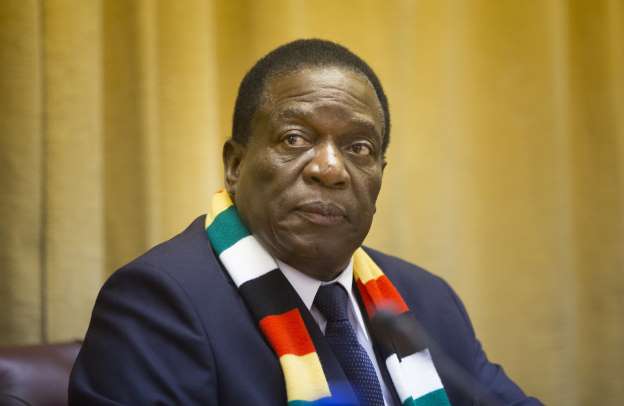
Zimbabwe’s President Emmerson Mnangagwa. Photo credit: REUTERS/Philimon Bulawayo

The Zimbabwe Gender Commission’s legal and investigative manager Ms. Delis Mazambani came up with the proposal in the wake of escalating rape cases being experienced in the country.

She said: “During the weekend, the students can then wear whatever they want, but when attending lectures, they need to be guided on how to dress and this makes it easier for lecturers to pinpoint that according to the university’s policy you are not dressed appropriately.”

The proposal would, however, cause widespread public outbursts – many arguing that the escalating rape culture does not correlate whatsoever with what women wear, rather it is a scourge.

Zimbabwe’s Women’s Affairs Minister Sithembiso Nyoni described the proposal as an affront to women and a form of abuse.

“We shouldn’t respect the uniform but the person, it means we are saying our men have no respect for women but uniforms,” she said.

Higher and Tertiary Education, Science and Technology Development Minister Professor Amon Murwira said the proposal would be an attack on womanhood, saying: “It is a very free country and everyone is entitled to his or her opinion as this is not a directive.”

Also, SAYWHAT, a non-governmental organization, said a dress code for the students would further reinforce the dictates of patriarchy in which society was always policing the dressing of women.

“Having a dress code cannot be a sustainable way of addressing the issue, what needs to be changed are the attitudes of the perpetrators, transformation of gender norm is needed in which men can respect women and their rights irrespective of what they are wearing,” said the organization in a statement.

“The proposed solutions must not be skewed towards putting the blame on women. Having a dress code is tantamount to direct indictment that women are being sexually harassed because of the clothes they wear.

“There is limited correlation on the two as societies have witnessed that even women who dress in the so-called modesty and decent ways are sexually harassed, while others become victims of rape while dressed in long skirts and dresses,” it added.Cases of rape have been on the rise since the beginning of the year. Women have had to bear the brunt of nursing emotional wounds after such an encounter. In neighboring South Africa, a young student Uyinene was recently raped and murdered in what sparked a #Am I next campaign.

Russia-Zimbabwe platinum venture needs $500 million for first phase – The Zimbabwean

Zimbabwe is pinning its hopes on the mining sector to drive the recovery of an economy grappling with rolling power cuts and shortages of foreign exchange and fuel.

Russia’s Vi Holding, through its JSC Afromet subsidiary, owns half the shares in GDI, which is developing the Darwendale platinum project near Harare, while Zimbabwe’s Landela Mining Venture (Pvt) Ltd owns the rest.

Landela is a subsidiary of commodity trading firm Sotic International Ltd, linked to Zimbabwean fuel tycoon Kudakwashe Tagwireyi, one of President Emmerson Mnangagwa’s advisors.

Former Zimplats chief executive David Brown is the new GDI chairman, the company said.

Tagwirei did not respond to calls to his mobile phone. Brown could not be reached for comment.

The Darwendale project is located in the mineral-rich Great Dyke belt and had initially earmarked $400 million for the first phase of the project. It aims for the mine to start production in 2021 and at its peak to produce 860,000 ounces of platinum group metals and gold per year.

Last year, Zimbabwe produced 978,692 ounces of platinum.

Zimbabwe is seeking to exploit its reserves of platinum, which is used in catalytic converters to limit auto emissions, at a time when vehicle manufacturers are boosting production of electric cars powered by lithium batteries.

GDI said in a statement its lead financial arranger African Export-Import Bank was targeting financial closure for the syndicated funding by March 31, 2020.

“Advanced negotiations are currently underway with a number of South African, Russian and Zimbabwean financial institutions to participate in the syndicate providing funds for equipment, machinery and services procurement,” GDI said.

GDI was also finalizing contractual terms with foreign and local contractors, suppliers and service providers.

Brown said in a statement that the Darwendale project had potential to become a significant low-cost PGM producer.

Anglo Platinum and Impala Platinum Holdings already mine platinum in Zimbabwe. Impala also owns a joint-venture mine with Sibanye-Stillwater.

Karo Mining Holdings, part-owned by South Africa’s Tharisa Plc, plans a $4.2 billion platinum mining venture, while Bravura, owned by Nigerian billionaire Benedict Peters, was given a concession to explore for platinum in May.

Public anger in Zimbabwe over a proposal to Universities to impose dress code for female students
Zimbabwean healthcare system: ‘A silent genocide’

Post published in: Business

Zimbabwean healthcare system: ‘A silent genocide’ – The Zimbabwean

 Dr Peter Magombeyi (Photo: Thom Pierce)

Magombeyi, who was abducted a month ago after leading demonstrations against the intolerable conditions that healthcare givers in Zimbabwe are working under, is recuperating in SA after seeking care for a medical condition associated with his abduction. He spoke to Maverick Citizen.

According to Dr Peter Magombeyi, the salaries of doctors in Zimbabwe have been slashed from $1,800 a month to a mere $80. This left doctors unable to sustain themselves and their families. Many of them cannot even afford to pay for transportation. The drastic salary cut was never communicated to doctors officially: the news came via an SMS notification.

The decrease in salaries is speculated to be a consequence of switching from the US dollar to the RTGS dollar, Zimbabwe’s new currency. With the prices of essential commodities soaring by nearly 1,000%, Zimbabwe’s economy is at an all-time low, leaving most of the population unable to afford basic living expenses.

Resources such as fuel are scarce, and the country is in the throes of rolling power cuts, some lasting up to 18 hours. Many patients have been turned away from their surgical appointments because of the power cuts and those on life support are in a precarious position, to say the least.

In the midst of severe economic unrest, the Zimbabwean healthcare system has collapsed. Just under 2,000 doctors serve a population of 14-million, who are largely unemployed.

“This collective job action is not a strike; we are incapacitated,” said Magombeyi.

Magombeyi, who practises as a doctor at the Harare Central Hospital, said the current working conditions of healthcare practitioners were tantamount to slave labour.

“Imagine being in a hospital that accepts all referrals, and then not having things as simple as gloves or bandages. Patients have to buy and bring their own test tubes,” Magombeyi said.

In some instances, patients are forced to buy medication privately. “We don’t even have Paracetamol,” Magombeyi said. Paracetamol is the most basic pain medication. Millions of Zimbabweans who rely on the public healthcare system bear the brunt of the under-resourced facilities as they are unable to access the private healthcare system.

“The private system is for the rich and politicians, and they often have the option of flying out of the country to access healthcare,” said Magombeyi.

He described the situation in Zimbabwean hospitals as a “silent genocide”.

“Our government is averse to truth-telling. When we speak out about what is happening, we are labelled as a third force trying to destabilise the country; if you tell the truth, you become an enemy of the state. We can no longer subsidise the government, our people must know exactly what is happening.

“The government should have policies that enable us to look after the population, and that is not happening. We subscribe to the codes of health practice that outline that we cannot do harm to our patients. If the government does not create policies that allow us to execute our duties in a safe manner, then our patients’ lives are at risk.”

The public healthcare system in Zimbabwe has become dysfunctional even at the lowest level of care. The primary healthcare system is severely incapacitated, forcing their referrals onto even more incapacitated central hospitals, which are supposed to cater to the needs of patients from all over the country.

“There are very high rates of death linked to HIV/AIDS as well as chronic illnesses such as diabetes and high blood pressure. Thousands of people have died,” Magombeyi lamented.

On 21 October, doctors in Zimbabwe had been on an “incapacitated” demonstration for 50 days. None of them has received a salary since they embarked on demonstrations against the government. Magombeyi said the government had refused to respond to the healthcare crisis with any degree of urgency. He criticised the state for skirting around the issue of remuneration of healthcare givers.

He further refuted government claims that there were only five doctors who were disgruntled with the state of affairs and influencing other doctors to take part in the demonstrations.

“How can 1,600 doctors be influenced by five people? Our requests are not a matter of greed, we are not being unreasonable either, our patients are dying. Thousands have already died. If we don’t advocate for them, who will?” asked Magombeyi.

Despite the doctors’ continued action of incapacitation, Magombeyi clarified that the collective job action was structured so that emergency cases were still attended to.

“It’s not that we are all on leave at once. We have doctors on call to attend to life-threatening cases. If a patient is identified as baton red, they are attended to. We are an essential service and we honour those ethical engagements.”

Doctors and the government are at a stalemate, as doctors continue their collective job action awaiting a favourable resolution to address their dire situation. MC

Breast, cervical cancer, Zimbabwe’s new twin evils – The Zimbabwean

HARARE, Zimbabwe – Four years ago, breast cancer claimed the life of her mother. Now, 34-year-old Thembi Bhebhe, a high school teacher by profession, is battling cervical cancer, bed-ridden at her Harare home, the Zimbabwean capital.

In Chitungwiza, a town 25 kilometers (16 miles) southeast of Harare, 46-year-old Megan Saruwaka, a mother of four, is battling breast cancer, which she says doctors have classified as having reached stage four, meaning it has reached its advanced stage.

Breast cancer has become Zimbabwe’s new health headache, and it is not alone, having teamed up with cervical cancer, becoming the poor country’s loathed twin evils in the health sector.

Hammered by one of the two, now Megan’s situation is beyond redemption, she said.

“I’m in pain, dying is better, I wait for my day to rest from this pain,” Megan told Anadolu Agency as she winced in pain, lying in bed in her room as despondent loved ones encircled her.

For any cancer patients like Megan and Thembi, “what decides the treatment depends on the stage of the cancer,” according to oncologist Patrick Hungwe in Bulawayo, Zimbabwe’s second largest city.

“Each stage is cured differently, with early breast or cervical cancer detection, one can be saved before cancer cells start spreading throughout the lungs, liver and the brain,” Hungwe said.

For Thembi, even as she hopes for chemotherapy treatment sessions, her hope of survival is slowly fading away as Zimbabwean doctors have remained on strike for over two months now, demanding increased wages.

“There are no doctors at hospitals and I can only afford to be treated at government hospitals. I’m afraid the absence of doctors reduces my hopes to win against cancer,” Thembi told Anadolu Agency.

In 2017, the World Health Organization (WHO) announced that the number of annual cancer deaths globally reached at 8.2 million, adding that the numbers were expected to triple by 2030.

With breast and cervical cancers as the country’s twin evils haunting hundreds of women here like Thembi and Megan, the Health and Child Care Ministry says approximately 1,500 women are succumbing to cervical cancer each year.

Not only that, but Zimbabwe’s Cancer Association says breast cancer alone is claiming more than one thousand women every year in the southern African nation.

Even health experts here concur cervical and breast cancer have wreaked havoc in Zimbabwe.

“You would realize that because of poverty and lack of knowledge many women are discovering too late that they have breast or cervical cancer; women are delaying to be screened for these cancers and that is why we are having many of them succumbing to the diseases,” Hillary Goto, a private oncologist based in Harare, told Anadolu Agency.

But women rights activists here have blamed government for the deaths of their colleagues from breast or cervical cancer.

“Government is solely responsible for the lack of service in hospitals and that means cancer patients like women with breast or cervical cancer are at the receiving end of the crisis in hospitals as they die before getting help,” Linet Chaota, a member of the NGO Women of Zimbabwe Arise (WOZA), told Anadolu Agency.

Cancer Association of Zimbabwe is currently carrying out a month-long free cancer screening as part of commemorations of the World Breast Cancer Awareness month, which is observed in October across the world.

WOZA is a Zimbabwean civic movement formed in 2003 to provide women from all walks of life with a united voice to speak out on issues affecting their day-to-day lives, according to Amnesty International.

“Some well-to-do women cancer patients are having to cross to neighboring countries like South Africa to seek treatment,” according to women rights defender Chaota.

But, the likes of Thembi and Megan are having to bear the brunt of the disease holed up in their homes, because to Chaota, “many women suffering from either breast or cervical cancer can’t afford to seek medication outside the country”.

“The poor are just dying in their homes with no care or treatment,” said Chaota.

According to Zimbabwe’s Cancer Registry, from 6,548 registered cases of cancer in 2013, figures have shot up to 9,220 in 2018.

For breast cancer, registered cases went up from 246 to 487 in the same period, the same time period that the disease caught up with many like Thembi and Megan.

Out of 2,062 recorded cancer-related deaths so far in Zimbabwe, breast cancer has been responsible for 7% of the fatalities, with cervical cancer being the highest killer accounting for 13% cancer deaths in the country.

Meanwhile, the Cancer Association of Zimbabwe has been on record in the media saying breast cancer is one of the most frequently diagnosed cancers today, with the number of cases worldwide having significantly rose since the 1970s.

Both the Senate and the National Assembly Resume Sittings Today – The Zimbabwean

Both the Senate and the National Assembly Resume Sittings Today

Note:  The President has declared Friday 25th October a public holiday

to allow Zimbabweans to attend solidarity against sanctions on Zimbabwe events.

Coming up in Parliament

The Second Session of this Parliament – the Ninth Parliament of Parliament [and second Parliament under the 2013 Constitution of Zimbabwe] was officially opened by President Mnangagwa on Tuesday 1st October at a joint sitting of both Houses.  The President delivered a State of the Nation address [link] during which he outlined the Government’s legislative agenda for the session.  After the joint sitting both Houses reconvened briefly before adjourning until today.

MPs have not, however, been idle in the interim – they have been attending committee meetings and engaging members of the public at public consultations on Bills and the forthcoming 2020 National Budget.  Yesterday they attended a pre-Budget briefing in preparation for their coming labours on the 2020 National Budget – including the detailed pre-Budget Seminar at Victoria Falls scheduled for 30th October to 4th November.

The presentation of the 2020 Budget by the Minister of Finance and Economic Development will be on Thursday 14th November.

Today’s agenda

As today’s sittings will be the first working sittings of the new session and as all unfinished business of the First Session, including uncompleted Bills, lapsed at the end of that session, the agenda for this afternoon’s sittings is very brief.  It is the same in each House: the moving of the customary beginning-of-session motions expressing loyalty to Zimbabwe and respectful thanks to the President for the speech that he delivered when opening the new session on 1st October.

Upcoming Business

Unfinished business from the last session it is likely that motions will be put, and approved, that Bills be restored to the Order Paper at the stage reached in the last session:

Education Amendment Bill

Zimbabwe Investment and Development Agency Bill

Money Laundering and Proceeds of Crime Amendment Bill

Coroner’s Office Bill

Marriages Bill

New Business, for example, tabling of three recently gazetted Bills so that they can go for consideration by the Parliamentary Legal Committee:

Reserve Bank of Zimbabwe Amendment Bill

International Treaties Bill

Constitutional Court Bill

The Government’s Legislative Agenda for the Second Session

Twenty-six Bills were listed by the President in the Government’s legislative agenda for this session.  We have divided the list into the following parts and indicated the Bills that have already been gazetted or are awaiting gazetting, having been sent to the Government Printer for printing and gazetting:

Bills repeated from the legislative agenda for the First Session

  1. High Court Amendment Bill
  2.  Public Finance Management Amendment Bill
  3.  Gold Trade Amendment Bill
  4. Precious Stones Trade Amendment Bill
  5. Mines and Minerals Amendment Bill
  6. Freedom of Information Bill [already gazetted]
  7. Zimbabwe Media Commission Bill [already gazetted]
  8. Broadcasting Services Amendment Bill
  9. Cyber Crime and Cyber Security Bill [awaiting gazetting]
  10. Data Protection and Electronic Transactions Bill
  11. Child Justice Bill
  12. Mandatory Sentencing for Rape and Sexual Offences Bill
  13. Immigration Bill.

Bills appearing on the legislative agenda for the first time

  1. Labour Court Bill
  2. Magistrates Court Amendment Bill
  3. Police Bill
  4. Insurance and Pensions Commission Amendment Bill
  5. Pension and Provident Funds Amendment Bill
  6. Securities and Exchange Commission Bill
  7. Deposit Protection Corporation Amendment Bill
  8. Competition Amendment Bill
  9. Petroleum Amendment Bill
  10. Medical Aid Societies Bill
  11. Persons with Disabilities Bill
  12. Private Voluntary Organisations Bill
  13. Prisons and Correctional Services Bill

Veritas makes every effort to ensure reliable information, but cannot take legal responsibility for information supplied.

Breast, cervical cancer, Zimbabwe’s new twin evils
The MDC’s unflighted interview with the ZBC

Post published in: Featured

Zimbabwe says 55 elephants have died in two months following severe drought – The Zimbabwean

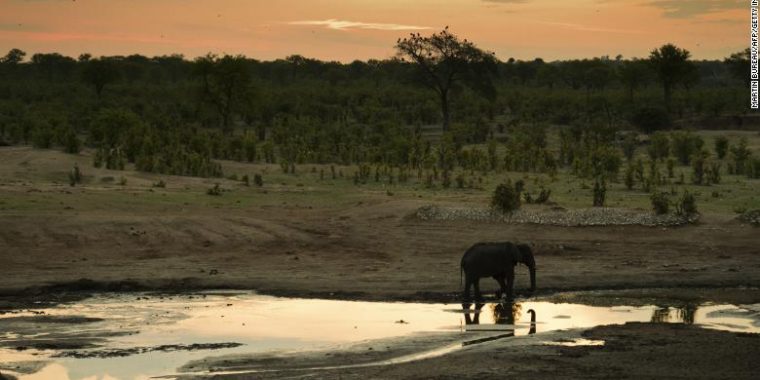
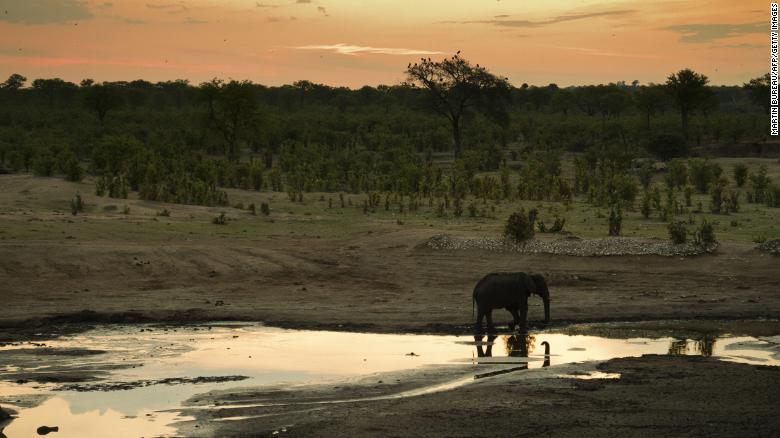
Some of the animals died while searching for water at the Hwange National Park. Others were killed by residents after wandering into surrounding communities looking for food, Tinashe Farawo, spokesman for Zimbabwe’s Parks and Wild Life Management Authority said.

“The elephants are traveling long distances to look for water and end up invading communities. Some died of thirst in the park, some while in search of water. Community members killed others after they destroyed their properties,” Farawo said.

Twenty people have killed in human-animal conflict in the country since January, according to the spokesman.

Farawo said an elephant mauled a man to death after he tried to chase the animal, which had wandered into his garden to drink water in his backyard in a local settlement last week.

“That’s why we are saying allow us to trade in these animals, and we can raise funds for their security and food. But the so-called conservationists condemn us. The park was meant for 15,000 elephants, but we are now talking of over 50,000,” he said.

Farawo said the water crisis at the park was at a dire stage, and authorities have had to dig boreholes deeper to provide care for the animals.

The El-Nino drought that lasted between last October and May has devastated water sources in Zimbabwe, and citizens are bearing the brunt of the disaster.

Zimbabwe’s government has often complained about its elephant numbers, arguing that selling the animals will help reduce their population and generate funds to care for them, a position that has been opposed by animal conservationists.

In May, Zimbabwe said it had made $2.7 million from the sale of 90 elephants to Dubai and China, and profits will be plowed into animals conservation efforts.

Lenin Chisaira, director of Advocates4Earth, a group challenging a purported plan to sell 35 elephants to countries in Asia, said the water problems at the park were not enough to justify elephants’ sale.

Chisaira said mining operations in Hwange have contaminated water sources and affected grazing lands, leaving the animals with no choice but to fend for themselves.

“The government has over the years been allowing mines to develop in Hwange and that’s reducing grazing land, and those operations have impact on water. Even polluting the water. So the government is squarely to blame for all this,” Chisaira told CNN.

Agriculture in Masvingo’s communal areas: limited prospects – The Zimbabwean

We investigated agricultural production across our communal area sites throughout Masvingo province during the 2016 and 2017 harvest seasons. These were relatively good rainfall years, with 690 mm recorded in Masvingo town in 2016-17, for instance. Compared to the past seasons, these were bumper harvest years, especially in the Lowveld site of Mwenezi.

Yet, as the table below shows, with the exception of Mwenezi, none of the sites produced on average sufficient grain to feed a family. If this is estimated to be one tonne of grain per year, three of the sites produced about half this amount on average. Of course there was a wide range, but across three sites only 14-18% households produced over a tonne of grain.

The Mwenezi results are unusual, given that this is drought prone area, but good soils under higher rainfall can produce the occasional good crop, especially as land areas are significantly higher. Here 51% of households produced over a tonne of grain on average across the two seasons, much of this from sorghum. Some sorghum is sold under contract to brewers, but most is retained for food, and because of good storage can tide people over through a number of years.

  Mwenezi Chivi Gutu West Gutu North
Maize 16/17 seasons average (kg) 915 543 509 613
Sorghum (kg) 1312 20 21 36
Pearl millet (kg) 0 3.4 3.9 0
Finger millet (kg) 3.3 1.7 37.6 52.5
% households producing over 1 tonne of grain (16/17 average) 51 16 14 18
Sunflower (kg) 5.8 0 18 12.7
Cotton (kg) 0 0 0 0
Groundnuts (kg) 73 182 189 220
Horticulture sales $ per household 26 6 5 8
Maize sales 16/17 seasons average(kg) 159 60 18 18
Zero maize sales 16/17 seasons (%) 85 89 96 95
Maize certified seed purchase (%) 59 88 90 100
Fertiliser purchase (%) 2 23 52 44
Manure applied (%) 3 37 44 65
Pesticide purchase (%) 40 41 45 23
Credit (%) 0 0 0 0
Contract (%) 13 0 0 0

Overall, crop diversity is limited. Outside Mwenezi, maize dominates, and pearl and finger millet have nearly disappeared, beyond being grown on very small plots for specialist production, usually for home brewing. Groundnuts are grown but not in large quantities and in these sites sunflowers are rare, because of the lack of markets these days. Cotton and tobacco are absent except for a few isolated cases.

Sales are also very limited. A few larger maize and sorghum producers sell, but most don’t. In fact across the two years on average 85%, 89%, 96% and 95% in the Mwenezi, Chivi, Gutu West and Gutu North communal area sites sold nothing, even in these relatively good years. With very few cash crops and little surplus to sell, this is largely a subsistence economy, one that requires off-farm income to supplement meagre agricultural production, as explored in a subsequent blog.

Tillage is especially reliant on access to livestock, which, as discussed in an earlier blog in this series, have a skewed ownership pattern. 50-68% of households use their own oxen, while others hire. Tractors are not a feature outside Mwenezi where a few have bought second-hand machines. Those with without other options must hoe their land, a feature most evident in Mwenezi.

% Mwenezi Chivi Gutu West Gutu North
Own oxen 54 68 51 50
Hired oxen 14 28 29 35
Loaned oxen 2 5 11 4
Own Tractor 7 0 0 0
Rented tractor 2 0 0 0
Hoeing 21 3 9 11

Big contrasts with the A1 resettlements

These patterns of agricultural production contrast significantly with the nearby A1 resettlement areas where, especially in the higher rainfall areas, production is higher. In 2010-11 for example, sites nearby the two Gutu sites produced on average 844kg and 1238kg of maize, with 38% of households selling surplus maize. Over the period from 2003-2013, 44% of households in those A1 sites produced more than one tonne of maize. Cultivated land areas are higher, averaging 3.2 ha in the resettlements near our Gutu sites, but also the intensity of production is greater, with higher inputs, including fertiliser (with over half of the households applying fertiliser).

As discussed in a later blog in this series, labour hiring is more common, both of permanent and temporary workers. Across our A1 land reform sites, excluding Mwenezi, over a third of households are regularly producing surpluses and reinvesting in the development of the farm. At the time of our last major census of A1 sites in 2011-12, the level of mechanisation was modest, however, with only half a dozen tractors across all the A1 sites, but this has changed since as people have invested in tractors and other equipment, notably pumps.

In the A1 resettlement areas, this results in a dynamic of accumulation for a significant group, where investments in farm and house improvements occur year on year. Not everyone manages this, and the patterns of differentiation – and associated dynamics of class formation – are very evident, with those not able to accumulate either dropping out and moving away or becoming wage labourers supporting the production of the accumulators.

Across the communal area sites this dynamic is not seen. Those able to realise surpluses are vanishingly few. Only around 15 percent in three of the areas achieved levels of output of grain sufficient to provide for household food needs, and even fewer sold surpluses. And this in relatively good rainfall years.

Although there is obvious differentiation in assets, production, labour hiring and so on, as other blogs in this series show, most communal area households are poor, unable to do much more than subsist off their farms and rely on off-farm incomes of various sorts. Agricultural production in the communal areas is therefore very low input and low output.

As the table shows, across the communal area sites, fertiliser input levels were low, although increasing in the wetter Gutu sites. Virtually no-one uses synthetic fertiliser or manure in Mwenezi, where soils are good and the potential for crop ‘burning’ due to excessive fertiliser is high. This contrasts with the sandy soils of the miombo areas further north, where higher rainfall and leaching means soil fertility is low and additions are required. In all sites, as another blog will discuss further, labour hiring is minimal, and outside Mwenezi collective work parties are very rare.

Perhaps surprisingly, given the low levels of production, outside Mwenezi the vast majority use certified maize seed, purchased hybrids or open-pollinated improved varieties. The proportion is less in Mwenezi, but still nearly 60%. The long-term commitment to improved varieties across Zimbabwe persists, supported by a 50-year tradition and continued extension reinforcement. This makes the economics of production of maize very risky, especially if purchased fertilisers are added too, and so this seed, along with most effort in agricultural production, is focused on the homefield areas, where extra labour, fertilisation and, if needed, additional irrigation can be applied. In small quantities, such maize may be produced as green maize for local consumption and sale rather than for grain.

Pesticides were bought by around a quarter of households, but these were in very small quantities and mostly applied to vegetables. Horticulture as a source of income, however, was highest (but not very high) in Mwenezi where irrigation projects provide opportunities. This again contrasts with the A1 resettlement areas, where informal irrigation has taken off in all sites, resulting in significant production of vegetables and green maize for market.

Finally, commercial credit was purchased by no one across the sites. Limited contracting for sorghum in Mwenezi provides some finance, but otherwise farmers are on their own. They rely on off-farm sources and remittances to finance agriculture, but overall, and by contrast to the A1 resettlements, this is a very low input, low output form of agriculture. Indeed, the possibilities of improvement are constrained. Land areas are small, soils are poor or rainfall is highly variable, labour is scarce and many farm owners are old and unable to invest effort.

Communal area projects: missing the mark

Agricultural production remains important of course, but more as stop-gap social security rather than as a basis for accumulation. This is vital given the absence of wider welfare opportunities and declining employment possibilities in Zimbabwe, but it is no surprise that government, NGO and donor food and cash for work schemes are an important source of livelihood for a significant group in these areas.

While there are many well-meaning projects aimed at improving agriculture in the communal areas of Masvingo province – usually with a ‘climate smart’ or ‘resilience building’ tag these days – you have to wonder whether these can have any impact, beyond marginal, often very labour intensive, improvements (like ‘conservation agriculture’). The communal areas, as discussed in other blogs, are structurally poor and disadvantaged and technical tinkering will make little difference. Maybe there are some high value, niche products that can be promoted – such as has been done with chillies in some parts of the country – but our Masvingo sites are in lower rainfall areas, more remote from markets, and it may make sense.

In sum, contrasting the communal areas with the A1 resettlements demonstrates how important land redistribution is if agriculture is to become more than a marginal, subsistence activity for most.

This post is the fourth in a series of nine and was written by Ian Scoones and first appeared on Zimbabweland.

This field research was led by Felix Murimbarimba and Jacob Mahenehene. Data entry was undertaken by Tafadzwa Mavedzenge

You know what it is?
Update on Statutory Instruments: Part 2

Post published in: Featured