Pew Grant Will Take ‘Learned Hands’ Project from Prototype to Production, to Help ID Consumers’ Legal Issues | LawSites

Last October, I reported here on the launch of an innovative project, Learned Hands, that uses a game to train a machine-learning algorithm to better identify the legal issues in the words that ordinary people use to describe their problems. The goal was to use artificial intelligence to help legal services providers better match a consumer to the appropriate attorney or legal resource.

Now, The Pew Charitable Trusts has awarded a grant to one of the sponsors of that project, Suffolk Law School’s Legal Innovation and Technology Lab, to move the project from proof of concept to production.

The grant runs through December 2020 and will be used to create issue spotters, in the forms of both an application programming interface (API) and a Python programming library, that will be free to use for public-interest groups, the LIT Lab’s director, David Colarusso, told me. It is also expected that the Legal Services Corporation will use the issue spotters in its project to develop state legal portals.

David Colarusso

The idea behind Learned Hands was to create a game to incentivize players to crowdsource the task of spotting legal issues in real people’s stories about their legal problems. Players earn points and rankings based on how many questions they mark and the extent to which their marks are deemed correct.

The goal is to train a machine-learning algorithm to spot legal issues issues. That required both people-power to do the tagging and a collection of actual questions against which to train. For that, the project obtain a collection of some 75,000 questions posted in the Reddit forum r/legaladvice.

That project went well, Colarusso said, drawing participation by nearly 600 people who created 54,000 labels resulting in the finalization of about 2,000 of the questions. The labeling is being used to create a taxonomy of legal issues that better matches the words and phrases that regular people use, based on the National Subject Matter Index developed by the Legal Services National Technology Assistance Project.

Building An Infrastructure

Through this new grant, LIT Lab students will build out the engineering infrastructure to deliver the API and documentation, with the goal of having it available for use by the end of 2020. The API will be free to use for non-profits and legal services organizations.

How could legal services organizations use this issue spotter? Colarusso outlined four potential use cases:

  • In portals and court service centers, where a consumer could come to the site, ask a question in plain English, and be directed to the appropriate resource.
  • For ask-a-lawyer or limited-scope representation projects, to ensure that consumer inquiries and messages get routed to the right lawyer.
  • As what Colarusso calls a “cognitive exoskeleton” to help in situations where a consumer is connected to a live person or paraprofessional. The issue spotter can help triage the issues so the person taking the call does not start from scratch.
  • To look at incoming inquiries in the aggregate, so that an organization can better understand on a broad level the types of queries that are coming in and where to allocate its resources.

Other Project Goals

In addition to building the API, Colarusso has other goals for the project. One is to continue to train the algorithm against new data. While the Reddit corpus has proved useful, Colarusso said, the source suggests that it is likely skewed towards a demographic that is younger, male, and better off than the general population. So more representative data is needed.

In addition, the algorithm needs to adapt to semantic shifts over time, changes in the language people use to talk about their problems.

“At the end of the day, you can have a fancy algorithm, but the thing that is the real killer is the data,” Colarusso said. “So the more data we have, the better.”

One way to address this need for further and continual training would be through some sort of feedback loop incorporated within the API, so that the system could learn from people’s actual behavior in using it. But a feedback loop could be problematic as some organizations or consumers may not want their data feeding back to the LIT Lab, Colarusso said. There may also be legal restraints, such as under California’s new privacy law.

Recognizing this, another of Colarusso’s goals is to develop a set of standards and best practices around the responsible use of the algorithm and API. Such standards might address issues such as consumer opt-in or disclosures around the use of the API. Colarusso said that if people have ideas about formulating these standards, he welcomes their input.

One final goal for the project is to come up with a plan to make it sustainable beyond the period of the grant. Perhaps students in the LIT Lab will be able to shoulder some of the ongoing work, Colarusso said, but he also does not rule out the possibility of licensing the API to for-profit entities or seeking other forms of outside support.

The one point on which he is certain is that access to the technology will always be free for non-profits. “We don’t want non-profits ever to have to pay for it,” he said.

As for the original Learned Hands project, although the Pew grant that funded it has now run out, the site will continue to operate under the auspices of both the LIT Lab and the project’s other partner, Stanford Law School’s Legal Design Lab.

Former Partner’s Suit Against Biglaw Goes To The California Supreme Court

Constance Ramos

Suing Biglaw firms over gender discrimination has become a veritable trend with firms like Morrison & Foerster, Jones DaySteptoe & Johnson LLP, Chadbourne & Parke (now part of Norton Rose), Proskauer RoseLeClairRyan (RIP), Sedgwick, CKR Law, Ogletree Deakins, and Winston & Strawn all on the receiving end of lawsuits. But, while the lawsuits all make headlines when the complaint is served, often times mandatory arbitration clauses as part of partnership arrest the litigation process and transfer it to confidential arbitration.

One plaintiff who’s had success in challenging her former firm’s arbitration gambit is Constance Ramos, who sued Winston & Strawn alleging the firm treated her as “an appendage of a male superior” and that the firm tried to get rid of her once the male equity partner she worked with departed the firm. In November, a three-judge panel of the California Court of Appeal found that the arbitration clause was unconscionable and therefore unenforceable. Winston & Strawn is seeking to have that decision overturned.

As reported by Law.com, Winston & Strawn’s lawyer, Joshua Rosenkranz of Orrick, Herrington & Sutcliffe, is arguing the Federal Arbitration Act should control and that the lower courts need a “reminder” about how preemption should work:

“In the wake of [AT&T Mobility v. Concepcion], no other jurisdiction has held that arbitration-specific rules like these survive FAA preemption,” Rosenkranz told the justices in May. He argued that “California courts need another reminder” to follow the Supreme Court’s precedence on enforcement of arbitration agreements. “It is time,” Rosenkranz wrote.

But Ramos’s attorney, Karla Gilbride of Public Justice, argued that it was the unusual terms of Winston’s arbitration agreement that forced the lower court’s decision:

The law firm’s “overly harsh” terms in its partnership agreement drove the lower court opinion, Gilbride told the justices Wednesday. Chief among those terms that the lower court found unconscionable, Gilbride said, was the “firm always wins” clause. That provision, with one exception, barred the arbitration panel from substituting its judgment for the decisions of the partnership, its executive committee or officers.

That clause, Gilbride said, “would make it impossible for the arbitrators to award Ramos back pay, front pay, reinstatement or punitive damages—essentially every form of relief she sought in her complaint for employment discrimination and retaliation.”

But Winston & Strawn isn’t the only Biglaw firm hoping the California Supreme Court will take a stand on the side of arbitration. Ropes & Gray has filed an amicus brief in the case:

Ropes & Gray filed an amicus brief supporting Winston & Strawn. “Today, it is common for law firms to experience regular fluctuations in their partnership ranks,” Douglas Hallward-Driemeier, head of the firm’s appellate and Supreme Court practice, said in the brief. “As a result, it has become increasingly important for law firms to be able to quickly and efficiently resolve internal disputes in a way that protects confidential information and minimizes disruptions to client service.”

Whatever the outcome, it’s clear it will have a big impact on Biglaw.


headshotKathryn Rubino is a Senior Editor at Above the Law, and host of The Jabot podcast. AtL tipsters are the best, so please connect with her. Feel free to email her with any tips, questions, or comments and follow her on Twitter (@Kathryn1).

Litigation Finance Firms Now Ranked By Chambers And Partners

Litigation funding has become an important part of the legal profession — so important, in fact, that the sector has attracted the attention of Chambers and Partners, a U.K.-based organization that ranks corporate lawyers and litigators worldwide. It was just last year that Chambers rolled out its first-ever ranking of litigation funders, and not long ago, its second annual ranking of litigation funders was announced. Click here to see the latest ranking.

I recently had the pleasure of speaking to Boaz Weinstein, one of the cofounders of Lake Whillans, a firm that’s been ranked by Chambers since the inception of its new litigation finance listing. Here is a (lightly edited and condensed) write-up of our lively conversation about litigation funding and starting and building a career from the ground up in this constantly developing industry.

Staci Zaretsky (SZ): Congratulations on Lake Whillans being included in the Chambers and Partners ranking of litigation funders for two years in a row. It’s quite the achievement for you and your firm.

Boaz Weinstein (BW): Yes, so it’s a big honor for us. Obviously, we’re very enthused and pleased with the recognition. And I was individually ranked both years as well. I think the Chambers ranking overall is kind of an important development for the litigation finance market. It just goes to show how mainstream the litigation finance community has become. I think we’ve seen increasing consensus among law firms and now that we’re at the point where Chambers has started to weigh in on the category, it just gives another stamp of approval — it’s kind of an endorsement, a recognition that this is a significant part of the industry and one that’s here to stay.

SZ: Exactly. The concept of litigation finance went from being somewhat of a novelty to being ranked by Chambers — it’s a big deal. It shows how much litigation finance has become an established part of the legal world.

BW: It shows that there’s now increased acceptance and increased traction for people who are interested in litigation funding, and being included in the Chambers ranking shows that not only is Lake Whillans a reputable organization, but it’s one of the most reputable organizations. That’s something very special, and we’re certainly humbled and honored by the recognition.

I think it’s very helpful for people to know who the reputable players in the industry are, what their various strengths are, and how they differentiate from one another. It’s an important resource for the practitioner who’s thinking about using litigation finance.

Some people in the past have had some bad experiences dealing with less reputable funders, so I think having an organization like Chambers say that these are these are the major players is a helpful starting point for practitioners to make sure that they’re that they’re working with the right people so they’ll have the best experience.

SZ: What kind of practices and trends are you seeing in the industry?

BW: One of the trends that’s become apparent is the growth in the types of users that we’re seeing. It used to be that litigation finance was more predominantly used by smaller to medium-sized companies for whom either it would not be possible to fund a litigation or if it was possible, it would come at significant cost to the company’s business because litigation is quite expensive, and these companies often weren’t well resourced to do it. And while that continues to make up a significant portion of the user base, the place where we’ve seen a lot of growth over the last two years or so has been in larger companies coming to recognize the utility of litigation finance as a financial tool.

This has increasingly become part of the user base and I think it’s a trend that is strong and is helping to broaden the demand for litigation finance quite significantly, so it is in some sense a frontier that has been opened. I would say it’s not all the way there, but I think that’s maybe the biggest development as we move forward in the litigation finance market.

I think a second trend in this sector is portfolio financing. There has been a sizable uptick in in recent years in the number of law firms that are looking for portfolio financing, although it’s been tempered somewhat by the recent opinion of the New York City Bar Association about nonrecourse financing. [Ed. note: Please click here to read an excellent piece about the Bar Association’s decision.] It’s an opinion that has generated a lot of heat and a lot of ethics professionals and other litigation funders have decried the logic of the opinion, which rests on a formality that even the opinion itself recognizes. I should note that NYCBA opinion doesn’t have the force of law, and there’s actually significant case law in New York and elsewhere around the country enforcing these types of arrangements. It’s an opinion that itself suggested that a legislative fix might be in order, and I know that the Bar Association is itself looking at that issue afresh even as we speak.

The other bigger trend is the diversification of litigation funders. We like to think of ourselves as providers of financial solutions, and so that can take a lot of forms at law firms. I think there is a broadening scope of products that are on the market and this is going to continue to change as people think about ways that they can be useful and deploy capital in prudent investments.

Boaz Weinstein (Photo via Lake Whillans)

SZ: On a more personal note, how did you get into litigation finance? Please tell me more about your career journey.

BW: In late 2010, I believe I heard of litigation finance for the first time. My wife is a partner at an Am Law 200 firm, and she had had a client who needed litigation funding at the time. And so from afar, I thought to myself, “Oh, litigation finance, what an interesting concept.” It really piqued my interest, and as I delved into my own cases at work, I wondered if it would catch on in the United States.

Fast forward approximately six-to-eight months, and one of my colleagues at the firm where I was decided to open up a litigation funding company in New York. I decided to jump in headfirst and give it a go. It was at that firm that I met my current business partner, Lee Drucker, and both Lee and I were largely tasked with figuring out how to run a litigation finance business, which is to say that the partners at the firm spent a lot of their time trying to raise capital for the company and largely delegated to us, to a significant degree, everything else — dealing with the claim holders, negotiating terms, underwriting cases, doing transactions — basically all the nuts and bolts of running a litigation finance company.

In late 2012, Lee and I looked at each other, and we were big believers in the business. We’d seen over the course of time that we’d been in the business a kind of increasing traction. We’d worked side by side for 18 months, thinking about what we were doing right, what we were doing wrong, what we could be doing better — and so we took a leap into the unknown in some sense, and in 2013, we started Lake Whillans.

From there, we’ve always sought to build a company that could be defined as human; a company that is professional, a company that is smart, but also is one that’s fair, that’s transparent, that’s responsive. People come to us for all sorts of reasons, so we’ve always felt it’s important to know you’re dealing with people’s lives to a certain extent, and make sure we’re taking the appropriate care and helping them through the process as best we can. And it’s on the back of that ethos that we have built the Lake Whillans brand.

For Lee and I, it’s been a journey. I have three children of my own, but this company is also like my baby, and I make sure I take great care of this baby in every way possible.

SZ: Is there anything else you think people need to know about the litigation finance world, or how to become a part of it if they’re interested?

BW: I think there are predominantly two skill sets that funders are looking for right now. One is judgment and one is business development. From my perspective, the two keys here are number one, you need to have good deal flow to make sure that you’re getting a good pipeline of opportunity and having a selection to choose from, and number two, you have to be picking the right cases.

On the business development side, people who have relationships or just have the ability to go out and attract or find new claim holders or find claims, that is a significant skill.

As far as judgment is concerned, how do you show a funder in advance that you have that skill? As you can imagine, the reality of this industry is that there aren’t a ton of companies and the companies aren’t enormous, so there are only a few really good positions available. Each of the top companies probably gets a lot of résumés coming in relative to the number of positions they have, each saying, “I went to XYZ top law school and I come from XYZ brand name law firm. You should hire me.” But if those are the only things you’re promoting yourself with, how do we know if your judgment is good? It’s a hard thing to pick up from a résumé.

You need to think about ways that you can demonstrate that judgment. Think about things that you’ve done; think about specific instances. If you think you have relationships that could help you find cases, show that to a funder. How would you handle due diligence? We’d like to see your way of thinking on display. Have you interacted with litigation funders in the past? Tell us about that. To the extent people can go from saying litigation funding seems like a great idea to being able to show they have experience with funders, it’s a worthwhile investment of your time or at least something to think about doing.

Lastly, you should definitely let a funder know if you have any ideas about innovations — we’re always looking for creativity and entrepreneurialism. We’re looking at all of these things when making a hiring decision.

*****

On behalf of everyone here at Above the Law, we’d like to congratulate Lake Whillans on its inclusion in the Chambers and Partners litigation funding ranking. It’s clear that litigation finance is here to stay, and this is an accomplishment worth celebrating.

(Disclosure: Lake Whillans is an Above the Law advertiser.)


Staci ZaretskyStaci Zaretsky is a senior editor at Above the Law, where she’s worked since 2011. She’d love to hear from you, so please feel free to email her with any tips, questions, comments, or critiques. You can follow her on Twitter or connect with her on LinkedIn.

Kylie Jenner-Approved Designer Kim Shui Is Accusing Fashion Nova of Copying Her Designs

A month after Jenner wore two skin-tight dresses from the independent New York-based label, the fast-fashion retailer is selling almost identical versions.

Largest Law Firm In China Looks To Absorb Struggling American Firm

CKR Law has had a pretty bad couple of months. First, cash flow problems came to light that the firm claimed to be on top of, but tipsters have continued to report that partners have not been getting their full draws — some say for months — as the firm continues to lose attorneys seeking greener pastures. Then the firm was sued for allegedly operating a “sexually hostile work environment.”

While observers wondered if CKR would survive the summer, it appears they’ve been thrown a tentative lifeline. Whether or not the numbers ultimately work out remains to be seen.

CKR just announced that Yingke, the largest China-based law firm, has agreed in principle to take on the firm and create “YKR” a U.S. firm with around 10 offices.

If Yingke really goes through with this verein-like deal, it would mark a significant contraction for CKR. The firm currently boasts around 20 U.S. offices and 31 foreign offices which are numbers considerably bigger than “10.” It’s unclear what would happen with all those attorneys in offices that miss out when Yingke partners with the rump of CKR. In any event, despite the rosy press release language, it’s hard to see this proposal as anything but a survival play for CKR, trying to secure an infusion of capital and a massive downsizing effort to get back on solid footing. It’s the kind of deal that makes it seem like those cash flow issues were a bigger deal than management officially claimed.

The deal is set to be finalized September 30th if due diligence doesn’t turn up any red flags. For those of us wondering if all the rumors coming out of CKR about a cash flow crisis were true, we’ll know if it really is a minor setback or a genuine existential firm crisis if Yingke pulls out of this in the Fall.

CKR Law and Yingke Law Engaged in Discussion to Create New Legal Practice in U.S. [Newswire]

Earlier: Global Law Firm Facing Cash Flow Problems, Considering Terminating Partners
Biglaw Firm Faces Allegations Of A ‘Sexually Hostile Work Environment’


HeadshotJoe Patrice is a senior editor at Above the Law and co-host of Thinking Like A Lawyer. Feel free to email any tips, questions, or comments. Follow him on Twitter if you’re interested in law, politics, and a healthy dose of college sports news. Joe also serves as a Managing Director at RPN Executive Search.

One year after Emmerson Mnangagwa’s election, many Zimbabweans regret supporting him – The Zimbabwean

Langton Chiwocha chose Emmerson Mnangagwa among 23 candidates in Zimbabwe’s presidential elections a year ago. Today he says he deeply regrets his choice.

“We had high expectations as many promises were made, but things have turned worse since the elections,” Chiwocha said. “I wish I could take back my vote, or maybe I shouldn’t have bothered to vote at all.”

Mnangagwa, 76, who took over from long-time autocrat Robert Mugabe, went into the July 30, 2018 elections vowing to revive Zimbabwe’s sickly economy, end cash shortages, mend fences with former western allies and lure foreign investors.

Mnangagwa launches investigation into brutal security forces crackdown, promises ‘heads will roll’

Chiwocha, who holds a business studies diploma from a college in the capital Harare, says his hopes have been cruelly dashed.

“I graduated in 2012 and I have not had a job. I thought after winning the elections, Mnangagwa would fix the economy and all who had qualifications would get jobs.”

But within months of Mnangagwa’s election, the ghosts of Zimbabwe’s economic past returned: severe power rationing and shortages of fuel, bread, medicine and other basics.

In June this year, the annual inflation rate hit a decade-high 175 per cent. Memories revived of the terrifying hyperinflation that reached 500 billion per cent in 2009, wiping out savings and wrecking the economy.

That episode ended when the US dollar became the national currency, replacing the Zimbabwean dollar, which had been proudly introduced upon independence in 1980.

But in June, Zimbabwe in theory ended the use of dollars, replacing them with “bond notes” and electronic RTGS dollars, which would combine to become a new Zimbabwe dollar, a currency that has yet to be introduced in paper form.

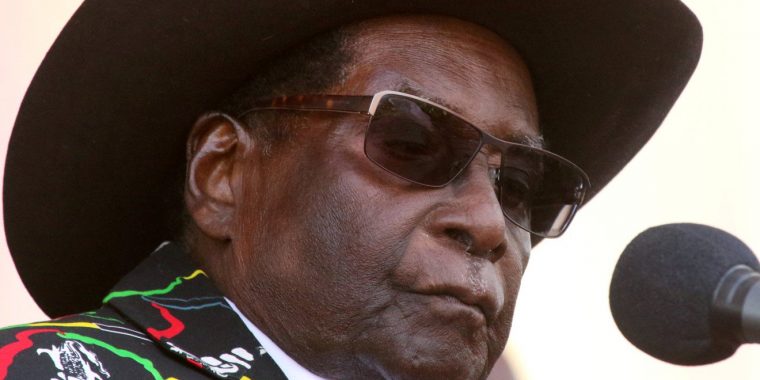
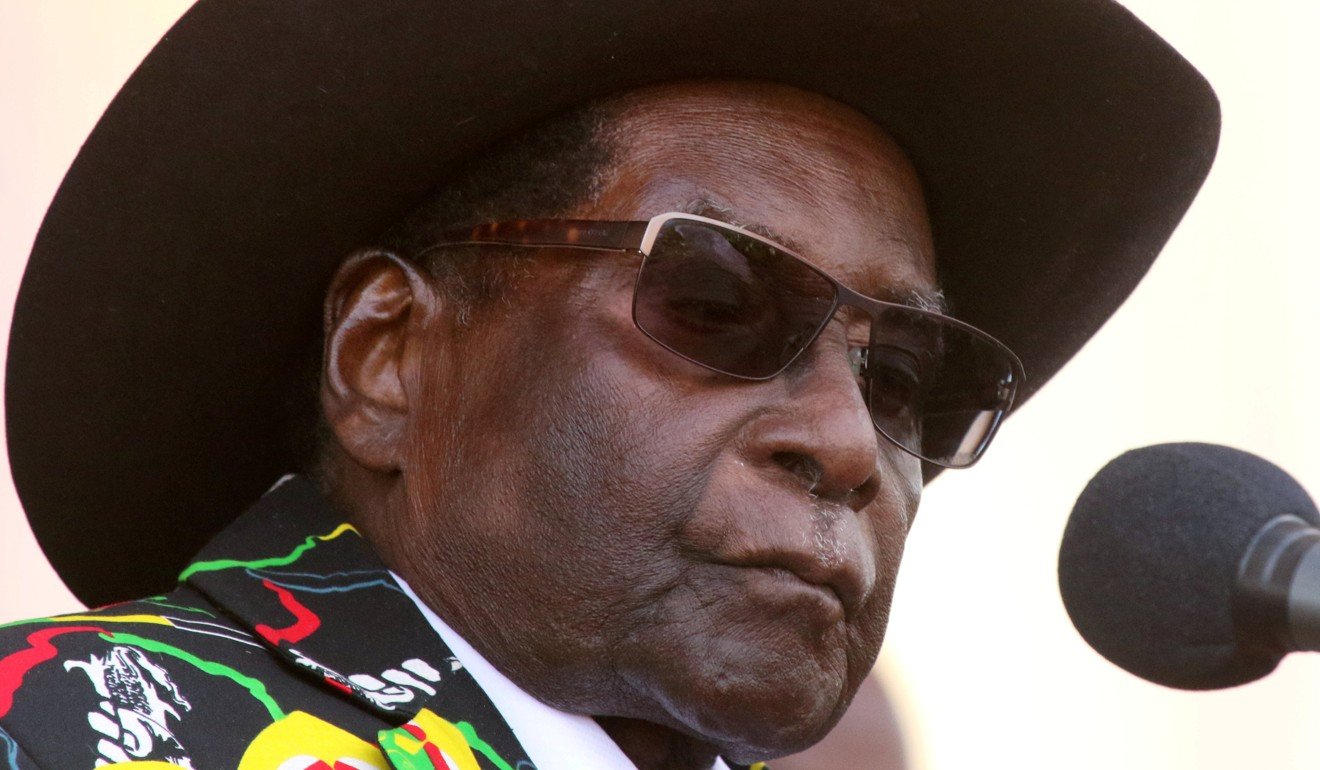
Former president Robert Mugabe. Photo: Reuters

Zimbabweans say it is a nightmare to get common documents such as passports, drivers’ licence discs and vehicle registration plates – the government is too poor to import the materials to make them.

Over the past two decades, hundreds of thousands of Zimbabweans have fled abroad seeking work. Many others are now seeking to join the exodus as the economy withers.

“We are sitting in a vehicle whose wheels have fallen off,” said Derek Matyszak, a senior researcher at a South African think tank, the Institute of Security Studies. “Nothing is moving”.

“Mnangagwa was fully aware that Mugabe had left behind an economic disaster. To get out of it required re-engagement to attract investment from wealthy countries, improved governance and respect for human rights.”

Two days after the election, at least six people were killed when soldiers opened fire on protesters demanding the results of the ballot be published.

In January, at least 17 people were shot dead and scores injured as soldiers were ordered to crush nationwide protests triggered by a doubling of fuel prices.

“The events of August 1 last year and January this year have set back the re-engagement effort and possibility of a bailout,” Matyszak said.

Power is usually turned on between 10pm and 5am – at other times, businesses are at a loss to know whether they will get electricity.

Mugabe’s exit will make Zimbabwe even closer to China, say Chinese analysts

“Factories and industries will not open for the duration of the power cuts,” Matyszak said. “That’s hours of production lost. It means Zimbabweans are going to sink deeper into the hole.”

Tony Hawkins, a professor at the University of Zimbabwe’s School of Economics, agreed.

“It’s very difficult to be anything other than pessimistic and negative at the moment,” he said. “Jobs are being lost and exports are being lost. The fact is you are not going to get the economy back on the rails without some kind of accommodation with the main opposition.

“Without that accommodation, chances of getting international recognition and support are slim. They [the government] are caught between a rock and a hard place. It’s a very difficult situation and there is no short-term way out.”

Zimbabwe central bank holds first public T-bill auction in seven years – The Zimbabwean

Mthuli Ncube

Between 2013 and last year, the government held private auctions for banks and insurance firms and used a central bank overdraft facility to raise money. It often breached its borrowing limit, pushing domestic debt to more than $9 billion.

Under a staff-monitored programme with the International Monetary Fund, Harare promised to limit its reliance on the overdraft facility, and Finance Minister Mthuli Ncube told business leaders earlier this month that the government had not borrowed from the central bank this year.

The Reserve Bank of Zimbabwe invited bids for 91-day treasury bills worth 30 million Zimbabwe dollars, which would be allotted to successful bidders on Thursday.

Ncube, who is set to present a midterm budget review on Wednesday, has pledged to lower the budget deficit to below 5% of gross domestic product this year from 11.7% in 2018.

$1 = 9.1856 Zimbabwe dollars

One year after Emmerson Mnangagwa’s election, many Zimbabweans regret supporting him
One year on: What has changed for Zimbabwe post Mugabe?

Post published in: Business

One year on: What has changed for Zimbabwe post Mugabe? – The Zimbabwean

Mnangagwa was given a mandate to rule Zimbabwe for the next five years in disputed polls last year [File: Siphiwe Sibeko/Reuters]

Harare, Zimbabwe – A year ago, with Zimbabwe‘s longtime ruler Robert Mugabe out of the picture, the troubled African country seemed to have taken a turn for the better.

Mugabe’s successor and the incumbent, Emmerson Mnangagwa, was speaking a new language.

Politically, he was breaking away from his predecessor’s ruinous and often autocratic past and presenting himself as a new man, re-engaging with the international community after years of diplomatic ostracisation.

A return to democracy was expected.

Economically, the 76 year old was pursuing new policies such as opening up the country for business under the “open for business” mantra. He was also looking to abandon controversial policies such as indigenisation – a law that compelled foreign investors with businesses with a net asset value of $1 to cede 51 percent equity stakes to indigenous Zimbabweans to right historical wealth imbalances.

Aided by various public relations gimmicks that won him admiration, Mnangagwa was set to succeed.

On one occasion, he stopped his presidential motorcade at a popular fast food outlet for a chicken meal. He is said to have waited in the queue like everyone else.

Mnangagwa gives his inaugural speech to thousands of people after his win in last year’s disputed polls [Aaron Ufumeli/EPA]

Fast forward a year, the hope for a new Zimbabwe has vanished. Mnangagwa has lost support and confirmed everyone’s worst fear: there is someone who can run the country worse than Mugabe.

Innocent Zhakata, a book vendor on Harare’s streets, told Al Jazeera things have gotten tougher since Mnangagwa took over.

“Life is getting tough. Prices are going up. There is no money in the economy. During Mugabe’s time, life was better. People are now realising they made a mistake [supporting the military coup that catapulted Mnangagwa to power],” Zhakata told Al Jazeera.

“In the few months we have been with these guys, things have gotten worse. Things were better. We could buy property, furniture and other things. Now, we can’t even buy clothes.”

Munyaradzi Mufambi, a 22-year-old beverage merchandiser in the capital, said the last year had been disillusioning for him.

“I am not sure about the future of our generation in light of the problems we face as a country. I wonder if I will ever be able to raise a family and provide for them adequately,” said Mufambi.

“In all fairness, I don’t know if the president has plans to fix the problems. Maybe he just hasn’t communicated these plans to the nation.”

Mufambi, like Zhakata, said the standards of living were much better under Mugabe.

“Given a choice between Mugabe and Mnangagwa, I would choose Mugabe,” said Mufambi.

“School fees was $20 in my time. A quart of beer was $2. I have to forego beer now, save money and buy essential things. I now buy second-hand clothing.”

Promises and ‘lies’

Ibbo Mandaza, a respected academic and director of a local think-tank Sapes Trust, said Mnangagwa’s first year as president had been a total failure.

“Ever since that coup in November 2017, things have actually been getting worse. It’s been worse than we expected. We are now faced with a far worse political and economic crisis characterised by power shortages, rising prices, currency crisis and fuel shortages,” Mandaza told Al Jazeera.

“What is more worrying is that whilst we are in this crisis, there is virtual absence of government intervention. One can be forgiven for thinking there is now government. At this rate, I don’t see this government getting to 2023.

“Under Mugabe, things were getting bad. It’s the same group of people essentially. It’s them and it appears it ends with them. This can’t go on forever. I am concerned with the apparent lack of an alternative political solution in this crisis to step in and help end the crisis.”

In the run-up to the elections last year, Mnangagwa promised millions of jobs, a better life, and a better Zimbabwe.

A year later, none of the promises has been delivered.

“He lied. We thought industries were going to open and new jobs created. He lied. None of the things he promised have been delivered,” Zhakata, who was laid off from one of the country’s largest bakery, Lobels, pointed out.

Not many citizens will vent their anger in public.

Some said Mnangagwa is far more brutal than Mugabe and an even worse dictator.

In January, five months after being sworn in as the country’s third president, more than 17 unarmed people were shot and killed by the military for protesting against high fuel prices.

Scores were wounded or arrested. Mugabe had generally been seen as a dictator, but he had never unleashed soldiers on protesters.

Zimbabwe protest

Zimbabweans stand behind a burning barricade during protests against high fuel prices [Philimon Bulawayo/Reuters]

The US imposed sanctions as a result, saying they would only be removed if Harare showed commitment and political will to return to democracy through fostering the rule of law and holding credible elections, among other key reforms.

Just this week, Defence and War Veterans deputy minister Victor Matemadanda told a Zimbabwe National Liberation War Collaborators conference in Gweru the army would crush any protests.

“The law says police must use minimum force when dealing with riotous people during demonstrations,” he said.

“I do not know the level of the said minimum force. But if they fail to handle the demonstrations, the constitution says they must invite the military,” Matemadanda added.

Opposition MDC National Youth Assembly spokesperson Steven Chuma said Mnangagwa’s short reign has been a disaster.

“It’s crystal clear that Mnangagwa has failed. Never in the history of Africa has any president failed in one year as he has failed.”

Clampdown on dissent

Mnangagwa’s pledge to break with his predecessor’s past autocratic policies and tactics, and introduce far-reaching reforms in the realms of business and safeguarding fundamental rights, has so far been a pipe dream for many Zimbabweans.

Since the beginning of the year, there has been a clampdown on activists and opposition figures.

In the past few months, the government has seemingly targeted civil society activists and workers.

State security agents arrested seven activists between May 20 and 27 at Harare’s Robert Gabriel Mugabe International Airport on their return from a workshop in the Maldives.

Job Sikhala, deputy chair for the main opposition Movement for Democratic Change (MDC), was arrested last month on charges of attempting to subvert Mnangagwa’s government.

The basis of Sikhala’s arrest was a video that circulated on social media in which he appears to be telling supporters at a rally: “We are going to take the fight to the doorsteps of Emmerson Mnangagwa. We are going to overthrow him before 2023 – that is not a joke.”

What political reforms?

Mnangagwa has also not instituted reforms to laws seen to be unconstitutional such as the repressive Access to Information and Protection of Privacy Act and the Public Order and Security Act.

The two laws were seen as an attack on fundamental rights such as freedom of expression and association.

Analysts say apart from his heavy-handedness and autocratic tactics, his short rule is one fraught with numerous failures.

The economy is on its knees. Inflation is ravaging. General hardships are the order of the day.

Power shortages have hit industry hard. Currency confidence is at its lowest.

A spokesman for the ruling Zimbabwe African National Union – Patriotic Front (ZANU-PF), Simon Khaya Moyo, said Mnangagwa fared pretty fairly given the myriad of challenges he faced, such as the drought and the impact it was having on the economy.

Moyo added that the government had instituted fiscal reforms that are bearing fruit as evidenced by the fiscal discipline within all government departments as well as the budget surplus.

He added that the drought affected power generation in the country.

“The water level at Kariba dam is at 24 percent of required capacity. This has affected power generation. That is not something we have control over. But we are working to resolve this issue,” said Moyo.

“It’s been difficult for the people because of inflation. We want our people to have a good life as enunciated in our election manifesto. All the people of Zimbabwe should be well taken care of without bias and favour. It’s every citizen’s right. That is what we want for our people.”

In Zimbabwe, the Water Taps Run Dry and Worsen ‘a Nightmare’ – The Zimbabwean

HARARE, Zimbabwe — It had been five days since water had stopped flowing out of the taps at Eneres Kaitano’s bungalow in southern Harare, Zimbabwe’s modern and tidy capital city. Five days since she had done any laundry. Five days since she had forbidden her children to use the toilet more than once a day.

On the sixth day, she again rose at 3 a.m. to fetch water from a communal borehole. By the early afternoon, she was still waiting her turn at the tap with her six buckets and cans.

Much of the city had the same idea. More than half of the 4.5 million residents of Harare’s greater metropolitan area now have running water only once a week, according to the city’s mayor, forcing them to wait in lines at communal wells, streams and boreholes.

“It is causing us serious problems,” said Ms. Kaitano, a 29-year-old jeans wholesaler who was down to her last clean outfit last week. “We have to stop ourselves from going to the toilet.”

Zimbabwe’s acute water shortage is a result of a particularly bad drought this year, a symptom of climate change. Poor water management has wasted much of the water that remains. Two of Harare’s four reservoirs are empty from lack of rain, but between 45 and 60 percent of the water that’s left is lost through leakage and theft, said Herbert Gomba, the mayor of Harare.

Credit Zinyange Auntony for The New York Times

But the water crisis is only a microcosm of Zimbabwe’s malaise. Years of mismanagement under Robert Mugabe, who governed Zimbabwe for 37 years until he was finally ousted in 2017, have left the economy in tatters. Residents are battling daily blackouts that last between 15 and 18 hours; shortages of medicine, fuel and bank notes; and inflation of more than 175 percent.

Zimbabwe has become a country of queues. In recent weeks, drivers have typically lined up for about three hours to refuel their cars with gasoline that has been diluted with ethanol, which makes it burn faster. Workers wait for hours in long lines outside of banks to receive their pay in cash, because of a shortage of Zimbabwean dollars.

The price of bread has increased sevenfold in the past year, and some medicines are now 10 times more expensive, even as most wages remain stagnant.

“It is a nightmare,” said Norman Matara, a physician and board member of the Zimbabwe Association of Doctors for Human Rights, a medical watchdog. Some of Dr. Matara’s patients can no longer afford medication, while others take it “once every three days instead of once a day,” Dr. Matara said.

The shortage of water has become an annual problem in Zimbabwe, but this year’s drought is particularly serious because it has occurred earlier in the summer and affected even more people than usual.

Credit Zinyange Auntony for The New York Times

The level of rainfall this year has been about 25 percent less than the annual average, according to Washington Zhakata, the director of the Climate Change Management Department in the Zimbabwean government. A cyclone inundated the country in March, but it didn’t raise the water table and isn’t included in this year’s rainfall tally.

Although the field of attribution science — which studies how climate change influences individual weather events — is still evolving, it has been well established that global warming can make extreme weather events, including drought, more frequent and more intense.

Harare, a city of quiet suburbs with clusters of low-income tenements, all circling a compact central business district, has been hit hard.

“So much time spent waiting — it affects the productive part of the economy,” said Mr. Gomba. “It affects the whole cycle of life.”

President Emmerson Mnangagwa took over the country after leading the coup that toppled Mr. Mugabe. Mr. Mnangagwa had served as the former president’s right-hand man.

Credit Zinyange Auntony for The New York Times

Mr. Mnangagwa’s government says it is in the process of improving Zimbabwe’s economy, pointing to austerity measures that led to a rare budget surplus in the first quarter of the year.

“Zimbabwe is on a journey of reform,” the finance minister, Mthuli Ncube, wrote in a recent article. “We are heading in the right direction,” he added.

But the government has so far been unable to arrest spiraling inflation, currency devaluation and import costs. Its decision in June to ban the use of foreign currency, in an attempt to stabilize the value of the newly created Zimbabwean dollar, has instead made it even harder for firms to import goods from abroad.

“We had a window of opportunity when Mugabe left power,” said Kipson Gundani, the chief economist at the Zimbabwean National Chamber of Commerce. “But we missed that window.”

President Mnangagwa denies the fault lies with his own administration. In an interview, he blamed the water mismanagement on local politicians from opposition parties, like Mr. Gomba, Harare’s mayor. The national government is in the process of procuring a $71 million loan from the Chinese government to renovate the Zimbabwean water system, Mr. Mnangagwa said.

Credit Zinyange Auntony for The New York Times

“When that is done,” he said, “the works will begin.”

But the authorities’ record is hardly promising. The construction of a new dam, first proposed during the early years of Mr. Mugabe’s rule, has been repeatedly delayed. Broken municipal boreholes are often left unreplaced. And excessive construction of informal housing at the city limits has led to the overuse of springs and wells by an influx of new residents.

At a spring in the scrubland on the southern fringes of Harare, the water this week had slowed to a trickle, forcing residents to wait for about three hours to fill their buckets.

This time last year, several residents said, the same process took just a few minutes. But since then, a municipal borehole in a nearby township broke — it has yet to be replaced — and several wells dried up, compelling more residents to trek to the farther spring.

“We always have problems with water shortages,” said Patience Chiwakata, a 35-year-old subsistence farmer. “But this year it is much worse.”

The most desperate scenes this week were in the more formal settlements closer to the city center, where the waits were far longer and where scuffles broke out after some tried to force their way to the front.

Residents said they were washing less, drinking less and relieving themselves less. Many take time off from work to make sure their families have enough water.

Ms. Kaitano, the jeans wholesaler, had only once been able to take her clothes to market since the taps last dried up, losing around a week’s income. Her friend, Susan Chinoda, allowed her three children just one cup of drinking water a day, and one toilet brea k.

“We’re seriously restricted from living our lives,” said Ms. Chinoda, 32. “Water is life.”

Zim ups the ante on curruption, arrests top officials – The Zimbabwean

1.8.2019 7:40

The newly-constituted Zimbabwe Anti-Corruption Commission (ZACC), which was given “new teeth” by president Emmerson Mnangagwa is on an anti-corruption blitz that has seen the arrest of two senior government officials including a Minister.

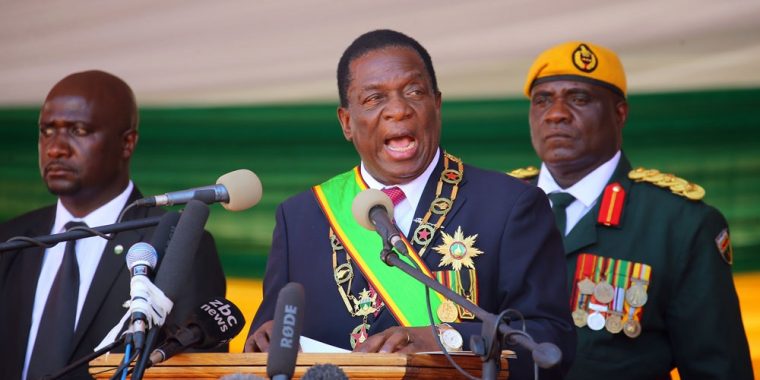
Emmerson Mnangagwa

Mnangagwa declared last week that he has “created teeth” by giving ZACC powers to arrest the corrupt and has publicly stated that “acts of corruption will not be tolerated”.

Tourism minister Prisca Mupfumira became the first high profile individual to be arrested and brought before the courts over an alleged US$95 million corruption scandal. Mupfumira is said to have abused her position to swindle funds from the country’s state pension entity, the National Social Security Authority, when she was minister of labour in Robert Mugabe’s administration.

Mupfumira becomes the second serving minister in Zimbabwe’s history to be arrested while still in office. The first was former finance minister Chris Kuruneri who was arrested in 2004 while he was still in government. Mupfumira was on Saturday denied bail and will spend 21 days in custody.

Prosecutors said detaining Mupfumira for 21 days would allow investigators to probe her bank accounts.

Meanwhile another high profile arrest was made Tuesday when Principal Director Monitoring and Evaluation in the Office of the President and Cabinet, Douglas Tapfuma was arrested for criminal abuse of office after allegedly importing a fleet of vehicles.

ZACC commissioner in charge of investigations, Frank Muchengwa confirmed the arrest saying Tapfuma allegedly led people to believe that he was importing the vehicles on behalf of the State, when the cars were his. He allegedly imported the vehicles using letters from the President’s Office to facilitate the importation of vehicles for friends and relatives duty-free.

In Zimbabwe, the Water Taps Run Dry and Worsen ‘a Nightmare’
Why disaster readiness is critical for Africa – and what the Commonwealth is doing about it

Post published in: Business