
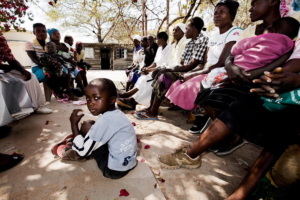

Zimbabwe is
a
country
located
in
southern
Africa.
It
shares
its
borders
with
South
Africa
to
the
south,
Zambia
to
the
north,
Mozambique
to
the
east
and
Botswana
to
the
west.
Harare,
the
largest
city
and
at
the
same
time
the
capital,
lies
in
the
northeastern
part
of
the
land.
Zimbabwe’s
population
is
about
17
million,
with
the
average
age
of
a
citizen
being
18.
The
political
system
is
a
constitutional
democracy
and
most
of
its
population
practices
Christianity.
Despite
its
vast
size,
natural
beauty
and
rich
cultural
heritage,
HIV
in
Zimbabwe
remains
a
significant
public
health
challenge.
The
Prevalence
of
HIV
HIV
in
Zimbabwe is becoming
an
increasingly serious
problem.
In
2024,
about
1.3
million
people
were
living
with
the
virus,
most
of
whom
were
adults.
Notably,
women
made
up
a
significantly
larger
share
of
those
affected,
with
740,000
cases
compared
to
490,000
among
men.
Despite
the
progress
made
in
prevention
and
treatment,
economic
instability
and
limited
public
health
funding
continue
to
threaten
the
country’s
response
to
HIV.
The
national
currency’s
devaluation
and
rising
inflation
have
reduced
health
care
budgets
and
led
to
shortages
of
medicines
in
some
regions.
In
early
2025, cuts
and
freezes in
international
funding,
including
a
temporary
suspension
of
economic
support,
took
effect.
As
a
result,
several
HIV
clinics
closed
and
the
ARV
supply
was
interrupted,
leaving
thousands
without
help.
Experts
and
health
organizations
have
warned
that
such
disruptions
could
reverse
years
of
progress
in
HIV
control
and
treatment
adherence.
Key
Populations
In
Zimbabwe,
key
populations,
especially
female
sex
workers,
bear
a
substantially
higher
burden
of
HIV
than
the
general
population.
About
half
of female
sex
workers have
HIV
in
Zimbabwe.
The
prevention
is
difficult
because
many
in
the
key
population
don’t
even
know
their
HIV
status,
spreading
the
illness
further.
Women
and
girls,
despite
progress
in
some
areas
of
education,
remain
underrepresented
in
formal
employment
and
are
more
exposed
to
poverty.
Many
women
rely
on
the
informal
sector
for
income,
such
as
street
vending
and
odd
jobs,
which
often
yield
irregular
earnings,
making
it
difficult
to
afford
health
care,
clinic
transport
or
consistent
treatment.
In
some
cases,
the
urgency
to
provide
for
dependents
leads
to
“survival
sex”
or
informal
transactional
relationships.
Fighting
HIV
Zimbabwe
has
made
significant
progress
in
combating
HIV,
with
strong
backing
from
the
Global
Fund,
PEPFAR,
UNDP
and
local
civil
society
groups.
According
to
recent
reports,
about
93%
of
people
living
with
HIV
in
Zimbabwe
know
their
status,
98%
of
those
diagnosed
are
receiving
antiretroviral
therapy
(ART)
and
95%
of
those
on
ART
have
achieved
viral
suppression.
However,
sustaining
these
gains
remains
a
challenge.
Despite
substantial
external
support,
Zimbabwe
faces
a
funding
gap
of
about
$133
million
in
2024
to
fully
meet
the
resource
needs
outlined
in
its
strategic
HIV
plan.
Recent
freezes
and
reductions
in
donor
funding,
including
from
USAID,
have
raised
serious
concerns
about
maintaining
services,
clinics,
ART
supply
and
outreach,
particularly
for
vulnerable
and
marginalized
groups.
With
continued,
focused
commitment
from
international
partners
and
increased
domestic
investment,
Zimbabwe
aims
to
maintain
and
strengthen
HIV
prevention
and
treatment
services.
Key
elements
include
expanding
local
funding
sources,
ensuring
that
services
for
key
populations
remain
prioritized,
sustaining
supply
chains
for
ART
and
scaling
up
testing,
prevention
and
care
innovations.
–
Julia
Skowrońska
Julia
is
based
in
Wrocław,
Poland
and
focuses
on
Global
Health
for
The
Borgen
Project.
Post
published
in:
Featured