
Last
week,
a
lawyer
attending
the
New
York
Bar
Foundation
gala
spoke
up
to
heckle
Paul
Weiss
chair
Brad
Karp
over
the
firm’s
deal
with
the
Trump
administration.
Afterward,
a
prominent
authority
on
the
business
of
law
mused
to
me
that
we
don’t
level
enough
blame
on
the
rest
of
the
legal
industry
for
failing
to
organize
and
take
collective
action.
Paul
Weiss
and
the
other
capitulating
firms
found
themselves
in
a
classic
Prisoner’s
Dilemma
and
found
that
the
faster
they
made
a
deal,
the
better
the
terms.
But
the
best
outcome
for
the
hypothetical
prisoners
is
actually
to
stick
to
their
principles,
assuming
no
one
rats
them
out.
While
many
lawyers
called
out
the
administration’s
lawlessness,
there
wasn’t
the
unified
sense
of
purpose
across
the
industry
—
especially
across
Biglaw
—
that
a
firm
could
rely
upon.
But
a
number
of
legal
professionals
want
to
change
that,
and
start
making
a
public
demonstration
of
the
legal
community
coming
together
to
defend
the
rule
of
law
—
since
lawyers
should
consider
themselves
the
rightful
guardians
of
that
principle
anyway.
Tomorrow
offers
something
of
a
second
bite
at
the
apple
for
lawyers.
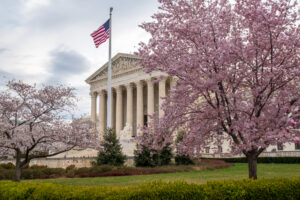
“Lawyers
March
for
Democracy”
kicks
off
tomorrow
at
1
p.m.
outside
the
Supreme
Court.
The
People’s
Parity
Project
organized
the
event,
backed
by
Alliance
for
Justice,
the
American
Constitution
Society,
Lambda
Legal,
and
a
coalition
of
other
progressive
legal
organizations
to
“call
out
the
Trump
administration’s
lawlessness
and
the
Supreme
Court’s
complicity
in
Trump’s
authoritarianism.”
Through
all
of
the
upheavals
of
the
early
months
of
Trump’s
second
term,
the
Supreme
Court
has
not
only
been
complicit
but
has
actively
participated
in
Trump’s
authoritarian
project,
siding
with
the
administration
over
and
over
again
and
allowing
him
to
continue
blatantly
unconstitutional
actions
without
any
public
legal
justification.
Why
start
at
the
Supreme
Court?
Remember
the
humble
ask
of
the
anonymous
federal
judges
who
asked
the
Supreme
Court
to
please
say
something
about
the
Trump
administration
telling
the
January
6
people
to
go
to
“war”
with
us?
At
least
try
—
they
asked
the
Court
—
to
explain
shadow
docket
opinions
so
the
administration
can’t
use
its
media
outlets
to
recast
those
empty
orders
as
indictments
of
lower
court
judges
just
following
existing
precedent.
Hearing
the
plea
and
understanding
the
gravity
of
the
violent
threats
mounting
against
federal
judges,
the
Supreme
Court
said:
nah.
And
then
Republicans
called
for
a
probe
to
punish
the
judges
for
speaking
out.
The
Supreme
Court
makes
a
lot
of
sense
as
a
starting
point.
The
New
Republic
ran
a
wonderful
piece
this
week
drawing
parallels
between
tomorrow’s
march
and
successful
lawyer-led
resistance
movements
around
the
world.
In
Pakistan
in
2007,
lawyers
marched
—
through
tear
gas
and
arrests
—
after
President
Musharraf
suspended
the
chief
justice.
They
wore
their
black
coats
as
symbols
that
the
law
itself
was
under
siege.
Eventually,
they
prevailed.
Lawyers
love
their
image
as
the
guardians
of
democracy.
Quoting
A
Man
For
All
Seasons
to
proclaim
themselves
the
last
defense
against
tyranny
is
practically
the
“Oh,
The
Places
You’ll
Go”
of
a
law
school
graduation.
But
when
tyranny
actually
knocks,
the
incentives
are
set
up
to
make
it
easier
to
invite
it
in
for
tea.
At
the
highest
levels,
law
firms
run
on
access
to
government
actors,
expensive
staff,
and…
well,
yeah,
also
big
personal
paychecks.
When
an
administration
launches
an
existential
threat
to
the
business
model
—
and
the
current
Supreme
Court
gives
few
guarantees
that
it
would
block
those
illegal
threats
if
called
upon
—
it’s
hard
to
convince
individual
firms
to
push
back
if
they
don’t
feel
like
the
rest
of
the
industry
has
their
back.
And
they
didn’t.
The
rest
of
Biglaw
failed
to
publicly
back
them
up
and
Karp
claims
rival
firms
actively
used
the
Executive
Order
threat
to
try
to
steal
talent
and
business
from
the
firm.
At
the
time
when
a
firm
needed
industry
support
the
most,
at
least
some
of
its
competitors
just
saw
a
chance
to
throw
them
under
the
bus.
That
those
same
firms
are
probably
now
using
the
fact
that
a
firm
DID
make
a
deal
to
try
to
steal
talent
and
business
may
involve
a
different
ethical
positioning,
but
the
underlying
problem
remains
that
the
industry
is
so
atomized
that
it
presents
a
custom-built
divide
and
conquer
opportunity.
Which
is
why
marches
like
the
one
tomorrow
are
so
important.
And
conferences
like
the
Rule
of
Law
Society
recently
held.
And
initiatives
defending
bar
associations
and
other
legal
groups
that
preach
profession
over
employer.
Lawyers
need
to
get
back
to
a
little
of
that
corny
law
school
idealism
and
get
together.
Lawyers
March
for
Democracy
[People’s
Parity
Project]
Earlier:
Heckler
Asks
‘For
Trump?’
As
Paul
Weiss
Describes
Pro
Bono
Work
At
Gala
Dinner
In
A
Bold
Move,
Federal
Judges
Are
Calling
Out
The
Supreme
Court’s
Bullsh*t
District
Judges
Fight
To
Save
The
Rule
Of
Law
While
DOJ
And
Supreme
Court
Snicker
Rule
Of
Law
Conservatives
Awkwardly
Embrace
#Resistance
 Joe
Joe
Patrice is
a
senior
editor
at
Above
the
Law
and
co-host
of
Thinking
Like
A
Lawyer.
Feel
free
to email
any
tips,
questions,
or
comments.
Follow
him
on Twitter or
Bluesky
if
you’re
interested
in
law,
politics,
and
a
healthy
dose
of
college
sports
news.
Joe
also
serves
as
a
Managing
Director
at
RPN
Executive
Search.