
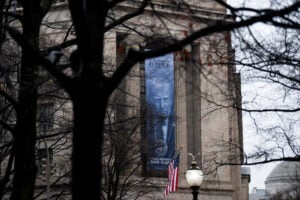
by
Al
Drago/Bloomberg
via
Getty
Images)
Ed.
note:
We
don’t
normally
publish
op-eds
like
this,
but
given
the
gravity
of
the
ethical
issues
coming
out
of
the
Justice
Department,
we
are
lucky
to
present
this
timely
report
and
analysis
from
the
former
director
of
the
DOJ’s
Departmental
Ethics
Office,
Joseph
Tirrell.
The
Department
of
Justice
recently
changed
a
long-standing
policy
that
limited
the
political
activity
of
its
senior
political
appointees.[1]
At
first
glance,
the
shift
may
appear
technical.
In
reality,
it
removes
an
important
safeguard
designed
to
protect
public
confidence
in
the
fairness
of
American
elections.
I
spent
19
years
at
the
Justice
Department.
In
my
final
role,
as
senior
ethics
counsel
and
director
of
the
department’s
ethics
office,
I
trained
employees
on
the
Hatch
Act,
advised
leadership
on
compliance
and
helped
enforce
its
rules.
For
more
than
two
decades,
the
department
treated
its
political
appointees
as
“further
restricted”
employees
under
that
law
—
a
designation
grounded
in
a
straightforward
principle:
officials
responsible
for
enforcing
election
laws
must
be
held
to
the
highest
standard
of
political
neutrality.
The
Hatch
Act
is
the
primary
federal
law
intended
to
shield
elections
from
inappropriate
political
influence
by
government
employees.
Most
federal
workers
are
considered
“less
restricted”
under
the
law.
They
are
free
to
participate
widely
in
political
life
in
their
personal
capacities.
They
may
volunteer
for
campaigns,
attend
rallies,
distribute
campaign
messages
on
social
media
and
participate
in
party
organizations.
But
even
these
employees
face
limits.
They
may
not
engage
in
political
activity
while
on
duty
or
in
the
workplace,
solicit
campaign
contributions,
run
for
partisan
office
or
use
their
official
positions
to
influence
the
outcome
of
an
election.
A
smaller
group
of
federal
employees
—
those
whose
work
involves
investigations,
prosecutions
or
election
oversight
—
are
classified
as
“further
restricted.”
This
group
includes
employees
of
the
F.B.I.,
the
Justice
Department’s
Criminal
Division
and
the
Federal
Election
Commission.
In
addition
to
the
basic
Hatch
Act
restrictions,
these
employees
may
not
work
on
campaigns,
distribute
campaign
materials
or
hold
leadership
roles
in
political
parties.
Their
political
participation
is
largely
limited
to
voting,
donating
to
campaigns
and
expressing
personal
opinions.
The
distinction
reflects
a
deliberate
balance.
The
government
recognizes
the
political
rights
of
its
employees
while
also
protecting
the
integrity
of
institutions
that
must
enforce
election
laws
impartially.
More
than
half
a
century
ago,
the
Supreme
Court
affirmed
that
balance
in
United
States
Civil
Service
Commission
v.
National
Association
of
Letter
Carriers.
Upholding
the
Hatch
Act
in
1973,
the
court
emphasized
that
“the
impartial
execution
of
the
laws”
is
the
“great
end
of
government.”
The
logic
is
easy
to
understand.
Imagine
if
commissioners
at
the
Federal
Election
Commission
were
free
to
run
campaign
operations
for
candidates
whose
cases
might
later
appear
before
them.
Or
if
F.B.I.
agents
responsible
for
investigating
election
crimes
were
also
serving
as
leaders
in
political
parties.
Even
if
those
officials
acted
fairly,
public
confidence
in
the
integrity
of
elections
would
quickly
erode.
For
decades,
the
Justice
Department
recognized
this
risk
and
applied
the
stricter
standard
to
its
own
political
leadership.
By
long-standing
order
of
successive
attorneys
general,
political
appointees
at
the
department
were
treated
as
“further
restricted.”
Republican
and
Democratic
administrations
alike
maintained
the
policy.
In
the
months
leading
up
to
federal
elections,
department
leaders
regularly
reminded
employees
that
political
neutrality
was
essential
to
the
institution’s
credibility.
The
reasoning
was
clear.
Senior
Justice
Department
officials
oversee
matters
that
directly
affect
elections,
including
election
security,
campaign
finance
enforcement
and
civil
rights
protections
at
the
ballot
box.
They
also
speak
publicly
on
behalf
of
the
department
about
these
issues.
Allowing
these
officials
to
work
on
political
campaigns
—
even
in
their
personal
capacity
—
blurs
the
line
between
impartial
law
enforcement
and
partisan
advocacy.
Leadership
by
example
matters
as
well.
When
those
at
the
top
accept
stricter
limits
on
their
own
political
activity,
they
reinforce
the
expectation
that
the
entire
department
must
remain
above
partisan
politics.
The
new
policy
abandons
that
tradition.
The
likely
consequences
are
not
difficult
to
foresee.
Senior
officials
will
test
the
boundaries
of
their
expanded
political
freedom.
Some
will
publicly
support
candidates
on
social
media
while
insisting
they
are
speaking
only
as
private
citizens,
even
as
their
government
titles
lend
authority
to
their
words.
The
distinction
between
official
speech
and
political
advocacy
will
become
harder
to
maintain.
Once
that
line
begins
to
blur
at
the
top,
the
erosion
of
norms
throughout
the
department
becomes
almost
inevitable.
Career
employees
will
see
leaders
disregarding
long-standing
standards
and
begin
to
question
why
they
alone
should
continue
to
observe
them.
The
risk
extends
beyond
internal
discipline.
Enforcement
of
the
Hatch
Act
itself
could
come
to
appear
selective
—
vigorously
pursued
when
critics
of
the
administration
are
involved
while
violations
by
allies
receive
less
scrutiny.
More
troubling
still
is
the
potential
impact
on
election
law
enforcement.
If
the
public
comes
to
believe
that
investigations
and
prosecutions
are
influenced
by
partisan
considerations,
confidence
in
the
fairness
of
elections
will
suffer.
The
Justice
Department’s
authority
ultimately
depends
on
trust
—
the
belief
that
prosecutors
and
investigators
enforce
the
law
fairly,
without
regard
to
politics.
For
generations,
strict
limits
on
political
activity
helped
sustain
that
trust.
Weakening
those
limits
threatens
to
erode
it.
Opposition
to
this
change
must
be
loud
and
clear
until
the
former
policy
is
reinstated.
Congress
should
also
consider
expanding
the
definition
of
“further
restricted”
employees
under
the
Hatch
Act
so
that
officials
responsible
for
safeguarding
elections
remain
insulated
from
partisan
campaign
activity.
Finally,
in
preparation
for
a
new
administration,
an
Ethics
2029
playbook
must
be
developed,
strengthening
not
just
the
Hatch
Act,
but
all
of
the
ethics
rules
that
apply
to
Federal
employees,
including
the
financial
conflict
of
interest
statute,
and
Federal
Employee
Standards
of
Conduct
regulations,
particularly
the
impartiality
rules.
The
goal
is
not
to
deny
public
servants
their
political
rights.
It
is
to
protect
something
even
more
fundamental:
a
Justice
Department
that
Americans
can
trust
to
enforce
the
law
fairly
—
and
to
defend
the
integrity
of
the
nation’s
elections
without
fear
or
favor.
[1]
Castronuovo,
Celine.
“DOJ
Shift
on
Political
Activity
Rules
Breaks
from
Past
Practice.”
Bloomberg
Law,
March
6,
2026,
https://news.bloomberglaw.com/us-law-week/doj-shift-on-political-activity-rules-breaks-from-past-practice.
Joseph
W.
Tirrell
served
for
19
years
as
an
attorney
with
the
FBI
and
the
Department
of
Justice
and
was
Director
of
the
Justice
Department’s
Departmental
Ethics
Office
from
2023
to
2025.
In
that
role,
he
advised
senior
department
leadership
on
federal
ethics
rules,
including
the
Hatch
Act.
He
was
dismissed
without
cause
by
Pam
Bondi
in
July
2025.