
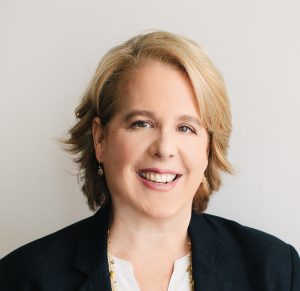
Kaplan
(Courtesy
photo)
Ed.
note:
The
Rainmaker
is
a
new
Above
the
Law
series
highlighting
attorneys
who
have
built
distinguished
practices
by
excelling
not
only
in
the
courtroom
and
at
the
negotiating
table,
but
also
in
business
development,
mentorship,
and
leadership.
Each
installment
will
feature
candid
reflections
on
what
it
takes
to
succeed
as
a
rainmaker
in
today’s
legal
industry.
Today’s
featured
rainmaker
is
Roberta
Kaplan.
As
a
young
associate
in
what
my
son
likes
to
call
“the
last
Century,”
every
time
I
would
walk
into
a
courtroom
with
the
great
litigator
(and
one
of
my
mentors)
Marty
London,
the
presiding
judge
would
ask
Marty
a
bunch
of
questions
about
his
boat
and
how
the
fishing
had
been
lately.
(Marty
was
an
avid
deep-sea
fisherman.)
I
have
to
admit
that
it
seemed
kind
of
unfair
to
me
at
the
time
–
I
didn’t
think
that
any
judge
would
ever
know
me
well
enough
to
greet
me
with
those
kinds
of
questions.
Back
then,
a
“rainmaker”
brought
to
mind
images
of
smoke-filled
men’s
clubs,
leather
lounge
chairs
at
cigar
or
whiskey
bars,
front
row
seats
to
the
Super
Bowl,
and
every
single
golf
course
on
the
planet.
True
confessions:
Even
the
smell
of
Scotch
gives
me
a
migraine.
The
one
time
I
tried
to
smoke
a
cigar
(on
a
big
case
in
Tokyo)
was
very
unpleasant.
My
father
has
spent
years
obsessing
about
golf
so
I’ll
do
anything
to
avoid
it.
And
I
obviously
can’t
join
a
men’s
club.
While
much
has
changed
since
my
time
as
a
junior
associate,
much
has
stayed
the
same,
especially
today,
when
the
word
“diversity”
is
now
perceived
by
many
as
provocative.
The
reality
is
that
there
are
still
far
fewer
venues
for
women
attorneys
to
network
and
build
their
books
of
business
as
compared
to
men,
who
still
dominate
law
firm
partnerships
and
general
counsel
offices.
As
with
many
things
for
women,
becoming
a
successful
“rainmaker”
requires
thinking
creatively
about
finding
your
own
path.
In
2013,
I
had
the
honor
to
argue
United
States
v.
Windsor
before
the
United
States
Supreme
Court.
Not
only
was
Windsor
the
case
that
broke
open
my
career,
it
also
may
have
been
the
one
that
involved
the
most
creativity.
One
of
the
things
that
was
unusual
about
Windsor
in
connection
with
rainmaking
is
that
it
was
a
pro
bono
matter.
It’s
hardly
the
norm
to
build
your
book
of
business
by
doing
public
interest
cases
pro
bono.
But
it
was
definitely
more
rewarding
than
playing
endless
rounds
of
golf.
To
be
clear,
I
was
not
a
member
of
the
established
SCOTUS
bar.
I
didn’t
work
for
the
Solicitor
General’s
office.
And
I
never
clerked
for
the
Supreme
Court.
I
was
just
Robbie,
a
Jewish
girl
from
Cleveland
who
worked
her
tush
off
to
get
into
Harvard
College
and
Columbia
Law
School,
and
then
worked
even
harder
to
become
a
litigation
partner
at
Paul,
Weiss.
It
was
as
astonishing
to
me
as
it
was
to
everyone
else
at
the
time
that
I
was
the
person
who
would
be
standing
before
the
Supreme
Court
arguing
Windsor.
If
you
had
told
me
back
when
I
was
Marty’s
junior
associate
that
that
would
happen,
I
would
have
told
you
that
you
needed
to
get
more
sleep.
So
how
did
I
get
a
winning
case
to
the
Supreme
Court
in
the
first
place?
The
key
to
our
success
in
Windsor
was
to
take
the
abstract
question
of
marriage
equality
off
the
table.
Most
LGBTQ
civil
rights
cases
that
had
been
brought
up
to
that
point
had
gone
broad,
using
a
large
number
of
lesbian
and
gay
couples
of
different
ages,
races,
backgrounds,
with
and
without
children,
who
were
married
in
every
sense
of
the
word
but
the
legal
one.
That
was
certainly
understandable
–
the
point
was
to
show
the
broad
diversity
of
lesbians
and
gay
men
who
were
negatively
impacted
by
their
inability
to
marry.
In
fact,
that
was
the
strategy
that
I
myself
had
used
when
we
lost
the
state
court
case
for
marriage
equality
in
New
York
in
2006.
In
Windsor,
we
decided
to
take
the
opposite
approach.
Rather
than
have
multiple
plaintiffs
presenting
a
wide
variety
of
different
statutes
and
factual
scenarios,
we
had
only
one.
In
other
words,
we
deliberately
narrowed
our
case
to
focus
on
one
couple
(Edie
and
Thea)
who
had
been
together
for
decades
when
Thea
died
and
Edie
was
forced
to
pay
a
huge
inheritance
tax
because
their
marriage
wasn’t
recognized
under
federal
law.
We
thought
that
while
the
Justices
weren’t
ready
to
rule
that
gay
and
lesbian
couples
had
the
constitutional
right
to
marry,
a
majority
might
agree
that
the
federal
government
could
not
discriminate
against
an
already
married
lesbian
couple
when
it
came
to
taxes.
It
worked.
We
won
Windsor
because
of
DOMA’s
discriminatory
impact
on
the
federal
inheritance
tax.
A
scintillating
area
of
tax
law?
No.
But
creative?
Very.
In
fact,
my
current
client,
the
writer
and
journalist
E.
Jean
Carroll,
has
compared
the
Windsor
case
to
the
Boston
Tea
Party:
a
local
fight
over
paying
taxes
that
ultimately
led
to
revolutionary
advances
for
the
whole
country.
I
would
never
describe
myself
as
“creative”
in
the
conventional
sense
of
the
word.
I
have
no
artistic
talent.
I
can’t
draw
anything
recognizable.
I
sing
so
far
out
of
key
that
my
son
can’t
stand
to
be
in
the
car
with
me
when
a
Chappell
Roan
song
comes
on.
(Believe
it
or
not,
I
recently
dressed
up
as
Chappell
Roan
for
a
Halloween
party
hosted
by
one
of
our
clients).
My
high
school
art
teacher
once
claimed
that
every
piece
of
pottery
I
made
somehow
turned
out
to
look
like
a
hookah.
When
I
argued
that
that
was
not
my
intent,
his
response
was
that
I
should
never
take
another
art
class
again,
but
that
I
probably
would
make
a
good
lawyer.
He
was
right
on
both
counts.
Not
only
did
I
never
take
another
art
class,
but
in
the
law,
I
found
an
outlet
for
my
own
unique
form
of
creativity.
It
may
look
easy,
but
it
actually
takes
a
lot
of
creativity
to
come
up
with
ways
to
describe
complex
facts
and
ideas
in
ways
that
a
judge
or
jury
will
find
most
persuasive.
After
many
years
in
Biglaw
and
with
the
Windsor
decision
behind
me,
I
decided
to
repeat
our
strategy
in
Windsor
–
rather
than
going
big,
it
was
time
to
go
small.
It
seemed
to
me
that
it
was
becoming
increasingly
difficult
to
have
a
cutting-edge
litigation
practice
at
a
big
firm
—
clients
were
growing
concerned
about
what
litigators
were
doing
not
just
for
them,
but
for
other
clients
as
well.
Just
months
after
leaving
Paul,
Weiss,
when
I
came
up
with
the
crazy,
albeit
creative
idea
of
using
the
KKK
Act
of
1871
to
sue
more
than
a
dozen
white
nationalists
who
planned
for
the
violence
that
occurred
at
the
Unite
the
Right
rally
in
Charlottesville,
I
knew
that
the
costs
in
terms
of
e-discovery
and
security
alone
were
going
to
be
astronomical.
At
large
firms,
pro
bono
cases
are
largely
funded
by
paying
cases.
If
a
small
firm’s
attorneys
are
only
working
on
pro
bono
cases,
that
can
make
it
hard
to
pay
salaries.
Unfortunately,
the
righteousness
of
the
cause
won’t
pay
the
rent.
So
we
decided
to
get
creative.
Inspired
by
what
Chad
Griffin
had
done
in
establishing
the
non-profit
advocacy
group
the
American
Foundation
for
Equal
Rights
to
support
David
Boies’
and
Ted
Olson’s
California’s
Prop
8
litigation
(argued
at
the
Supreme
Court
the
day
before
Windsor),
we
decided
to
establish
a
non-profit
group
to
raise
money
for
our
expenses.
Being
a
smaller
firm
means
that
you
don’t
have
the
luxury
of
just
throwing
bodies
at
a
problem;
you’re
forced
to
solve
it
in
the
most
efficient
and
creative
way
possible.
Not
enough
partners
to
handle
all
the
witnesses
in
a
four-week
jury
trial?
No
problem
–
hire
the
most
talented
associates
and
give
them
the
opportunity
to
put
witnesses
on
the
stand
themselves.
(In
Charlottesville,
I
had
two
different
junior
colleagues
put
on
and
cross
examine
some
of
the
most
important
witnesses
in
the
case.)
While
our
firm,
Kaplan
Martin,
is
small
by
design,
we
punch
far
above
our
weight
in
large
part
because
we
love
what
we
do.
We
practice
at
the
same
level
as
Biglaw
—
we
still
sweat
every
detail
because
that
is
the
only
way
to
win.
We
just
do
it
with
fewer
people
and
more
creativity.
And
although
we
are
committed
to
being
generalists,
we
do
have
one
specialty
—
we
like
to
take
on
bullies.
We’ve
twice
beaten
the
biggest
bully
in
the
world
in
jury
trials
for
E.
Jean
Carroll
and
in
the
dispute
over
congestion
pricing
for
the
MTA.
Sadly,
since
there
seem
to
be
a
lot
more
bullies
with
a
lot
more
power
in
the
world
today,
when
potential
clients
see
us
willing
to
go
up
against
the
likes
of
Donald
Trump
or
the
neo-Nazis
in
Charlottesville,
they
know
that
we
won’t
be
afraid
to
take
on
the
toughest
fights
for
them.
The
law
is
not
for
everyone
and
practicing
law
the
way
I
do
(obsessively)
isn’t
either.
I
can’t
think
of
anything
that
gives
me
a
greater
sense
of
satisfaction
than
writing
a
brief,
arguing
in
court,
or
trying
a
case
–
except
maybe
fly
fishing
when
the
trout
are
biting.
If
you
love
what
you
do,
you’ll
never
be
bored.
Surround
yourself
with
colleagues
who
you
respect
and
trust,
who
love
to
litigate,
and
with
whom
you
can
come
up
with
the
most
creative
ways
to
win.
At
least
in
my
opinion,
that’s
not
a
bad
way
to
pass
the
time,
beat
bullies,
and
become
a
“rainmaker.”
Described
by The
Washington
Post as
“a
brash
and
original
strategist,
with
neither
a
gift
for
patience
nor
silence,
a
crusader
for
underdogs
who
has
won
almost
every
legal
accolade
imaginable,”
Robbie
Kaplan
is
a
renowned
and
celebrated
litigator
and
co-founder
of
Kaplan
Martin
LLP.
Robbie
began
her
legal
career
at
Paul,
Weiss,
where
she
catapulted
herself
to
partner
in
just
seven
years.
Along
with
securing
federal
recognition
of
same-sex
marriage
through
the
historic
Supreme
Court
case United
States
v.
Windsor and
defeating
the
neo-Nazis
in
Charlottesville,
Robbie
also
has
defeated
President
Trump
twice
in
trials
on
behalf
of
her
client
E.
Jean
Carroll
and
represents
the
New
York
City
Metropolitan
Transportation
Authority
in
its
matters
related
to
congestion
pricing.
Robbie
is
a
long-time
lecturer
at
Columbia
University
Law
School
and
has
won,
among
many
other
awards,
the
Lifetime
Achievement
Award
from
the New
York
Law
Journal and
Most
Innovative
Lawyer
of
the
Year
from
the Financial
Times.