
President
Emmerson
Mnangagwa
received
the
sculpture
after
years
of
negotiation
Zimbabwe’s
flag,
banknotes
and
coat
of
arms
all
feature
a
stately
looking
eagle,
sitting
majestically
on
a
plinth.
Known
as
the
Zimbabwe
Bird,
it
has
long
been
a
symbol
of
national
identity,
but
behind
it
lies
a
complex
tale
of
displacement,
colonial
plunder
and
restitution.
The
bird
is
one
of
several
ancient,
treasured
sculptures
that
were
taken
from
Zimbabwe
by
colonialists
and
spent
decades
outside
the
country’s
borders.
It
was
only
this
week
that
–
after
137
years
away
–
the
final
displaced
bird
arrived
home,
a
moment
Zimbabwean
President
Emmerson
Mnangagwa
described
as
“the
return
of
a
national
icon”.
The
grey,
soapstone
carving
was
repatriated
from
neighbouring
South
Africa
–
it
wound
up
there
having
been
ripped
from
its
column,
then
sold
to
British
imperialist
Cecil
Rhodes.
On
Tuesday,
South
Africa
repatriated
the
bird,
along
with
eight
sets
of
human
remains,
previously
exhumed
in
Zimbabwe
by
colonial
researchers
and
donated
to
a
South
African
museum.
The
body
parts
were
taken
during
the
late
19th
and
early
20th
Centuries
for
“a
misguided
colonial
pseudoscience”
South
African
Minister
of
Culture
Gayton
McKenzie
said
at
a
ceremony
held
to
hand
over
the
remains
and
the
bird.
“These
are
not
abstractions,
but
people…
removed
from
their
graves,
their
communities,
and
their
homeland
under
the
logic
that
their
bodies
were
data,”
he
said.
Their
return
is
significant
for
Zimbabwe, which
has
also
been
seeking
the
return
of
the
skulls
of
late-19th
Century
anti-colonial
heroes,
believed
to
be
in
the
UK.
This
week’s
homecoming
comes
at
a
time
when
former
colonial
powers
are
yielding
to
campaigns
to
send
looted
African
remains
and
artefacts
back
to
their
home
countries.
The
vast
majority
of
returns
have
come
from
European
countries
like
France,
the
Netherlands,
Germany
and
the
UK.
What
made
this
repatriation
rare
was
that
it
was
an
African
country
doing
the
returning.
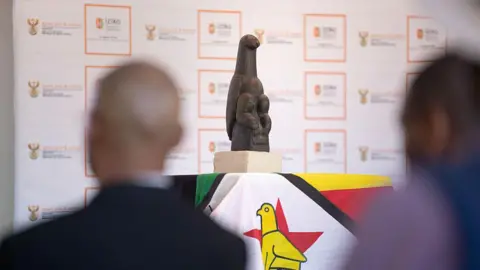 AFP
AFPvia
Getty
Images
national
symbol,
the
Zimbabwe
Bird
features
on
Zimbabwe’s
flag
In
his
speech
on
Tuesday,
McKenzie
described
the
birds
as
“unique”
and
“revered”.
“Nothing
like
them
has
been
discovered
anywhere
else
in
the
world,”
he
said.
The
sculptures
were
taken
from
the
ruins
of
Great
Zimbabwe,
a
medieval
stone
city,
from
which
Zimbabwe
gets
its
name.
In
fact,
Zimbabwe
means
“house
of
stone”
–
and
today
the
country
is
globally
renowned
in
art
circles
for
its
modern
stone
carvings.
The
Great
Zimbabwe
site
was
built
between
the
11th
and
15th
Centuries
and
the
striking
bird
sculptures
–
of
which
eight
are
known
–
were
planted
on
walls
and
monoliths.
An
air
of
intrigue
surrounds
the
eagles
–
scholars
cannot
agree
on
who
exactly
sculpted
them,
though
some
scholars
believe
they
were
made
by
ancestors
of
the
Shona
people,
who
make
up
the
majority
of
the
country’s
current
population.
“They
are
the
most
significant
archaeological
treasures
ever
discovered
in
the
country,”
Plan
Shenjere-Nyabezi,
an
archaeology
professor
at
the
University
of
Zimbabwe,
tells
the
BBC.
“The
Zimbabwe
Birds
stand
as
powerful
and
cherished
symbols
of
our
national
heritage.”
The
sculptures
vary
in
shape
and
sizes
–
they
range
from
25cm
(9.8in)
to
50cm
in
height,
towering
above
one
metre
when
measured
with
their
columns.
Some
experts
believe
the
statues
depict
the
bateleur
eagle,
known
as
“chapungu”
in
Shona.
Others
believe
the
bird
is
a
“hungwe”,
the
African
fish
eagle.
The
statues
have
great
spiritual
meaning
for
some
in
Zimbabwe,
Edward
Matenga,
one
of
Zimbabwe’s
foremost
scholars
of
the
sculptures,
tells
the
BBC.
He
says
the
endangered
bateleur
eagle
is
historically
“sacred”
to
both
the
Shona
and
the
minority
Venda
people.
The
eight
birds
watched
over
Great
Zimbabwe
for
hundreds
of
years.
However,
in
the
19th
Century
a
growing
number
of
European
hunters,
traders
and
missionaries
began
exploring
the
region
prior
to
colonisation.
A
hunter
named
Willi
Posselt
happened
upon
the
birds
in
1889
and
decided
to
take
the
“best
specimen”
–
the
very
sculpture
returned
to
Zimbabwe
on
Tuesday.
According
to
his
own
account,
local
people,
armed
with
guns
and
spears,
initially
protested
against
the
bird’s
removal.
But
Posselt
was
able
to
leave
with
the
bird,
ripping
it
from
its
column
after
handing
over
blankets
and
“other
articles”
in
exchange.
“I
stored
the
remaining
[birds]
in
a
secure
place,
it
being
my
intention
to
return
and
secure
them
from
the
natives,”
he
wrote.
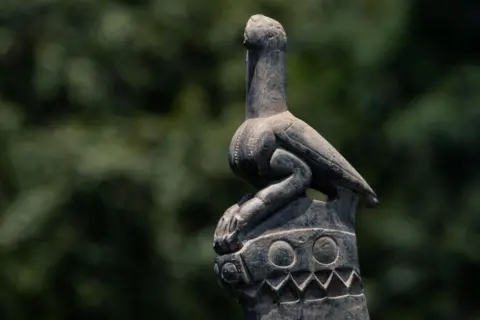 AFP
AFPvia
Getty
Images
eight
soapstone
sculptures
looked
over
Great
Zimbabwe
for
centuries
Posselt
sold
the
bird
to
Cecil
Rhodes,
a
powerful
imperialist
who
headed
the
British
South
Africa
Company
and
spearheaded
the
colonisation
of
modern-day
Zimbabwe
and
Zambia.
Rhodes
used
the
bird
as
décor
for
his
grand
Cape
Town
estate
and
two
years
later,
the
British
South
Africa
Company
commissioned
archaeologist
Theodore
Bent
to
return
to
Great
Zimbabwe.
Bent
found
the
sculptures
that
Posselt
had
stored
away
and
transported
four
of
the
prized
birds
to
a
museum
in
South
Africa.
A
fragment
of
one
other
bird
ended
up
further
afield
–
its
pedestal
was
taken
by
a
German
missionary
and
sold
to
Berlin’s
Ethnological
Museum
in
1907.
But
after
Zimbabwe
became
independent
in
1980,
its
authorities
launched
a
campaign
to
recoup
the
missing
birds,
with
only
two
remaining
in
the
country.
Robert
Mugabe,
Zimbabwe’s
independence
leader
and
long-time
president,
described
their
loss
as
a
“ruthless
cultural
plunder”.
In
a
peculiar
trade,
South
Africa’s
apartheid
government
agreed
in
1981
to
release
the
four
birds
it
held
in
a
museum
in
exchange
for
a
huge
collection
of
bees,
wasps
and
ants.
The
trove,
belonging
to
Zimbabwe’s
Natural
History
Museum,
comprised
around
1,000
kinds
of
insects.
Then,
in
2003,
another
win.
Germany
returned
the
soapstone
pedestal
that,
in
Mugabe’s
words,
had
“spent
almost
100
years
in
exile”.
Getting
the
last
bird
back
was
more
of
a
challenge.
When
Rhodes
died
in
1902,
his
Cape
Town
home
and
all
its
contents
were
vested
to
South
Africa’s
governor-general
–
a
role
which
was
later
transformed
into
the
national
president.
In
1910,
a
law
named
the
Rhodes
Will
Act
stated
that
these
possessions
should
not
be
sold,
let
or
transferred.
“Every
time
Zimbabwe
asked,
the
1910
Act
was
cited,”
McKenzie
explained
in
his
speech.
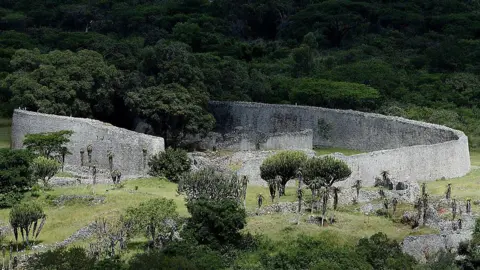 AFP
AFPvia
Getty
Images
Zimbabwe
is
recognised
as
a
World
Heritage
site
by
Unesco
South
Africa
finally
got
round
this
legal
quandary
by
signing
a
deal
to
loan
the
bird
to
Zimbabwe
for
two
years.
McKenzie
insists
that
the
bird
will
never
return
to
South
Africa,
saying
the
authorities
are
undertaking
a
review
of
the
1910
Act
in
order
to
allow
for
“permanent
repatriation”.
After
years
of
negotiation,
Zimbabwe’s
authorities
appear
to
have
faith
in
South
Africa’s
pledge.
For
them,
their
lost
bird
has
flown
home
for
good.
Prof
Shenjere-Nyabezi
echoes
this
optimism,
stating:
“I
would
say
the
arrival
of
this
last
piece
signifies
a
spiritual
homecoming.
“The
bird
is
Zimbabwe’s
heritage…
one
should
not
have
to
travel
to
other
countries
to
enjoy
their
own
heritage.”
Matenga
describes
the
repatriation
as
a
“win-win
situation”
for
both
Zimbabwe
and
South
Africa.
“It
is
a
cathartic
process
for
South
Africa,”
he
says,
“that
they
are
giving
away
what
is
important
for
another
country.”
The
bird
is
finally
returning
to
its
home
at
Great
Zimbabwe,
joining
its
seven
siblings
in
an
on-site
museum,
for
protective
purposes.
When
receiving
the
sculpture,
Mnangagwa
noted
that
the
bird
had
arrived
home
just
in
time
for
the
anniversary
of
Zimbabwe’s
independence,
on
Saturday.
“Let
the
people
of
Zimbabwe
come
and
witness,”
he
said,
wearing
a
woollen
scarf
bearing
the
colours
of
Zimbabwe’s
flag.
“Let
the
children
of
this
great
nation
see
with
their
own
eyes
the
symbol
of
their
identity
and
let
the
world
know
Zimbabwe
is
a
nation
that
respects
its
past.”
Post
published
in:
Featured