Judge Rules There Was No Reason To Detain Or Deport Grad Student Over A Damn Op-Ed Piece – Above the Law

(Image
by
Getty)

Some
good
news
for
everyone
asking
if
due
process
still
has
a
heart
beat!
Rümeysa
Öztürk,
a
grad
student
at
Tufts
University,
was
arrested
last
March
for
co-writing
an
article
that
evaluated
policy
decisions.
This
sort
of
squarely
political
speech
is
exactly
what
the
First
Amendment
was
meant
to
protect.
And
yet,
she
was
kidnapped
by
ICE
in
broad
daylight
and
the
state
came
up
with
some
bs
story
about
her
being
a
terrorist.
Thankfully
she’s
gotten
a
lot
of
support
from
the
start:
the
attempt
to
speedily
deport
her
was

thwarted

and
she
was
eventually

allowed
to
go
back
home
.
But
that
wasn’t
the
end
of
her
legal
troubles.
An
administration
so
desperate
for
legal
victories
that
they
tried
to
lock
a
guy
up
over
a
thrown
sandwich
(they
failed,
by
the
way)
continued
to
apply
legal
pressure
against
Öztürk.
After
this
most
recent
ruling,
there’s
a
good
chance
they’ll
finally
leave
her
alone.

CNN

has
coverage:

An
immigration
judge
terminated
removal
proceedings
against
Tufts
University
doctoral
student
Rümeysa
Öztürk,
who
was
detained
for
over
a
month
last
year
as
part
of
the
Trump
administration’s
effort
to
target
and
deport
international
students
and
activists
involved
in
pro-Palestinian
advocacy,
her
lawyers
said
Monday.

The
move
comes
after
recently
unsealed
court
documents
showed
the
federal
government
didn’t
have
any
evidence
that
Öztürk
had
been
supporting
terrorist
activity
when
she
was
arrested,
and
that
her
visa
revocation
and
arrest
were
because
of
an
opinion
article
she
wrote
containing
criticisms
of
Israel.

A
win
for
free
speech!
The
“accuse
them
of
terrorism
to
bypass
their
due
process
rights
and
figure
out
charges
later”
strategy
is
one
that
the
government
has
used
heavily
since
at
least
the
Bush
Jr.
administration.
And
while
Ms.
Öztürk
was
fortunate
enough
to
have
strong
legal
representation
that
could
advocate
on
her
behalf,
there’s
no
telling
how
many
other
people
weren’t
as
well-equipped
to
defend
themselves
from
the
government
over
an
offending
article,
presence
at
a
protest,
or
looking
like
they
have
the
last
name
Ramirez.

The
rule
of
law
may
be
on
its
last
legs,
but
it
ain’t
dead
yet!


Immigration
Judge
Terminates
Removal
Proceedings
Against
Tufts
Student
Detained
By
Trump
Administration,
Attorneys
Say

[CNN]


Earlier
:

2nd
Circuit
Orders
Return
Of
Vermont
Grad
Student
Abducted
By
ICE
Because
She
Wrote
An
Article
They
Didn’t
Like


Rümeysa
Öztürk
Finally
Returns
Home
After
Being
Detained
Over
6
Weeks
For
Sharing
Her
Opinions


Chris
Williams
became
a
social
media
manager
and
assistant
editor
for
Above
the
Law
in
June
2021.
Prior
to
joining
the
staff,
he
moonlighted
as
a
minor
Memelord™
in
the
Facebook
group Law
School
Memes
for
Edgy
T14s
.
 He
endured
Missouri
long
enough
to
graduate
from
Washington
University
in
St.
Louis
School
of
Law.
He
is
a
former
boatbuilder
who
is
learning
to
swim, is
interested
in
critical
race
theory,
philosophy,
and
humor,
and
has
a
love
for
cycling
that
occasionally
annoys
his
peers.
You
can
reach
him
by
email
at [email protected]
and
by
tweet
at @WritesForRent.

OK, We Need To Talk About What These Kathryn Ruemmler/Jeffrey Epstein Emails Really Mean – Above the Law

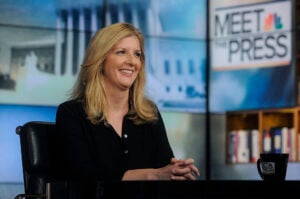
Kathryn
Ruemmler
(Photo
by
William
B.
Plowman/NBC/NBC
Newswire/NBCUniversal
via
Getty
Images)

The

relationship

between
Goldman
Sachs’s
top
lawyer,
Kathryn
Ruemmler,
and
the
late
sexual
predator
Jeffrey
Epstein
is
no
longer
something
you
can
politely
describe
as
“unfortunate
optics.”
The
latest
dump
of
Epstein
files
reveals
thousands
of
communications
between
the
two,
and
they
paint
a
picture,
not
of
arm’s-length
professionalism,
but
of
questionable
coziness
from
someone
whose
literal
job
description
is
reputational
risk.

Ruemmler
isn’t
some
inexperienced
legal
rube
who
brushed
elbows
with
a
toxic
client
once
upon
a
time.
She
is
the
top
attorney
at
Goldman
(chief
legal
officer
and
general
counsel),
a
member
of
the
management
committee,
head
of
the
firmwide
conduct
committee,
and
co-vice
chair
of
the
reputational
risk
committee.
Avoiding
the
sort
of
reputational
damage
that
could
arise
from
blurring
professional
and
friendly
relations
with
a
toxic
client
isn’t
just
expected;
it’s
the
whole
job.
Which
makes

emails
calling
Epstein
“sweetie”

while
advising
him
on
sexual
misconduct
allegations
feel
less
like
a
lapse
and
more
like
a
flashing
red
warning
light.

Then
there
are
the

pricy
gifts

from
Epstein

a
$9,400
Hermès
bag,
a
$4,200
Fendi
fur-trimmed
plaid
wool
coat,
and
a
$1,700
Fendi
bag
amongst
them.
And
she
dutifully
thanked
her
“Uncle
Jeffrey”
for
the
largesse.
Now,
a
spokesperson
said,
“Ms.
Ruemmler
didn’t
ask
for
anything
and
didn’t
want
anything,”
which
may
well
be
true,
but
surely
it’s
obvious
that
the
excessive
gifts,
and
referring
to
Epstein
as
family
(she
also
referred
to
him
as
an
“older
brother”
in
another
exchange)
is
not
exactly
a
master
class
in
character
evaluation.

It’s
worth
noting
at
this
point
that
Goldman
CEO
David
Solomon
has,
thus
far,
stood
by
Ruemmler,
even

in
the
face

of

unease
at
the
bank
.

Ruemmler
herself
has
offered
the
now-familiar
Epstein
defense,
“I
was
a
defense
attorney
when
I
dealt
with
Jeffrey
Epstein.
I
got
to
know
him
as
a
lawyer
and
that
was
the
foundation
of
my
relationship
with
him.
I
had
no
knowledge
of
any
ongoing
criminal
conduct
on
his
part,
and
I
did
not
know
him
as
the
monster
he
has
been
revealed
to
be.” Fine.
But
that
framing
gets
harder
to
swallow
when
the
same
communications
show
her
venturing
beyond
legal
advice
and
seeking
Epstein’s

career
insights
,
joking
about
“trading”
one
of
Epstein’s
“Russians”
for
a
better
compensation
package,
and
turning
to
him
for

personal
guidance
.
These
aren’t
the
hallmarks
of
a
strictly
professional
relationship.


More
emails

reinforce
that
impression.
Epstein
described
Ruemmler
as
“an
arch
feminist
who
is
my
great
defender,”
someone
who
could
show
skeptics
like
Melinda
Gates
“the
other
side
of
[J]effrey.”

Of
this
latest
revelation,
a
spokesperson
said,
“Ms.
Ruemmler
had
no
control
over
how
Epstein
characterized
her
or
their
interactions.
She
was
not
his
defender.
She
never
advocated
on
his
behalf
with
any
third
party

not
Melinda
Gates,
not
the
press,
not
a
court,
not
a
government
official.”
That
may
be
so.
But
it’s
also
beside
the
point.
Epstein’s
entire
enterprise
relied
on
cultivating
powerful,
credible
people
who
lent
him
legitimacy
simply
by
being
close.
You
don’t
have
to
file
motions
for
a
predator
to
be
useful
to
one.

Remember,
at
the
time
of
all
these
interactions,
Epstein
was
already
a
registered
sex
offender!
When
dealing
with
the
criminal
element

especially
a
guy
who
served
time
for
procuring
a
child
for
prostitution

it
should
at
least
cross
one’s
mind
that
you
might
be
dealing
with
a
manipulator.
The
price
Ruemmler
paid
for
all
these
fancy
gifts
was
the
legitimacy
Epstein
sought
from
cultivating
a
relationship
with
one
of
the
most
highly
credentialed
attorneys
in
the
nation.

Grooming
isn’t
just
about
sex,
it’s
how
predators
see
the
whole
world.

That
lack
of
accountability
is
on
full
display
in
a
jaw-dropping
comment
a
Ruemmler
spokesperson
made.
A
spokesperson

told
the
Financial
Times
,
“It
is
despicable
to
single
out
and
attack
a
highly
respected
female
professional
simply
because
of
her
benign
interactions
with
Jeffrey
Epstein.”

I’m
sorry
but
that
statement
broke
my
brain
a
little
bit.
The
thing
that
was
actually
despicable
was
Epstein’s
criminal
conduct

and
the
web
of
elite
enablers
that
allowed
it
to
persist
for
decades.
You
can’t
wave
the
specter
of
misogyny
just
because
there’s
finally
a
whiff
of
accountability.

Brad
Karp
is

no
longer
the
chair

of
Paul
Weiss!
Alan
Dershowitz
has
been
repeatedly

put
under
a
microscope

for
his
relationship
with
Epstein!
Donald
Trump’s
involvement
with
Epstein
is
the
top
political
news
story
in
the
world!
No
one
is
looking
to
single
out
a
woman
here.
And
I
can
assure
you
that
if
other
prominent
attorneys
are
discovered
in
the
Epstein
files,
Above
the
Law
will
be
writing
about
it
(even
if
it’s
us
).

It’s
galling
that
Ruemmler
is
taking
this
position
in
a
vain
attempt
to
get
the
heat
off
of
her.
This
is
the
same
Ruemmler
who,
in
emails
with
Epstein,
scoffed
at
diversity
concerns,
writing
“I
ain’t
no
affirmative
action”
when
discussing
a
potential
job
opportunity.
(Which,
tbh,
has
big
pick-me-girl
energy.)
Now
we’re
supposed
to
accept
that
it’s
“despicable”
to
scrutinize
a
“highly
respected
female
professional”
for
maintaining
an
unusually
warm
relationship
with
this
guy?
Equity
isn’t
a
shield
you
can
wield
when
the
questions
get
uncomfortable.

Goldman
is
standing
by
Ruemmler
for
now.
But
the
Epstein
files
have
a
way
of
turning
“benign
interactions”
into
something
much
harder
to
explain,
especially
for
someone
whose
job
is
supposed
to
be
knowing
better.


Kathryn
Rubino
is
a
Senior
Editor
at
Above
the
Law,
host
of

The
Jabot
podcast
,
and
co-host
of

Thinking
Like
A
Lawyer
.
AtL
tipsters
are
the
best,
so
please
connect
with
her.
Feel
free
to
email

her

with
any
tips,
questions,
or
comments
and
follow
her
on
Twitter

@Kathryn1
 or
Mastodon

@[email protected].

Top Biglaw Firm Pumps The Brakes On Early Recruiting In A Rare Win For Law Students – Above the Law

For
the
first
time
in
years,
a
Biglaw
firm
is
making
a
recruiting
change
that
could
positively
impact
law
students

and
we’re
totally
here
for
it.

Cooley
just
did
something
that
should
be
obvious,
but
somehow
feels
radical
in
the
modern
recruitment
era:
the
firm
has
stopped
pretending
that
first-semester
first-year
law
students
should
be
making
life-defining
career
decisions
before
they
even
understand
what
lawyers
do.

Instead
of
locking
in
its
entire
2028
associate
class
during
the
1L
panic
cycle,
Cooley
is
only
hiring
about
half
of
the
class
now

and
intentionally
leaving
the
rest
of
the
seats
open
to
fill
later,
after
students
actually
have
more
law
school
experience,
exposure,
and
clarity.
In
a
system
that’s
been
built
on
speed,
pressure,
and
early
commitment,
slowing
down
is
the
reform
students
actually
need.

Bloomberg
Law

has
the
details:

The
firm
is
extending
some
offers
this
winter
to
first-year
law
students
(1Ls)
for
the
summer
of
2027.
It
will
then
supplement
by
recruiting
after
students’
first
year
of
law
school,
aiming
to
fill
30-40%
of
its
class
of
2028
after
the
initial
1L
hiring
spree,
and
use
the
overlooked
3L
market
to
help
complete
its
ranks.

“It’s
going
to
broaden
the
students
that
we’re
able
to
see
over
time,
rather
than
rushing
to
hire
our
entire
entry
level
2028
class
now
with
1Ls
who
don’t
necessarily
know
what
they
want
to
do,”
Carrie
Wagner,
Cooley’s
chief
talent
officer,
told

Bloomberg
.
That’s
not
just
corporate
HR
speak

it’s
a
quiet
admission
of
what
everyone
already
knows:
the
Biglaw
recruiting
system
is
broken.

Law
schools
lost
control
of
the
recruiting
process
during
COVID.
On-campus
interviews
collapsed,
firms
took
over
timelines,
and
because
the
entire
process
got
sped
up,
students
were
crushed
by
it.
Students
are
being
pushed
to
apply
for
elite
jobs,
often
before
finals,
before
grades,
before
practice-area
exposure,
and
before
they
even
know
whether
they
like
litigation,
corporate
work,
or
the
law
in
general.
Offers
come
fast,
deadlines
are
short,
decisions
are
rushed,
and
the
pressure
is

intense
.
Cooley
is
hoping
to
cool
down
the
process
and
allow
students

and
the
firm

to
have
some
much-needed
breathing
room.

Cooley’s
new
approach
is
an
attempt
to
slow
down
the
system
that’s
putting
too
forcing
students
to

make
decisions
they’re
simply
not
ready
for
yet
.
This
is
what
student-centered
recruiting
should
look
like.

Biglaw
recruiting
has
been
a
pot
ready
to
boil
over
for
years.
Faster
timelines.
Younger
students.
Earlier
and
earlier
decisions.
More
stress.
More
mismatches.
More
burnout,
far
too
soon.
Cooley’s
move
is
a
serious
one

one
that
eases
the
pressure
and
provides
much-needed
relief
for
students.
Cooley
is
offering
something
to
students
that
Biglaw
usually
doesnt:
the
gift
of
time.
We
can
only
hope
that
more
firms
follow
in
Cooley’s
footsteps.


Cooley
Dials
Down
Recruiting
Pressure
Cooker
for
Summer
Program

[Bloomberg
Law]


Staci
Zaretsky
 is
the
managing
editor
of
Above
the
Law,
where
she’s
worked
since
2011.
She’d
love
to
hear
from
you,
so
please
feel
free
to email her
with
any
tips,
questions,
comments,
or
critiques.
You
can
follow
her
on BlueskyX/Twitter,
and Threads, or
connect
with
her
on LinkedIn.

How Perkins Coie Harnessed Data-Driven Insights And Bolstered Client Service – Above the Law


Editor’s
note:
 Second
in
a
series. 

The
Litera
Foundation
knowledge
management
platform
doesn’t
just
have
customers.
It
has
superfans

law
firms
continually
using
the
system
in
new
ways
to
enhance
client
value. 

These
ground-breaking
firms
were
recently
honored
in
Litera’s
inaugural Foundation
Innovation
Awards
,
which
recognized
the
creative
ways
firms
are
using
this
powerful
tool. 

Foundation’s
simplicity
and
adaptability
are
at
the
core
of
these
awards,
which
highlight
the
endless
use
cases
Foundation
customers
are
putting
into
practice. 

Here,
we
explore
a
use
case
among
the
finalist
firms. 


Perkins
Coie
Implements
Data-Driven
Forecasting

When
working
together,
two
Litera
solutions

Foundation
Scoping
(formerly
known
as
Clocktimizer)
and
Foundation

can
offer
critical
insights
into
pricing
trends
so
that
firms
can
increase
revenue
and
profitability
while
also
improving
client
service.

Before
GenAI
was
a
household
term,
there
was
Foundation
Scoping,
which
uses
natural
language
processing
to
identify,
categorize
and
analyze
timecard
data,
providing
useful
insights
for
scoping
and
matter
management.

A
Perkins
Coie
team
of
knowledge
management,
innovation,
and
pricing
professionals
set
out
to
combine
data
from
Foundation
Scoping
and
Foundation
to
provide
better
data
support
to
the
Emerging
Companies
&
Venture
Capital
practice.

The
team
particularly
wanted
to
categorize
transaction
types
using
data
from
Foundation
and
Foundation
Scoping
to
create
a
pricing
model
and
identify
trends
so
they
could
more
accurately
price
and
scope
matters
in
the
future.

The
Perkins
Coie
team
was
able
to
overcome
challenges,
including
estimating
the
present-day
value
of
historical
work
experience
and
ensuring
the
integrity
of
the
data
entered
into
the
system.

Because
of
these
efforts,
the
firm
has
a
deeper
understanding
of
the
key
activities
by
deal
type.
Now,
they
are
looking
to
publish
a
firmwide
dashboard
that
will
help
their
lawyers
leverage
this
data
to
better
align
with
client
needs
and
efficiency
goals.

“By
integrating
Foundation
Scoping
and
Foundation, Perkins Coie is
harnessing
the
power
of
data-driven
insights
to
transform
how
we
scope,
price,
and
manage
matters
for
our
clients,”
says
Julio
Sanchez,
the
firm’s
Senior
Pricing
Manager.
“Creating
robust
internal
benchmarks
enables
us
to
respond
to
client
RFPs
more
quickly
and
accurately,
expand
the
number
of
partners
we
can
support
with
actionable
data,
and
drive
improvements
in
firm
revenue
and
profitability.”

“This
initiative
not
only
enhances
our
ability
to
identify
key
activities
and
trends
by
deal
type,
but
also
empowers
our
lawyers
to
deliver
more
efficient,
client-aligned
value-based
alternative
fee
arrangement.
We
are
excited
to
continue
advancing
our
data
strategy
to
further
support
our
commitment
to
innovation
and
exceptional
client
service.”

With
so
many
unique
use-cases
for
Foundation,
it’s
no
wonder
to
see
why
it
has
such
innovators.
If
you
would
like
to
learn
more
about
Foundation
and
explore
how
it
might
help
your
firm
transform
your
experience,
pricing,
and
other
precedent
data,

connect
with
the
Litera
team

to
request
a
detailed
analysis
of
your
marketing
tech-stack!


This
and
other
use
cases
will
form
the
basis
of
a
business
of
law
eBook
this
year.
You
can
pre-register
for
your
copy
by
filling
out
the
form
below.

Thousands Of Law Students Demand Congress Allow The Constitution To Apply To ICE – Above the Law

(Photo
by
Alex
Kormann/The
Minnesota
Star
Tribune
via
Getty
Images)

The
folks
who
haven’t
even
passed
the
bar
yet
are
more
committed
to
defending
the
Constitution
than
the
corps
of
government
lawyers
who
swore
to
uphold
it.

A

student-led
coalition

has
gathered
more
than
2,600
signatures
from
law
students,
legal
academics,
and
law
student
organizations
across
109
law
schools
calling
on
Congress
to
pass
the
Federal
Officer
Accountability
Act.
As
the
Department
of
Homeland
Security
disappears
suspected
migrants
without
due
process,
arbitrarily
harasses
citizens,
and
point
blank
kills
innocent
people
on
camera,
a
shocked
public
has
learned
what
lawyers
have
talked
about
for
years:

the
government
has
stacked
the
immunity
deck

to
functionally
shield
law
enforcement
from
accountability.
But
Congress
could,
if
it
wanted
to,
put
a
stop
border
enforcement’s
cheat
codes
by
statutorily
authorizing
lawsuits
against
federal
officers
for
constitutional
violations.

As

reported
by
The
Nation
,
the
effort
grew
out
of
a
late-night
idea
by
Berkeley
Law
students

including
Amelia
Dal
Pra,
Zadie
Adams,
Isaiah
Paik,
Shree
Mehrotra,
and
Kaylana
Mueller-Hsia


inspired
by

Times

opinion
piece

from
Berkeley
Law
Dean
Erwin
Chemerinsky
and
NYU
professor
emeritus
Burt
Neuborne.
Within
one
week,
the
letter
attracted
signatures
from
146
legal
academics,
22
law
student
governments,
and
224
law
student
organizations.

If
you
fit
one
of
those
descriptions
and
haven’t
signed
on
yet,

here’s
your
opportunity
.

Section
1983
allows
individuals
to
sue
state
and
local
officers
for
constitutional
violations
since
1871.
As
appellate
attorney
Chris
Truax

put
it
in
The
Hill
,
Section
1983
is
“kryptonite
for
nascent
tyranny.”
That’s
a
tad
overstated
since
Superman
doesn’t
get
to
avoid
kryptonite
just
by
telling
a
court
he
was
following
standard
procedure.
The
judicially
contrived
defense
of
“qualified
immunity”


the
most
consequential
typo
in
American
law


frustrates
most
1983
cases,
giving
law
enforcement
a
“Get
Out
of
Responsibility
Free”
card
as
long
as
they
can
sell
a
judge
that
it’s
totally
normal
police
procedure

to
light
a
man
on
fire
.
Superman
wishes
his
heat
vision
could
do
that!

But
to
the
most
egregious
police
conduct

occasionally

results
in
some
1983
accountability
it
puts
some
brakes
on
police
misconduct
to
know
they
might
have
to
justify
their
actions
in
court
if
they
go
full
jackboot.

Federal
law
enforcement
has
no
such
check.

The
Supreme
Court
briefly
created
a
workaround
to
hold
federal
agents
to
account
in

Bivens
v.
Six
Unknown
Named
Agents
.
But
since
that
1971
opinion,
the
Supreme
Court
has
methodically
dismantled
that
remedy.
In

Egbert
v.
Boule

(2022),
the
Court
all
but
closed
the
door
entirely,
reasoning
that
if
Congress
wants
people
to
be
able
to
sue
federal
officers,
Congress
should
pass
a
law.

These
law
students
take
the
Court
at
its
word.

Their
proposed
text
of
the
Federal
Officer
Accountability
Act
mirrors
Section
1983’s
language,
extended
to
those
acting
under
the
authority
of
federal
law.
But
it
also
adds
the
kicker
that
officers
found
to
have
used
excessive
force
cannot
be
shielded
by
qualified
immunity.

Minnesota
is
presently
a
constitutional
law
dumpster
fire.
The
Constitutional
Accountability
Center
identifies

at
least
five
constitutional
amendments

that
the
Trump
administration
is
repeatedly
violating
on
the
ground.
Federal
agents
have
killed
American
citizens
Renée
Good
and
Alex
Pretti

on
film

during
immigration
enforcement
operations.

Over
50
people
have
died

in
ICE
detention
under
this
administration.
A
federal
judge
in
Minnesota
has
cataloged

ICE
violating
96
court
orders
in
74
cases

since
January
1,
2026

a
stunning
series
of
contemptuous
failures
that
led

one
government
lawyer
to
a
bit
of
an
in-court
breakdown
.
ICE
has
taken
the
position
that
the
Fourth
Amendment

doesn’t
apply

to
noncitizens.
The
need
for
a
federal
1983
is
as
pronounced
as
ever.

Under
the
current
legal
framework,
the
families
of
the
dead
have
essentially
no
civil
remedy
against
the
individual
officers.
Even
the
state
courts
are
closed
off
because
federal
agents
can
automatically
remove
to
federal
court.
They
can’t
rely
upon
internal
review

the
FBI
had
a
warrant
to
investigate
Renee
Good’s
murder

and
Trump
officials
called
it
off
.

The
law
students
are
shouldering
the
nation’s
ethical
and
constitutional
burdens
while
government
lawyers
run
roughshod.

Administration
lawyers
are
filing
baseless
charges
against

the
administration’s
political
enemies

and

arresting
journalists
,
advancing
facially
frivolous
legal
theories.
As
they
rack
up
clear
and
public
violations
of
the
code
we
are
supposedly
bound
to
uphold,
the
most
pressing
professional
obligation
upon
the
rest
of
us
is
to

make
sure
these
lawyers
never
practice
again
.
But
while
these
bottom-feeders
trash
their
oaths
providing
cover
for
constitutional
abuses,
law
students
read
an
op-ed,
recognized
a
repairable
problem
in
American
law,
and
built
a
nationwide
coalition
in
seven
days.
They
managed
to
draft
a
concrete
solution
to
a
problem
Congress
hasn’t
managed
to
figure
out
for
decades.

The
kids,
as
they
say,
are
all
right.
And,
fine,
some
of
the
professors
too.


ICE
Officers
Should
Be
Held
Accountable.
These
Law
School
Students
Know
How.

[The
Nation]


HeadshotJoe
Patrice
 is
a
senior
editor
at
Above
the
Law
and
co-host
of

Thinking
Like
A
Lawyer
.
Feel
free
to email
any
tips,
questions,
or
comments.
Follow
him
on Twitter or

Bluesky

if
you’re
interested
in
law,
politics,
and
a
healthy
dose
of
college
sports
news.
Joe
also
serves
as
a

Managing
Director
at
RPN
Executive
Search
.

FAMU Puts ‘Black’ Back In Black History Month After Clearing Up Bad Legal Interpretation – Above the Law

It’s
a
“B
History”
miracle!
Yesterday,
we
wrote
on
about
students
at
Florida
A&M
University’s
College
of
Law
being
told
that
they
couldn’t
use
the
word
“Black”
to
advertise
Black
History
Month
and
related
events.
The
worry
was
that
doing
so
would
be
in
violation
Florida
Senate
Bill
266
requiring
that
no
funding
go
to
“DEI”
events.
It
is
understandably
difficult
to
know
what
is
and
isn’t
“DEI”
when
your
language
is
being
policed
by
an
insufferable
bunch
that
don’t
realize
diversity
is
everywhere.
Especially
when
it
comes
to
history

people
will
look
you
in
the
eye
and
tell
you
that
lessons
about
the
Spanish-speaking
Christopher
Columbus
who
discovered
America
(he
didn’t
)
aren’t
DEI,
but
as
soon
as
you
speak
Spanish
at
an
American
event,
it
is
regarded
as

some
terrible
and
offensive
DEI
takeover
.

As
understandable
as
it
was
regrettable,
the
school
erred
on
the
side
of
safety
when
it
came
to
Black
History
Month.
After
getting
their
dirt
aired
out
for
the
last
three
days,
the
school
changed
their
tune.

Florida
Today

has
coverage:

[T]hree
days
after
the
university
shared
an
initial
statement
emphasizing
its
compliance
with
state
law
in
a
television
news
report
about
the
matter,
FAMU
President Marva
Johnson and
the
College
of
Law’s
Interim
Dean Cecil
Howard each
released
statements
Feb.
9
saying
the
word “Black” is
not
a
violation
but
was
instead
a
misinterpretation
of
diversity,
equity
and
inclusion
(DEI)
laws
that
FAMU
and
other
universities
across
the
state
have
been
abiding
by
these
past
few
years.

Cue
the
music!

Jokes
aside,
this
is
a
Black
and
White
(okay,
just
one
more
joke)
example
of
how
the
backlash
against
DEI
operates
as
either
an
explicit
or
implicit
chill
on
free
speech.
Let’s
not
forget
that
Black
History
Month

originally
Negro
History
Week

started
as
a
way
to
spread
awareness
of
Black
folks’
beautiful
history
and…inspire
us
to
greater
achievements
.”
Color
blind
policies
and
overzealous
attempts
to
conform
to
them
have
concrete
racial
effects
like
angering
and
frustrating
a
group
of
students
that
wanted
to
do
little
more
than
implement
some
community
organization
and
inspiration.
Schools
shouldn’t
have
to
worry
about
their
funding
getting
cut
because
a
Black
History
Month
flyer
mentions
that
a
Black
man
invented

personal
computers

and

blood
transfusions

or
that

Black
women
are
why
we
made
it
to
the
moon
first

or

have
MRIs
that
can
detect
breast
cancer

or

that
Black
trans
folks
have
been
fighting
for
our
civil
rights
for
centuries

or

are
moving
on
the
cutting
edge
of
tech
,
or
and
or
ad
infinitum.

This
is
a
small,
local
win
for
FAMU.
It
is
also
a
victory
for
all
the
other
HBCUs
and
their
students
that
have
graduated,
are
enrolled,
and
will
enroll
in
the
future.
The
country
wins,
too.
All
of
our
histories
are
wrapped
up
in
one
another’s

no
amount
of
removing
installations
in
Philadelphia
can
change
that.
There
is
a
clear
line
that
links
censoring
speech,
history,
and
identity
in
service
to
a
petrified,
monumental
history
that
lives
in
fear
of
truth,
change,
and
a
healthy
sense
of
self
that
contains
multitudes.
But
enough
about
everyone
who
opted
to
watch
Kid
Rock
lip
sync
over
the
Bad
Bunny
Bowl.
Go
Seahawks!


FAMU
Leaders
Say
‘Black’
Word
Ban
For
Black
History
Month
Was
An
Error

[Florida
Today]


Earlier
:

HBCU
Law
School
Not
Allowed
To
Use
The
Word
‘Black’
For
Black
History
Month
Event


Chris
Williams
became
a
social
media
manager
and
assistant
editor
for
Above
the
Law
in
June
2021.
Prior
to
joining
the
staff,
he
moonlighted
as
a
minor
Memelord™
in
the
Facebook
group Law
School
Memes
for
Edgy
T14s
.
 He
endured
Missouri
long
enough
to
graduate
from
Washington
University
in
St.
Louis
School
of
Law.
He
is
a
former
boatbuilder
who
is
learning
to
swim, is
interested
in
critical
race
theory,
philosophy,
and
humor,
and
has
a
love
for
cycling
that
occasionally
annoys
his
peers.
You
can
reach
him
by
email
at [email protected]
and
by
tweet
at @WritesForRent.

Merger Mayhem: Perkins Coie ‘Thinking About’ Partner Retention Bonuses Ahead Of Ashurst Tie-Up – Above the Law

Back
in
November
2025,
Perkins
Coie
announced
its
plans
to
combine
with
Ashurst,
transatlantic
tie-up
 expected
to
propel
the
firm
into
the
top
20
of
the
Am
Law
100.
With
the
merger
expected
to
close
sometime
in
the
third
quarter,
Perkins
isn’t
exactly
enjoying
a
kumbaya
moment
across
the
partnership.
Instead,
they’re

voting
with
their
feet


sources
say
the
firm
is
leaking
partners
like
a
sieve,
with
recruiters
circling
like
sharks
and
management
quietly
floating
retention
bonuses
to
stop
the
bleeding.

According
to
multiple
recruiters
and
firm
sources,
“tons
of
Perkins
partners”
are
now
on
the
market,
and
at
least
22
partners
have
already
left
the
firm’s
Seattle
headquarters.
In
fact,
as
reported
by
the

American
Lawyer
,
one
recruiter
with
clients
in
Seattle
said
rather
bluntly
of
the
situation:

“We
are
talking
to
Perkins
partners,
and
we
are
going
to
be
seeing
more
defections.
My
sense
is
that
the
way
the
merger
was
presented
was
not
ideal;
partners
were
feeling
like
they
were
not
given
a
choice.
It
was
more
like,
‘This
is
happening,
and
you
need
to
be
OK
with
that
and
get
on
board’

not
much
of
a
discussion.”

That
theme

no
buy-in,
no
real
consultation,
no
partner
agency

keeps
coming
up.
Another
recruiter
was
even
more
direct:

“[T]ons
of
Perkins
partners
are
looking
for
jobs”
if
the
merger
with
Ashurst
goes
through,
and
noted
some
have
threatened
to
depart
if
the
merger
is
finalized.

Internally,
the
resentment
is
even
worse.
One
current
Perkins
partner
didn’t
mince
words,
calling
the
merger
“a
monumental
f—
up.”
That
partner
claimed
management
never
meaningfully
vetted
the
merger
across
the
partnership
and
said
many
would
likely
vote
“no,”
adding
that
unlike
the
merger
between
Hogan
Lovells
and
Cadwalader,
some
Perkins
partners
see
Ashurst
as
a
brand
dilution.
Even
“lifers”
at
the
Perkins
are
displeased,
with
the
merger
inspiring
lateral
“window
shopping”
at
other
firms.

According
to
multiple
sources,
to
stop
the
bleeding,
Perkins
is
now
exploring
partner
retention
bonuses,
reportedly
structured
as
two-year
contracts
with
clawbacks
if
partners
leave
early.
As
one
source
put
it,
although
bonuses
haven’t
been
discussed
with
partners,
“the
firm
is
seriously
thinking
about
them.”
Another
source
said
the
firm
is
“not
proactively
going
out
and
making
retention
bonus
offers
to
partners.”
But
unfortunately,
these
bonuses
could
certainly
come
in
handy
for
the
firm,
because
in
reality,
“There’s
only
so
much
hemorrhaging
they
can
do
before
the
deal
is
off.”

The
view
on
this
prospective
merger
from
30,000
feet
is
that
some
partners
are
so
upset
about
how
this
deal
was
approached
that
they’re
considering
leaving

if
they
haven’t
already
left.
Perkins
Coie
seems
to
be
dealing
with
a
partner
confidence
crisis,
leaving
the
tie-up
with
Ashurst
hanging
in
the
balance.
Yes,
this
combination
may
still
close,
and
the
press
releases
will
of
course
sound
optimistic,
but
on
the
inside,
it’s
a
lot
messier
than
it
looks.


‘More
Defections’?
Perkins
Partners
Seek
Alternative
Options
in
Advance
of
Ashurst
Merger

[American
Lawyer]


Earlier
:

Perkins
Coie
Faces
Partner
Run
As
Ashurst
Merger
Deal
Nears


The
Next
Transatlantic
Biglaw
Heavyweight:
Ashurst
Ties
The
Knot
With
Perkins
Coie


Staci
Zaretsky
 is
the
managing
editor
of
Above
the
Law,
where
she’s
worked
since
2011.
She’d
love
to
hear
from
you,
so
please
feel
free
to email her
with
any
tips,
questions,
comments,
or
critiques.
You
can
follow
her
on BlueskyX/Twitter,
and Threads, or
connect
with
her
on LinkedIn.

A GC’s Guide To The Modern Merger: Mastering Complex Transactions In Uncertain Times – Above the Law

As
recent
report
by
Deloitte
 notes,
today’s
dealmakers
must
“navigate
perpetual
uncertainty.” 

The
same
goes
for
law
departments
involved
with
a
corporate
transaction

or
even
preparing
for
the
possibility
of
one.

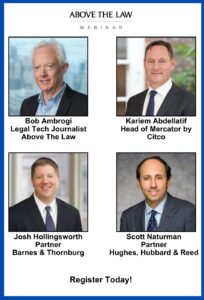
On

February
12th

at
1
p.m.
ET,
join
us
and
our
friends
at
Mercator
by
Citco for
a
panel
discussion
providing
a
step-by-step
look
at
key
challenges
and
strategies
in
modern
M&A
practice
including:

  • Pre-merger
    due
    diligence
    best
    practices
  • Post-closing
    integration
    strategies
  • Entity
    management
    optimization
  • Compliance
    risk
    mitigation
  • The
    role
    of
    technology

We’ll
discuss
how
your
law
department
can
encourage
a
successful
transaction

from
early
due
diligence
through
to
long-term
governance
and
integration
planning.


Register
Here!
1
hour
of
CLE
credit
is
available
for
live
attendees.


Friday Is the Deadline to Vote! Here Are the Current Standings. Vote Now to Pick the 15 Startups that Will Go to Startup Alley at ABA Techshow in March

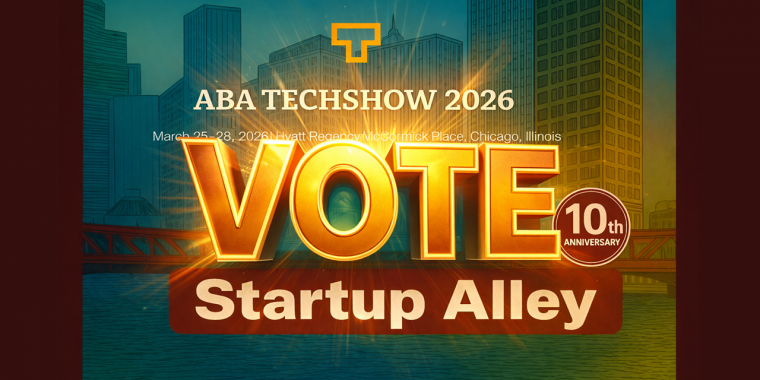
This
Friday,
Feb.
13,
is
the
deadline
to
vote.
Your
votes
determine
the
15 legal
tech
startups
that
will
get
to
compete
at
the
10th-annual
Startup
Alley
at
 ABA
TECHSHOW
.

Below
are
the
standings
so
far,
ranked
by
total
votes
received.
Which
of
these
companies
will
end
up
lucky
on
Friday
the
13th?

Remember,
your
votes
determine
the
15
companies
that
get
the
oppor
tunity
to
face
off
in
a
live
pitch
competition
on
the
opening-night
of
this
year’s
TECHSHOW,
which
takes
place
in
Chicago
March
25-28.
They
also
get
to
exhibit
in
a
special
Startup
Alley
portion
of
the
exhibit
hall.


DEADLINE
FOR
VOTING
IS
FRIDAY,
FEB.
13,
AT
11:45
P.M.
ET.

Voting
is
easy:

Here
are
the
current
standings.
Only
15
of
the
25
startups
will
make
the
cut.

  1. LegalBridge
  2. Candle
    AI
  3. Immediator
  4. Bradwell
  5. EstateScribe
  6. TwinCounsel
  7. Litmas
    AI
  8. CounselPro
  9. Sonar
    Legal
  10. Simone
  11. CaseCreate
  12. EstateMin
  13. LawFi
  14. CollBox
  15. SecureSplit
  16. Lawdify
  17. StreamSettle
  18. Trailmate
  19. PowerPatent
  20. ZODR
    Ai
  21. SayWell
  22. DraftyAI
  23. LawQi
    Global
  24. ChronoTracer
  25. AutoScript,
    AutoScriptOne,
    Deposition-AI

Employers Celebrated PBM Reform. The Reality Is More Complicated – MedCity News

For
years,
Congress
has
signaled
that
it
wants
to
crack
down
on
Pharmacy
Benefit
Managers,
the
middle
men
that
have
come
under
fire
for
their
vertical
integration
with
insurers
and
their
role
in
spiking
drug
costs. 

This
week,
it
finally
happened
via
the
Consolidated
Appropriations
Act
of
2026,
prompting
employer
groups
including
the

Purchaser
Business
Group
on
Health

(PBGH)
and
the

ERISA
Industry
Committee

to
cheer
its
passage. 

“Taken
together,
the
bipartisan
health
care
reforms
in
this
law
will
lower
health
care
costs
for
employers
and
employees
alike,
introduce
new
accountability
for
PBMs,
and
will
deliver
purchasers
an
unprecedented
amount
of
transparency
into
their
pharmacy
benefit
plan,”
according
to
a
statement
from
PBGH. 

But
the
reality
is
more
complicated.
While
it
is
true
that
there
were
major
gains
made
by
employers,
one
of
the
most
significant
parts
of
the
law

the
delinking
of
PBM
compensation
from
the
price
of
a
drug
in
Medicare
Part
D

eluded
employer
groups.
This
is
a
provision
in
the
new
law
that
only
applies
to
Medicare
Part
D,
according
to
Jesse
Dresser,
a
partner
in
Frier
Levitt’s
Life
Sciences
Department. 

In
Medicare
Part
D,
spread
pricing
was
also
prohibited
as
PBMs
will
no
longer
be
able
to
derive
any
revenue
tied
to
the
cost
of
the
drug,
Dresser
stated.
Spread
pricing
occurs
when
a
PBM
charges
a
health
plan
more
for
a
drug
than
it
pays
the
pharmacy
and
keeps
the
difference
as
profit.
The
changes
will
take
effect
in
2028.

Employers,
meanwhile,
didn’t
get
a
ban
on
spread
pricing,
noted
Shawn
Gremminger,
president
and
CEO
of
the

National
Alliance
of
Healthcare
Purchaser
Coalitions
.
Neither
did
they
get
the
“longshot
ask”
of
making
PBMs
fiduciaries
to
their
clients,
which
would
require
PBMs
to
act
in
the
best
financial
interest
of
employers.

Still,
this
shouldn’t
diminish
what
the
law
achieves,
as
it
is
a
“big
deal
and
will
meaningfully
change
the
way
PBMs
operate
in
the
commercial
space,”
Gremminger
said.

If
delinking
from
list
price,
a
ban
on
spread
pricing
and
PBMs
not
becoming
fiduciaries
to
customers
ultimately
failed
in
the
final
passage,
what
gains
were
made?

What
the
law
does
include
for
employers
is
a
requirement
for
PBMs
to
provide
more
detailed
reporting
to
plan
sponsors,
such
as
a
list
of
covered
drugs
dispensed,
prescriptions
dispensed
by
affiliated
pharmacies
and
information
on
biologics
and
biosimilars.
In
addition,
PBMs
are
mandated
to
pass
along
all
rebates,
discounts,
fees
and
other
payments
they
receive
on
drugs
directly
to
employers
or
group
health
plans.

“After
eight
years,
ERIC-led
reforms
to
the
PBM
industry
that
instill
greater
accountability
and
transparency
made
it
across
the
goal
line,
and
the
result
will
be
lower
drug
costs
for
more
than
160
million
Americans
who
get
their
health
insurance
through
a
job,”
said
James
Gelfand,
president
and
CEO
of
the
ERISA
Industry
Committee,
in
a
statement. 

This
does
put
PBMs
on
the
road
to
greater
transparency,
but
the
battle
is
not
won. 

As
Wendell
Potter
pointed
out
in
his

newsletter
,
employers
may
actually
get
some
of
what
they
want
via
a

rule

the
Department
of
Labor
recently
proposed.
The
rule
would
require
PBMs
to
disclose
all
rebates
and
other
payments
from
manufacturers
to
employer-sponsored
health
plan
fiduciaries,
including
any
compensation
tied
to
the
difference
between
plan
payments
and
pharmacy
reimbursements.
It
also
allows
fiduciaries
to
audit
these
disclosures
and
provides
protections
if
PBMs
fail
to
comply.

“With
the
new
Consolidated
Appropriations
Act
of
2026,
along
with
the
Department
of
Labor’s
proposed
regulation,
I
do
think
that
there
will
be
some
more
protection,
more
relief
aimed
at
compelling
disclosure
of
certain
information,”
Dresser
said.

However,
according
to
Gremminger,
while
the
Department
of
Labor’s
proposed
rule
and
the
Consolidated
Appropriations
Act
of
2026
give
purchasers
“unprecedented
transparency”
into
PBMs,
employers
still
won’t
have
everything
they’re
looking
for.

“Even
after
both
the
regulation
and
the
law
are
implemented,
PBMs
will
still
be
allowed
to
engage
in
spread
pricing
and
link
their
fees
to
the
price
of
drugs
in
the
commercial
market.
PBMs
will
still
not
be
statutory
fiduciaries,”
Gremminger
said.
“The
events
of
the
past
week
are
a
huge
leap
forward,
but
much
more
needs
to
be
done.”

Dresser
also
noted
that
it’s
possible
that
the
Department
of
Labor’s
proposed
rule
may
change
down
the
line,
especially
given
the
fact
that
it
was
released
in
the
same
week
as
the
Consolidated
Appropriations
Act
of
2026. 

“Some
of
what
they’re
looking
to
do
in
the
new
regulations
is
already
being
directed
by
law
and
also
calls
for
the
enactment
of
regulations
aimed
at
enforcing
and
implementing
these
new
rules,”
he
said.
“So
I
do
think
that
there
is
a
possibility
that
this
particular
iteration
of
the
Department
of
Labor’s
proposed
regulation
doesn’t
go
through,
but
instead
it
gets
kind
of
converted
into
something
that
maybe
more
aligns
with
the
recently
enacted
law.”

He
added
that
it’s
unlikely
for
future
iterations
of
the
DOL
rule
to
include
a
ban
on
spread
pricing,
as
this
will
likely
need
congressional
action.
However,
it’s
possible
it
could
come
from
agency
enforcement
action.
He
pointed
to
the
recent

FTC
settlement

with
Express
Scripts
over
insulin,
in
which
Express
Scripts
agreed
to
a
series
of
changes,
including
moving
away
from
a
model
that
involves
rebates.

Companies
that
serve
employers
are
also
applauding
the
efforts
made
to
rein
in
PBMs,
including
Carrum
Health.

“We
are
pleased
to
see
these
developments
in
the
approach
to
PBM
pricing
and
compensation
as
it
will
create
more
transparency
for
employers,”
said
Doug
Cole,
vice
president
of
health
plan
partnerships
at
Carrum
Health.

Meanwhile,
AJ
Loiacono,
CEO
of
Judi
Health
(a
tech-enabled
PBM
formerly
Capital
Rx),
agrees
that
this
is
a
major
step
forward,
but
acknowledges
that
more
needs
to
be
done.
For
example,
the
law
doesn’t
address
PBMs
steering
patients
to
affiliated
specialty
pharmacies
or
vertical
integration.
Judi
Health
bills
itself
as
a
transparent
PBM.

“When
PBMs
own
mail-order
and
specialty
pharmacies,
they
have
financial
incentives
to
steer
patients
toward
those
channels—often
at
higher
cost
to
the
plan.
Greater
transparency
into
affiliate
pharmacy
pricing
and
utilization
is
a
great
start,
but
structural
separation
may
ultimately
be
needed,”
he
said.

In
other
words,
Loiacono
is
suggesting
that
PBMs
be
broken
up
such
that
an
insurance
company,
a
PBM
and
a
pharmacy
don’t
have
the
same
corporate
parent,
as
is
the
case
with
many
large
PBM
players
today.
That
may
be
the

longest
shot
of
them
all


Photo:
cagkansayin,
Getty
Images