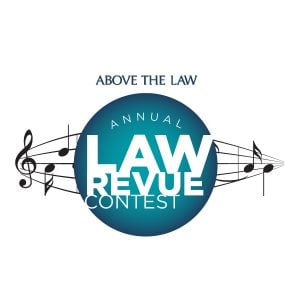
It’s Time To Submit Your Entries For Above The Law’s 17th Annual Law Revue Video Contest! – Above the Law

Spring
has
sprung,
and
you
know
what
that
means:
we’re
now
seeking
submissions
for
our
annual law
revue
video
contest
.
As
far
as
last
year’s
submissions
are
concerned,
some
of
them
were
funny,
some
of
them
were
“meh,”
and
some
of
them
made
us
want
to
close
our
heads
inside
of
our
laptops.
Trust
us
when
we
say
you
do
NOT
want
to
be
in
the
last
category.

If
you
think
you
can
carry
a
tune
or
tell
a
joke,
we
ask
that
you
send
us
your
very
best
law
revue
videos
so
that
we

and
the
Above
the
Law
audience

may
pass
judgment
upon
them.
Prepare
for
the
worst,
but
hope
for
the
very
best.

Those
responsible
for
the
winning
video
will
get
Above
the
Law
prizes
and
the
pleasure
of
knowing
they’re
the
envy
of
their
law
school
peers.
As
always,
there
will
be
complete
and
total
exoneration
for
the
losers.
There’s
always
next
year.

Before
you
start
sending
us
your
videos,
we’ve
got
some
rules.
As
future
members
of
the
legal
profession,
we
hope
you’ll
be
able
to
follow
them.

  1. Your
    video
    must
    be publicly
    available
    online
     somewhere.
    Send
    us
    the
    link
    at [email protected] with
    the
    subject
    line “Law
    Revue
    Video
    Contest
    Submission

    [School
    Name].”
     We’ll
    accept
    submissions
    of
    any
    videos
    posted
    after
    April
    25,
    2025
    (the
    deadline
    for
    our
    last
    contest).
  2. To
    avoid
    complaints
    from
    competitors
    (see,
    e.g., West
    Virginia’s
    2013
    winning
    entry
    ),
    your
    primary
    performers
    must
    come
    from
    within
    the
    law
    school
    community
    (but
    cameos
    from
    outsiders
    are
    okay).
    How
    do
    we
    define
    a
    “primary
    performer”?
    Don’t
    test
    us,
    gunners.
    We’ll
    know
    a
    violation
    when
    we
    see
    it.
  3. Send
    us
    your
    submission
    by FRIDAY,
    MAY
    1,
    at
    5:00
    P.M.
     (Eastern
    time).
    That’s
    not
    a
    soft,
    law
    school
    deadline;
    it’s
    a
    hard,
    law
    firm
    deadline.
    (NO
    EXCEPTIONS
    ,
    so
    don’t
    even
    try
    pleading
    with
    us;
    if
    you’re
    reading
    this
    post
    after
    the
    deadline,
    you
    don’t
    read
    ATL
    frequently
    enough.)
  4. Your
    editors
    here
    at
    ATL
    will
    make
    a
    list
    of
    our
    favorites,
    the
    competition
    finalists,
    and
    post
    them.
  5. We
    will NOT watch
    videos
    longer
    than 5
    minutes
    .
    Use
    editing
    tools,
    people.
  6. Please
    submit no
    more
    than
    two
    entries
    per
    school
     (one
    per
    school
    is
    even
    better).
    Try
    to
    collaborate
    with
    your
    fellow
    students
    and
    submit
    no
    more
    than
    two
    entries.
    If
    the
    leadership
    of
    Law
    Revue
    can
    come
    up
    with
    “official”
    submissions,
    that
    would
    be
    ideal.
  7. ATL
    readers
    will
    then
    vote
    to
    choose
    the
    funniest
    of
    the
    finalists.
    The
    winning
    team
    will
    receive
    ATL
    prizes
    (limit
    five
    prizes).

Here
are
some
unofficial
rules:

  • Please
    send
    funny
    videos
    only.
  • You
    have
    no
    idea
    how
    short
    our
    attention
    spans
    are.
    If
    you
    use
    the
    full
    five
    minutes,
    it
    better
    be
    absolutely
    freakin’ HILARIOUS.
  • Gratuitous
    shout-outs
    to
    Above
    the
    Law
    are
    appreciated
    and
    encouraged.
  • Video
    quality
    matters.
    A
    shaky
    clip
    shot
    on
    a
    handheld
    from
    a
    third-floor
    balcony
    is
    probably
    not
    going
    to
    make
    the
    cut.
  • Don’t
    make
    us
    hate
    you.

Send
those
videos
in.
Best
of
luck

we
have
a
feeling
the
competition
will
be
even
fiercer
than
usual,
so
you’re
going
to
need
it!!!
We
look
forward
to
judging
you.



Staci
Zaretsky
 is
the
managing
editor
of
Above
the
Law,
where
she’s
worked
since
2011.
She’d
love
to
hear
from
you,
so
please
feel
free
to email her
with
any
tips,
questions,
comments,
or
critiques.
You
can
follow
her
on BlueskyX/Twitter,
and Threads, or
connect
with
her
on LinkedIn.

US Going Deeper Into The Red Now That The IRS Is Sharing Tax Data With ICE – Above the Law

The
government
needs
more
funding
than
ever,
which
is
kind
of
hilarious
when
you
realize
the
Tea
Party
of
the
Obama
era
was
the
predecessor
of
this
Big
Government
version
of
the
GOP.

The
DHS
can’t
even
get
itself
a
budget
at
the
moment.
Sure,
it
will
get
some
money
thrown
to
it
sooner
or
later
and
the
administration
won’t
let
the
lack
of
tax
revenue
offsets
stop
it
from
feeding
billions
more into
its
Bigotry
Machine
.

But
that’s
not
all.
Behold
our all-but-officially-declared
war
 in
Iran,
currently
headed
by
the
Department
of Defense War Little
Excursion
,
which
is
adding
billions
of
dollars
weekly
to
the
national
deficit.
After
all,
as
right-leaning
libertarians
like
to
point
out,
the
government
doesn’t
actually
“make”
anything.
The
private
sector
builds
the
bombs
and
missiles.
And unlike
TSA
agents
,
they
expect
to
be
paid.


You
know
who could help
this
country
offset
 some
of
its
insane
expenditures? It’s
the
same
people
 we’re
spending
billions
to remove from
the
country:


Immigrants
accounted
for
more
US
income
and
generated
more
revenue
for
the
government
because
they
were,
on
average,
over
12
percentage
points
more
likely
to
be
employed
than
the
US-born
population.
This
means
that
even
if
immigrants
earn
lower hourly wages,
they
can
still
account
for
more
total
income
per
capita
than
the
US-born
population
by
working
cumulatively
more
hours.
 This
higher
employment
rate
was
driven
by
the
fact
that
immigrants
were,
on
average,
20
percentage
points
more
likely
to
be
of
working
age.
Immigrants
usually
arrive
in
the
US
as
young
adults
and
often
leave
before
retirement.

More
succinctly,
immigrants
out-punch
their
weight
class
when
it
comes
to
erasing
budget
deficits:


Accounting
for
savings
on
interest
payments
on
the
national
debt,
immigrants
saved
$14.5
trillion
in
debt
over
this
30-year
period.


[…]


Without
the
contributions
of
immigrants,
public
debt
at
all
levels
would
already
be
above
200
percent
of
US
GDP—nearly
twice
the
2023
level
and
a
threshold
some
analysts
believe
would
trigger
a
debt
crisis.

But
that
help
is
apparently
no
longer
welcome.
The
Trump
administration
has
succeeded
in eliminating
the
firewall
 between
the
IRS
and
ICE,
allowing
ICE
agents
to
use
this
data
to hunt
down
taxpayers
 who
work
harder
and
pay
more
taxes
than
the
white,
natural-born
citizens
that
this
administration
pretends
make
America
great.

That’s
going
to
cause
even
more
problems
for
an
administration
that
is
spending
far
more
liberally
than
any
“liberal”
it
blames
its
current
budget
problems
on. Here’s
how
that
looks
on
the
ground
 as
Tax
Day
has
come
and
gone
in
the
United
States:


By
the
time
Tax
Day
rolls
around
every
April
15,
accountant
María
José
Solís
usually
has
more
to
do.
More
clients.
More
paperwork.
More
phones
ringing,
more
emails
and
WhatsApp
messages
pinging.


But
this
year,
she
said,
more
than
550
of
her
regular
clients
have
disappeared.
That’s
about
15
percent
of
her
customer
base
at
Toro
Taxes,
the
bilingual
firm
in
Wheaton,
Maryland,
that
Solís
runs.

There’s
your
anecdote,
albeit
one
that’s
being
repeated
around
the
nation.
Here’s
the
data:


The
Yale
Budget
Lab estimates that
the
IRS
stands
to
lose
between
$147
billion
and
$479
billion
over
the
next
decade
as
migration
to
the
U.S.
declines,
deportations
increase
and
immigrants
of
various
statuses
disengage
from
the
formal
economy
for
what
some
experts
say
may
be
an
extended
period.

That
estimate
will
likely
be
low
if
the
Trump
administration
continues
to
purge
migrants
at
the
rate
it
has
since
Trump
returned
to
office.
It
will definitely be
lower
if
another
similarly
bigoted
GOP
lawmaker
succeeds
him
as
president.

And
it’s
not
just
the
losses
up
front.
There’s
money
leaking
out
the
back
as
well.
It’s
a
double-dip,
because
migrants
with
ITINs
(individual
tax
identification
numbers)
pay
taxes
for
services
they
can’t
actually
access,
like
Social
Security
and
Medicare.
They’re
actually
subsidizing
citizens
who
pay
fewer
taxes,
work
fewer
hours,
and commit
more
crimes
 than
they
do.

This
nation
continues
to
become
poorer,
not
just
in
terms
of
financial
viability,
but
in
heart
and
spirit.
Migrants
made
this
nation
great.
Now,
a
bunch
of
ungrateful
people
who
hate
people
who
aren’t
white
are
not
only
driving
us
deeper
into
debt,
but
they’re
eliminating
a
source
of
income
that
never
asked
for
anything
more
than
a
chance
to
survive.


US
Going
Deeper
Into
The
Red
Now
That
The
IRS
Is
Sharing
Tax
Data
With
ICE


More
Law-Related
Stories
From
Techdirt
:


Wireless
Giants
To
Get
Off
The
Hook
For
Spying
On
Your
Daily
Movements
For
Years


Arkansas
Tried
To
Pass
An
Unconstitutional
Social
Media
Law.
Again.
It
Lost.
Again.


Hypocritically,
The
Origin
Of
The
Supreme
Court’s
‘Shadow
Docket’
Was
An
Attempt
To
Curb
Executive
Power

How Appealing Weekly Roundup – Above the Law


Ed.
note
:

A
weekly
roundup
of
just
a
few
items
from
Howard
Bashman’s

How
Appealing
blog
,
the
Web’s
first
blog
devoted
to
appellate
litigation.
Check
out
these
stories
and
more
at
How
Appealing.


“Aftershocks
from
‘The
Shadow
Papers’;
Publication
of
a
trove
of
confidential
Supreme
Court
memos
ignited
debates
in
the
legal
academy”:
 Adam
Liptak
has this
new
installment
 of
his
“The
Docket”
newsletter
online
at
The
New
York
Times.


“Paul
Clement
Will
Argue
for
Trump-Targeted
Law
Firms
Next
Month”:
 Justin
Henry
of
Bloomberg
Law
has this
report
.


“Originalist
Judges
Are
Spitting
On
the
Constitution
and
Think
You
Won’t
Notice;
A
law
in
Texas
requires
every
public
school
to
display
the
Ten
Commandments
in
every
single
classroom;
No
problem,
says
the
Fifth
Circuit”:
 Jay
Willis
has this
post
 online
at
his
“Balls
&
Strikes”
Substack
site.


“New
Alito
book
reveals
details
on
Jan.
6
case,
flag
controversy;
New
books
about
Alito
are
being
published
after
much
speculation
about
when
the
conservative
justice
might
retire”:
 Maureen
Groppe
of
USA
Today
has this
report
.


“Chapman
on
Indoctrinating
Thy
Neighbor;
Assessing
Nathan
v.
Alamo
Heights
Independent
School
District”:
 Nathan
Chapman
has this
guest
post
 at
the
“Divided
Argument”
Substack
site.


“11th
Circuit
shoots
down
challenge
to
machine
gun
ban;
The
federal
government
maintained
the
Second
Amendment
does
not
cover
machine
guns
or
the
machine
gun
conversion
device
that
led
to
a
two-year
prison
sentence
for
a
Fort
Lauderdale
man”:
 Alex
Pickett
of
Courthouse
News
Service
has this
report
.

Morning Docket: 04.24.26 – Above the Law

*
Justice
Department
charges
soldier
who
made
$400,000
betting
on
Maduro
capture.
Weirdly,
no
action
at
all
on
whoever
keeps
making
million
dollar
oil
shorts
minutes
before
Trump
announces
imaginary
Iran
deals.
[ABC]

*
Freshfields
partners
with
Anthropic
to
build
AI
tools.
[Legal
IT
Insider
]

*
Davis
Polk
unveils
new
appellate
practice
after
snagging
Paul
Weiss
practice
co-chair.
[American
Lawyer
]

*
Spirit
Airlines
likely
to
get
taxpayer
bailout.
The
government
should
give
them
the
bare
minimum,
and
then
charge
extra
for
each
additional
necessity.
[Law360]

*
PE
eyes
PI
practice.
[Law.com]

*
Judge
Salas
on
the
dangers
of
weakening
data
privacy
laws.
[Reuters]

*
Junior
lawyer
makes
pageant
finals.
[Legal
Cheek
]

No Facts, No Problem! – See Also – Above the Law

Fifth
Circuit’s
Stuart
Kyle
Duncan
Shows
You
Can
Go
Far
Without
Doing
The
Reading:
Also,
the
Establishment
Clause
doesn’t
matter
anymore.
Keeping
It
Real
About
Real
Estate
Law:
These
schools
should
be
at
the
top
of
your
list!
Exercise
Judgment:
AI
can
help
you,
but
you
still
need
to
be
at
the
helm.
Goodbye,
DEI:
Companies
have
given
up
the
commitment
to
diversity
song
and
dance.
Law
Student
Is
On
An
Amazing
Jeopardy
Run!:
Representing
New
Jersey
and
Seton
Hall!

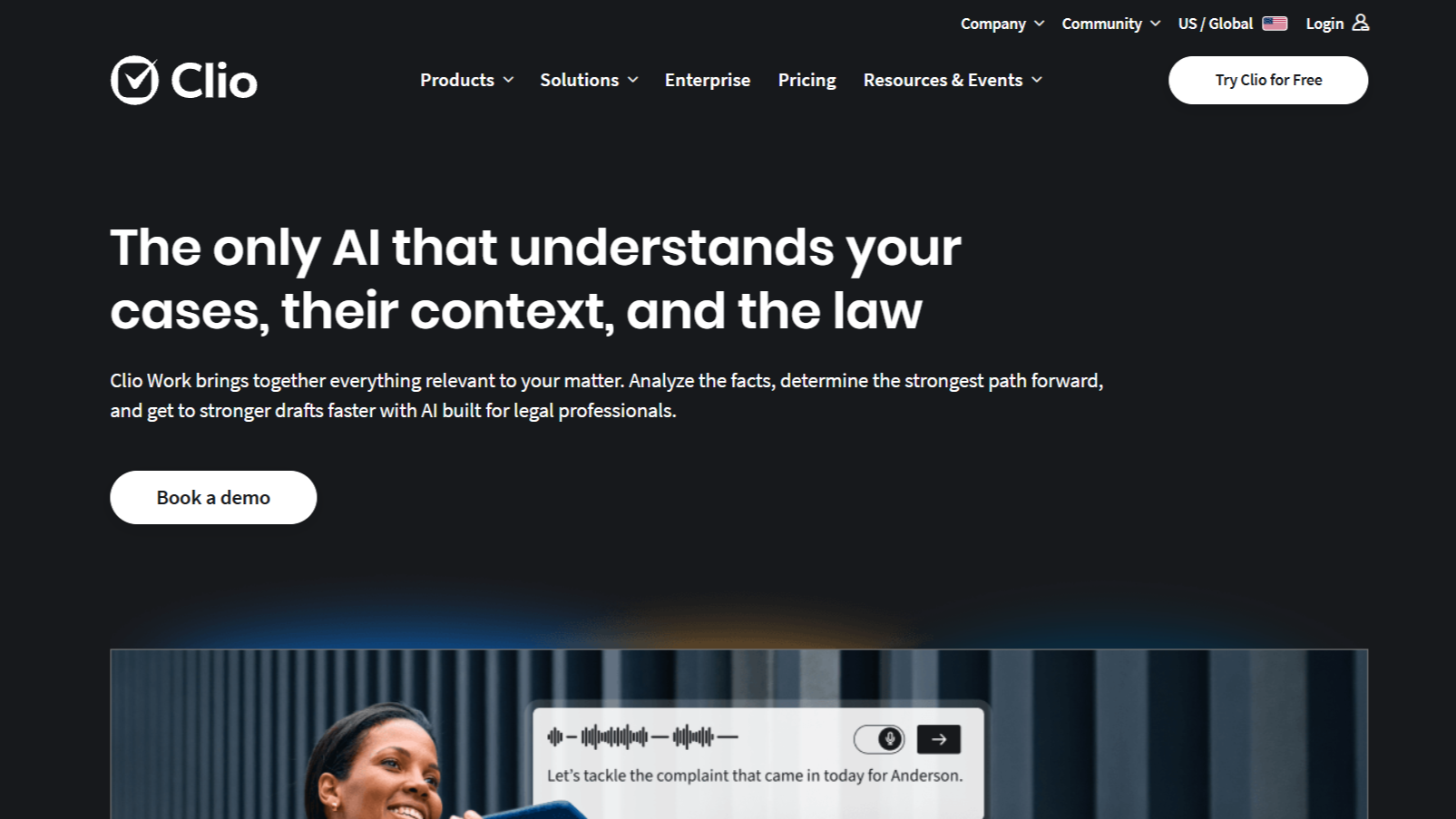
Clio Work, Clio’s AI Workspace, Is Now Available To Solo and Smaller Law Firms As A Standalone Product

Clio
has
made
Clio
Work

the
AI
workspace
for
legal
research,
analysis
and
strategy
it
launched
last
October

available
as
a
standalone
product
for 
solo,
small
and
mid-sized
law
firms,
removing
the
requirement
that
customers
also
subscribe
to
its
flagship
practice
management
platform,
Clio
Manage.

The
Vancouver-based
company,
which
describes
itself
as
the
global
leader
in
legal
AI,
said
the
expansion
opens
the
product
up
to
the
wider
legal
market
after
a
six-month
period
in
which
it
was
limited
to
Clio
Manage
subscribers.
Clio
said
that
Clio
Work
has
been
the
fastest-adopted
product
in
the
company’s
history
since
its
October
launch.

“Firms
of
all
sizes
are
turning
to
Clio
Work
to
get
work
done,”
CEO
and
founder
Jack
Newton
said
in
the
announcement.
“Its
rapid
adoption
shows
that
legal
AI
is
becoming
where
work
begins,
and
Clio
is
defining
that
starting
point.
Expanding
access
to
the
wider
legal
market
is
the
next
step,
giving
more
firms
direct
access
to
the
AI
setting
the
standard
for
the
profession.”

What
Clio
Work
Does

Clio
Work
is
designed
to
interpret
facts
and
files,
identify
key
issues,
and
help
shape
legal
arguments.
It
draws
on
a
global
library
of
more
than
one
billion
legal
documents

the
corpus
Clio
acquired
through
its
purchase
of
vLex

and
combines
that
with
matter-level
context
from
a
firm’s
own
documents,
notes
and
contacts
to
produce
research,
analysis
and
strategic
recommendations.

Users
can
delegate
complex
tasks
through
goal-based
instructions,
and
Clio
Work
plans
and
executes
the
steps
needed
to
complete
them,
the
company
said.
Outputs
are
intended
to
become
more
precise
over
time
as
the
workspace
accumulates
context
from
a
firm’s
ongoing
matters.

Clio
said
the
product
supports
both
litigation
and
transactional
workflows
across
pleadings,
discovery,
depositions,
contracts,
and
policies.

Building
on
Prior
Releases

Today’s
announcement
extends
a
product
launch
that
Newton
first
unveiled
at
ClioCon
in
Boston
in
October
2025,
when
he
described
Clio
Work
as
a
central
piece
of
what

he
called
the
company’s
“intelligent
legal
work
platform”


a
vision
aimed
at
dissolving
the
traditional
divide
between
software
for
the
business
of
law
and
software
for
the
practice
of
law.

At
that
keynote,
Clio
Work
was
offered
as
an
additional
product
at
$199
per
user
per
month
and
was
limited
to
Clio
Manage
subscribers.

Earlier
this
month,
Clio
announced
a
significant
update
to
Clio
Work,

adding
agentic
capabilities

that
enable
the
product
to
handle
multi-step
tasks
from
a
single
natural-language
prompt.

Those
capabilities
were
built
on
what
the
company
calls
a
“skills
infrastructure”
that
allows
Clio
Work
to
determine
and
execute
the
sequence
of
steps
needed
for
a
given
goal.
At
the
same
time,
Clio
launched
a
standalone
Vincent
by
Clio
mobile
app
for
iOS
and
Android.

Today’s
move
widens
the
pool
of
firms
that
can
access
those
capabilities,
removing
the
Clio
Manage
subscription
as
a
prerequisite.

The
vLex
Connection

Clio
Work
is
closely
tied
to
Clio’s
$1
billion
acquisition
of
legal
research
provider
vLex,
which

the
company
completed
in
November
2025

alongside
a
$500
million
Series
G
round
that
valued
Clio
at
$5
billion.
That
acquisition
gave
Clio
ownership
of
Vincent,
vLex’s
generative
AI
platform,
and
of
the
vLex
legal
corpus
that
now
underpins
Clio
Work’s
research
and
analysis
capabilities.

In
his
ClioCon
keynote,
Newton
argued
that
the
combination
of
a
practice
management
system’s
contextual
data
with
a
verified
legal
research
corpus
was
what
distinguished
Clio
Work
from
generic
AI
tools.
The
company
has
said
the
vLex
corpus
spans
more
than
110
jurisdictions
and
is
already
used
by
eight
of
the
world’s
10
largest
law
firms.

Early
Customer
Reactions

Clio’s
announcement
included
comments
from
three
early
adopters.
A
partner
at
Williams
&
Hamilton
described
Clio
Work
as
“a
force
multiplier”
that
handles
tedious
tasks.
A
director
at
King
Law
Offices
said
the
product
has
raised
the
baseline
work
product
of
junior
attorneys,
reducing
how
often
senior
attorneys
need
to
step
in.
And
a
firm
owner
at
Matechik
Law
Firm
said
Clio
Work
has
replaced
the
generic
AI
tools
the
firm
previously
relied
on.

Clio
said
a
global
rollout
of
the
expanded
availability
is
underway.
“This
is
just
the
beginning,”
Newton
said
in
the
announcement.
“We
believe
Clio
Work
will
become
the
foundation
for
how
the
next
generation
of
legal
professionals
engages
with
technology,
and
we
are
excited
to
lead
that
transformation.”

Joe Exotic’s Lawyer Runs Afoul Of AI Hallucinations – Above the Law

An
incarcerated
murder-for-hire
convict
in
a
federal
lawsuit
over
whether
an
animal
sanctuary
can
neuter
a
white
Bengal
tiger
named
Elvis
that
the
plaintiff
used
to
own
is
already
hallucinatory
enough
without
the
case
citations
being
fake.

Joseph
Maldonado

better
known
to
everyone
who
Netflix-ed
their
way
through
the
pandemic
as
Joe
Exotic

is
currently
housed
at
FMC
Fort
Worth,
where
he

pesters
Donald
Trump
for
a
pardon

and
an
administration
position
at
Fish
and
Wildlife.
But
he’s
also

suing
Black
Pine
Animal
Sanctuary

in
the
Northern
District
of
Indiana
over
the
fate
of
four
tigers
seized
from
Maldonado’s
former
associates
Jeff
and
Lauren
Lowe
back
in
2022.
The
sanctuary
announced
plans
to
neuter
Elvis,
one
of
the
white
Bengals,
prompting
Maldonado,
through
counsel
Roger
Roots,
to
file
a
federal
suit
under
the
Endangered
Species
Act.

Fast
forward
to
Chief
Judge
Holly
Brady’s
February
27

show
cause
order
.
Judge
Brady
ran
her
own
research
on
Maldonado’s
work
in
the
case
and
discovered
a
plethora
of
made
up
cases.
The
complaint
anticipates
the
standing
challenge
(which
the
court
had
flagged
in
a
prior
iteration
of
this
same
case)
by
citing
a
case
that…
doesn’t
exist.

The
Court
searched
for
that
case
with
that
citation,
but
the
case
number
leads
to
an
unrelated
debt
case
and
the
Westlaw
identifier
returns
no
result
at
all.
And
while
a
case
with
that
name
exists
with
a
different
case
number,
there
is
no
order
for
that
date
and
no
order
that
makes
any
reference
to
standing
beyond
the
fact
that
the
defendants
never
challenged
or
even
brought
up
the
Plaintiff’s
standing.

Twice
more,
Judge
Brady
notes,
counsel
cited
cases
that
“technically
exist
but
cannot
be
found
at
his
provided
citation,
have
no
order
on
his
cited
date,
and
apparently
do
not
support
what
he
represents
to
the
Court.”
The
footnote
catalogues
two
such
entries.
A

PETA
v.
Wildlife
in
Need

cite
that
resolves
to
a
Western
District
of
Virginia
criminal
matter,
and
a

PETA
v.
Tri-State
Zoological
Park

cite
that
resolves
to
an
SDNY
employment
case.

The
opposition
brief
is,
in
Brady’s
words,
“an
extensive
affair
which
at
times
reads
more
like
a
legal
treatise
on
the
ESA
as
opposed
to
a
legal
brief.”
Which
is
judicial
speak
for
“I
ain’t
reading
all
that

I’m happy
for
u tho. Or
sorry
that
happened.”
The
brief
lists
various
“ESA
injuries”
with
supporting
caselaw,
and
the
caselaw

the
caselaw
that
actually
exists

doesn’t
support
the
propositions.

For
instance,
he
cites

In
Defense
of
Animals
v.
National
Institutes
of
Health
,
543
F.
Supp.
70
(D.D.C.
2008),
for
his
assertion
that
“Loss
of
scientific
data,
interruption
of
research,
or
inability
to
continue
long-term
animal
studies
constitutes
injury-in-fact”
and
that
“[c]ourts
emphasize
that
scientific
frustration
is
a
valid
injury
even
without
direct
physical
access.”
(ECF
No.
17
at
15).
But
not
only
is

In
Defense
of
Animals

a
Freedom
of
Information
Act
case
with
no
reference
or
connection
to
the
ESA,
the
opinion
does
not
mention
standing,
scientific
injuries,
or

anything

that
would
support
Maldonado’s
proposition. 

And
it
keeps
going
like
that.
One
case
described
as
“Conservation
and
scientific
professionals
have
standing
when
mistreatment
of
animals
disrupts
their
work,”
actually
concluded
that
a
circus
elephant
handler
didn’t
have
an
injury-in-fact
just
because
he
wanted
to
work
with
the
elephants
again.
As
Judge
Brady
wrote,
“while
other
ESA
cases
might
support
his
contention
about
standing
for
emotional
injuries,
the
case
he
chose
was
explicitly
not
among
them.”

This
raises
the
obvious
2026
question:
did
counsel
use
generative
AI
to
produce
this
filing?

While
these
cases
and
citations
were
not
fully
fabricated,
as
is
often
the
story,
the
inaccuracies
and
misrepresentations
nevertheless
bear
much
resemblance
to
other
instances
in
which
pro
se
litigants
or
attorneys
have
relied
on
generative
AI
to
produce
their
filings,
in
part
or
in
full.

See,
e.g.,


Jones
v.
Kankakee
Cnty.
Sherriff’s
Dep’t
,
164
F.4th
967,
969
(7th
Cir.
2026)
(“To
our
eye,
the
error
has
all
the
hallmarks
of
a
so-called
AI
“hallucination,”
a
circumstance
where
an
AI
large
language
model
generates
an
output
that
is
fictional,
inaccurate,
or
nonsensical.”).
Although
these
aren’t
quite
the
typical
hallmarks
of
AI
hallucination,
the
legal
misrepresentations,
nonexistent
citations,
and
length
policy
sections
altogether
are
too
fishy
for
the
Court
to
believe.
There
is
something
rotten
in
the
Northern
District
of
Indiana,
and
it’s
not
the
fish
being
fed
to
Maldonado’s
former
tigers.

As
we

noted
recently
,
humans
are
fully
capable
of
producing
this
kind
of
slop
without
Claude
or
ChatGPT’s
help.
As
Brady
explains,
“But
even
if
Maldonado’s
counsel
did
not
use
AI
for
his
filings,
the
Court
is
deeply
concerned
by
these
blatant
misrepresentations
of
law.”

We
are
now
past

1,000
documented
AI
hallucination
cases

globally.
Sullivan
&
Cromwell

the
firm
that
represents
OpenAI


just
had
to
file
an
emergency
letter

explaining
why
its
Prince
Global
Holdings
brief
was
riddled
with
hallucinated
citations.
Gordon
Rees
is
now
a

serial
offender
.
Butler
Snow
got

three
lawyers
kicked
off
a
case
.
Courts
are
losing
patience.

The
lawyer
responded,
pinning
responsibility
on
a
paralegal
filing
a
non-final
draft.
“Although
he
does
not
directly
address
the
use
of
AI
for
the
filings,
that
use
can
be
read
between
the
lines,”
wrote
Judge
Brady
in

her
opinion
.
Ultimately,
the
attorney
received
a
$1,500
fine
and
a
bar
referral.

Elvis…
not
as
lucky.


(Order
to
Show
Cause
on
next
page…)


HeadshotJoe
Patrice
 is
a
senior
editor
at
Above
the
Law
and
co-host
of

Thinking
Like
A
Lawyer
.
Feel
free
to email
any
tips,
questions,
or
comments.
Follow
him
on Twitter or

Bluesky

if
you’re
interested
in
law,
politics,
and
a
healthy
dose
of
college
sports
news.
Joe
also
serves
as
a

Managing
Director
at
RPN
Executive
Search
.

Elite Biglaw Firm Learns The Real Cost Of AI Hallucinations: The Firm’s Reputation – Above the Law

(Image
via
ChatGPT)


Ed.
note
:
Welcome
to
our
daily
feature, Quote
of
the
Day
.


The
reputational
concern
is
that
it
tells
the
court
you
didn’t
read
the
case
and
you
didn’t
cite
check
your
brief.
Firms
are
now
getting
sanctioned
for
it
so
there
is
an
economic
concern
as
well.
I
think
most
law
firm
leaders
would
agree
that
the
most
significant
issue
is
the
impact
on
the
reputation
and
brand
of
the
firm.


— 
A
law
firm
leader,
in
comments
given
to

Law.com

on
the
condition
of
anonymity,
concerning
Sullivan
&
Cromwell’s
recent

run-in
with
AI
hallucinations

submitted
in
a
court
filing.
The
firm
leader
went
on
to
say
that
“[r]ule
number
one
from
first
year
of
law
school
is
don’t
cite
fictional
cases.”
A
New
York
practice
group
leader
echoed
those
thoughts,
telling

Law.com
,
“Somebody
manually
has
to
go
and
look
at
every
case
and
every
quote,
and
make
sure
that
it’s
there.
We
always
do
that.
We
did
that
10
years
ago.
We
did
that
15
years
ago.
I
did
that
as
a
first
year
associate.
In
fact,
I
did
that
in
law
school
when
I
was
on
law
review
and
did
cite
checking.
So,
in
some
ways,
that’s
not
new.
What’s
just
new
is
the
allure
of
the
[AI]
shortcut,
you
know?


Staci
Zaretsky
 is
the
managing
editor
of
Above
the
Law,
where
she’s
worked
since
2011.
She’d
love
to
hear
from
you,
so
please
feel
free
to email her
with
any
tips,
questions,
comments,
or
critiques.
You
can
follow
her
on BlueskyX/Twitter,
and Threads, or
connect
with
her
on LinkedIn.

Companies Are Quietly Killing Their Law Firm Diversity Mandates – Above the Law

Remember
when
general
counsel
were
the
cavalry?
When
the
corporate
legal
world
was
going
to
save
Biglaw
from
itself
by
threatening
to
yank
business
from
firms
that
couldn’t
put
a
diverse
team
on
the
field?
For
a
hot
minute
there,
it
actually
seemed
to
be
working.

Well.
About
that.

A
new
Bloomberg
Law

report
documents

what
many
of
us
have
suspected:
under
Trump
2.0,
corporate
America
is
walking
away
from
the
diversity
commitments
they
once
dangled
over
their
outside
law
firms
like
a
sword
of
Damocles.
And
in
the
process,
they’re
taking
what
little
hard-won
progress
existed
in
the
legal
profession
and
tossing
it
into
the
nearest
dumpster.

Microsoft,
which
had
one
of
the
longest-running
outside
counsel
diversity
programs
in
Biglaw
history
dating
to
2008,
has
ended
the
initiative.
That
program
tied
bonuses
to
diversity
metrics
on
teams
working
Microsoft
matters,
as
well
as
firmwide
efforts
to
diversify
partner
ranks.
Now?
“We
do
not
offer
incentives
or
bonuses
tied
to
the
workforce
composition
of
our
outside
counsel
or
suppliers,”
a
Microsoft
spokesperson
said,
declining
to
say
when
the
company
made
the
shift.
Cool,
great,
very
brave.

Then
there’s
Meta.
The
Facebook
parent,
which
since
2017
had
required
at
least
a
third
of
lawyers
on
its
matters
to
be
women
or
ethnic
minorities,
announced
in
January
2025
it
was
dropping
diversity
requirements
for
outside
suppliers
entirely.
Poof.

These
weren’t
symbolic
commitments

they
were
among
the
most
concrete
mechanisms
in-house
counsel
had
developed
to
actually
move
the
needle.

Back
in
2021,
we
covered
Coca-Cola
GC
Bradley
Gayton’s
landmark
policy

demanding
firms
staff
at
least
30%
of
new
matters
with
diverse
attorneys,
with
at
least
half
that
billable
time
going
to
Black
lawyers,
on
pain
of
fee
reductions
or
removal
from
the
roster
altogether.
It
was
the
most
aggressive
outside
counsel
diversity
mandate
Biglaw
had
ever
seen.

It
lasted
approximately
three
months.

Gayton
was
out
after
only
eight
months
on
the
job


shown
the
door
just
weeks
after
rolling
out
the
policy,
with
Coca-Cola
immediately
putting
the
diversity
plan
on
pause.
Nobody
officially
explained
what
happened.
The
CEO
issued
the
corporate
equivalent
of
a
hostage
statement
but
with
a
massive
severance
package,
thanking
Gayton
for
his
service
and
calling
him
“a
strategic
and
results-oriented
leader.”
Gayton
issued
his
own
anodyne
quote
about
the
“privilege”
of
the
work.

The
lesson
corporate
America
apparently
took
from
the
Gayton
episode
wasn’t
“we
need
to
protect
bold
GCs
who
push
for
change.”
It
was
“don’t
be
Bradley
Gayton.”
The
current
Bloomberg
Law
story
is
really
just
that
lesson,
playing
out
at
scale.
Trump
2.0
didn’t
create
the
corporate
retreat
from
outside
counsel
diversity
mandates.
He
just
made
it
socially
acceptable
to
surrender
openly,
instead
of
doing
it
quietly
with
an
eight-figure
severance
check.

The
fear
driving
the
retreat
is
palpable,
even
among
those
who
know
better.
“Even
if
what
they’re
doing
is
quite
popular
and
legally
safe,
if
they’ve
got
the
label
on
it
of
DEI
or
something
that
sounds
like
DEI,
they
think
that
it’s
putting
a
target
on
their
back
because
the
administration
doesn’t
like
DEI,”
said
David
Glasgow,
an
attorney
who
advises
firms
on
their
diversity
measures.
This
is
institutional
cowardice
dressed
up
as
legal
caution.

Paula
Boggs,
the
former
GC
of
Starbucks,
put
it
plainly:
“There
are
law
firms
that
mouthed
a
commitment
to
diversity
and
inclusion
because
they
knew
that
would
make
them
more
palatable
to
companies.
In
the
absence
of
that
pressure
they
feel
no
need
to
engage
in
it
and
make
the
effort.”

Read
that
again.
The
diversity
commitments
that
law
firms
made
to
land
and
keep
corporate
clients
were,
for
many
of
them,
always
just
marketing.

Even
in
2019
,
when
over
170
GCs
signed
an
open
letter
to
Biglaw
demanding
statistical
progress
or
threatening
to
take
their
business
elsewhere,
there
were
those
that
suspected
it
was
but
a
momentary
concern.
The
cynics
were
right
then:
a
lot
of
those
firms
just
hoped
the
heat
would
die
down.
Now
it
has.

And
the
data
tells
a
stark
story.
The
share
of
Black
summer
associates
at
law
firms
fell
for
the
third
straight
year
in
2025,
dropping
to
about
8.5%,
according
to
the
National
Association
for
Law
Placement.
The
overall
proportion
of
summer
associates
of
color
fell
to
roughly
38%

the
lowest
since
2020.
The
gains
that
GC
pressure
helped
produce
are
already
eroding.
Years
of
progress,
evaporating
in
months.

You
want
to
know
what
accelerated
this?
Look
no
further
than
the
Trump
administration’s
systematic
campaign

to
bully
every
diversity
infrastructure
in
the
profession
out
of
existence.

Like
the
FTC’s
decision
to
send
warning
letters
to
42
Biglaw
firms
,
threatening
antitrust
liability
for
participating
in
Diversity
Lab’s
Mansfield
Certification
program,
a
program
that
doesn’t
actually
work
the
way
the
FTC
described,
as
actual
antitrust
lawyers
were
quick
to
note.
Didn’t
matter.
The
goal
was
intimidation,
not
accuracy.
And
it
worked:

Diversity
Lab
announced
in
February
2026
that
it
was
pausing
the
Mansfield
certification
program
entirely
,
its
operating
funds
“substantially
depleted”
after
clients
began
fleeing.
Biglaw,
famously
brave
when
billing
$2,000
an
hour,
apparently
has
limits.

And
of
course,
into
this
vacuum
strides
Edward
Blum

the
man
who
has
made
a
career
out
of
dismantling
every
mechanism
society
has
devised
to
address
historical
inequity

to
declare
victory.
“It
is
an
altogether
positive
development
that
law
firm
clients
are
no
longer
specifying
the
racial
makeup
of
the
legal
teams
assigned
to
represent
them,”
said
Blum,
whose
advocacy
group
led
the
suits
that
prompted
the
Supreme
Court
to
strike
down
affirmative
action
in
college
admissions
three
years
ago.
“The
race
or
ethnicity
of
a
lawyer
is
irrelevant.”

Lovely.

The
man

who
has
spent
years
manipulating
the
system
and

manufacturing
plaintiffs

to

achieve
his
political
ends

gets
to
announce
the
end
of
an
era.
When
Blum’s
American
Alliance
for
Equal
Rights

began
suing
Biglaw
firms

over
their
diversity
fellowships
in
2023,

Perkins
Coie
,

Morrison
&
Foerster
,
and

Gibson
Dunn

all
folded.
By
December
2023,

Blum
was
declaring
there
was
“nothing
left
to
do”
in
the
law
firm
space

because
the
profession
had
surrendered.
Now
corporate
clients
are
doing
the
same
thing.

GCs
are

uniquely
positioned

to
drive
change
because
they
have
leverage
law
firms
can’t
ignore.
But
that
leverage
only
works
if
you’re
willing
to
use
it.
And
right
now,
the
corporate
legal
world
has
decided
the
political
environment
makes
that
leverage
too
costly
to
deploy.


Kathryn
Rubino
is
a
Senior
Editor
at
Above
the
Law,
host
of The
Jabot
podcast
,
and
co-host
of Thinking
Like
A
Lawyer
.
AtL
tipsters
are
the
best,
so
please
connect
with
her.
Feel
free
to
email her with
any
tips,
questions,
or
comments
and
follow
her
on
Twitter @Kathryn1 or
Bluesky @Kathryn1