In
one
of
my
many
meetings
this
week
at
ILTA’s
super
conference,
I
bumped
into
Alex
Babin,
whose
company
I
have
written
about
before.
Babin,
who
recently
sold
his
company,
Hercules,
to
Aderant,
made
an
important
point.
If
you
want
to
be
a
successful
startup
in
legal
or
elsewhere,
you
have
to
focus
on
one
thing
and
only
one
thing.
You
can’t
divert
your
time
and
energies
trying
to
launch
two,
three,
or
four
products
at
the
same
time.
It
just
won’t
work.
I
thought
about
this
as
I
strolled
through
the
exhibit
hall
and
talked
to
various
vendors,
some
of
whom
were
startups
and
some
of
whom
were
“used
to
be”
startups
that
are
now
mainstream.
The
mainstream
ones
did
exactly
what
Babin
said.
Unlike
their
larger
brethren,
they
offered
products
that
were
designed
for
a
singular
purpose
in
niche
areas
where
the
bigger
players
may
not
be.
ModeOne
A
prime
example
is
ModeOne,
which
focuses
almost
exclusively
on
the
collection
of
data
from
mobile
devices.
I
first
bumped
into
ModeOne
back
in
2022.
ModeOne
and
its
founder
and
CEO,
Matthew
Rasmussen,
have
built
a
successful
business
by
being
laser
focused.
When
I
asked
Rasmussen
this
year
what’s
next
for
ModeOne,
he
made
an
interesting
comment:
“We
can
broaden
our
bench
with
different
products,
or
we
can
deepen
our
bench
and
just
be
a
specialized
company.
So,
we’re
really
going
to
dig
deep
on
just
the
phone
kind
of
stuff.”
Babin
couldn’t
have
put
it
any
better.
ActiveNav
Another
vendor,
ActiveNav,
has
taken
a
similar
approach.
ActiveNav’s
one
thing
is
data
governance
for
and
in
law
firms.
Law
firms
present
special
governance
problems
and
ActiveNav
knows
this.
They
know
the
territory,
they
know
the
culture,
and
they
know
how
to
help
firms
solve
unique
governance
problems.
Tavrn
I
thought
about
all
this
when
I
got
an
invite
and
a
demo
from
a
startup
company
called
Tavrn.
Tavrn
was
founded
by
Pedro
Paulino,
a
Harvard-educated
engineer.
Paulino
worked
for
a
time
in
the
health
field
and
became
interested
in
the
intersection
of
law
and
medicine
where
personal
injury
lawyers
(plaintiffs’
and
defense)
live
and
work.
Tavrn
is
singulary
focused
on
PI
work.
Their
flagship
product
is
something
called
Medical
Chronologies.
A
user
inputs
all
the
medical
records
in
a
case
and
the
tool
then
prepares
a
chronology
with
links
to
the
relevant
records
including
such
things
as
pure
medical
records
and
billing
records,
pain
journals
and
the
like.
According
to
Paulino,
the
tool
separates
out
the
records
relevant
to
the
case
but
does
not
include
the
irrelevant
stuff
that
may
also
be
there.
As
Kevin
Silvergold,
Tavrn
Founding
Engineer,
put
it,
the
chronology
is
essentially
a
timeline
view
of
the
case
in
a
significantly
reduced
format.
The
idea,
says
Paulino,
is
to
deal
with
records
for
legal
purposes,
not
medical
purposes.
In
addition,
according
to
Paulino,
the
tool
will
automate
the
collection
of
medical
records
once
an
authorization
is
received.
One
of
the
big
problems
I
recall
about
medical
record
collection
was
the
need
to
constantly
badger
the
facilities
holding
the
records
to
provide
them.
This
usually
took
multiple
requests
and
was
time
consuming.
Tavrn
completely
automates
this
function.
In
addition,
the
tool
can
review
the
medical
records
and
spit
out
a
demand
letter
in
10-30
minutes.
It
calculates
the
charges
only
for
the
medical
work
relevant
to
the
case.
This
is
helpful
to
plaintiffs’
lawyers
but
also
to
lawyers
representing
entities
who
are
seeking
subrogation
for
medical
charges
they
have
paid
as
well.
It
can
be
helpful
to
those
on
the
defense
side
who
also
must
routinely
evaluate
medical
records
to
assess
exposure
and
prepare
both
liability
and
damage
defenses.
The
Tavrn
suite
of
products
can
also
automate
the
review
of
standard
documents
such
as
those
produced
as
eDiscovery.
According
to
Silvergold,
the
AI
tool
can
understand
the
context
and
nuances
of
the
documents
as
it
runs
searches
across
the
whole
database.
You
can
create
subject
tags
for
search
purposes
as
well
and
the
tools
will
apply
those
tags
to
every
single
document
to
answer
the
query.
Like
most
good
AI
platforms,
it
cites
back
to
the
found
documents.
Tavrn
is
three
years
old,
and
this
is
its
first
time
at
the
ILTA
conference.
Tavrn’s
Key
Value
Particularly
for
plaintiff
lawyers,
this
tool
can
short
circuit
a
lot
of
work.
Since
most
plaintiffs’
lawyers
work
on
a
contingency
basis,
they
have
to
gauge
the
amount
of
work
needed
to
get
to
resolution.
Often,
the
amount
of
human
work
required
will
result
in
them
not
taking
the
case
since
the
cost
may
exceed
the
benefit.
But
with
tools
like
Tavrn
offers,
the
amount
of
work
can
be
reduced.
The
analysis
shifts
toward
taking
the
work
rather
than
not.
As
I
have
discussed
before,
the
result
is
more
cases
being
filed
and
greater
access
to
justice
for
many.
Good
Luck
There’s
something
special
about
companies
that
have
a
laser
focus
on
an
area.
Over
time,
I
have
noticed
that
startups
that
focus
on
one
thing
succeed
more
than
those
who
try
to
do
too
much.
Often
these
successful
startups
are
either
bought
up
by
the
behemoths
of
the
legal
tech
world
or
gradually
grow
and
branch
out
after
they
get
off
the
ground
with
a
singular
product.
Either
way,
the
result
is
new
product
that
helps
a
specific
practice
group.
I
admire
their
creativity
and
hard
work.
Good
luck
to
the
Tavrns
of
the
world.
Stephen
Embry
is
a
lawyer,
speaker,
blogger,
and
writer.
He
publishes TechLaw
Crossroads,
a
blog
devoted
to
the
examination
of
the
tension
between
technology,
the
law,
and
the
practice
of
law.
In
the
wake
of
the
lackluster
health
emergency
protocol
the
New
York
Board
of
Law
Examiners
displayed
last
month,
readers,
test
takers,
and
even
lawmakers
have
penned
letters
admonishing
the
bar
for
not
doing
better.
In
a
perfect
world,
the
NYBOLE
would
own
up
to
their
mistakes
and
implement
safety
protocols
to
ensure
that
there
would
be
a
response
team
on
the
ground
in
the
event
of
an
emergency.
Instead,
they
responded
with
a
press
release
that
looks
like
their
in-house
attorney
sent
a
couple
of
drafts
back
to
their
PR
department
before
they
could
send
it
out.
Thankfully,
lawyers
aren’t
the
only
ones
that
can
advise
the
NYBOLE
—
the
state
legislature
can
do
so
as
well.
Law.com
has
coverage:
Following
an
incident
during
the
New
York
bar
exam
on
Long
Island
last
month,
when
a
test-taker
collapsed
and
proctors
let
the
exam
continue
while
CPR
was
being
administered,
the
New
York
State
Assembly
is
now
considering
a
bill
called
the
Clock
Should
Stop
Act.
Rodneyse
Bichotte
Hermelyn,
assemblymember
representing
the
42nd
Assembly
District
in
Brooklyn,
sponsored
the
bill
because
the
incident
“has
prompted
concerns
about
the
standard
of
care
exercised
by
the
bar
examiners,”
as
many
have
stated
that
the
bar
examiners
“acted
recklessly,
showing
unjustifiable
disregard
for
human
safety,”
she
told
Law.com.
The
“Clock
Should
Stop
Act”
is
aptly
named
—
as
the
lawyer-to-be
was
suffering
from
a
heart
attack,
the
test
takers
surrounding
her
were
told
to
ignore
her
and
continue
with
the
test.
You
could
make
an
argument
that
bar
exams
shouldn’t
be
stopped
because
it
messes
with
score
consistency,
but
that
“consistency”
also
goes
up
in
the
air
if
a
question
requires
you
to
determine
if
a
future
property
interest
will
vest
no
later
than
21
years
after
some
life
in
being
whilst
someone
is
actively
dying
at
your
side.
The
provisions
would
apply
to
medical
crisis,
criminal
incidents,
and
natural
or
man-made
disasters.
Chris
Williams
became
a
social
media
manager
and
assistant
editor
for
Above
the
Law
in
June
2021.
Prior
to
joining
the
staff,
he
moonlighted
as
a
minor
Memelord™
in
the
Facebook
group Law
School
Memes
for
Edgy
T14s
.
He
endured
Missouri
long
enough
to
graduate
from
Washington
University
in
St.
Louis
School
of
Law.
He
is
a
former
boatbuilder
who
is
learning
to
swim, is
interested
in
critical
race
theory,
philosophy,
and
humor,
and
has
a
love
for
cycling
that
occasionally
annoys
his
peers.
You
can
reach
him
by
email
at [email protected]
and
by
tweet
at @WritesForRent.
The
air
distance
is
about
364
kilometres,
and
a
one-way
ticket
can
be
found
for
around
USD
135.00,
sometimes
less
on
promotion.
That
should
thrill
us,
but
should
also
make
us
impatient.
Fastjet’s
Bulawayo
to
Victoria
Falls
Flight
price
(20
August
2025)
Domestic
flyers
know
the
math
too
well.
A
Bulawayo–Harare
hop,
just
about
360
kilometres,
often
costs
over
USD
125
one-way
if
booked
late.
Round
trips
can
be
USD
240
or
more.
Most
of
us
go
by
bus
because
we
cannot
afford
to
fly.
Now
look
south.
Durban–Johannesburg
takes
more
time
in
the
air
than
Bulawayo–Harare,
yet
seats
there
often
sell
for
under
USD
80,
even
last-minute.
Johannesburg–Cape
Town,
more
than
triple
the
distance,
can
be
cheaper
per
kilometre
thanks
to
multiple
airlines,
frequent
schedules,
and
a
bigger
market.
South
Africans
fly
farther
for
less
money
than
we
do
here
at
home.
FlySafair
DUR-JNB
flight
price
20
August
2025
Part
of
the
problem
is
structural.
Fuel
is
costly.
Airport
charges
are
high.
Maintenance,
insurance,
and
a
volatile
currency
raise
the
bill.
Fewer
passengers
and
fewer
flights
make
it
hard
to
spread
fixed
costs.
Airlines
here
cannot
scale
like
those
in
South
Africa,
so
prices
stay
high.
Part
of
it
is
policy
and
management.
Bad
roads
should
make
flying
more
attractive,
yet
airlines
struggle
because
so
few
can
afford
the
fares.
Aviation
fees
and
taxes,
often
used
to
plug
budget
gaps,
keep
costs
high.
Some
airport
charges
are
opaque.
Every
extra
levy
lands
on
the
passenger’s
ticket.
Fastjet’s
move
shows
demand
exists.
It
proves
a
city
outside
Harare
can
sustain
flights
that
matter.
But
five
flights
a
week
is
not
a
network
(Fastjet
has
four
flights
while
air
Zimbabwe
has
one
flight
per
week).
Frequent
schedules
across
multiple
routes
drive
competition
and
bring
prices
down.
That
takes
more
than
one
carrier.
It
takes
an
ecosystem
of
operators,
airports,
and
regulators
pulling
in
the
same
direction.
Flying
here
has
also
become
ceremonial.
Years
of
economic
strain
turned
it
into
something
for
emergencies
or
an
indulgence
for
the
privileged
few.
The
pool
of
potential
travellers
shrank,
and
airlines
priced
for
that
small
group.
It’s
a
loop
that
chokes
demand
and
keeps
fares
high.
We
need
to
change
the
fundamentals.
Aviation
should
be
treated
as
infrastructure,
not
a
cash
cow.
Fees
that
punish
airlines
and
passengers
should
be
reviewed.
Targeted
subsidies
for
key
routes
are
not
charity;
they
are
investments.
Many
countries
support
strategic
flights
until
markets
stabilise.
Airports
can
help
by
cutting
hidden
charges
and
improving
turnaround
times.
Every
minute
a
plane
sits
idle
costs
money.
Lower
those
costs
and
airlines
can
price
more
aggressively.
Regulators
should
make
it
easier
for
low-cost
and
regional
carriers
to
enter
the
market
without
being
buried
in
red
tape.
Private
players
can
share
the
load.
Tour
operators,
hotels,
and
councils
could
bundle
flights
with
packages
to
create
predictable
demand.
Guaranteed
seasonal
seat
blocks
give
airlines
the
confidence
to
add
frequencies
or
lower
fares.
The
numbers
tell
the
story.
Bulawayo–Victoria
Falls:
364
kilometres,
USD
135
on
a
good
day.
Bulawayo–Harare:
aboyt
360
kilometres,
often
over
USD
125
one-way.
Johannesburg–Durban:
similar
time
in
the
air,
often
under
USD
80,
with
sales
dipping
lower
(during
sales
one
may
fly
for
as
little
as
USD
25
on
the
DUR-JNB
route).
The
difference
is
competition,
frequency,
and
policy.
Some
will
argue
the
state
should
stay
out
of
it.
Yet
roads
and
railways
were
built
with
public
money.
Strategic
intervention
in
aviation
works
the
same
way:
connect
hubs,
build
demand,
then
step
back.
The
private
sector
alone
will
not
move
fast
enough.
Airlines
need
scale,
and
scale
comes
from
cooperation
between
government,
business,
and
carriers.
There’s
a
safety
case
too.
The
road
between
Bulawayo
and
Victoria
Falls
is
long
and
dangerous
in
most
parts.
A
safe,
quick,
affordable
flight
saves
lives
as
well
as
time.
That
is
reason
enough
to
act.
Fastjet’s
new
route
is
proof
that
change
is
possible.
But
it
will
not
be
a
revolution
unless
we
push
for
more.
More
routes.
More
players.
Transparent
fees.
Policies
that
see
aviation
as
a
public
good.
The
next
time
a
Bulawayo–Victoria
Falls
fare
makes
headlines,
it
should
not
be
because
it
is
rare,
but
because
it
has
become
normal.
The
sky
above
Zimbabwe
should
be
a
common
road,
not
a
luxury
lane.
His
Excellency
President
@edmnangagwa
observed
the
signing
of
the
Economic
and
Technical
Cooperation
Agreement
and
the
Exchange
Letters
for
Emergency
Assistance
between
the
Government
of
the
People’s
Republic
of
China
and
Zimbabwe.
The
Economic
and
Technical
Cooperation
Agreement
aims
to
promote
socio-economic
development,
enhance
food
security,
and
support
targeted
projects
intended
to
improve
the
livelihoods
of
vulnerable
communities.
These
agreements,
concluded
on
Wednesday,
August
6,
2025,
come
in
the
wake
of
President
Emmerson
Mnangagwa’s
state
visit
to
Beijing
in
2024,
during
which
several
agreements
were
signed
in
agriculture,
mining,
and
infrastructure.
During
that
visit,
Chinese
President
Xi
Jinping
expressed
his
intent
to
deepen
cooperation
with
Zimbabwe
in
areas
such
as
investment,
trade,
clean
energy,
and
the
digital
economy.
This
partnership
is
in
line
with
China’s
broader
strategy
to
develop
an
Africa–China
network
designed
to
spur
economic
growth
on
both
sides.
In
2023,
trade
between
the
two
nations
grew
by
29.9%
to
reach
$3.12
billion,
primarily
driven
by
Zimbabwe’s
exports
of
minerals
and
tobacco
to
China.
According
to
the
International
Trade
Center,
trade
flows
in
2024
were
projected
to
reach
$3.8
billion,
reflecting
a
23.9%
increase
from
the
previous
year.
Cuts in international aid funding threaten to reverse decades of hard-earned progress in Zimbabwe, where an estimated 1.3 million people are living with HIV.
The country has made significant achievements, including reaching the UNAIDS 95-95-95 fast-track targets among the adult population, meaning 95 percent of people living with HIV know their status, 95 percent of those diagnosed are on treatment, and 95 percent of those on treatment have achieved viral suppression.
Today, that progress is under threat, and warning signs are emerging. Media reports show that from January to June 2025, Zimbabwe recorded 5,932 AIDS-related deaths, up from 5,712 during the same period in 2024.
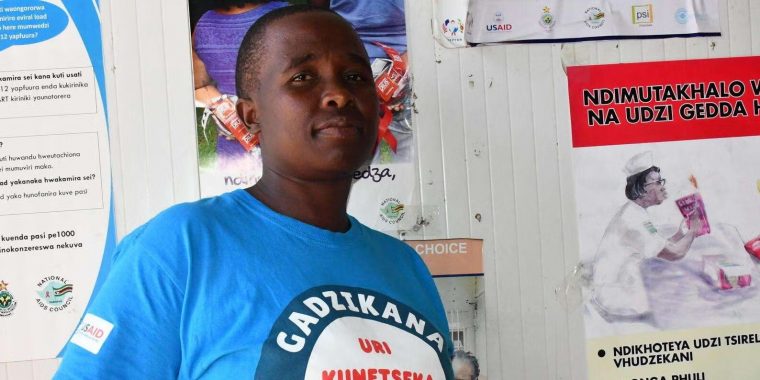
Doctors Without Borders/Médecins Sans Frontières (MSF) teams in Zimbabwe interviewed volunteers from different organizations who have witnessed first-hand the impact of the funding cuts. Angela Jambo is one of these volunteers. She welcomed us warmly into her home in the town of Chitungwiza, bearing a beaming smile that masked a long, painful journey as she took us back to the year 2000—the year she was diagnosed with HIV.
“Back then, it was a death sentence,” Angela said.
Antiretroviral treatment (ARVs) was not available in Zimbabwe, and people living with HIV largely relied on “positive living” methods, which entailed embracing a proactive lifestyle focused on traditional nutrition, herbal remedies, mental well-being, and peer support to manage life with HIV. Together, Angela and a few other women marched to the official residence of the president of Zimbabwe, in hopes to share their grievances. However, the security situation prevented them from getting there, so they eventually secured a meeting with the country’s vice president. That meeting became one of the many milestones that led to the introduction of ARVs in Zimbabwe five years later.
Since then, Angela has spent her time advocating for other people living with HIV. With strong donor support, particularly from the US Agency for International Development, or USAID, access to treatment expanded, support groups grew, awareness increased, and hope renewed.
Immediately, nutritional aid, food hampers, psychological support, and educational materials disappeared. Parents and guardians of children living with HIV were thrown into confusion.
That hope is now crumbling due to President Trump’s sweeping executive order earlier this year, which froze most foreign aid and was followed by an aggressive rescission proposal aimed at cutting billions in global health and development funding. Today, USAID has effectively ceased operations, the US President’s Emergency Plan for AIDS Relief (PEPFAR) faces an uncertain future, and the administration has announced the end of US funding for UNAIDS, the United Nations’ flagship program for HIV/AIDS. More donor countries, including the Netherlands and the United Kingdom’s Foreign, Commonwealth & Development Office, have announced they will reduce their financial support for Africa, a situation that will further strain Zimbabwe’s already overstretched health sector.
Angela felt the blow firsthand. She received a message to stop all activities through a WhatsApp group for volunteers with USAID projects. Immediately, nutritional aid, food hampers, psychological support, and educational materials disappeared. Parents and guardians of children living with HIV were thrown into confusion. Some schools began turning children away. Those preparing for final exams could not register; USAID had been their only hope for school fees including examination registration fees. Her community was left reeling.
Vulnerable people are feeling the impact
Angela’s voice cracked as she recalled an 11-year-old boy born HIV-positive who lived nearby. After learning the truth about his medication, he became violent and blamed his mother for his status. Angela counseled him and introduced him to a support group that changed his life.
That boy, and many like him, weigh heavily on Angela’s heart. “Support groups were everything,” she said.
“Now I see these children walking aimlessly as we are no longer conducting any support group activities. It’s stressful and disturbing. These children had found a family in our groups. Now, all of that is gone,” she added.
In Mbare, Beloved Mhizha*, a sex worker who also worked with the Center for Sexual Health and HIV/AIDS Research Zimbabwe (CeSHHAR Zimbabwe)—an organization that specializes in population health research and HIV/AIDS programming—watched helplessly as the network of sex workers he worked with collapsed.
“Before the funding cuts, clinics were well-stocked with medication and supplies,” he said. “Now, we are seeing condom stock-outs, something we have not been experiencing lately. Preexposure prophylaxis (PrEP) for HIV prevention is no longer given to new clients. We seem to be going backwards.”
He described how services they once accessed with ease have either become inaccessible or prohibitively expensive.
“We used to get medication for free,” he explained. “Now, we must travel long distances or go to private clinics where we pay for the medication for some drugs. Even the gas used during cryotherapy, a common treatment for genital warts that uses extremely cold temperatures to freeze and destroy the wart tissue, is no longer available. Loops [an intra-uterine device (IUD) that act as contraception] and condoms are in short supply and clinics no longer treat minor ailments like they used to.”
A collapse in community-based and prevention programming
Sithabile Garan’anga, a sex worker who worked as a PrEP champion and a lay counselor trained by Friendship Bench, an organization that provides community based psychosocial support, is also now idle. She used to volunteer at a CeSHHAR-run facility in Mbare providing counseling services to people struggling with depression, suicide, drug use, and abuse, among other challenges.
“It was tough work, but rewarding,” Sithabile said. “Now, I cannot help anyone, even though I know how to.”
Sithabile used to follow up with patients, particularly key populations, a group defined by UNAIDS as those at higher risk of HIV infection and who face social and legal challenges that increase their vulnerability. She ensured the patients stayed on medication and received proper care. Today, without support from clinics or funding, she is not useful to them.
“It hurts to see people suffering while I stand by with my hands tied,” she said.
The cuts are not just hitting program activities and medical stocks; they are crippling the logistical backbone of HIV care.
Natasha Ngwenyeni, community volunteer
Natasha Ngwenyeni, a community volunteer with the Zimbabwe Association of Church-Related Hospitals, has also witnessed a painful decline in Glen View, Harare. Her work involved supporting key populations in accessing health care services and pushing for inclusive policies.
“The work we did brought dignity to people who had long been ignored by service providers,” she said. “But with USAID said to be closing for good in September this year, I fear the worst is yet to come. Already, key populations are beginning to shy away from being served at local clinics as they fear being judged by service providers.”
According to MSF country representative Zahra Zeggani-Bec, the funding cuts are already having far-reaching consequences: “We are seeing a total collapse in community-based and prevention programming, especially for key populations who are now entirely left behind.”
It hurts to see people suffering while I stand by with my hands tied.
Sithabile Garan’anga, volunteer
“The cuts are not just hitting program activities and medical stocks; they are crippling the logistical backbone of HIV care,” she added. “Transport for distributing supplies has all but vanished. Confusion reigns, with services changing daily or weekly, leaving patients unsure where to go and breaking continuity of care. We are also deeply concerned about looming stock-outs of essential drugs, HIV test kits, and lab equipment, particularly the cartridges needed for the GeneXpert machines that are central to HIV and tuberculosis (TB) diagnosis.”
MSF in Zimbabwe
MSF, under its current Adolescent Sexual and Reproductive Health (ASRH) and Artisanal Miners projects in Harare and Gwanda, is filling critical service gaps that have widened due to reduced USAID funding. The ASRH project operates in densely populated suburbs of Mbare and Epworth, offering a mix of medicalized and peer-led, adolescent-friendly services aimed at reducing morbidity and mortality related to sexual and reproductive health. Meanwhile, the Gwanda-based Artisanal Miners project is delivering mobile, integrated health services in remote mining communities, targeting the intersecting burdens of HIV, TB, and silicosis. Both projects are grounded in strong community engagement, ensuring services are responsive, inclusive, and context-specific.
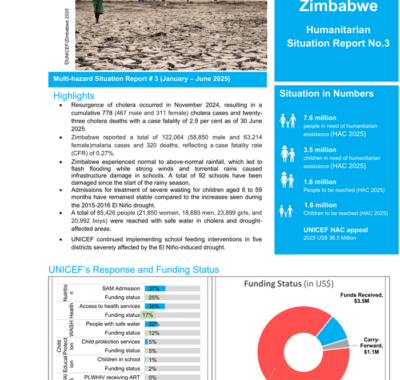
Resurgence
of
cholera
occurred
in
November
2024,
resulting
in
a
cumulative
778
(467
male
and
311
female)
cholera
cases
and
twenty-three
cholera
deaths
with
a
case
fatality
of
2.9
per
cent
as
of
30
June
2025.
Zimbabwe
reported
a
total
of
122,064
(58,850
male
and
63,214
female)malaria
cases
and
320
deaths,
reflecting
a
case
fatality
rate
(CFR)
of
0.27%.
Zimbabwe
experienced
normal
to
above-normal
rainfall,
which
led
to
flash
flooding
while
strong
winds
and
torrential
rains
caused
infrastructure
damage
in
schools.
A
total
of
92
schools
have
been
damaged
since
the
start
of
the
rainy
season.
Admissions
for
treatment
of
severe
wasting
for
children
aged
6
to
59
months
have
remained
stable
compared
to
the
increases
seen
during
the
2015-2016
El
Niño
drought.
A
total
of
85,426
people
(21,850
women,
18,685
men,
23,899
girls,
and
20,992
boys)
were
reached
with
safe
water
in
cholera
and
drought-affected
areas.
UNICEF
continued
implementing
school
feeding
interventions
in
five
districts
severely
affected
by
the
El
Niño-induced
drought.
We
use
cookies
on
our
website
to
give
you
the
most
relevant
experience
by
remembering
your
preferences
and
repeat
visits.
By
clicking
“Accept
All”,
you
consent
to
the
use
of
ALL
the
cookies.
However,
you
may
visit
“Cookie
Settings”
to
provide
a
controlled
consent.
UNICEF
supports
the
Government
of
Zimbabwe
to
improve
access
to
climate-resilient
and
sustainable
WASH
services,
with
a
focus
on
the
most
vulnerable
populations.
In
2024,
development
and
emergency
interventions
reached
an
additional
574,060
people
and
156
schools
with
basic
water
services.
These
improvements
were
made
through:
Rehabilitation
of
boreholes
Chlorination
of
water
points
Construction
of
piped
water
schemes
and
community
water
kiosks
These
interventions
have
enhanced
water
security
and
reduced
the
time
and
physical
burden
on
women
and
girls,
while
supporting
disease
prevention
and
dignity
across
communities.
UNICEF
also
contributed
to
expanding
access
to
sanitation.
Technical
assistance
and
advocacy
led
to
the
approval
of
the
new Sanitation
and
Hygiene
Policy,
which
promotes
self-financed
household
latrines.
Implementation
in
six
districts
reached
31,899
people
with
basic
sanitation
services.
Seventeen
villages
in
Matabeleland
South
Province
were
declared open
defecation
free,
marking
progress
in
community-led
sanitation
efforts.
However,
the
pace
of
latrine
construction
remains
below
the
levels
required
to
meet
national
targets.
Integrating
Climate
and
Child
Rights UNICEF
continues
to
champion
child-sensitive
climate
action
in
Zimbabwe.
In
2024,
UNICEF
supported
the
Government
in
incorporating
children’s
needs
into
two
key
national
climate
frameworks:
National
Adaptation
Plan
(NAP):
Submitted
to
the
UNFCCC,
the
plan
includes
provisions
for
child-centred
resilience
building
in
sectors
such
as
health
and
WASH.
Nationally
Determined
Contributions
(NDC)
Implementation
Plan:
UNICEF
influenced
the
inclusion
of
age-
and
gender-responsive
indicators.
Ahead
of
COP29,
UNICEF
co-hosted
child-led
consultations
with
the
Ministry
of
Environment
and
Ministry
of
Youth
to
better
understand
the
climate-related
health
impacts
facing
children.
A
total
of
1,000
children
shared
insights,
which
informed
the Climate
Change
Impacts
on
Child
Health
Report,
presented
at
the
60th
Subsidiary
Body
Sessions
of
the
UNFCCC
in
Bonn,
Germany.
UNICEF
also
supported
the
participation
of
young
climate
advocates
and
contributed
to
national
climate
vulnerability
assessments,
helping
to
ensure
that
children’s
voices
and
needs
are
central
to
environmental
policymaking
and
adaptation
efforts.
—
Hunter
Biden,
in
response
to
a
demand
letter
he
received
from
Alejandro
“Alex”
Brito
of
Brito
PLLC, who
represents
First
Lady
Melania
Trump,
in
her
quest
to
receive
an
apology
over
what’s
been
described
as
Biden’s
“false,
defamatory,
disparaging
and
inflammatory
statements”
made
during
a
YouTube
podcast
that
allegedly
tie
the
president’s
wife
to
Jeffrey
Epstein.
Brito
has
threatened
Biden
with
a
$1
billion
lawsuit
if
he
refuses
to
apologize.
Staci
Zaretsky is
the
managing
editor
of
Above
the
Law,
where
she’s
worked
since
2011.
She’d
love
to
hear
from
you,
so
please
feel
free
to
email
her
with
any
tips,
questions,
comments,
or
critiques.
You
can
follow
her
on Bluesky, X/Twitter,
and Threads, or
connect
with
her
on LinkedIn.
The
latest
bit
of
ridiculous
news
in
our
nation’s
turn
toward
authoritarianism
is
the
felony
charges
levied
against
the
D.C.
sandwich
thrower.
In
case
you
missed
the
underlying
story,
in
the
midst
of
Donald
Trump’s
militarization
on
the
nation’s
capital,
Sean
Charles
Dunn
allegedly
called
a
federal
agent
a
fascist
and
threw
a
Subway
sandwich
at
the
officer.
According
to
charging
documents,
Dunn
admitted
to
arresting
officers,
“I
did
it.
I
threw
a
sandwich.”
Felony
charges
for
assaulting
a
federal
officer
with
a
Subway
sandwich
is
absolutely
absurd
and
also
the
most
2025
sentence
ever.
Anyway,
it
turns
out
Dunn
was
actually
an international
affairs
specialist
in
the
Justice
Department’s
criminal
division.
Emphasis
on
*was*
because,
as
Attorney
General
Pam
Bondi
made
hilariously
apparent,
Dunn
has
been
fired
from
his
job.
If
you
touch
any
law
enforcement
officer,
we
will
come
after
you.
I
just
learned
that
this
defendant
worked
at
the
Department
of
Justice
—
NO
LONGER.
Not
only
is
he
FIRED,
he
has
been
charged
with
a
felony.
I
certainly
don’t
condone
Subway
sandwich
throwing
—
they
can
be
a
tasty
treat!
And
the
DOJ
got
evermore
homogenized
with
Dunn’s
firing.
I
threw
the
sandwich,
but
I
did
not
throw
the
condiments I
threw
the
sandwich,
but
I
didn’t
throw
the
condiments
All
around
Washington
D.C. They’re
trying
to
track
me
down They
say
they
want
to
bring
me
in
guilty For
the
spilling
of
some
mayonnaise For
wasting
all
the
dijon,
but…
https://t.co/IeEfrJw8eh
Kathryn
Rubino
is
a
Senior
Editor
at
Above
the
Law,
host
of
The
Jabot
podcast,
and
co-host
of
Thinking
Like
A
Lawyer.
AtL
tipsters
are
the
best,
so
please
connect
with
her.
Feel
free
to
email
her
with
any
tips,
questions,
or
comments
and
follow
her
on
Twitter
@Kathryn1 or
Mastodon
@[email protected].