Law Firms Are Still Looking To Diversify Their Workforce – Above the Law

There’s
no
question
that
running
DEI
programs
at
law
firms
has
become
more
difficult
after

SFFA
v.
Harvard

and
mounting
pressure
from
the
Trump
administration,
but
it
isn’t
impossible.
Potential
employees
and
firms
looking
to
hire
can
still
try
to
make
connections,
but
the
anti-DEI
climate
has
forced
some
changes
around
how
the
application
process
looks.

Law.com

has
coverage:

While
a
handful
of
large
firms
have
open
DEI
roles
posted,
the
quantity
of
open
positions
has
declined,
making
each
posting
more
competitive.

While
some
public
job
postings
for
law
firm
DEI
roles
have
opened
up
since
the
initial
pullback
when
law
firms
were
being
targeted
by
the
administration
earlier
this
year,
some
open
positions
don’t
name
the
firm
at
all
until
after
candidates
apply.
“We’ve
posted
for
our
clients
in
that
way
because
maybe
there’s
a
hesitation
that
they
are
not
looking
to
put
their
names
out
there
and
put
a
target
on
their
backs,”
said
Calibrate
Strategies
recruiter
Haley
Revel.

The
increased
competition
for
the
available
roles
means
that
firms
can
choose
more
qualified
applicants,
which
is
great,
but
workarounds
that
obscure
the
name
of
the
firm
being
applied
to
could
dissuade
qualified
applicants
from
applying
for
the
positions.
It
is
far
from
a
perfect
solution,
but
it
is
an
understandable
way
of
balancing
searching
for
qualified
applicants
without
inviting

Blum
&
Co
.
to
knock
on
your
door.
Hopefully.
Admittedly,
it
seems
like
firms
that
are
trying
to
hide
DEI
recruitment
behind
a
silk
curtain
are
only
delaying
the
eventual
affirmative
action
by
proxy
suit
to
come.

In
the
meantime,
make
the
most
of
the
market
while
you
can.
Apply,
apply,
apply!


Law
Firm
Diversity
Professionals
Face
Challenging
Job
Market

[Law.com]


Chris
Williams
became
a
social
media
manager
and
assistant
editor
for
Above
the
Law
in
June
2021.
Prior
to
joining
the
staff,
he
moonlighted
as
a
minor
Memelord™
in
the
Facebook
group Law
School
Memes
for
Edgy
T14s
.
 He
endured
Missouri
long
enough
to
graduate
from
Washington
University
in
St.
Louis
School
of
Law.
He
is
a
former
boatbuilder
who
is
learning
to
swim, is
interested
in
critical
race
theory,
philosophy,
and
humor,
and
has
a
love
for
cycling
that
occasionally
annoys
his
peers.
You
can
reach
him
by
email
at [email protected]
and
by
tweet
at @WritesForRent.
It Is Absolutely Time To Panic About Marriage Equality – Above the Law

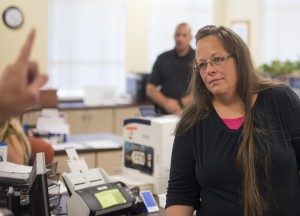
Kim
Davis
(Photo
by
Ty
Wright/Getty)

Turns
out

Kim
Davis’s

15
minutes
of
fame
aren’t
over
yet.

You
probably
thought
the
Kentucky
clerk
who
refused
to
follow
the
law
and
wouldn’t
provide

same-sex
couples

with
marriage
licenses
in
the
wake
of
the

landmark
marriage
equality

case


Obergefell
v.
Hodges
,
was,
like
skinny
jeans
and
side
parts,
a
sign
of
a
bygone
era.
But
now
that
flouting
the
law
until
it
bends
to
your
preferred
religious
proclivities
is
all
the
rage,
Davis
is
back.

Davis
is
appealing
an
order
directing
her
to
pay
a
same-sex
couple
$100,000
in
compensation
(plus
attorneys
fees)
for
denying
them
a
marriage
license.
In
the
appeal,
Davis

asks
the
Supreme
Court

to
overturn
the

Obergefell

case,
and
even
the
ask
is
deeply
concerning.
Because
if
you’ve
been
paying
attention, you
know
the
Supreme
Court
 is
gunning
for Obergefell.

And
it’s
not
just
the
doom-vibes
of
2025
that
has
me
predicting
yet
another
roll
back
of
rights.
There’s
plenty
of
written
evidence
that
demonstrated
a
majority
of
the
Court
is
ready
to
end
marriage
equality.

It
all
started
with
Samuel
Alito’s
unhinged
dissent
in

Obergefell
,
and he
still
can’t
let
it
go.
 
In
2020,
in
a
denial
of
cert
in
another
case
involving
Davis,
Alito
and
Thomas

railed

against

Obergefell

and
its
“ruinous
consequences
for
religious
liberty.”
Then
there
was
Alito’s
*majority*
opinion
overturning
established
precedent
guaranteeing
the
right
to
reproductive
freedom
in Dobbs,
which creates
parallels
 between
the
right
established
in Obergefell and
reproductive
freedom,
as
they’re
not
“deeply
rooted
in
history.”
And,
of
course,
the concurrence
in
that
case
written
by
Clarence
Thomas

explicitly
says
the
Court
should
“reconsider”
its
jurisprudence
on
marriage
equality
(as
well
as
the
Court’s
holdings
on
consensual
sexual
contact
and
contraception,
so
there’s
more
horror
to
look
forward
to).

Of
course,
not
everyone
sees
the
downfall
of
marriage
equality
in
the
tea
leaves.

Axios

has
a
panel
of
experts,
like
Mary
Bonauto,
attorney
to Jim
Obergefell, who
are
more
optimistic.
Bonauto
said,
“There’s
good
reason
for
the
Supreme
Court
to
deny
review
in
this
case
rather
than
unsettle
something
so
positive
for
couples,
children,
families
and
the
larger
society
as
marriage
equality.”

Oh,
my
dear
sweet
summer
child.
No
matter
how
much
you
and
I
(and 69%
of
Americans
) see
marriage
equality
as
a
societal
good,
Alito

very
much
sees
it

differently.
The
current
Court
is
disturbingly
down
with shredding
precedent
 and
issuing
decisions wildly
out
of
line
 with
what
the majority
of
Americans
 believe
as
long
as
it
fits *their*
vision
 of
what
the
country
should
be.
So,
yeah.
It’s
time
to
start
prepping
for
a
regression.

California
and
Hawaii
are
already

ensuring
zombie
laws

that
predate

Obergefell

don’t
come
back
from
the
dead.
And
estate
lawyers
are
available

to
protect
couples’
relationships
with
contracts.
Because
the
time
to
worry
is
now.


Kathryn
Rubino
is
a
Senior
Editor
at
Above
the
Law,
host
of

The
Jabot
podcast
,
and
co-host
of

Thinking
Like
A
Lawyer
.
AtL
tipsters
are
the
best,
so
please
connect
with
her.
Feel
free
to
email

her

with
any
tips,
questions,
or
comments
and
follow
her
on
Twitter

@Kathryn1
 or
Mastodon

@[email protected].

The Silent Killer in Zimbabwe’s Medicine Cabinet

The
power
of
antibiotics
is
easy
to
take
for
granted
because
most
of
us
have
grown
up
in
a
world
where
infections
are
rarely
a
death
sentence.
For
most
of
human
history,
it
was
the
opposite.
Diseases
swept
through
populations
unchecked,
changing
the
course
of
civilisations.

Archaeological
records
suggest
plague
epidemics
go
back
at
least
5,000
years.
The
Old
Testament
speaks
of
rats
and
tumours
devastating
communities.
The
Plague
of
Justinian
in
the
6th
century
may
have
helped
bring
down
the
Byzantine
Empire.
The
Black
Death
wiped
out
between
a
third
and
half
of
Europe’s
people.
These
were
not
just
health
disasters
but
social
and
economic
earthquakes.

When
penicillin
was
discovered
in
1928
and
began
to
be
widely
used
during
the
Second
World
War,
it
felt
as
if
those
grim
chapters
had
been
closed
for
good.
Surgery
became
safer,
childbirth
less
perilous,
and
infections
that
once
doomed
the
sick
to
certain
death
could
be
treated
in
a
matter
of
days.

But
even
as
antibiotics
began
saving
lives,
the
seeds
of
their
undoing
had
already
sprouted.
Before
penicillin
reached
patients,
scientists
had
found
bacteria
carrying
enzymes
that
could
destroy
it.
Bacteria
are
survivors.
Their
goal
is
simple:
replicate,
spread,
and
endure.
Each
time
they
meet
an
antibiotic,
they
adapt.
The
weak
die,
the
strong
survive,
and
their
descendants
inherit
that
armour.

Over
the
decades,
medicine
fought
back
by
inventing
new
drugs
and
new
classes
of
antibiotics.
But
the
bacteria
always
caught
up.
Now
we
face
“superbugs”
resistant
to
multiple
treatments.
In
2019,
antimicrobial
resistance
(AMR)
was
directly
responsible
for
1.27
million
deaths
and
played
a
role
in
nearly
5
million
more.
If
the
trend
continues,
the
annual
death
toll
could
reach
10
million
by
2050.
That
is
way
more
than
the
global
cancer
burden
today.

Zimbabwe
is
already
feeling
the
weight
of
this
crisis.
Drug-resistant
gonorrhoea
means
healthcare
professionals
rely
almost
entirely
on
one
injectable
drug,
ceftriaxone.
Some
urinary
tract
infections
shrug
off
the
standard
pills.
Hospital
infections
sometimes
leave
doctors
with
no
effective
options.

Part
of
the
problem
is
cultural.
A
teacher
with
the
flu
will
pressure
a
clinic
for
antibiotics
so
she
can
be
back
in
class
tomorrow.
A
parent
gives
leftover
pills
to
a
coughing
child
“just
in
case.”
Health
workers,
short
on
time
and
under
pressure
to
please,
sometimes
hand
over
a
prescription
rather
than
spend
precious
minutes
explaining
why
that
amoxilin
won’t
help
with
your
influenza
headache.

The
other
part
is
structural.
Antibiotics
are
easily
bought
over
the
counter.
In
agriculture,
they
are
fed
to
livestock
to
boost
growth
and
prevent
illness
in
cramped
farming
conditions,
passing
resistant
bacteria
to
humans
through
meat,
milk,
and
even
water.

Losing
antibiotics
would
roll
the
clock
back
centuries.
Caesarean
sections,
hip
replacements,
and
cancer
chemotherapy
would
all
become
far
riskier.
Pneumonia,
diarrhoea,
and
infected
wounds
could
again
claim
young,
healthy
lives.

If
we
are
to
preserve
antibiotics
for
the
future,
change
must
start
now.
Pharmacies
must
enforce
prescription
rules.
Clinicians
must
resist
patient
pressure
when
antibiotics
won’t
help.
Farmers
must
reserve
these
drugs
for
sick
animals,
not
for
fattening
stock.
And
each
of
us
must
stop
treating
antibiotics
as
a
cure-all
for
every
cough,
sneeze,
or
fever.

Antibiotics
are
not
just
another
medicine.
They
are
the
thin
shield
between
us
and
a
return
to
an
age
when
the
simplest
infection
could
be
fatal.
That
shield
is
cracking.
If
we
let
it
break,
there
will
be
no
quick
fix,
no
backup
plan—just
the
slow
realisation
that
we
handed
the
advantage
back
to
the
very
enemies
we
thought
we
had
defeated
forever.

Post
published
in:

Featured

Biglaw Firms May Be ‘Getting Anxious’ About Lagging Collections – Above the Law


Ed.
note
:
Welcome
to
our
daily
feature,

Quote
of
the
Day
.


If
the
collection
lag
persists
or
deepens,
then
I
think
we
will
see
firms
getting
anxious
.


A
delay
in
collections
that
became
significant
enough
to
result
in
lower
2025
performance
relative
to
budget
would
mean
that
most
partners
would
receive
less
compensation
in
2025
that
had
been
originally
projected
or
anticipated.


Kristin
Stark,
a
law
firm
management
consultant
at
Fairfax
Associates,
in
comments
given
to
the

American
Lawyer
,
concerning
law
firms’
growing
anxiety
over
a
lag
in
collections
in
2025.
She
went
on
to
add
that
law
firms
aren’t
“hitting
the
panic
button”
just
yet.


Staci Zaretsky


Staci
Zaretsky
 is
the
managing
editor
of
Above
the
Law,
where
she’s
worked
since
2011.
She’d
love
to
hear
from
you,
so
please
feel
free
to

email

her
with
any
tips,
questions,
comments,
or
critiques.
You
can
follow
her
on BlueskyX/Twitter,
and Threads, or
connect
with
her
on LinkedIn.

Gwanda court complex nears completion, to feature public viewing deck

GWANDA

Chief
Justice
Luke
Malaba
says
construction
of
the
new
Gwanda
Court
Complex

one
of
the
judiciary’s
largest
infrastructure
projects

is
now
in
its
final
stages,
with
completion
targeted
for
the
end
of
the
year.

Speaking
during
a
tour
of
the
site,
Malaba
said
his
visit
was
to
“fulfil
a
promise”
made
earlier
this
year
to
personally
monitor
progress
on
the
project,
which
began
in
earnest
in
2018.

Built
into
the
side
of
a
hill,
the
multi-storey
complex
will
house
nine
courtrooms,
including
a
resident
High
Court,
and
accommodate
all
judicial
departments
from
magistrates
and
prosecutors
to
prison
services
and
administrative
staff.

“This
is
one
of
the
biggest
projects
undertaken
by
the
judiciary
as
part
of
our
infrastructure
development
policy,”
Malaba
said.
“Courts
are
a
demonstration
of
our
commitment
to
ensuring
the
public’s
right
of
access
to
justice.”

The
Gwanda
High
Court
will
be
the
fourth
provincial
High
Court
after
Masvingo,
Mutare
and
Chinhoyi,
part
of
a
plan
to
establish
one
in
every
province.
Malaba
said
the
complex
would
address
a
long
wait
for
residents
of
Matabeleland
South,
who
have
been
without
a
local
High
Court
for
nearly
seven
years.

He
revealed
the
building
will
feature
a
public
viewing
deck
offering
panoramic
views
of
the
whole
of
Gwanda,
turning
the
facility
into
more
than
just
a
place
of
justice.

“The
court
will
also
be
a
cultural
heritage
site,”
he
said.
“Members
of
the
public
from
different
places
will
be
able
to
come
here,
experience
the
view
and
appreciate
the
town
from
above.”

Malaba
also
emphasised
that
the
project
is
part
of
a
broader
transformation
of
the
judiciary,
including
the
rollout
of
an
Integrated
Electronic
Case
Management
System
(IECMS)
designed
to
eliminate
corruption,
case
backlogs
and
delays.

“With
IECMS,
once
a
document
is
filed,
it
leaves
a
permanent
electronic
footprint
that
cannot
be
erased,”
he
said.
“Everyone
involved
can
track
a
case
in
real
time,
ensuring
transparency.”

The
Chief
Justice
said
the
contractor
had
met
all
deadlines
so
far,
with
the
next
inspection
set
for
December
5,
when
he
hopes
to
find
a
completed
and
operational
facility.

“This
is
not
just
brick
and
mortar,”
Malaba
said.
“It’s
a
manifestation
of
change

a
new
standard
for
justice
delivery
in
Zimbabwe.”

Drake’s Lawyers Are Making Accusations And Probing For Proof Afterward – Above the Law

Pictured:
Shaky
Warrior
(Photo
by
Cole
Burston/Getty
Images)

Some
Above
the
Law
stories
require
a
certain
level
of
objectivity,
balance,
and
finesse
to
be
done
well.
This
is
not
one
of
them.
Drake’s
goofy
ass
is
still
trying
to
make
fetch
happen
by
converting
his
Superbowl-publicized
hip-hop
loss
into
a
courtroom
victory.
The

Teenage
Fever

star’s
legal
strategy
of
blaming
everyone
but
Kendrick
and
himself
for
his
L
is
zoning
in
on
UMG’s
Lucian
Grainge,
accusing
him
of
conspiring
against
Drake.

The
Guardian

has
coverage:

As
Drake’s
lawsuit
continues
against
his
record
label’s
parent
company,
Universal
Music
Group
(UMG),
his
lawyers
have
claimed
that
UMG’s
British
chair
and
chief
executive
Lucian
Grainge
had
a
“role
in
and
knowledge
of
the
scheme
to
defame
and
harass”

Drake
,
and
have
requested
that
UMG
produce
texts
and
emails
by
Grainge.

UMG
has
previously
denied
access
to
those
communications,
stating
that
Grainge
has
“no
meaningful
involvement
in
the
matters
and
decisions
at
issue
in
this
litigation”.


It
seems
like
the
famous
actor
we
once
knew
is
looking
paranoid
and
now
spiraling
.
We
do
not
have
unreleased
footage
of
what
Drake
must
have
looked
like
as
he
compelled
his
lawyers
to
try
and
make
something
out
of
a
fishing
expedition,
but
I’d
imagine
that
it
looked
something
like
this:

The
desperate
clawing
for
anything
that
could
clear
Drake’s
name
isn’t
stopping
with
Lucian.
Back
in
Family
Matters,
Drake
insiunated
that
Dave
Free
was
the
actual
father
of
Kendrick
Lamar’s
children.
And
while
it
made
for
a
catchy
vocal
stim
in
a
song,
the
likelihood
of
it
being
anything
more
than
a
rumor
quickly
fell
out
for
even
one
of
Drake’s
most
ardent
fanboys:

Drake
is
bringing
the
question
back
and
pushing
for
documents
to
determine
if
Kendrick
Lamar’s
children
were
fathered
by
Lamar
or
Dave
Free:

If
you
are
unfortunate
enough
to
remember
Drake’s
thematically
and
qualitatively
sad
attempt
to
respond
to
“Not
Like
Us”
titled
The
Heart
Pt.
6


not
to
be
confused
with
Kendrick
Lamar’s
“The
Heart
Pt.
6,”
an
actual
piece
of
good
art

you
know
that
Drake
claims
everything
he
said
during
the
rap
spat
was
factual.
If
that’s
true,
shouldn’t
he
already
have
some
reliable
information
on
the
documentation
he’s
requesting
above?

Tell
you
one
thing

it’ll
be
a
sad
day
in
a
Toronto
recording
studio
if
Drake’s
legal
team
somehow
manages
to
get
all
of
the
documents
they’re
requesting
and
it
does
goose
egg
to
help
him
in
the
long
run.


Drake
Lawyers
Allege
Universal
Head
Lucian
Grainge
‘Personally
Involved’
In
Kendrick
Lamar
Diss
Track

[The
Guardian]


Chris
Williams
became
a
social
media
manager
and
assistant
editor
for
Above
the
Law
in
June
2021.
Prior
to
joining
the
staff,
he
moonlighted
as
a
minor
Memelord™
in
the
Facebook
group Law
School
Memes
for
Edgy
T14s
.
 He
endured
Missouri
long
enough
to
graduate
from
Washington
University
in
St.
Louis
School
of
Law.
He
is
a
former
boatbuilder
who
is
learning
to
swim, is
interested
in
critical
race
theory,
philosophy,
and
humor,
and
has
a
love
for
cycling
that
occasionally
annoys
his
peers.
You
can
reach
him
by
email
at [email protected]
and
by
tweet
at @WritesForRent.

Front-End Loading Cases Just Got Easier: Everlaw’s Deep Dive Tool – Above the Law

One
of
the
key
things
I
learned
from
a
number
of
mentors
in
the
mass
tort
defense
league
was
the
importance
of
front-end
loading
cases.
By
that
I
mean
getting
a
grasp
early
on
of
the
exposure
and
the
“oh
shit”
documents
and
then
immediately
formulating
the
appropriate
case
strategy
based
on
that
grasp.
Over
and
over
again,
the
approach
proved
itself
as
the
case
progressed.

Another
thing
I
learned
along
the
way
was
the
improved
depositions
and
cross
examination
of
witnesses
where
I,
as
the
most
knowledgeable
and
experienced
lawyer
on
the
case,
could
myself
review
and
locate
the
most
important
documents,
as
opposed
to
asking
an
associate
or
paralegal
to
do
that
work
and
then
report
to
me.

The
problem
with
both,
of
course,
was
always
the
cost
and
time
involved
to
do
this
important
work.
All
too
often
clients
would
balk
at
paying
for
this
work
early
on.
Convincing
them
otherwise
was
a
pain,
to
say
the
least.


The
Deep
Dive
Tool

Enter

Everlaw’s

new

Deep
Dive

tool,
which
promises
to
address
both
challenges.
The
tool
is
an
enhancement
of
what
was
previously
called
Project
Query,
according
to
the
Everlaw
press
release.
Deep
Dive
was
announced
in
open
beta
at
the
ILTA
conference
this
week.

In
essence,
the
tool
allows
the
user
to
query
a
large
data
set
of
inputted
documents
using
natural
language.
The
tool
allows
users
to
simply
ask
questions
related
to
specific
issues,
parties,
or
events
and
get
answers.
In
a
class
action,
you
might
ask
the
tool
something
like
“is
there
any
support
for
the
claims
that
there
are
common
questions
of
fact
among
the
various
putative
class
members.”

The
answers
are
supported
with
a
list
of
facts
and
referenceable
documents
so
users
can
dive
deeper
into
the
breakdown
of
information
available
as
part
of
the
response.
In
other
words,
the
tool
cites
the
documents
that
it
uses
to
answer
the
questions.
You
can
then
drill
down
into
the
documents
and
ask
more
specific
questions
based
on
a
subset
of
the
cited
documents.
The
tool
does
not
go
outside
the
documents
to
answer
any
inquiry.

Importantly,
according
to

AJ
Shankar
,
Everlaw’s founder,
who
demoed
the
product
for
a
group
of
journalists
over
lunch,
if
Deep
Dive
can’t
find
any
documents
to
respond
to
the
question,
it
will
say
so.
(In
the
demo,
based
on
the
question
one
of
us
asked
as
to
who
the
best
legal
tech
journalist
was,
Deep
Dive
demurred
and
said
there
were
no
documents
in
its
data
base
to
answer
the
questions,
thankfully.)

The
demo
certainly
backed
up
the
above
claims
from
Everlaw’s
press
release.

According
to

Chuck
Kellner
,
Everlaw
Advisor,
who
also
attended
the
demo,
Everlaw
envisioned
three
use
cases:

1.
Undertaking
a
data
dump
before
depositions
to
help
either
the
taking
or
defending
lawyer
better
prepare.

2.
Using
the
tool
at
the
beginning
of
case
to
assess
exposure
etc.
without
a
huge
investment
of
time
and
cost
and
before
discovery.

3.
Designing
document
review
and
coding
projects.
Use
of
the
tool
would
eliminate
the
“I
don’t
know
what
to
look
for”
problem.
The
tool
can
give
an
overview
of
the
documents
to
help
design
the
review
and
coding.

The
first
two
of
these
were
particularly
music
to
my
ears.
Kellner
confirmed
what
I
was
thinking.
It
is
designed
not
for
those
working
on
a
case
but
for
the
case
lead
and
strategist.
And
as
I
said
before,
these
are
the
people
that
know
the
overall
case
the
best
and
know
the
client
the
best.
Giving
them
the
ability
to
ask
questions
will
inevitability
lead
to
better
results.
All
too
often,
eDiscovery
vendors
portray
what
their
tools
will
do
defensively
and
not
offensively
in
the
hands
of
an
experienced
lawyer.

And
the
ability
to
ask
what
documents
might
support
the
other
side’s
allegation
is
golden
to
a
front-end
loading
and
strategy
process.
Simply
plug
in
the
an
allegation and
then
ask
what
supports
or
does
not
support
that
claim.


A
Credible
Demo

But,
here’s
another
lesson
from
the
Everlaw
demonstration.
In
a
conference
where
too
many
vendors
are
promising
the
sun,
the
moon,
and
the
stars,
Shankar
was
refreshingly
honest
about
what
the
tool
can
and
can’t
do.
He
recognized
that
the
questions
lawyers
need
answers
to
aren’t
necessarily
easy
for
AI
tools
to
answer.
That
Deep
Dive
might
make
mistakes,
that
it’s
an
aid,
not
a
panacea.

Shankar
even
did
the
demo
live,
not
using
a
screen
video
like
most
use
in
vendor
presentations.
The
technology
didn’t
necessarily
work
perfectly
during
the
demo
(those
who
do
this
in
real
life
know
this
is
an
issue
for
a
variety
of
reasons
that
have
nothing
to
do
with
the
product).
He
let
the
audience
ask
questions
of
the
tool.
He
admitted
that
while
he
thought
he
knew
what
the
tool
would
do
in
the
demo,
it
wasn’t
foolproof.
“It
can’t
do
everything,”
he
cautioned.

The
approach
was
refreshing
and
enhanced
both
his
and
Everlaw’s
credibility
in
my
mind.

A
useful
tool
and
a
credible
demo.
Imagine
that.


Stephen
Embry
is
a
lawyer,
speaker,
blogger,
and
writer.
He
publishes TechLaw
Crossroads
,
a
blog
devoted
to
the
examination
of
the
tension
between
technology,
the
law,
and
the
practice
of
law
.

Missing: Biglaw’s Summer Bonus Matches – Above the Law

Milbank
delighted
with special
summer
bonuses
,
ranging
from
$6-25
thousand,
for
associates.
And
that’s
great
for
them!
But
where
are
all
the
matches?
We
have
a
theory
on
when
associates
at
other
firms
will
be
able
to
cash
in.

There
was some
fishiness
 (now
resolved)
with
the
constitution
on
congress’s
website.
Which,
honestly,
should
be
more
shocking
than
it
is.

Biglaw
partner
lateral
moves
are
all
the
rage,
with
some major
moves
 this
summer.
But not
everyone
 is
benefitting
from
the
hotness
of
the
lateral
market

all
because
of
a
little
thing
called
due
diligence.

The Am Law A-List: Ranking The Most Elite Law Firms In America (2025) – Above the Law

Another
day,
another
ranking
for
lawyers
to
ogle
in
a
search
for
meaning
as
they
attempt
to
get
through
the
day’s
billables.
Such
is
the
life
of
a
Biglaw
attorney,
always
on
the
hunt
for
confirmation
that their firm
is
the best firm,
the
one
that’s
hitting
all
of
its
essential
metrics
year
after
year.
If
that
sounds
like
you
(and
you
might
as
well
admit
it,
it
probably
does),
then
you
should
check
out
the
latest
offering
from
the
American
Lawyer,
the
annual
A-List
ranking.

Are
you
unfamiliar
with
this
ranking?
Here
are
all
of
the
metrics
that
it
measures
to
determine
which
Biglaw
firms
are
the
best
of
the
best:


[The
A-List]
recognizes
firms
based
on
a
combination
of
factors,
both
financial
and
cultural:
revenue
per
lawyer,
pro
bono
commitment,
associate
satisfaction,
racial
diversity
and
gender
diversity
(the
percentage
of
equity
partners
who
are
women),
with
RPL
and
pro
bono
given
double
weight.
Each
metric
measures
Am
Law
200
firms’
relative
performance—a
firm’s
score
in
a
given
category
is
based
on
its
ranking
among
all
200
firms.
Each
category,
as
well
as
the
overall
score,
is
based
on
a
100-point
scale.

That
said,
the
full
top
20
firms
and
their
scores
are
listed
at
the American
Lawyer
,
but
we’ve
listed
the
top
10
firms
here
to
satiate
your
rankings
cravings
(with
the
firms’
total
scores
noted
parenthetically):

1.
Munger
Tolles
&
Olson
(96.1)

2.
Ropes
&
Gray
(90.7)

3.
WilmerHale
(89.2)

4.
Jenner
&
Block
(88.5)

5.
Morgan
Lewis
(87.7)

6.
Arnold
&
Porter
Kaye
Scholer
(86.4)

7.
O’Melveny
&
Myers
(85.4)

8.
Orrick
(84.9)

9.
Covington
&
Burling
(83.9)

9.
Debevoise
&
Plimpton
(83.9)

Congratulations
to
all
of
the
firms
that
made
this
year’s
Am
Law
A-List.


The
2025
A-List:
Top
20
Firms

[American
Lawyer]


Staci Zaretsky


Staci
Zaretsky
 is
the
managing
editor
of
Above
the
Law,
where
she’s
worked
since
2011.
She’d
love
to
hear
from
you,
so
please
feel
free
to

email

her
with
any
tips,
questions,
comments,
or
critiques.
You
can
follow
her
on BlueskyX/Twitter,
and Threads, or
connect
with
her
on LinkedIn.

In-House Professionals: Help Us Benchmark Your Pay – Above the Law

We’re
updating
our
compensation
information
for
in-house
law
departments
and
asking
for
your
help.

Above
the
Law
has
tracked
corporate
counsel
pay
for
many
years
in
our
annual In-House
Compensation
Report
,
and
this
year,
for
the
first
time,
we
are
collecting
compensation
information
from
legal
operations
professionals
as
well.

So
whether
you
serve
as
in-house
counsel
or
work
in
legal
ops,
just
tell
us
how
much
you
make
in
this

brief
survey
.
The
feedback
you
provide
will
enable
us
to
share
valuable
benchmarking
information
with
you
later
this
year.

The
survey
is completely
anonymous 
and
shouldn’t
take
more
than
a
few
minutes
of
your
time.