Zimbabwe Is Trying to Build a China Style Surveillance State – The Zimbabwean

But it was on social media that Zimbabweans first found their voice to rise up against the 93-year-old strongman, with platforms like WhatsApp, Facebook, and Twitter proving to be vital in mobilizing and coordinating countrywide protests.

Now, just two years later, activists say the government that replaced Mugabe’s is trying to silence those same social media accounts with legislation that bears all the hallmarks of China’s dystopian censorship and surveillance system.

“It is a terrifying piece of legislation”

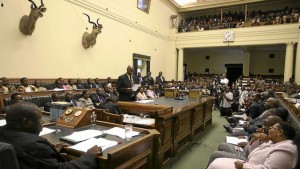
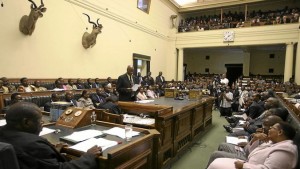
Zimbabwe’s Parliament is weighing legislation that would authorize the use of surveillance technologies, grant sweeping powers to crack down on social media users, and allow the government to snoop on citizens’ private communications. The latest version of the bill — known as the Cyber Crime, Cyber Security and Data Protection Bill of 2019 — was passed by President Emmerson Mnangagwa’s Cabinet last month and is currently being drafted for publication and approval by Parliament, where it’s expected to easily pass under Mnangagwa’s Zanu-PF party majority.

Activists warn things could get ugly soon after that.

“It is a terrifying piece of legislation,” Bekezela Gumbo, a researcher at the Zimbabwe Democracy Institute, told VICE News. “It has everything it needs to give the ruling Zanu-PF party and its agents in government the legal basis to imprison opponents using the internet.”

Although the public still doesn’t know exactly what the final version of the bill will contain, activists say it’ll likely be overly broad and lacking the sort of necessary protections that rights groups have called for in the past.

“The definitions of crimes were described in such broad terms that they could arrest people because they have said something on a social media platform to criticize the government or say something that is unfair to government,” Kuda Hove, a legal expert with the Media Institute of Southern Africa, told VICE News, referring to a previous draft of the bill he’d seen.

From Twitter to the streets

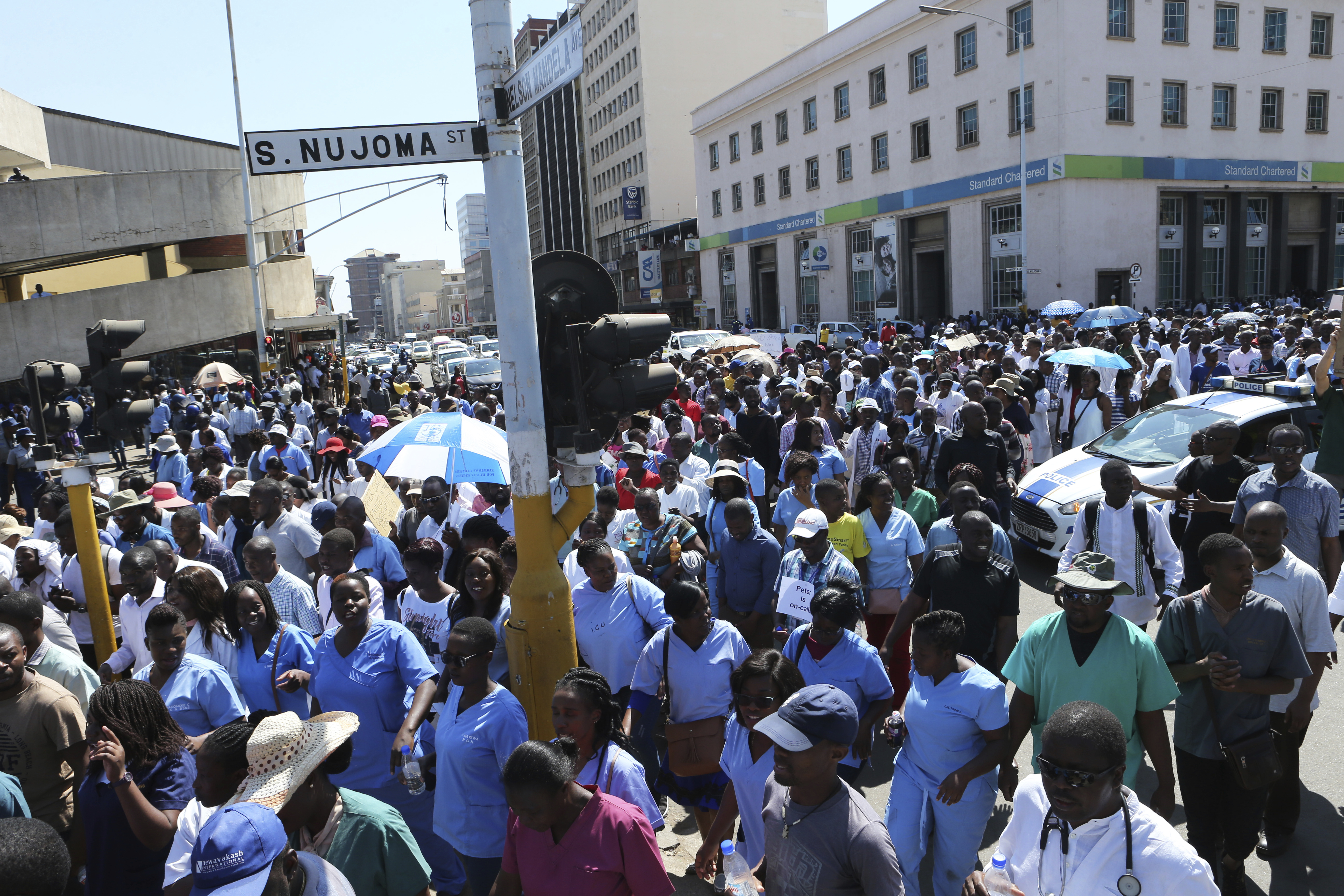
ZIMBABWEAN MEDICAL STAFF MARCH ON THE STREETS OF HARARE, THURSDAY SEPT, 19, 2019. ZIMBABWEAN DOCTORS PROTESTING THE ALLEGED ABDUCTION OF A UNION LEADER WON A HIGH COURT RULING ALLOWING THEM TO MARCH AND HANDOVER A PETITION TO THE PARLIAMENT.THE ZIMBABWE HOSPITAL DOCTORS ASSOCIATION HAS SAID ITS PRESIDENT, PETER MAGOMBEYI, WAS ABDUCTED ON SATURDAY AFTER CALLING FOR A PAY STRIKE, AND MEMBERS SAY THEY WILL NOT RETURN TO WORK UNTIL HE IS FOUND. (AP PHOTO/TSVANGIRAYI MUKWAZHI)

Back in 2016, social media was the spark for the protests that would ultimately lead to Mugabe’s ouster in 2017. It was on Facebook, Twitter, and critically WhatsApp that the genesis of the protest movement began to take shape.

At the time, WhatsApp accounted for over one-third of all mobile data used in Zimbabwe as citizens shared anti-government news and information about demonstrations.

Officials were powerless at the time to stop the surge in online dissent, and they began exploring ways to curb it. It was during that period, as Mugabe was losing his grip on power, that the first version of the Computer Crime and Cyber Crime Bill was drafted.

Since Mugabe’s departure, the bill has seen a number of revisions. The most recent version remains shrouded in mystery, but it includes a vague mandate to protect “cyberspace,” according to Mnangagwa.

The president’s office did not respond to multiple requests for comment on the latest bill approved by the Cabinet. The only official who would speak was Ivanhoe Gurira, the principal director at the Ministry of Information, who denied the bill was meant to promote censorship, claiming Zimbabwe has other laws that help protect access to information and freedom of speech.

When asked about the criticism from activists about the new law, Gurira said: “Only those people that want to operate outside the law would say so.”

But Mnangagwa’s government has already shown its willingness to restrict online speech.

In January, the government partially shut off internet access and blocked access to social media platforms including Facebook, WhatsApp, Twitter, LinkedIn, Reddit, and Tinder. The move came as the government struggled to contain protests over a sharp spike in fuel prices and generally deteriorating economic conditions. The internet shutdown was soon followed by a brutal military crackdown that left a dozen people dead and over 170 more injured.

Access to the internet was restored a week later, but only after the High Court ruled the government’s order was illegal. Free speech activists say the new cybercrime bill would essentially make another shutdown legal.

“With such precedent, it is indubitable that the underlying intention of the proposed law is to curtail citizens’ fundamental political and civil liberties, especially as government battles to contain the tanking economy and rising citizens agitation,” Nhlanhla Ngwenya, program director at the Open Society Initiative for Southern Africa, told VICE News.

The government has also arrested numerous individuals for online activities since Mnangagwa came to power, including Evan Mawarire, a pastor who was charged with inciting public violence after he posted messages in support of the labor protests on Facebook and Twitter.

“We’re in a country where the basic freedoms that are provided for in the constitution for citizens are being blatantly violated. People are not allowed to speak freely. The amount of arrests that have taken place of people who have spoken out or against the government is shocking,” Mawarire told CNN this week.

Now, under Mnangagwa’s rule, the government is hoping to expand its crackdown on free speech online — and to do that it’s taking its lead from the world’s worst abuser of the internet: China.

China’s deep ties

China and Zimbabwe have long and deep ties that stretch back decades and run to the very highest levels of government.

Many of Zimbabwe’s senior leaders, including Mnangagwa and Vice President Constantino Chiwenga, received military training in China back in the early 1960s.

“You can’t overstate how deep the ties go between these two governments,” Eric Olander, managing editor of the nonpartisan China Africa Project, told VICE News. “They go back a long way together and there’s no indication either side is wavering in their mutual commitment to one another.”

“You can’t overstate how deep the ties go between these two governments”

On the technology front, China is already helping the Zimbabwe government keep a closer eye on its citizens. As part of Beijing’s $71 million Belt and Road investment in the country, the Zimbabwe government has partnered with Chinese facial recognition company CloudWalk Technology to create a surveillance network similar to the one deployed to monitor Uighurs in Xinjiang.

The deal sees CloudWalk technology monitoring major transport hubs and using the data to build a national facial recognition database. The deal also gives the Chinese company access to a rich trove of data on African faces.

Critics worry the new cybersecurity law would augment this nascent surveillance network by monitoring citizens’ online activities as well as their offline movements. And while China’s involvement in Zimbabwe’s surveillance plans remain far from clear, experts expect Harare to lean heavily on Beijing’s expertise to roll it out.

“We probably don’t need a lot of evidence to draw the conclusion that China will likely lend its expertise to building this kind of digital surveillance, given the trust that exists between these two governments and China’s expertise in this area,” Olander said. “Plus, the Chinese have an entire mechanism in place to provide the financing, implementation, and training on how to use technology like this.”

In fact, the Zimbabwean government may have already been inspired by China during the drafting of the new legislation. Officials from the Zimbabwean government were among representatives from three dozen countries who travelled to China in recent years to for weeks-long seminars on information management, according to Sarah Cook, a senior China researcher with Freedom House.

With China’s expertise, Mnangagwa’s government could get closer to stemming the sort of upheaval that toppled his predecessor before it even begins.

“This law is a response to the use of social media by activists, citizen journalists, and researchers during protests, accountability monitoring, and political mobilization,” Gumbo said. “This is what the government doesn’t want, and the bill is a mechanism to avoid public scrutiny. It is meant to curtail freedom of expression.”


Zimbabwe Is Trying to Build a China Style Surveillance State – The Zimbabwean

But it was on social media that Zimbabweans first found their voice to rise up against the 93-year-old strongman, with platforms like WhatsApp, Facebook, and Twitter proving to be vital in mobilizing and coordinating countrywide protests.

Now, just two years later, activists say the government that replaced Mugabe’s is trying to silence those same social media accounts with legislation that bears all the hallmarks of China’s dystopian censorship and surveillance system.

“It is a terrifying piece of legislation”

Zimbabwe’s Parliament is weighing legislation that would authorize the use of surveillance technologies, grant sweeping powers to crack down on social media users, and allow the government to snoop on citizens’ private communications. The latest version of the bill — known as the Cyber Crime, Cyber Security and Data Protection Bill of 2019 — was passed by President Emmerson Mnangagwa’s Cabinet last month and is currently being drafted for publication and approval by Parliament, where it’s expected to easily pass under Mnangagwa’s Zanu-PF party majority.

Activists warn things could get ugly soon after that.

“It is a terrifying piece of legislation,” Bekezela Gumbo, a researcher at the Zimbabwe Democracy Institute, told VICE News. “It has everything it needs to give the ruling Zanu-PF party and its agents in government the legal basis to imprison opponents using the internet.”

Although the public still doesn’t know exactly what the final version of the bill will contain, activists say it’ll likely be overly broad and lacking the sort of necessary protections that rights groups have called for in the past.

“The definitions of crimes were described in such broad terms that they could arrest people because they have said something on a social media platform to criticize the government or say something that is unfair to government,” Kuda Hove, a legal expert with the Media Institute of Southern Africa, told VICE News, referring to a previous draft of the bill he’d seen.

From Twitter to the streets

ZIMBABWEAN MEDICAL STAFF MARCH ON THE STREETS OF HARARE, THURSDAY SEPT, 19, 2019. ZIMBABWEAN DOCTORS PROTESTING THE ALLEGED ABDUCTION OF A UNION LEADER WON A HIGH COURT RULING ALLOWING THEM TO MARCH AND HANDOVER A PETITION TO THE PARLIAMENT.THE ZIMBABWE HOSPITAL DOCTORS ASSOCIATION HAS SAID ITS PRESIDENT, PETER MAGOMBEYI, WAS ABDUCTED ON SATURDAY AFTER CALLING FOR A PAY STRIKE, AND MEMBERS SAY THEY WILL NOT RETURN TO WORK UNTIL HE IS FOUND. (AP PHOTO/TSVANGIRAYI MUKWAZHI)

Back in 2016, social media was the spark for the protests that would ultimately lead to Mugabe’s ouster in 2017. It was on Facebook, Twitter, and critically WhatsApp that the genesis of the protest movement began to take shape.

At the time, WhatsApp accounted for over one-third of all mobile data used in Zimbabwe as citizens shared anti-government news and information about demonstrations.

Officials were powerless at the time to stop the surge in online dissent, and they began exploring ways to curb it. It was during that period, as Mugabe was losing his grip on power, that the first version of the Computer Crime and Cyber Crime Bill was drafted.

Since Mugabe’s departure, the bill has seen a number of revisions. The most recent version remains shrouded in mystery, but it includes a vague mandate to protect “cyberspace,” according to Mnangagwa.

The president’s office did not respond to multiple requests for comment on the latest bill approved by the Cabinet. The only official who would speak was Ivanhoe Gurira, the principal director at the Ministry of Information, who denied the bill was meant to promote censorship, claiming Zimbabwe has other laws that help protect access to information and freedom of speech.

When asked about the criticism from activists about the new law, Gurira said: “Only those people that want to operate outside the law would say so.”

But Mnangagwa’s government has already shown its willingness to restrict online speech.

In January, the government partially shut off internet access and blocked access to social media platforms including Facebook, WhatsApp, Twitter, LinkedIn, Reddit, and Tinder. The move came as the government struggled to contain protests over a sharp spike in fuel prices and generally deteriorating economic conditions. The internet shutdown was soon followed by a brutal military crackdown that left a dozen people dead and over 170 more injured.

Access to the internet was restored a week later, but only after the High Court ruled the government’s order was illegal. Free speech activists say the new cybercrime bill would essentially make another shutdown legal.

“With such precedent, it is indubitable that the underlying intention of the proposed law is to curtail citizens’ fundamental political and civil liberties, especially as government battles to contain the tanking economy and rising citizens agitation,” Nhlanhla Ngwenya, program director at the Open Society Initiative for Southern Africa, told VICE News.

The government has also arrested numerous individuals for online activities since Mnangagwa came to power, including Evan Mawarire, a pastor who was charged with inciting public violence after he posted messages in support of the labor protests on Facebook and Twitter.

“We’re in a country where the basic freedoms that are provided for in the constitution for citizens are being blatantly violated. People are not allowed to speak freely. The amount of arrests that have taken place of people who have spoken out or against the government is shocking,” Mawarire told CNN this week.

Now, under Mnangagwa’s rule, the government is hoping to expand its crackdown on free speech online — and to do that it’s taking its lead from the world’s worst abuser of the internet: China.

China’s deep ties

China and Zimbabwe have long and deep ties that stretch back decades and run to the very highest levels of government.

Many of Zimbabwe’s senior leaders, including Mnangagwa and Vice President Constantino Chiwenga, received military training in China back in the early 1960s.

“You can’t overstate how deep the ties go between these two governments,” Eric Olander, managing editor of the nonpartisan China Africa Project, told VICE News. “They go back a long way together and there’s no indication either side is wavering in their mutual commitment to one another.”

“You can’t overstate how deep the ties go between these two governments”

On the technology front, China is already helping the Zimbabwe government keep a closer eye on its citizens. As part of Beijing’s $71 million Belt and Road investment in the country, the Zimbabwe government has partnered with Chinese facial recognition company CloudWalk Technology to create a surveillance network similar to the one deployed to monitor Uighurs in Xinjiang.

The deal sees CloudWalk technology monitoring major transport hubs and using the data to build a national facial recognition database. The deal also gives the Chinese company access to a rich trove of data on African faces.

Critics worry the new cybersecurity law would augment this nascent surveillance network by monitoring citizens’ online activities as well as their offline movements. And while China’s involvement in Zimbabwe’s surveillance plans remain far from clear, experts expect Harare to lean heavily on Beijing’s expertise to roll it out.

“We probably don’t need a lot of evidence to draw the conclusion that China will likely lend its expertise to building this kind of digital surveillance, given the trust that exists between these two governments and China’s expertise in this area,” Olander said. “Plus, the Chinese have an entire mechanism in place to provide the financing, implementation, and training on how to use technology like this.”

In fact, the Zimbabwean government may have already been inspired by China during the drafting of the new legislation. Officials from the Zimbabwean government were among representatives from three dozen countries who travelled to China in recent years to for weeks-long seminars on information management, according to Sarah Cook, a senior China researcher with Freedom House.

With China’s expertise, Mnangagwa’s government could get closer to stemming the sort of upheaval that toppled his predecessor before it even begins.

“This law is a response to the use of social media by activists, citizen journalists, and researchers during protests, accountability monitoring, and political mobilization,” Gumbo said. “This is what the government doesn’t want, and the bill is a mechanism to avoid public scrutiny. It is meant to curtail freedom of expression.”

The Humanitarian disaster in Zimbabwe – The Zimbabwean

Your recent statement on conditions in Zimbabwe made heartbreaking reading…………many reasons were given, but the elephant in the room, which the report failed to mention – was the Mugabe inspired illegal invasion of thousands of highly productive, commercial farms, 90% of farmers lost their farms.

These farms were bringing in more than half the country’s foreign exchange, and was the source directly or otherwise, of most of the Government’s tax revenues.

At the time, I was Chief Inspector for the Zimbabwe National Society  for the Prevention of Cruelty to Animals (ZNSPCA), and for four long years, myself and my small team returned to invaded farms (after the farmers were refused permission to collect their animals and equipment), to rescue animals that ranged from children’s pets to livestock and wildlife.

We witnessed first hand the destruction of farm equipment, irrigation systems, fencing stolen for making snares, livestock axed, thousands of battery hens left to die, horses denied grazing, dipping of cattle stopped, over 500 farm security dogs left in their kennels, or tied to trees left to die.

Large herds of both dairy and beef cows had to go for direct slaughter if the farm was in a Red Zone area, and with no one to care for them, this included prize bulls, cows in calf, that were trucked to local abattoirs, many of these booked up for over 6 months.

We witnessed hundreds of pigs left to die when the “war vets” would not let the farmworkers feed them, and only allowed us to remove two truckloads……….the stronger pigs ended up eating the weaker pigs.

The national dairy and beef herds are down by over 60% – the gene pool painstakingly built up over generations – lost.

Farms were not given to the poor and landless, but to Mugabe’s friends, senior officials in the Police, Army, Air Force, High Court judges and Bishops.

Thousands of farmworkers who were forced to leave the farms, now have no work, nowhere to live and no access to the schools and clinics which once thrived on the commercial farms.

Surely the role of the United Nations should now be to get farmers, whatever their colour or creed, back onto the derelict farms, perhaps growing drought-resistant crops, introducing breeds of cattle that can survive in times of drought, so that Zimbabwe can once again be known as the Bread Basket of Africa?

Regards
Meryl Harrison
Retired Chief Inspector of ZNSPCA

Uncertainty and the Zimbabwean economy
Both Houses will be in Session this Week

Post published in: Featured

Uncertainty and the Zimbabwean economy – The Zimbabwean

President Mnangagwa arrived in post on the back of much good will and hope for change. But hopes have been dramatically dashed since. This is not only due to the failure to address political reforms as required under the Constitution, but also a failure to confront underlying economic challenges, the inheritance of the Mugabe era. The flood of external investment failed to materialise, and the process of dealing with debt arrears and the negotiations with the IMF has been convoluted and protracted.

The situation today in the formal economy is dire. The recent budget statement was a farce, with made-up numbers conjuring up a fictional story. No-one believes the story being spun. Trust is the basis of any economy. Once lost, it is difficult to retrieve, and wild swings in exchange rates between different parallel rates, combined with accelerating inflation, means that things have become uncontrollably uncertain. Such uncertainties can provide opportunities for a few – those able to ‘rinse’ money, capitalise on fake prices and hedge against dramatic changes. These capitalist cowboys profit from chaos, and there are those in the political-military elite who are doing so today through a range of schemes.

Living through uncertain times

This leaves everyone else living in precarity through deeply uncertain times. For those who can insulate themselves from the mainstream economy, survival is possible. So, those with a secure source of remittance income, for example, can buy solar panels, generators and transformers to avoid the endless power cuts from ZESA. They can dig deep boreholes at their homes to assure clean, reliable water. And they can employ people to queue for fuel or food or any other commodity in short supply; or jump such queues using bribes, foreign currency or premium payments. There are others without such resources who must live in the informal economy, making do. This is hard, creating anxiety, stress and fear. Those who must dodge the law to sell illegally, for example, must confront violence or pay possibly the highest ‘taxes’ of any citizen to pay off the enforcers.

And then there are farmers. In such a chaotic economy, they may have the greatest resilience of all, as they can supply for themselves, and trade locally in an increasingly barter-based rural economy. The formal channels of marketing – and so some agricultural commodities – are frequently a waste of time, but alternatives emerge in the survival economy, which, against all odds, is supplying food across urban and rural areas.

In 2019, Zimbabweans have joined the citizens of places like the Democratic Republic of Congo in the darkest days of the Mobutu regime when the economy collapsed. Zimbabweans have learned the skills over two decades now, and the memories of the dramatic economic collapse of 2008 are etched on many people’s minds. In the DRC this capacity to get by, to ride the storm to make-do through resourcefulness and initiative, is termed ‘débrouillardise’. It doesn’t translate well into English, as it’s not a passive sense of hopelessness or coping or muddling-through free of active agency. It is a set of culturally-rooted skills that are actively applied in the everyday; part of life in an uncertain, turbulent world.

A new narrative that takes uncertainty seriously

The STEPS Centre at Sussex is just ending its year focused on the theme of uncertainty (check out the multiple resources, including podcasts, videos and blogs here). Reflecting on the Zimbabwe situation, our engagement with the politics of uncertainty across a range of domains has been hugely revealing. Too often, we assume we are dealing with controllable, manageable risks not deeper uncertainties, where we don’t know what the outcomes are. Predictions, forecasts and technical plans are what follows from a risk-control approach. Yet, if things are uncertain, ambiguous or even subject to ignorance (where we don’t know what we don’t know), then a risk approach – as seen in the imagined figures and forecasts in Zimbabwe’s recent budget statement – makes no sense, giving a false sense of being in control.

Professor Mthuli Ncube, Zimbabwe’s finance minister, with his background in mathematical finance, is steeped in this quantitative risk paradigm and the world of precise models and confident predictions. This may work in Oxford or Geneva but not in Zimbabwe’s economy where radical uncertainties play out. As the economy fragments, it’s the parallel, informal economy, dominated by uncertainties, ambiguities and ignorance, where the action is. Here, the standard measures of economic management being attempted by Ncube and being suggested by the IMF have no effect.

Some imagine a reform package that will bring things back to ‘normal’, provide a sense of order and control, based on principles advocated for liberal market economies where the informal sector is not significant. A recent report from Chatham House was of this type. It’s an odd read as it doesn’t connect with realities on the ground, and conjures up an imaginary, wished-for economy.

Instead of senseless dreaming and fictitious prediction based on fantasies of control, a new narrative for the economy is required, one that takes the uncertainties of the real, everyday economy seriously. Only then will the necessary trust be built in the basic functioning of the economy – formal and informal – so that some much-needed stability can emerge.

This post was written by Ian Scoones and first appeared on Zimbabweland

The Humanitarian disaster in Zimbabwe

Post published in: Featured

Open Committee Meetings Monday 2nd to Thursday 5th December – The Zimbabwean

PARLIAMENTARY COMMITTEES SERIES 45/2019

Open Committee Meetings Monday 2nd to Thursday 5th December

There will be six committee meetings open to the public during the week.

The meetings will be held in Parliament Building, Harare, on the dates and at the times and venues indicated below.

Members of the public may attend these meetings – but as observers only, not as participants, i.e. they may observe and listen but not speak. If attending, please use the entrance to Parliament on Kwame Nkrumah Ave between 2nd and 3rd Streets. Please note that IDs must be produced.

The details given in this bulletin are based on the latest information from Parliament. But, as there are sometimes last-minute changes to the meetings schedule, persons wishing to attend should avoid disappointment by checking with the committee clerk that the meeting concerned is still on and open to the public. Parliament’s telephone numbers are Harare 2700181 and 2252940/1.

Reminder: Members of the public, including Zimbabweans in the Diaspora, can at any time send written submissions to Parliamentary committees by email addressed to [email protected] or by letter posted to the Clerk of Parliament, P.O. Box 298, Causeway, Harare or delivered at Parliament’s Kwame Nkrumah Avenue entrance in Harare.

PLEASE NOTE THAT ALL PUBLIC ACCOUNTS COMMITTEE HAVE BEEN CANCELLED UNTIL FURTHER NOTICE.

Monday 2nd December at 10.00 am

Portfolio Committee: Mines and Mining Development

Oral evidence from the Ministry of Mines and Mining Development on the legal framework governing the Gold Production Sector.

Venue: Senate Chamber.

Monday 2nd December at 2.00 pm

Portfolio Committee: Information Communication Technology, Postal and Courier Services 

Oral evidence from the Zimbabwe Academic and Research Network (ZARNet) on its operations.

Note: ZARNet provides Internet and ICT services to the academic and research sector which include kindergarten schools, primary schools, secondary schools, vocational training colleges, university, tertiary colleges, research Institutions, government institutions, and affiliate institutions.

Venue: Committee Room No.  413.

Tuesday 3rd December at 10.00 am

Portfolio Committee: Foreign Affairs

Meeting with ZIMTRADE to unpack the National Export Strategy.

Venue: Committee Room No.  4.

Thursday 5th December at 10.00 am

Portfolio Committee: Energy and Power Development

Oral evidence from Independent Power Producers and ZERA [Zimbabwe Energy Regulatory Authority] on the state of the Renewable Energy Sector.

Venue: Committee Room No.  311.

Thematic Committee: Indigenisation and Empowerment

Oral evidence from the Permanent Secretary of the Ministry of Women Affairs, Community, Small and Medium Enterprises and Cooperative Development on Empowerment Policies and Programmes for SMEs and Cooperatives in Zimbabwe.

Venue: Committee Room No.  3.

Thematic Committee: Peace and Security

Oral evidence from the  Health Services Board, the Zimbabwe Medical Association and the Nurses Association on the conditions of health workers in the health sector.

Venue: Committee Room No.  4.

Business to be Conducted in Closed Meetings

Portfolio Committee: Defence. Home Affairs and Security Services

The committee will be meeting to hear the Ministry of Defence and War Veterans Affairs unpack the Veterans of the Liberation Struggle Bill and the various Treaties on Radiation Protection that will be coming before the National Assembly for approval in terms of section 327 of the Constitution.

Portfolio Committee: Information, Media and Broadcasting Services

The committee will meet to deliberate on the Zimbabwe Media Commission Bill.

Veritas makes every effort to ensure reliable information, but cannot take legal responsibility for information supplied.

Zimbabwe’s unsung hero fights HIV/AIDS

Post published in: Featured

Zimbabwe’s unsung hero fights HIV/AIDS – The Zimbabwean

EPWORTH, Zimbabwe 

Benson Hungwe, 32, has dedicated his life to helping patients suffering from HIV and AIDS in the Zimbabwean capital.

The alleys of Epworth, a slum settlement east of Harare, echo with stories of people who are too poor to seek treatment for the disease they have contracted.

Hungwe for much of his life juggled between taking care of his siblings and completing his medical education after the death of his parents from AIDS.

He is now a revered medical practitioner and the hope for the local community of Epworth.

“With help from well-wishers and undertaking menial jobs, I did succeed to feed my brothers and also continue my education,” he said.

But, everybody is not so lucky, he confesses. For him, the fortunate part was that his parents had not passed HIV to their children.

After getting himself a job, Hungwe moved from Epworth in pursuit of an improved standard of life to Braeside, a suburb east of Harare. He would visit communities in Epworth often, helping out HIV and AIDS patients.

“A lot of people are infected and affected by HIV and AIDS in Epworth; I know this because I have grown up in the area and I mingle with local HIV/AIDS support groups here made up of both young and old living with the disease, volunteering my time counselling them and helping source some nutritious foodstuffs for them,” Hungwe told Anadolu Agency.

“I know the pain of watching a loved one dying from AIDS; I watched my parents dying during our days in Epworth; I’m a living testimony of how AIDS hurts,” said Hungwe.

Zimbabwe has one of the highest HIV and AIDS prevalence in sub-Saharan Africa. A staggering 1.3 million people, comprising 12.7% of the total population, are living with HIV as of last year, according to the UNAIDS.

Hungwe said he at times helps out in the fight against AIDS through voluntarily working with some non-governmental organizations.

In 2006, Doctors Without Borders, in particular, working in partnership with Zimbabwe’s Ministry of Health and Child Care, established the Epworth Clinic, which has focused on the treatment of more than 30,000 HIV patients.

Over the years, Hungwe said he has seen the pressure mounting on healthcare facilities like Epworth Clinic, and felt he had to step in and assist.

Thanks particularly to efforts by many individuals like Hungwe, today, the number of people who are HIV positive in Zimbabwe has reduced to 15% although major gaps in treatment remain, according to the National AIDS Council.

“I don’t seek popularity, but my work should leave an indelible mark, not for pay or recognition, but for the good of humanity,” said Hungwe.

World AIDS Day is being marked on Sunday to stress the role of communities to fight the deadly disease.

Zimbabwe is Facing a Meltdown – The Zimbabwean

Zimbabwe is suffering a terrible defeat. Issues go from bad to worse when the government attempts to address this severe instability through coercion, manipulation and aggression.

Citizens are facing an absolute crisis; shops no longer show food prices to customers knowing that its value will rise within the next hour, schools cannot afford resources to accommodate for students during their exams and electricity from fuel that pumps water is in short supply resulting in water shortages during a 37 degrees Celsius heatwave.

Why is it that we don’t hear enough about such an extreme case like Zimbabwe? Probably because of the great deal of censorship and oppression that the government uses to hide its transgressions. Those who speak out against the government are stifled with fear that the government will abduct or kill them and so the safest way they can show their discontent is through strikes. However, this has only put the already heavy burden onto innocent bystanders at a time when they are in need these public services most.

Doctors, despite the threat of government dismissal, are currently striking leading to a lack of health care in hospitals. A seven-year-old girl sustained leg injuries during a car accident and without medical attention, resorted to amputation above the knee.  These are the consequences of Zimbabwe’s poor leadership.

The worst part of this national disaster is the lack of help the outside can give. Since the government controls the flows of money, what comes in as generous donations from schools abroad hoping to help, is translated into pretty pennies in the pockets of the powerful. Some charities have found ways around this to bypass the government however, it has become increasingly difficult to aid the victims of this corruption since the majority of Zimbabwe’s communication links have been worn thin.

Despite all of this, the Zimbabwe people have remained optimistic. With the few communications that are received, the local people show their upmost gratitude for the work being done abroad. Esher College is part of ECAT, a charity that raises money to a Zimbabwean school to pay for extortionate tuition fees and school equipment. At this point in time, it is too dangerous for students to visit the school and help but the recipients of the donations have been continuously grateful for the contributions.

Hopefully in the future, there will be more awareness about the state of Zimbabwe and a more prominent, international political discussion on how to address this crisis.

Zimbabwe turns to UAE-backed solar boom to fight blackout crisis

Post published in: Business

Zimbabwe turns to UAE-backed solar boom to fight blackout crisis – The Zimbabwean

Lake Kariba, the world’s largest man-made lake, could act as a giant storage battery to the 2GW of solar under consideration, the government said. Image credit: Joachim Huber / Flickr

Zimbabwe is to tap into Middle Eastern expertise to deploy a colossal solar fleet able to alleviate a long-running electricity crisis, president Emmerson Mnangagwa has announced.

The African State, reeling after months of widespread power outages, will be assisted by the United Arab Emirates (UAE) as it looks to deploy a 2GW solar portfolio across the country and integrate it with a lake-turned-storage-facility.

In a statement aired by a government website, president Mnangagwa explained how the deal with Sheikh Mohammed bin Zayed Al Nahyan, Crown Prince of Abu Dhabi, was brokered in the run-up to its rubberstamping in capital Harare on Monday 25 November.

Last week, on the sidelines of a tradeshow in Abu Dhabi Mnangagwa was visiting, Zimbabwe’s president claims to have asked the Crown Prince – who reportedly assisted the African state with the response to the Cyclone Idai of March 2019 – for help with the roll-out of solar plants.

“He asked me how many megawatts we require and I said 500MW,” Mnangagwa recounted. “After consultations in Arabic language with some of his officials, he said ‘my brother, if you want 500MW only, we don’t come unless you ask for anything from 2,000MW and above’.”

According to Mnangagwa, Zimbabwe’s ensuing agreement to the 2GW figure was followed with the UAE’s promise to send a delegation to confirm the partnership. “And true to his word, the team came and on Monday we signed a deal with first phase of 1,000MW,” Mnangagwa said.

Solar offers lifeline for miners facing mass blackouts

While light on the specifics as of yet, Zimbabwe’s 2GW solar roadmap foresees an energy storage component. The country, the government claims, has in 5,400km2 Lake Kariba – the world’s largest man-made lake, bordering Zambia – “what amounts to the world’s largest storage battery”.

With PV, the government said, “[hydro dam] Kariba South can be switched off during the day, keeping the daytime ration of water in store. At night, the power station can use the whole 24-hour ration of water in just 12 hours, keeping Zimbabwe’s lights on until the sun rises the next morning.”

According to Mnangagwa, the solar push means Zimbabwe can consign widespread power outages to the past. “We are planning that in one-and-a-half years, we will say bye-bye to the problem of power shortages,” added the president, the successor of late Robert Mugabe.

The government pledge to resolve Zimbabwe’s electricity crisis comes in a year of systematic cuts, caused by drought-driven water outages at the country’s main hydro plant and its aging thermal power fleet. For months this year, Zimbabweans faced a daily 16 hours of blackouts.

The electricity market chaos extends across the border in South Africa, where the financial woes of utility Eskom prompted similarly widespread outages this year and a reopening of old renewable PPAs. In July, it emerged that an investigated former Eskom boss is to work on PV in Zimbabwe.

Power disruptions have seen mining players across both countries turn to solar as an avenue to guarantee supply in case of outages. Firms contemplating installations include Zimbabwe’s Caledonia Mining and South Africa’s Harmony Gold Mining Company.

Fired Zimbabwe state doctors reject offer to return to work

Post published in: Featured

Fired Zimbabwe state doctors reject offer to return to work – The Zimbabwean

The doctors went on strike on Sept.3 to protest against poor wages, in some cases less than US$100 a month.

President Emmerson Mnangagwa’s government, which responded to the job boycott by firing 448 doctors and pursuing disciplinary action against more than 1,000 others, on Thursday offered to reinstate them if they returned to work within 48 hours.

Zimbabwe is experiencing its worst economic crisis in a decade that has seen resurgent inflation soaring to three-digit levels, eroding salaries and bringing back bitter memories of the hyperinflation era of a decade ago.

According to the Zimbabwe Hospital Doctors Association (ZHDA), the last wage offer by the government would see the doctors earning a total package, including allowances, of Z$3,900 (about US$240) per month.

“Sadly, the moratorium has come without a new offer on the table having been communicated to us,” ZHDA said, explaining its rejection of the offer.

The strike by junior and middle-level doctors has paralyzed state hospitals, used by Zimbabwe’s poor majority. Even before the strike, the hospitals had already been struggling with shortages of drugs and other basic products.

Critics say President Emmerson Mnangagwa has failed to keep promises he made in last year’s election campaign to revive the economy by pushing through reforms, attracting foreign investment and rebuilding collapsing infrastructure.

On Thursday Parirenyatwa Hospital, the country’s biggest, was deserted, with only a handful of desperate patients being attended to by nurses.

Sheila Muzanenhamo, who lives in one of Harare’s poorest townships, Epworth, grimaced as she explained how she had been turned away from the hospital because there was no doctor to attend to her.

“I have been here since dawn, hoping to get assistance but the nurses said they could not help me,” said Muzanenhamo. “They told me to go to private doctors, but I have no money to pay for that.”

Zimbabwe turns to UAE-backed solar boom to fight blackout crisis
Of birds and bricks

Post published in: Featured

Zimbabwe president U-turns on scrapping grain subsidies – state media – The Zimbabwean

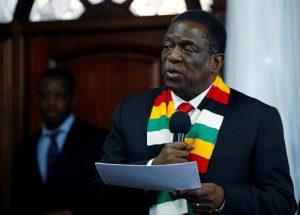
Zimbabwean President Emmerson Mnangagwa addresses mourners gathered at former President Robert Mugabe’s ‘Blue Roof’ residence in Harare, Zimbabwe, September 12, 2019. REUTERS/Philimon Bulawayo/File Photo

Zimbabwean President Emmerson Mnangagwa addresses mourners gathered at former President Robert Mugabe’s ‘Blue Roof’ residence in Harare, Zimbabwe, September 12, 2019. REUTERS/Philimon Bulawayo/File Photo

The country is experiencing its worst economic crisis in a decade, marked by soaring inflation and shortages of food, fuel, medicines and electricity.

Half of Zimbabwe’s population needs food aid after a devastating drought across the southern Africa region, worsened by an economy expected to shrink by 6.5% this year and month-on-month inflation at a four-month high of 38.75%.

Zimbabwe’s grain agency buys grain from farmers and releases it onto the market at subsidised prices, costing the treasury tens of millions of U.S. dollars. The government had planned to remove the subsidy in its 2020 budget.

Mnangagwa was quoted in the state-owned Herald newspaper as saying that would no longer happen.

“We cannot remove the subsidy,” he was quoted as saying. “So I am restoring it so that the price of mealie-meal is also reduced (next year).”

The removal of the government’s grain subsidy would have seen a 10 kg bag of maize meal, the country’s staple, costing 102 Zimbabwean dollars (about US$6.30), against 60 Zimbabwe dollars now, in a country with 90% unemployment.

Last week, the government removed import controls on maize and wheat flour to try to prevent food shortages.

Zimbabwe’s reintroduction of a local currency after 10 years of dollarisation, coupled with the removal of subsidies on fuel and electricity, unleashed inflation, triggering frequent and sometimes deadly protests against Mnangagwa’s government.

Rights groups say at least 17 people were killed and hundreds were arrested in January, after security forces cracked down on protests against fuel price increases. Police have banned further protests.

Early hopes that Mnangagwa, who took over from the long-ruling former president Robert Mugabe after a November 2017 coup, would revive the economy are fast fading amid a worsening economic crisis and slow-paced political reforms.

Laywers protest, petition Kazembe, Matanga over police brutality

Post published in: Featured