We’re Almost There — See Also

Findings from the 12th Annual Law Department Operations Survey

Findings from the 12th Annual Law Department Operations Survey

The 2019 LDO Survey reveals how law departments are leveraging legal operations, including insights on: Artificial Intelligence ,Technology, Effectiveness, Legal Project Management, and more.
Join us on December 11th at 1pm ET to learn more!

The 2019 LDO Survey reveals how law departments are leveraging legal operations, including insights on: Artificial Intelligence ,Technology, Effectiveness, Legal Project Management, and more.
Join us on December 11th at 1pm ET to learn more!

The Impeachment Gender Gap

(You’re pretty close to convincing me to amend the Sixth Amendment so that it provides for an impartial jury OF WOMEN.)

Trump Wall Street Allies Want To Do Some Firing, Avoid Getting Fired

When I Grow Up I Want To Be A Lawyer

A child of the ’90s, I always wanted to be an attorney, likely as a result of my exposure to network television programs. Shows like Ally McBeal, L.A. Law and, of course, Law and Order, made being a lawyer look suspenseful, profitable, and even glamorous. High-rise offices, mysterious fact patterns, and intraoffice love affairs were enough to get me to commit to the answer of “lawyer” when asked what I wanted to be when I grew up.

Honestly, at the time, I had little idea as to what being a lawyer entailed. Growing up, I did not know any lawyers. My parents were schoolteachers, and my friends’ parents were police officers, fire fighters, and small-business owners. To me, becoming a lawyer — that was making it big. That was the ultimate sign of success.

As a child, I saw television portray attorneys as successful individuals, comfortably compensated, and always busy. The prime-time episodes did not show the grittiness of lawyering, the exhausting law school experience, the excessive student loans, the mundane internships, or the employer frustrations. Yet despite now having witnessed the grave differences between real life and fiction, I could not imagine having any other career.

This past week, I had the privilege of returning to my high school to speak to the senior public-speaking class regarding my career path. The class, filled with ambitious students reminiscent of my own classmates, seemed honestly interested in my law career. Many of them stated confidently that they wanted to become lawyers. Niceties aside, they asked pertinent questions about which cases I found interesting, how I was trained, and, of course, how I was paid. What  interested me the most were their specific desires to practice in specific fields including divorce, criminal defense and personal injury (sadly none stated elder law or trusts and estates).

I questioned the students who had expressed their desire to become attorneys. I wanted to know why they had chosen the field and why, at the age of 17, before any college coursework, they were so convinced that it was right for them. The consensus was that being a lawyer was deemed a good job and one that presented itself as stable and successful. Interestingly none of the students were able to specifically tell me what being a lawyer entailed. The day–to–day of lawyering was unknown. I explained that sometimes I write, sometimes I argue, and often I meet with clients and try to problem solve.

Without a doubt, stories of litigation entertained the students and promoted many questions. The drafting and research, not so much. In speaking about my educational path, I noted that I had always wanted to become a lawyer but had also loved theater, which became my undergraduate major and also the subject of a graduate degree before law school. Although I took a break from my childhood plans, I eventually returned to them and went to law school. Speaking with the students made me think about why. It was not easy to go to law school. I had a young family, I had a baby, I had loans, and I had other responsibilities. In thinking about it, the answer I came to was simple and in many ways the same as it was when I was in high school.

To me, being an attorney means being educated. The law requires that you learn how to write, something I emphasized to the students. It provides a method for thinking and analyzing. You may not always like the legal subject that you are studying, but being a lawyer gives you a path to attack the subject. The education promises success -– at some level — and a membership in an exclusive club. A legal education leaves you more intelligent, more worldly, and , hopefully, compensated.

One student commented that I seemed happy with my career choice. And I am. Part of that goes to the fact that I work for myself, I set my own expectations, and I control what I do. The other part is reminiscent of my childhood goals, and I cannot explain who or what or why I lawyer, except that for me it represents the gold standard in education and, with that, the embodiment of success.


Cori A. Robinson is a solo practitioner having founded Cori A. Robinson PLLC, a New York and New Jersey law firm, in 2017. For more than a decade Cori has focused her law practice on trusts and estates and elder law including estate and Medicaid planning, probate and administration, estate litigation, and guardianships. She can be reached at cori@robinsonestatelaw.com

Who’s Afraid Of Machine Learning?

Last week, I wrote about the use of keyword search terms and whether they are, or should be, the preferred means to identify documents and information relevant in discovery.

Since it does not make a whole lot of sense to present a problem without also presenting a solution — at least that’s what one of my managers suggested to me early in my career — I thought it would be appropriate to review some of the alternatives to the use of search terms.

Whether you like it or not, artificial intelligence is entering our lives in ways that many of us could never have imagined. Digital marketing and promotion, the diagnosis of serious medical conditions, and autonomous vehicles are a few of the more glaring examples.

When the Federal Rules were written 80 years ago, did anyone ever consider that AI or machine learning would be used in the legal industry to predict the outcome of a legal case, to compare documents in multibillion-dollar business deals, or to identify documents and information in discovery?

That day has arrived. Whether or not you subscribe to the idea that machine learning is a form of AI, the fact remains that today we are able to parse the text of millions of documents in a fraction of the time — and a fraction of the cost — it took just 20 years ago.

The problem, it seems, is that many view predictive technologies like machine learning as unknown, unproven, imprecise, or incomplete. It’s the “black box” that either frightens or intimidates users. Some also say an inherent bias skews results one way or another.

The truth is that text is just text, words are just words, characters just characters. We put characters and words in documents all the time. We use the same characters and words over and over. There’s a lot of repetition, and, yes, some words are more meaningful, but regardless, patterns begin to emerge, and meaning can be derived, if not specifically, certainly conceptually.

Depending upon which dictionary you use, English has about 250,000 words in use. All of these words together take up about 500 pages of text, or, for the more data-minded readers, about 1 MB of data. It should not surprise anyone that we have figured out how to index, analyze, and categorize this relatively small number of words.

In case you did not see it coming, when it comes to machine learning and predictive technologies to identify relevant documents in discovery, it helps to think about it as something akin to advanced search techniques. We’re not talking about robots reading documents or any of the neural or deep-learning or theories of artificial general intelligence. We’re not yet to the point where machines, least of all in the legal industry, are reasoning and learning on their own. We’re basically talking about search terms on steroids.

So next time your legal technology project manager, your e-discovery expert or data scientist suggests that you use machine learning or TAR (or whatever we’re calling it that day), don’t worry so much about the black box; focus instead on what you’re trying to learn from the documents. The available tools can get you there faster, cheaper, and just as accurately.


Mike Quartararo

Mike Quartararo is the President of the Association of Certified E-Discovery Specialists (ACEDS), a professional member association providing training and certification in e-discovery. He is also the author of the 2016 book Project Management in Electronic Discovery and a consultant providing e-discovery, project management and legal technology advisory and training services to law firms and Fortune 500 corporations across the globe. You can reach him via email at mquartararo@aceds.org. Follow him on Twitter @mikequartararo.

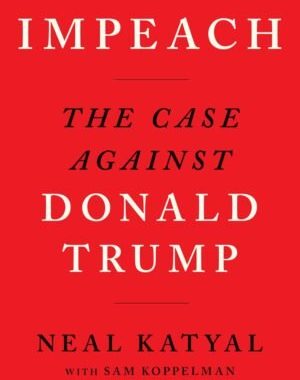
Impeach — The Case Against Donald Trump: An Interview With Neal Katyal

As we sit down for Thanksgiving dinner on Thursday, one thing guaranteed to be on the menu almost as much as turkey is impeachment talk. If you’re a lawyer or law student, expect the non-lawyers in the family to turn to you for your expert opinion on this important subject. Whether they’ll agree with or defer to you is another story, of course — but you’ll certainly be asked.

If you’d like to field questions about impeachment in an intelligent and informed way, then I have a book recommendation for you: Impeach: The Case Against Donald Trump, by Neal Katyal. Longtime Above the Law readers know Katyal as the former Acting Solicitor General of the United States, current Hogan Lovells partner and Georgetown law professor, and leading Supreme Court and appellate advocate (with more SCOTUS arguments than any other minority group lawyer in U.S. history). Now he has a new title: Author.

Whether you agree or disagree with Katyal’s bottom line, Impeach is well worth your time: Cogent, clear, comprehensive, and concise. And it’s especially impressive considering that Katyal wrote it in under two weeks, which explains how he’s able to tackle a subject that’s still unfolding in real time.

I spoke with Neal this past Friday about the book, the impeachment process, and other Trump-related topics — such as whether the Supreme Court will tackle the issue of access to Trump’s tax records. Here’s a (lightly edited and condensed) write-up of our conversation.

DL: Before we turn to substance, let’s talk process — how quickly this book came together. You’re writing about developments that took place weeks or even days ago. Can you start by telling us about the genesis of the project?

NK: On October 4, about six weeks ago, I was at dinner in D.C. with friends, including Howard Yoon, a book agent. The month before, I had written, with George Conway, an op-ed about the Ukraine allegations for the Washington Post that said, in essence, “This is a big deal — and impeachment proceedings will happen.” I got lots of pushback on that prediction, but by October 3, it was clear I was right.

With the Mueller investigation, I did some television — even though television is not my thing, as a Supreme Court lawyer — in the hope that it could change the debate. It didn’t quite work out that way. So after the Ukraine news broke, I wondered: What could I do this time around that might be more effective?

Howard said, “You won’t want to hear this, but you should really write a book.” I told him, no way, it’s October 4, impeachment proceedings will begin in a month. But Howard insisted I could do it.

Lying in bed that night, I thought to myself: “I can totally do this.” I woke up and started to bang out a proposal. I needed a collaborator, so the next day I called Sam Koppelman and asked if he’d work with me. He said yes. I knew him because earlier this year, I got a call from Dean Gerken at our alma mater [Yale Law School], asking me to give the commencement address. I was, needless to say, freaked out. I showed a draft of the speech to my good friend Brian Koppelman, who suggested that I show it to his son Sam. Sam worked with me to revise that speech, and he did a beautiful job. He was the first and only call I made to seek out a collaborator.

DL: So what was your timeframe, in terms of how quickly you wrote the proposal, how quickly you wrote the book, and how quickly it went to press?

NK: The dinner was on Friday, October 4. We sent out the proposal early the following week, around Monday the 7th or Tuesday the 8th, and said we’d pick a publisher based on who could do it most quickly. Houghton said they could do it very fast, really wanted to publish it, and could commit to having it on shelves by November 26, so we went with them.

We promised them the manuscript by October 25 and actually submitted it within nine days, a week ahead of the October 25 deadline. It’s on trucks right now, being delivered to bookstores.

DL: Conveniently right before Thanksgiving.

NK: Thanksgiving is the traditional time for sitting down with extended family, many of whom you might not agree with politically, and talking about fundamental questions. On my website, you can download Thanksgiving “impeachmats” — placements inspired by the book that are designed to guide civil discussion about impeachment.

Neal Katyal (courtesy of the author)

DL: You make a strong argument in favor of impeachment as opposed to waiting for the 2020 election. But are you at all concerned that a failed impeachment could actually strengthen Trump’s reelection prospects?

NK: I can see arguments both ways on the politics. The reason I wrote this book is because in this country, both the left and the right have cared too much about politics and not enough about our fundamental values. If you told me that impeachment was guaranteed to fail and to reelect Trump, I would say we still have to do it — even though I view Trump as an existential threat to our democracy. We have to stand for something. This is about who we are as a country.

DL: And are you worried about the possible weaponization of impeachment, such that we’ll go through “impeachment” pretty much every time the White House and Congress are controlled by different parties?

NK: Trump’s conduct is the core of what impeachment is about. It doesn’t matter where you’re coming from politically. The central argument of the book is to ask readers to think like law students, and reverse the identity of the parties. Republicans should ask themselves: What if Obama did what Trump is accused of doing? If you don’t impeach for this, you’ve read these clauses out of the Constitution altogether.

I do worry about impeachment becoming a regular event. But this is why the constitutional standard, “high crimes and misdemeanors,” is as high as it is. It’s not for maladministration or policies you don’t like.

So, for example, I’m as distraught as anyone in the country about Trump’s policies regarding child separation, but I don’t think they are an impeachable offense. It might be a grotesque violation of human rights, but it is not impeachable conduct.

For lawyers, think about fiduciary duty, putting your client’s interests ahead of your own personal ones. That’s how the Founders thought about the presidency: That the president has a fiduciary duty to put the people first. When the president violates that duty by trying to get personal help for his reelection from a foreign government, that’s core impeachment.

DL: Your book is prescriptive and normative; let’s turn to the predictive. How do you think this will all shake out? You point out that most Republicans and a sizable portion of the public opposed the impeachment of Nixon for a long time, and then his support collapsed in a matter of weeks. But do you think that can happen today, a much more polarized time?

NK: I do think it can happen today. Pundits consistently underestimate the American people and members of Congress.

I’m sick of the soft bigotry of low expectations when it comes to the American people. There have been so many times in our history when people said something couldn’t be done, and it got done. So I am optimistic that Trump will end up leaving office, whether through resignation or a formal vote.

DL: One of your proposed reforms is to pass a federal law requiring presidents and presidential candidates to release their tax returns before the election. The issue of access to Trump’s tax records — albeit in a different context, in terms of requests for them by a House committee and by Manhattan prosecutors — has now been decided by two circuit courts.

You’re an expert on the Supreme Court as well as impeachment. Any prediction as to whether the Court will agree to decide this issue and, if so, what the Court will rule?

NK: I think the Court is perhaps unlikely to hear these cases. When the president asks the Court to hear a case, generally they do — but there are a few things going on here that make it less likely than usual.

We’re in an election year, and this president hasn’t hesitated to declare war on the Court when he loses. So there will be some inclination among the justices to say, “Let’s not get into this.”

The arguments by Trump are just frankly bad, the court of appeals decisions are both narrow, and they both pretty much demolish the Trump arguments. So I could see the justices basically saying they are comfortable with where things wound up.

DL: Anything to share in closing, about the book or about impeachment?

NK: Impeachment is a hybrid animal, rooted in both politics and law. So much of the daily discourse is about politics; I wrote the book to focus on law.

We need to put the law back into impeachment discussions. We need to reflect on what it would do to our government if our commander in chief can go and get secret help for his reelection campaign from a foreign government. It’s not about whether this helps Pelosi or Schiff or Buttigieg, it’s about what this means for our country. This is why I hope people read the book.

DL: And read it they shall. Congrats again on the book, Neal, and thanks for taking the time to chat!

Impeach: The Case Against Donald Trump [Amazon (affiliate link)]


DBL square headshotDavid Lat, the founding editor of Above the Law, is a writer, speaker, and legal recruiter at Lateral Link, where he is a managing director in the New York office. David’s book, Supreme Ambitions: A Novel (2014), was described by the New York Times as “the most buzzed-about novel of the year” among legal elites. David previously worked as a federal prosecutor, a litigation associate at Wachtell Lipton, and a law clerk to Judge Diarmuid F. O’Scannlain of the U.S. Court of Appeals for the Ninth Circuit. You can connect with David on Twitter (@DavidLat), LinkedIn, and Facebook, and you can reach him by email at dlat@laterallink.com.

How Online Learning Is Revolutionizing Legal Education: A Discussion With Ken Randall Of iLaw

As technology continues to integrate itself into the practice of law, law schools are the latest to get on board with the digital revolution. We sat down with Ken Randall, former Dean of the University of Alabama School of Law and founder of distance learning company iLaw (a BARBRI Company), to discuss the rise of hybrid J.D. programs and how iLaw is helping law schools to expand their offerings in today’s digital era. 

You’re one of the pioneers in online learning for law schools. Can you give us a little bit of your background in this area?

I was Dean at the University of Alabama School of Law for 20 years, and during that time, the law school improved 75 spots in U.S. News and World Report. A large part of that improvement came from online resources. Alabama was among the first law schools to use distance education (education where the instructor and student are not in the same place) for non-J.D. graduate work. We took a residential tax LL.M. program and started incorporating distance learning, and this generated a lot of revenues to improve the school.

Around 2000, the ABA Section of Legal Education and Admission to the Bar named me the first chair of their Technology Committee. The committee that provided the origins of Standard 306, which regulates distance or online education at accredited law schools. That was the origins of online regulation in the J.D. space.

For those who aren’t familiar, what are hybrid J.D. programs and what does Standard 306 say about them?

Hybrid education simply means education that uses two platforms. There’s no strict definition of what constitutes a hybrid J.D. program — it’s really anything that’s a blend of residential and online learning. ABA Standard 306 is the relevant standard governing online education at accredited law schools. In its first iteration, the ABA allowed for only 11 credits to be offered by distance education. By 2018, that was expanded so that law schools can now offer at least ⅓ of the J.D. program online, and 10 of those online credits in the first year. Law schools can also apply to the ABA for a variance to do offer even more credits online. Today, law schools are experimenting and innovating with having a large part of their J.D. programs come from an online platform.

How many law schools are offering hybrid J.D. programs today?

In terms of schools that have true hybrid programs that offer a significant amount of the program online, there are probably 8-10 schools that stay within Standard 306. There are other schools that may have certain online courses, but have not designated an official hybrid program. There are also about five schools that have an ABA variance to do even more than ⅓ of their program online. So, in total, about 10 percent of the 200 ABA-accredited law schools are offering some kind of hybrid program or distance learning today. It’s important to note, though, that these schools also continue to offer their traditional programs. 

Why did you found iLaw and how does it fit into the hybrid J.D. landscape?

I created iLaw in 2013 because very few people were focusing on distance learning in legal education at the time. There were a lot of good online vendors focusing on undergraduate institutions, but not on legal education. iLaw was founded to provide law schools with an online learning platform.

We specialize in two areas. The first is providing J.D. content to law schools. We hire subject matter leaders from around the country, the ones who wrote the casebooks, to create online content, and we license that content to law schools. The second thing we do is partner with law schools on LL.M and J.M. programs for lawyers and non-lawyers, helping them to recruit students, design courses, and show courses through our learning management system. Those two strands come together in the hybrid J.D space, wherein we become a comprehensive partner for law schools looking to offer a hybrid program.

We’re now doing in the hybrid J.D. space what we’d been doing in the masters space for six or seven years. In 2017, we were acquired by BARBRI, and together we provide comprehensive solutions for students both during and after law school to help them prepare for and take the bar exam.

Why are more law schools moving to online learning and what do they stand to gain from it?

Legal education has been slower to move to distance education as compared to other disciplines. Standard 306 didn’t exist until 2002, and it wasn’t until 2018 that a law school could deliver at least ⅓ of the program was online. As you know, law school applications saw a sharp decline five or six years ago. The movement to innovate and experiment, including in the online space, has a lot to do with the fact that admissions numbers really started to disrupt legal education.

Going forward, I expect we’ll see more and more schools entering the online space with hybrid programs. We tend to focus on the number of credits a person can take online, but equally if not more important is what’s going on in that online classroom. That’s why iLaw is putting a lot of resources into the pedagogy of teaching online. Today we can really replicate online the kind of engagement and interactivity that a student has with a faculty member on campus. When people think of distance education, they think of a talking head and a PowerPoint, but that’s not the high-quality work we’re doing. There’s absolutely outstanding, innovative teaching going on online today. So much of the practice of law today is conducted online and through technology, so we’re marrying an online pedagogy with the online skills that the students will use when practicing law. There’s no better way to teach technology skills than through technology. 

There’s also a huge focus on inclusivity and opportunity and bringing down the cost of education. The optimal way to do that is through distance education. Full-time residential learning is not an option for a lot of people, so online learning really provides an inclusive and more diverse education. In terms of law schools, it’s also a great thing, because online learning provides a way for schools with diminishing applicant pools to diversify their revenue streams and improve their ability to draw students from broader markets.

Are there any success stories you can highlight for us?

The University of New Hampshire Franklin Pierce School of Law has been highly successful with online learning. They’re one of the top five intellectual property law schools in the country, but they’re in a place that’s more remote. They’ve secured a variance under Standard 306 to offer more than half their coursework online through a hybrid program, and this has been an extremely successful way for them to share their IP expertise with the rest of the country. It’s a great example of inclusive education, because innovators, people working in IP-related fields, and people working in tech now have a way to attend a top-5 IP law school through distance education.

What advice do you have for law schools who might want to partner with iLaw to expand their online programming or offer a hybrid J.D. program?

We believe that online learning has a place in every law school. This doesn’t mean it should replace traditional learning, but innovation is important, particularly if you want an inclusive and diverse student body or to attract non-traditional learners. Investigating online offerings is especially important for schools that have part-time or evening programs, because they play a critical role in educating non-traditional students.

Every law school has different challenges based on their goals, geography, or mission, so we don’t take a one-size-fits-all approach to online learning. You need to create a program that works with your particular challenges, and iLaw is an expert in doing that. What distinguishes us is that we only deal with law schools. Our staff are experienced in all aspects of legal education and we know how to design and build J.D. courses.

Can we expect to see law schools that are 100 percent online in the future?

It will ultimately depend on the ABA, but I would imagine that over the next five years there will be some accredited J.D. programs that are allowed to be 100% online. This won’t be to the exclusion of traditional learning, but rather giving faculty the freedom to experiment with online learning in addition to the traditional teaching they’re already doing.

Come Party With Above The Law!

It’s that time of year again where we look back, take stock of the year in law, count the bonuses rolling in and order another round. With that in mind, we’re throwing a holiday party here in New York, and you’re invited!

So, if you want to grab some drinks and food on ATL, RSVP here! This year we’ll have our party on December 10th at Houndstooth Pub on 8th Avenue at 37th Street.

Want to brag about your bonus? Share a war story? Take a break from studying for finals? Catch up with your favorite (it’s me, I know it is) ATL editor? All are welcome!

Here are the details:

When: Tuesday, December 10th
Where: 520 8th Avenue, New York, NY 10018
Time: 6pm – whenever we stop drinking

Remember to RSVP soon to guarantee your spot and we’ll see you in December.


headshotKathryn Rubino is a Senior Editor at Above the Law, and host of The Jabot podcast. AtL tipsters are the best, so please connect with her. Feel free to email her with any tips, questions, or comments and follow her on Twitter (@Kathryn1).

Sorry Seems To Be The Hardest Word

(Image via Getty)

I’m not big on apologies in my professional life. Mainly, because I’ve learned that nothing good ever comes of them. This tried-and-true life experience is compounded by the issue of having lady parts. I don’t want to make any broad, sweeping generalizations here (hint: I’m going to anyway), but I think those of us with lady parts apologize too much, and it’s not a good look. So, I have worked long and hard to eradicate this word from my knee-jerk reaction list (which includes such gems as, “Why in the hell would you do that,” “It’s your funeral,” and my patented look of equal parts of horror and disgust).

For me, an apology boils down to a formal admission of wrongdoing. I don’t know about you, but when it comes to my business partners, there’s about a zero chance I’m going to open myself up to that. Like dogs, bees, and toddlers, business partners can smell weakness, and who in the hell has time for that? I waste enough oxygen and brain cells justifying to business partners why we should do something when I’m in the right. That leaves me no time to grovel when I’m in the wrong.

The same goes for the word “sorry.” Because we lawyer types are word nerds, I’m in the camp that thinks there’s a subtle different between an apology and a sorry. Sorry implies an additional requirement of regret and remorse, and, frankly, I have even less time for that. Yes, I may have effed up, but I like to take the comparative negligence approach. If I’ve effed up, chances are that the business partner has effed up even more. Do you really think the sales rep is going to say he’s sorry for leaving out half the conversation he had with a vendor and making you look like a baboon’s ass in front of their counsel? I think not.

So I avoid apologies and sorry like the plague. Nor do I ever expect them from business partners because, again, that would imply some realization of wrongdoing or remorse. And there’s nothing quite like a half-assed apology that someone offers when they need something from you. “Kay, I’m so sorry I sat on this request for a month, but I really do need that merger agreement in four hours.” See? It’s like being punched in the intellect and the stomach at the same time.

But far worse than a half-assed apology, is a forced one.

We have this shiny, new sales SVP and like most of our sales SVP, this guy looks and sounds like he just got his learner’s permit. He’s been brought in to “shake things up.” Read: break the current system without any analysis as to what is working well. I give Thom about nine months before he’s out for failing to shake things up.

In the meantime, Thom has posted these larger-than-life, Technicolor canvas boards all over his team’s walls with such inspirational offerings as, “You miss 100% of the shots you don’t take,” and “Great things never come from idling in your comfort zone.” My personal favorite (the one over by the restroom) is “DREAM BIGGER.” I’m just saying that I probably wouldn’t have posted this one over by the men’s restroom. Snicker.

Well, I’m sorry to report that despite all these snazzy signs designed to inspire his team, I got into an epic showdown with one of Thom’s direct reports. I’m not going into the gory details, but let’s just say it involved changing a significant amount of language in a settlement agreement after it was approved by Legal. Let’s just say those changes were caught after the document was signed by the vendor but before we inked it, and a shitstorm ensued. The immediate result was me spending my Friday night and weekend renegotiating with a righteously (and rightfully) pissed vendor’s counsel. This resulted in me being righteously (and rightfully) pissed at Thom’s direct report for ruining my weekend because he decided that being a sneaky ass waffle was the way to go, rather than find an adult when the deal went south.

The following Monday morning, I was treated to a meeting in which the offending business partner was forced to apologize to me in front of Thom. Absent from the proceedings was an admission of wrongdoing or sense of remorse. Not only that, the ass waffle in question couldn’t make eye contact with me, and I got the distinct impression that it wasn’t remorse, but general pissiness, that was preventing him from looking me in the eyes. The lowlight (there were no highlights) was Thom wasting twenty minutes of my life explaining what it’s so important to take ownership of one’s mistakes and learn from them. I’m just going to say that I have lived through some awkward shit in my career (including having to coach a Midwestern-born VP that he couldn’t refer to his female employees as “gals” no matter how highly he regarded them), but this was up there.

Unsurprisingly, this didn’t fix anything. If anything, Thom’s direct report has been more of an ass waffle than before. He now starts every call and meeting with, “Kay, am I allowed to do the following, I wanted to check first, it’s not like I have ten years of experience in this field or anything …” in the snottiest tone imaginable. As if I’m the one who made this guy apologize or who tried to sneak one by his boss with a bogus settlement agreement. Nope, nope, nope. I’m just the poor sucker who spent her weekend fixing the mistake and her Monday morning listening to an SVP who clearly wanted to be one of those college basketball coaches making impassioned speeches to his team on the sidelines.

This experience, while mortifying, did give me a great outlet for my creativity. If you do happen to find yourself by the men’s restroom on the second floor of our building, you’ll find a new sign. It’s not as fancy as Thom’s airbrushed ones, but I think my, “SORRY IS NOT ENOUGH, SOMETIMES, YOU ACTUALLY HAVE TO CHANGE” sign gets the job done.


Kay Thrace (not her real name) is a harried in-house counsel at a well-known company that everyone loves to hate. When not scuffing dirt on the sacrosanct line between business and the law, Kay enjoys pub trivia domination and eradicating incorrect usage of the Oxford comma. You can contact her by email at KayThraceATL@gmail.com or follow her on Twitter @KayThrace.