Zimbabweans choose work over mourning Mugabe – The Zimbabwean

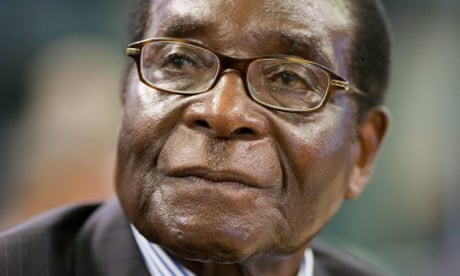
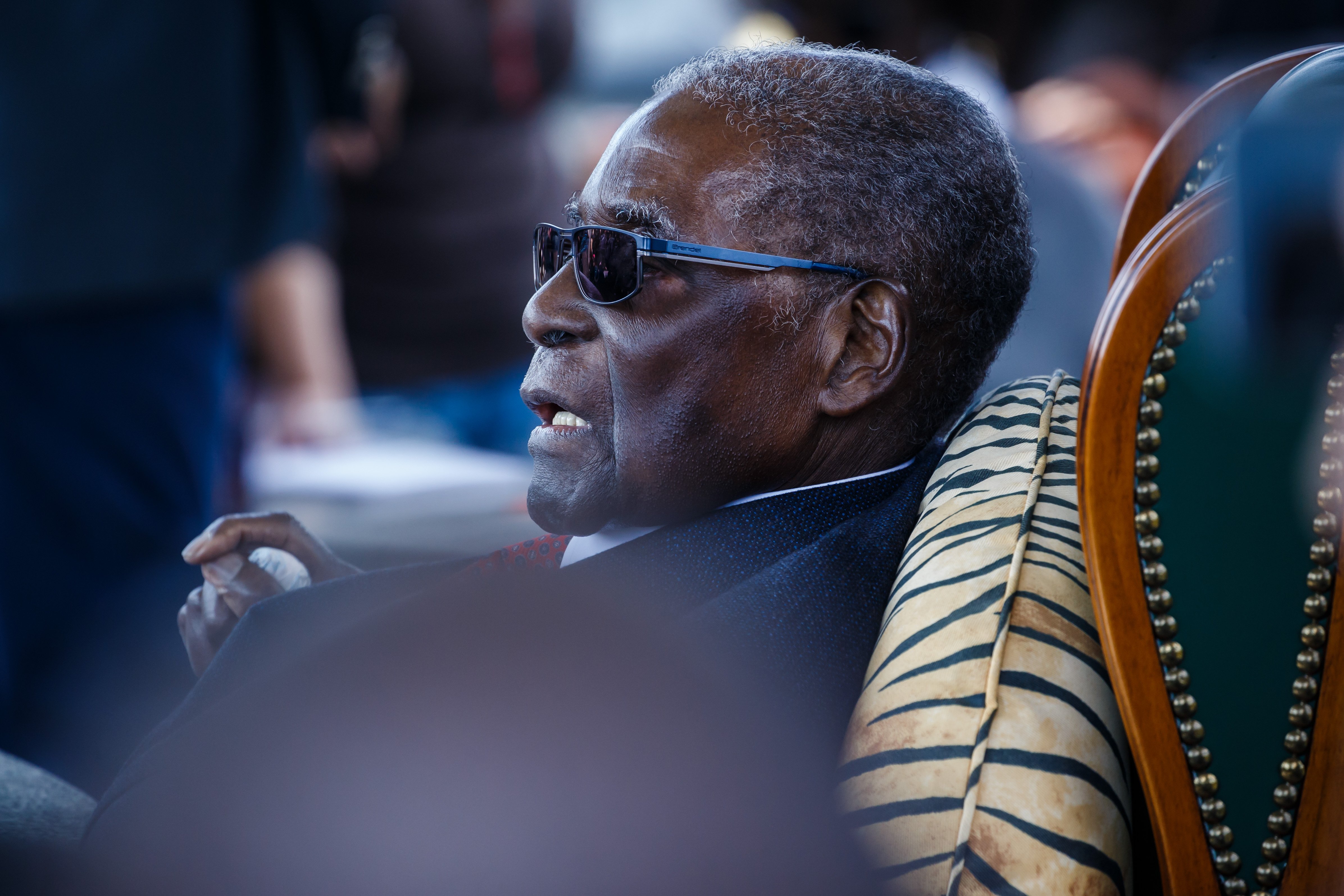
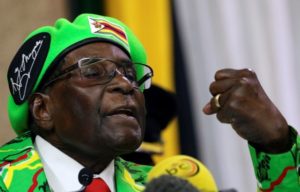
Former Zimbabwean President Robert Mugabe

The streets and shops were packed, weddings and parties went ahead as planned. Most people were going about their usual business, trying to eke out living.

For while Mugabe is hailed for having led Zimbabwe to independence, for many Zimbabweans he is also the man who wrecked their economy, leaving them to live with the consequences.

Commuter mini bus driver More Kondo, 30, was busy decanting petrol from a large jerrycan into a smaller container to share with a fellow driver.

Mnangagwa: death of Mugabe “leaves a big void in our nation”

Zimbabwean President Emmerson Mnangagwa reacts to the death of his predecessor Robert Mugabe, who has passed away aged 95.

“If it were another leader, right now this country should have shut down to mourn,” he said. “But he was an autocrat.

“Had he left power early and the country in a better shape, we would be celebrating his life and would have seriously shut down the country in honour of him.”

Mugabe died on Friday aged 95 at a Singapore hospital.

Lauded by some as liberator and for his uncompromising stance against the West, Mugabe led a controversial land-grab programme nearly two decades ago — seizing commercial farmland from whites.

This policy is widely blamed for having contributed to the collapse of the once-thriving economy.

Zimbabweans struggle daily to access basic services, while inflation hovers in triple digits. Many people on Saturday said they had more pressing needs to attend to than mourning.

“We not going to the funeral,” said Kondo shaking out remaining drops of petrol in the container that previously had engine oil. “We will be busy trying to make money, we are hungry.”

Fuel in Zimbabwe is in short supply and its price has been increased more than six times since the start of the year — as have prices for several other goods.

Another man, a 35-year-old engineering graduate who would only give his first name, Tonde, was equally unimpressed.

“I have a degree, I’m unemployed and hungry and you expect me to waste my time to go to his funeral? What, after 37 wasted years?

“He stole money and today he is gone,” he said.

‘He destroyed this country’ 

Along Kaguvi street, police officers set up their usual Saturday morning public interaction desks conducting surveys on the public’s views on policing.

People drew comparisons between Mugabe’s death and that of South Africa’s first black president and anti-apartheid icon Nelson Mandela, who died in 2013.

“When Mandela died, people went onto the streets, but look at him (Mugabe) — nothing.

“It doesn’t even look like there’s a death (of a former leader),” said 25-year-old auto-spares store keeper Munya Nhamo.

Mugabe, he said, had stolen the 2008 election from opposition leader Morgan Tsvangirai. “If he had accepted defeat, the country would not be in such a bad shape”.

Ozias Mupeti, 55, stood over his small stall selling fresh ginger and a few packets of paprika and curry.

“He destroyed this country. Now he’s gone and we have nothing left … because of him,” he said angrily. “It’s painful.”

A few metres down the road, ice cream vendor and mother-of-three Tendai Marange, 42, expressed mixed feelings as she waited for customers.

“We are not respecting him (Mugabe) by continuing to work, but when the body arrives we will stop,” she said. “For now we have to work because life is tough these days.

“When Mugabe was there things were better…. if he wanted prices to drop, they would”.

State television carried extensive coverage of the death between the normal weekend programming, such as sports.

Patson Muparadzi was preparing to go to Mugabe’s village for the wake.

Sporting a white Zanu-PF t-shirt emblazoned with Mugabe’s portrait, he said: “We are maybe here at work, but we are grieving.

“We are working so we can raise money for fuel to go to Zvimba (Mugabe’s rural home),” said added.

Willy Salim, 39, a street forex dealer, also mourned Mugabe’s death.

“Darkness has engulfed our country. Zimbabwe will never be the same without Mugabe,” he said.

Mugabe’s body to return home soon: family

Post published in: Featured

Mugabe’s body to return home soon: family – The Zimbabwean

HARARE – Robert Mugabe‘s nephew said on Sunday that a delegation was expected to leave Zimbabwe on Monday to collect the hero-turned-despot’s body from Singapore where he died two days ago.

Mugabe, a guerilla leader who swept to power after Zimbabwe’s independence from Britain and ruled for 37 years, died on Friday, aged 95.

His health took a hit after he was ousted by the military in November 2017, ending his increasingly tyrannical rule. He had been travelling to Singapore for treatment since April.

“I can’t give an authoritative day, all I know is people are leaving tomorrow Monday to go and pick up the body,” Leo Mugabe told AFP.

“So assuming they get there on Tuesday and the body is ready, logically you would think they should land here on Wednesday,” he said, adding that a list of accompanying family members was being finalised.

Once praised as a liberator who rid Zimbabwe of white minority rule, Mugabe soon turned to repression and fear to govern.

He is widely remembered for crushing political dissent and ruining the economy, prompting mixed reactions to his passing.

President Emmerson Mnangagwa declared a period of “national mourning” on Friday, without providing further detail.

The government is expected to announce when Mugabe’s body will be returned to Zimbabwe and provide details of the funeral in coming days.

Robert Mugabe was once a hero of the left – The Zimbabwean

If democracies have learned anything, it is that one man or woman in control of a country for decades never works. Having come to power by fighting against the previous regime, with spells in prison or exile, charismatic leaders can only sustain their power as that charisma fades by progressively tightening control. Challengers, typically embodying some combination of fresh ideas, new social forces and a desire to end abuse, are held down by ever fouler means.

Even if the state purports to be a democracy, elections are rigged, the media muzzled and opposition politicians harried or even killed. Inevitably, the economy suffers: there is a lack of investment, growing shortages, government rationing and rampant inflation. As the despot gets older, there is a fight for the succession, but without rules, process or accountability, so that it becomes a raw and destructive battle between factions. The need for orderly succession is an overlooked and powerful argument for democracy, as those conniving in the strutting power of presidents Putin and Xi will one day discover.

Authoritarianism – from Zimbabwe’s Robert Mugabe, who died last week, to the Philippines’ Ferdinand Marcos – always goes wrong. The list of failures is long, including China’s Mao Zedong, Cuba’s Fidel Castro and Venezuela’s Hugo Chávez. George Orwell’s prescient warnings in Animal Farm are confirmed again and again. The intriguing question is why so many both inside and outside a country suspend their thinking capacity and collude in the despot’s narrative.

Challenging authoritarian power from inside demands extreme bravery: the authoritarian will have control of the police, courts and military and be only too willing to use them. But there is little excuse for those outside, too often blindsided by stories of colonial liberation, freedom, socialism or, as in China’s case, sheer economic effectiveness.

Mugabe, who had nearly 40 years running Zimbabwe, is an object lesson. Once a freedom fighter, imprisoned for his beliefs, and and at the time benefitting from wide support among the western left, he was elected prime minister in 1980 as Zimbabwe’s saviour. Clever and articulate, he preached pan-African black power but also reconciliation. However, the institutions in the fledgling democracy, borrowed from Westminster (which, we are discovering, is a weak democratic model), were easily abused.

The doctrine that simple majorities confer total sovereign power, even over law and the courts, was co-opted by Mugabe to justify his transmutation from prime minister to president controlling all the institutions of authority. Then, as he became fearful that any successor would exile or imprison him for his misdeeds, he manipulated successive elections, rigging votes and closing ballot stations. The economy collapsed and ultimately he was ejected from office when too frail and old to sustain his charismatic control.

Of course, he had a great story. It needed a strong man to take on the noxious legacy of colonisation. The white community, still owning vast tracts of land, would necessarily oppose black rule. Fire had to be fought with fire: Zimbabweans should not listen to complaints about democratic abuse and interference with the rule of law. This was a raw power struggle in which democratic norms came second to redressing gross injustice. His black critics were playing into the hands of the whites.

Yet he is now seen as a pernicious disaster. It’s not just the rule of law that has been wrecked, but the economy. His one saving grace is that he helped convince Nelson Mandela that a successful South Africa would be based on respect for its democratic institutions – a fixed-term presidency, regular, independently scrutinised elections, independent courts, regard for law and an independent press.

Learning from its neighbour, South Africa, imperfect though it is, has been better served. The Mugabe-like former president Jacob Zuma, condemned by South Africa’s constitutional court for not upholding the constitution, is now fighting corruption charges and firmly out of power.

Good democratic governance is the precondition for prosperity, order, justice and freedom. Yet creating fit-for-purpose institutions of democracy is always a work in progress and always imperfect; no country possesses the utopian democratic system. The temptations of political power need constantly to be held in check by multiple and entrenched institutions of alternative power – an independent judiciary and press, a second chamber, a constitutional court and, above all, a culture of laws in which it is understood that respect for human rights is the glue that binds the entire democratic apparatus.

As the third decade of this century approaches, it is clear that no country, not even the once esteemed US and UK, can rely on producing this cultural glue from within. The greater the number of international norms, the greater their strength, the more support those fighting for justice and accountability have when their democratic institutions are under pressure.

This is certainly true of countries such as Zimbabwe, but also of today’s Russia or China. The brave protesters in Hong Kong are strengthened – and the Chinese authorities who want to crush them weakened – by the existence of the Universal Declaration of Human Rights. There is an international gold standard, even if it is rarely attained, and so it is that bit harder to snuff out democracy. It is why the former supreme court justice Jonathan Sumption was so naive and fundamentally wrong in this year’s Reith lectures when he offered Brexit broadsides against international human rights law.

Certainly, human rights law can sometimes overstep the mark – all human institutions are imperfect – but to imagine that every country’s democracy is so strong that the national polity can be the sole site for defending and legitimising human rights is mad. The UK, with only a puppet privy council and no constitutional court (unlike South Africa) to adjudicate over the abuse of prerogative power, is hardly an acme of democratic process. Mugabe’s career, and the damage he inflicted on Zimbabwe, is too frequently dismissed as the result of a particular leader acting on a particular ex-British colony. Rather, it is a lesson for us all.

 Will Hutton is an Observer columnist

Mugabe’s legacy remains alive and it must be defeated – The Zimbabwean

I only met Robert Mugabe once.

It was 2012, at a school in Tsholotsho. As I shook his hand, I was struck by how soft and delicate it was. It was the hand of a fragile old man. This was the man responsible for the death, rape and torture of thousands of my fellow Zimbabweans. This was the man who had declared my father an enemy of the state, sought to have him assassinated, and disrupted my childhood and education as we were forced to go into hiding.

And yet at that moment, as I held his hand, what I saw was his humanity. An old man who would one day die and go to meet his Maker. Now that day has come. He died in a faraway land, in a hospital in Singapore at a time when Zimbabwean hospitals are crippled by a doctor’s strike, stripped of the power he lusted after and with the nation he once fought to free still yearning for freedom.

There are few figures with a more contested legacy than Robert Mugabe. Across Africa and throughout the world, he divides opinion.

The great freedom fighter who defeated the white supremacist Rhodesian regime.

The teacher who helped build an education system that was the envy of our neighbours.

The brutal dictator who used the repressive colonial state machinery he inherited to continue the subjugation of the masses and extraction of the nation’s wealth for the benefit of a privileged few.

It is tempting to see Mugabe through our chosen lens and ignore the complexity of the character that he was. Some engage in an ahistorical narrative that he was a good guy who turned bad. That ignores both the evil he perpetrated during the early years and the good that he achieved even in his twilight years. In truth, Mugabe the educator, Mugabe the freedom fighter, and Mugabe the dictator were intermingled throughout his life.

Mugabe started his career as a teacher and remained passionate about education until the end. The day I met Mugabe in Tsholostho, he delivered a speech telling the crowd that when my father had first joined the Government of National Unity as education minister he had been highly suspicious of him and how he would fit in as a white person. But that, over time, he’d seen my father’s commitment to the education of all Zimbabwean children and they’d grown to work together well. (Coltart’s father, David, is a Zimbabwean member of parliament for the MDC and a human rights activist – Editor.)

There were several occasions during the GNU that Mugabe intervened on my father’s the side against his lieutenants for the sake of the advancement of education. And yet, even his legacy on education is contested. Just a few kilometres from that school in Tsholotsho, seven teachers were killed at the very start of the Gukurahundi massacres in 1983. Teachers would remain prime targets for intimidation throughout Mugabe’s rule and that legacy continues today after he has gone. Only two weeks ago, I was assaulted and arrested by the police together with a group of teachers who had simply asked for a living wage. The decimation of the education sector in the past two decades is the result.

Mugabe played a critical role against white supremacy

There is no doubt Mugabe played a critical role in the struggle against white supremacy, colonialism and imperialism—not only during the liberation struggle, and as the leader of a frontline state against apartheid, but also throughout his career as an African statesman who spoke out against the hypocrisy of the West.

For that, he continues to be revered across Africa: the leader who told the West what everyone felt, but no one dared to say. As a Pan-Africanist, at times I found myself agreeing with what Mugabe said on global platforms! But sadly he did not practice at home what he preached abroad. While he railed against a global system that shackled Africa, he was keeping his people in chains. Even his legacy as a freedom fighter during the liberation struggle is marred by his cutthroat rise to power within ZANU-PF and the devious use of uMkhonto weSizwe arms caches in Matabeleland for the struggle against apartheid South Africa as a pretext for the crackdown against ZAPU and the massacres during Gukurahundi.

Mugabe did not suddenly become a dictator in the early 2000s as is sometimes portrayed. Two decades earlier, within three years of independence, Mugabe unleashed his North-Korean trained military unit, the Fifth Brigade, into Matabeleland who would kill, rape and torture tens of thousands of Ndebele civilians. But the West turned a blind eye and the Queen even gave Mugabe a knighthood.

It was only when white-owned farms started being violently expropriated that the West took notice. Which brings us to one of Mugabe’s most contested legacies of all: land. As the land reform debate rages in South Africa, some hold out Zimbabwe has a doomsday example of where South Africa is going and others view Mugabe as a hero who took back the land. I, for one, believe that land reform was extremely necessary for Zimbabwe, just as it is in South Africa.

But the violent and chaotic manner in which land reform took place in Zimbabwe — and the mass accumulation of land by black elites — was partly as a result of Mugabe’s own obstruction of land reform in the first two decades after independence and his wrong motivation for implementing land reform: which was never to empower the black majority but about retention of power.

But it was all about power

Retention of power was perhaps Mugabe’s greatest skill.

For decades, he played the game and remained on top. But Zimbabweans learnt the hard way that he was simply part of a system. When he became a liability to that system he was dispensed with to protect the system.

Today, Mugabe — the frail old man — is gone. But Mugabe — the system — remains entrenched.

It is that system, of repression and exploitation for the sake of power retention, that will be Mugabe’s defining legacy. And it remains the task of the Zimbabwean people to defeat it.

** Doug Coltart is a Zimbabwean lawyer and human rights activist.

Africa’s longest serving leaders

Post published in: Featured

Africa’s longest serving leaders – The Zimbabwean

JOHANNESBURG – Zimbabwe’s former president Robert Mugabe, whose death was announced on Friday, was in power for 37 years, but is far from the only African leader to have ruled for so long.

Equatorial Guinea’s Teodoro Obiang Nguema is Africa’s longest-serving president currently in power after 40 years.

Having come to power in a 1979 coup, he was re-elected in 2016 to a fifth seven-year term in his tiny, oil-rich country.

Here is a rundown of the continent’s leaders in longevity.

– Previous records –

Ethiopia’s late emperor Haile Selassie holds the record for the longest time in power on the African continent. After reigning for 44 years, he was ousted in 1974.

Libya’s Moamer Kadhafi, who ruled with an iron fist for nearly 42 years, was killed in 2011 after a protest movement turned into an armed conflict. Omar Bongo Ondimba governed oil-rich Gabon for more than 41 years until his death from cancer in 2009. Angola’s Jose Eduardo dos Santos stepped down in September 2017, having led his oil-rich country for 38 years.

– More than 30 years –

Among those still in power, Cameroon President Paul Biya is the second longest-serving leader in Africa with more than 36 years in office.

He was re-elected in October 2018 to a seventh term.

In Congo-Brazzaville President Denis Sassou Nguesso has spent 35 years in office, but not in one go.

He first served from 1979 to 1992 and returned in 1997 at the end of a civil war.

Sassou Nguesso was re-elected in March 2016.

In Uganda, Yoweri Museveni has been in power for 33 years.

He took office in January 1986 after winning the war that ousted brutal dictator Idi Amin Dada.

He was elected to a fifth term in February 2016.

In southern Africa’s tiny eSwatini, the former Swaziland, King Mswati III is the continent’s last absolute monarch.

He took the throne in April 1986, more than 33 years ago.

Mugabe’s family clashes with Mnangagwa over plans for state funeral – The Zimbabwean

Officials and family members are arguing over the arrangements for the burial of Robert Mugabe, the former Zimbabwean president who died in Singapore last week aged 95.

High-ranking members of the ruling Zanu-PF party are understood to have told Mugabe’s close family that his remains should be interred at a hilltop monument outside Harare, the capital, following a ceremony at the nearby national stadium, where dozens of prominent African leaders would be present.

However friends and allies of Mugabe’s second wife, Grace, have said that the late dictator made it clear he would prefer to be buried at his home town of Zvimba, about 60 miles from Harare, with only close relatives in attendance.

They said that Mugabe, who was ousted in a military takeover in November 2017, did not want his death exploited for political gain by his successors.

Mugabe’s remains have yet to be repatriated from Singapore, where he died in a private clinic. Many of his close family members are there, including his widow, along with a team of senior officials.

Last Friday evening, Emmerson Mnangagwa, president of Zimbabwe, declared Mugabe a “national hero” and ordered days of mourning before the burial. He did not give any details of funeral arrangements, but his choice of words suggested he wanted to see Mugabe buried in the National Heroes Acre, a monument to the heroes of the war that overturned the white supremacist regime in the former British colony.

Designed by Zimbabwean and North Korean architects, the plot has a commanding view of Harare and features a huge bronze statue of three guerrilla fighters and an eternal flame on a 40-metre tower.

Though much of Mugabe’s 37 years in power was marked by violence, economic mismanagement and corruption, the former guerrilla fighter is still revered as a liberation leader. Many in Zimbabwe see him as a national hero, remembering his role in the war against white rule.

Flags flew at half-mast yesterday, but there were no public activities to mark the death of a man whose legacy includes a shattered economy, pariah status on the international stage and a repressive political system dominated by the ruling party.

The state-run Herald newspaper, which vilified Mugabe when he was forced to resign and when he subsequently voiced support for the opposition, carried glowing tributes.

In a “commemorative edition” the newspaper, which often acts as a mouthpiece of the government, praised Mugabe for “his uncompromising stance when it came to the rights of Africans”.

A major ceremony and burial at the National Heroes Acre would allow the new rulers of Zimbabwe to showcase their respect for the man they ousted after nearly 40 years in power.

“It would be very awkward for Mnangagwa and others if the funeral is in Zvimba and a family affair … They have always justified their actions as targeting those around [Mugabe], not him, and made a point of treating him well. This is the last act and they need to get it right,” said Blessing-Miles Tendi, an associate professor of African politics at Oxford University and author.

 Zimbabwe’s current leader Emmerson Mnangagwa has declared Mugabe a national hero, but not everyone agrees. Photograph: Aaron Ufumeli/EPA

Officials said they were surprised at the apparent bitterness that had caused the former dictator to shun a state funeral. A senior party official told the Observer: “The family is being engaged intensely. The funeral is state funded, all expenses paid to Singapore and back, so that should aid the process.

“There have been discussions before on this matter … It has been going on for months now. Before such news gets to the public, a long process of engagement takes place.

“The five family members who went to Singapore have yet to come back, and those who are here are also engaging in discussions among themselves.”

Mugabe’s relatives are themselves also divided over the location and nature of the funeral. The late president’s nephew, Leo Mugabe, said a decision had yet to be taken but denied that his uncle had given explicit instructions about his final resting place.

“We are just waiting for the repatriation of the body before the full programme is known. We also had never discussed with my uncle before he died where he wanted to be buried so it’s still unclear,” he said.

A spokesman for Zanu-PF, Simon Khaya Moyo, said a Heroes Acre burial was inevitable for Mugabe unless his family decided otherwise.

“The body is not yet here so we cannot be certain on the burial arrangements,” Moyo said. “The family is already discussing among themselves. He was declared a national hero and ordinarily he should be buried at the National Heroes Acre but it’s up to the family and up to what he wanted himself, which we will only know when the body arrives.”

Mugabe was the most prominent surviving member of the generation who fought to free their countries from European colonial rule in Africa.

“The death of Mugabe signals that the era of the 1960s liberation movement leadership is drawing to a close,” said Piers Pigou, an expert on Zimbabwe with the International Crisis Group.

Millions of Zimbabweans now face malnutrition, soaring inflation, up to 80% unemployment and a crumbling infrastructure. Medicines are in short supply and power cuts are common.

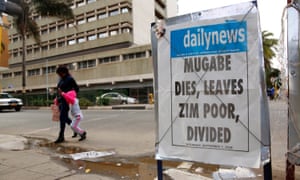
“End of an era as Mugabe dies, leaves Zim poor, divided,” read the front-page headline of a privately owned newspaper in Zimbabwe, the Daily News.

Tendai Biti, a former finance minister and opposition politician who was tortured by Mugabe’s henchmen, said the dictator was a product of an era of struggle. “He was a victim of the system he created. The revolution ate its own children and he was the first-born child of that revolution,” said Biti, who is an MP and vice-president of the Movement for Democratic Change.

Zimbabwe: Women face discrimination in land ownership – The Zimbabwean

KADOMA, Zimbabwe 

As Zimbabwe’s 1970s liberation war veterans seized white-owned farms about two decades ago, now 71-year-old Danisa Njovo suddenly became a proud owner of a five-hectare farm in Chakari area in the country’s Mashonaland west province. But although Agness, his wife, fought alongside her husband during the war, she owns nothing, not even the couple’s urban home in Kadoma.

Kadoma is a Zimbabwean town, 140 kilometers west of Harare, the country’s capital.

For many like 67-year-old Agness, because she is a woman, even claiming her compensation as one of the fighters during the war did not give any result, she said.

Even today, Agness said, she is amongst millions of women in this Southern African nation, who despite making significant contribution to agriculture on land literally owned by their male counterparts, still have no ownership rights to the farms, the means of production.

“I work on the farm with my children, a farm in my husband’s name and he is the one who goes to the market with our products and nothing in terms of property or land is in my name”, Agness told Anadolu Agency.

Similar to Agness, many women in Zimbabwe in both urban and rural areas have continued to bemoan unfair access to land and properties as they are sidelined.

Farms are being seized from white farmers, but do not benefit the country’s majority of women although the women make greater part of the country’s population with 60%, according to women rights organizations speaking on Zimbabwe’s land question.

Yet the UN’s new sustainable development goals that guide development efforts recognize the significance of property rights for women like Agness all over the world, mainly in rural areas.

According to Zimbabwe’s constitution, everyone has the right, in any part of the country, to procure, hold and dispose of all forms of property, either individually or in association with others irrespective of their sex, gender or marital status.

Even then, the Southern African country is a signatory to the Convention on the Elimination of All Forms of Discrimination against Women of 1979, the Beijing Platform for Action of 1995 and the SADC Gender and Development Declaration of 1997.

Despite Zimbabwe’s laws dispelling myths around gender disparities in terms of land and property ownership, the country’s rural women still stand out as the worst affected, according to rights activists.

“Poverty is worse amongst Zimbabwean women from rural communities because they make significant contribution to agriculture and are the mainstay of farm labor yet they own nothing nor earn anything from what they produce,” Catherine Mkwapati, a Zimbabwean feminist and director of the Youth Dialogue Action Network — a local civil society organization — told Anadolu Agency.

Meanwhile, Zimbabwe, whose economy is agro-based, has 39.6 million hectares land area, very little of it owned by women.

Zimbabwe has an estimated population of 14 million people. According to country’s Gender and Women Affairs Ministry, out of roughly 14 million population, an estimated nine million are women of which 70% live in poverty.

For women rights activists like Mkwapati: “Zimbabwean men in particular continue to own land, govern women’s labor and make agricultural decisions supported by masculine social systems”.

The majority of women lack property ownership, and “women’s access to land is only through their husbands, fathers, brothers or sons,” said Mkwapati.

Trapped in similar situations, many Zimbabwean women have ultimately found it hard to gain equal access to land and property even under the country’s Fast Track Land Reform Program.

But corruption has also played a role in disadvantaging Zimbabwe’s women in land and property ownership, according to women rights organizations such as the Zimbabwe Women Lawyers Association.

“Zimbabwean women always and often are discriminated against in land ownership owing to factors like lack of access to capital, failure to get credit, lack of collateral, customary restrictions, and even lack of knowledge on how they can get land and title deeds,” Marylin Chikwaka, a lawyer from the Zimbabwe Women Lawyers Association, told Anadolu Agency.

Why Mugabe spent his last days in Singapore? – The Zimbabwean

SINGAPORE – Former Zimbabwe president Robert Mugabe spent his final days in Singapore at one of Asia’s best hospitals, more than 8,000 kilometres away from his homeland.

He died Friday aged 95 at Gleneagles Hospital, breathing his last while surrounded by family members, according to a relative.

Why would an African leader chose to seek medical treatment in faraway Singapore?

– Why Singapore? – 

Singapore’s reputation as a strictly-ruled country is conducive to privacy and lacks a paparazzi culture and an aggressive media.

Its healthcare system is reputed to be among the best in the world, offering a whole range of services from health screenings to high-end surgical procedures.

A controversial figure like Mugabe could expect no protesters to hound him, as Singapore has strict rules against political gatherings.

Up until his death, no one would even officially confirm the hospital where Mugabe was being treated, sending journalists on a wild goose chase in the early hours after the announcement in Harare of his passing.

– How long had he sought treatment in Singapore? –

Local media said he first sought medical treatment for a cataract problem in 2011 and returned in 2014 for another procedure. Since then, his visits became more frequent.

AFP journalists saw Mugabe at Gleneagles Hospital in 2017. It was the first time he has been seen in public since he was forced to resign after a military takeover brought a sudden end to his authoritarian 37-year rule.

He was back in Singapore in April this year as his health deteriorated and a relative said he was in and out of the hospital while in the city-state.

Mugabe’s nephew Adam Molai told reporters in Singapore the former leader was admitted at Gleneagles around a week before his death.

Molai said he died of afflictions related to old age.

– Who was with Mugabe when he died? –

Molai said the former leader “was surrounded by family” when he passed away and that he died “very peacefully”.

Mugabe also “spoke about how he loves his family” in his final days, Molai added.

– How much is a room at Gleneagles Hospital? –

According to its website, suites are priced between Sg$1,158 and Sg$7,588 (between R12,400 and RR81,000) daily, while the cheapest admission is in a four-bed ward at Sg$259.

– What are Mugabe’s other Singapore connections? –

Mugabe and his wife Grace travelled to Singapore to visit their daughter Bona, who studied in the city-state.

Both parents attended her graduation when she was awarded a masters degree in management, specialising in banking and finance.

Mugabe’s wife, dubbed “Gucci Grace” in the media, is also known for her lavish shopping sprees around the world. She was reported to have spent 8,800 pounds ($10,700) on a handbag in a Singapore boutique.

– Who else has sought treatment in Singapore? –

Former Myanmar military leaders Soe Win and Than Shwe sought treatment in Singapore at various times.

Former Indonesian first lady Ani Yudhoyono died at Singapore’s National University Hospital in June.

In 2003, 29-year-old conjoined Iranian twins Laleh and Ladan Bijani chose Singapore to have their separation surgery but both died after a marathon operation.

And in 2012, a student who was critically wounded after a gang-rape in New Delhi — a case that sparked national outrage in India — was brought to Singapore for treatment but succumbed to her injuries soon after her arrival.

How UK’s foreign policy efforts to dislodge Mugabe ended in failure – The Zimbabwean

Britain’s 40-year effort to find a way to either influence or dislodge Robert Mugabe is one of the country’s great post-war foreign policy failures. It is a story spanning six UK prime ministers, nearly £1bn in aid and every conceivable strategy.

Whether the cause of that failure lies at the door of a colonial mindset in the Foreign Office, a failed land transfer policy, the collective weakness of the Commonwealth, a cowardly African political elite or simply the corrupt thuggery of Mugabe himself will be a matter of dispute for generations.

At the heart of the story is misunderstanding and apprehension, neatly illustrated by Lord Howard de Walden’s description of Christopher Soames on being told the latter was to be made Britain’s interim governor in Rhodesia during the colonial handover in 1979: “A cloud passed over his face, as if he could see himself being plucked of his plumed hat and being eaten by savages. There was no alternative to agree. Before leaving the building to face the press, he asked for another drink.”

Fears for Soames’s personal safety in Zimbabwe proved misplaced, but from the outset the Foreign Office had doubts about Mugabe, and how to respond to the manipulation of elections by his Zanu-PF party. Diplomats told Lord Carrington, the then foreign secretary, that the ballot rigging was blatant.

Carrington – who had been reluctant even to send outside election observers – demurred on calling for Zanu-PF to be banned from participating, in part believing, according to his biographer Christopher Lee, that Mugabe would not be elected.

When he was indeed victorious, and by a landslide, Carrington was reassured by the tone of Mugabe’s inauguration speech as prime minister, which preached reconciliation and forgiveness worthy of any 20th century liberation hero.

A policy of benign tolerance, and hoping for the best, ensued for nearly a decade. As late as 1988 Carrington wrote he had been fortified by Mugabe’s magnanimity and intelligence, seemingly unaware of the slaughters Mugabe instigated in his political rival’s power base, the two Matabeleland provinces of eastern Zimbabwe, from 1982 to 1987.

Above all, Carrington was reassured that Mugabe did not seem willing to tamper with the special protection sunset clauses in Lancaster House given to white Zimbabwean landowners at least for the first 10 years of independence, including provisions that the government of Zimbabwe would not engage in compulsory land acquisition but would instead proceed on a “willing buyer, willing seller” principle.

The warning signs for the British became unmistakable in 1992 when, with the economy stagnating, a compulsory land acquisition programme slowly started. But in many ways 1997 was the decisive year both for Zimbabwe, and its relationship with Britain, now led by a Labour government with an ethically-driven foreign policy.

Although Mugabe had won the 1995 elections easily, the arrival of a pressure group of war veterans demanding land soon made itself felt. In November 1997 Mugabe offered large one-off payments to each of the 70,000 “war veterans”, in addition to a monthly payment.

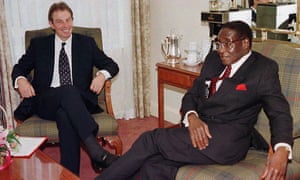
Tony Blair and then foreign secretary Robin Cook initially responded by convening a Land Donors conference to address the issue, but then pulled out of talks. Mugabe’s hatred of Blair started, as he accused the British of trying to engineer a coup by funding his political opponents.

As the Zimbabwean economy rapidly deteriorated, tensions over land reform reached boiling point in February 2000, when the government’s new draft constitution, which contained a clause providing for land acquisition without compensation unless paid for by the British government, was defeated in a referendum. Shortly thereafter, so-called “war veterans” invaded white-owned farms across the country.

As late as 2000 Cook offered an extra £40m to fund land reform. But he set conditions including “a fair price to the farmer” and reducing poverty among the working poor.

Labour believed Mugabe’s programme was not only unlawful, but corrupt. Half of all the farms redistributed since 1997 had gone to employees or members of the Zimbabwean government.

The shutters went down. Britain imposed an arms embargo against Zimbabwe on 3 May 2000. It halted the provision of 450 Land Rovers to its police force, withdrew the British military advisory training team and cut aid to Zimbabwe by one-third. An EU-wide travel ban was imposed on Mugabe and 19 members of his inner circle.

Blair did not just try isolation. He used the Commonwealth to urge Mugabe to sign a declaration at Abuja in 2001 and elsewhere later committing to democracy. But such words proved largely worthless when it came to actual elections won by Mugabe. Blair led the call to suspend Zimbabwe from the Commonwealth in March 2002. Mugabe never forgave him.

Since then all the weapons of diplomacy – quiet megaphone, economic, political, multilateral, unilateral – were used to weaken Mugabe, or strengthen his opponents in the stolen elections that have succeeded.

Short of using force, the British alone had the ability to wound, but never to end the Mugabe regime. Mugabe was repeatedly protected by other African leaders, notably the ANC in South Africa, that declined to criticise him on the grounds of non-interference and national sovereignty.

“Mugabe was one of those people the British empire created who specialised in knowing how to twist the British government’s tail,” Lord Hurd, another British foreign secretary, said: “He was well-trained in the art of annoying the British if he needed to. He knew our ways.”

Robert Mugabe killed the freedoms he had worked so hard for – The Zimbabwean

Wafa wanaka” – it is said that it is unAfrican to speak ill of the dead. But what choice does one have when the death of a once towering figure raises complex emotions, and not in a good way?

On 18 April 1980, Zimbabwe was born. In a colourful celebration that started the previous night at Rufaro stadium in Harare (then known as Salisbury), the independence flame was lit. Bob Marley sang Zimbabwe, a song he’d written at the invitation of the government. Hope filled the air as Robert Gabriel Mugabe, the nation’s first prime minister, took his oath of office and swore allegiance to the new nation. Julius Nyerere, the leader of Tanzania, prophetically cautioned Mugabe, saying: “You have inherited a jewel in Africa. Don’t tarnish it.”

Mugabe represented the birth and hope of a new era. Eloquent, ideologically clear and popular, he represented what many a Zimbabwean and parent at the time wished for the next generation. The optimism was not unfounded. Mugabe was a teacher by profession. He declared education a basic human right and changed the constitution to recognise primary and secondary public education as free and compulsory – a policy that woud reap dividends for decades to come. He preached unity, his aspiration for a non-racial society, and his belief in the rule of law and democracy.

It is the Mugabe of this moment that plunged many Zimbabweans into a feeling of conflict when his death was announced on Friday morning. While his legacy to many Africans across the continent is that of a revolutionary hero who championed the continent’s liberation struggle, this image of him presents an incomplete picture. Though he was admittedly a master politician, many Zimbabweans were killed, tortured and brutalised as he entrenched his insatiable grip on power. The unromantic part of his legacy must not be ignored.

While revolutionary and eloquent in his speeches, Mugabe tarnished a precious jewel with violence, economic mismanagement and repression. In the 37 years he ruled over Zimbabwe, a dark cloud of broken hope replaced the promise of a bright future. We were left poorer and damaged for it. His ousting in a coup orchestrated by some of his trusted comrades and generals was tragic but celebrated by the masses.

In the early 1980s, Mugabe’s proclivity for violence was already evident. Insecure about his enemies, he established the notorious Fifth Brigade, a military group that was trained by the North Koreans. Between 1983 and 1987, Mugabe deployed the brigade into Matabeleland, in the south of Zimbabwe. The brigade oversaw a campaign of beatings, arson, public executions and massacres. This period came to be known as Gukurahundi, a term drawn from a Shona word that means “the wind that sweeps away the chaff before the rains”.

The Catholic Commission for Justice and Peace documented at least 2,000 deaths but estimated that figure was more than 8,000. Other groups believe the death toll could be as high as 20,000. Throughout his decades of rule, Mugabe never afforded justice to the survivors and victims of Gukurahundi, although he later acknowledged that “thousands” had been killed, and he called the massacres “a moment of madness”.

During the 1990s, Zimbabwe’s economy steadily contracted. Unemployment rose threefold, average wages were lower and, by 2000, living standards were a pale shadow of what they’d been in 1980. The economic crisis reached a climax in mid-November 2008 when year-on-year inflation reached 89.7 sextillion per cent. This period was characterised by food shortages, empty shelves and the failure of the Zimbabwean dollar.

In addition to the economic failure, Zimbabwe experienced a deep political crisis. Opposition figures and human rights activists were beaten, arrested, abducted and killed for daring to raise their voices against Mugabe. Elections were fraught with rigging and violence as Mugabe refused to give up power – the most brutal of these elections was in 2008.

One of the strategies devised by Mugabe to maintain his grip was a controversial land reform exercise, which began in 2000. It was high on the rhetoric of restoring land to the black majority, although in reality the land remained in the hands of the state, with the holders of the farms holding no title or security of tenure. Critics accused Mugabe of parcelling land out to political elites at the expense of ordinary Zimbabweans. More than 400,000 black farmworkers were also displaced during the exercise.

While many agreed that rebalancing land ownership was necessary, many also found fault with the “fast-track” manner in which this was done. The poor administration of the programme had a negative impact on the economy and the one-time “breadbasket of Africa”. Zimbabwe now, in the aftermath of Mugabe, faces a huge crisis and requires at least US$400m in food aid to avoid starvation.

When all is said and done, Mugabe’s legacy is a complicated, conflicted and problematic one. On the one hand, he will always be an African liberation icon. On the other, he presided over economic destruction and killed the freedoms he had worked so hard to give birth to. It will take many years to undo the system of repression that he created and which continues under his successor today.

While it is unAfrican to speak ill of the dead, Mugabe offers a cautionary tale to all in the continent of how not to destroy a jewel.

 Fadzayi Mahere is a Zimbabwean lawyer and politician