News National Zimbabwe plans talks on foreign debt arrears in early 2020: finance minister Zimbabwe plans talks on foreign debt arrears in early 2020: finance minister – The Zimbabwean

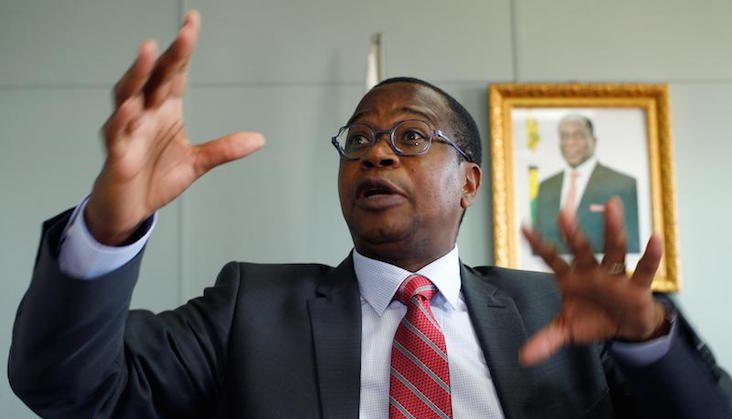
FILE PHOTO: Zimbabwean Finance Minister Mthuli Ncube looks on before the swearing in of new cabinet ministers at State House in Harare, Zimb

By Alexander Winning and Wendell Roelf

Arrears on World Bank and African Development Bank loans total almost $2 billion, he said, and clearing that may be crucial to securing new funds to help lift the country out of crisis.

Ncube, speaking to Reuters on the sidelines of a World Economic Forum on Africa conference in Cape Town, said Zimbabwe would “cast the net wide”, from G7 countries to banks, to secure the bridging loans it would need to pay off those arrears.

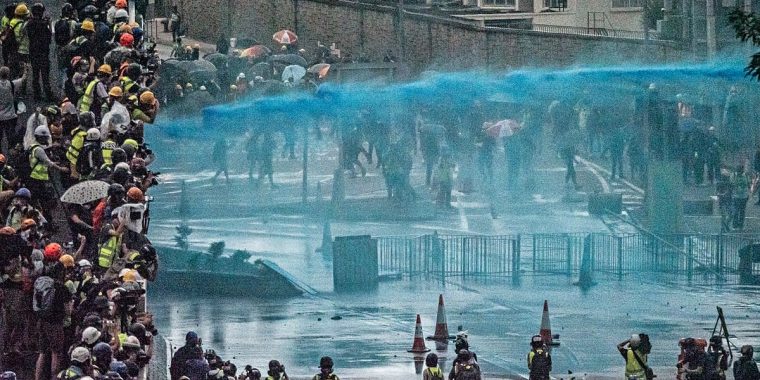
Asked if foreign investment was being deterred by a crackdown on anti-government demonstrations, Ncube said protests naturally hurt investor sentiment but that President Emmerson Mnangagwa was determined to build an inclusive society.

Mnangagwa “has launched a political dialogue process that didn’t exist in the past,” Ncube said.

“…Some of the parties are not participating and some of them are those protesting… (Protest) doesn’t mean that the government is not making an effort to make sure there is a more cordial environment… The effort is being made every day.”

Zimbabwe is mired in triple-digit inflation, rolling power cuts and shortages of U.S. dollars, basic goods, medicines and fuel.

That toxic economic cocktail has fueled civil unrest – prompting a de facto government ban on dissent by the main opposition MDC party that it has likened to repressive tactics used by Mnangagwa’s predecessor Robert Mugabe – and raised fears of a return to the runaway inflation that forced the country to ditch its currency a decade ago.

Ncube, who predicted the economy would contract this year before rebounding in 2020, said he was “not happy” with current inflation levels but that fears of a return to hyperinflation were unfounded.

Mnangagwa’s government agreed a staff-monitored International Monetary Fund (IMF) program in April that aims to restore stability by implementing reforms and correcting economic imbalances.

After the IMF’s final review early next year, “the idea… would (be) we go into negotiations on how to clear the (World Bank and AfDB) arrears,” Ncube said.

“…We need some kind of bridging loan or facility because we don’t have enough resources to be able to clear all the arrears. We need about a $1 billion in terms of the shortfall we need for those two.”

Zimbabwe’s annual inflation hit 175% in June, the highest since runaway money-printing and associated price rises forced the country to adopt the U.S. dollar in 2009.

Ncube on Aug. 1 suspended the publication of year-on-year inflation figures until February 2020 because the base for calculating them had been impacted by the adoption of a new currency. Zimbabwe would not “rush” to print large amounts of it, he said.

He forecast the economy would contract by around 3% percent this year, hurt by a drought and power outages, but rebound to growth of 3% next year. In its April World Economic Outlook, the IMF forecast a 2019 contraction of 5.2%.

The southern African nation also hopes to narrow its budget deficit from around 4 percent of gross domestic product this fiscal year to 3 percent next, Ncube said.

Zimbabwe’s bid to expand tobacco growing faces challenges – The Zimbabwean

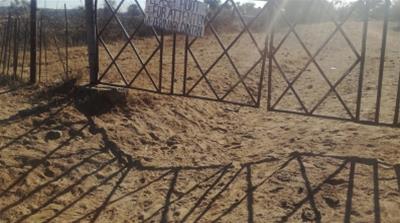
The gate at the former tobacco farmer, Shandu Gumede’s farm in Nyamandlovu, Umguza District, in Matabeleland North Province, Zimbabwe that she is now reportedly leasing to a cattle farmer. [Daylife]

Bulawayo, Zimbabwe – When a local research institute in southwest Zimbabwe launched a training programme to teach farmers how to grow tobacco, Winston Babbage jumped at the opportunity to boost his business and cash in on what many in the country call the “golden leaf”.

Babbage, who lives in the Umguza district of Matabeleland province in the southwest of the country, was given free seedlings and soil-testing services, as well as equipment to build a barn and mentoring to get the crop going. But his dreams of cashing in big on tobacco never materialised.

“It was promising at first and we were all excited, but I soon realised it was unviable,” Babbage told Al Jazeera.

Dozens of farmers like Babbage underwent training as part of the country’s Tobacco Improved Productivity Sites (TIPS) initiative, a programme launched in 2013 by Zimbabwe’s government and the Kutsaga Research Station. It aimed to geographically spread tobacco production to non-traditional growing areas of Zimbabwe and increase the number of farmers cultivating the lucrative crop.

Zimbabwe is Africa‘s biggest tobacco producer and the fifth-largest in the world, according to a study published in the Journal of Agrarian Change.

The crop is also one of Zimbabwe’s top foreign-currency earners, accounting for about 12 percent of the nation’s economic output. In 2018, tobacco production reached 252 million kilogrammes, the highest in Zimbabwe’s 121-year history of commercial growing, according to the country’s Tobacco Industry and Marketing Board (TIMB).

But while tobacco production has risen overall in Zimbabwe, in the southwest, there’s been a significant decline, thanks to a combination of extreme weather, lack of market infrastructure and skilled labour.

Hauling crops to auction

Babbage stuck with tobacco growing for three seasons, but the cost of transporting his crop to the auction floor in Harare, about 400km away, cut into his profits. The government had promised to build an auction floor in nearby Bulawayo, the country’s second-largest city, Babbage said, but never followed through.

Babbage said Matabeleland North’s provincial governor at the time, former Home Affairs Minister Obert Mpofu, had been supportive of the new tobacco farmers – but couldn’t convince investors it was worth having an auction floor in Bulawayo.

Mpofu, a tobacco grower himself, acknowledged that getting crops to market is a challenge for farmers.

“I had 15 hectares of premium tobacco and fetched five dollars per kilogram at the auction floors,” he told Al Jazeera. “I encourage farmers from the region to try it, as it is life-transforming, but they have to find a way around the logistical challenges of taking the crop to the market.”

Goodson Khuddu, the training manager at Kutsaga Research Station who trained Babbage and others in tobacco-growing, points to the absence of volume as a reason for the lack of a local auction market.

“There is not enough tobacco to justify the establishment of sales points,” Khuddu told Al Jazeera. “It’s not cost-effective to bring floors to Matabeleland given the small tonnage. Doing so would outweigh the effort of wanting to do business.”

A view of the section of the field on which Shandu Gumede used to grow tobacco now lies derelict [Al Jazeera]

Indigenous people in Zimbabwe grew Nyoka tobacco, which is native to the country, before the arrival of Europeans, but it was a Jesuit priest who claimed to be the first to commercially cultivate tobacco in the 1890s, according to the Zimbabwe Tobacco Association, a group representing growers.

Today, flue-cured Virginia tobacco – a type of cigarette tobacco- is grown extensively in four provinces in northern Zimbabwe.

The crop provides the highest economic return for each hectare among all the major annual crops grown in the country, says the association.

But tobacco curing is not a simple process. It involves a series of physical and chemical changes that begin when the plant is cut and ends when it is dried – a process that takes up to eight weeks.

Much like Umguza, the four regions have sandy loam soil that is suitable for tobacco growing, and receives an annual rainfall of between 600mm and 800mm, according to the ZTA.

Babbage said the three seasons he grew tobacco coincided with erratic, late-onset rains. This meant that his crop ripened for processing after marketing season had already started. The delay also meant he couldn’t meet a government-imposed deadline for clearing land and destroying crop residue, which must be done before the next crop is planted.

Penalties for missing the deadline are steep. Zimbabwe’s Plant Pests and Diseases Act allows TIMB officials to destroy crops before they’re harvested or to fine farmers.

Quitting farming

A shortage of skilled labour has further hampered efforts to expand tobacco production throughout Zimbabwe.

Shandu Gumede purchased a farm under the government’s land reform redistribution plan in Umguza district in the early 2000s. She said she was lucky to find barns already built on the property, which she refurbished for tobacco curing.

Gate at the former tobacco farmer, Shandu Gumede’s farm in Nyamandlovu, Umguza District, in Matabeleland North Province, Zimbabwe that she is now reportedly leasing to a cattle farmer

The gate at the former tobacco farmer, Shandu Gumede’s farm in Nyamandlovu, Umguza District, in Matabeleland North Province, Zimbabwe that she is now reportedly leasing to a cattle farmer [Al Jazeera]

But Gumede said she was forced to quit farming altogether, due to the combined problems of high transportation costs and a lack of labourers familiar with growing tobacco.

“It’s a special kind of undertaking,” said Andrew Matibiri, CEO of the TIMB. “If you want someone to go into the field to do a particular undertaking, they have to understand how to do it and why they are doing it,” he told Al Jazeera.

Dumisani Nyoni, a Ministry of Agriculture official working in Matabeleland North, said that when the TIPS initiative started, about 10 farmers were growing tobacco in the province, but “there are no farmers producing it at the moment.”

Similarly, in neighbouring Midlands province, the number of tobacco growers has dropped from 400 to 300, said Matibiri.

Andrew Godfrey Mpambo is one of the Midlands farmers who decided to drop out. He said he grew tobacco on his farm in the Zaloba area in 2013, but found the crop was too capital-intensive. With more government support and better farm equipment, he said, he could have thrived.

“The government should chip in to help emerging farmers,” Mpambo told Al Jazeera. “If we could be supported and have our farms mechanised, that would help.”

Zimbabwe’s Mnangagwa Says Relations With U.S. Best in 20 Years – The Zimbabwean

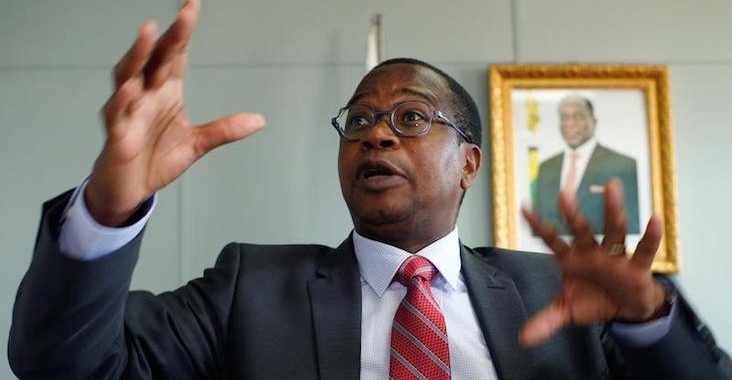
Mnangagwa, 76, reinforced a pledge to re-engage with the international community and attract the investment needed to spark economic growth in the southern African nation. So far he’s struggled, with inflation estimated by economists at between 230% and 570% and the economy poised to contract for the first time since 2008.

When he became president in late 2017 after a coup ended Robert Mugabe’s four-decade rule, Mnangagwa inherited a nation beset by U.S. and European Union sanctions on its leaders and state companies, $9 billion of debt and an economy decimated by the state’s seizure of commercial farms that accounted for much of its exports.

“We have rejoined the family of nations,” Mnangagwa said in an interview with Bloomberg Television at the World Economic Forum on Africa in Cape Town. “I am happy that dialog with the Trump administration is ongoing. I am happy with the progress we are so far making, which has never happened in the last 20 years.”

The removal of sanctions, which also target Mnangagwa himself, are one of a laundry list of hurdles the president needs to overcome to revive the economy. Until it has repaid its arrears to the World Bank and African Development Bank, the government can’t borrow more money from international lenders, and an unstable currency regime is deterring foreign investors.

Most Zimbabweans are unemployed and many have immigrated in search of economic opportunity.

Still, the president, a close ally of Mugabe for 50 years before falling out of favor in 2017, is confident progress is being made. Relations with the Group of Seven industrialized nations are “warm,” he said.

Resurrecting Growth

“We are moving at the pace of what is possible. We know where we want to go,” he said. “We are beginning from the bottom of the trough. I am in charge of my country, and I must look at what is necessary to resurrect and to grow my economy.”

Last year, Mnangagwa appointed Mthuli Ncube, a technocrat with no political affiliations, as finance minister. While spending has been curbed and a number of economic reforms rolled out, investment in the country’s key agriculture and platinum mining sectors has been slow to arrive.

“There are resources at our disposal,” he said. “The resources we have must be exploited, we must create a situation, an environment to attract global capital.”

Assistance from the G-7 in easing Zimbabwe’s debt is predicated on democratic reforms taking place in parallel to the economic steps.

Only two weeks ago, Zimbabwean police forces violently dispersed a small, largely peaceful protest against deteriorating living conditions. They used tear gas and batons and beat a woman unconscious as tourists and journalists observed the demonstration from the balcony of the most famous hotel in the capital, a visible demonstration of the crackdowns that have led to Zimbabwe’s isolation.

Two South Africans, one Zimbabwean woman among 5 killed during violent Gauteng unrest – The Zimbabwean

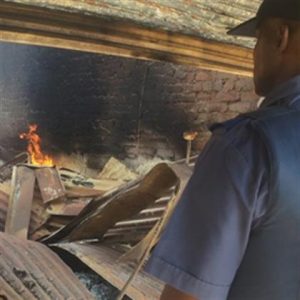
The two bodies were found inside shops torched by looters during xenophobic violence.

Both provincial police spokesperson Captain Kay Makhubele and Johannesburg Metro Police Department spokesperson Chief Superintendent Wayne Minnaar confirmed the bodies were found in rubble after the shops were set ablaze.

Makhubele said he was on his way to the scene to gather further information and told News24 bodies were found inside shops where people were collecting scrap metal.

“I can confirm two bodies were found in the rubble by a person who was looking for scrap. I am on my way there and will get more information when I get there.”

Makhubele added the bodies were found in different shops, hours apart.

The discovery of the bodies comes after two people were shot and killed on Tuesday night in the area around London Road, provincial police spokesperson Colonel Lungelo Dlamini said.

He added the shootings were not linked to xenophobic attacks.

“A motorist who was driving a vehicle without a registration number fired randomly at people who were on the street. One person died at the scene and the other in hospital. Two cases of murder are being investigated,” Dlamini said.

He added no arrests have been made.

Earlier, Dlamini said the police had identified three of the five victims of recent violent attacks in central Johannesburg earlier this week.

He told News24 the two men who were killed in Brixton and Sophiatown on Tuesday were South Africans, while the security guard killed in Hillbrow on Monday was a Zimbabwean woman.

Dlamini said the nationalities of the two men killed in Hillbrow and Jeppestown on Monday and Tuesday were still unknown.

All five victims killed during the unrest were shot, he added.

Since the unrest spread from Tshwane to Johannesburg and Ekurhuleni on Sunday, 289 people have been arrested for looting and public violence.

Foreign nationals have been the main target in the unrest, with dozens of shops looted and burned, although South African-owned shops have also been broken into and looted.

“Last night in Ekurhuleni, 100 people were arrested when the police responded to several incidents of public violence and looting,” Dlamini said in a statement.

“Fifty-four of these suspects were surrounded by the police in Thokoza and Katlehong while they were inside two businesses stealing furniture and groceries. Others were arrested for public violence in Buhle Park, Germiston and Elsburg.”

Since the arrests, there have also been a stark decline in public violence and looting in Johannesburg and Tshwane on Wednesday, Dlamini added.

On Wednesday, News24 reported the unrest in the Pretoria CBD was finally over, after the City of Tshwane and taxi operators reached an agreement.

While the taxi drivers were demonstrating in the CBD last Wednesday, after one of their own was shot and killed after accosting an alleged drug dealer, both the City and taxi associations distanced operators from the violence and looting during the protests.

President Cyril Ramaphosa and Police Minister Bheki Cele have condemned the violence.

South Africa: Years of impunity for xenophobic crimes driving the latest attacks
CiZC Statement on the Xenophobic Attacks in South Africa

Post published in: Featured

We Truly Appreciate Our Advertisers

Advertising

Thanks so much for your support.

We’d like to express gratitude to our fantastic sponsors here at Above the Law:

If you’re interested in advertising on Above the Law or any other site in the Breaking Media network, please download our media kits or email advertising.

—ADVERTISEMENT—

From the Above the Law Network

When It Comes To Mental Health, Don’t Mind Your Own Business

Ed. note: Brian Cuban wrote this piece for the Texas Bar Journal, and it is being republished here with the permission of the State Bar of Texas.

Lawyers are 3.6 times as likely as non-lawyers to suffer from depression. We have the highest problem drinking rate. It seems like once a month I read about a lawyer dying by suicide (this month has been no exception). We are fourth in that category.

It breaks my heart each time I learn that we have lost another colleague. I may see it on Facebook, Twitter, or a news article. It is rare that suicide is specifically mentioned, but there may be a request in lieu of flowers for a donation to a mental health organization or there may be commentary about the person’s struggle with mental health issues.

We can’t bring ourselves to say the word. We make the donation. We grieve. Maybe tweet out or Facebook post the number to a suicide crisis line. We talk about reaching out. Then we lose another. And another.

In 2005, I stood on the precipice of becoming a tragic statistic as a result of my mental health struggles. That summer, after decades of depression, alcohol, and cocaine addiction, I lost all hope. I looked in the mirror and saw a monster, ugly inside and out. A circus freak who deserved to be locked away in a pitch-black dungeon, shackled to the walls so my “sickness” did not infect anyone else.

In those aphotic moments, it suddenly made perfect sense to me. I would do my family a favor by relieving them of my burden. Self-cull the Cuban herd of the lone black sheep. I did not see a selfish act. I had no concept of “selfish.” Living in the dense fog of suicidal ideation, it was an act of love. A thought process that may seem unfathomable to anyone who has not dwelled in that type of darkness, with seemingly no way to climb out. Days spent in bed, crying and hoping for an end to the pain of loneliness and isolation with no way to articulate it to those who care.

It was a close call. I was lucky to have family and a friend who did not mind their own business. My brothers showed up at my home. They dragged me kicking and screaming to a local psychiatric hospital for what would be my first of two trips over the next two years.

As they pulled me out of bed and forced me to get dressed, evidence of the depth of my problems was strewn about the room. Empty and half-full bottles of booze on the floor. Cocaine lines on the nightstand. Xanax tablets strewn over the imported marble top of my dresser. In addition to the pills, I was chugging whiskey as a sleep aid to come down from the cocaine high — a difficult if not impossible way to engage in the competent practice of law. As we walked out the door, I heard my younger brother, Jeff, mention addiction and drinking issues. My older, Mark, focused on depression. They were both right.

The drive to the hospital consisted of me screaming at my brothers to take me back home and leave me alone. I wanted the people who loved me most in the world out of my life. They were trying to save me.

As we walked through the doors of the psychiatric facility, it dawned on me that there was going to be an attempt to have me committed. I was not going to let that happen. I put my law degree to use. I made it clear, sitting with the attending psychiatric physician, that I was not a danger to myself or others. I convinced him that I had no intention of harming myself. To the chagrin of my brothers, they could not keep me there. When we returned to my house, they took my car keys and demanded that I not leave for two weeks so I could sober up and “get my head on straight.” I recall thinking that was fine because my cocaine dealer made house calls. My family was no different than any other. They struggled to understand my problems and were learning about addiction and major depression in the moment, while also trying to save my life.

Tough lessons under any circumstances.

It would take one more trip to that hospital after a two-day drug-and-alcohol-induced blackout before I would begin my long-term recovery journey. I often reflect back on those brutal moments and wonder why I am still here. There was clearly a timing factor. People did not mind their own business at the right moment for intervention to occur before I completed the act of suicide.

Tragically, that is not always the case. Whether its depression, addiction, or other mental health variables, we can’t be there every moment and those tragic and life-changing/ending thoughts can come quickly and without warning.

The good news is that we all have the ability to play a significant role in changing the course of a life by simply doing what my friend and brothers did. By stepping outside of our comfort zone. By not minding our own business. We can look within ourselves and pledge to pay attention. To lend an ear. Here is a simple method I use to engage when I suspect someone is struggling even if I have no idea what the issue may be.

Me: “(First Name), you looked stressed today, everything OK? Anything I can do to help?”

Possible response: “Appreciate it, I’m fine, thanks for asking.”

Don’t walk away! Repeat the message.

Me: “Glad to hear that, but I want you to know that if you want to talk, I am a good ear.” (or something like that)

What you have done is provide a message that can prompt someone into thinking about getting help even if he or she is not ready at that moment, and with the quick repeat message, you have reinforced it and provided a window for the person to change his or her mind. In those few seconds, people do change their minds. The tap on the shoulder comes as you walk away. Or maybe you get a call or text later in the day.

Possible response: “Now that you mention it, can we talk?”

Regardless of the response, you have now become a vital cog in positive mental health messaging. No accusations.  No judgment. Just empathy and support.

The person may not be ready to talk about it or not want to talk about it with you. They may reach out to someone they have a comfort level with. It doesn’t matter. The messaging is as important as the response. The knowledge that people do care is implanted and reinforced. I had a lawyer tell me that he was not ready when I stepped out of my comfort zone, but he never forgot that I cared and after a cumulation of people not minding their own business, he sought help for both his depression and problem drinking.

Each time we don’t mind our own business, it could be that one moment that changes the course of someone’s life. It also could be one of a series of touchpoints that eventually gets that person to seek help.

Not minding your own business will not save everyone. As long as there is human suffering, there will be tragedy. We cannot be there every moment of the day when someone is struggling, and I know from experience that the thoughts and desire to act can come on fast without warning to anyone else. Not minding your own business, however, may be the one moment that you need to save just one person by interrupting a terrible, dark process. Take that chance. Be uncomfortable. Reach out. Interrupt.

Pledge to ask someone how he or she is doing and let him or her know you are there for an ear. When you see how easy it is, think about doing it again and again. It costs nothing but some time. Those few seconds can change the course of a life. The benefits can last a lifetime.


Brian Cuban (@bcuban) is The Addicted Lawyer. Brian is the author of the Amazon best-selling book, The Addicted Lawyer: Tales Of The Bar, Booze, Blow & Redemption (affiliate link). A graduate of the University of Pittsburgh School of Law, he somehow made it through as an alcoholic then added cocaine to his résumé as a practicing attorney. He went into recovery April 8, 2007. He left the practice of law and now writes and speaks on recovery topics, not only for the legal profession, but on recovery in general. He can be reached at brian@addictedlawyer.com.

Build Your House Out Of Weed, For Fun And For Profit, With Hempcrete!

(Image via Getty)

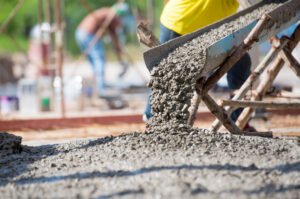
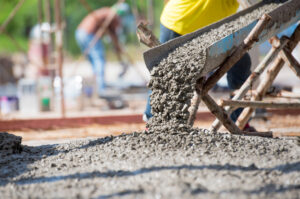
We Use A Lot Of Concrete

I spent this Labor Day at one of my favorite museums. You really can’t help but learn something useful every time you go there. I’d gone in already having a pretty good idea as to what I’d be writing about this week, and as luck would have it, stumbled upon a little something that helped me along in my research.

Human beings need a lot of resources to survive, and especially to survive in style with iPhones and whatnot. The most-consumed material on earth is probably not a surprise to you. It’s water. But the second most-consumed material isn’t as obvious: reinforced concrete.

Each year, we use three metric tons of the stuff for every person on earth. That’s a lot of concrete. Reinforced concrete is the world’s most common building material, and ever since French gardener Joseph Monier came up with the stuff in 1867, the artificial environment we construct for ourselves has never been the same. Thanks for the helpful background info, Science Museum!

Concrete Is Awful For The Earth, But What If You Could Make It Out Of Ganja?

While reinforced concrete has proven terribly useful over the last century-and-a-half, it’s also proven terribly, well, terrible in terms of its environmental consequences. Cement makers can take credit for about seven percent of global carbon dioxide emissions. The limestone kilns required to produce cement, and therefore to produce concrete, are not exactly ecofriendly. The carbon dioxide released into the atmosphere in the process of making cement weighs half as much as the cement produced, according to the European Cement Association.

Now, bear with me here, because a possible solution to this problem at first sounds like a half-baked idea that came from your fully-baked friends: what if we just all built our houses out of weed?

Thanks to some wonderful reporting from Bloomberg, we now know that this is sort of already a thing. It is not actually marijuana that is being used as a building material, of course, but rather marijuana’s industrious (and non-psychoactive) cousin, hemp.

Hemp is a pretty useful plant. In addition to its many other applications, hemp has been used as a building material since the days of the Roman Empire, when engineers mixed its strong fibers into the mortar they used to hold up bridges, many of which stand to this day. In newer structures, we use modern hempcrete, a combination of the inner woody core of the hemp plant and a lime-based or clay-based binder. Like its reinforced concrete antecedent, hempcrete was also developed in France.

Fully cured hempcrete weighs only about a seventh or an eighth of the weight of concrete. Compared to their concrete counterparts, hempcrete buildings have better temperature regulation, ventilation, and fire resistance. Maybe best of all, hempcrete is carbon negative. Growing hemp absorbs CO2, and the plant continues to soak up carbon as it’s mixed with lime or clay. According to Canadian builder Just BioFiber, each cubic meter of its hemp-based structural material entraps 287 pounds of carbon dioxide, which is more CO2 than is emitted during production.

Maybe The U.S. Should Get Over Itself And Stop Ceding The Hemp Market To Europe And Canada

Hempcrete is not a replacement for concrete in all circumstances. It does not have the same load-bearing capabilities of traditional concrete. Still, in Europe, buildings as high as 10 stories have been built using hempcrete.

Hemp’s proven utility abroad is finally winning it some fans again in North America. The Northern Alberta Institute of Technology reported that Canadian hemp sales reached $140 million last year, and could hit $1 billion within five years. In the United States, over the last half-century growing hemp has been largely illegal because of its resemblance to marijuana. However, the 2018 Farm Bill removed hemp from the controlled substances act and legalized its cultivation under certain circumstances. A number of states have since taken steps to ramp up production, although at this point it’s still a bit of a legal nightmare to actually get from a hemp seed to a building component in the U.S. Only a few dozen homes nationwide contain hemp as a building material.

Hempcrete is a hearty, sustainable, environmentally friendly, and profitable building material that can be produced in close proximity to the buildings it is actually used to construct. Sounds like a good way to help out the struggling farm economy, and maybe even gin up some work for the legal industry in unentangling over half a century of misguided regulation.


Jonathan Wolf is a litigation associate at a midsize, full-service Minnesota firm. He also teaches as an adjunct writing professor at Mitchell Hamline School of Law, has written for a wide variety of publications, and makes it both his business and his pleasure to be financially and scientifically literate. Any views he expresses are probably pure gold, but are nonetheless solely his own and should not be attributed to any organization with which he is affiliated. He wouldn’t want to share the credit anyway. He can be reached at jon_wolf@hotmail.com.

The Chinese Are In Revolt. The Hedge-Fund Investing Chinese, We Mean.

They’re not taking it to the streets, but they are taking it to online forums, so….