Mnangagwa promised a ‘Zimbabwe you want’ but has failed to deliver – The Zimbabwean

Last year, during Zimbabwe’s national elections, the ruling party erected dozens of banners all over the country, emblazoned with lofty promises and a giant photo of the man who won that contest, Emmerson Mnangagwa.

Vote ZANU-PF, they proclaimed, for “visionary and mature leadership”. Vote Mnangagwa for, “affordable, quality, healthcare guaranteed”, and “jobs, jobs, jobs”. Trust us, implored the billboards, for “delivering the Zimbabwe you want”.

The Zimbabwe you want.

It is a good thing they have taken down those banners because the country is a mess. Unemployment is pushing 90%, inflation has hit 100%, electricity blackouts last for days at a time and public services have virtually collapsed.

Public services in Zimbabwe have virtually collapsed

During our visit, we met city residents scavenging for firewood in the countryside and health workers who could not source paracetamol. The deterioration of the local currency means civil servants such as teachers and nurses are earning 80p a day.

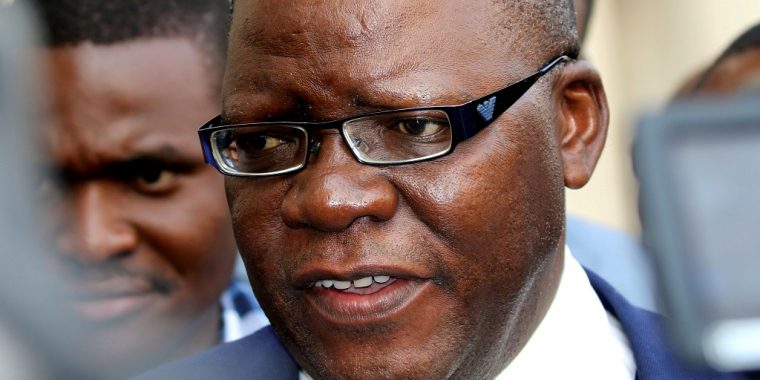
President Mnangagwa and his ministers have shown themselves to be little better than the clique that surrounded long-time dictator Robert Mugabe – the 95-year-old who was kicked out of office by his generals in November, 2017.

On Monday, Mnangagwa reintroduced the notorious Zimbabwe Dollar, last used in 2009 when hyperinflation meant that Z$35 quadrillion was required to purchase US$1.

His administration has also banned foreign currency (such as the US dollar) in a move described as “madness” by Opposition Movement for Democratic Change (MDC) treasury spokesman, David Coltart.

Mr Coltart said: “The government has compounded an already chaotic economic situation. Ironically, the re-dollarisation process had brought some stability but that has all been thrown out the window.”

The Zimbabwe you want.

Civil servants are earning just 80p a day

Civil servants are earning just 80p a day

Desperation and anger simmers beneath the surface in Zimbabwe. Nobody seems to think the current situation can go on.

It is because the people are so unhappy that the government has ruthlessly clamped down on dissent. Civil rights leaders, activists, lawyers and union representatives have been targeted with beating, abductions and detentions.

The NGO Zimbabwe Lawyers For Human Rights told Sky News that more than a thousand community leaders and ordinary citizens have been arrested on spurious charges, such as “subversion of the state”, in the past six months.

Obert Masaraure, who runs the Rural Teachers of Zimbabwe Union, was not summoned to court, however. Instead, eight men wearing masks and carrying machine-guns broke into his house and dragged him into the bush.

Obert Masaraure was attacked by eight masked men

Obert Masaraure was attacked by eight masked men

He was stripped naked and beaten with rubber straps because he had asked for an increase in pay. “We had a petition to be paid in US dollars and we declared a work (stay away) in June. The (attackers) shouted at me: ‘why are you asking these teachers not to go to work?’”

I asked him: “Are you scared?”

“I don’t want to lie to you, I am scared, I am human… for them to be harassing my family, to be harassing my kids. It is the lowest level of madness we can get in a country. The state is supposed to be protecting rights and our freedoms.”

We spoke on the roadside, in the middle of night, inside a passenger van and he was so badly beaten that he had trouble walking.

The Zimbabwe you want.

The party of power has proven one simple thing. ZANU-PF cannot reform itself. President Mnangagwa cannot introduce the sort of radical changes – to the economy and to society – without damaging the entrenched interests of party members.

Instead, his administration will live from day-to-day, with a baton in its hand, ready to strike at its critics.
Substance Over Form, But Decorative Dishes Please The Palate

(Image via Getty)

With deadlines looming and work piling up, attorneys often find themselves skipping over aesthetic detail to get legal arguments to paper. While it is easy to believe that the judge, clerk, or attorney reading your documents will glaze over small errors and spacing inconsistencies, the sum effect of a document is either bolstered or weakened by the attention to detail paid by the author. As lawyers, we must remember that every detail bears upon the outcome of our work and potentially the disposition of our cases.

What Gourmet Chefs Have Mastered

A study conducted by a team based in Oxford University empirically demonstrated that a salad plated  to mimic Kadinsky’s Painting #201 was perceived to be tastier than a salad made of the same ingredients either arranged geometrically (in organized lines) or traditionally. The study also found that people were willing to pay more for the artistically plated salad than for either of the other two.

The results of this study come as no surprise to gourmet chefs. The highest echelons of the dining industry have been preparing foods which appeal to all five of the senses for years. Just as the average cook concentrates his efforts solely on the taste of his food, the average attorney predominantly concentrates on the logic and arguments set forth in her papers.

The legal profession must extrapolate from the results of this study and those like it. Just as a diner’s impression of the taste of a chef’s food is altered by its presentation, an attorney’s audience is affected by things aside from the logic of her legal arguments.

Realities in Law

All attorneys are taught to present persuasive and logical arguments with the backing of legal authority. What we are not taught is the importance of attention to the aesthetic details in the documents we author. Sloppy writing often imputes sloppy arguments in the reader’s mind. Attorneys must be cognizant that writing that is pleasant to read and look at weighs more favorably on the reader than a messy and typo-ridden one.

Attention to detail includes a litany of onerous and often annoying tasks stretching from the banalities of proper Bluebooking to concentration on the proper use of em dashes as compared to en dashes and hyphens. Additional considerations include making sure that each paragraph of a brief has the same alignment, proper use of punctuation, and consistent spacing between sentences as well as paragraphs.

While these small items may seem menial and unimportant, they can make the difference between success and failure when two equally persuasive briefs are submitted. We must strive to become the gourmet chefs and avoid the pitfalls of the average cook.

Professional Benefits

Aside from the beneficial results pristine work product achieves for an attorney’s client, there are significant fringe benefits associated with producing quality papers. An attorney’s name and work product are her calling card. Every time an attorney submits a brief, her name is inextricably tied to the document she produced. Presenting a work product that is not only logically sound and persuasive, but also well put together and detail oriented will appeal to potential future employers and clients alike. Furthermore, when clients review an attorney’s work product, the same factors described above will also bolster a client’s confidence in the attorney’s skill and ability.

Morning Docket: 07.05.19

(Photo by Alex Wong/Getty Images)

* Okay, fine, whatever, the Trump administration is apparently going to look for a way to add a citizenship question to the 2020 Census. We’re governing by tweet these days, and this is the latest information on this debacle. [Washington Post]

* And it looks like the way President Trump is thinking of adding a citizenship question to the 2020 Census is through an executive order. The Justice Department has until this afternoon to straighten this out. [ABC News]

* Nope, you still can’t use money that was supposed to go to the Defense Department to build a border wall. The Ninth Circuit upheld an injunction on the use of these military funds just before the holiday. [Los Angeles Times]

* Which Biglaw firms have received the most money from presidential candidates’ 2020 election campaigns? As you might have guessed, lawyers from Jones Day have gotten a lot to Republicans, and lawyers from Perkins Coie have gotten a lot to the Democrats. [National Law Journal]

* Prosecutors have dropped the manslaughter charge filed against an Alabama woman who was five months pregnant and lost her unborn child after being shot in the stomach. Congratulations, Alabama! Way to be normal! [CBS News]

* If you’re interested in going to law school, you should know that the average debt for the class of 2018 was pretty hefty at $115,481 — that’s $130,900 for private school graduates and $89,962 for public school graduates. Good luck paying it off! [Nerdwallet]

* Matthew Benedict, a student at Buffalo Law, RIP. [New York Law Journal]


Staci ZaretskyStaci Zaretsky is a senior editor at Above the Law, where she’s worked since 2011. She’d love to hear from you, so please feel free to email her with any tips, questions, comments, or critiques. You can follow her on Twitter or connect with her on LinkedIn.

Gibson Guitar Declares Shift In IP Enforcement After Most Recent Public Backlash

Our past posts on Gibson Guitar, the famed guitar-maker, have revealed roughly a decade of strict IP enforcement and other busuiness challenges. Between waffling on its support for SOPA and its own failures to properly innovate in a direction that met its customers’ demand, never mind its odd legal trouble over “illegal” wood used in its guitars and the bankruptcy it underwent a few years back, we’re not left with a picture of a well-oiled business. Despite that, emerging from bankruptcy, Gibson has continued its IP maximilist ways, most notably in the past few weeks with a lawsuit against the owner of Dean and Luna Guitars for trademark infringement and counterfeiting over several guitar body designs that the defendants claim aren’t protectable.

There are two important aspects of that specific dispute to note here. First, the public backlash against Gibson over the lawsuit was firm and swift. Second, this specific dispute originated with cease and desist notices sent out by Gibson’s legal team back in 2017. That is particularly notable as it was only in November of 2018 that Gibson brought on a new CEO, James Curleigh. In the wake of the backlash over the past few weeks, Curleigh has gone out of his way to promise the public that Gibson is going to quickly move on from its IP maximilist ways.

Regarding criticism Gibson has faced for its legal actions, the company said in a statement that the past few weeks “have provided a ‘real time’ opportunity to start making the pivot from less legal leverage to more industry collaboration, with appropriate levels of awareness.” Furthermore, the company clarified that the recent attention on the lawsuits in process stem from several years of legal action initiated prior to the new leadership, headed by CEO and President James “JC” Curleigh, arriving in November of 2018. With regard to the inherited and ongoing legal dynamic with Dean Guitars, Gibson says its team has made attempts to directly communicate to “avoid a prolonged legal battle.”

Said Curleigh, “I am proud of the progress we have made with our attention to quality, with the launch of the new collections, and with our renewed engagement to our Gibson authorized dealer base. At the same time, we acknowledge there are still legacy challenges to solve going forward, especially around brand protection and market solutions.”

On the one hand, it feels somewhat lame to let a company off the hook for filing a lawsuit two weeks ago just because the cease and desists were sent out two years prior to the current CEO’s tenure. You’re the CEO, dude. Tell the legal team to not file the suit if that’s what you think it should do.

All that being said, the words coming out of Curleigh’s mouth are the right ones, as are those coming from the Gibson PR team. It’s gratifying to watch a company bow to public backlash over an overtly aggressive IP enforcement stance. And hearing the company use language that used to be reserved for the craft beer industry, back before that industry was similarly ravaged by IP enforcement, is encouraging.

He continued, “It is time to make the modern-day shift from confrontation towards collaboration, whilst still protecting our brands, and we are committed to making this happen starting now.”

What remains is seeing just how Curleigh’s Gibson Guitar wants to balance that equation. If he can shift the culture of the company towards one that is human and awesome, all while giving fans of Gibson guitars what they want, it could be a major win for a company that recently looked quite lost.

Gibson Guitar Declares Shift In IP Enforcement After Most Recent Public Backlash

More Law-Related Stories From Techdirt:

Sinclair Faces Expanded Probe For Shady Behavior During Tribune Merger
We Should Probably Stop Blaming Technology For The Failings Of Human Beings
NASA, NOAA, and the Navy Tell The FCC Its 5G Plan Will Harm Weather Forecasting

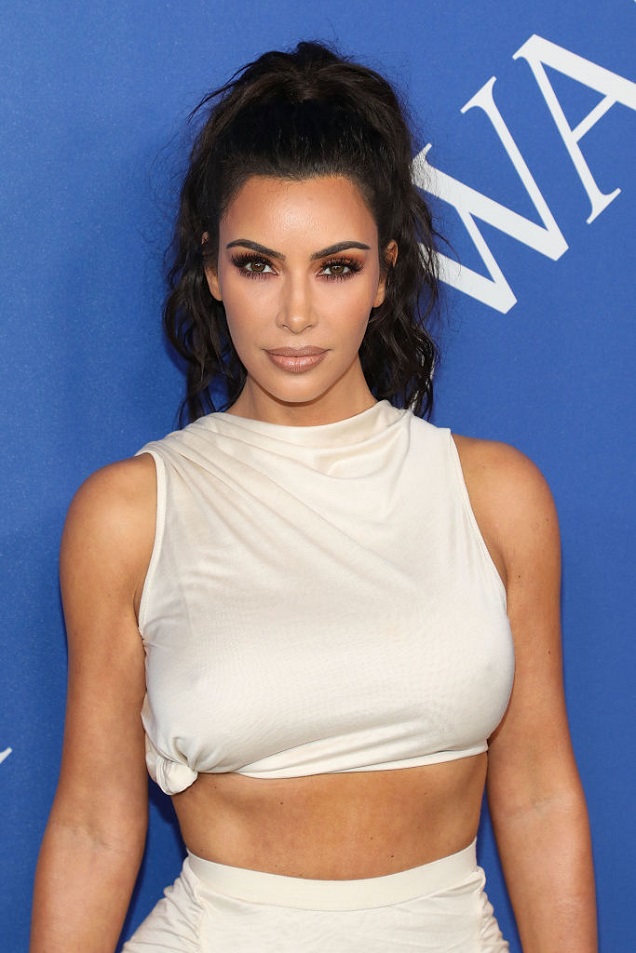
The Law School Textbook Kim Kardashian Turned Into An ‘Accessory’

Kim Kardashian (Photo by Lucas Dawson/Getty Images)

Which law school textbook was Kim Kardashian West recently seen toting around that inspired a 235-word expose from Vogue?

Hint: The subject matter of the textbook fits perfectly with the social justice work Kardashian has been persuing.

See the answer on the next page.


Staci ZaretskyStaci Zaretsky is a senior editor at Above the Law, where she’s worked since 2011. She’d love to hear from you, so please feel free to email her with any tips, questions, comments, or critiques. You can follow her on Twitter or connect with her on LinkedIn.

Oh Yeah, The Wall Is Still Not Happening

Live look at Trump’s Wall. (Image via Getty)

I can’t, like, mentally or emotionally deal with what Donald Trump is trying to pull with the Census. It’s in such bad faith and the fact that conservatives are pushing him to still try is such a clear indication of just how committed to racism “movement conservatives” have become.

Anyway, while we wait for the next twist in that case, let’s circle back to Trump’s most consistent racist priority. The Wall. Or as Trump likes to call it: “WALL.”

WALL took a defeat on Wednesday, when a Ninth Circuit panel upheld a district court injunction blocking Trump from stealing military funds to build the thing. From Courthouse News:

U.S. Circuit Judges Richard Clifton and Michelle Friedland, who authored the majority opinion, said Trump is unlikely to win his appeal of U.S. District Judge Haywood Gilliam’s order last Friday permanently enjoining the feds from building sections of the wall in California, New Mexico, Arizona and Texas.

Clifton and Friedland agreed with Gilliam that Trump’s diversion of military funding fails to square with the Appropriations Clause of the U.S. Constitution. They said the need for the money was not unforeseen, as the feds argued, and it was a budget item that Congress had already denied.

The Department of Defense had relied on section 8005 of the Department of Defense Appropriations Act of 2019 to move the funds to the Department of Homeland Security.

But the unauthorized use of those funds, the judges wrote, “violates the constitutional requirement that the Executive Branch not spend money absent an appropriation from Congress.”

Unfortunately, the panel was not unanimous. Bush appointee N. Randy Smith dissented:

“Given this significant national security interest, the public would benefit more from a stay that—while this appeal is pending—permits defendants to effect the policies that it has determined are necessary to minimize that threat, than it would from a decision that hampers defendants’ ability to combat this threat throughout the present appellate process,” Smith wrote.

There is not a “significant national security interest” that WALL addresses. I am disturbed, every time, when a Republican judge accepts the administration’s rationale for WALL, without questioning that rationale. Just like with the Census, the national security explination is just a pretext, and I don’t see why Republicans are proud of their ability to be so freaking obtuse.

In any event, WALL is still not a thing, and for that at least we can be thankful.

Ninth Circuit Upholds Freeze on Pentagon Cash for Trump’s Border Wall [Courthouse News Service]


Elie Mystal is the Executive Editor of Above the Law and a contributor at The Nation. He can be reached @ElieNYC on Twitter, or at elie@abovethelaw.com. He will resist.

‘I Mean, You’re Racist For Calling Me Racist!’ Argument Fails Spectacularly In Benchslap

With all the attention on the census, America’s getting pretty familiar with obviously racist pretextual arguments. But while the administration is busy trying to concoct a new rationale for the census question out of thin air, the mundane, everyday work of creating terribly pretextual reasoning for racist activity is still going on in America’s courts. This is what Batson is supposed to curtail, but it’s not too difficult for savvy prosecutors to work their way around that edict with the help of a compliant bench.

Sometimes, however, Racist Icarus flies too close to the sun and earns the constitutional benchslap they deserve.

Out in Oregon, three young, unemployed college students showed up for jury duty in a case involving a black defendant and a white alleged victim. The two white kids got on… the black kid did not. The prosecutor said his peremptory strike wasn’t racially motivated because he decided he doesn’t like young, unemployed jurors and had made a note to strike him before ever seeing him. You see, it’s not so much that he’s against a juror because he’s black, he’s against all college students and makes exceptions if they’re white!

When the defense raised a Batson issue, the prosecutor carefully considered the racial dynamics of the situation and decided that the real racist here was defense counsel:

Amazingly, the trial judge accepted this reasoning. The court of appeals did… not agree:

There is nothing offensive or racist about invoking the United States Supreme Court-established process for eliminating unconstitutional discrimination in jury selection, and defense counsel should not have been subjected to those accusations by the prosecutor simply for doing his job in accordance with the law.

The opinion eviscerates the pretextual reasons offered by the prosecutor. For example, he said he liked the white kid, despite his reservations, because he was a Boy Scout but then never asked the black kid about that. But the most entertaining problem for the government dealt with the disparate treatment of the female juror, arguing, “Although the prosecutor did not state so expressly, a prosecutor might reasonably refrain from challenging a female juror, when trying a case involving a young girl who was preyed-upon by an older man.” You can see where this is going…

This argument creates problems for the state and, given those, the state wisely backed away from it at oral argument. Nonetheless, it is difficult to disagree with the underlying premise of the state’s argument: that, on this record, it is inferable that the prosecutor’s exercise of the peremptory against [the black juror] was unconstitutionally based on gender, as well as race.

The case was reversed and remanded.

Putting aside the obvious constitutional problems — which shouldn’t be diminished by this point — what makes this such a boneheaded Batson violation is not so much that the black juror was going to be the second alternate and therefore have very little chance of impacting the verdict, but that even if he was on the jury, Oregon is the sole remaining state allowing non-unanimous verdicts — a Jim Crow-era law crafted for this exact situation to allow prosecutors to let black people on juries without raising obvious constitutional alarms without worrying that they might frustrate a proper railroading.

So perhaps Oregon should get on fixing that problem next.

State v. Curry [Justia]


HeadshotJoe Patrice is a senior editor at Above the Law and co-host of Thinking Like A Lawyer. Feel free to email any tips, questions, or comments. Follow him on Twitter if you’re interested in law, politics, and a healthy dose of college sports news. Joe also serves as a Managing Director at RPN Executive Search.

Vault Ranks The Best Law Firms For Diversity (2020)

Over the past few weeks, Vault has rolled out a variety of law firm rankings — from the firms that are the most prestigious to the firms that offer the best quality of life to the firms with the top-ranked practice areas in their region to the firms with the highest-rated summer associate programs — and there’s yet another important one that we’ll dive into today.

Money can buy prestige and can certainly improve your quality of life, but the diversity of your colleagues is worth more than what any salary scale can possibly pay.

In a companion ranking to the Vault 100, associates were asked to rank their own law firms based on categories most relevant to how the firm does at creating, maintaining, and fostering a diverse workforce, including diversity relating to racial minorities, women, LGBTQ individuals, and individuals with disabilities. To create the overall Best 30 Firms for Diversity ranking, Vault averages the scores from all four ratings.

There was a huge amount of movement in the Top 10 this year. Which firms made the cut? Without any further ado, here are the Top 10 Best Law Firms for Diversity based on Vault’s Annual Associate Survey for 2020:

  1. O’Melveny & Myers (+1)
  2. Carlton Fields (+12)
  3. Constangy Brooks Smith & Prophete (-2)
  4. Orrick, Herrington & Sutcliffe (+1)
  5. Ropes & Gray (+3)
  6. White & Case (+1)
  7. Cleary Gottlieb Steen & Hamilton (+16)
  8. Littler Mendelson (-2)
  9. Schiff Hardin (+1)
  10. Finnegan Henderson Farabow Garrett & Dunner (+7)

It’s worth noting that O’Melveny swept almost the entirety of Vault’s 2020 diversity rankings, while Constangy Brooks remained on top for Best Law Firm for Diversity for Minorities. Here’s some additional commentary on that:

The firm not only claimed the No. 1 spot for Overall Diversity—moving up from its spot at No. 2 in the 2019 rankings—but it also ranked No. 1 as the Best Law Firm for Diversity for Individuals with Disabilities, Diversity for LGBTQ Individuals, and Diversity for Women. As one O’Melveny associate indicated, “There are few firms who take diversity as seriously as OMM.” …

In addition to O’Melveny—which also ranked No. 3 for Diversity for Racial Minorities—three law firms ranked in the top 10 of all five of Vault’s diversity rankings: Carlton Fields; Orrick Herrington & Sutcliffe LLP; and Ropes & Gray LLP.

Congratulations to each of the Biglaw firms that made the latest edition of the Vault Best Firms for Diersity For rankings, and a huge congratulations to O’Melveny for yet another rankings sweep. How did your firm do? Email us, text us at (646) 820-8477, or tweet us @atlblog to let us know how you feel.

Best Law Firms for Diversity (2020) [Vault]


Staci ZaretskyStaci Zaretsky is a senior editor at Above the Law, where she’s worked since 2011. She’d love to hear from you, so please feel free to email her with any tips, questions, comments, or critiques. You can follow her on Twitter or connect with her on LinkedIn.